
Introduced Pine Sawfly
Diprion similis
This record describes Diprion similis (species). Recorded family: Diprionidae. Recorded order: Hymenoptera.
Identification and Appearance
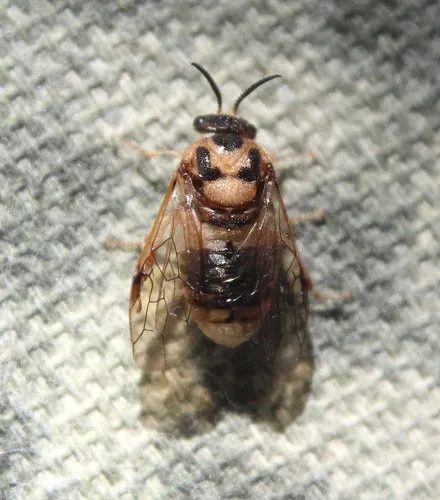
First reported in our area: CT 1914 Although a serious pest at times, it normally stunts rather than kills its hosts. It can be a more serious problem with young trees and in cases such as Christmas trees where appearance is important. It has natural enemies and diseases, so large outbreaks are only intermittently seen. The introduced parasite, Monodontomerus dentipes , has a 75% effective record in NJ.
Wikipedia reference for Diprion similis: http://en.wikipedia.org/wiki/Diprion_similis.
Classification
- Kingdom
- Animalia
- Phylum
- Arthropoda
- Class
- Insecta
- Order
- Hymenoptera (Ants, Bees, Wasps and Sawflies)
- Family
- Diprionidae (Conifer Sawflies)
- Genus
- Diprion
Imported taxonomy record. Source availability varies; see the source references and editorial policy below.
Habitat and Range
Habitat
Pine forests
Geographic Range
adventive from Europe; ne. US (ME-MN to NC-TN) ( map ) + WA ; in Canada, NF-MB & BC
Seasonal Activity
Adults can be found throughout the season, from first emergence in mid-spring to pupation in mid-fall (in favorable weather they may stay active even longer). Late-emergers and two generations mean all stages of development can be found together at the same time.
Diet and Behavior
Diet: hosts: pines ( Pinus ); 5-needled pines (Subg. Strobus ) are preferred, but others may be infested as well
Life History
Male | Female Adults emerge as early as April, depending on the climate, and mate (Females that fail to mate can still lay eggs, which hatch to produce males). The females make slits in needles with their ovipositors to lay their eggs- about 10 per needle. When they first emerge, the larvae feed in groups, but spread out as they get older. Larva: There are often two generations, with the first spinning cocoons in early July, emerging in early August, and laying eggs which hatch into the second generation. The second generation generally spins cocoons in September in the litter under the trees. Most go into diapause in a pre-pupal state until spring, then pupate. Some may not emerge with the others, remaining in diapause until later in the season, or even for 1-3 years. Empty cocoon: With exit hole of a chalcid wasp:
Additional species information
Species notes from the sources
Etymology: Diprion similis (Hartig 1834)
About Flies: the wider group
Order-level background for Hymenoptera, the group containing Diprion similis. Species-specific details appear above.
Group overview
Hymenoptera includes over 150,000 described species of ants, bees, wasps, and sawflies. Earth harbors approximately 20 quadrillion (20×10^15) ants, with a combined biomass of ~12 megatons of dry carbon - exceeding the combined biomass of all wild birds and mammals (PNAS, 2022).
Ecological role of the group
About 35% of the world's food crops depend on animal pollinators. The chocolate industry, valued at over $100 billion, depends on pollinating flies and midges. Ants are the dominant soil engineers in most terrestrial ecosystems, turning more soil than earthworms in many habitats.
Economic and practical significance of the group
Pollinators contribute $235-577 billion worth of annual global food production (FAO). In the U.S., bee pollination alone benefits crops valued at $18 billion annually, and honey bees are responsible for $5.4 billion in agricultural productivity. Between April 2023-2024, 55.1% of managed honey bee colonies were lost. The U.S. bee population dropped from 5 million to 2.5 million.
Recorded sources for this group: FAO, USDA, EPA, PNAS (2022), US Fish & Wildlife Service. Imported estimates may describe particular regions or reporting periods.
Photos of Introduced Pine Sawfly (3)
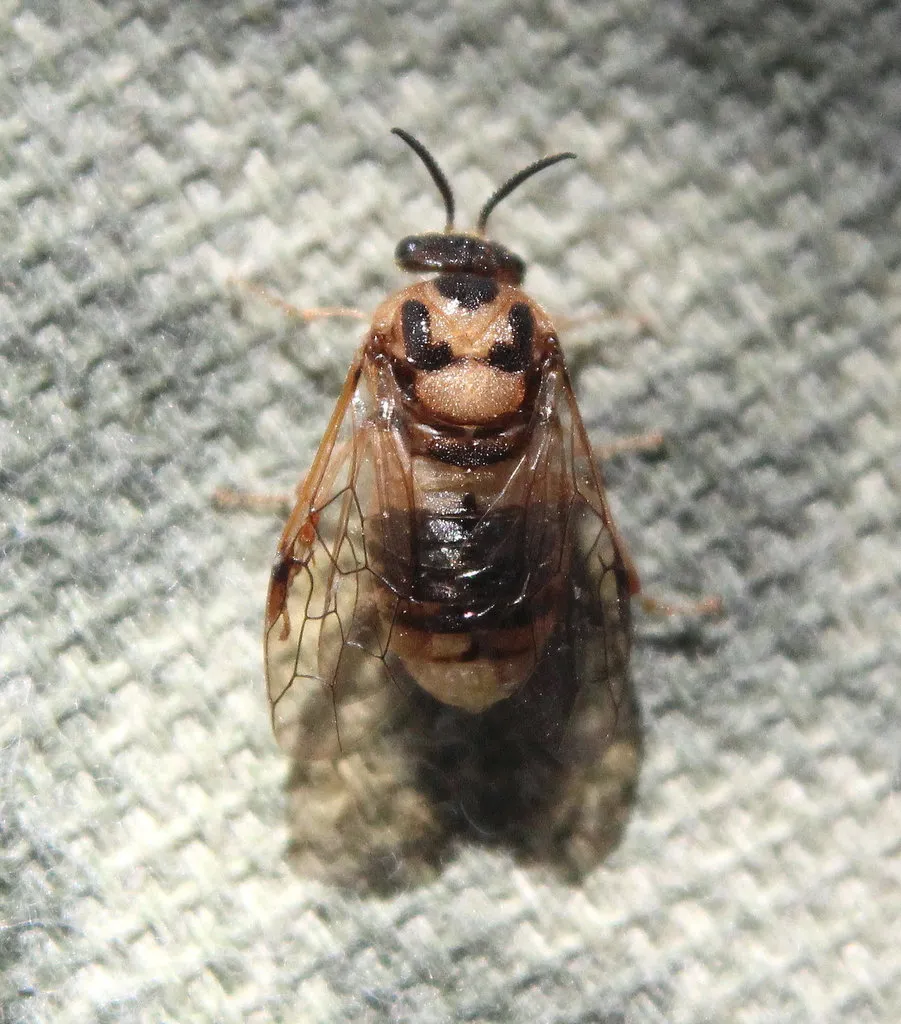
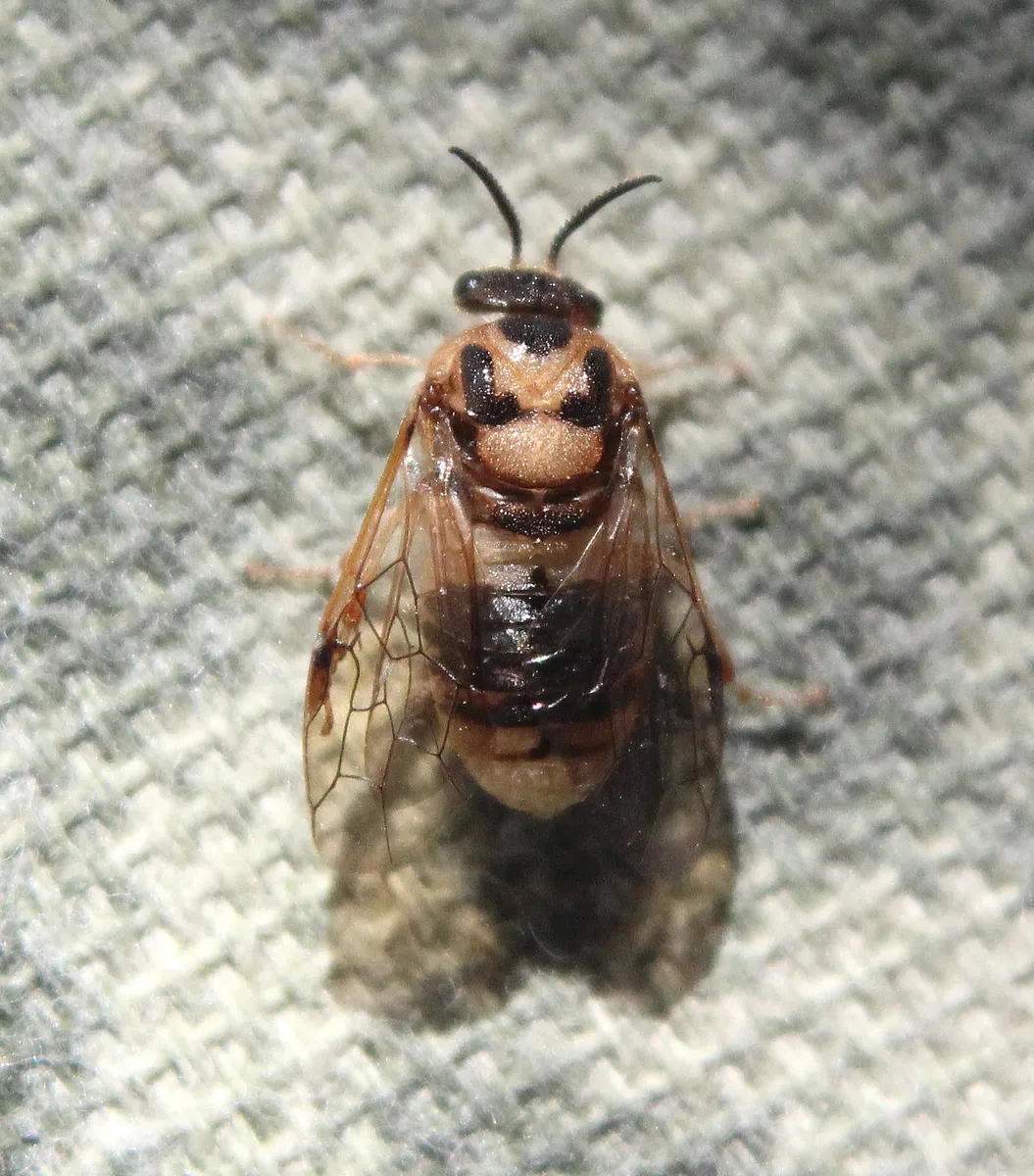
Photo credits: Contributed by Tony DiTerlizzi; Additional contributions by Beatriz Moisset , Chuck Entz , ceiseman , v belov , Marci Hess
Frequently Asked Questions About Introduced Pine Sawfly
What is Introduced Pine Sawfly?
Introduced Pine Sawfly (Diprion similis) is a species in the family Diprionidae, within the order Hymenoptera.
Where is Introduced Pine Sawfly found?
| Feature | Details |
|---|---|
| Habitat | Pine forests |
| Range | adventive from Europe; ne. US (ME-MN to NC-TN) ( map ) + WA ; in Canada, NF-MB & BC |
What does Introduced Pine Sawfly eat?
The diet of the Introduced Pine Sawfly includes hosts: pines ( Pinus ); 5-needled pines (Subg. Strobus ) are preferred, but others may be infested as well.
When is Introduced Pine Sawfly active?
Introduced Pine Sawfly: seasonal activity - Adults can be found throughout the season, from first emergence in mid-spring to pupation in mid-fall (in favorable weather they may stay active even longer). Late-emergers and two generations mean all stages of development can be found together at the same time..
What is the life cycle of a Introduced Pine Sawfly?
Male | Female Adults emerge as early as April, depending on the climate, and mate (Females that fail to mate can still lay eggs, which hatch to produce males). The females make slits in needles with their ovipositors to lay their eggs- about 10 per needle. When they first emerge, the larvae feed in groups, but spread out as they get older. Larva: There are often two generations, with the first spinning cocoons in early July, emerging in early August, and laying eggs which hatch into the second generation. The second generation generally spins cocoons in September in the litter under the trees. Most go into diapause in a pre-pupal state until spring, then pupate. Some may not emerge with the others, remaining in diapause until later in the season, or even for 1-3 years. Empty cocoon: With exit hole of a chalcid wasp: