
Jet Ant
Lasius fuliginosus
This record describes Lasius fuliginosus (species). Recorded family: Formicidae. Recorded order: Hymenoptera.
Identification and Appearance
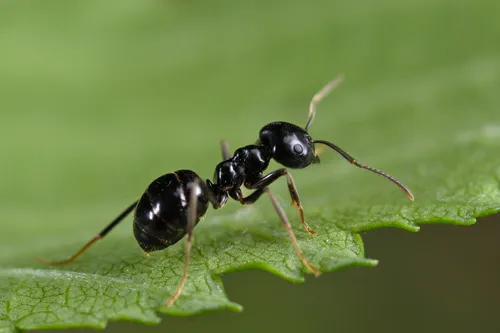
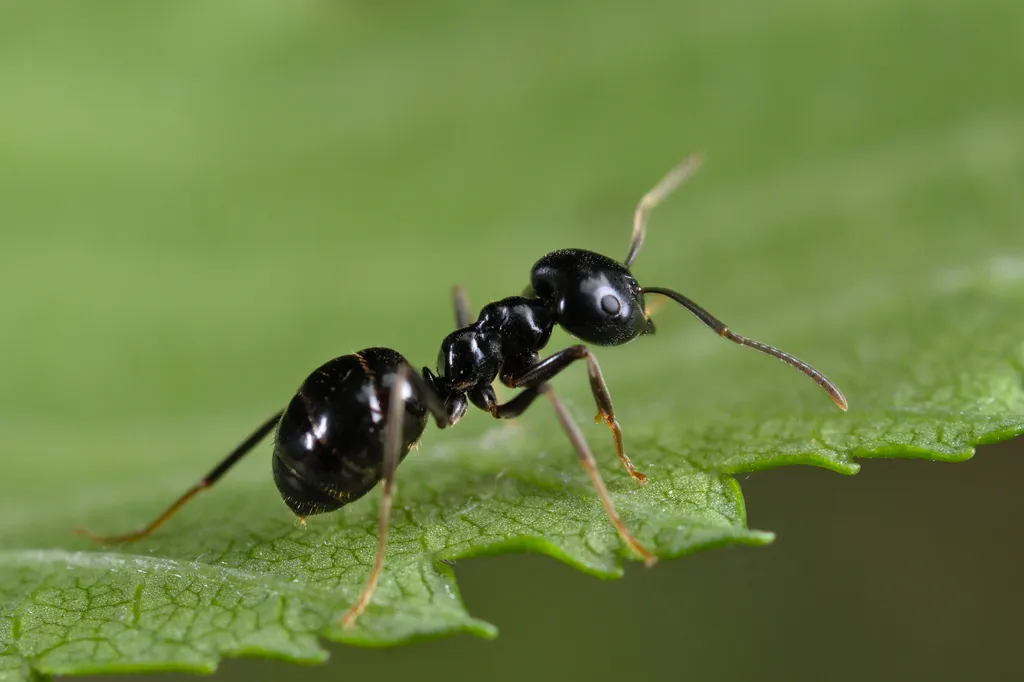
This ant is shiny jet black in colour with a heart-shaped head. Workers are about 4 to 6 mm long, females are larger and small males reach a length of 4.5 to 5 mm. Unless identified by a recognised expert, a photo is required and the specimen should be examined with a microscope. In the comments box, state the key or ID method used and describe the size and identifying characters. It is a semi-social parasite of a semi-social parasite; that is, the species establishes its colonies in those of the Lasius umbratus group which are in turn founded in colonies of the Lasius niger/flavus species complexes. The chances of success for a founding queen under these circumstances may well result in the highly localised distribution of colonies seen in the field. Occasionally, nests are found with the black L. fuliginosus and yellow or brown host workers still intermixed. The workers often forage on trails leading some distance from the nest to trees where they tend Homoptera for honeydew. Most of their diet appears to come from this source and they rarely seem to take insect prey; however, dead aphids are occasionally seen being carried back in workers' mandibles and they will take dead insects if offered. The nests themselves are made from a type of carton (wood fragments cemented together with saliva), usually in the hollow of a partially rotted tree, log or stump, or within a hedge bank or wall. This species is not rare in southern England and Wales but always tends to be locally uncommon, with often only a few isolated nests known to recorders in any one locality. There appears to be contraction in the range of L. fuliginosus in northern and central England.
Wikipedia reference for Lasius fuliginosus: https://en.wikipedia.org/wiki/Lasius_fuliginosus.
Classification
- Kingdom
- Animalia
- Phylum
- Arthropoda
- Class
- Insecta
- Order
- Hymenoptera
- Family
- Formicidae
- Genus
- Lasius
Imported taxonomy record. Source availability varies; see the source references and editorial policy below.
Habitat and Range
Habitat
See Life History
Seasonal Activity
Usually recorded in summer.
Additional species information
Recorded status
This species is not rare in southern England and Wales but always tends to be locally uncommon, with often only a few isolated nests known to recorders in any one locality. There appears to be contraction in the range of L. fuliginosus in northern and central England.
About Flies: the wider group
Order-level background for Hymenoptera, the group containing Lasius fuliginosus. Species-specific details appear above.
Group overview
Hymenoptera includes over 150,000 described species of ants, bees, wasps, and sawflies. Earth harbors approximately 20 quadrillion (20×10^15) ants, with a combined biomass of ~12 megatons of dry carbon - exceeding the combined biomass of all wild birds and mammals (PNAS, 2022).
Ecological role of the group
About 35% of the world's food crops depend on animal pollinators. The chocolate industry, valued at over $100 billion, depends on pollinating flies and midges. Ants are the dominant soil engineers in most terrestrial ecosystems, turning more soil than earthworms in many habitats.
Economic and practical significance of the group
Pollinators contribute $235-577 billion worth of annual global food production (FAO). In the U.S., bee pollination alone benefits crops valued at $18 billion annually, and honey bees are responsible for $5.4 billion in agricultural productivity. Between April 2023-2024, 55.1% of managed honey bee colonies were lost. The U.S. bee population dropped from 5 million to 2.5 million.
Recorded sources for this group: FAO, USDA, EPA, PNAS (2022), US Fish & Wildlife Service. Imported estimates may describe particular regions or reporting periods.
Photos of Jet Ant (2)
Frequently Asked Questions About Jet Ant
What is Jet Ant?
Jet Ant (Lasius fuliginosus) is a species in the family Formicidae, within the order Hymenoptera.
How big is Jet Ant?
of 4.5 to 5 mm.
Where is Jet Ant found?
Habitat: See Life History
When is Jet Ant active?
Jet Ant: seasonal activity - Usually recorded in summer..