
Flies
Order Hymenoptera
The Flies (Order Hymenoptera) includes 5,194 species across 102 families and 1,491 genera in our directory.
About Flies
Hymenoptera includes over 150,000 described species of ants, bees, wasps, and sawflies. Earth harbors approximately 20 quadrillion (20×10^15) ants, with a combined biomass of ~12 megatons of dry carbon - exceeding the combined biomass of all wild birds and mammals (PNAS, 2022).
Economic Impact
Pollinators contribute $235-577 billion worth of annual global food production (FAO). In the U.S., bee pollination alone benefits crops valued at $18 billion annually, and honey bees are responsible for $5.4 billion in agricultural productivity. Between April 2023-2024, 55.1% of managed honey bee colonies were lost. The U.S. bee population dropped from 5 million to 2.5 million.
Ecological Role
About 35% of the world's food crops depend on animal pollinators. The chocolate industry, valued at over $100 billion, depends on pollinating flies and midges. Ants are the dominant soil engineers in most terrestrial ecosystems, turning more soil than earthworms in many habitats.
Families in Hymenoptera (102)
Species in Hymenoptera (5,194)
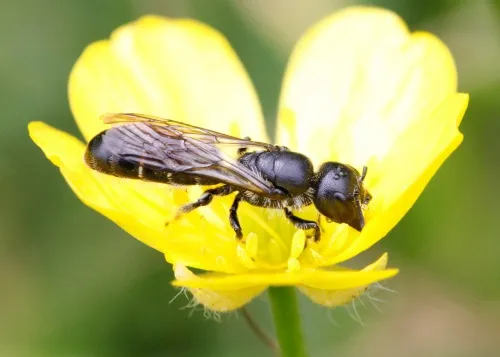
Sleepy Carpenter Bee
Chelostoma florisomne
A larger version of the more frequently encountered C. campanularum ; of the same general long, thin cylindrical shape, but with distinctive white bands of short hairs on the apices of the abdominal segments. The males also have a two-pronged peg on
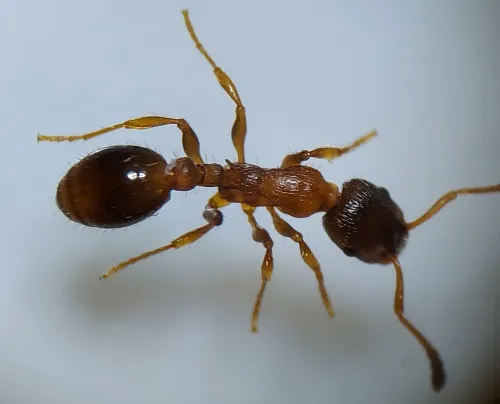
Slender Ant
Leptothorax acervorum
A small myrmicine ant with distinct propodeal spines and three-segmented antennal clubs. Reddish to brownish yellow with the head and gaster appearing much darker. Adult workers are typically 3 to 3.5 mm total in length. Can be confused with Temnotho
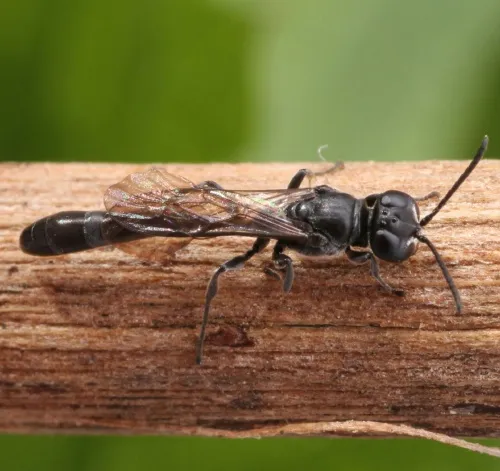
Slender Wood Borer Wasp
Trypoxylon attenuatum
Length about 8 mm. A blackish, slender bodied wasp. Most solitary bees and wasps are difficult to identify, and can rarely be identified from photos taken in the field. All red-rated records should include a photo or set of photos of the specimen, il
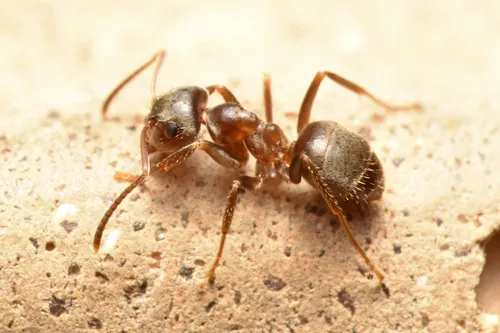
Small Black Ant
Lasius niger
Worker length: 3.4 - 5 mm, male length: 3.5 - 4.7 mm, queen length: 8 - 9 mm. Workers (non-reproductive females) are blackish-brown in colour and covered in small hairs. Winged reproductive females (queens) are almost twice as big as the workers, are
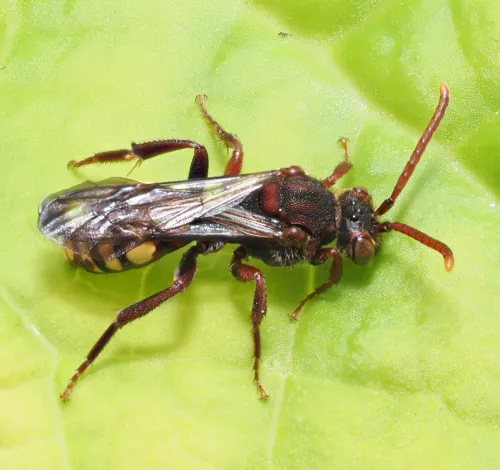
Small Nomad Bee
Nomada flavoguttata
This is one of the smallest species of Nomada. A small reddish nomad usually with small yellow spots on the sides of tergite 2 and 3. Females have extensive red markings on the head (usually surrounding the eyes), and the sides of the thorax, plus a
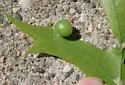
Small Oak Apple Gall Wasp
Amphibolips quercusostensackenii
Develops in galls on leaves of the red oak group: "Small oak apple, 7-9 mm, projecting on both sides of leaf, larval cell supported by fibers." Weld lists Q. coccinea, velutina, palustris, falcata, and imbicaria as hosts. "Globose, somewhat oblong, h
Small Oak Spindle Gall Wasp
Andricus chinquapin
Produces stalked galls emerging from veins of leaves in the white oak group ( Quercus bicolor, Q. alba, Q. prinus, Q. stellata ; Felt also lists Q. macrocarpa ). Adults emerge from galls in spring.
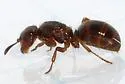
Smaller Yellow Ant
Lasius claviger
Identification: Pale, yellow-orange color and strong lemon-verbena smell Most references are under the name Acanthomyops claviger This is the most widely distributed and common of the eastern species of "citronella ants"
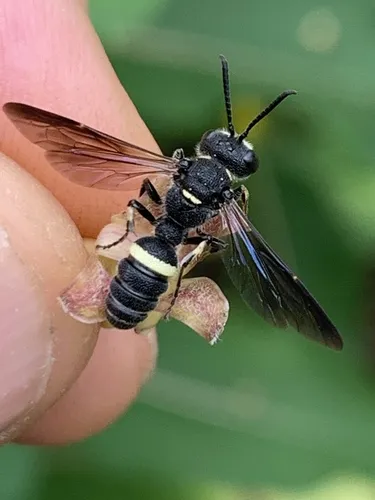
Smoky-winged Beetle-bandit
Cerceris fumipennis
Identification: Smoky brown wings, a creamy yellow band on T2, 3 pale spots on face in females, 2 in the males ♂ ♀ Mating preys mostly on Buprestidae. The wasp is used to detect EAB presence ( Careless et al. 2009 )
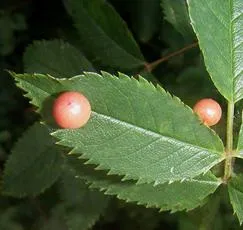
Smooth Pea Gall Wasp
Diplolepis eglanteriae/nervosa
The smooth rose pea gall is caused either by cynipid wasp Diplolepis nervosa or by Diplolepis eglanteriae on the leaves of the Dog-rose ( Rosa canina ). The galls are identical and Diplolepis eglanteriae cannot be recorded from the gall; adults have
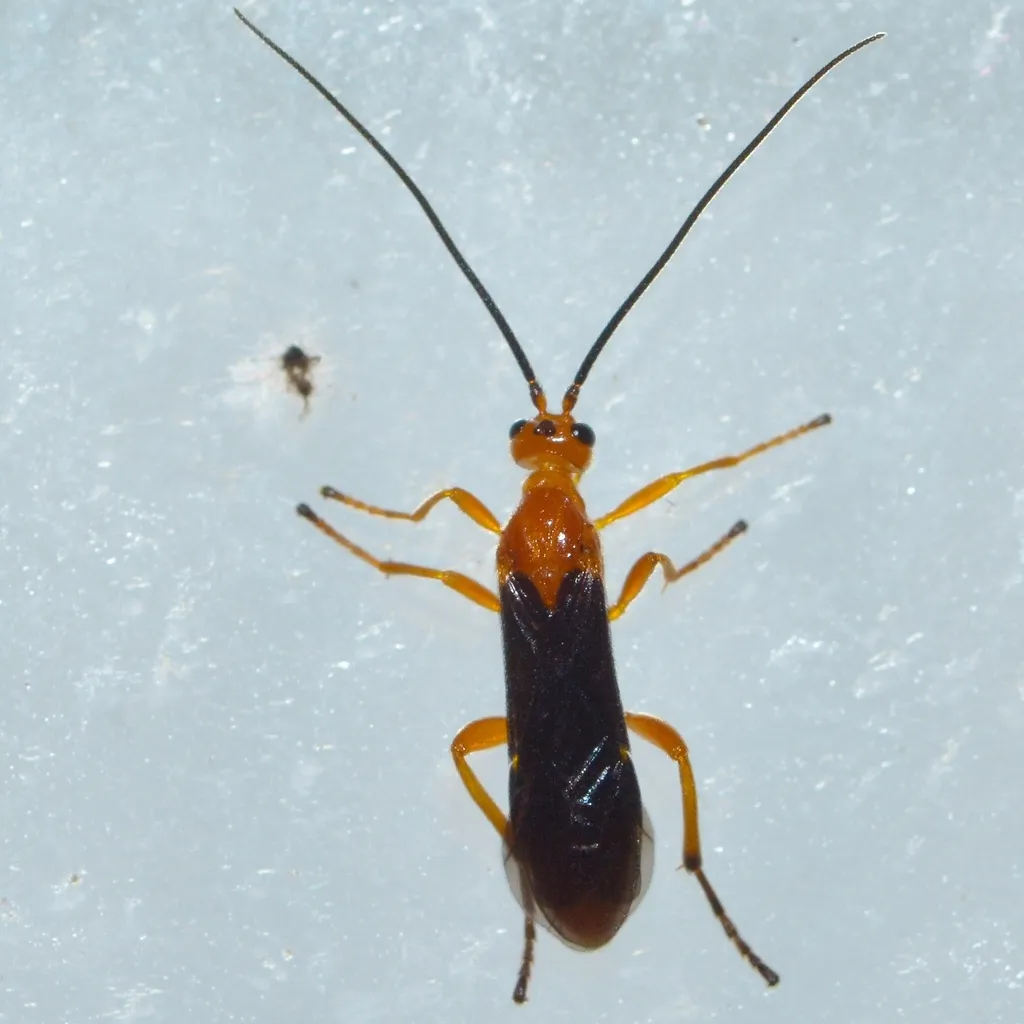
Smooth-headed Mummy Wasp
Aleiodes politiceps
Identification: Color pattern very distinctive: orange with black wings, the legs with black at the ends, a diagnostic pattern for this species. The color is brighter in the living specimens, but the pattern is the same as museum specimens. It is one
Solanum Exomalopsis
Exomalopsis solani
Nest communally in hard packed horizontal ground. There is evidence of cooperativity.
Solenopsis globularia
Solenopsis globularia
Identification: enormous globular postpetiole distinctive
Solenopsis pergandei
Solenopsis pergandei
Identification: Queens are yellow and very large (among the small Solenopsis) at ~4.5mm. In workers, the short head, coarse punctures on the head, and the perfectly round postpetiole separate this species from other US thief ants.
Solenopsis picta
Solenopsis picta
Identification: A tiny Solenopsis, usually with bicolored workers, as opposed to other thief ants in the US that have either fully dark or pale yellow workers. Much smaller than the "fire ants".
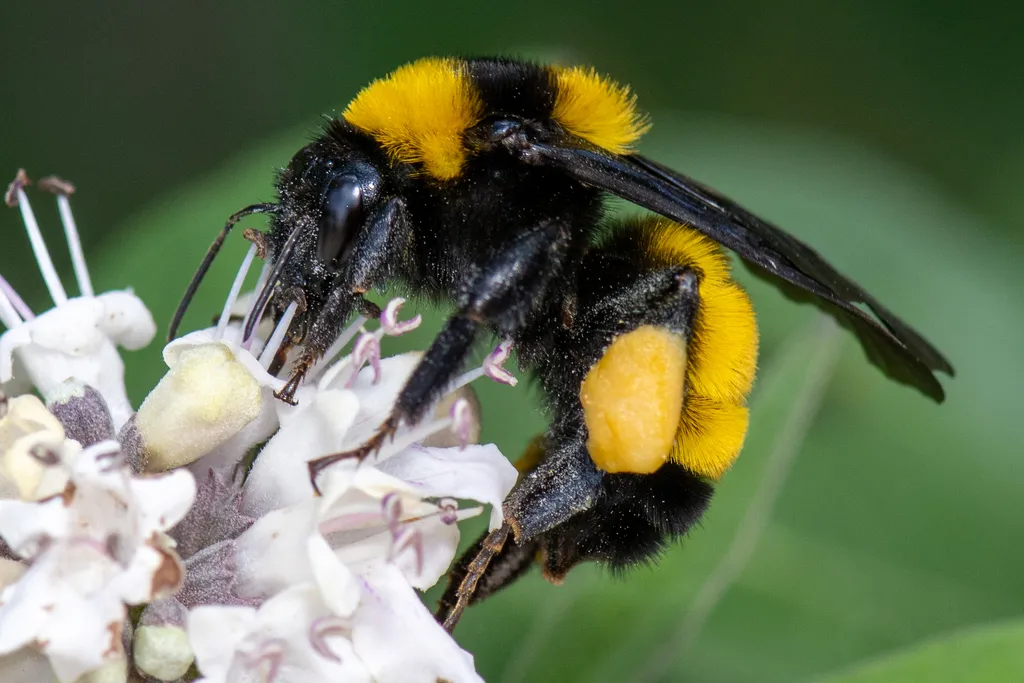
Sonoran Bumble Bee
Bombus sonorus
Identification: Similar to the very closely related B. pensylvanicus , but in B. sonorus the dorsum of the thorax is yellow posteriorly and there is a distinct black interalar band, whereas in typical B. pensylvanicus , the dorsum of the thorax is la
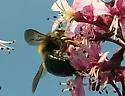
Southern Carpenter Bee
Xylocopa micans
Identification: Male similar to the more widespread X. virginica , but male micans has greenish-blue abdomen rather than purple. Female micans is black and with purple body (all black in virginica ).
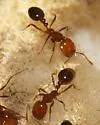
Southern Fire Ant
Solenopsis xyloni
Identification: Generally similar to S. invicta in color and morphology. Differentiation is based on the lack of median tooth on the clypeus. Due to variation within colonies, several major workers should be examined in order to ensure that this feat
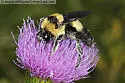
Southern Plains Bumble Bee
Bombus fraternus
Identification: Black interalar band broad and well defined. T3 black (as opposed to yellow in auricomus and sonorus). T2 entirely yellow-tan (lacking the black apicolateral corners typical of griseocollis). see detailed description of queen and male
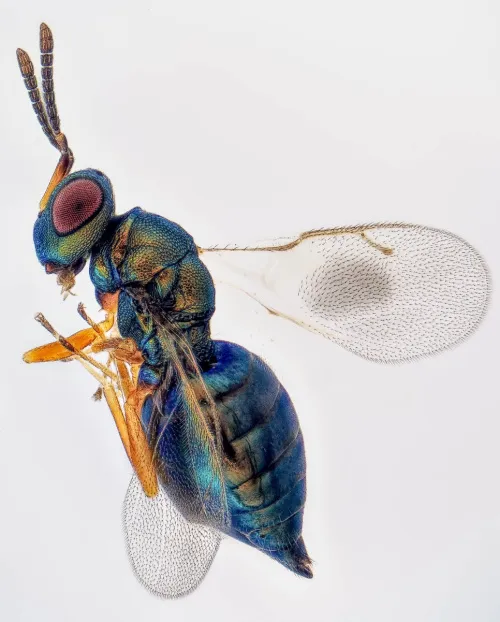
Spaniopus dissimilis
Spaniopus dissimilis
Body length 1.5–2.5mm. Head, mesosoma and metasoma dark metallic green with diffuse coppery lustre; antenna with scape yellowish-brown, flagellum entirely brown; legs yellowish-brown; fore with or without infuscate spot under M and S; ovipositor shea
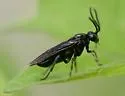
Sphacophilus cellularis
Sphacophilus cellularis
Identification: Females have much more orange and simple antennae (Dave Smith, 2.viii.2009)
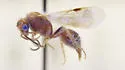
Sphaeropthalma noctivaga
Sphaeropthalma noctivaga
Identification: The male "has a smaller ventral mandibular tooth" than related species in the noctivaga-group - Kevin Williams
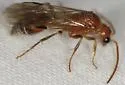
Sphaeropthalma pinalea
Sphaeropthalma pinalea
Identification: Male "can be recognized by the stark contrast of the darker back half of abdomen and lighter reddish T2, long marginal cell, and the lack of a tooth on the underside of the mandible. The female isn't published and described yet..." -
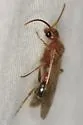
Sphaeropthalma pluto
Sphaeropthalma pluto
Identification: Male has "entirely black abdomen" and "small ventral mandibular tooth" - Kevin Williams
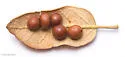
Sphaeroteras pulchripennis
Sphaeroteras pulchripennis
Identification: Induces small, brown, globular galls on leaves of Quercus arizonica, grisea, oblongifolia, rugosa, toumeyi, turbinella, and Quercus x undulata. They usually occur in rows next to the leaf midrib .
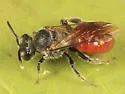
Sphecodes confertus
Sphecodes confertus
Identification: "sickle-shaped, elongate, simple mandibles, median groove (hairs within visible in image) of broad clypeus, broad head, and densely punctate scutum". Comment by John Ascher
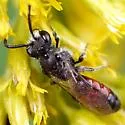
Sphecodes davisii
Sphecodes davisii
Identification: One of the larger species, with dense white hairs on the clypeus , a red metasoma with black tip (vs. black in males of many other species), and a rugose scutum anteriorly (comment by John Ascher).
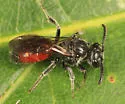
Sphecodes mandibularis
Sphecodes mandibularis
Gibbs et. al., 2017 says Mitchell 1960 uses the name Sphecodes stygius for this species.
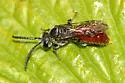
Sphecodes ranunculi
Sphecodes ranunculi
Identification: Short first flagellar segment, long second segment. Slender body form. ( Comment by John Ascher)
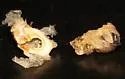
Sphecophaga vesparum
Sphecophaga vesparum
Has been introduced into New Zealand as a biological control of wasps.
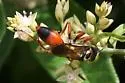
Sphex dorsalis
Sphex dorsalis
Identification: Females have a black head and thorax, with golden pubescence on these segments. The legs are red apart with the exception of the final tarsus and claws. The abdomen has T1-3 and T6 red and T4-5 black. They also can be separated from S
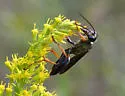
Sphex flavovestitus
Sphex flavovestitus
Identification: can be identified by black body, orange tibiae and tarsi, and strong golden pubescence (including on lateral areas of scutum): Sphex nudus also has tan legs but thorax dark without golden lateral marks on scutum, pubescence lighter-co
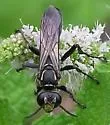
Sphex texanus
Sphex texanus
Identification: Females have a black head and thorax, with silvery-yellow pubescence on these segments. The legs are fully black, and the wingtips are darkened. The abdomen has T1-3 red and T4-6 black. Males are black with clear wings and yellowish-s
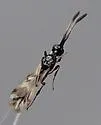
Spilomicrus exul
Spilomicrus exul
Identification: "Spilomicrus exul is unique among the Nearctic members of Spilomicrus because of the deeply maculate wings, strongly projecting occipital flange, distinct epomia,and unusually long petiole."
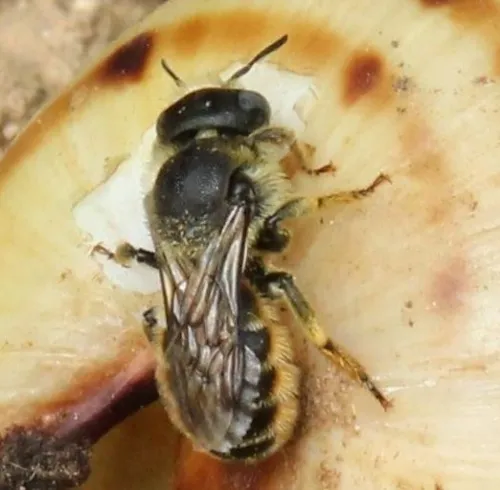
Spined Mason Bee
Osmia spinulosa
The taxonomy of Osmia spinulosa has been the subject of considerable debate. Recent genetic work carried out in Switzerland by Mueller, shows that this taxon should correctly be placed within the genus Osmia rather than left within Hoplitis . Records
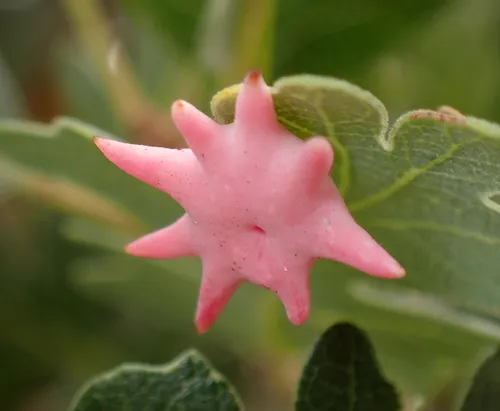
Spined Turbaned Gall Wasp
Antron douglasii
Identification: Gall occurring on white oaks ( Quercus lobata , engelmannii , douglasii , and various "scrub" oaks.)
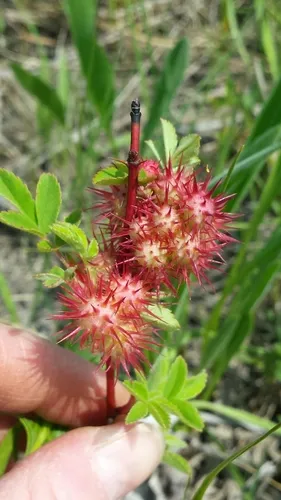
Spiny Rose Gall Wasp
Diplolepis bicolor
Causes galls on rose leaves: "Spherical, 7-10 mm. in dia., covered with spines about as long as diameter of the gall, the leaf obliterated if the cluster is large."
Split Twig Gall Wasp
Neuroterus asymmetricus
Identification: Larvae form integral stem galls on oaks in the "intermediate" oak group on the west coast. The intermediate oak group includes: Quercus chrysolepis (canyon live oak), Q. palmeri (Palmer's oak), Q. vacciniifolia (huckleberry oak). The
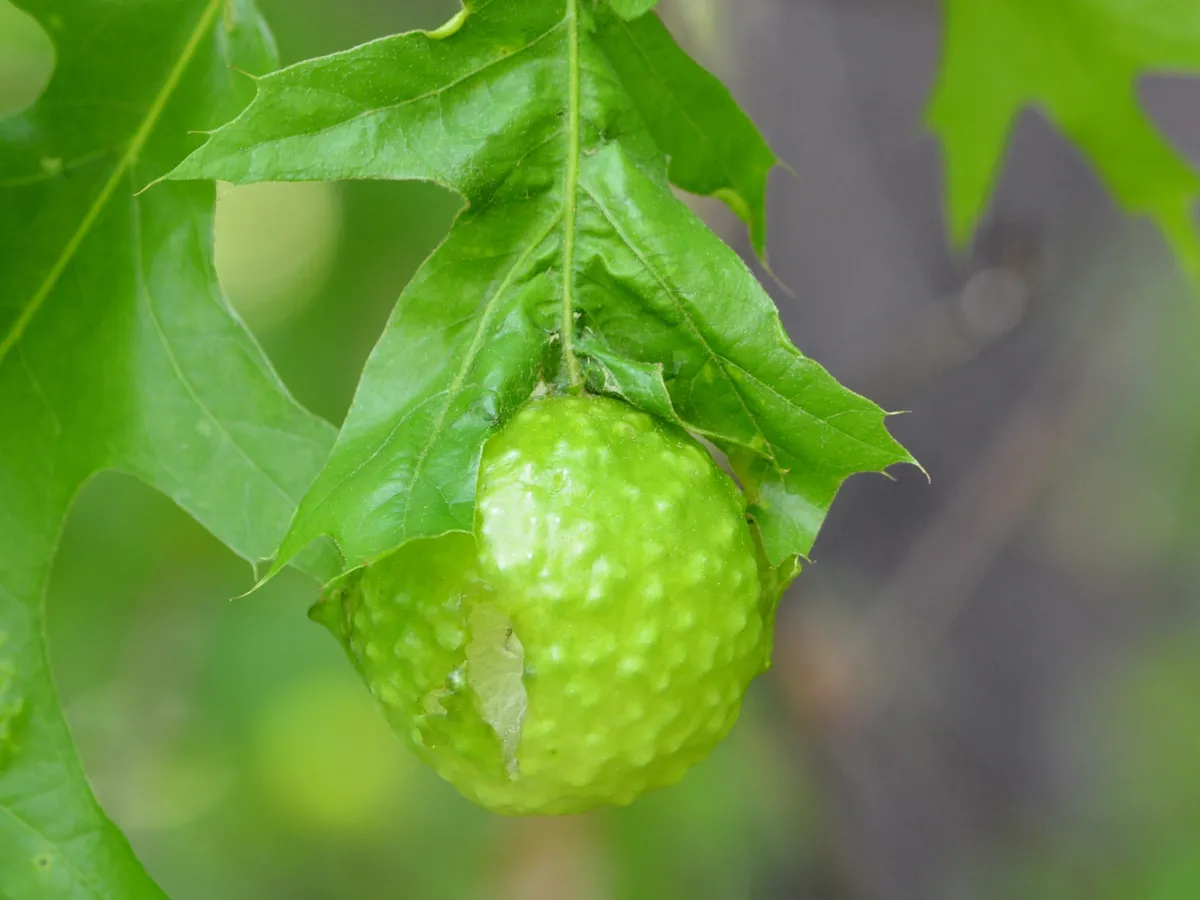
Spongy Oak Apple Gall Wasp
Amphibolips confluenta
Identification: Adults are small and dark cynipid wasps with oval, compressed abdomen. Larvae are small and globe-shaped. Galls are green at first, become tan and papery thin on the outside.
Spotted Nomad Bee
Nomada maculata
Identification: Male with mostly black thorax and head. Extensive yellow spots on distal terga. Kleptoparasite of Andrena (Melandrena) vicina and also likely related species
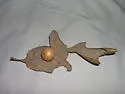
Spotted Oak Apple Gall Wasp
Atrusca quercuscentricola
Larvae develop in galls on the underside of post oak ( Quercus stellata ) leaves in the fall: "Globular, thin-shelled leaf gall, spotted and sometimes tinged with pink and covered with a white bloom, internally a filament supported cell, diameter 1/2
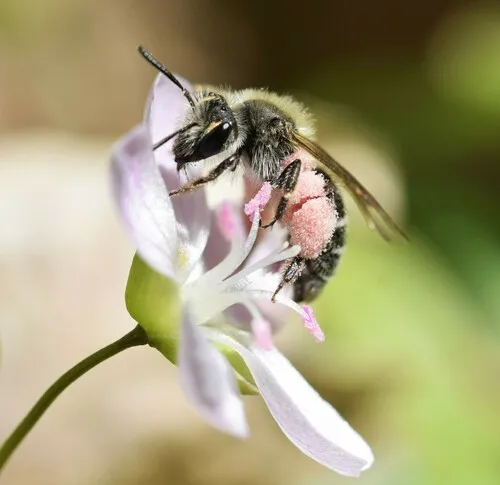
Spring Beauty Mining Bee
Andrena erigeniae
Identification: Male S8 distinctively bifurcating at its apex. Facial foveae thin. Host plant has pink pollen. Visits flowers of Claytonia virginica and other Claytonia spp. for pollen. It also visits Erigenia bulbosa and other flowers for nectar.
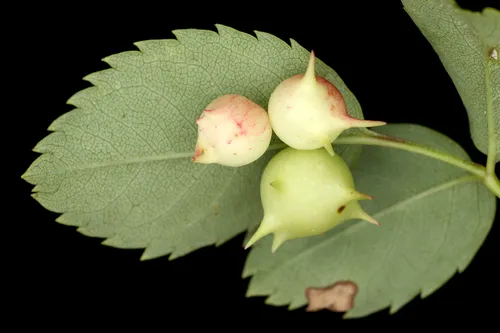
Sputnik Gall Wasp
Diplolepis nervosa
The cynipid wasp Diplolepis nervosa causes spiked 'sputnik' galls on the petioles, midrib or leaf blades of wild roses, usually underside but occasionally on the upper surface. It also forms smooth pea-galls, but these cannot be distinguished from th
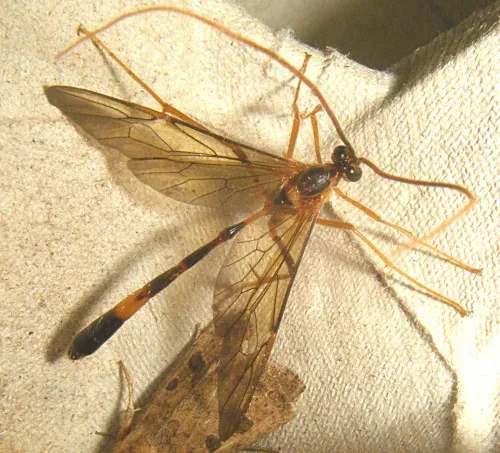
Stauropoctonus bombycivorus
Stauropoctonus bombycivorus
A striking, large ichneumon with exceptionally long, orange antennae and orange legs. The abdomen is black and orange. Various habitats in search of its host species. It is a parasitoid of the Lobster Moth. It could be also be attacking other suitabl
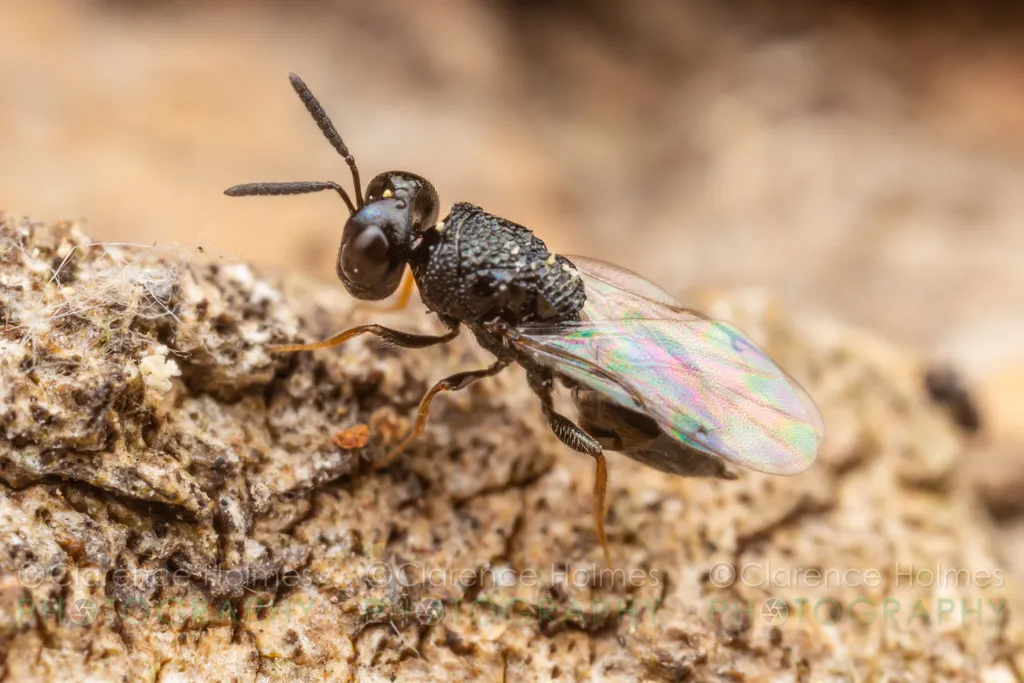
Steffanolampus salicetum
Steffanolampus salicetum
" Perilampus salicetum Steffan (Chalcidoidea) is removed to the monotypic Steffanolampus (gen. nov.). The type series was dubiously reported as being taken in either Austria or the Far East but the species has been subsequently found only from Quebec
Stelis costalis
Stelis costalis
Very similar to S. louisae , and there is much potential for confusion where this species overlaps (unfortunately potential overlap is not well known at this point).
Stelis lateralis
Stelis lateralis
Parasitizes (Alcidamea simplex ) Robertsonella simplex (Cresson); Hoplitis pilosifrons and H. producta
Stelis laticincta
Stelis laticincta
Cleptoparasitic on Megachile . The host is a Megachile (Chelostomoides) , likely M. angelarum .
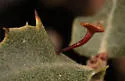
Stellar Gall Wasp
Andricus stellulus
Identification: Larvae induce stalked, cuplike galls on Quercus cornelius-mulleri (Muller's scrub oak), Quercus turbinella (shrub live oak), and Quercus dumosa (Nuttall's scrub oak). There is one larva per gall. Little is known about this wasp.
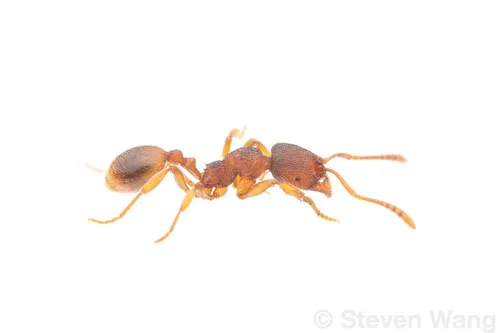
Stenamma schmittii
Stenamma schmittii
Identification: Minute eyes with few facets, net-like sculpture diagnostic for this eastern species
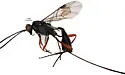
Stenarella domator
Stenarella domator
Identification: Distinguished from related Osprynchotina by black color with brownish-red legs, ovipositor at least 2.9 times metasomal length, and small cell 1+2Rs in fore wing. Parasitoid of wasps and bees with mud nests.
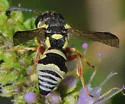
Stenodynerus toas
Stenodynerus toas
Identification: For genus - row of pits under T1 margin For species group - presence of humeral carina Female: Lunate white mark on base of clypeus, white spots of base of mandible, hind margin of pronotum black, pair of spots on T2, apical rim of T2
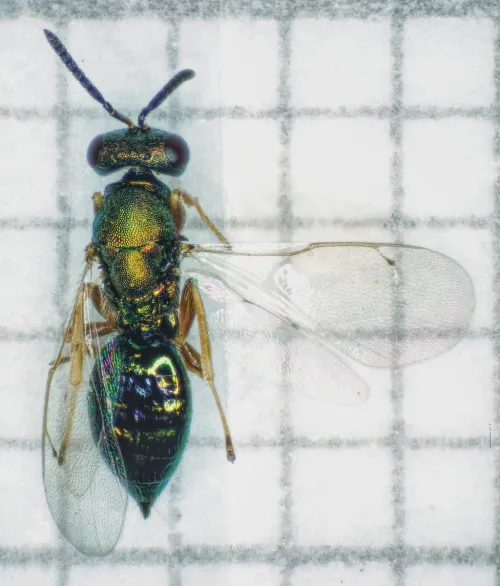
Stenomalina gracilis
Stenomalina gracilis
Genus Stenomalina : The lower edge of the clypeus (face) usually has distinct teeth or is deeply notched in the middle. The antennae are typically inserted at or slightly above the level of the lower eye margins. Like most Pteromalids, the antennae h
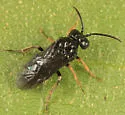
Stethomostus fuliginosus
Stethomostus fuliginosus
Probably introduced; occurs in Europe and Japan (comment by Dave Smith)
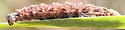
Stigmata Mummy Wasp
Aleiodes stigmator
Identification: Body mostly honey-yellow except metanotum and propodeum brown to black. Metasoma sometimes with first tergite dark brown- black. Can be distinguished from similar species by strongly pectinate tarsal claws, with teeth located along
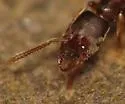
Stigmatomma pallipes
Stigmatomma pallipes
"Not a particularly rare ant, but rarely encountered because of its cryptic, subterranean life...It is a specialist predator of geophilomorph centipedes." - James C. Trager
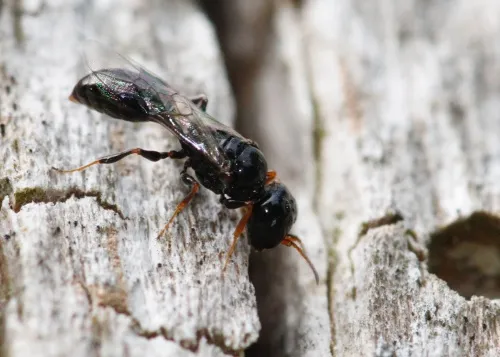
Stigmus pendulus
Stigmus pendulus
Most solitary bees and wasps are difficult to identify, and can rarely be identified from photos taken in the field. All red-rated records should include a photo or set of photos of the specimen, illustrating the key characters taken from a standard
Stizus brevipennis
Stizus brevipennis
Identification: This species looks superficially quite like Sphecius speciosus (the eastern cicada-killer wasp), but the abdominal banding is much less "ornate". These markings lack a hooked structure and are overall broader and smoother. The scutell
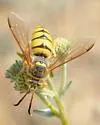
Stizus occidentalis
Stizus occidentalis
Identification: One of 4 western species and 2 extensively yellow species, S. occidentalis and S. iridis (range: UT, CA, AZ) share a largely yellow, red, and black coloration. S. occidentalis can be separated from S. iridis by its straighter margin o
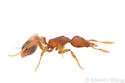
Strumigenys dietrichi
Strumigenys dietrichi
Identification: Due to its wide distribution there can be some variation in the clypeal hairs, sometimes with some having slightly expanded tips but never as bulbous as in S. ornata . Very similar to S. boltoni , but boltoni has a clypeus that is upt
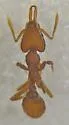
Strumigenys mixta_nr
Strumigenys mixtanr
S. mixta recorded in AZ in Booher 2021 as nonnative, but has subtle differences with central American mixta -- calling it mixta_nr for now
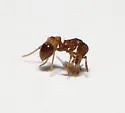
Strumigenys pulchella
Strumigenys pulchella
Identification: Flagellate apiscrobal hair is diagnostic within the pulchella group. This is the wiry thin hair sticking out the side of the face at the top of the antennal scrobes, highlighted in green here:
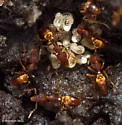
Strumigenys reflexa
Strumigenys reflexa
Identification: The arrangement of clypeal hairs is diagnostic within the pulchella-group.
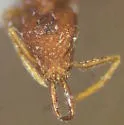
Strumigenys silvestrii
Strumigenys silvestrii
Identification: In respects to S. louisianae : longer (less heart shaped) head, less "scaly" hairs on the head, different shaped lamellae underneath the propodeal spines. Workers also have much smaller eyes. Most easily confused with Strumigenys loui
Strumigenys superstes
Strumigenys superstes
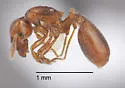
known from a single queen specimen described here- Booher, D. and Uhey, D., 2020. New Native Trap-Jaw Ant, Strumigenys Smith1, from the Neotropical Excisa Species Group Discovered in a Disjunct Region and Climate on the Colorado Plateau. Southwestern
Strumigenys talpa
Strumigenys talpa
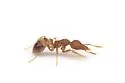
nominal species of the talpa-group, which includes Strumigenys archboldi, Strumigenys filitalpa, Strumigenys talpa, and Strumigenys wrayi
Succulent Gall Wasp
Neuroterus fragilis
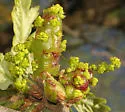
Identification: Ron Russo: "These galls are always succulent looking and not cranial, twisted, hairy as in N. washingtonensis ." Host plants include: Quercus durata , Quercus berberidifolia (and likely other scrub oaks), Quercus douglasii , and Querc
Succulent Oak Gall Wasp
Dryocosmus quercuspalustris
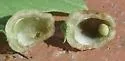
Galls are fleshy walled and hollow, except for the free-rolling cell about 2.5mm in diameter
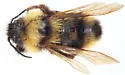
Suckley's Cuckoo Bumble Bee
Bombus suckleyi
Identification: Hairs of female face black unlike insularis. Lateral projections of female sterna more pronounced than in other species. A photo identified as a female suckleyi in the Williams et al. identification guide appears to be fernaldae inste
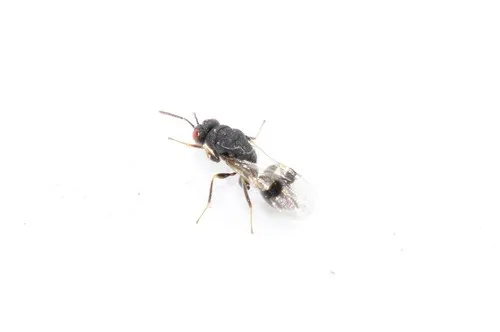
Sycophila biguttata
Sycophila biguttata
Length 2-3.5mm. Forewing with a distinctive long bent cloud; stigmal vein shorter than marginal vein. Non-metallic, dark head & thorax with or without pale markings; dark brown gaster; dark & paler legs; dark antennae; abdomen petiolate; five tarsal
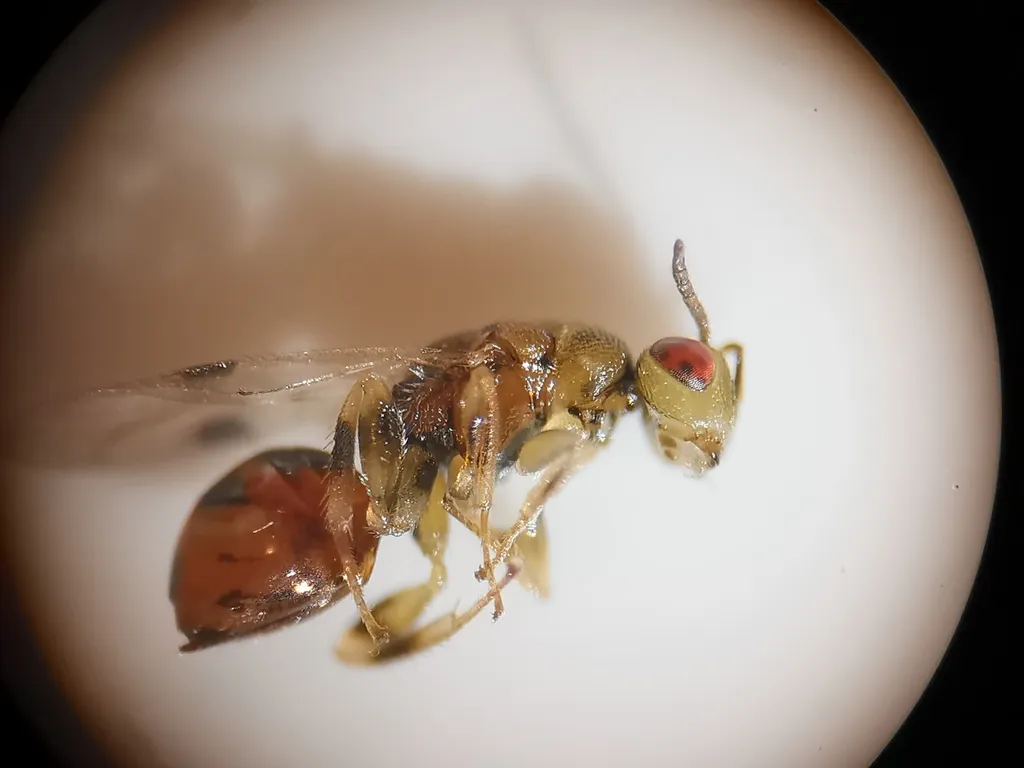
Sycophila mellea
Sycophila mellea
Predominantly pale species, propodeum distinctly pale with dark markings. Pronotum about 1.5 times as wide as long. Forewing postmarginal vein thickened, partly fused with stigmal vein, basal cell usually bare, rarely a few hairs present. Unless iden
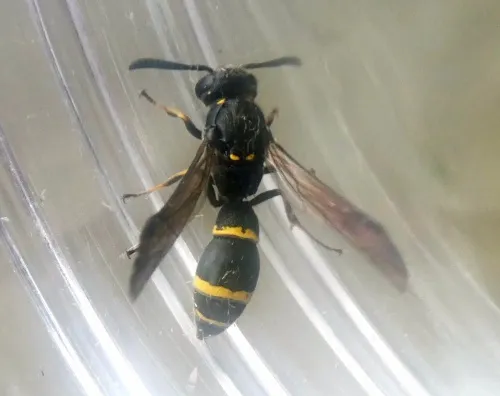
Symmorphus bifasciatus
Symmorphus bifasciatus
This species has a black and yellow banded abdomen. Adults seem to prefer damp places, often near streams and ditches, and their flight paths are associated with patches of foliage in full sunlight. May to October; but mainly from June to August, wit
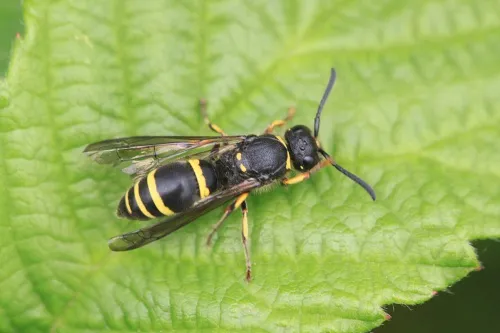
Symmorphus gracilis
Symmorphus gracilis
This black and yellow banded wasp is very similar to Symmorphus crassicornis and expert help is needed with identification. Adults seem to prefer damp places, often near streams and ditches and their flight paths are associated with patches of foliag
Symmorphus projectus
Symmorphus projectus
Identification: Has more projecting (name!) pronotal angles than other congeners
Synergus gallaepomiformis
Synergus gallaepomiformis
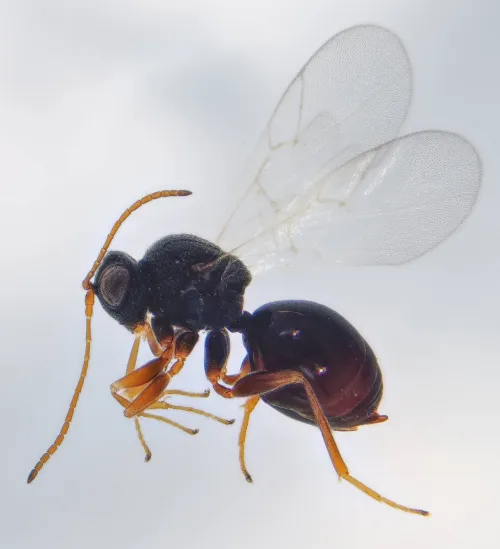
Length 1.5-3.5mm. Head black, except lower face which usually yellow to orange red or red; mesosoma black, antenna and legs entirely yellow or yellow-red. Metasoma black dorsally and brown laterally. Wing veins distinct, brown. Body with sparse white
Syrphoctonus tarsatorius
Syrphoctonus tarsatorius
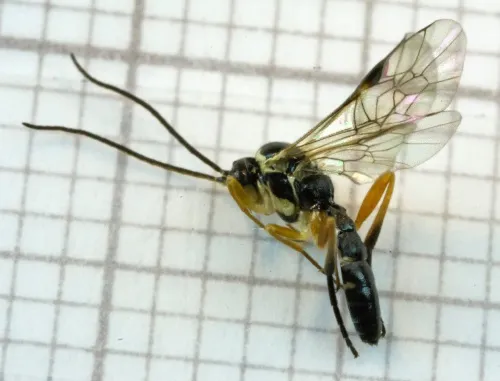
Diplazontinae wasps are recognized from their three-toothed (tridentate) mandibles with a notched upper tooth, a box-like first abdominal segment). The upper tooth of the mandibles is wide and notched, making the mandibles look three-toothed. The cly
Syscia augustae
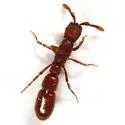
Syscia augustae
Type Locality: on the banks of Waller Creek, Austin, Travis Co., Texas
Syzeuctus comptus
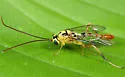
Syzeuctus comptus
Identification: In the original description, distinguished from Meniscus elegans (now Syzeuctus elegan ) by the red hind femora.
Tachinaephagus zealandicus
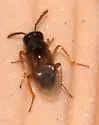
Tachinaephagus zealandicus
"A gregarious larval endoparasitoid of muscoid flies" -- Geden and Skovgård 2014.
Tachysphex pechumani
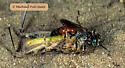
Tachysphex pechumani
Identification: Our only member of the genus in which the female has orange antennae
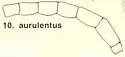
Tachytes aurulentus
Tachytes aurulentus
Identification: The males have the basal antennae segments F2 to F4 slightly convex, on the ventral side. ♂ Compare with Tachytes grisselli (below)
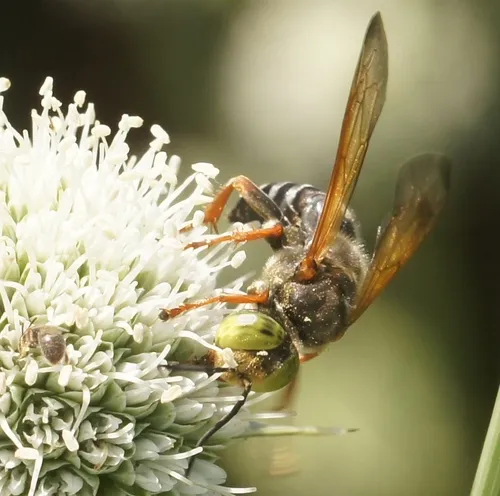
Tachytes distinctus
Tachytes distinctus
Identification: Hind femora have no patches of long hairs on ventral side. Hind femora are mostly red or mostly black, depending on variety/gender. (males have mostly black) Hind tibiae are mostly red or all-red. Mandibles are light-colored. Body all
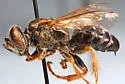
Tachytes grisselli
Tachytes grisselli
Identification: Males have the basal antennae segments highly curved, on the ventral side. ♂
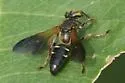
Tachytes guatemalensis
Tachytes guatemalensis
Identification: ♂ ♀ Mating pair: ♀♂ "One of the more easily recognized Tachytes species: reddish wing base, only two abdominal segments with silvery bands (female), scutum without silvery pubescence." --Matthias Buck ( comments )
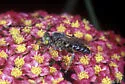
Tachytes pennsylvanicus
Tachytes pennsylvanicus
Identification: Most members of the pepticus species group are very difficult to identify to species, from an image alone. (both genders) Some females of the pepticus species group are not identifiable to species, without dissection or DNA verificati
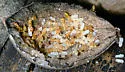
Tapinoma litorale
Tapinoma litorale
Not a rare ant, but rarely seen because of its small size and twig-dwelling habits (often in mangroves)
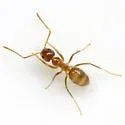
Tawny Crazy Ant
Nylanderia fulva
Identification: How to identify Nylanderia , crazy ant spp. - Alex Wild, Myrmecos Todd Staples, Texas Commissioner of Agriculture, suspects this to be a potentially serious agricultural pest. These ants show likelihood of being transported through mo
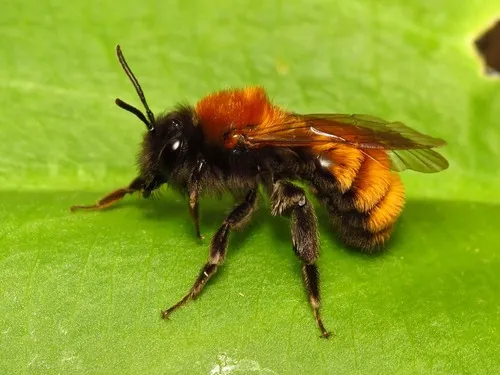
Tawny Mining Bee
Andrena fulva
The males are 10 to 12 mm and the females 8 to 10 mm long. The females are covered with fox red hair on their backs and black on the underside, whilst the males are more slender and yellower in appearance. Gardens on Currants, Gooseberries and other
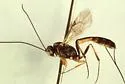
Temelucha interruptor
Temelucha interruptor
Palearctic species introduced to control the European Pine Shoot Moth ( Rhyacionia buoliana ) . However, research subsequently showed the species to be cleptoparasitic upon the braconid Orgilus obscurator , also introduced to control R. buoliana .
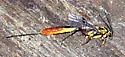
Temelucha sinuata
Temelucha sinuata
Identification: Noted particularly for its large size, brilliant coloration, and sinuate ovipositor
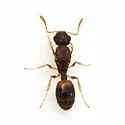
Temnothorax ambiguus
Temnothorax ambiguus
Identification: The typical species of old fields and prairie (comment by James C. Trager).
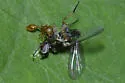
Temnothorax caryaluteus
Temnothorax caryaluteus
Identification: The workers of this species can be differentiated from other members of the Temnothorax schaumii-group by range and the length of the spines. The range of T. caryaluteus is primarily allopatric to the northern T. ambiguus . It can be
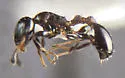
Temnothorax obturator
Temnothorax obturator
Identification: Rounder petiole than most other Temnothorax (as opposed to angled), small propodeal spines united by a carina.
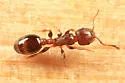
Temnothorax schaumii
Temnothorax schaumii
"An arboreal species with short spines and the head shining, the latter character state visible at low magnification in the field. Nests are usually in dead branches or under loose bark on live hardwoods or conifers, usually the former. Can be either
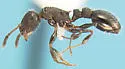
Temnothorax texanus
Temnothorax texanus
Widely associated with ecologically intact, sandy-soil grassland and open woodland habitats in the US Southeast, extending well north along the Atlantic Coast and in the Mississippi Valley. (comment by James C. Trager) "Nests are in soil, usually onl
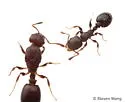
Temnothorax whitfordi
Temnothorax whitfordi
Identification: Smooth and shiny dark brown Temnothorax with 11 segmented antennae, distinctive within the subgenus. Similar to T. emmae, differing in minor sculpture differences and color. More aggressive than typical Temnothorax
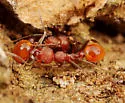
Tennessee Collared Ant
Aphaenogaster tennesseensis
Identification: " Aphaenogaster tennesseensis is relatively large Aphaenogaster species whose workers are dark reddish-brown, with heavy sculpture, long curved propodeal spines, and have the postpetiole broader than long and suboval in shape. The que
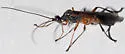
Terminal Mummy Wasp
Aleiodes terminalis
Identification: Body 2-colored, orange and black. T1-2 orange with following segments black. Ocelli small, distance between eye and lateral ocellus about equal to ocellus width. Hind tibia black with light yellowish-white band on basal third. Hind ta
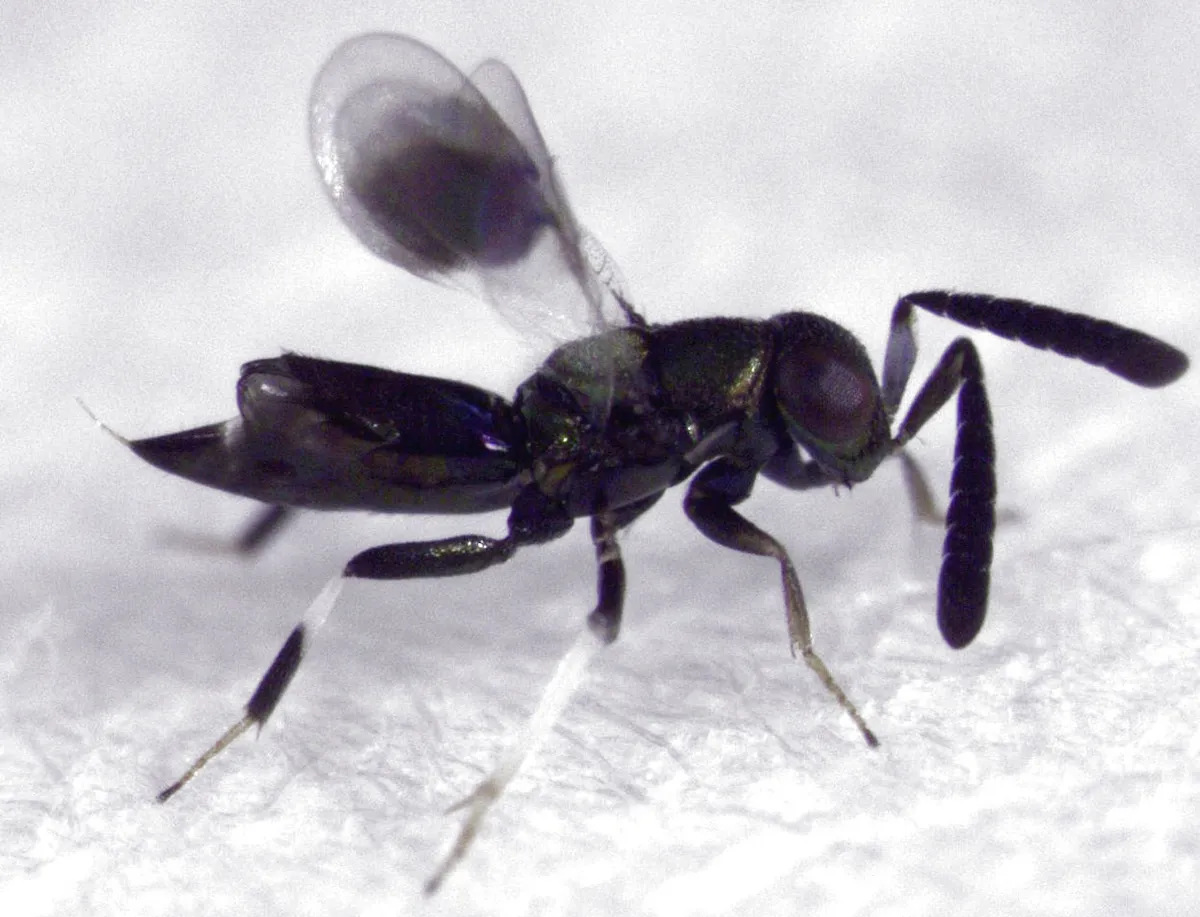
Tetracnemoidea sydneyensis
Tetracnemoidea sydneyensis
introduced into so. CA in 1933 to control the Long-tailed Mealybug ( P. longispinus
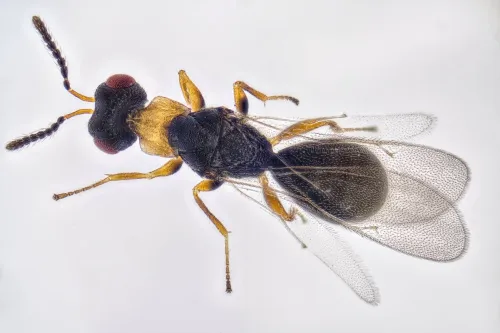
Tetramesa fulvicollis
Tetramesa fulvicollis
Unless identified by a recognised expert, photos are required and the specimen should be examined with a microscope. In the comments box, state the key or ID method used and describe the size and identifying characters. Tetramesa species are generall