
Tawny Mining Bee
Andrena fulva
This record describes Andrena fulva (species). Recorded family: Andrenidae. Recorded order: Hymenoptera.
Identification and Appearance
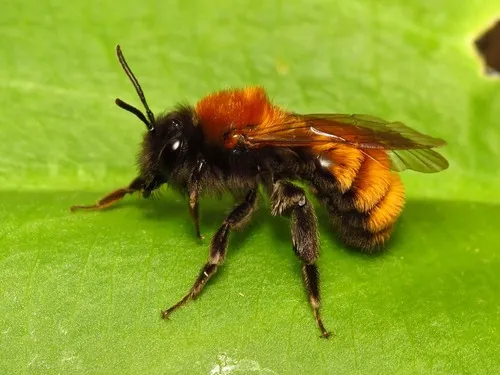
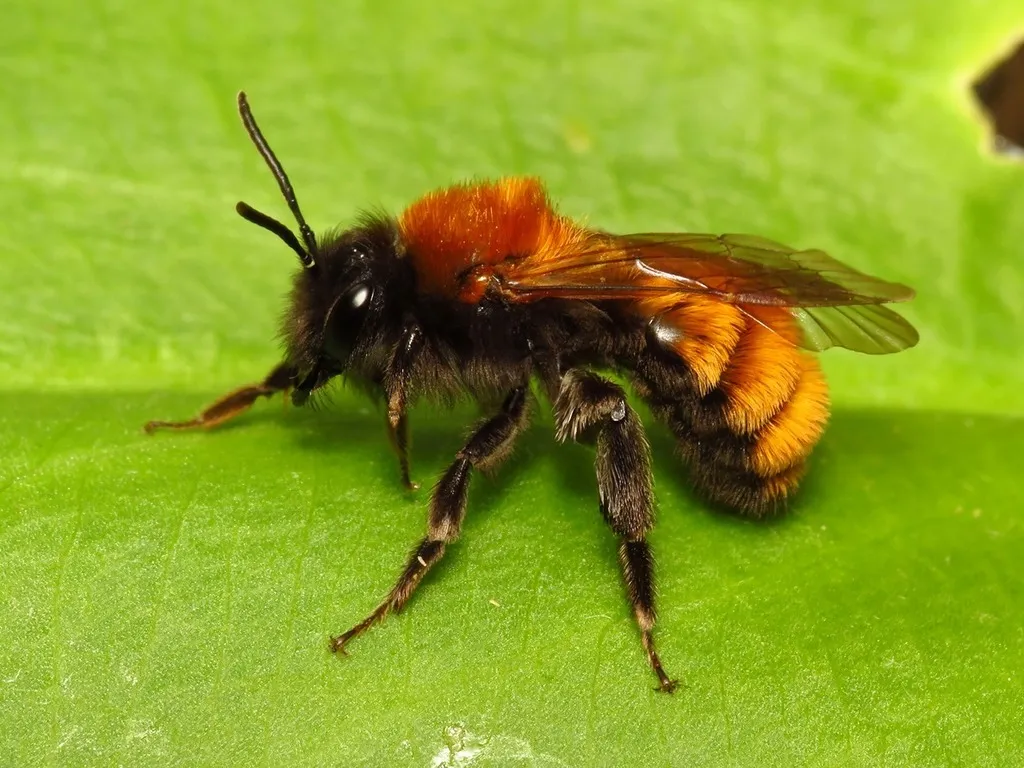
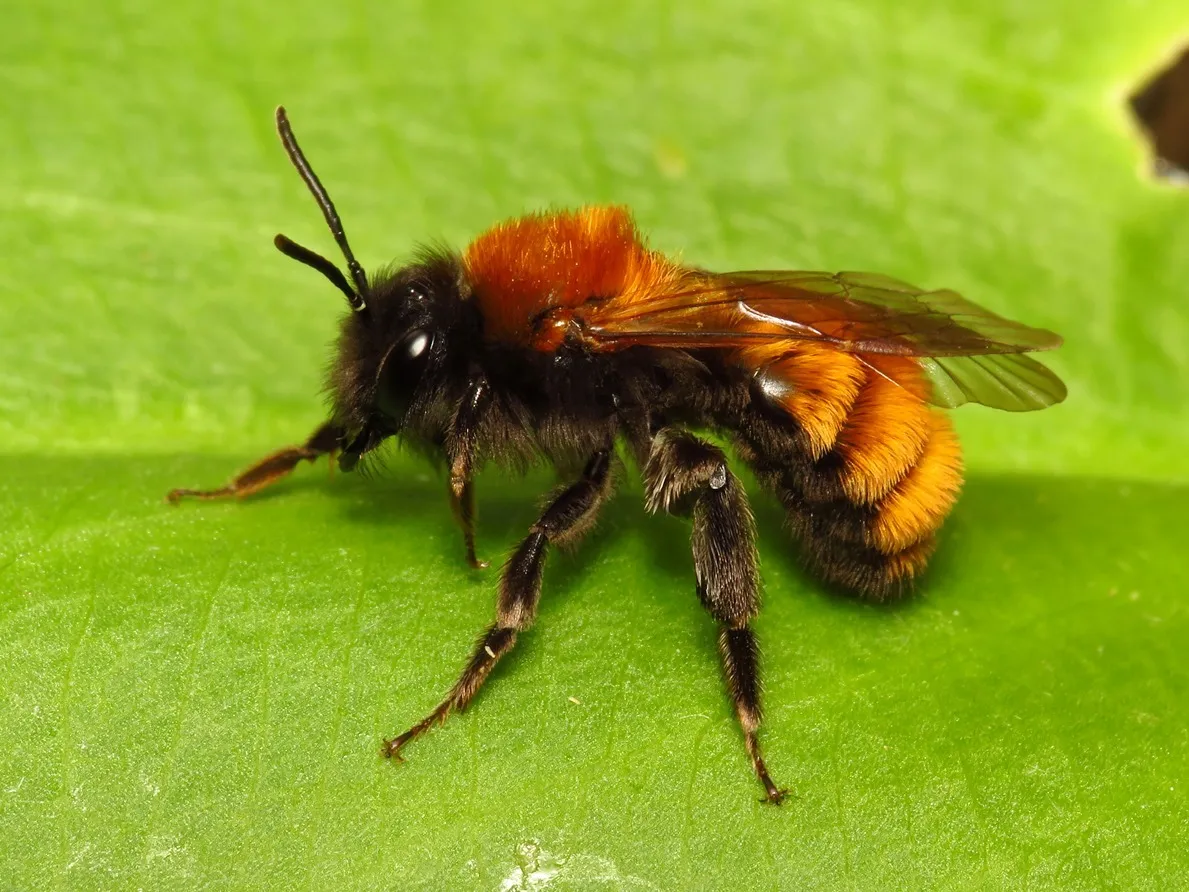
The males are 10 to 12 mm and the females 8 to 10 mm long. The females are covered with fox red hair on their backs and black on the underside, whilst the males are more slender and yellower in appearance. Gardens on Currants, Gooseberries and other Ribes species. It mates in spring, after which the male dies and the female starts to build a nest. Sometimes more than a hundred females build nests in a few square metres but the Tawny Mining Bee normally does not create a colony: each female has her own nest. The nest is a vertical shaft 200 to 300 mm (8 to 12 in) with several brood cells branching off it. The female fills these cells with a mixture of nectar and pollen, on which she lays one egg in each cell. The larva hatches within a few days, grows quickly and pupates within a few weeks. The adults emerge in spring after hibernation. Widespread and common in England, fewer records from elsewhere.
Wikipedia reference for Andrena fulva: http://en.wikipedia.org/wiki/Tawny_mining_bee.
Classification
- Kingdom
- Animalia
- Phylum
- Arthropoda
- Class
- Insecta
- Order
- Hymenoptera
- Family
- Andrenidae
- Genus
- Andrena
Imported taxonomy record. Source availability varies; see the source references and editorial policy below.
Habitat and Range
Habitat
Gardens on Currants, Gooseberries and other
Seasonal Activity
March to May
Additional species information
Recorded status
Widespread and common in England, fewer records from elsewhere.
About Flies: the wider group
Order-level background for Hymenoptera, the group containing Andrena fulva. Species-specific details appear above.
Group overview
Hymenoptera includes over 150,000 described species of ants, bees, wasps, and sawflies. Earth harbors approximately 20 quadrillion (20×10^15) ants, with a combined biomass of ~12 megatons of dry carbon - exceeding the combined biomass of all wild birds and mammals (PNAS, 2022).
Ecological role of the group
About 35% of the world's food crops depend on animal pollinators. The chocolate industry, valued at over $100 billion, depends on pollinating flies and midges. Ants are the dominant soil engineers in most terrestrial ecosystems, turning more soil than earthworms in many habitats.
Economic and practical significance of the group
Pollinators contribute $235-577 billion worth of annual global food production (FAO). In the U.S., bee pollination alone benefits crops valued at $18 billion annually, and honey bees are responsible for $5.4 billion in agricultural productivity. Between April 2023-2024, 55.1% of managed honey bee colonies were lost. The U.S. bee population dropped from 5 million to 2.5 million.
Recorded sources for this group: FAO, USDA, EPA, PNAS (2022), US Fish & Wildlife Service. Imported estimates may describe particular regions or reporting periods.
Photos of Tawny Mining Bee (3)
Frequently Asked Questions About Tawny Mining Bee
What is Tawny Mining Bee?
Tawny Mining Bee (Andrena fulva) is a species in the family Andrenidae, within the order Hymenoptera.
Where is Tawny Mining Bee found?
Habitat: Gardens on Currants, Gooseberries and other
When is Tawny Mining Bee active?
Tawny Mining Bee: seasonal activity - March to May.