
Stenomalina gracilis
This record describes Stenomalina gracilis (species). Recorded family: Pteromalidae. Recorded order: Hymenoptera.
Identification and Appearance
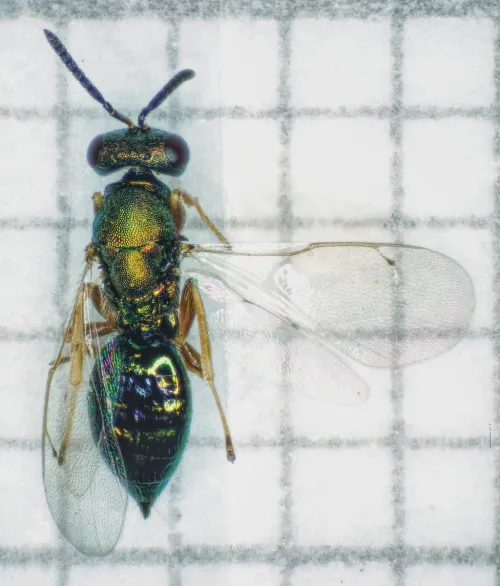
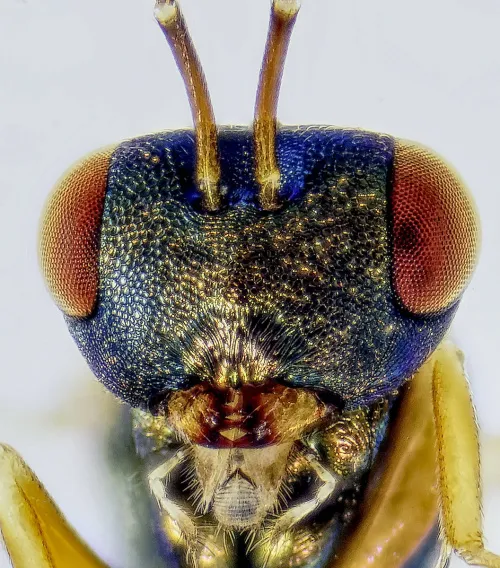
Genus Stenomalina : The lower edge of the clypeus (face) usually has distinct teeth or is deeply notched in the middle. The antennae are typically inserted at or slightly above the level of the lower eye margins. Like most Pteromalids, the antennae have 13 segments, but in Stenomalina the flagellum is relatively slender and elongated with two ring segments (anelli) and six funicle segments. The neck area of the pronotum has a distinct, sharp ridge (carina) along the front edge. The propodeum (rear thorax) lacks a nucha (a neck-like projection at the back). Stenomalina gracilis : Length 2-3.5mm. Relatively elongate and slender compared to other pteromalids. Typically a brilliant metallic green. The legs often have pale yellow or testaceous (brownish-yellow) sections, the coxae usually match the metallic body color. The marginal vein is significantly longer than the stigmal vein. The anterior margin of clypeus normally with a median tooth and a projection on either side of it. Around 15 UK Stenomalina species, difficult to distinguish. Unless identified by a recognized expert, explain how the specimen was identified and submit photos of key features. Endoparasitoid of various Diptera, mainly Agromyzidae, Cecidomyiidae and Chloropidae. The commonest member of the genus. Widespread but rarely recorded. No additional images available for this species.
Classification
- Kingdom
- Animalia
- Phylum
- Arthropoda
- Class
- Insecta
- Order
- Hymenoptera
- Family
- Pteromalidae
- Genus
- Stenomalina
Imported taxonomy record. Source availability varies; see the source references and editorial policy below.
Habitat and Range
Habitat
Often overwinters in evergreens.
Seasonal Activity
All year.
Diet and Behavior
Life History
Endoparasitoid of various Diptera, mainly Agromyzidae, Cecidomyiidae and Chloropidae.
Additional species information
Recorded status
The commonest member of the genus. Widespread but rarely recorded.
About Flies: the wider group
Order-level background for Hymenoptera, the group containing Stenomalina gracilis. Species-specific details appear above.
Group overview
Hymenoptera includes over 150,000 described species of ants, bees, wasps, and sawflies. Earth harbors approximately 20 quadrillion (20×10^15) ants, with a combined biomass of ~12 megatons of dry carbon - exceeding the combined biomass of all wild birds and mammals (PNAS, 2022).
Ecological role of the group
About 35% of the world's food crops depend on animal pollinators. The chocolate industry, valued at over $100 billion, depends on pollinating flies and midges. Ants are the dominant soil engineers in most terrestrial ecosystems, turning more soil than earthworms in many habitats.
Economic and practical significance of the group
Pollinators contribute $235-577 billion worth of annual global food production (FAO). In the U.S., bee pollination alone benefits crops valued at $18 billion annually, and honey bees are responsible for $5.4 billion in agricultural productivity. Between April 2023-2024, 55.1% of managed honey bee colonies were lost. The U.S. bee population dropped from 5 million to 2.5 million.
Recorded sources for this group: FAO, USDA, EPA, PNAS (2022), US Fish & Wildlife Service. Imported estimates may describe particular regions or reporting periods.
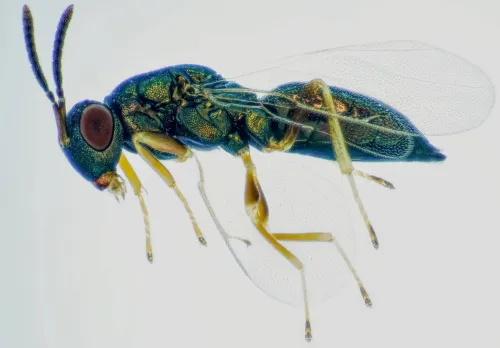
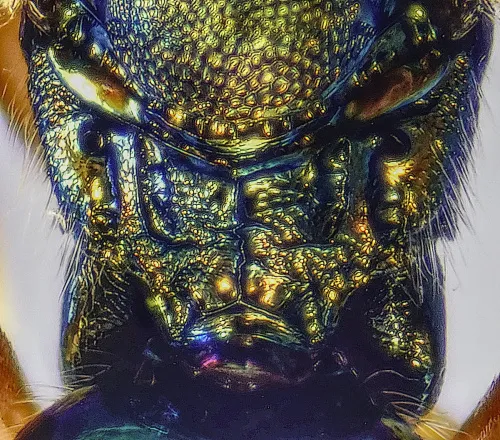
Photos of Stenomalina gracilis (4)
Frequently Asked Questions About Stenomalina gracilis
What is Stenomalina gracilis?
Stenomalina gracilis is a species in the family Pteromalidae, within the order Hymenoptera.
How big is Stenomalina gracilis?
2-3.5mm. Relatively elongate and slender compared to other pteromalids. Typically a brilliant metallic green. The legs often have pale yellow or testaceous (brownish-yellow) sections, the coxae usually match the metallic body color. The marginal vein is significantly longer than the stigmal vein. The anterior margin of clypeus normally with a median tooth and a projection on either side of it.
Where is Stenomalina gracilis found?
Habitat: Often overwinters in evergreens.
When is Stenomalina gracilis active?
Stenomalina gracilis: seasonal activity - All year..
What is the life cycle of a Stenomalina gracilis?
Endoparasitoid of various Diptera, mainly Agromyzidae, Cecidomyiidae and Chloropidae.