
Flies
Order Hymenoptera
The Flies (Order Hymenoptera) includes 5,194 species across 102 families and 1,491 genera in our directory.
About Flies
Hymenoptera includes over 150,000 described species of ants, bees, wasps, and sawflies. Earth harbors approximately 20 quadrillion (20×10^15) ants, with a combined biomass of ~12 megatons of dry carbon - exceeding the combined biomass of all wild birds and mammals (PNAS, 2022).
Economic Impact
Pollinators contribute $235-577 billion worth of annual global food production (FAO). In the U.S., bee pollination alone benefits crops valued at $18 billion annually, and honey bees are responsible for $5.4 billion in agricultural productivity. Between April 2023-2024, 55.1% of managed honey bee colonies were lost. The U.S. bee population dropped from 5 million to 2.5 million.
Ecological Role
About 35% of the world's food crops depend on animal pollinators. The chocolate industry, valued at over $100 billion, depends on pollinating flies and midges. Ants are the dominant soil engineers in most terrestrial ecosystems, turning more soil than earthworms in many habitats.
Families in Hymenoptera (102)
Species in Hymenoptera (5,194)
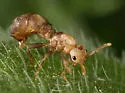
Tetramorium atratulum
Tetramorium atratulum
Obligate parasite of Tetramorium caespitum The species A. atratulus was moved under the genus Tetramorium after the genus Anergates was synonymized with Tetramorium by Ward et. al. 2015.
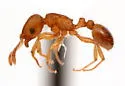
Tetramorium caldarium
Tetramorium caldarium
Identification: Much smaller than the common T. bicarinatum , and paler in color. Antennal scrobes less pronounced than the similar T. simillimum .
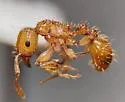
Tetramorium insolens
Tetramorium insolens
This species is native to Australasia but is invasive to parts of Southeast Asia, Oceania, Hawaii, and is also recorded from California. It is probably rare in California.
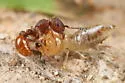
Tetramorium spinosum
Tetramorium spinosum
Identification: Similar to T. hispidum , but with relatively smaller eyes and longer hairs on the back. Part of the Tetramorium tortuosum-group , which are the only Tetramorium native to the New World, an otherwise Old World genus.
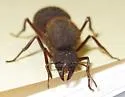
Texas Leaf-cutting Ant
Atta texana
Identification: - Queen; - Male Photo of all castes (note, female reproductive has larger head than male) - Forestry Images Atta texana Photos - Alex Wild, The Diversity of Insects Leaf-cutting ants live in large colonies of up to 2 million.
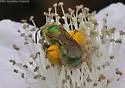
Texas Striped Sweat Bee
Agapostemon texanus
Identification: Scutum of female shining and "double punctate" that is with punctures of two different sizes. Identification notes for males from John Ascher "Note green reflections on terga, dark scape, and large femur" Found here
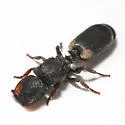
Texas Turtle Ant
Cephalotes texanus
This is a northern member of a moderately large Neotropical genus.
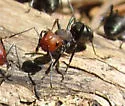
Thatching ant
Formica obscuripes
Identification: - workers weakly polymorphic, with narrow headed, uniformly dark colored minors and major workers with a broad, and contrastingly bright red head - bristles on all surfaces of hind tibiae (but few or none on scapes (cf. F. oreas ) - c
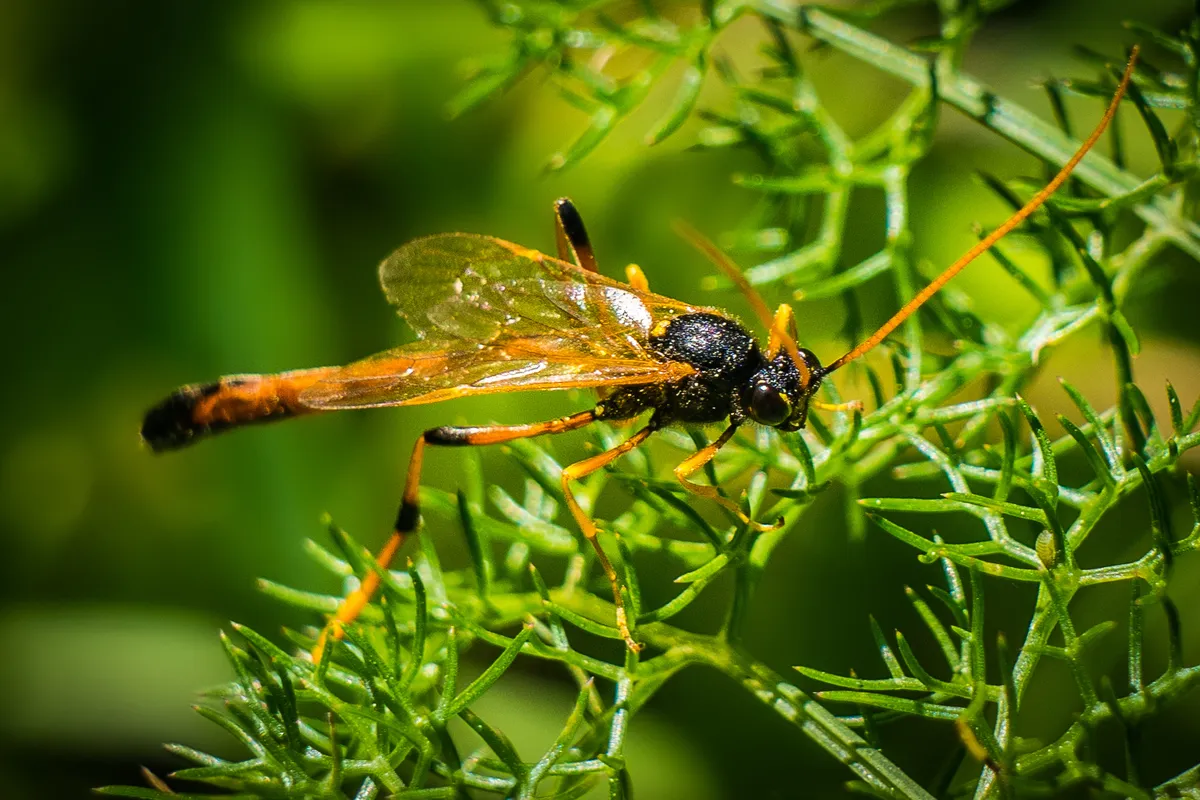
Therion circumflexum
Therion circumflexum
Identification: Very large size. Coloration: head black (female with only orbits and central stripe yellow, male with face entirely yellow), thorax black with at most some red spots, wings light brown, coxae black, trochanters red, first 3 abdominal
Therion petiolatum
Therion petiolatum
Identification: A small species. Coloration: Head black with orbits marked with red and yellow, thorax black with restricted red spots on the mesopleuron, wings dark brown, costal vein black, pterostigma dark, coxae black, trochanters red, hind femur
Theronia hilaris
Theronia hilaris
Identification: Tawny or orangish species with the following parts black: head, antennae, apical tarsomere of hind leg, and ovipositor sheath. The latter is about as long as the hind tibia. Wing venation Note that the picture in Marshall captioned as
Thief Ant
Solenopsis molesta
Identification: See Thompson (1989) below. A very abundant and widely distributed species that goes mostly unnoticed because of its small size.
Thief ant (but one of several)
Solenopsis texana
Identification: Separated from the very similar and as also common S. molesta by the very short antennal segments 3-7.
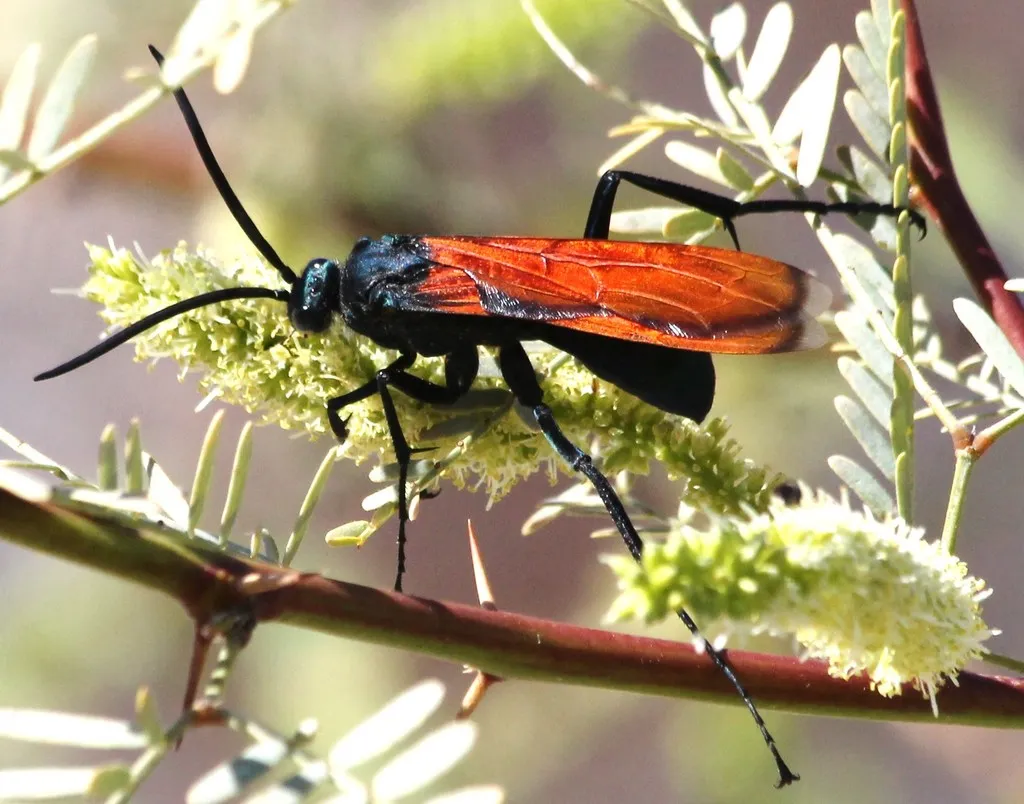
Thisbe's Tarantula-hawk Wasp
Pepsis thisbe
Identification: "Note the dark submarginal band basal to the hyaline edge of the wing." ( comment by Nick Fensler)
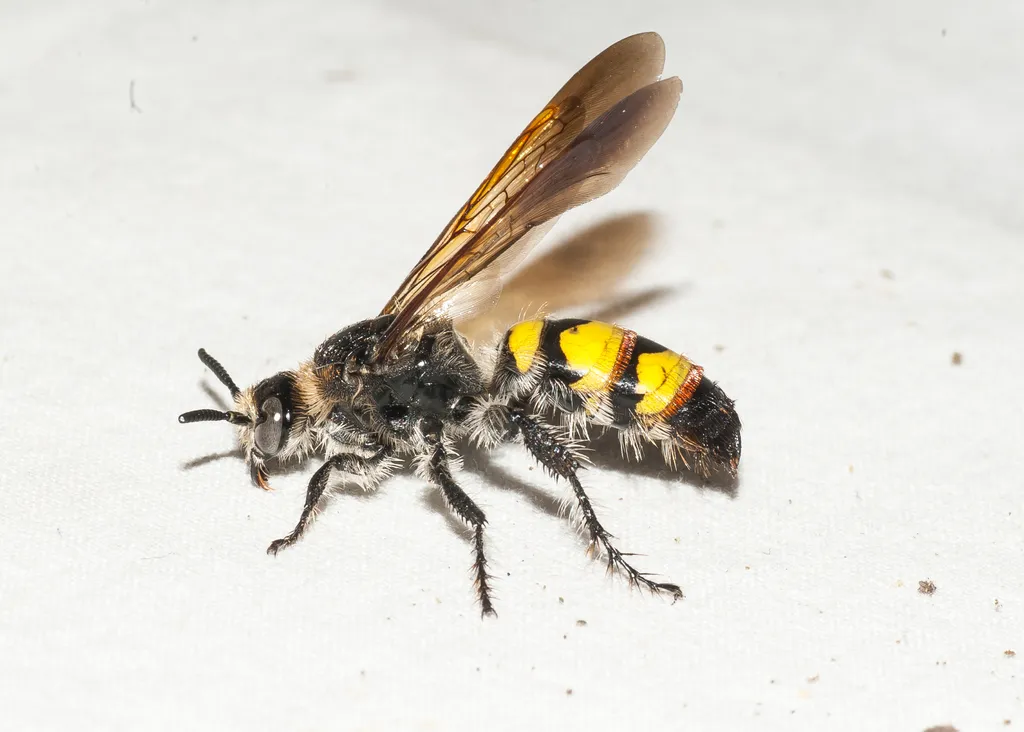
Three-banded Scoliid Wasp
Dielis trifasciata
Identification: The females are separated from other members of the genus in Florida in that they have only three abdominal bands. The pronotum has a strong fringe of pale rather than brown setae. ♀ The males have four bands on the abdomen, much like
Thyreodon atricolor
Thyreodon atricolor
Identification: A very distinct and large species with a black body, black wings, and orange-yellow antennae. Distinguishable as an Ophioninae by the laterally compressed abdomen with a distinct, circular "knob" between the first and second segments.
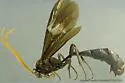
Thyreodon rivinae
Thyreodon rivinae
Identification: The salient diagnostic features are its enlarged ocelli (which almost touch the compound eyes laterally), yellow flagellum, and black fore wing with a large hyaline blotch in the discocubital and 2nd discoidal cells. (Porter, 1980) Ty
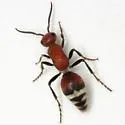
Timulla contigua
Timulla contigua
Identification: female: sides of thorax weakly emarginate; front, vertex and dorsum of the thorax with moderate, contiguous punctures; legs entirely black (Mickel 1937) uncommon, and a bit of an enigma. male unknown (G. Waldren, pers. comm. to MAQ, 2
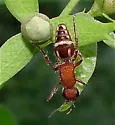
Timulla cyllene
Timulla cyllene
This species was previously only known from Mexico, and was newly recorded in Arizona (Santa Cruz Co.) by Waldren .
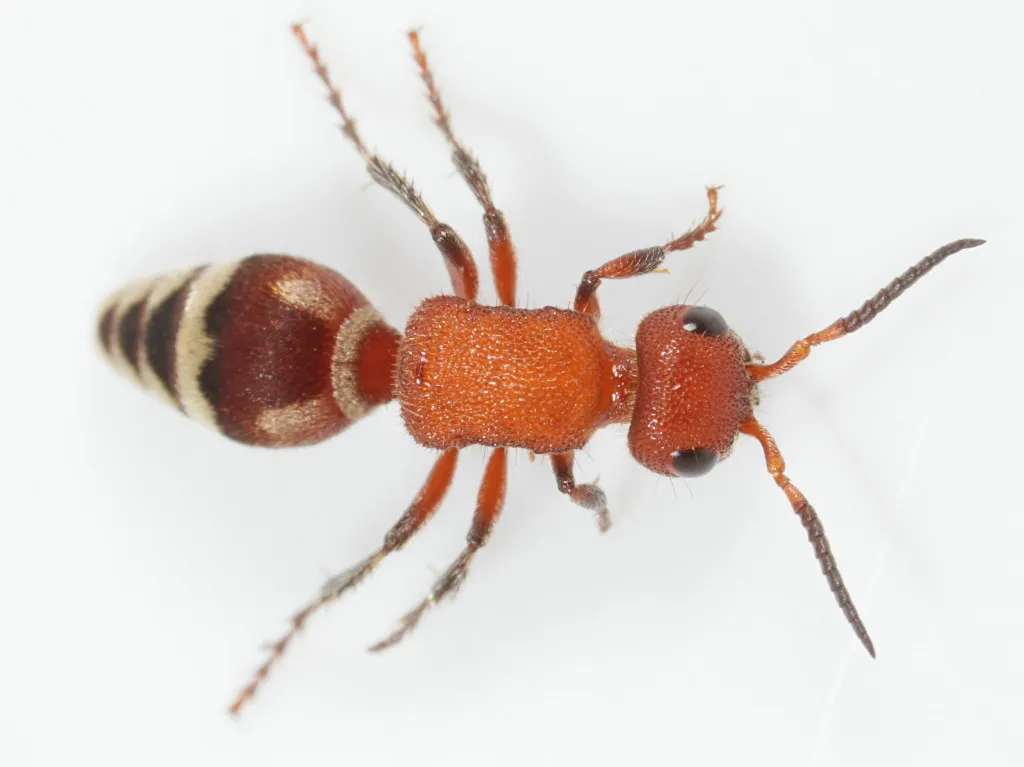
Timulla vagans
Timulla vagans
Identification: Mickel describes subspecies vagans : This is the most widely distributed and abundant species of the genus Timulla in North America north of Mexico. The female has been confused with dubitata Smith in collections. The female may be re
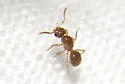
Tiny Queen Brachymyrmex
Brachymyrmex species-d
Identification: These queens are very small and only slightly larger than workers of Brachymyrmex depilis , in contrast to B. depilis queens which are much larger.
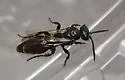
Tiphia pennsylvanica
Tiphia pennsylvanica
Identification: Female is distinguished by, in part, a longitudinal groove on inner surface of hind basitarsus and the first tergum with a transverse carina.
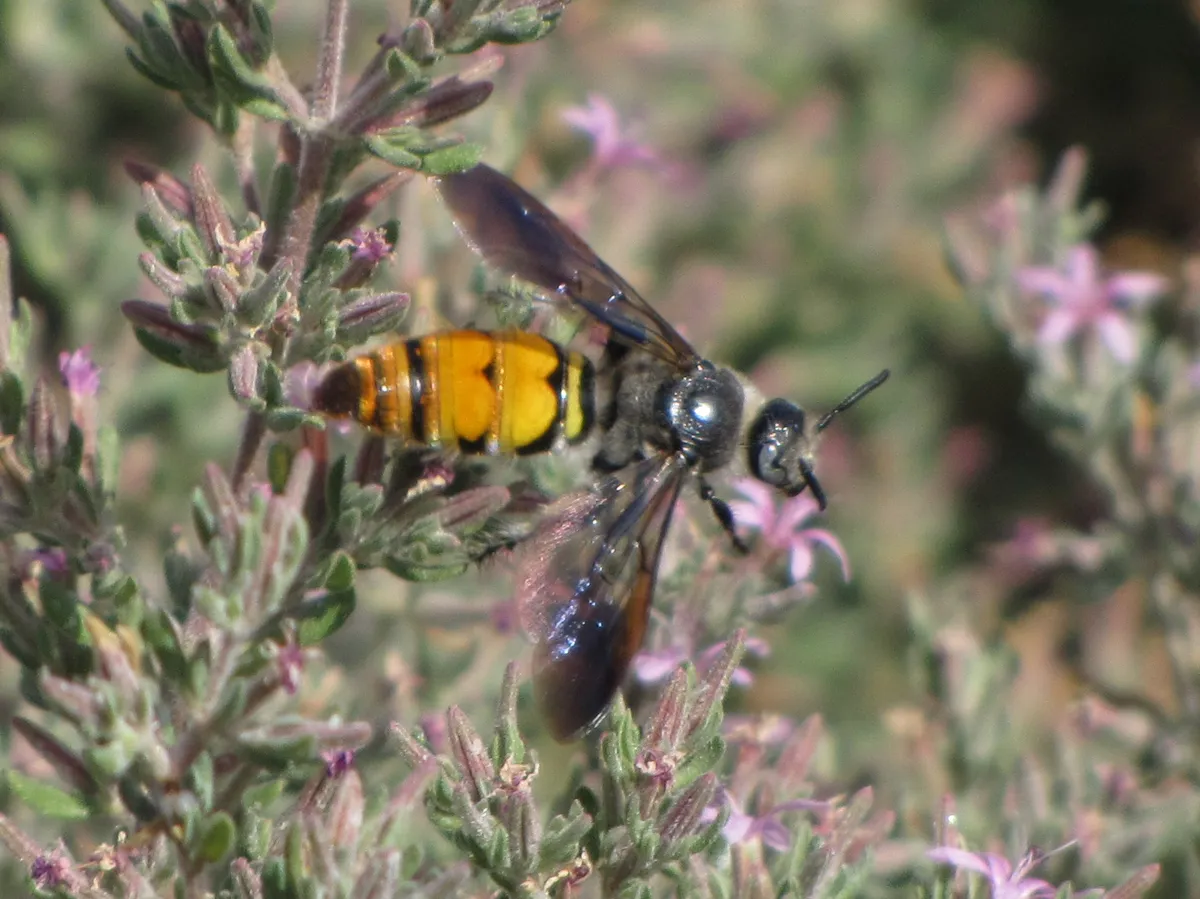
Toltec Scoliid Wasp
Dielis tolteca
Identification: Females are separated from D. pilipes by their orange-marked abdomens as the only such campsomerine species of the western US. Structurally, the propodeum is smooth, in contrast to the punctate propodeum of D. pilipes . The orange abd
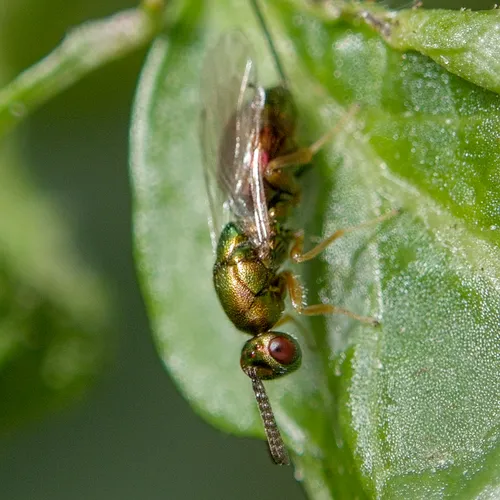
Torymus affinis
Torymus affinis
Length 2-3.5mm, ovipositor sheaths much longer than the body. Dorsal surface of hind coxa with at least a few setae in basal half, unsculptured shiny part at the back end of the scutellum, vertex with a fine suture connecting each lateral ocellus wit
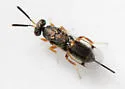
Torymus atriplicis
Torymus atriplicis
Torymus atriplicis (Torymus atriplicis) is a species in the family Torymidae, belonging to the order Hymenoptera (Ants, Bees, Wasps and Sawflies). It is classified within the subfamily Toryminae, superfamily Chalcidoidea. This species belongs to the
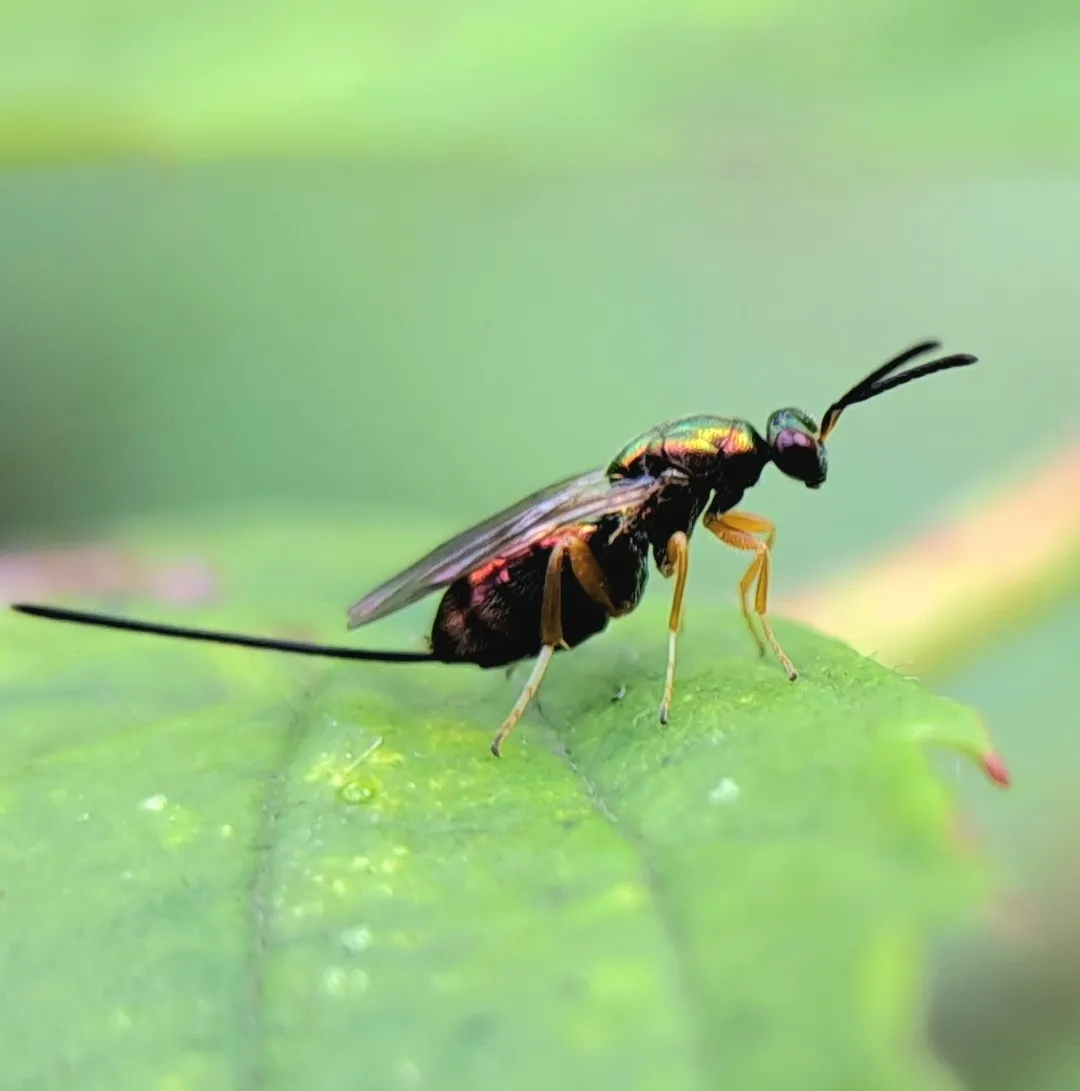
Torymus bedeguaris
Torymus bedeguaris
Very similar in appearance to other members of the genus. The female Torymus bedeguaris wasp measures 2.2 to 5.3mm, on average of 4mm excluding female ovipositor which is longer than the body ; male slightly smaller at 1.8 to 4mm. Metallic green thor
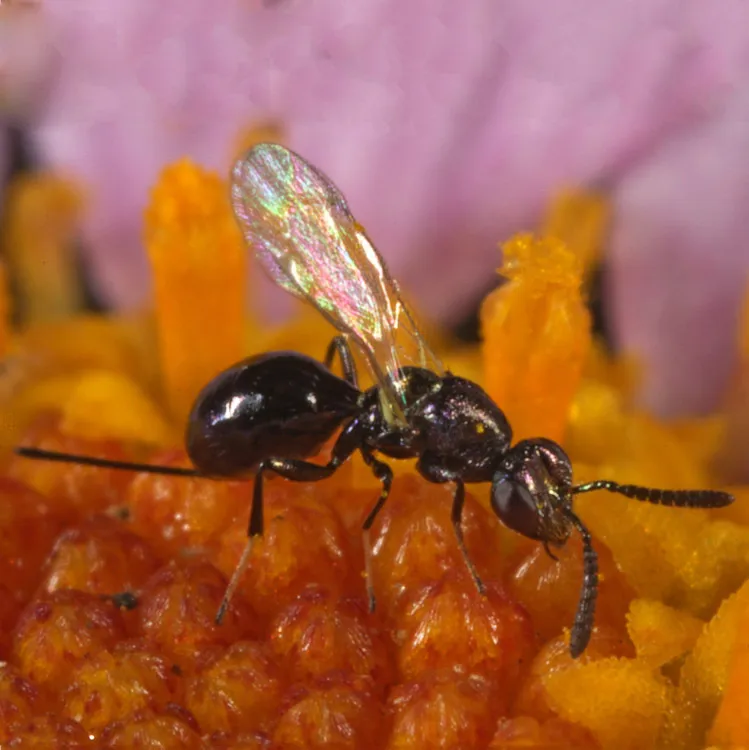
Torymus koebelei
Torymus koebelei
Has been reared from cecidomyiid galls on Baccharis , Artemisia , and a number of other Asteraceae. T. koebelei is in the tubicola species group.
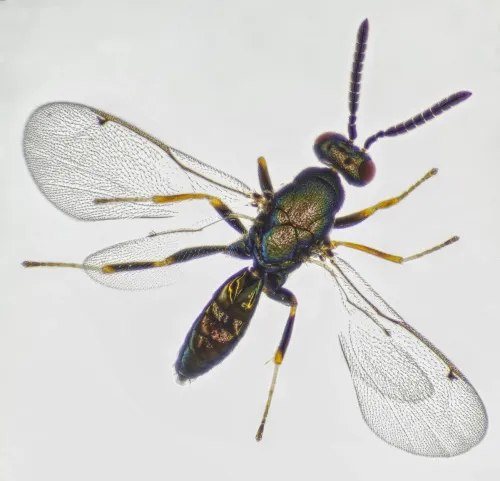
Torymus rubi
Torymus rubi
Very similar in appearance to other members if the genus. Small metallic green wasp. Ovipositor roughly equal to body length (c.f. much longer than body in Torymus bedeguaris). Mouth 2.3-2.6 malar space. Head with temples converging very strongly. M
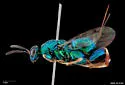
Torymus zabriskii
Torymus zabriskii
This is one of the species that had been placed in the separate genus Diomorus . The tooth on the hind femur is typical of this group. The distinction of the genus was not sustained, and there are evidently some species with a tooth on the hind fem
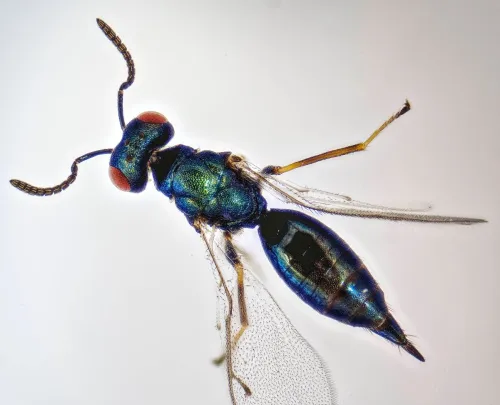
Toxeuma fuscicorne
Toxeuma fuscicorne
Antennal formula 11263; notauli complete; prepectus reticulate, without carinae; metasoma lanceolate, teregite 8 1.5–1.7 times as long as broad, metasoma 1.05–1.2 times as long as mesosoma and head together. Unless identified by a recognised expert,
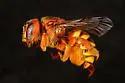
Trachusa cordaticeps
Trachusa cordaticeps
Identification: Extensively red markings very distinctive Color pattern matches that of some Eumeninae, Cercerini and other wasps
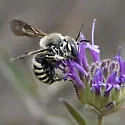
Trachusa timberlakei
Trachusa timberlakei
Once considered a subspecies of T. zebratum , which it resembles. Although widespread, apparently is locally uncommon.
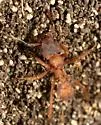
Trachymyrmex turrifex
Mycetomoellerius turrifex
Identification: Identification of eastern species is relatively straight-forward using this key: Trachymyrmex of SE US
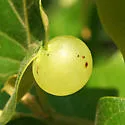
Translucent Oak Gall Wasp
Amphibolips nubilipennis
Identification: Description of translucent leaf-gall: "This is a beautiful, spherical, soft, succulent gall about 1/2 to 3/4 inch in diameter and has a very striking resemblance to a large white grape. There is a single larval chamber in the center."
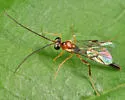
Trathala extensor
Trathala extensor
Identification: One of the characters, at least for the male of the species is that there is no space between the lateral ocelli and the eyes.
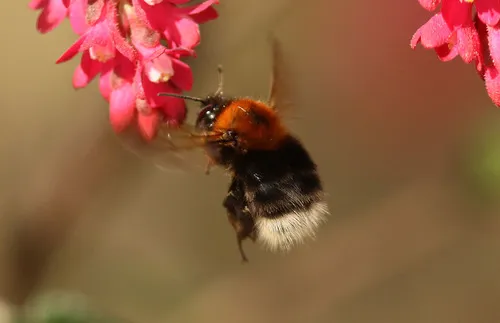
Tree Bumblebee
Bombus hypnorum
Queens, workers and males all tend to have black heads, tawny or darker gingery brown thorax, and a blackish abdomen with a white tail. There is considerable variation with some very dark examples whilst others are predominantly tawny. April to July
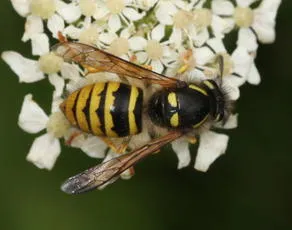
Tree Wasp
Dolichovespula sylvestris
Length 22 mm. The face of this species is usually clear yellow with one dot. Antennae yellow right at the base. Thorax with hairs at the sides and two yellow spots at the rear. Can be very aggressive. It builds its nest in trees and bushes as well as
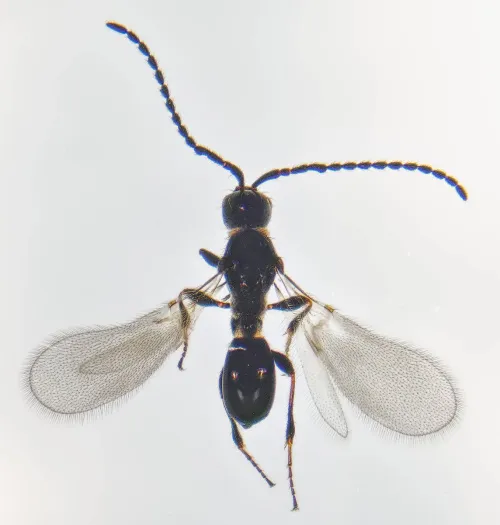
Trichopria crassifemur
Trichopria crassifemur
Length ~2mm. The antennae arise from a prominent raised ledge or "shelf" high on the face above the clypeus, a defining structural feature of Diapriidae. Extremely reduced wing venation lacking a closed cell, featuring a short marginal vein near the
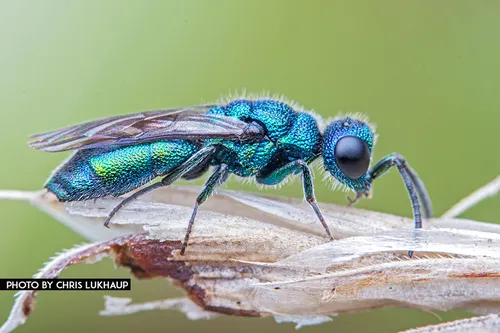
Trichrysis cyanea
Trichrysis cyanea
About 9mm long and a rather iridescent sea green in colour. Associated with open habitats with aerial nesting sites of its hosts such as wooden fence and gate posts, dead trees, logs and tree stumps, and holes in mud and cob walls. Recorded from May
Triepeolus eliseae
Triepeolus eliseae
Identification: Note oval pseudopygidial area The species was described by Molly G. Rightmyer in a monograph of Michigan bees by J. Gibbs et al.
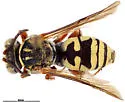
Triepeolus kathrynae
Triepeolus kathrynae
Identification: Hairs yellower (less white) than T. grandis http://digitallibrary.amnh.org/handle/2246/5111
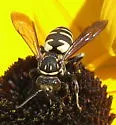
Triepeolus lunatus
Triepeolus lunatus
Types: Holotype: Epeolus lunatus male and female Say 1825. Locality: Missouri. British Museum of Natural History – type lost. Lectotype: Epeolus lunatus concolor female by Robertson 1898, #8174. Locality Illinois July 24, 1888. In Illinois Natural
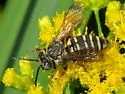
Triepeolus pectoralis
Triepeolus pectoralis
Types: Holotype Epeolus pectoralis female Sept 18, 1893 by Robertson, 1897. #15626. Locality: Illinois. In Illinois Natural History Survey. Webb 1980; Lectotype designated by LaBerge. Lectotype Triepeolus pectoralis male by Robertson, 1897. Locality
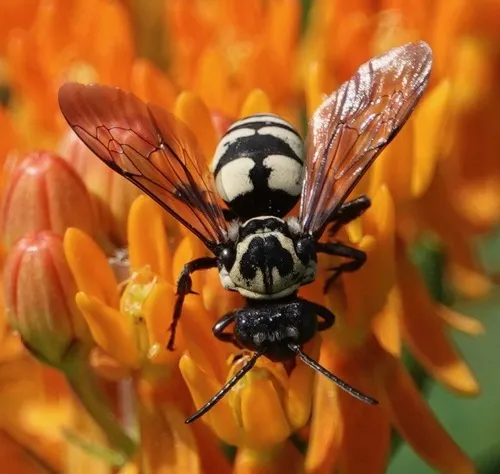
Triepeolus remigatus
Triepeolus remigatus
Types: Holotype Melecta remigata Fabricius 1804: 387 [Carolina] [Type lost?]. Holotype Epeolus superbus female by Provancher 1895. #1734 Locality: Los Angeles, California. In Université Laval, Quebec, Collection of Provancher. Holotype Epeolus texanu
Triepeolus simplex
Triepeolus simplex
Types: Lectotype Triepeolus simplex female by Robertson 1903. #18665 or #3600. Locality Carlinville, Illinois Aug 14, 1896. In Illinois Natural History Survey. Lectotype designated by LaBerge June 20, 1996. Michigan Museum of Natural History has 4 Tr
Trigonaspis polita
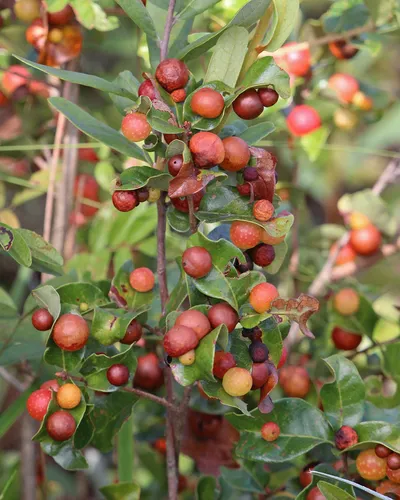
Trigonaspis polita
Forms detachable galls on leaves of post oak ( Quercus stellata ), Chapman oak ( Q. chapmanii ), and white oak ( Q. alba ): "Reddish oak apple, not spotted, 6-19 mm. in dia., in numbers on both sides of leaf in fall. Adults emerge the next spring Mar
Triscolia ardens
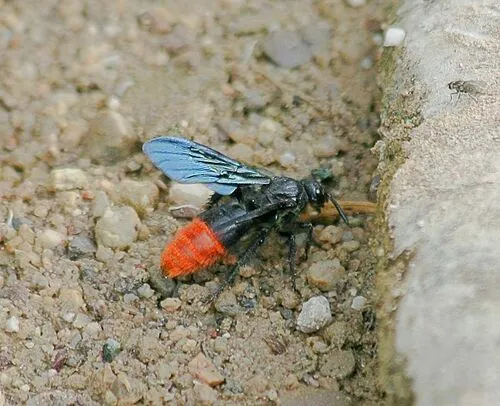
Triscolia ardens
Identification: Forewing with three submarginal cells and a single recurrent vein which meets the posterior edge of the 2nd submarginal cell (see diagram here ). Wings very dark, violaceous; thorax entirely black; first two abdominal tergites mostly
Trissolcus brochymenae
Trissolcus brochymenae
"This species falls into the flavipes group having orbital furrow expanded ventrally, hyperoccipital carina present, and notauli present. There are two color variations, this is the yellow scape and yellow leg version, the other is similar to Tr. eus
Trissolcus cultratus
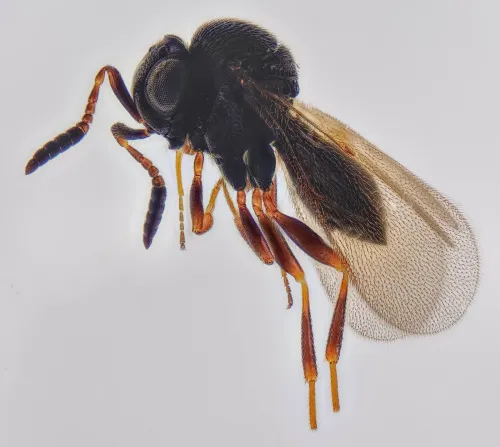
Trissolcus cultratus
1-2mm black parasitic wasp. Frons with characteristic parallel arched ridges. Unless identified by a known expert, a photo (or photos) should be submitted with the record showing the key features and/or these should be described in the comments box,
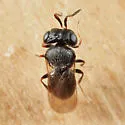
Trissolcus euschisti
Trissolcus euschisti
"The species in the picture is a female Trissolcus euschisti , a fairly common species in the U.S., Canada, and extending south into Mexico and Central America. They are egg parasitoids of stink bugs and related groups: they lay their egg inside the
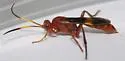
Trogomorpha arrogans
Trogomorpha arrogans
Identification: Pale transverse band on forewing distinguishes from Trogomorpha trogiformis , but it is not certain the two are distinct species.
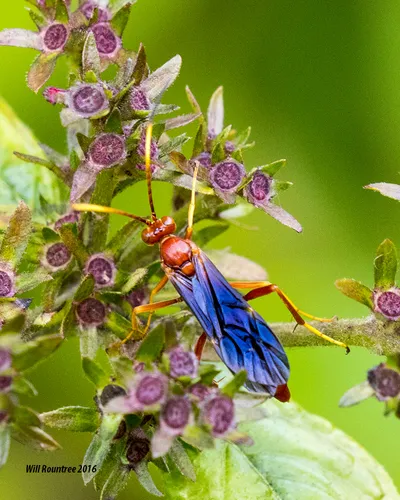
Trogomorpha trogiformis
Trogomorpha trogiformis
Identification: Noted for its uniformly red body, broad white to yellow bands (annuli) on the antennae, and very dark, somewhat iridescent, blackish wings. The abdomen, typical of this genus, has distinctively beadlike segments, noticeably bulging ou
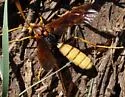
Trogus crustosus
Trogus crustosus
Identification: T. crustosus is a western black-and-yellow species. It is identified by the following combination: temples wide, genae convex, scutellum with a dull point and vertical, thorax robust, T3 with punctation but no rugulae; thorax generall
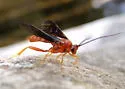
Trogus edwardsii
Trogus edwardsii
Here is an 1878 description of T. edwardsii by Cresson .
Trogus flavipennis
Trogus flavipennis
Identification: T. flavipennis is a western black-and-yellow species. It is identified by the following combination: temples narrower, genae not convex, scutellum sharp and curved posteriorly, thorax not particularly robust, T3 with both punctation a
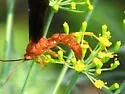
Trogus vulpinus
Trogus vulpinus
Identification: T. vulpinus is an eastern, red species. Most images here were previously lumped under Trogus pennator . T. vulpinus is identified by the following combination: high, conical scutellum (generally); supra-antennal area with two develope
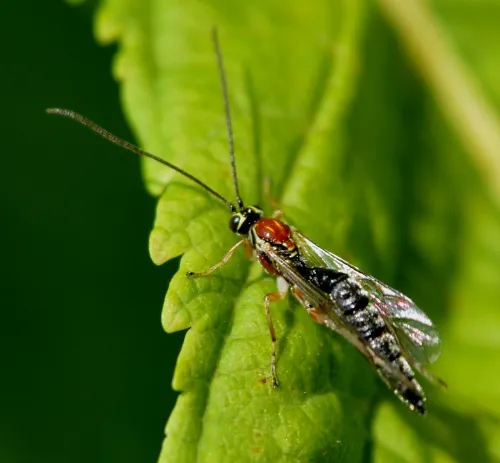
Tromatobia lineatoria
Tromatobia lineatoria
Length 7 to 10 mm. A black bodied wasp with yellowy-brown legs. Unless identified by a recognised expert, a photo is required. If the photo doesn't show the key ID features, then in the comments box describe the size and identifying characters you ha
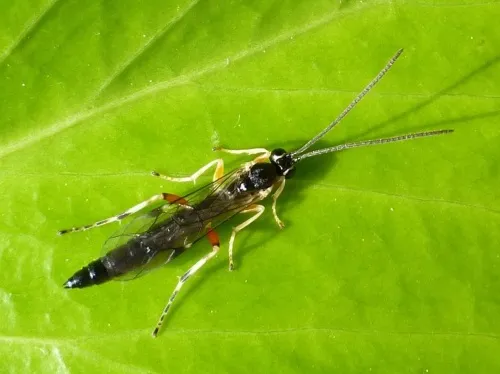
Tromatobia ovivora
Tromatobia ovivora
Very little information about this species is available to us at present, but, based on images available, the main characteristics of the species seem to be a black abdomen and paler legs. The status and distribution in Britain are not known due to t
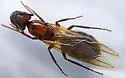
Tropical Carpenter Ant
Camponotus atriceps
Identification: In our area, similar to Camponotus floridanus but with a darker head and ranging only in Texas.
Trout-lily Mining Bee
Andrena erythronii
Identification: Both sexes can be distinguished from those of barbilabris by the more distinct pronotal humeral angles and dorsoventral ridges and by the very weak terga fasciae. The female of erythronii is marked by a labral process distinctly broad
Trypoxylon lactitarse
Trypoxylon lactitarse
Identification: Shining black body with pale hairs on the thorax and hind tarsi partly white.
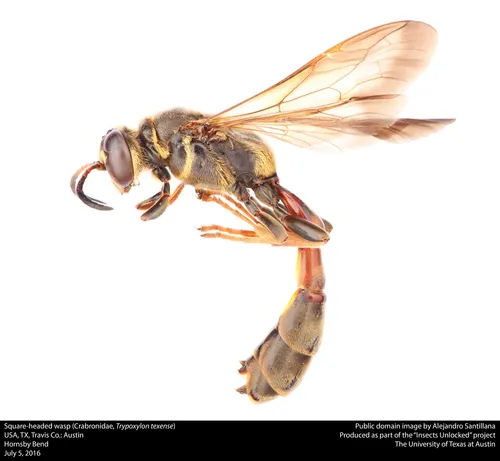
Trypoxylon texense
Trypoxylon texense
Identification: This species is rather distinctive for the combination of its bright golden pubescence and reddish basal (4-6) antennal segments. The ground color of the body is black, with orange to reddish markings on the antennae (as above), mandi
Trypoxylon tridentatum
Trypoxylon tridentatum
Identification: The only species of Trypoxylon in our area with a pair of spines on the propodeum.
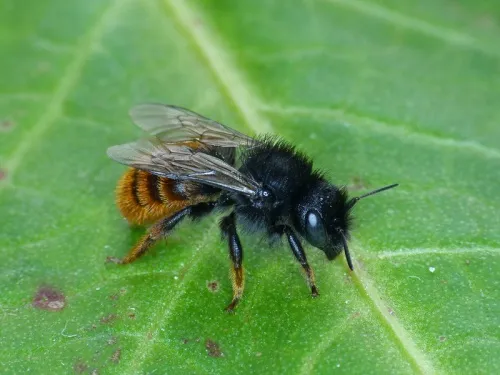
Two-coloured Mason Bee
Osmia bicolor
The female of this small (12 mm) bee is particularly attractive, with a black head and thorax and bright gingery hairs covering the abdomen. In the male the ginger is less striking. Most solitary bees and wasps are difficult to identify, and can rare
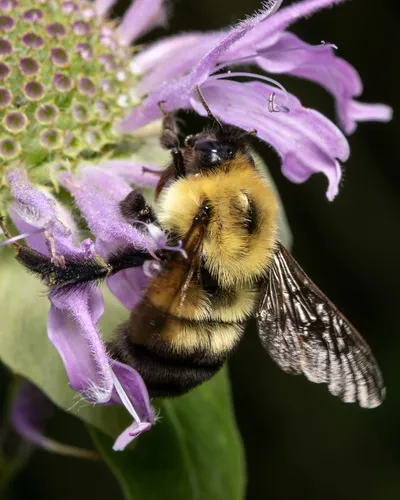
Two-spotted Bumble Bee
Bombus bimaculatus
Identification: see detailed description of queen and male at discoverlife.org ; worker is very similar to queen but smaller. In female the yellow of second abdominal tergum (T2) extends in a deep "U" nearly to the apex of the segment medially but th
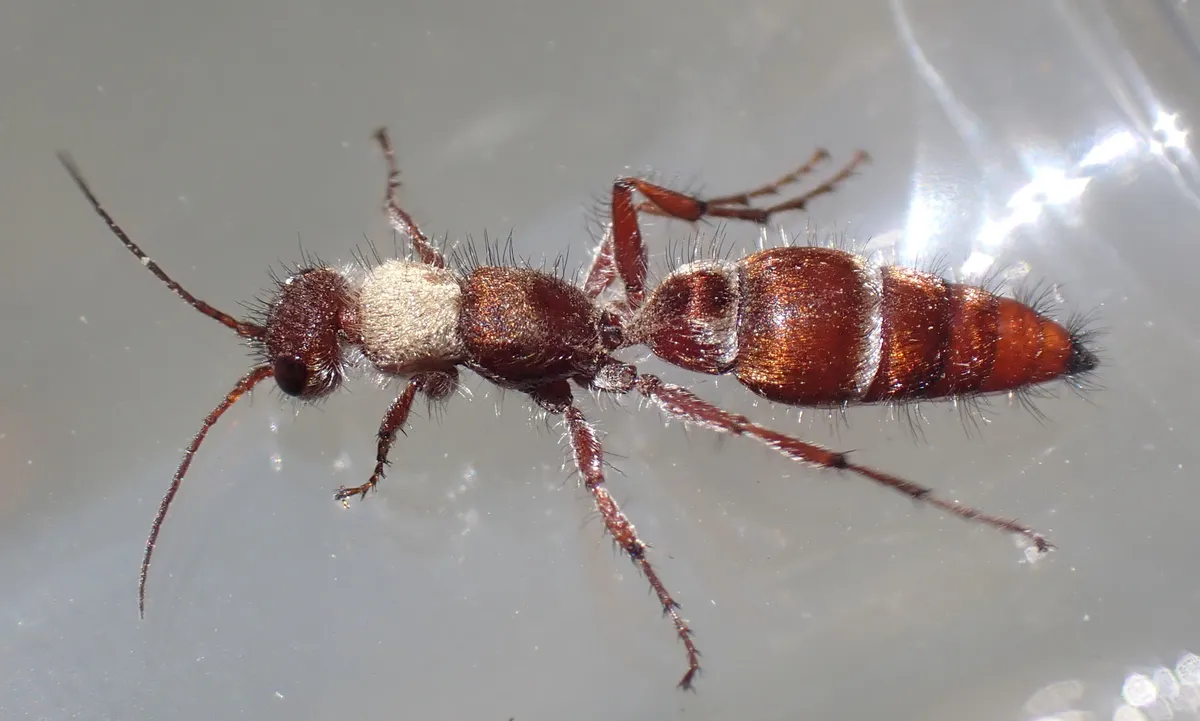
Typhoctes peculiaris
Typhoctes peculiaris
Identification: This polytypic species is represented by two races - the nominate found in the Great Basin and ssp mirabilis from central AZ east into the Great Plains
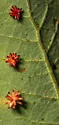
Urchin Gall Wasp
Antron quercusechinus
Identification: These wasps produce summer/fall leaf galls resembling spiny red or pink sea urchins. Galls are on blue and scrub oaks. Adults emerge in November or soon after, and parthenogenic females lay eggs in leaf buds. A bisexual generation (ma
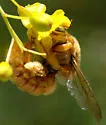
Valley Carpenter Bee
Xylocopa sonorina
Identification: Female is black with brassy reflections, perhaps. Male is a striking tawny brown. Apparently, no other Xylocopa are so sexually dimorphic. Males: ] ] Females: 4/17/2020 introduced Name change based on Sheffield C, Heron J, Musetti L (
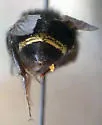
Van Dyke's Bumble Bee
Bombus vandykei
Identification: Females resemble the sympatric and generally more numerous vosnesenskii, but in vandykei the yellow band is on T3 rather than T4. This character is often hard to observe in the field so this species is under-recorded in visual and pho
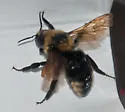
Variable Cuckoo Bumble Bee
Bombus variabilis
Identification: Similar to Bombus insularis but with more extensive black hairs. Males of the southwestern population, e.g, those from southern Arizona, can be difficult to separate. Although Bombus pensylvanicus persists in relatively good numbers i
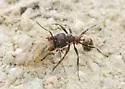
Veromessor andrei
Veromessor andrei
Identification: Two main colors, one brown-purple and one red. They seem to be modeled after two species of Pogonomyrmex , P. rugosus & P. occidentalis Corresponding V. andrei :
Veromessor chamberlini
Veromessor chamberlini
Identification: base of scape widened, spines long (lobognathus, the other species with expanded scapes, has short spines)
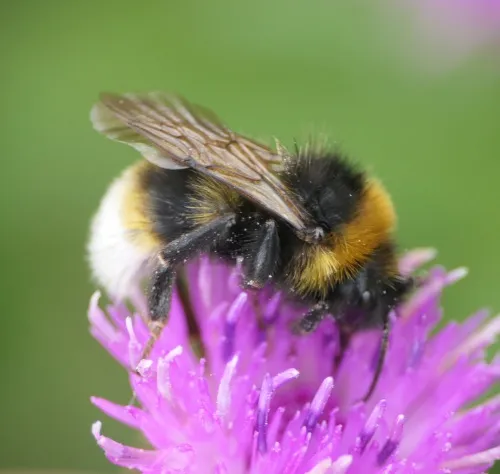
Vestal Cuckoo Bee
Bombus vestalis
Female length: 20-24 mm Male length: 15-19 mm [12 antennal segments = female /13 = male]. Cuckoo Bumblebees are identified by the lack of pollen baskets on the legs and they usually have tinted wings. Cuckoo bumbles tend to have less dense hair [shin
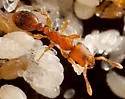
Vollenhovia emeryi
Vollenhovia emeryi
Colonies of this species vary heavily in range -- recently split colonies may consist of just a queen and a dozen workers, to full colonies which have dozens of queens and thousands of workers. I believe the largest colonies I have collected have had
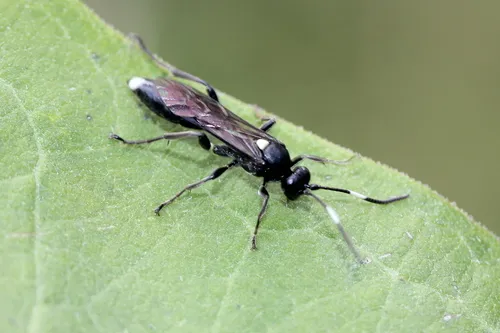
Vulgichneumon brevicinctor
Vulgichneumon brevicinctor
Identification: Black with the following parts white: band on flagellum, scutellum, "anal marks" on terga 6 and 7, and hind trochanter in female (not male). The white band on antenna is closer to the base in the female than the male. ♀: ♂: One of the
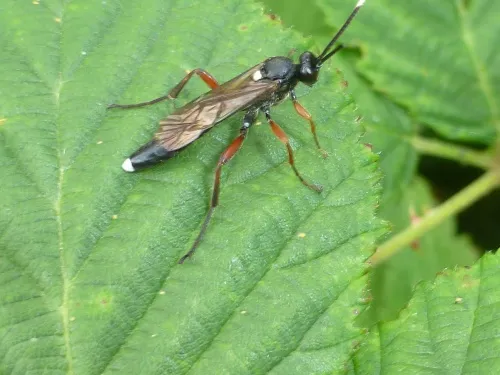
Vulgichneumon saturatorius
Vulgichneumon saturatorius
It has a white spot at the base of the thorax and another at the tip of the abdomen but is otherwise mainly black with red legs. The antennae have a broad white band at about halfway. Woodland and hedgerows or nectaring on Hogweed. Larvae feed on the
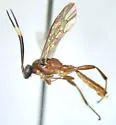
Vulgichneumon terminalis
Vulgichneumon terminalis
Identification: Head black; antennae with white annulus; thorax black to reddish with white scutellum; abdomen tricolored reddish, black, and white; legs with coxae reddish, hind femora ranging from black-tipped in the south to entirely black in the
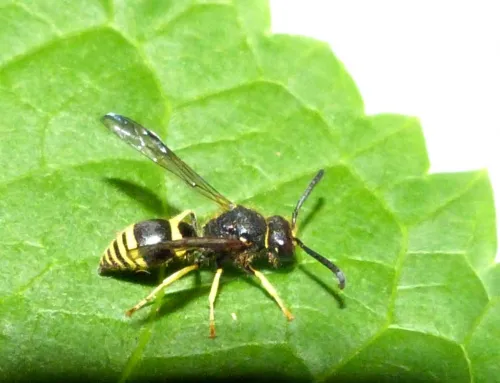
Wall Mason Wasp
Ancistrocerus parietum
Females vary from 10 to 13mm, males are slightly smaller and reach a bodily length of 8 to 11mm. Ancistrocerus parietum , A. gazella and A. quadratus are all very similar and hard to separate without detailed examination. The basic colour is black, w
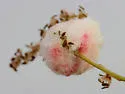
Water Oak Woolly Catkin Gall Wasp
Callirhytis turnerii
Identification: Felt says: "Globular, wooly gall, diameter 1/2 inch, on water oak, gall wasp." Weld describes in a key, summarized here: " Quercus nigra - Water Oak - > Flower galls - > Callirhytis turnerii (Ashm.). 484. Woolly, globular, as large as
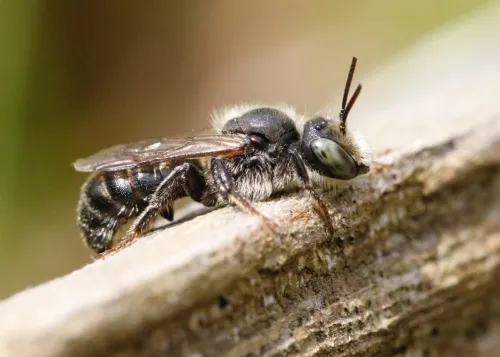
Welted Lesser Mason Bee
Hoplitis claviventris
A smallish mason bee closely resembling an Osmia species. Length 4-6mm, shiny blue black abdomen, pollen brush beneath abdomen is cream/white (c.f. Osmia spp, pollen brush black or orange). Forewing with 3 submarginal cells, tarsi with an arolium bet
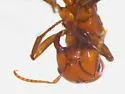
Western Amazon ant
Polyergus mexicanus
Future study may provide the wherewithal to recognize several species within the current concept of P. mexicanus . In particular, the West Coast populations formerly named 'umbratus' and 'laeviceps' seem somewhat distinctive, and another interior wes
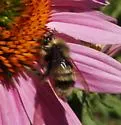
Western Bumble Bee
Bombus occidentalis
Identification: White tail tip distinctive. Usually but not always with yellow band centered on T3 but this can be lacking or yellow of the metasoma may extend to other terga. Has declined in the Pacific states including California. In the San Franci
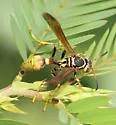
Western Paper Wasp
Mischocyttarus flavitarsis
Identification: A primarily black-and-yellow species with additional ferruginous markings. This species can be separated from the similar M. navajo by the typically lighter yellow brown wings (in all but one form), occasionally ferruginous T1 (especi
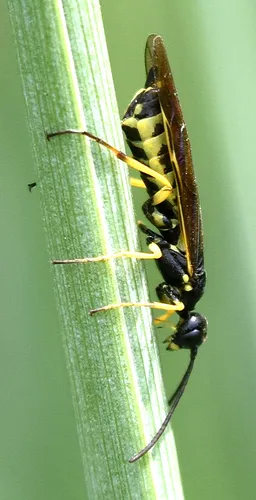
Western Wheat Stem Sawfly
Cephus cinctus
earliest NA record: CO, NV 1872; major pest of wheat and other cereals since 1895 (economically important damage is concentrated in the n. Great Plains)
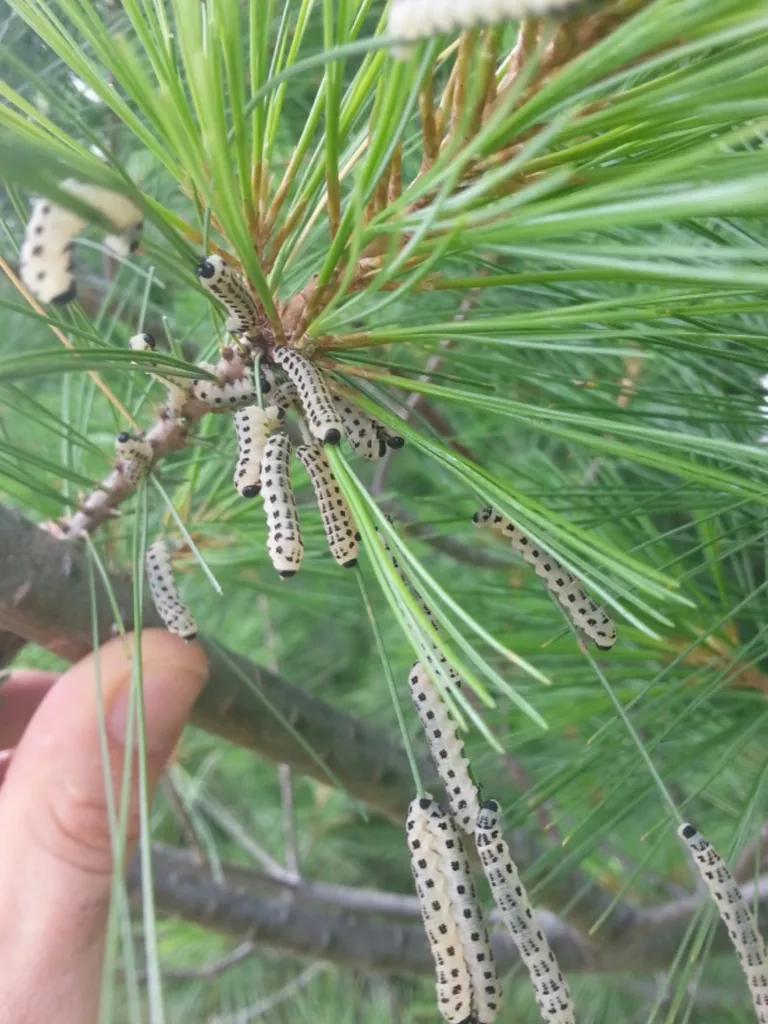
White Pine Sawfly
Neodiprion pinetum
Identification: Full grown larvae are pale yellow with a black head. They have 4 rows of black spots extending from the head to the black spot at the posterior end. About 25mm long.
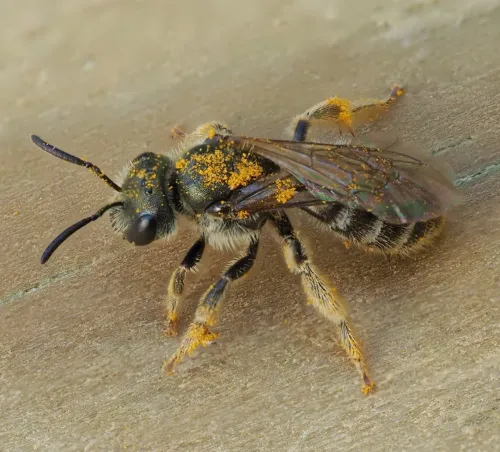
White-footed Green Furrow-bee
Lasioglossum leucopus
One of four small, metallic Lasioglossum species. Males are easily distinguished from the others by the pale yellow mid and hind tarsi. Females resemble L. morio but are stockier with a shinier thorax and propodeum, and lack minute transverse ridges
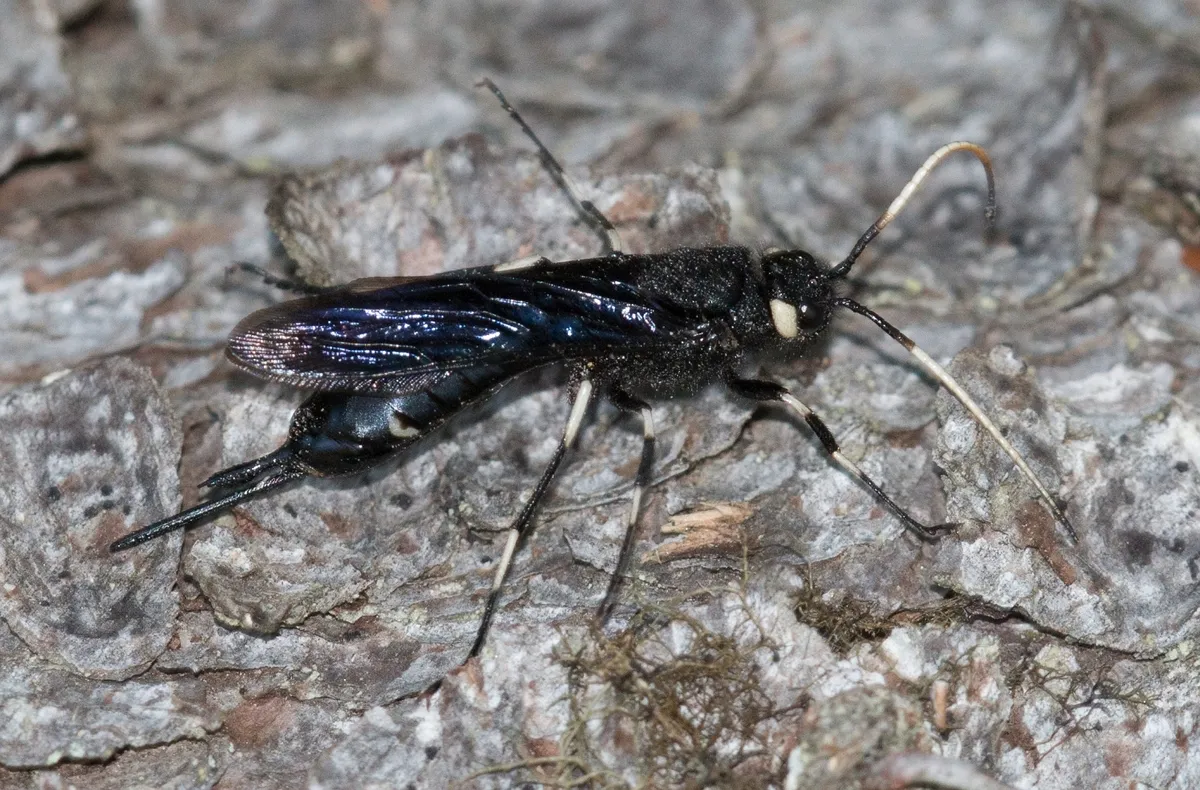
White-horned Horntail Wasp
Urocerus albicornis
Identification: Middle of antennae, cheeks, bases of tibia and tarsi are white. White spots may occur on sides of abdomen.
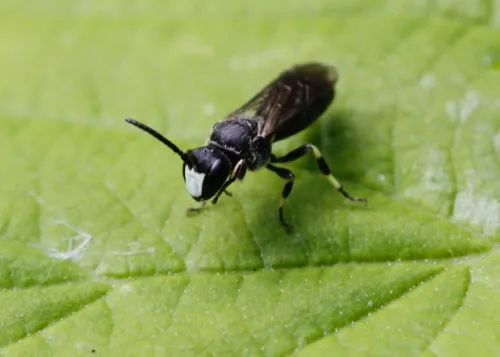
White-jawed Yellow-face Bee
Hylaeus confusus
This bee is a very close relative of the scarcer Hylaeus incongruus and the females of the two species can be difficult to distinguish apart; the facial markings offers the best character for identification. In southern England both species are occas
White-shouldered Bumble Bee
Bombus appositus
Identification: Similar to Bombus borealis but in appositus the anterior of the scutum is usually noticeably paler than the posterio of the scutum. Unlike fervidus the facial hairs are extensively yellow. Beware of worn centralis in which T3-T4 can a
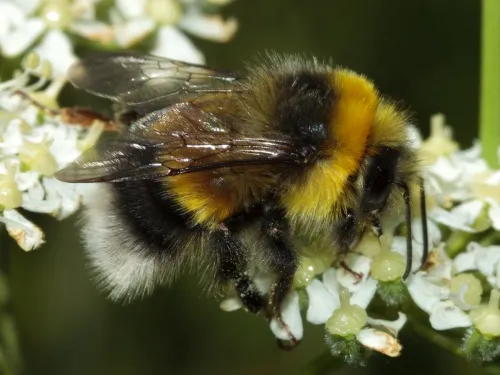
White-tailed Bumblebee
Bombus lucorum agg.
Lengths: Queen 19 to 20 mm, worker 11 to 17 mm, male 14 to16 mm. The Queens have a white tip to the abdomen. The species is slightly smaller than Bombus terrestris . In comparison, the yellow hair bands of B. terrestris appear more mustard-yellow whi
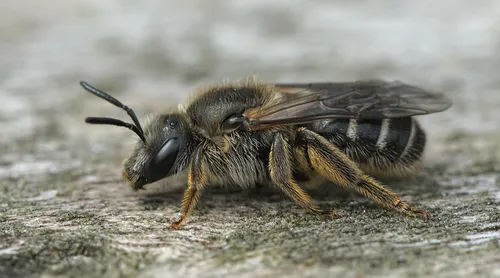
White-zoned Furrow Bee
Lasioglossum leucozonium
A rather large, robustly-built Lasioglossum with conspicuous white tomentose patches on the sides of tergites 2 to 4 (which form complete bands when the abdomen is distended). The hind tibiae have a dark pollen brush. Females closely resemble those o
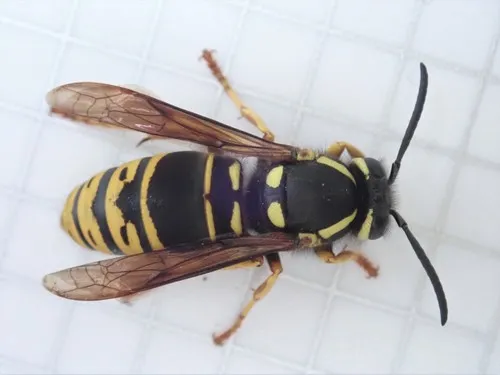
Widow Yellowjacket
Vespula vidua
Identification: Key to eastern Nearctic Vespula species in the Identification Atlas of the Vespidae of the Northeastern Nearctic Region . Key to Nearctic Vespinae genera in the Identification Atlas of the Vespidae of the Northeastern Nearctic Region
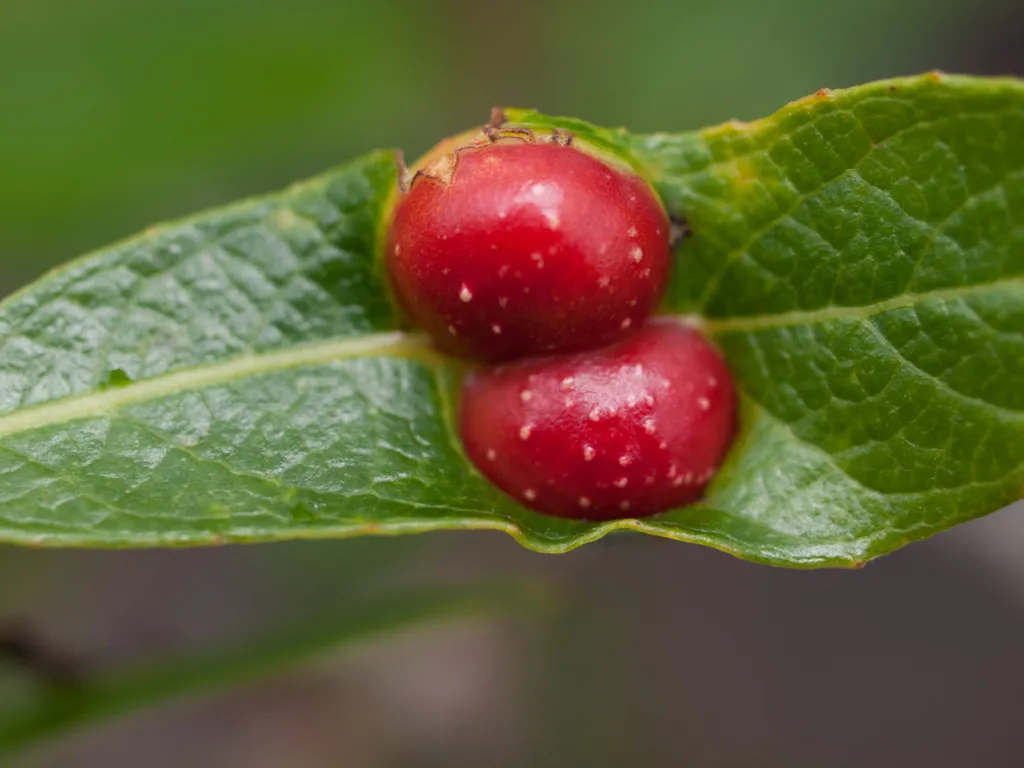
Willow Apple Gall Sawfly
Euura californica
Identification: This sawfly makes the only round red/green willow leaf gall in California with lenticels (wartlike scales, tubercles). The gall protrudes on both sides of the leaf.
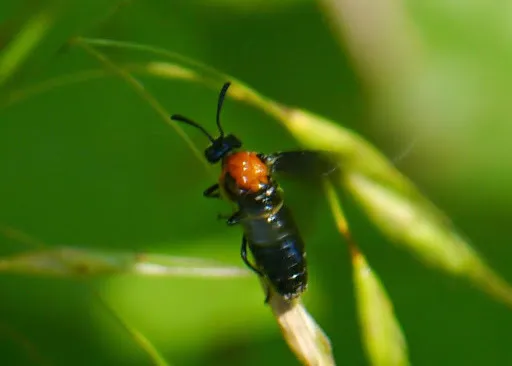
Willow Oak Sawfly
Arge quidia
Identification: Similar to A. scapularis , but much larger, with a different shaped sheath and antennae
Wine-red Amazon ant
Polyergus vinosus
Identification: In full face view, antennal scapes reaching or often exceeding the rear margin of the head in repose. The only essentially chaparral Polyergus .
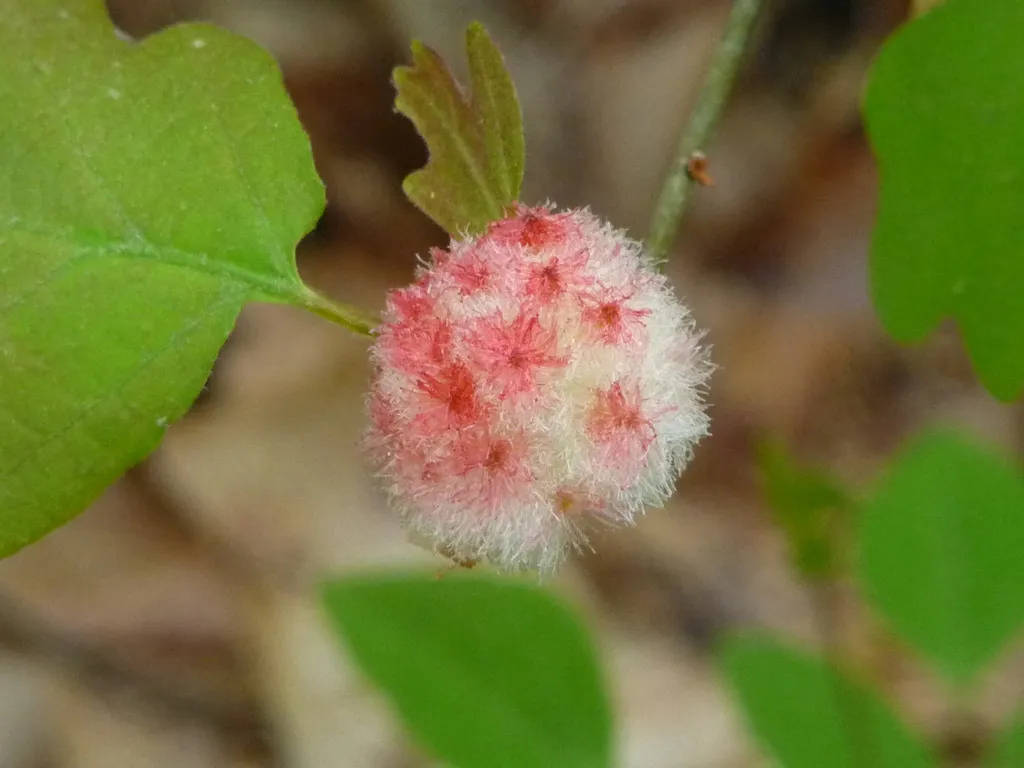
Wool Sower Gall Wasp
Callirhytis seminator
Identification: White with pink spots detachable stem gall on Quercus alba . Many celled. The gall has a distinctly stick surface when fresh and droplets have been observed. Parasitoid:
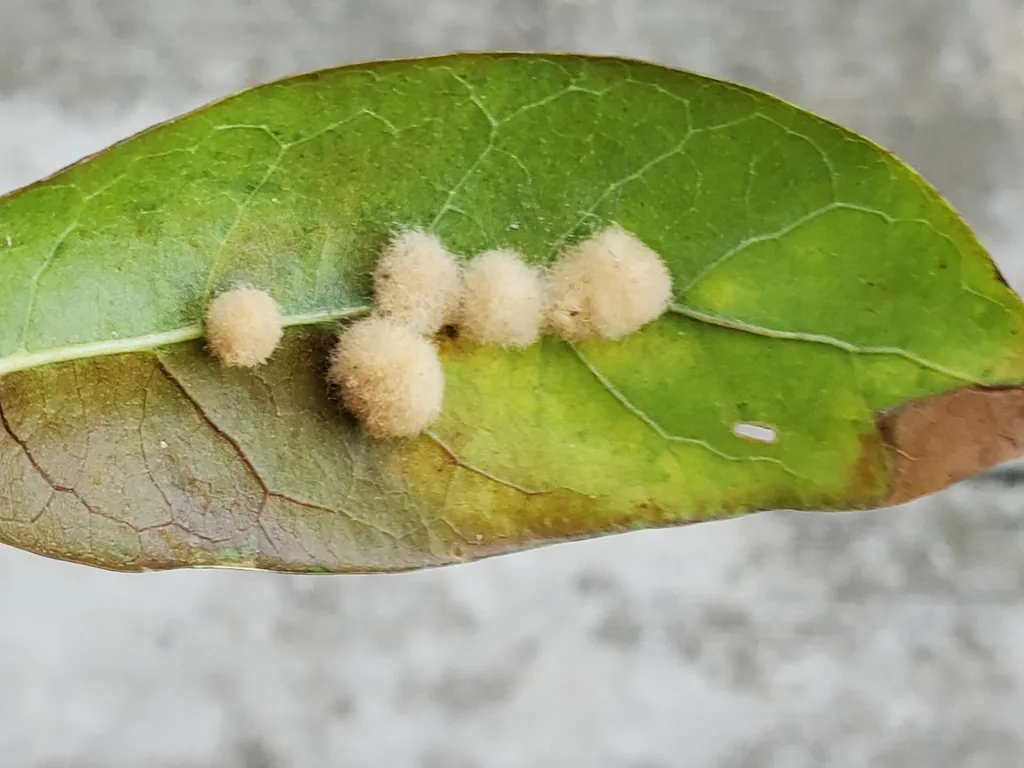
Wool-bearing Gall Wasp
Druon quercuslanigerum
Forms galls on live oak leaves ( Quercus virginiana and Q. geminata ). "Hemispherical or irregular tufts 1/2 inch long of rather long, whitish or reddish wool covering, 2 to 6 irregular brown, seed-like kernels on under side of midrib, diameter 1/12
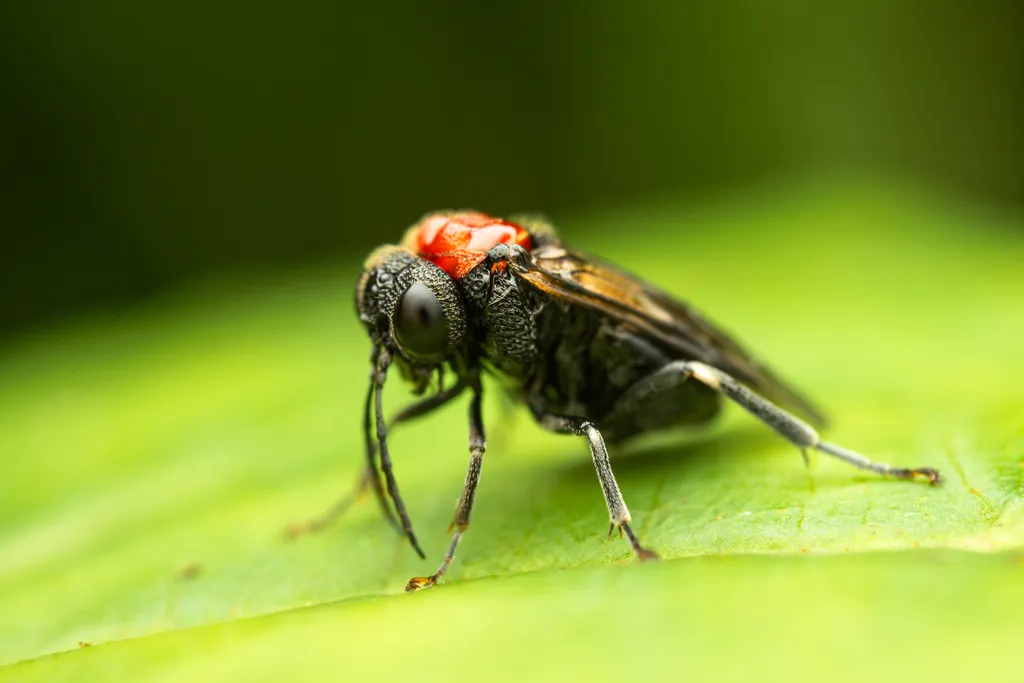
Woolly Alder Sawfly
Eriocampa ovata
Identification: Larva covered by flaky white bloom. earliest NA record: ON 1908
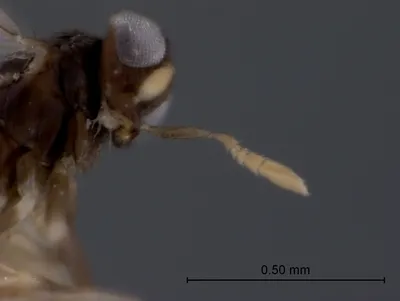
Woolly Apple Aphid parasitoid
Aphelinus mali
A species native to Northeastern United States that has been introduced in many other countries to control aphids, in particular the woolly apple aphid Eriosoma lanigerum . Annals of the Entomological Society of America .
Woolly Butternut Sawfly
Eriocampa juglandis
Identification: larvae peculiar, covered with long threads of wax