
Flies
Order Hymenoptera
The Flies (Order Hymenoptera) includes 5,194 species across 102 families and 1,491 genera in our directory.
About Flies
Hymenoptera includes over 150,000 described species of ants, bees, wasps, and sawflies. Earth harbors approximately 20 quadrillion (20×10^15) ants, with a combined biomass of ~12 megatons of dry carbon - exceeding the combined biomass of all wild birds and mammals (PNAS, 2022).
Economic Impact
Pollinators contribute $235-577 billion worth of annual global food production (FAO). In the U.S., bee pollination alone benefits crops valued at $18 billion annually, and honey bees are responsible for $5.4 billion in agricultural productivity. Between April 2023-2024, 55.1% of managed honey bee colonies were lost. The U.S. bee population dropped from 5 million to 2.5 million.
Ecological Role
About 35% of the world's food crops depend on animal pollinators. The chocolate industry, valued at over $100 billion, depends on pollinating flies and midges. Ants are the dominant soil engineers in most terrestrial ecosystems, turning more soil than earthworms in many habitats.
Families in Hymenoptera (102)
Species in Hymenoptera (5,194)
Pristepyris fraternus
Pristepyris fraternus
Identification: Similar to P. armifera. Compared to P. armifera, females of this species have a comparatively longer head that is strongly polished & non-alutaceous, while males have longer setulae on antennal segment 11 and the pronotum depressed al
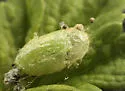
Pristiphora appendiculata
Pristiphora appendiculata
"A rather common sawfly on currant and distinguished from the other currant-feeding species, Nematus ribesii , by lacking black spots on the body. Widespread in North America, and probably an introduction from Europe long ago." [comment by Dave Smith
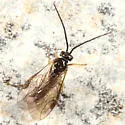
Pristiphora litura
Pristiphora litura
Identification: Females are variable in color, being partly orange as this to almost all black. Males are mostly black.
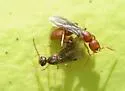
Proceratium chickasaw
Proceratium chickasaw
Identification: second gastric tergite more protruding than in P. pergandei .
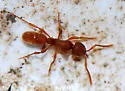
Proceratium pergandei
Proceratium pergandei
Identification: More strongly protruding second gastric tergite than most US Proceratium, but less so than Proceratium chickasaw .
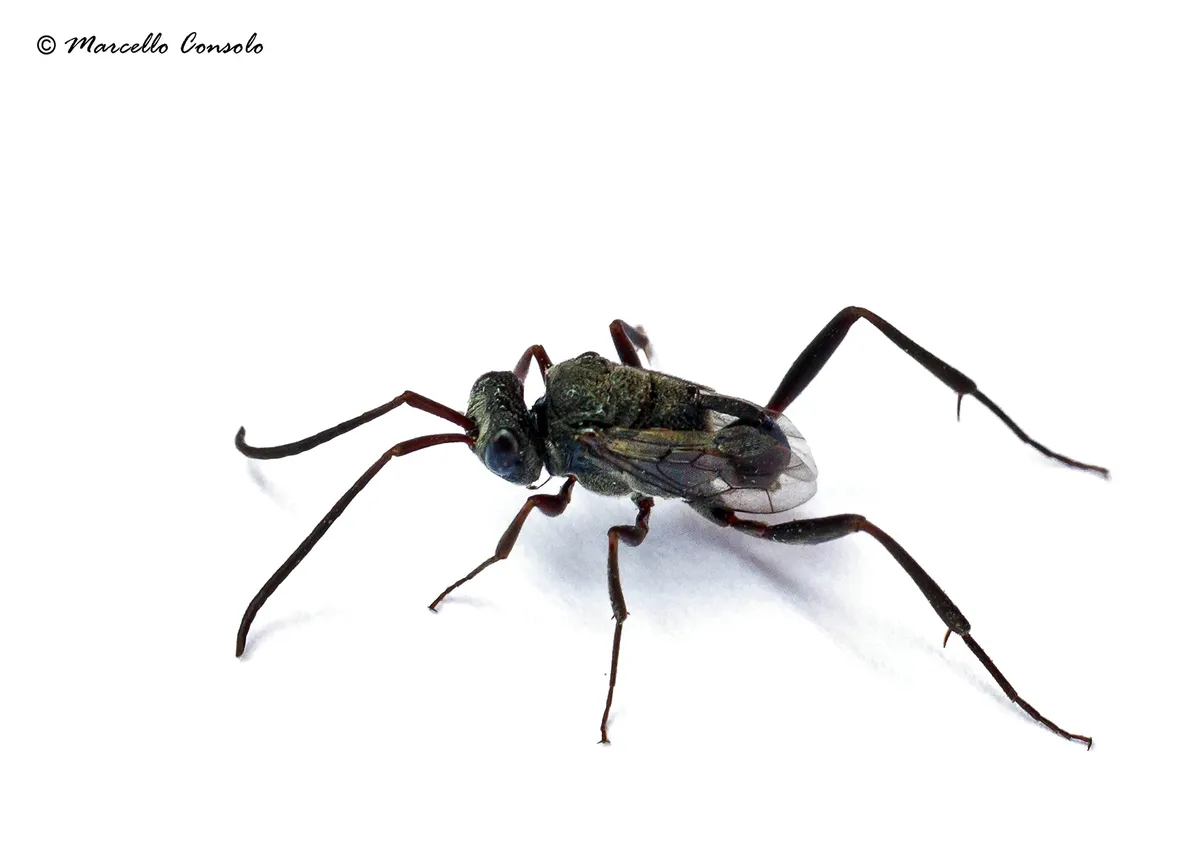
Prosevania fuscipes
Prosevania fuscipes
Introduced from Africa. Native to the Mediterranean.
Protandrena mexicanorum
Protandrena mexicanorum
They use sonication to gather pollen from Solanaceae.
Proterops abdominalis
Proterops abdominalis
Identification: Of eastern species, distinguished from P. proteroptoides by the entirely black head and thorax.
Proterops proteroptoides
Proterops proteroptoides
Identification: Of eastern species, distinguished from P. abdominalis by the yellow-orange head and thorax with few, albeit large, black spots including on the vertex, scutellum, pleurae, and most of the propodeum (minus a Ʌ-shaped mark). Males may h
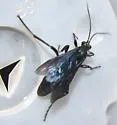
Protopelmus atrocaeruleus
Protopelmus atrocaeruleus
Identification: Very large for an ichneumonid wasp. The female is entirely black with metallic blue reflections, while the male has conspicuous pale markings, particularly on the scutellum, legs, T1-T3. ♀ ♂
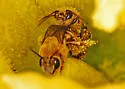
Pruinose Squash Bee
Peponapis pruinosa
Identification: Clypeus protuberant and with a small apical yellow spot in males. Females with widely spaced scopal hairs not hiding integument of tibia. Complete bands of frosty hairs on the abdomen. Male antennae relatively short. Smaller than Xeno
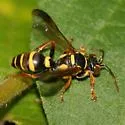
Psammaletes mexicanus
Psammaletes mexicanus
Specimens from southern locations have considerably more red markings (nearly absent in specimens from NE U.S., execept on legs).
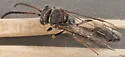
Pseneo punctatus
Pseneo punctatus
Preys on sharpshooters ( Cicadellinae ), and has appeared in California with the incursion of the glassy-winged sharpshooter, Homalodisca vitripennis (formerly H. coagulata ). (based on pers. communication with Doug Yanega; HW; see also reference on
Pseneo simplicicornis
Pseneo simplicicornis
Identification: Separated from other members of its genus by the following combination of traits: clypeus with silvery vestiture, antennal scapes dark, scutellum punctate, petiole black (rarely with reddish tinge in teneral individuals), legs black w
Pseudoanthidium nanum
Pseudoanthidium nanum
Identification: About the size or a little smaller than Osmia pumila . Discovered in the New World by Sarah Kornbluth in New Jersey and identified by John S. Ascher. Subsequently reported from Maryland and several other states.
Pseudodynerus quadrisectus
Pseudodynerus quadrisectus
Identification: Note two white bands on abdomen, very short petiole between thorax and abdomen, not long, as in Eumenes .
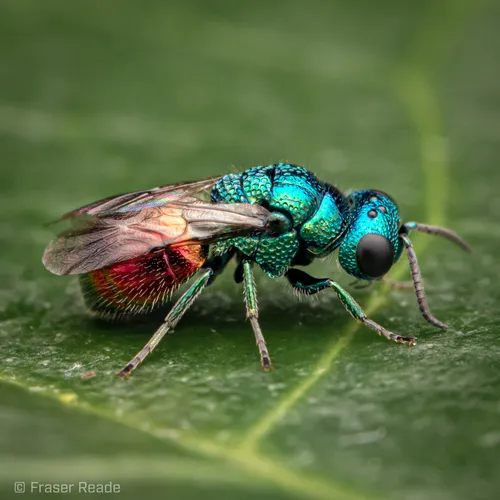
Pseudomalus auratus
Pseudomalus auratus
One of several very handsome species within this family, with a ruby red body and blue green thorax and head, the whole having a rather metallic lustre. There are several very similar species and great care is needed when identifying these wasps. Unl
Pseudomasaris basirufus
Pseudomasaris basirufus
Identification: Characteristic markings on clypeus but not on frons ( vs white spot on both frons & clypeus in P. maculifrons ) Males are more easily told apart by their antennae, and most reliably by the distance between the eyes on the vertex: nea
Pseudomasaris coquilletti
Pseudomasaris coquilletti
Identification: In females, the yellow of upper orbits are produced toward ocelli (not so in the similar zonalis ); humeri are more rounded than in zonalis (which have humeri with an obtuse anterior ridge): Antennal segments VI-VII in males are widen
Pseudomasaris edwardsii
Pseudomasaris edwardsii
Identification: Females have a swelling on the anterior side of mesotibia (reduced/absent in some individuals): Males have unique antennae, and a slight swelling on frons: description (Bradley 1922)
Pseudomasaris macswaini
Pseudomasaris macswaini
Identification: Similar to P. edwardsii , but females have yellow spot above the tegula and antennae all black except small yellow spots on scape; in males, antennae mostly black and not concave below
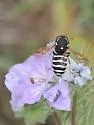
Pseudomasaris marginalis
Pseudomasaris marginalis
Identification: Head and thorax with long, black hairs. Black with whitish yellow markings, otherwise mostly black; clypeus, scape, most of the thorax, and abdomen ventrally are black. Has a lamellate propodeum (rather than dentate as in the somewhat
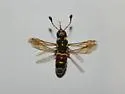
Pseudomasaris texanus
Pseudomasaris texanus
Identification: see Males and females: apex of fore femur, and bases of mid and hind tibiae without yellow spots. Males: eyes separated at the narrowest by about one posterior ocellar diameter.
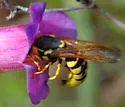
Pseudomasaris vespoides
Pseudomasaris vespoides
Identification: Males: Probably the most common species of Pseudomasaris .
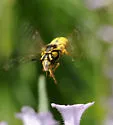
Pseudomasaris wheeleri
Pseudomasaris wheeleri
Identification: Black, with sulphur-yellow markings, more extensive in southern specimens; mesonotum with two complete or interrupted longitudinal stripes (thoracic and abdominal pattern superficially resembles that of Vespula sulphurea - HW).
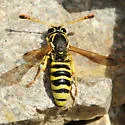
Pseudomasaris zonalis
Pseudomasaris zonalis
Identification: Females: Color is black and sulphur-yellow (whitish in some forms, especially in the northeastern part of its range), frons with a pale spot above clypeus (may be missing in some specimens). P. zonalis can be recognized by humeri with
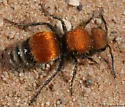
Pseudomethoca propinqua
Pseudomethoca propinqua
Identification: male: dorsum of thorax black, vertex and apical margins of the abdominal segments golden, wings dark; female similarly colored
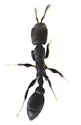
Pseudomyrmex caeciliae
Pseudomyrmex caeciliae
Identification: Similar to P. elongatus but in our region only found in Texas. The two species overlap further south. Seems to be treated as Pseudomyrmex elongatus in
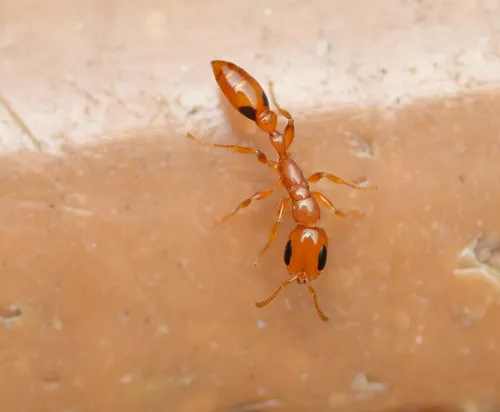
Pseudomyrmex simplex
Pseudomyrmex simplex
Identification: Very simply identified among its genus by the orange body and paired black spots on the gaster. Synemosyna petrunkevitchi (Araneae: Salticidae) is a jumping spider that mimics this ant:
Pseudophanerotoma thapsina
Pseudophanerotoma thapsina
Identification: Pseudophanerotoma ID: Forewing RS reaching hind margin; occipital carina complete; head and thorax with fine punctation; two sutures on the abdomen; antennae with more than 23 antennomeres (21 flagellomeres + pedicel & scape). P. thap
Pseudorhyssa nigricornis
Pseudorhyssa nigricornis
Identification: This is the only species in our area with a ridged mesoscutum not within subfamily Rhyssinae . This species can be separated by the larger areolet, "fore wing with vein cu-a joining at the bifurcation of M and Cu", complete occipital
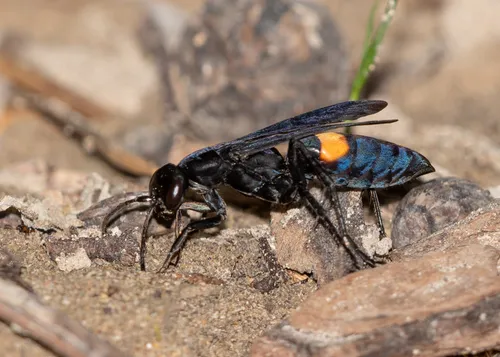
Psorthaspis brimleyi
Psorthaspis brimleyi
Identification: Apparently the only eastern member of the genus where female is mostly dark. Like most other members of this genus, known only from the female. Original description below (Malloch, 1928): Pedinaspis brimleyi , new species. Female. - B
Psorthaspis legata
Psorthaspis legata
Identification: This species has some orange coloration on the head and two cream bands on the third and fourth abdominal segments. Wings banded instead of diffusely darkened. (Nick Fensler)
Psorthaspis mariae
Psorthaspis mariae
Identification: See discussion under images. Historical notes. The author of this species is American entomologist Ezra Townsend Cresson (1838-1926). The wasp was no doubt named "mariae" in honor of his wife (married 1859), Mary Ann Ridings Cresson (
Psorthaspis planata
Psorthaspis planata
Formerly a separate species, Psorthaspis morosa is now considered synonymous with Psorthaspis planata . (Evans 1954)
Pterocheilus denticulatus
Pterocheilus denticulatus
Identification: Tergum 2 with a pair of scar-like longitudinal spots. Male with ventrally notched mid femur and apically expanded hind femur.
Pterocheilus diversicolor
Pterocheilus diversicolor
Identification: Among members of Micropterocheilus (originally described as a subgenus, later elevated to genus in Bohart(1999) but currently treated as a subgenus on BugGuide), Bohart states that for species P. diversicolor : "the orange and white m
Pterocheilus pimorum
Pterocheilus pimorum
Identification: Body almost entirely yellow with blackish or reddish markings
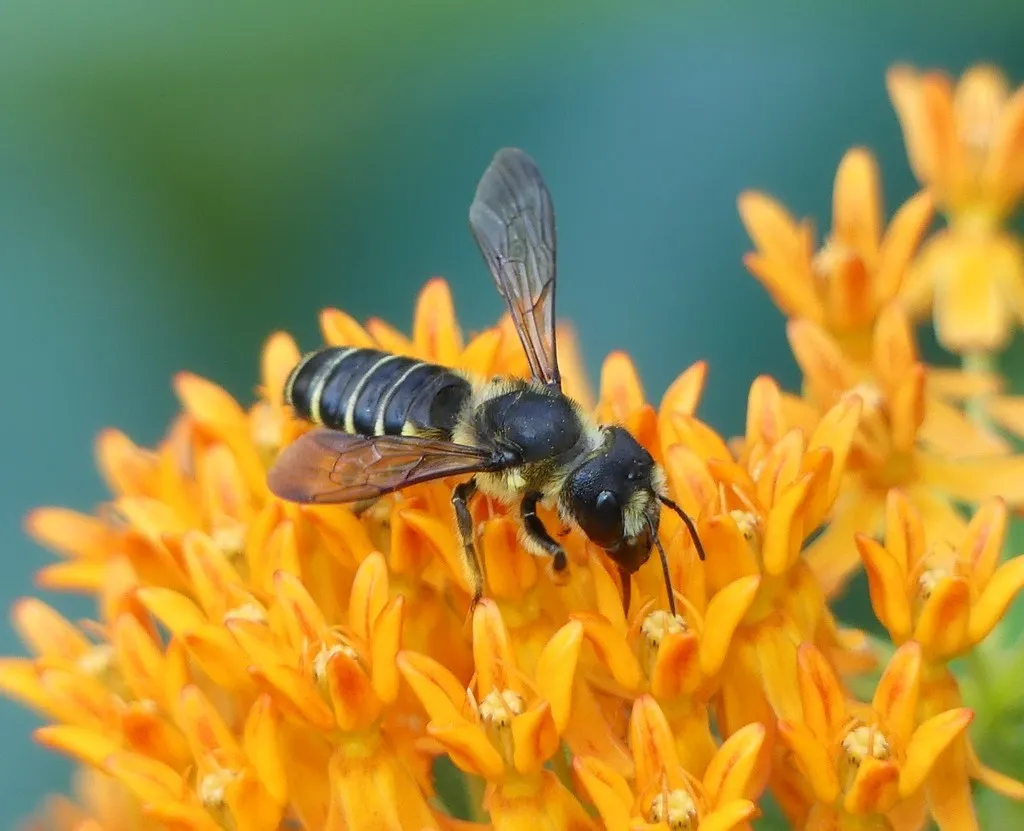
Pugnacious Leafcutter Bee
Megachile pugnata
Identification: In the female the clypeus is shortened and thickened producing a vertical face.
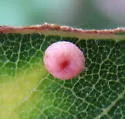
Pumpkin Gall Wasp
Dryocosmus minusculus
Identification: From Russo : "This cynipid wasp induces tiny, 1 mm wide, pumpkin-shaped galls on the upper surface of the leaves of coast live, interior live and California black oaks. When fresh in late spring and summer, these monothalamous galls a
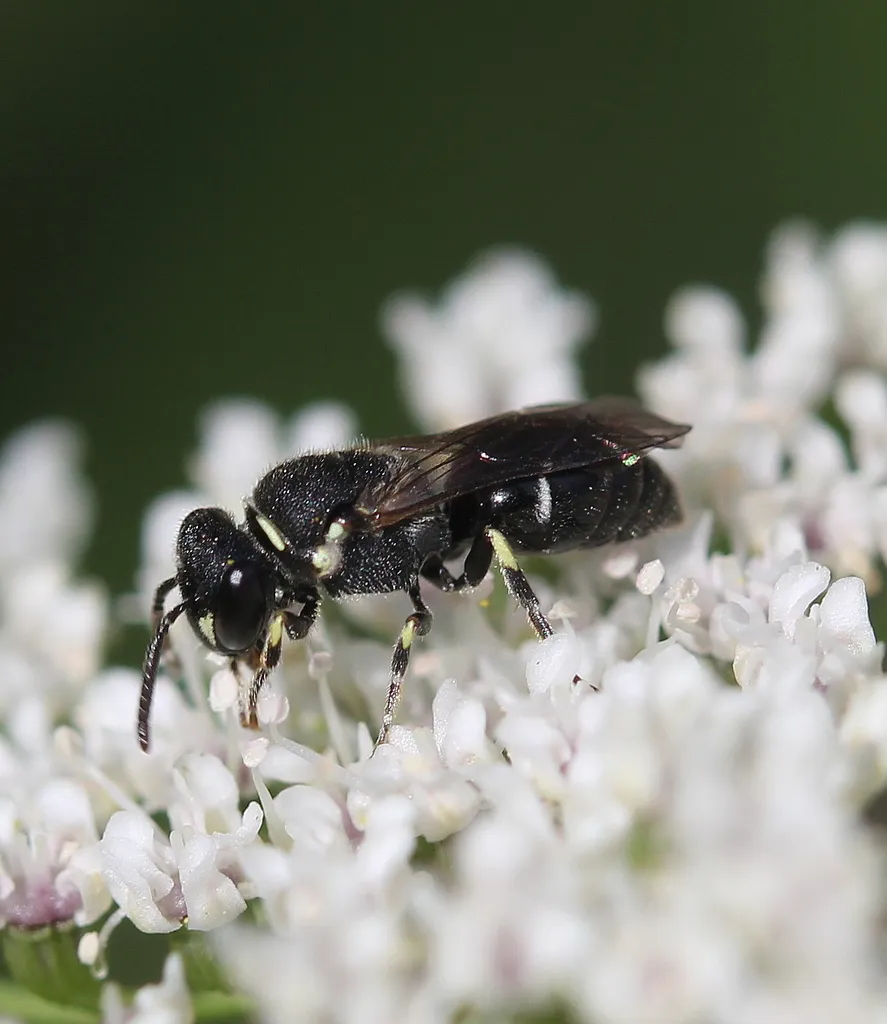
Punctate Masked Bee
Hylaeus punctatus
Non-native. First recorded in the US in 1981. (Snelling, 1983)
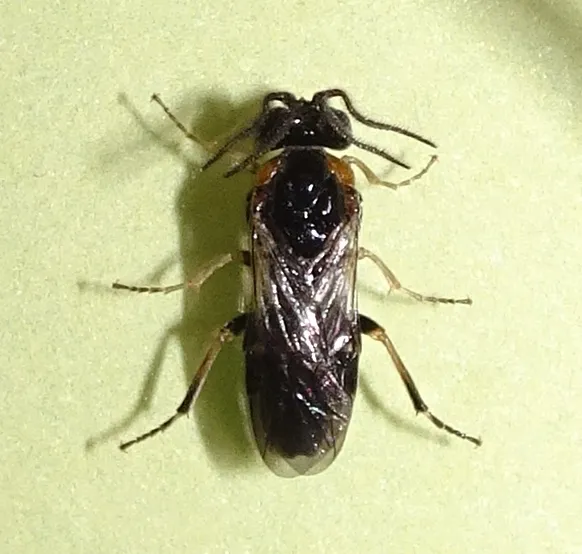
Purslane sawfly
Schizocerella pilicornis
Identification: leaf-mining species; mesonotum mostly black
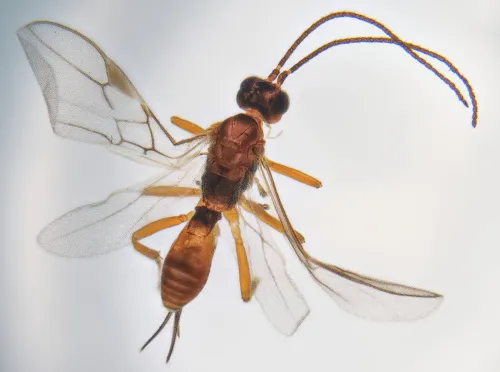
Pygostolus falcatus
Pygostolus falcatus
The genus can be recognized at once by the felty setose and flattened mesosternum of females and the distinctive shape of the first metasomal tergite. Antennal segments 30. Female mesosternum, propodeum and metasoma dark, forewing pterostigma infusca
Quebec Mummy Wasp
Aleiodes quebecensis
Identification: Body mostly honey-yellow or light brown Antenna black in basal half, light yellow or white medially, and often black apically hind tarsal segments bright yellow-white or white 45-55 short antennal segments Ocelli large, much larger th
Quebec Sweat Bee
Lasioglossum quebecense
Identification: "this common Lasioglossum species has weak apical and basal hair bands" JSA ( ref. ) "apical hair bands atypical of Lasioglossum but found in that species" JSA ( ref. ) "elongate body and dull scutum" (in males) JSA ( ref. ) "some mal
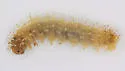
Raspberry Sawfly
Monophadnoides rubi
Identification: "A number of genera have similar spines, but not so long and branched in M. rubi , the spines on the subspiracular lobe (second row from bottom) have the anterior spine bifurcate and the posterior spine simple; the spines on the surpe
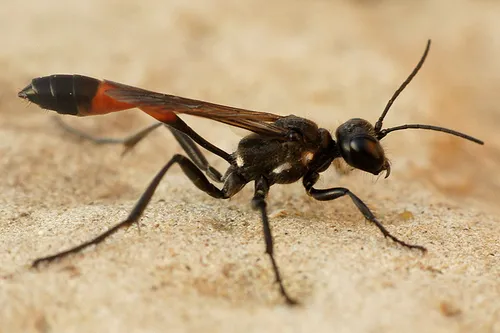
Red Banded Sand Wasp
Ammophila sabulosa
Ammophila sabulosa is a large (15 to 25 mm long) and striking solitary wasp with a very long narrow "waist" of two segments. The species can be told from A. pubescens (which is smaller, 12 to 20ÿmm long) as the waist widens out very gradually into th
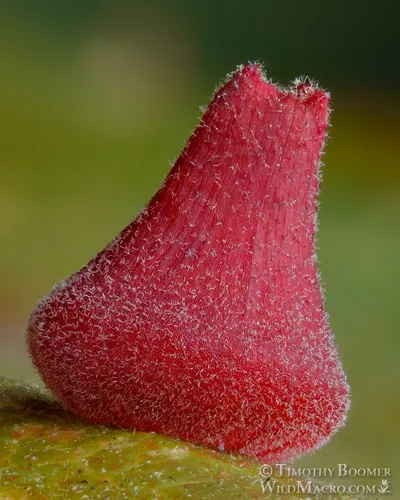
Red Cone Gall Wasp
Feron kingi
Galls normally cause only minor damage to the host plant
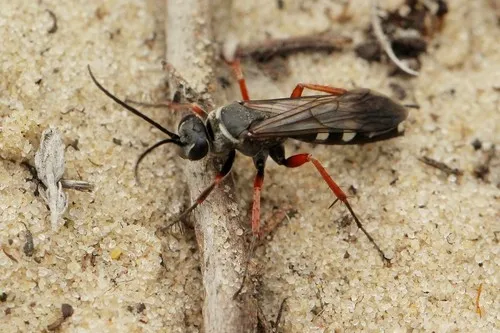
Red Legged Spider Wasp
Episyron rufipes
A large, robust species with ivory spots on the gaster. Until recently this was the only member of this genus to be found in Britain, but the recent discovery of Episyron gallicum has complicated matters. Females are readily distinguished by having f
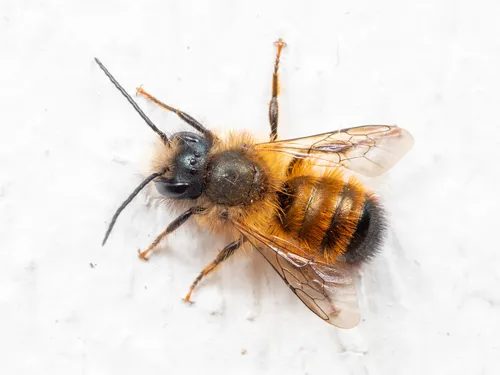
Red Mason Bee
Osmia bicornis
Greyish-brown hair on the thorax and orange-red on the abdomen. The head features two inwardly-curved facial horns below the antennae. The only other British Osmia species with this feature is O. cornuta, which resembles a large black and bright oran
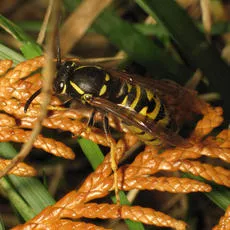
Red Wasp
Vespula rufa
Vespula rufa usually has rufous markings on the first and second abdominal segments (coupled with the pattern of black markings) and these are diagnostic of the species. Widespread and fairly frequent in Britain. No additional images available for th
Red Wood Ant
Formica rufa
Large red and black ant that builds large mound nests in woodland. One of the most conspicuous ant species in Europe.
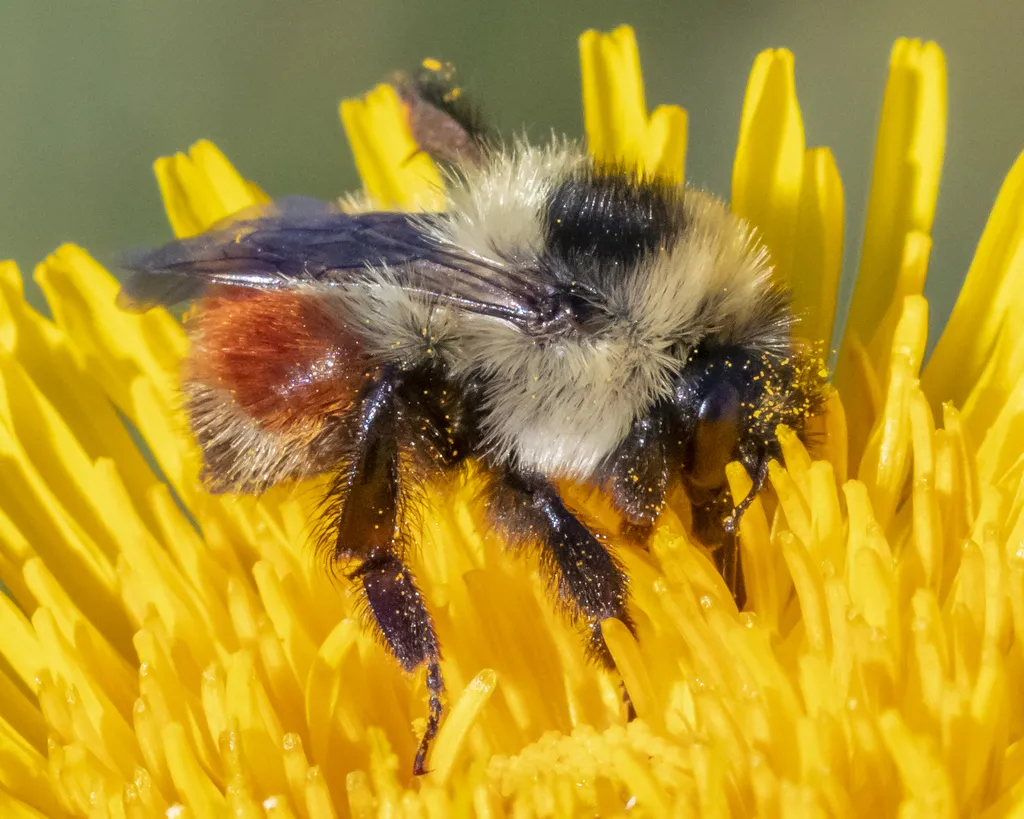
Red-belted Bumble Bee
Bombus rufocinctus
Identification: Those with red on the metasoma are often confused with various Pyrobombus whereas those without can be confused with Bombus bimaculatus and various other species, but in rufocinctus the malar space is exceptionally short. In females w
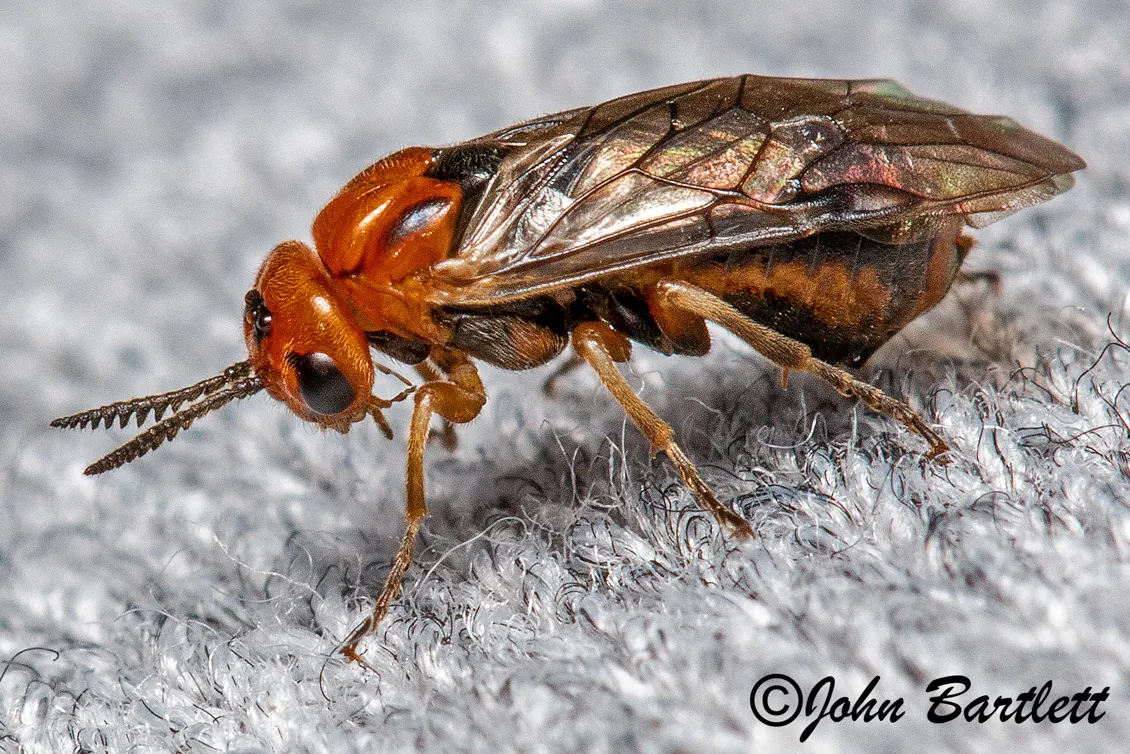
Red-headed Pine Sawfly
Neodiprion lecontei
Identification: Det. Tony DeSantis, 2013 Closterocerus cinctipennis is a parasite of eggs. Spathimeigenia aurifrons parasitizes larvae. Dahlbominus fuscipennis , a European parasite, as been found in infested stands in TN, ALA, NY, MICH.
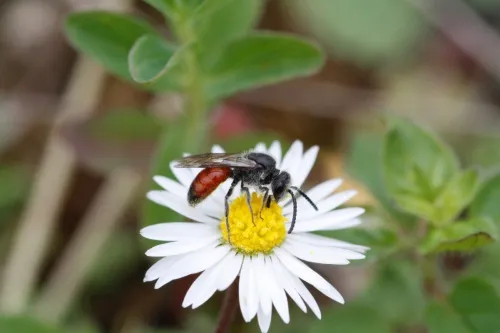
Red-tailed Blood Bee
Sphecodes rubicundus
A strikingly large Sphecodes. Male has knobbly antennae, (13 segments). Antennae not obviously compressed, and with fairly narrow zones of pubescence. It has a greater area of red in the body than males of other large Sphecodes species. Care is neede
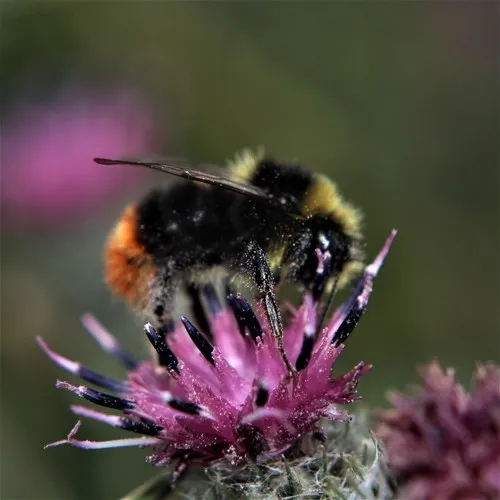
Red-tailed Bumblebee
Bombus lapidarius
Lengths queen 20-22 mm, workers 11-16 mm, male 14-16 mm. Bombus lapidarius is probably the most easily recognised bumblebee species, with its black body and bright orange tail. The workers have the same colouring as the queen but are much smaller. Th
Rhogogaster nr-viridis
Rhogogaster nr-viridis
Identification: Separated from R. californica as follows: Head with frontal groove much shallower than antennal groove; antennal crests aligned with raised edge of frontal area. ( 3 )
Rhynchophion flammipennis
Rhynchophion flammipennis
Identification: Body black, wings strongly orange with black at the apex and base, antennae variably yellow to black. Probably a mimic of certain Pepsini (tarantula-hawk wasps and allies)
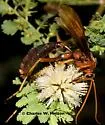
Rhynchophion woodi
Rhynchophion woodi
Identification: Body reddish-brown, wings orange with black at the apex and base, antennae yellowish-brown Suggested to potentially be a mimic of Polistes canadensis :
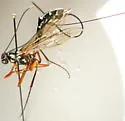
Rhyssa alaskensis
Rhyssa alaskensis
Identification: the only Rhyssa with the posterior orbits (area directly behind the eyes) entirely black, vs markings there ―see figs. from Townes (1960) . Original description
Rhyssa crevieri
Rhyssa crevieri
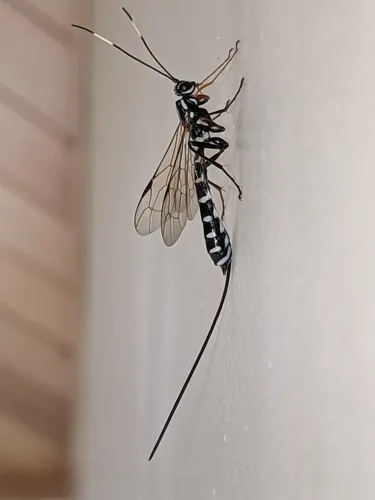
Identification: Rhyssa crevieri is one of only two rhyssine species in our area with white bands on the antennae. It lacks a white dorsobasal spot on the hind coxae (the ground color is dark). The metapleuron has a smaller, notched-to-"triangular" wh
Rhyssa howdenorum
Rhyssa howdenorum
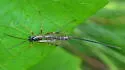
Identification: Rhyssa howdenorum is the only eastern member of its genus with a banded rather than spotted abdomen.
Rhyssa lineolata
Rhyssa lineolata
Identification: Rhyssa lineolata is one of only two rhyssine species in our area with white bands on the antennae. It additionally has a white dorsobasal spot on the hind coxae (the ground color is often orange but may be darker). The metapleuron has
Rhyssa ponderosae
Rhyssa ponderosae
Identification: Rhyssa ponderosae is the only western species with the hind coxae entirely black. It also has more reduced spots on the abdomen.
Rhyssella humida
Rhyssella humida
Identification: Identified as Rhyssinae by the ridged mesoscutum and lack of anterolateral grooves on T2 of the abdomen and as Rhyssella by the smaller size, lack of a median tooth on the clypeus, basal fusing of the first sternite and tergite, gener
Rhyssella nitida
Rhyssella nitida
Identification: Identified as Rhyssinae by the ridged mesoscutum and lack of anterolateral grooves on T2 of the abdomen and as Rhyssella by the smaller size, lack of a median tooth on the clypeus, basal fusing of the first sternite and tergite, gener
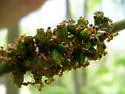
Ribbed bud gall
Callirhytis quercusgemmaria
Causes detachable stem galls on "all the red oaks." Typical galls look like this; they secrete honeydew and drop to the ground when mature: Galls containing "guests" do not drop. They enlarge and become woody, remaining on the tree over the winter. T
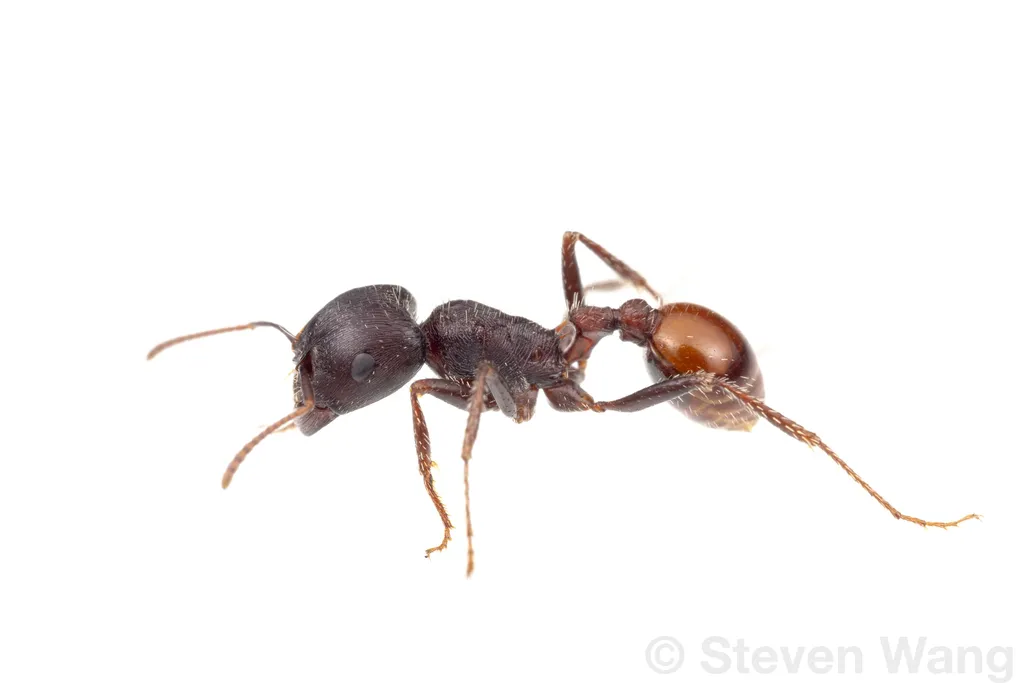
Rough Harvester Ant
Pogonomyrmex rugosus
Identification: Color and size is distinctive in range except for the dark morph of Veromessor andrei , but Pogonomyrmex has a continuous mesonotal profile (one hump) and Veromessor has an impressed metanotal groove (two humps). This species hybridiz
Rough-node Snapping Ant
Odontomachus ruginodis
Identification: I would rather lean for the very similar O. ruginodis (introduced, and now more common than O. brunneus ). 1st dorsal segment of the gaster appears to be shining, hairless or almost so, while O. brunneus is hairy and has a distinct wo
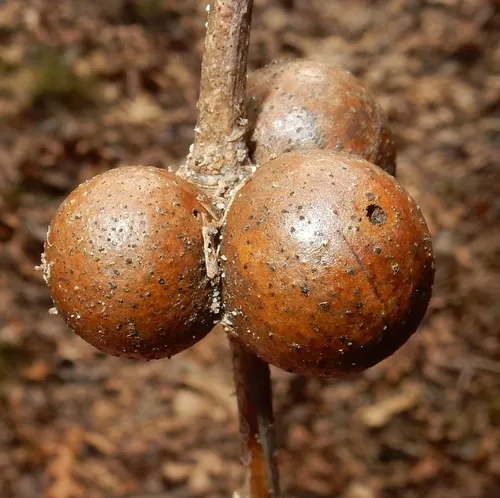
Round Bullet Gall Wasp
Disholcaspis quercusglobulus
Forms round, detachable twig galls, 8-15 mm in diameter, singly or in small clusters, on white oak ( Quercus alba ).
Rubicundiella annulicornis
Rubicundiella annulicornis
Identification: Males are readily distinguished from all other members of the genus by the combination of a white annulus on the flagellum and ferruginous scutellum.
Rubicundiella mucronata
Rubicundiella mucronata
Identification: Males are readily distinguished from all other members of the genus by the combination of a white annulus on the flagellum and yellow-white scutellum.
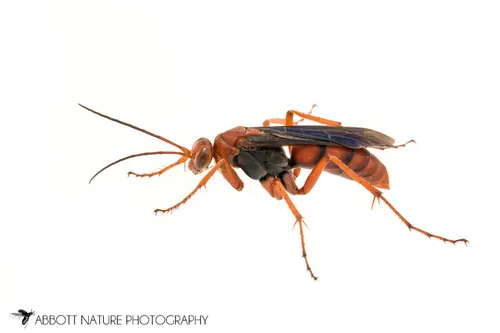
Rusty Spider Wasp
Tachypompilus ferrugineus
Identification: Subspecies are noted as follows based on the extent of black markings:
Rusty Willow Sawfly
Cimbex rubidus
Identification: Thick reddish/brown body, wings glossy black; female with yellow spot at the base of abdomen
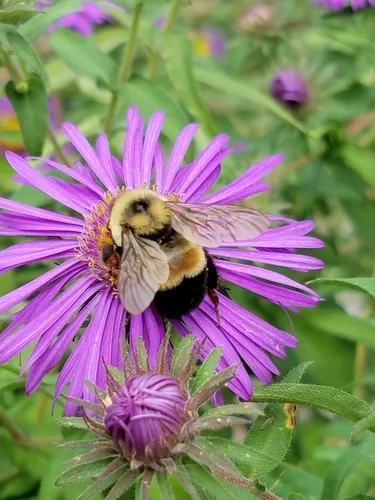
Rusty-patched Bumble Bee
Bombus affinis
Identification: Queens have a similar color pattern to B. vagans , with a yellow thorax and yellow T1 and T2 but in affinis the face and malar is much shorter, the hairs of the face are all black, and the coat is shorter and more uniform in length. W
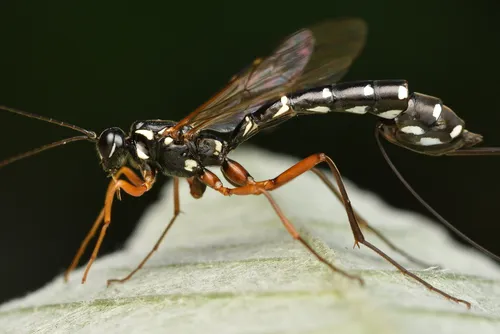
Sabre Wasp
Rhyssa persuasoria
Sometimes called the Giant Ichneumon, this is the largest ichneumon in Britain and one of the largest in Europe (10–40 mm). An easy species to identify due to the striking pattern of small white spots along the entire length of the thin, black body (
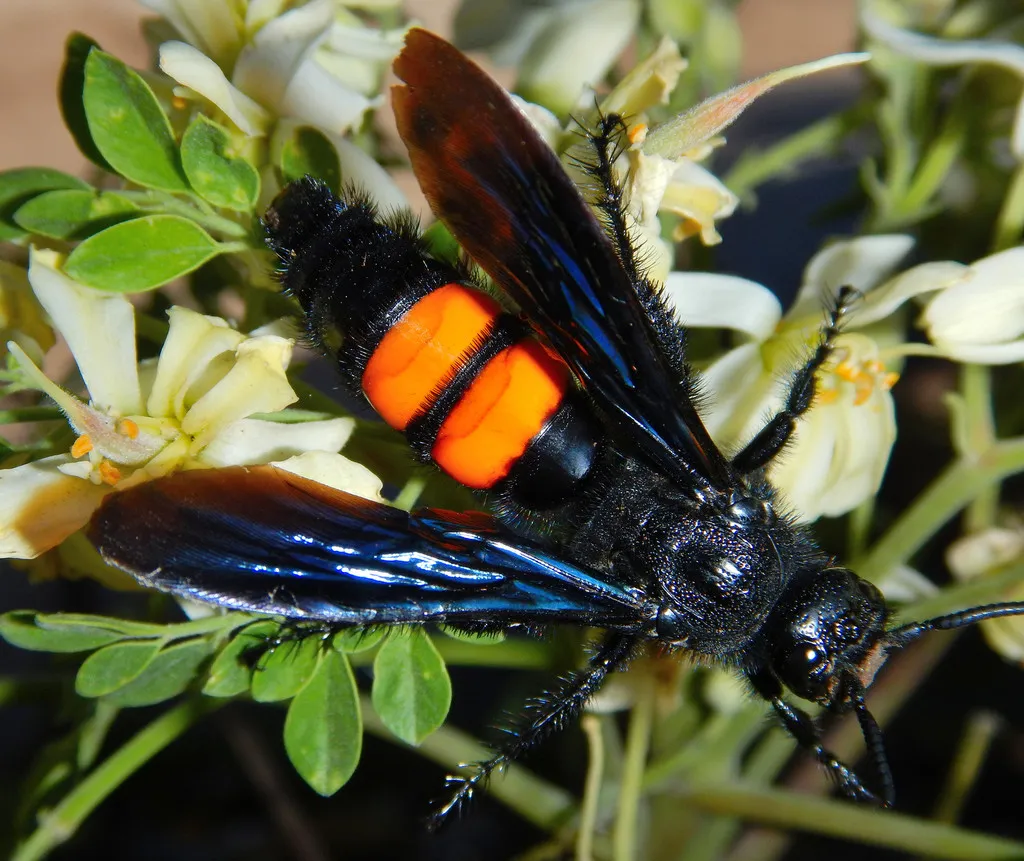
Saddleback Scoliid Wasp
Pygodasis ephippium
Identification: A large, black scoliid with two broad orange bands on the abdomen. The body setae are black, unlike the orange-marked Dielis (female D. dorsata and D. tolteca ). Unlike most of our campsomerine species, the male has the same color pat
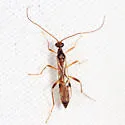
Saint Hyacinth Mummy Wasp
Aleiodes sanctihyacinthi
Identification: Body orange and black, eye posteriorly margined with orange, 46-48 antennal segments, top of head with rough sculpturing , fourth metasomal tergite with fine granular sculpture.
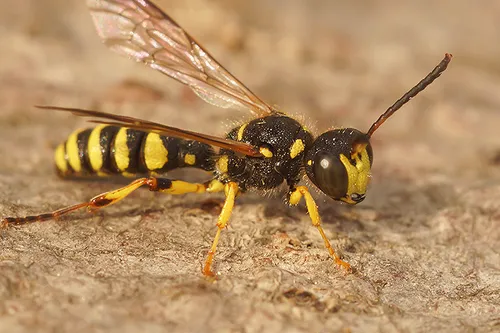
Sand Tailed Digger Wasp
Cerceris arenaria
A large species similar in size and markings to the Bee Wolf (Philanthus triangulum). Most solitary bees and wasps are difficult to identify, and can rarely be identified from photos taken in the field. All red-rated records should include a photo or
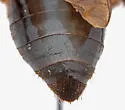
Sandhills Cellophane Bee
Colletes ultravalidus
Identification: Has the longest malar space of any North American Colletes, exceeding that of its sister species Colletes validus. Overall it resembles C. validus, but its thoracic hair is more orange (closer to thoracicus) and it lacks conspicuous t
Sanwald's Amazon ant 0
Polyergus sanwaldi
Identification: Dull integument, numerous stout dark bristle on rear margin of head, in mixed species colonies with host Formica dolosa . This ant is quite similar in appearance to the southern species P. longicornis , distinguished morphologically b
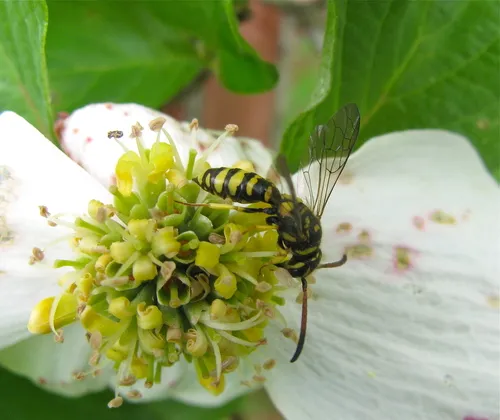
Sapyga centrata
Sapyga centrata
Identification: Head: Black, rough textured. Inner eye indented (emarginate) with yellow margin. Yellow dash on back eye margin. Yellow triangle above and between antenna bases on male. Mouth (clypeus) with yellow marks. Mandibles black with a yellow
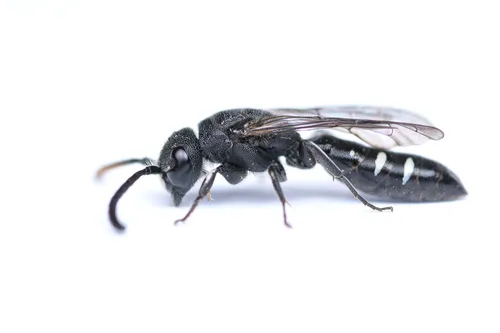
Sapyga quinquepunctata
Sapyga quinquepunctata
The quinquepunctata part of the scientific name probably refers to the white spotting on the tergites. The species is sexually dimorphic the males being mainly black other than the white spots mentioned above, but the females have a broad red band ac
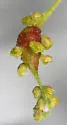
Sausage Flower Gall Wasp
Melikaiella congregata
Identification: Larvae induce sausage-like catkin galls on Quercus agrifolia (coast live oak) in the spring. Gall is known to produce honeydew
Scarlet Oak Sawfly
Caliroa quercuscoccinae
Identification: Larvae are slug like. Adults black with yellowish legs.
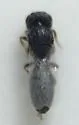
Scelio opacus
Scelio opacus
Most abundant and widespread species of Nearctic Scelio .
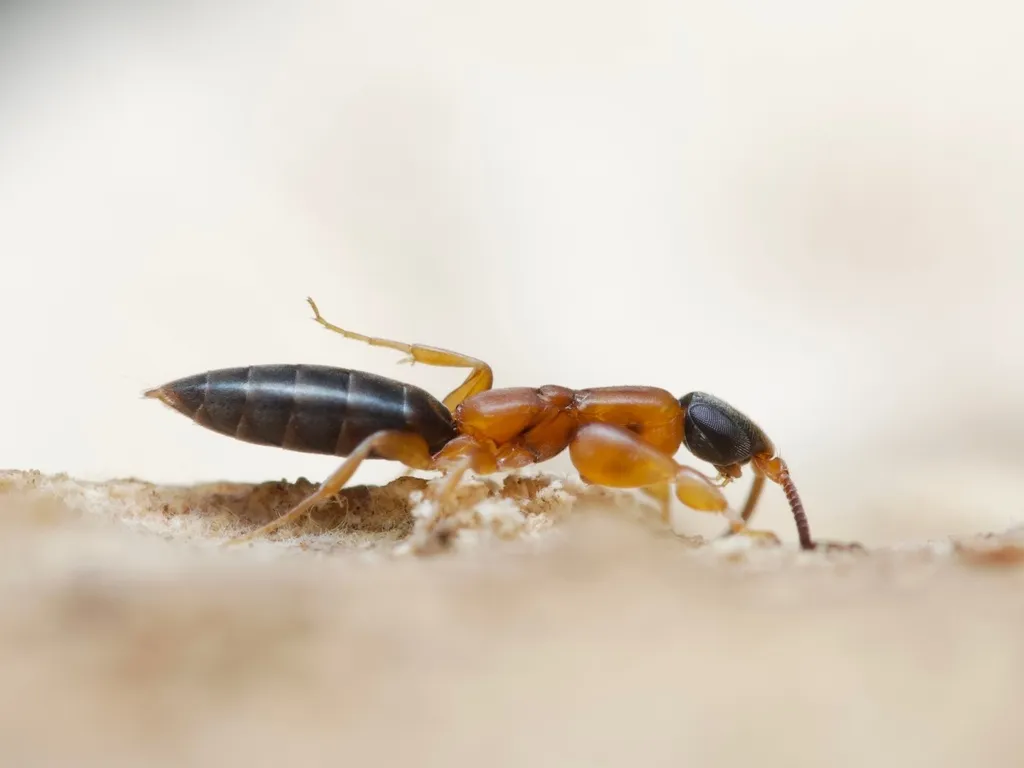
Sclerogibba talpiformis
Sclerogibba talpiformis
Identification: Reddish fore-body, longitudinal furrow on propodeum, lack of a longitudinal furrow on the pronotum, widely separated lateral ocelli, and complete notauli.
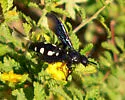
Scolia guttata
Scolia guttata
Adults were observed on several occasions flying around over the nests of Atta texana ; two were seen to enter ant nests. Scoliid cocoons were found among the material from which Cotinis larvae were taken, a likely host of S. guttata .
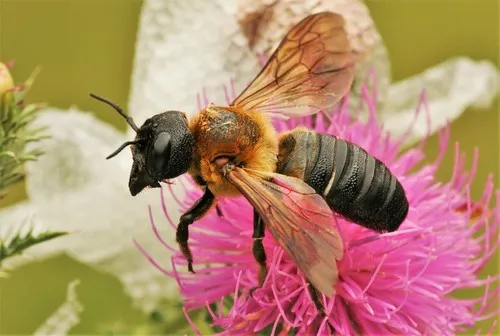
Sculptured Resin Bee
Megachile sculpturalis
Identification: body cylindrical, 14-24 mm in length (longer than most bees in NA), females usually larger than males; head and abdomen black, thorax covered with dense yellowish-brown hairs, wings dark but transparent Mangum & Bambara They are oppor
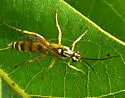
Setanta compta
Setanta compta
Identification: Females have white bands on the antennae and often narrower yellow bands on the abdomen while males have entirely black antennae and often wider yellow bands on the abdomen. ( 3 ) The subspecies have historically been identified as fo
Setanta parsimonica
Setanta parsimonica
Identification: Very similar to S. compta . "The main difference is the females have a predominantly yellow mesosoma (black in S. compta) and the basal part of the antenna is reddish-brown." - Brandon Claridge
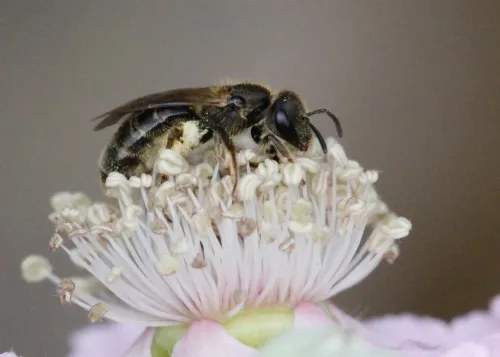
Sharp-collared Furrow Bee
Lasioglossum malachurum
This is one of the larger Lasioglossum species in Britain, and the distinctive right-angled front corners of the pronotum are easily seen under the microscope. Most solitary bees and wasps are difficult to identify, and can rarely be identified from
Shiny-vented Sharp-tail Bee
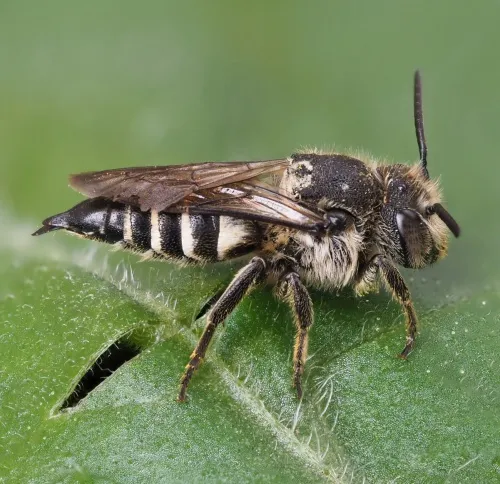
Coelioxys inermis
One of three Coelioxys species with similar tips to the female's sternite 6 (two sharp teeth on either side near apex). Females are more easily determined than males and can be separated from female C. mandibularis by the shape of the mandibles; from
Short-horned Yellow-face Bee
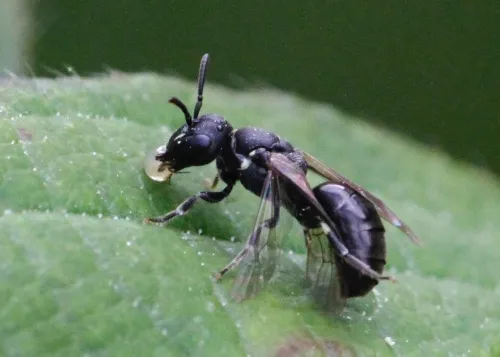
Hylaeus brevicornis
A very small and mainly black bee. The male has a striking white face (this characteristic is not restricted solely to this species) and the hind legs are banded with black and creamy yellow. The female has paired white spots on the face. Most solit

Sickle-jawed Blood Bee
Sphecodes puncticeps
A stout, small Sphecodes, with a median groove at the front of the thorax. It is very similar to other Sphecodes species and care is needed with identification. Most solitary bees and wasps are difficult to identify, and can rarely be identified from
Silky Striped Sweat Bee
Agapostemon sericeus
Identification: Rugose scutum See remarks. "Only 4 Agapostemon species in Ontario. A. sericeus has the roughest thorax and three white hair bands on abdomen, the second hair band is usually wider. Dark legs with the longest golden hair. A. splendens
Simophion excarinatus
Simophion excarinatus
Identification: Clypeus concavely truncate, more than twice as broad as long. Posterior tangent of eyes bisecting posterior ocelli. Mostly dark brown but the orbits so broadly yellowish white as to make the head appear largely of that color
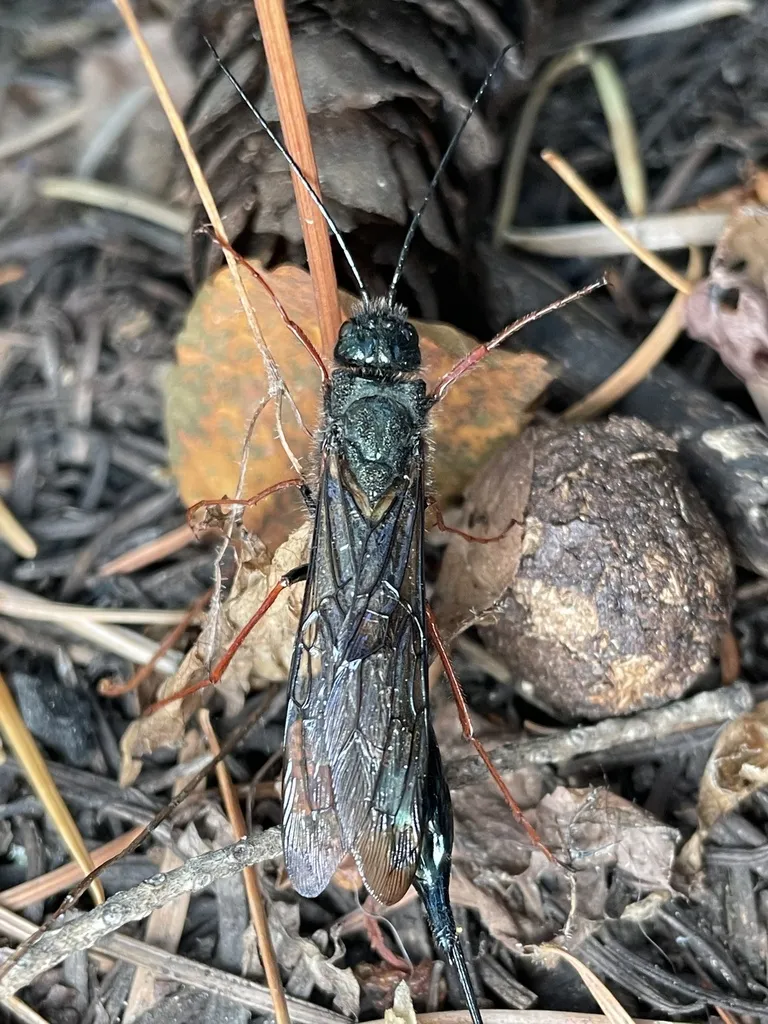
Sirex longicauda
Sirex longicauda
Identification: Female: body black with metallic blue or green reflections; wings clear; legs with coxae and femora black, tibiae and tarsi reddish; second hind tarsomere elongate (unique to this species and S. areolatus ); ovipositor long with apica
Sitka Bumble Bee
Bombus sitkensis
Identification: Very similar to the sympatric dimidiatus form of B. flavifrons but with a darker scutellum and a conspicuous buff tip to the abdominal apex. More common in the northern part of its range, such as Washington State, than in the southern
Six-Spotted Carpenter Ant
Camponotus sexguttatus
Identification: The dark reddish brown to blackish color, abundant whitish erect setae, and cream colored lateral spots on at least tergite 2 are unique among the North American Camponotus . Natural range is Argentina to Central America. Florida popu