
Spaniopus dissimilis
This record describes Spaniopus dissimilis (species). Recorded family: Pteromalidae. Recorded order: Hymenoptera.
Identification and Appearance
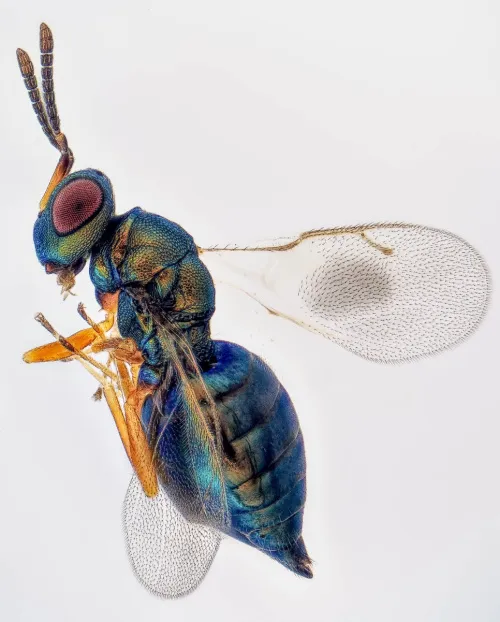
| Feature | Description |
|---|---|
| Body | Body length 1.5–2.5mm. |
| Head | Head, mesosoma and metasoma dark metallic green with diffuse coppery lustre; antenna with scape yellowish-brown, flagellum entirely brown; legs yellowish-brown; fore with or without infuscate spot under M and S; ovipositor sheath dark brown. Clypeus radially striate, its lower margin weakly emarginate. Mandible formula 3:4. Unless identified by a recognised expert, a photo is required and the specimen should be examined with a microscope. In the comments box, state the key or ID method used and describe the size and identifying characters. Parasitoids targeting gall-making insects within the Diptera family Cecidomyiidae (gall midges). Tselikh, E.V. Review of the world species of Spaniopus Walker, 1833 (Hymenoptera: Pteromalidae), with description of a new species from the Russian Far East. Zootaxa, 4058, 41-65. No additional images available for this species. |
Classification
- Kingdom
- Animalia
- Phylum
- Arthropoda
- Class
- Insecta
- Order
- Hymenoptera
- Family
- Pteromalidae
- Genus
- Spaniopus
Imported taxonomy record. Source availability varies; see the source references and editorial policy below.
Diet and Behavior
Life History
Parasitoids targeting gall-making insects within the Diptera family Cecidomyiidae (gall midges).
Additional species information
Recorded status
Unknown.
About Flies: the wider group
Order-level background for Hymenoptera, the group containing Spaniopus dissimilis. Species-specific details appear above.
Group overview
Hymenoptera includes over 150,000 described species of ants, bees, wasps, and sawflies. Earth harbors approximately 20 quadrillion (20×10^15) ants, with a combined biomass of ~12 megatons of dry carbon - exceeding the combined biomass of all wild birds and mammals (PNAS, 2022).
Ecological role of the group
About 35% of the world's food crops depend on animal pollinators. The chocolate industry, valued at over $100 billion, depends on pollinating flies and midges. Ants are the dominant soil engineers in most terrestrial ecosystems, turning more soil than earthworms in many habitats.
Economic and practical significance of the group
Pollinators contribute $235-577 billion worth of annual global food production (FAO). In the U.S., bee pollination alone benefits crops valued at $18 billion annually, and honey bees are responsible for $5.4 billion in agricultural productivity. Between April 2023-2024, 55.1% of managed honey bee colonies were lost. The U.S. bee population dropped from 5 million to 2.5 million.
Recorded sources for this group: FAO, USDA, EPA, PNAS (2022), US Fish & Wildlife Service. Imported estimates may describe particular regions or reporting periods.
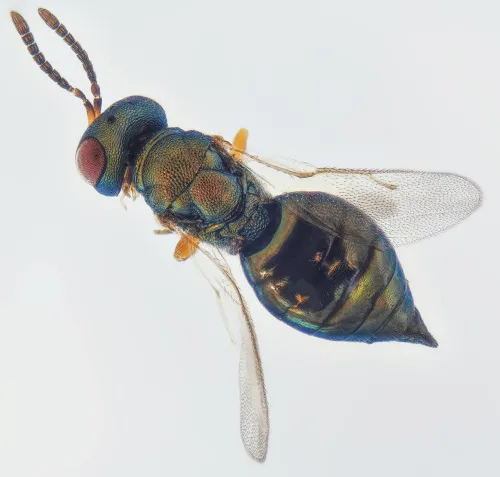
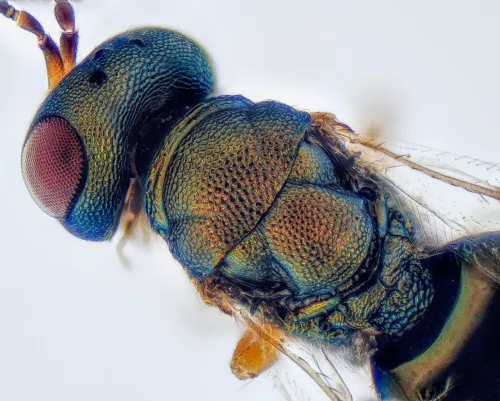
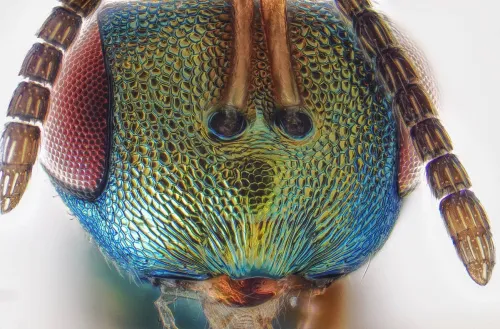
Photos of Spaniopus dissimilis (4)
Frequently Asked Questions About Spaniopus dissimilis
What is Spaniopus dissimilis?
Spaniopus dissimilis is a species in the family Pteromalidae, within the order Hymenoptera.
How big is Spaniopus dissimilis?
1.5–2.5mm. Head, mesosoma and metasoma dark metallic green with diffuse coppery lustre; antenna with scape yellowish-brown, flagellum entirely brown; legs yellowish-brown; fore with or without infuscate spot under M and S; ovipositor sheath dark brown. Clypeus radially striate, its lower margin weakly emarginate. Mandible formula 3:4.
What is the life cycle of a Spaniopus dissimilis?
Parasitoids targeting gall-making insects within the Diptera family Cecidomyiidae (gall midges).