
Suckley's Cuckoo Bumble Bee
Bombus suckleyi
This record describes Bombus suckleyi (species). Recorded family: Apidae. Recorded order: Hymenoptera.
Identification and Appearance
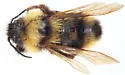
Hairs of female face black unlike insularis. Lateral projections of female sterna more pronounced than in other species. A photo identified as a female suckleyi in the Williams et al. identification guide appears to be fernaldae instead. Note the large patch of yellow hairs on the vertex. Declined severely since the late 1990s along with its hosts such as Bombus occidentalis. Whereas loss of its hosts, i.e. species of Bombus (Bombus) has received much attention, this species and B. ashtoni (associated with B. terricola) may be at even greater risk **Listed as Critically Endangered by the IUCN Red List of Threatened Species **
Classification
- Kingdom
- Animalia
- Phylum
- Arthropoda
- Class
- Insecta
- Order
- Hymenoptera (Ants, Bees, Wasps and Sawflies)
- Superfamily
- Trigonaloidea
- Family
- Apidae (Cuckoo, Carpenter, Digger, Bumble, and Honey Bees)
- Subfamily
- Apinae
- Tribe
- Bombini
- Genus
- Bombus (Bumble Bees)
Imported taxonomy record. Source availability varies; see the source references and editorial policy below.
Habitat and Range
Habitat
Expected at mountain sites with abundant B. occidentalis.
Geographic Range
Western North America. Scattered records from eastern North America mapped in the Williams et al. guide are at best inadequately documented and inconsistent with their statement that a disjunct population occurs in NL (Canada). Discover Life Global Map
Diet and Behavior
Life History
Social parasite of Bombus occidentalis and likely other Bombus (Bombus). Both sexes regularly visit flowers for nectar. The Hosts section of its Discover Life species page lists known floral associations based on specimen records.
Additional species information
Species notes from the sources
Etymology: Author of species is Greene, 1860.
About Flies: the wider group
Order-level background for Hymenoptera, the group containing Bombus suckleyi. Species-specific details appear above.
Group overview
Hymenoptera includes over 150,000 described species of ants, bees, wasps, and sawflies. Earth harbors approximately 20 quadrillion (20×10^15) ants, with a combined biomass of ~12 megatons of dry carbon - exceeding the combined biomass of all wild birds and mammals (PNAS, 2022).
Ecological role of the group
About 35% of the world's food crops depend on animal pollinators. The chocolate industry, valued at over $100 billion, depends on pollinating flies and midges. Ants are the dominant soil engineers in most terrestrial ecosystems, turning more soil than earthworms in many habitats.
Economic and practical significance of the group
Pollinators contribute $235-577 billion worth of annual global food production (FAO). In the U.S., bee pollination alone benefits crops valued at $18 billion annually, and honey bees are responsible for $5.4 billion in agricultural productivity. Between April 2023-2024, 55.1% of managed honey bee colonies were lost. The U.S. bee population dropped from 5 million to 2.5 million.
Recorded sources for this group: FAO, USDA, EPA, PNAS (2022), US Fish & Wildlife Service. Imported estimates may describe particular regions or reporting periods.
Photos of Suckley's Cuckoo Bumble Bee (2)
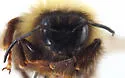
Photo credits: Contributed by Ted Kropiewnicki; Additional contributions by Beatriz Moisset , John S. Ascher , Nathaniel Green
Frequently Asked Questions About Suckley's Cuckoo Bumble Bee
What is Suckley's Cuckoo Bumble Bee?
Suckley's Cuckoo Bumble Bee (Bombus suckleyi) is a species in the family Apidae, within the order Hymenoptera.
How big is Suckley's Cuckoo Bumble Bee?
Large
How do you identify Suckley's Cuckoo Bumble Bee?
Hairs of female face black unlike insularis. Lateral projections of female sterna more pronounced than in other species. A photo identified as a female suckleyi in the Williams et al. identification guide appears to be fernaldae instead. Note the large patch of yellow hairs on the vertex.
Where is Suckley's Cuckoo Bumble Bee found?
| Feature | Details |
|---|---|
| Habitat | Expected at mountain sites with abundant B. occidentalis. |
| Range | Western North America. Scattered records from eastern North America mapped in the Williams et al. guide are at best inadequately documented and inconsistent with their statement that a disjunct population occurs in NL (Canada). Discover Life Global Map |
What is the life cycle of a Suckley's Cuckoo Bumble Bee?
Social parasite of Bombus occidentalis and likely other Bombus (Bombus). Both sexes regularly visit flowers for nectar. The Hosts section of its Discover Life species page lists known floral associations based on specimen records.