
Cicadettana calliope
This record describes Cicadettana calliope (species). Recorded family: Cicadidae. Recorded order: Hemiptera.
Identification and Appearance
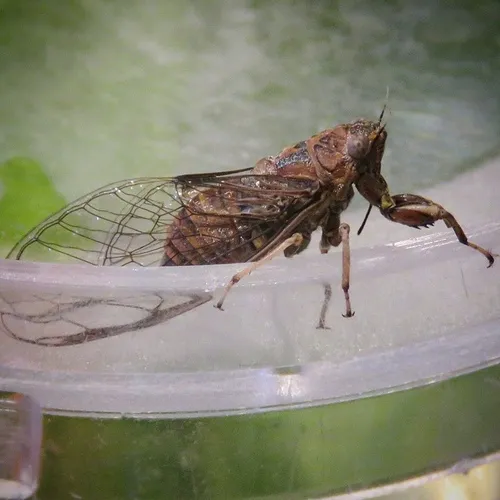
Small, and narrower across the head than other small cicadas Compare with Pacarina & Beameria . Color & Pattern: The coloration and degree of pattern may not be diagnostic to species! Populations currently classified as C. calliope exhibit several color forms incl. monochromatic lime green (Peninsular FL and Gulf), olive green, yellowish, ochreous-tan, tan, pinkish-tan, peach and brown. The typical cicada patterns may be vivid, bold and well delineated or be pale to absent giving the insect a monochromatic appearance. The color forms are not diagnostic of locality; however, within given portions of the range, there may be tendencies for certain color forms to be more prevalent. Call: The call is best described as a light whine or hissing buzz. The call of floridensis is distinct from that of other calliope populations and has a strong clicking component in addition to the light whine/hissing buzz. Initial info for this guide page taken from Dr Hamilton's remarks under this image (Please refer to the thumbnail image below for details regarding Dr. Hamilton's comments):
Classification
- Kingdom
- Animalia
- Phylum
- Arthropoda
- Class
- Insecta
- Order
- Hemiptera (True Bugs, Cicadas, Hoppers, Aphids and Allies)
- Suborder
- Auchenorrhyncha
- Superfamily
- Cicadoidea
- Family
- Cicadidae (Cicadas)
- Subfamily
- Cicadettinae
- Tribe
- Cicadettini
- Genus
- Cicadettana (Small Grass Cicadas)
Imported taxonomy record. Source availability varies; see the source references and editorial policy below.
Habitat and Range
Geographic Range
e. US (TX-FL-MD-NE)
About True Bugs, Cicadas, Hoppers, Aphids and Allies: the wider group
Order-level background for Hemiptera, the group containing Cicadettana calliope. Species-specific details appear above.
Group overview
Hemiptera (true bugs) includes over 80,000 described species across cicadas, aphids, leafhoppers, shield bugs, and bed bugs. Aphids alone cost global agriculture an estimated $2.5 billion annually in crop losses.
Ecological role of the group
Many Hemiptera are essential food sources for birds and predatory insects. Cicadas provide massive nutrient pulses during emergence events - a single Brood X emergence can involve trillions of individuals across 15 states.
Economic and practical significance of the group
The brown marmorated stink bug (Halyomorpha halys) caused $37 million in apple crop losses in a single year in the U.S. Mid-Atlantic region. Bed bug infestations in the U.S. increased by 500% between 2001-2010, costing the hotel industry hundreds of millions annually.
Recorded sources for this group: USDA, EPA, University research. Imported estimates may describe particular regions or reporting periods.
Photos of Cicadettana calliope (2)
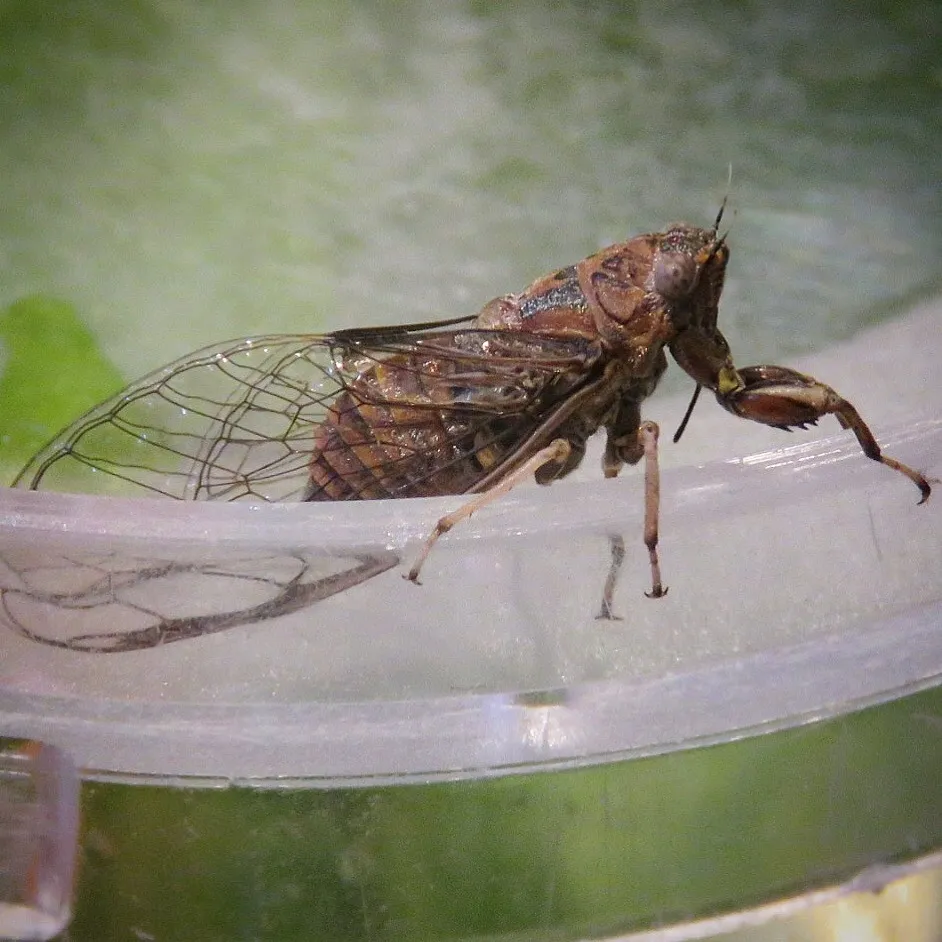
Photo credits: Contributed by Hannah Nendick-Mason; Additional contributions by Will Chatfield-Taylor , Mike Quinn , Bill Reynolds
Frequently Asked Questions About Cicadettana calliope
What is Cicadettana calliope?
Cicadettana calliope is a species in the family Cicadidae, within the order Hemiptera.
How big is Cicadettana calliope?
Total Length incl. wings < 1 inch (usually ~0.6 to 0.8 inches)
How do you identify Cicadettana calliope?
Small, and narrower across the head than other small cicadas Compare with Pacarina & Beameria . Color & Pattern: The coloration and degree of pattern may not be diagnostic to species! Populations currently classified as C. calliope exhibit several color forms incl. monochromatic lime green (Peninsular FL and Gulf), olive green, yellowish, ochreous-tan, tan, pinkish-tan, peach and brown. The typical cicada patterns may be vivid, bold and well delineated or be pale to absent giving the insect a monochromatic appearance. The color forms are not diagnostic of locality; however, within given portions of the range, there may be tendencies for certain color forms to be more prevalent. Call: The call is best described as a light whine or hissing buzz. The call of floridensis is distinct from that of other calliope populations and has a strong clicking component in addition to the light whine/hissing buzz.
Where is Cicadettana calliope found?
Range: e. US (TX-FL-MD-NE)