
Chinavia marginata
This record describes Chinavia marginata (species). Recorded family: Pentatomidae. Recorded order: Hemiptera.
Identification and Appearance
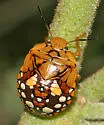
= Almost identical to C. hilaris yet much less common, though may locally predominate. C. marginatum has a yellow border around most of its body, especially on the face, but C. hilaris may have a yellow border, too. In C. hilare , the distal antennomeres are black and white, while in C. marginatum there is no white but the same bluish green as in basal segments.
Classification
- Kingdom
- Animalia
- Phylum
- Arthropoda
- Class
- Insecta
- Order
- Hemiptera (True Bugs, Cicadas, Hoppers, Aphids and Allies)
- Suborder
- Heteroptera
- Superfamily
- Pentatomoidea
- Family
- Pentatomidae (Stink Bugs)
- Subfamily
- Pentatominae
- Tribe
- Nezarini
- Genus
- Chinavia (Green Stink Bugs)
Imported taxonomy record. Source availability varies; see the source references and editorial policy below.
Habitat and Range
Geographic Range
so.US (CA‒TX, FL) to S.America; W. Indies
Additional species information
Species notes from the sources
Etymology: Chinavia marginata (Palisot de Beauvois 1817)
About True Bugs, Cicadas, Hoppers, Aphids and Allies: the wider group
Order-level background for Hemiptera, the group containing Chinavia marginata. Species-specific details appear above.
Group overview
Hemiptera (true bugs) includes over 80,000 described species across cicadas, aphids, leafhoppers, shield bugs, and bed bugs. Aphids alone cost global agriculture an estimated $2.5 billion annually in crop losses.
Ecological role of the group
Many Hemiptera are essential food sources for birds and predatory insects. Cicadas provide massive nutrient pulses during emergence events - a single Brood X emergence can involve trillions of individuals across 15 states.
Economic and practical significance of the group
The brown marmorated stink bug (Halyomorpha halys) caused $37 million in apple crop losses in a single year in the U.S. Mid-Atlantic region. Bed bug infestations in the U.S. increased by 500% between 2001-2010, costing the hotel industry hundreds of millions annually.
Recorded sources for this group: USDA, EPA, University research. Imported estimates may describe particular regions or reporting periods.
Photos of Chinavia marginata (5)
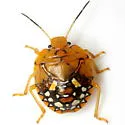
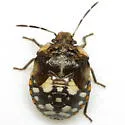
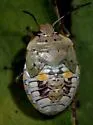
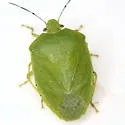
Photo credits: Contributed by Mike Quinn; Additional contributions by Andrew Meeds , ceiseman , v belov , KenW
Frequently Asked Questions About Chinavia marginata
What is Chinavia marginata?
Chinavia marginata is a species in the family Pentatomidae, within the order Hemiptera.
How do you identify Chinavia marginata?
= Almost identical to C. hilaris yet much less common, though may locally predominate. C. marginatum has a yellow border around most of its body, especially on the face, but C. hilaris may have a yellow border, too. In C. hilare , the distal antennomeres are black and white, while in C. marginatum there is no white but the same bluish green as in basal segments.
Where is Chinavia marginata found?
Range: so.US (CA‒TX, FL) to S.America; W. Indies