
Clastoptera globosa
This record describes Clastoptera globosa (species). Recorded family: Clastopteridae. Recorded order: Hemiptera.
Identification and Appearance
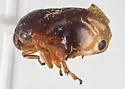
The yellow/pink on the scutellum extending past the central scutellum dividing line is characteristic of C. globosa but not C. funesta . (see comment from V. Thompson here ) This Mexican species' presence in the U.S. has never been officially published. As a Fowler species, definitive determination of the species occurring in southern TX as C. globosa is not currently possible, but it is highly likely that this species is C. globosa as it fits all described characters. This species is quite distinct from other U.S. species and is not closely related to them (e.g. does not belong in the obtusa clade and likely does not belong in the proteus / lineatocollis clade). Clastoptera funesta is a similar Mexican/Central American species that may make its way into the southwestern U.S.
Classification
- Kingdom
- Animalia
- Phylum
- Arthropoda
- Class
- Insecta
- Order
- Hemiptera (True Bugs, Cicadas, Hoppers, Aphids and Allies)
- Suborder
- Auchenorrhyncha
- Superfamily
- Cercopoidea
- Family
- Clastopteridae (Clastopterid Spittlebugs)
- Genus
- Clastoptera
Imported taxonomy record. Source availability varies; see the source references and editorial policy below.
Habitat and Range
Geographic Range
s. TX (Cameron Co.) / Mex. to C. Amer.
Additional species information
Species notes from the sources
Etymology: Clastoptera globosa Fowler, 1897
About True Bugs, Cicadas, Hoppers, Aphids and Allies: the wider group
Order-level background for Hemiptera, the group containing Clastoptera globosa. Species-specific details appear above.
Group overview
Hemiptera (true bugs) includes over 80,000 described species across cicadas, aphids, leafhoppers, shield bugs, and bed bugs. Aphids alone cost global agriculture an estimated $2.5 billion annually in crop losses.
Ecological role of the group
Many Hemiptera are essential food sources for birds and predatory insects. Cicadas provide massive nutrient pulses during emergence events - a single Brood X emergence can involve trillions of individuals across 15 states.
Economic and practical significance of the group
The brown marmorated stink bug (Halyomorpha halys) caused $37 million in apple crop losses in a single year in the U.S. Mid-Atlantic region. Bed bug infestations in the U.S. increased by 500% between 2001-2010, costing the hotel industry hundreds of millions annually.
Recorded sources for this group: USDA, EPA, University research. Imported estimates may describe particular regions or reporting periods.
Photos of Clastoptera globosa (4)
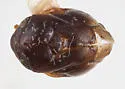
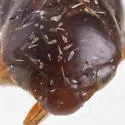
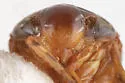
Photo credits: Contributed by Solomon V. Hendrix; Additional contributions by Mike Quinn
Frequently Asked Questions About Clastoptera globosa
What is Clastoptera globosa?
Clastoptera globosa is a species in the family Clastopteridae, within the order Hemiptera.
How do you identify Clastoptera globosa?
The yellow/pink on the scutellum extending past the central scutellum dividing line is characteristic of C. globosa but not C. funesta . (see comment from V. Thompson here )
Where is Clastoptera globosa found?
Range: s. TX (Cameron Co.) / Mex. to C. Amer.