
Chlorotettix fuscus
This record describes Chlorotettix fuscus (species). Recorded family: Cicadellidae. Recorded order: Hemiptera.
Identification and Appearance
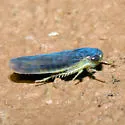
This species is very similar to C. melanotus, but frequently has a broken transverse band on the vertex that C. melanotus seemingly does not have. Additionally, while the pregenital sternites are very similar between fuscus and melanotus (they are different from tergatus), fuscus seems to have a wider excavation and less concave (wider) posterior margin on either side of the excavation compared to melanotus. Additionally, it can be differentiated from melanotus by the short, curved pygofer spine and the bifurcate aedeagal processes in the posterior aspect that melanotus has in the male genitalia. - Kyle Kittelberger
Classification
- Kingdom
- Animalia
- Phylum
- Arthropoda
- Class
- Insecta
- Order
- Hemiptera (True Bugs, Cicadas, Hoppers, Aphids and Allies)
- Suborder
- Auchenorrhyncha
- Superfamily
- Membracoidea
- Family
- Cicadellidae (Typical Leafhoppers)
- Subfamily
- Deltocephalinae
- Tribe
- Pendarini
- Genus
- Chlorotettix
Imported taxonomy record. Source availability varies; see the source references and editorial policy below.
About True Bugs, Cicadas, Hoppers, Aphids and Allies: the wider group
Order-level background for Hemiptera, the group containing Chlorotettix fuscus. Species-specific details appear above.
Group overview
Hemiptera (true bugs) includes over 80,000 described species across cicadas, aphids, leafhoppers, shield bugs, and bed bugs. Aphids alone cost global agriculture an estimated $2.5 billion annually in crop losses.
Ecological role of the group
Many Hemiptera are essential food sources for birds and predatory insects. Cicadas provide massive nutrient pulses during emergence events - a single Brood X emergence can involve trillions of individuals across 15 states.
Economic and practical significance of the group
The brown marmorated stink bug (Halyomorpha halys) caused $37 million in apple crop losses in a single year in the U.S. Mid-Atlantic region. Bed bug infestations in the U.S. increased by 500% between 2001-2010, costing the hotel industry hundreds of millions annually.
Recorded sources for this group: USDA, EPA, University research. Imported estimates may describe particular regions or reporting periods.
Photos of Chlorotettix fuscus (5)
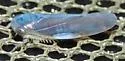
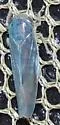
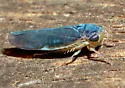
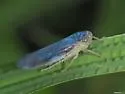
Photo credits: Contributed by Kyle Kittelberger; Additional contributions by antarctica