
True Bugs, Cicadas, Hoppers, Aphids and Allies
Order Hemiptera
The True Bugs, Cicadas, Hoppers, Aphids and Allies (Order Hemiptera) includes 7,349 species across 120 families and 1,727 genera in our directory.
About True Bugs, Cicadas, Hoppers, Aphids and Allies
Hemiptera (true bugs) includes over 80,000 described species across cicadas, aphids, leafhoppers, shield bugs, and bed bugs. Aphids alone cost global agriculture an estimated $2.5 billion annually in crop losses.
Economic Impact
The brown marmorated stink bug (Halyomorpha halys) caused $37 million in apple crop losses in a single year in the U.S. Mid-Atlantic region. Bed bug infestations in the U.S. increased by 500% between 2001-2010, costing the hotel industry hundreds of millions annually.
Ecological Role
Many Hemiptera are essential food sources for birds and predatory insects. Cicadas provide massive nutrient pulses during emergence events - a single Brood X emergence can involve trillions of individuals across 15 states.
Families in Hemiptera (120)
Species in Hemiptera (7,349)
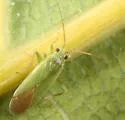
Labopidea cepula
Labopidea cepula
Identification: General color yellow green; pronotum, scutellum, and hemelytra with erect and semierect dark bristlelike setae, intermixed with recumbent, silvery sericeous setae. (Henry 1982) Females may be brachypterous (Henry 1982) Holotype: Bastr
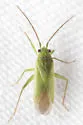
Labopidea geminata
Labopidea geminata
Identification: Small species (3-4 mm), mix of pale and somewhat brownish setae on dorsum, 4th antennal segment much longer than 1st, and male genitalia help distinguish this species.
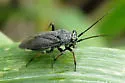
Labops burmeisteri
Labops burmeisteri
Identification: Hemelytra entirely black without light coloration along the lateral margin of the corium.
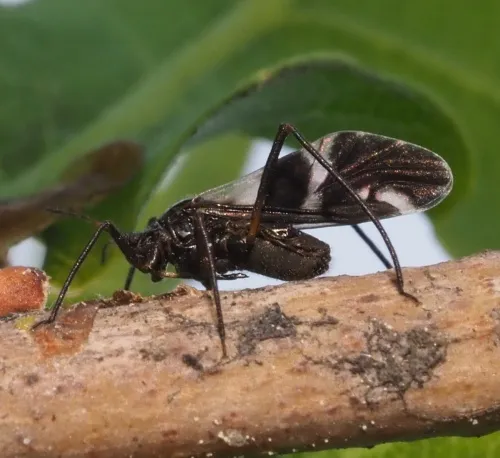
Lachnus roboris
Lachnus roboris
Lachnus roboris apterae are shining blackish brown. The body length of an adult L. roboris aptera is 2.5 to 5.5 mm. L. roboris alates have the forewing membrane pigmented except for four clear patches (hence the common name ‘Variegated’ Oak Aphid). G
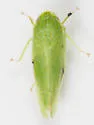
Laminate Leafhopper
Gyponana expanda
Identification: "Resembling octolineata in form and appearance but with head more produced and distinct male genitalia. Vertex produced and rather broadly rounded, almost two-thirds as long at middle as basal width between the eyes. Margin thin and s
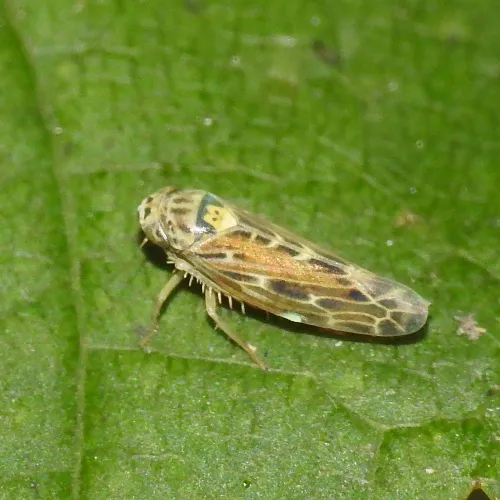
Lamprotettix nitidulus
Lamprotettix nitidulus
Length 5 to 6 mm. A fairly large and strongly marked brown and yellowish leafhopper, with two dark triangles and two central dots on the scutellum - forming a distinctive "sad frog' pattern. Good quality photographs showing scutellum Local (ref.: UK
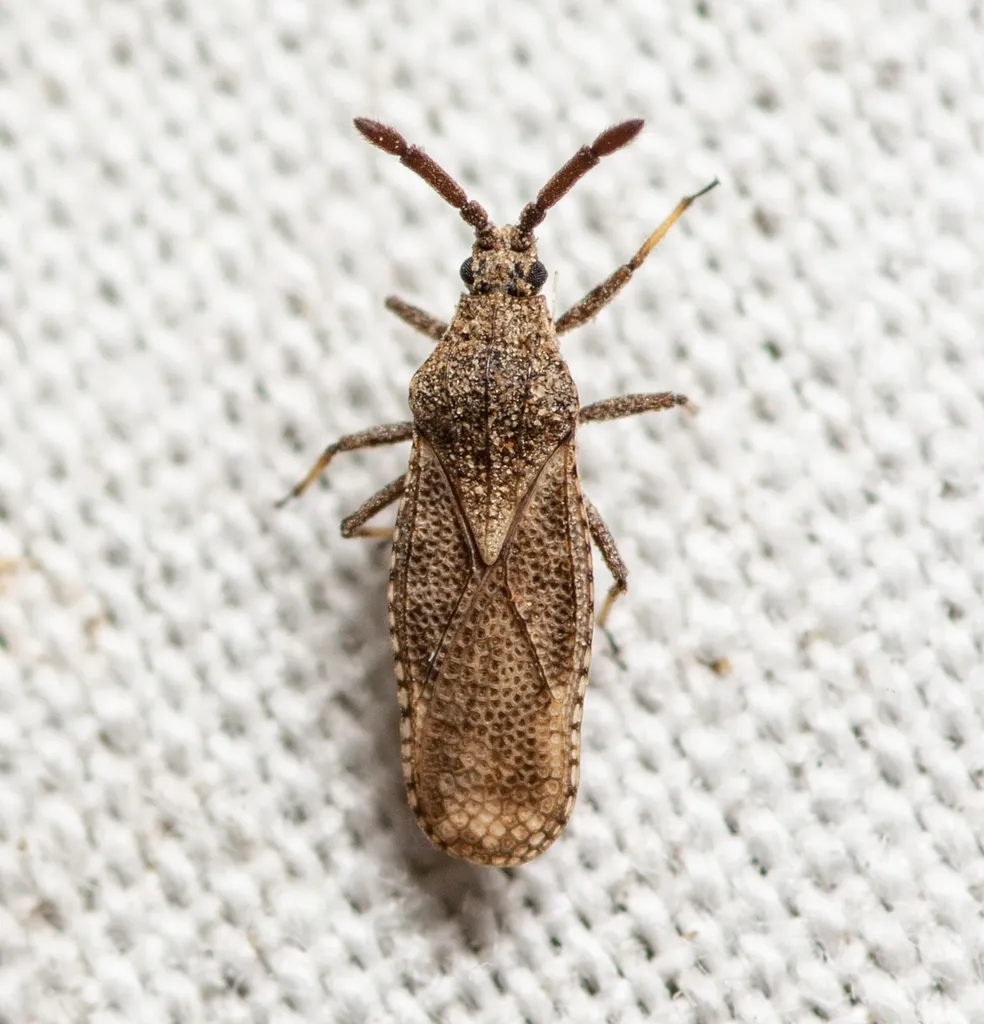
Lantana Lace Bug
Teleonemia scrupulosa
Identification: shortly pilose antennas and pubescent discoidal area are the principal characters of the species. (Champion 1898) introduced in many countries where Lantana is considered a noxious weed Feeding damages leaves and prevents development
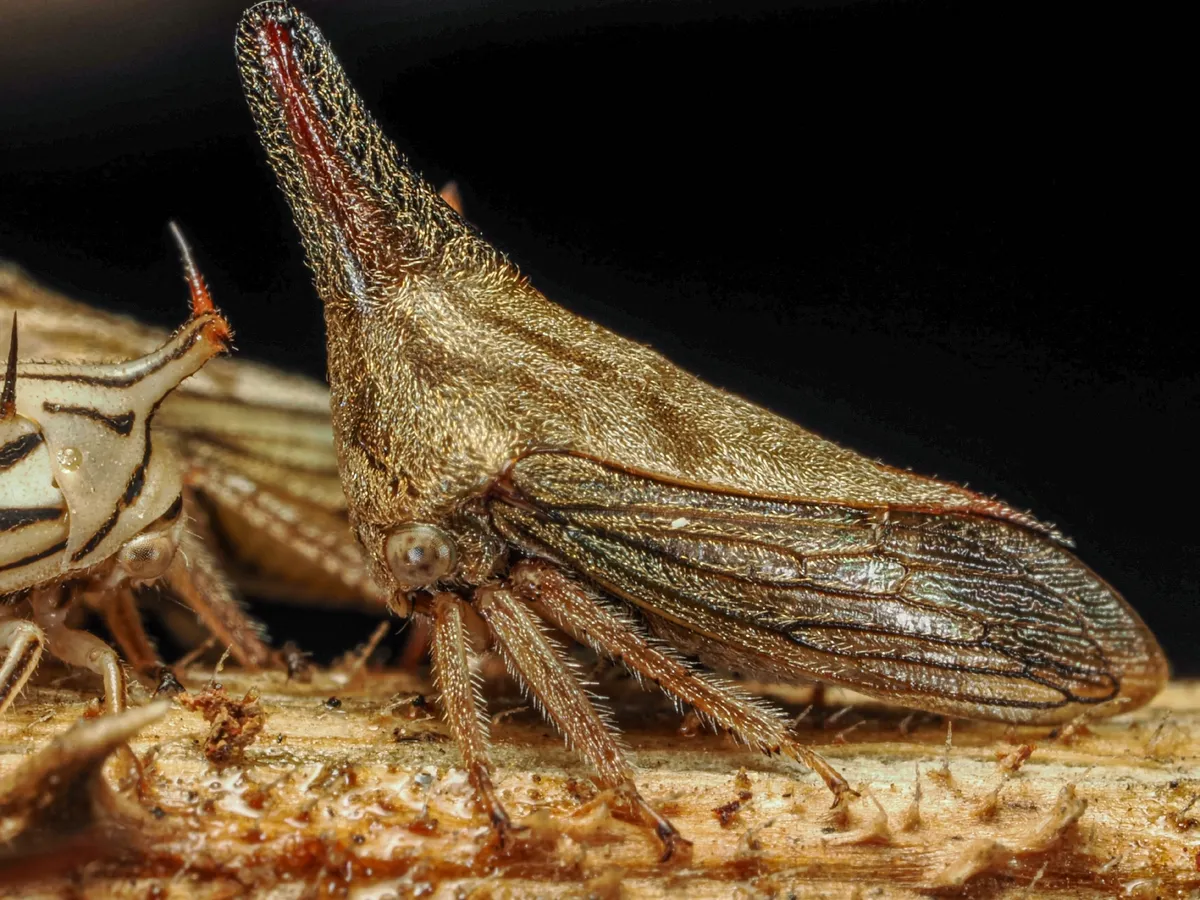
Lantana Treehopper
Aconophora compressa
Introduced in Australia since 1995 to control Lantana. (Introduced in South Africa?)
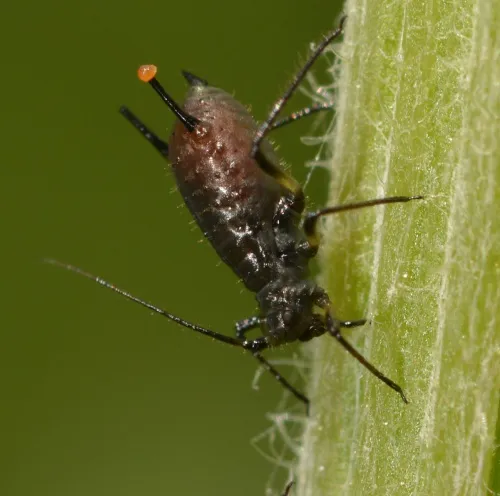
Large Knapweed Aphid
Uroleucon jaceae
This is a large blackish aphid that can appear dark metallic green. The abdominal tergites 2-4 often have small marginal tubercles. The femora have the basal half pale and distal half dark, with a rather sharp transition between them. The tibiae are
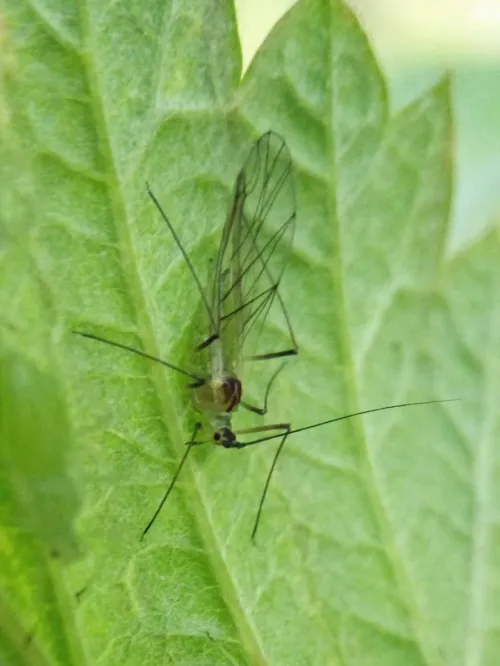
Large Raspberry Aphid
Amphorophora idaei
The body length of Amphorophora idaei apterae is 2.7 to 4.1 mm. The apterae are usually greenish white or pale yellow. The alate Amphorophora idaei) is of similar size but has a brown head and thorax, and has the distal half of the siphunculi darkene
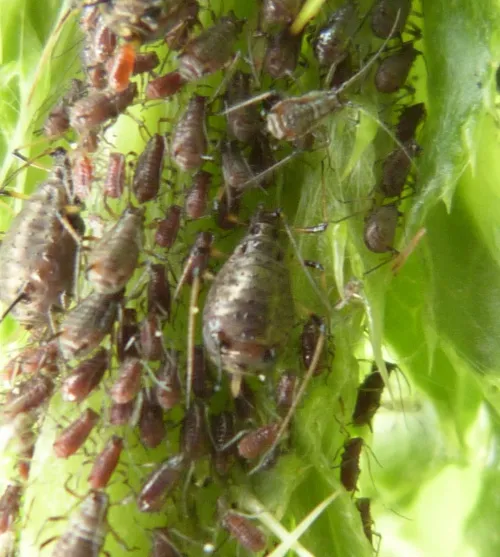
Large Thistle Aphid
Uroleucon cirsii
The large thistle aphid Uroleucon cirsii is between 4 and 5.2 mm in length and has characteristic two tone legs. Dark-tailed Thistle Aphid (Uroleucon aeneum) is similar and also uses Thistle as a host plant, but Uroleucon aeneum has an all black caud
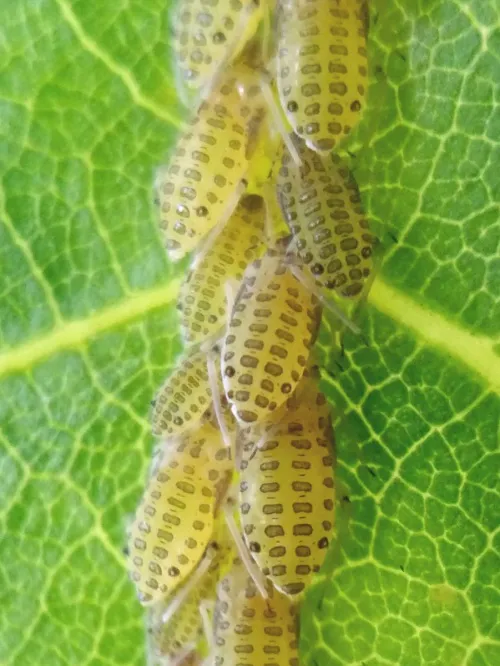
Large Walnut Aphid
Panaphis juglandis
The fourth-instar nymph has transverse rows of brown patches on the dorsal abdomen. The adult alate is large and stout-bodied. It has a darkened head and thorax, and a yellow abdomen with dark brown transverse bands. The forewing veins are fuscous-bo
Largidea grossa 0
Largidea grossa
Identification: Antennal segment II somewhat flattened, broadly lanceolate; length of segment I just equal to width of segment II; length 6.0 mm (last couplet) described from California, where a single female was taken on Jeffrey Pine, alt. 7000 ft,
Largidea nevadensis 0
Largidea nevadensis
Identification: Largidea , Key to the Species, couplet 2 : Femora black, without visible dots; length 4.7 mm nevadensis , n. sp. Femora reddish brown, one or two rows of fuscous dots visible through the red color; length 4.2 mm rubida Uhler
Largidea rubida 0
Largidea rubida
Identification: Largidea , Key to the Species, couplet 2 : Femora black, without visible dots; length 4.7 mm nevadensis , n. sp. Femora reddish brown, one or two rows of fuscous dots visible through the red color; length 4.2 mm rubida Uhler Type Loca
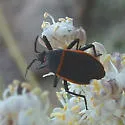
Largus convivus
Largus convivus
i have a student-collected male from Houston, TX [D. Swanson det. 2019]
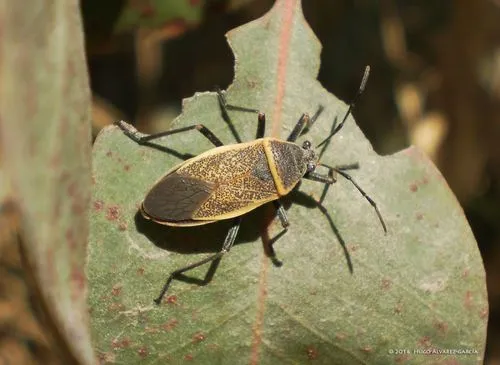
Largus sculptilis
Largus sculptilis
NB: i am still not convinced this form is not conspecific with L. cinctus , especially given the striking similarity of the parameres [ , Fig. 6a,c] plus the fact that the Largus from the Pacific Northwest (where only L. cinctus has been recorded) fi
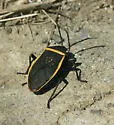
Largus semipletus
Largus semipletus
Identification: discussed and illustrated in likely another variant of L. cinctus but for now it's reasonable to follow the most recent revisionary work of Brailovsky and treat it as a species
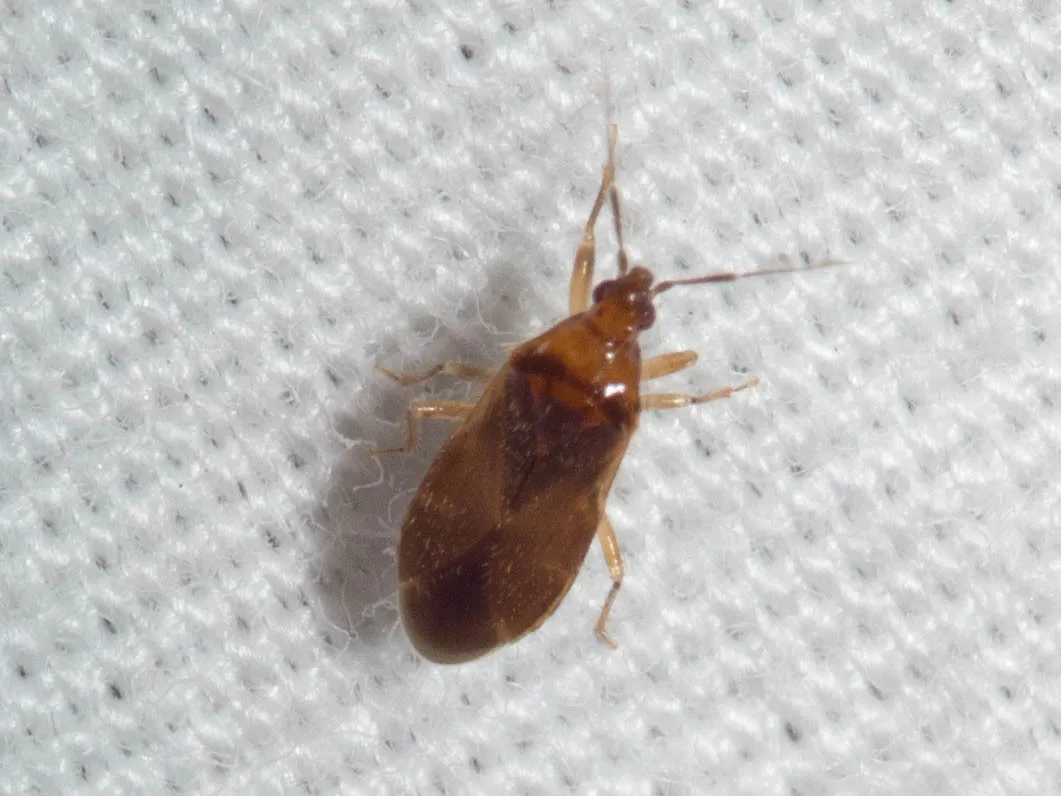
Lasiochilus hirtellus
Lasiochilus hirtellus
Identification: Oblong-ovate, broadest beyond the middle, clothed with numerous long scattered hairs, brownish testaceous , the head and pronotum shiny, the elytra duller. Head distinctly longer than broad, smooth, clothed with a few long erect hairs
Lasiomerus andabata
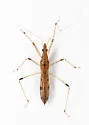
Lasiomerus andabata
Identification: slender-bodied, usually brachypterous
Lasiomerus annulatus
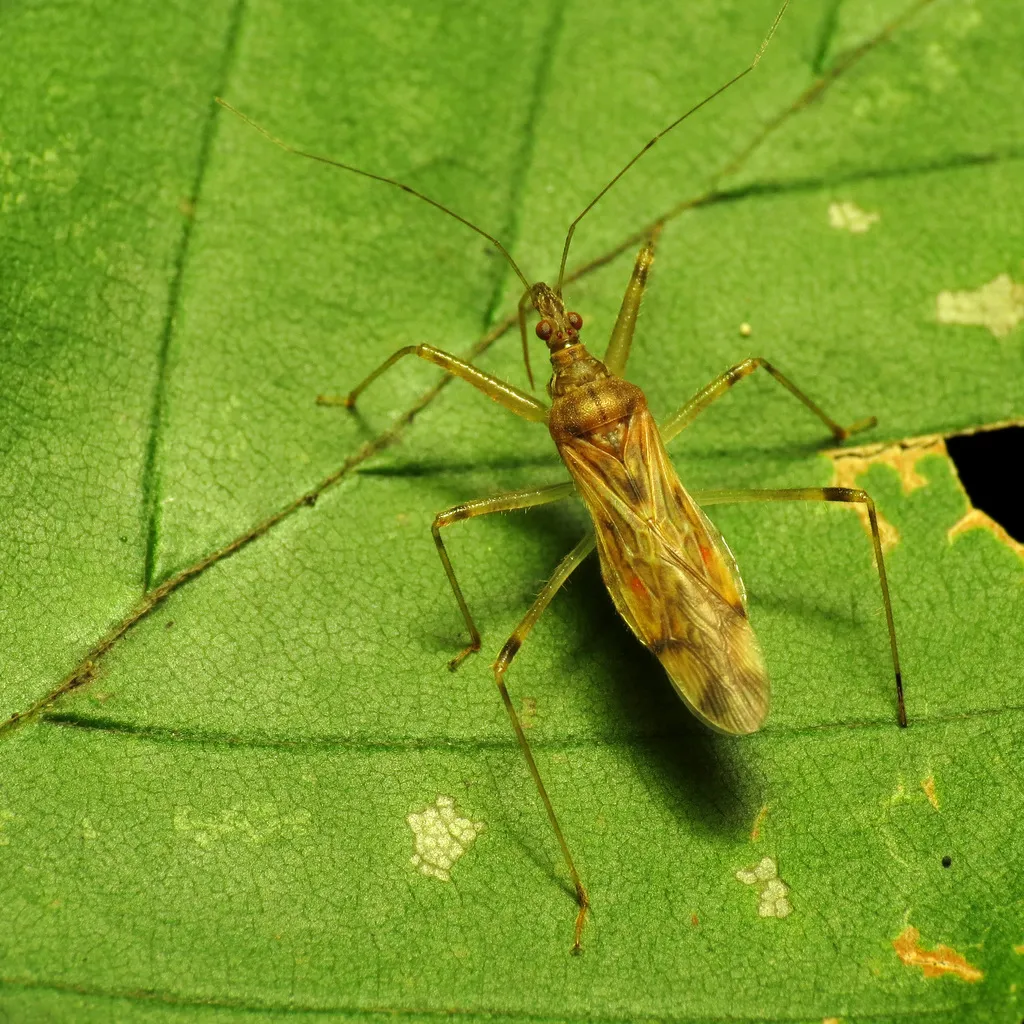
Lasiomerus annulatus
Identification: Blatchley's description: 570. Nabis annulatus Reuter, 1873, 86. Elongate, slender, subparallel. Dull straw-yellow; two narrow stripes on head, some vague irregular lines on front lobe of pronotum, five faint stripes on hind lobe, some
Lasiomerus constrictus
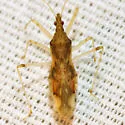
Lasiomerus constrictus
Identification: Blatchley's discussion--an update based on more recent information would certainly be great! 568. Nabis constrictus Champion, 1899, 303. Elongate, slender, strongly constricted at middle. Dull straw-yellow; head, front lobe of pronotu
Latalus personatus
Latalus personatus
Some authors treat this species as a member of the genus (or subgenus) Turrutus . Give the lack of evidence and need for revision in this group, we are not recognising Turrutus as a valid genus here and are sticking with the more common treatment of
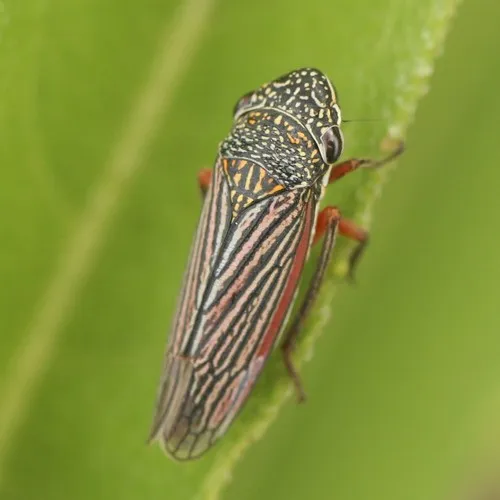
Lateral-lined Sharpshooter
Cuerna costalis
Identification: Black and red with longitudinal stripes on forewing; a conspicuous white stripe runs from the eye along the side of the abdomen; tip of abdomen with red spot. The only species in the genus with red on legs , per Andy Hamilton . Dets.
Leaf-footed Pine Seed Bug
Leptoglossus corculus
Identification: Outer hind tibial dilation distinctly longer than inner tibial dilation one of the most destructive insects attacking pine seeds in se.US • may invade homes
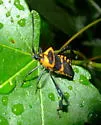
Leptoglossus ashmeadi
Leptoglossus ashmeadi
Identification: has an unusually broad, orange crossbar (wider than in L. phyllopus ) and prominent orange-yellow margins on the pronotum; antennae black
Leptoglossus brevirostris
Leptoglossus brevirostris
Identification: Reduced irregular yellow-white cross-stripe is mostly confined to veins; otherwise similar to L. phyllopus (which is also larger) Type Locality: Texas
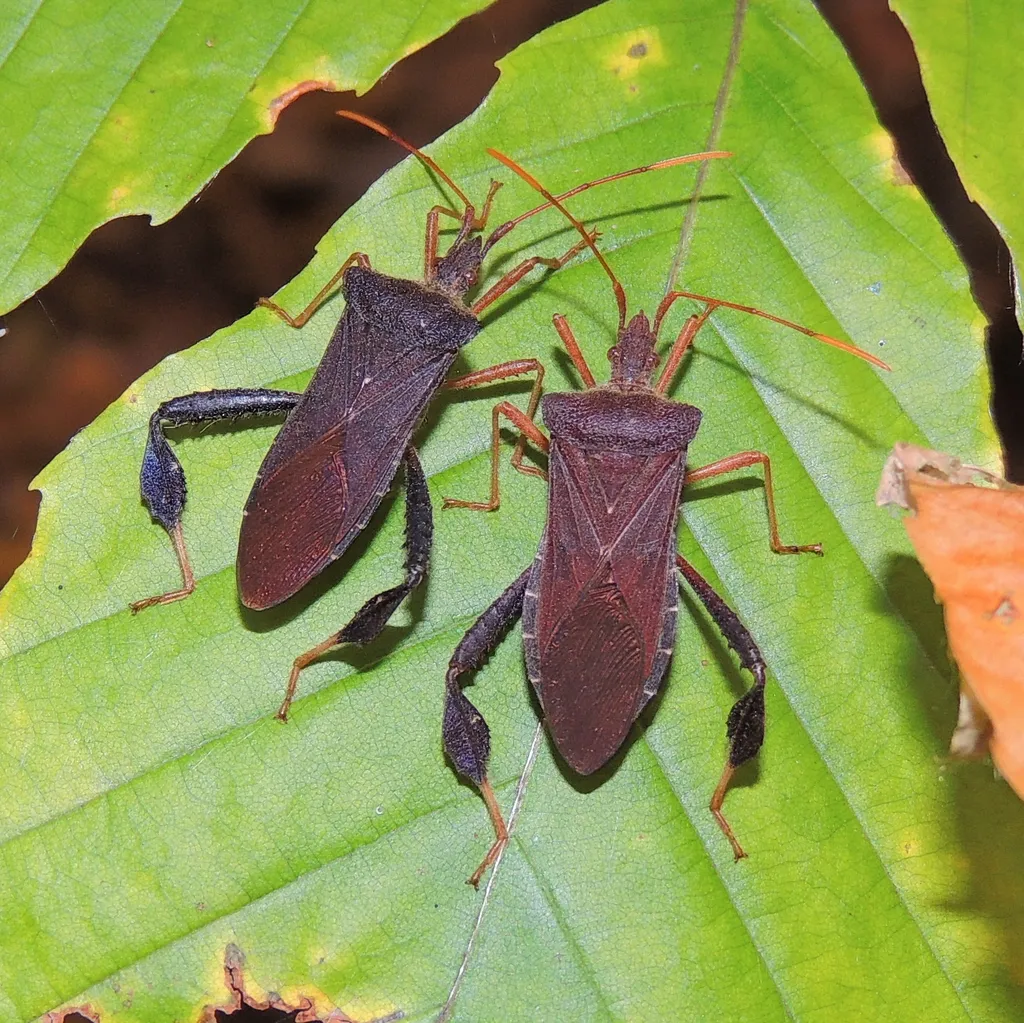
Leptoglossus fulvicornis
Leptoglossus fulvicornis
Identification: Hemielytra lacking a transverse fascia. Humeral area of pronotum strongly expanded and flared outward and upward, bearing coarse obtuse teeth anterior and posterior to humeral angles. Head nearly uniformly brown, lacking alternating d
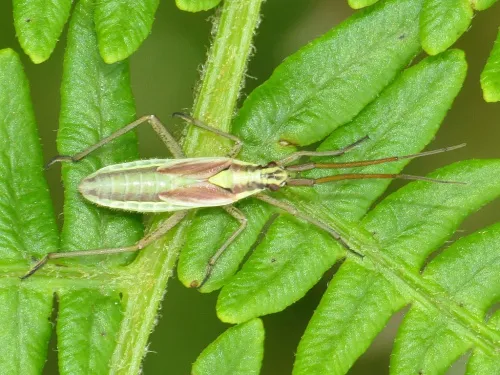
Leptopterna ferrugata
Leptopterna ferrugata
Length: 7.0 to 8.5 mm. This large, sexually dimorphic grass bug has a transverse furrow between the eyes and the legs and antennae are covered in long dark hairs. It often has reddish or orange-yellow forewings, hence the Latin name, however care mus
Leptoypha costata
Leptoypha costata
Identification: separated from L. mutica (the only other sp. that occurs in ne. US) by a more oval body ( vs parallel-sided) and a flattened wing's costal area with a partial double row of areola ( vs deflexed and replaced by costal margin) --L. Mill
Lepyronia angulifera
Lepyronia angulifera
Identification: A small spittle bug with the usual "diamond-back" pattern of the genus, but with a shorter and declivous [sloping downward toward the tip] top of the head ("crown") than other related species. Has shorter and more convex front than t
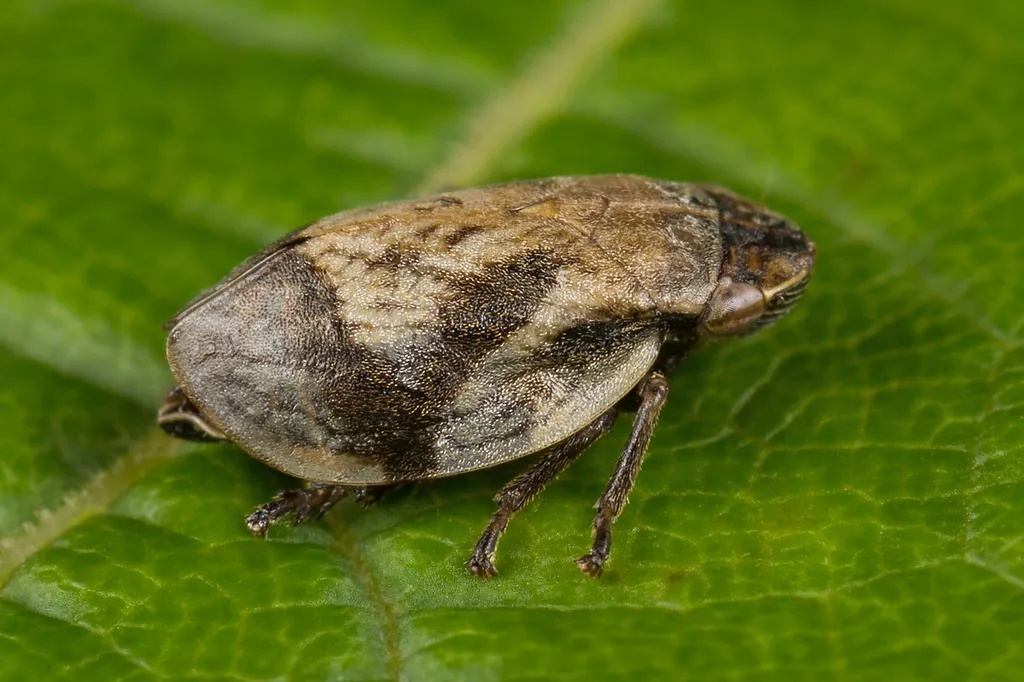
Lepyronia coleoptrata
Lepyronia coleoptrata
Identification: More robust than the common L. quadrangularis , particularly in the profile of the head. [Dr Hamilton] earliest N. Amer. record: NY 1940
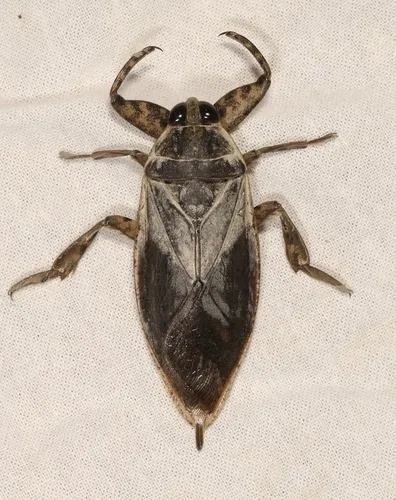
Lethocerus medius
Lethocerus medius
Identification: Legs banded. Eyes closer together than they are wide, and with rear margins roughly straight across as viewed from above (not distinctly slanted). Very similar to L. uhleri (ranges overlap in e. TX), differs in basal segment of hind t
Lidopus heidemanni
Lidopus heidemanni
Identification: easily recognized by extremely convex pronotum and color pattern
Ligyrocoris barberi
Ligyrocoris barberi
Identification: see Sweet for key. pterygopolymorphic throughout its range Det. V. Belov, 2019 Type Locality: Texas, Brazos Co., College Station, July 25, 1964, M. H. Sweet. While a widespread species, L. barberi is relatively uncommon overall and is
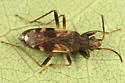
Ligyrocoris sylvestris
Ligyrocoris sylvestris
Identification: Differs from L. diffusus by having a significantly longer labium (beak), which extends to the hind coxae, and short wings (does not extend past abdominal tergum 7). Labial segment 1 is shorter than segment 3.
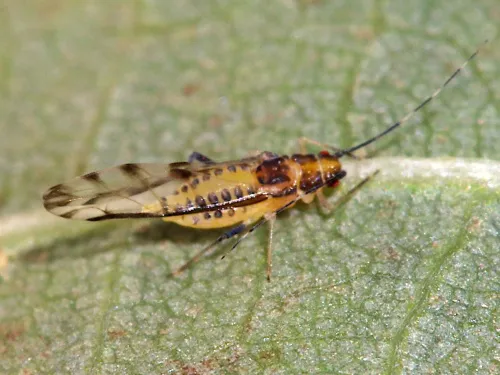
Lime Aphid
Eucallipterus tiliae
All adult viviparae of Eucallipterus tiliae are alates (winged) The body is pale yellow with black markings, including lateral stripes on head and prothorax and two rows of black dorsal abdominal spots. The forewing has a dark front edge and dark spo
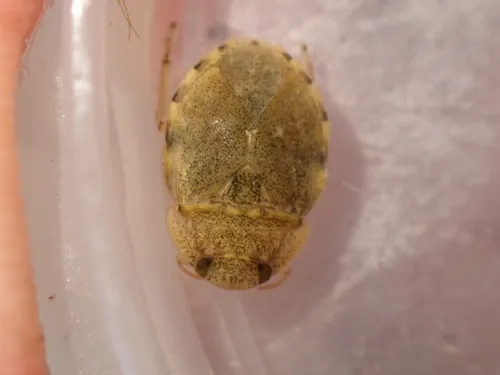
Limnocoris lutzi
Limnocoris lutzi
Type Locality: Sequin, Guadalupe River, Texas, 8 Sept. 50, Thos. Dolan.
Limnogonus franciscanus
Limnogonus franciscanus
Identification: Males distinguished by smaller size, often divergent pronotal spots, constricted fore tibia, and shape of vesica sclerites
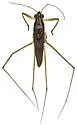
Limnogonus macroconfusus
Limnogonus macroconfusus
Identification: males distinguished from L. franciscanus by lack of constriction in fore tibia, larger size, never divergent pronotal spots, and shape of vesica sclerites
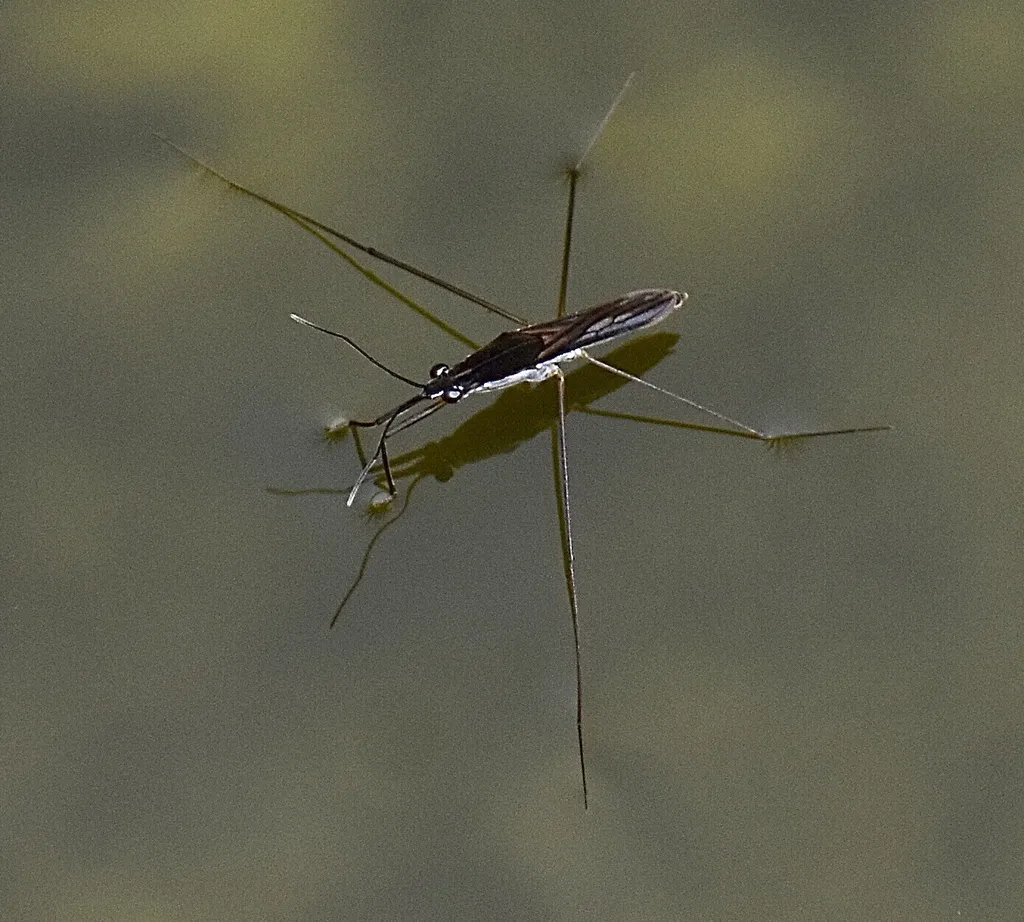
Limnoporus canaliculatus
Limnoporus canaliculatus
Identification: Best separated from other species by body size
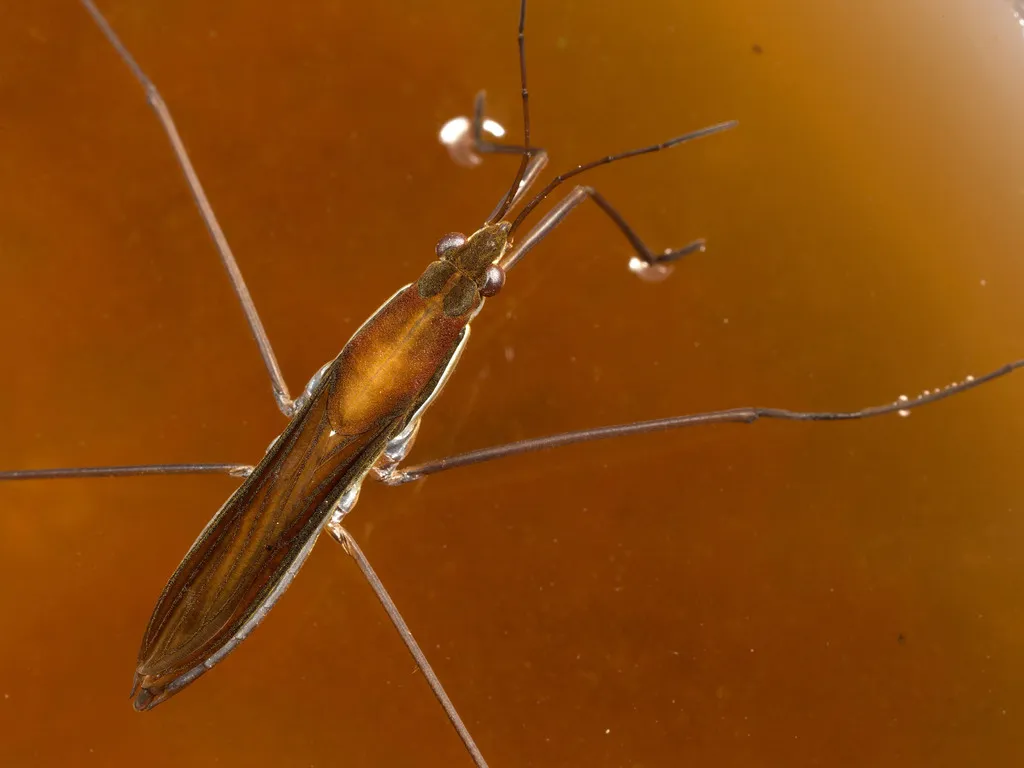
Limnoporus dissortis
Limnoporus dissortis
Identification: Very similar to L. rufoscutellatus and L. notabilis . Easiest to separate based on range, but overlaps and hybridizes with L. notabilis in Rockies
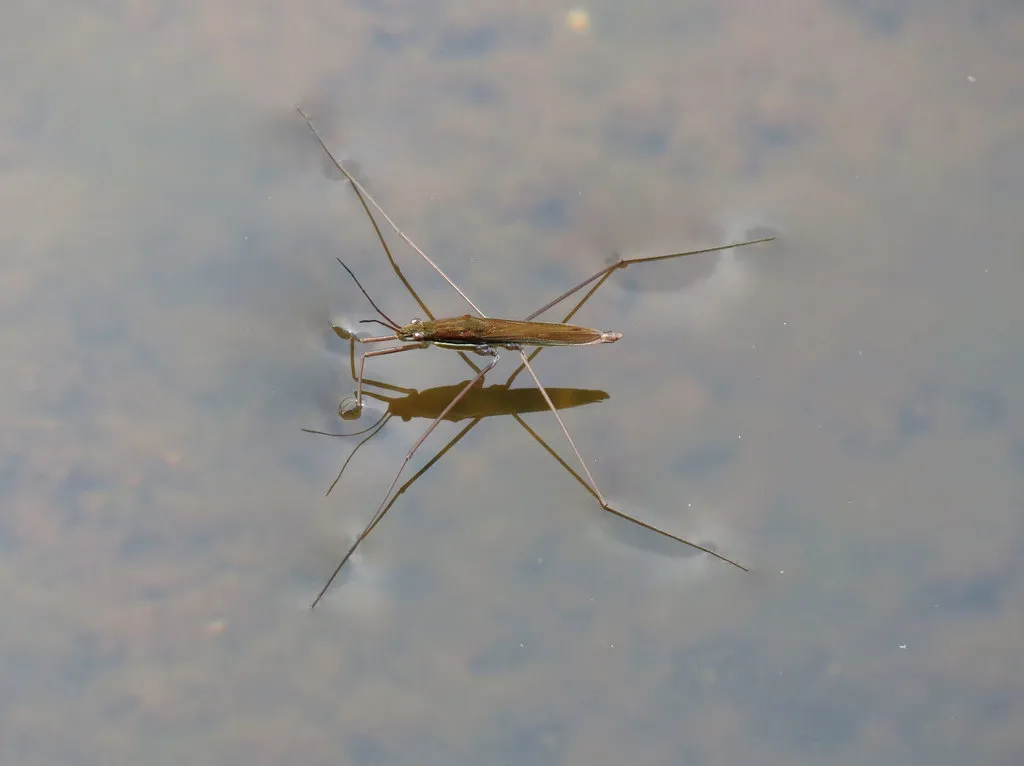
Limnoporus notabilis
Limnoporus notabilis
Identification: Can be separated from other spp. by its large size, but very similar to L. rufoscutellatus ; easiest to separate based on range, but the two overlap and hybridize in Rockies
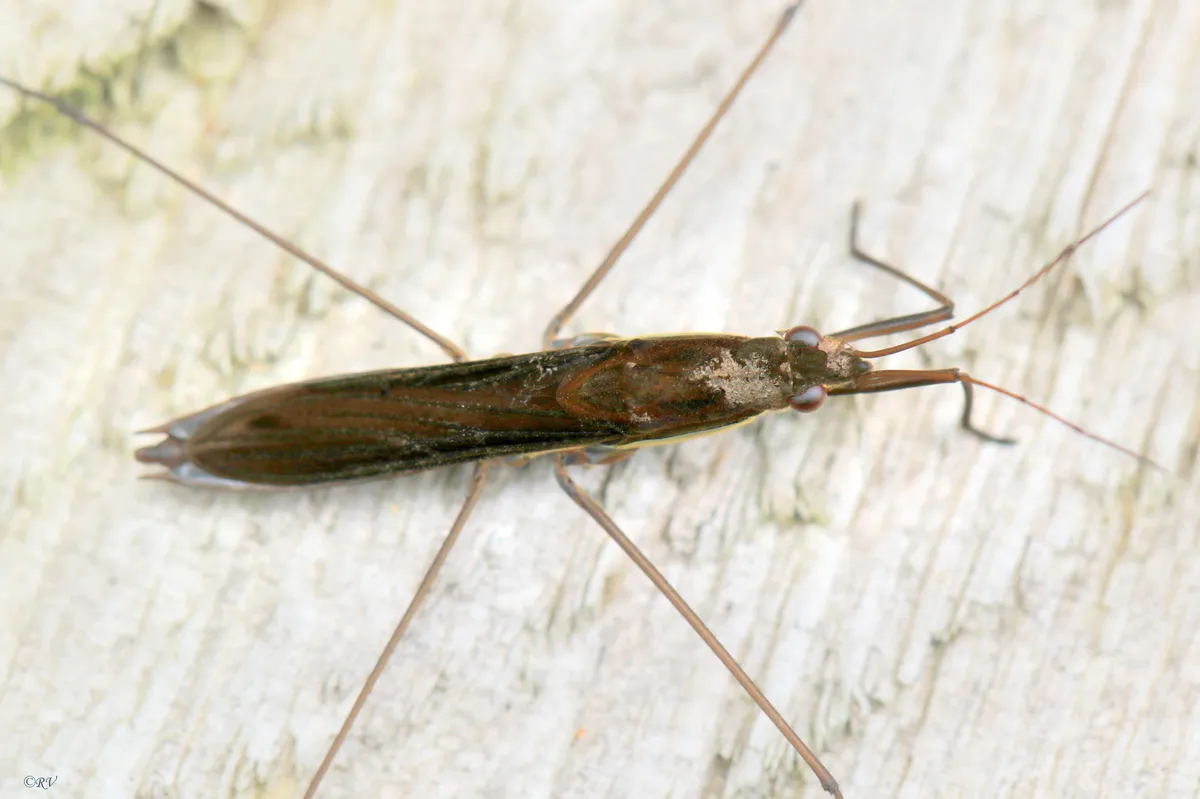
Limnoporus rufoscutellatus
Limnoporus rufoscutellatus
Identification: very similar to L. dissortis and L. notabilis
Limotettix elegans
Limotettix elegans
"pretty rare prairie-associated species" ‒Joel Kits' comment
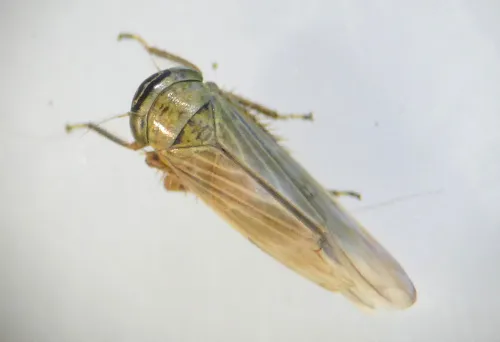
Limotettix striola
Limotettix striola
Length 3.5 to 5.0 mm. A greenish-yellow leafhopper associated with Spike-rush and other sedges. There is a dark band across the vertex between the eyes with a pale stripe in front, and dark markings on the face. Limotettix atricapillus also has a pal
Lineatopsallus biguttulatus
Lineatopsallus biguttulatus
Identification: " L. biguttulatus is distinguished from L. slateri by the larger size, more distinct fuscous lines on the antennal segments and legs, and the larger, more distinct, subapical, fuscous spot on the posterior surface of the meso- and met
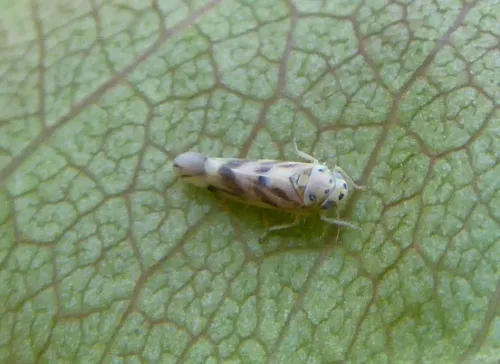
Linnavuoriana decempunctata
Linnavuoriana decempunctata
Length 3.5 mm. Very variable in colouration and intensity of dark markings - from whitish and pale yellow to pink and a deep salmony-orange. 6 spots on the pronotum (occasionaly fused) and 2 on the vertex. The forewing pattern of dark spots is someti
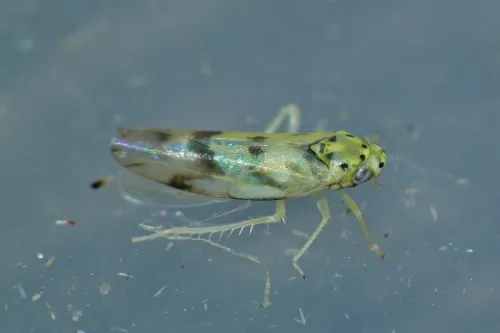
Linnavuoriana sexmaculata
Linnavuoriana sexmaculata
Length 3.5 mm. Greenish/yellow in colour, with four spots on the pronotum and two on the vertex. The dark markings on the forewings vary in intensity. Good quality photographs; note host plant Common (ref: UK Auchenorrhyncha checklist 2021 ) https://
Liocratus moniliferae
Liocratus moniliferae
Moved to Liocratus by Hamilton, who treated the taxon as a subgenus. However, like with Populicerus , the group is treated generically by most authors.
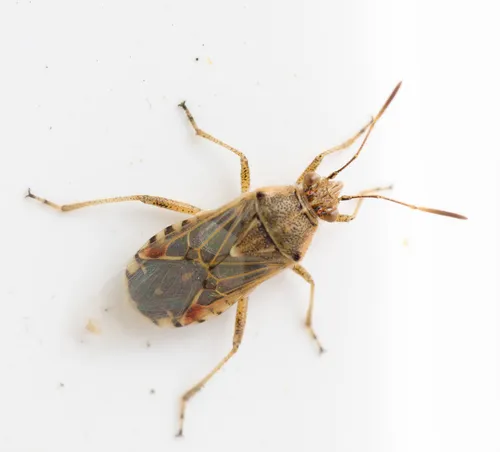
Liorhyssus hyalinus
Liorhyssus hyalinus
Length 6.5-7.5mm. Similar to Rhopalus and Stictopleurus species but usually has a very long wing membrane, which extends well beyond the body. The colouratios is very variable: individual with body colour yellow, reddish, greyish-yellow to darker bro
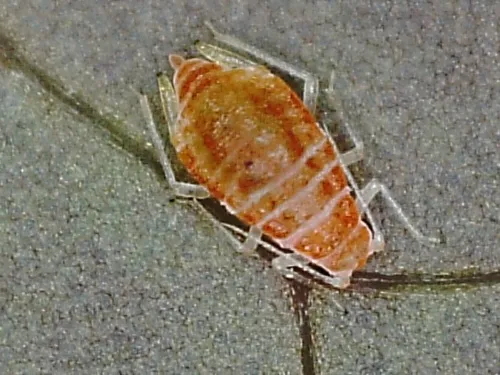
Liosomaphis berberidis
Liosomaphis berberidis
The alate Liosomaphis berberidis has the head, thorax, antennae and tips of legs darker than in the apterous viviparous female. Some tergites may have pale marginal and dorsal sclerites, sometimes fused into cross bands. L. berberidis apterae are gre
Little Juniper Cicada
Pacarina shoemakeri
The pronotum in this species usually exhibits a centralized "hourglass-shaped" dark region in the pronotum. Wings may be less heavily infuscated/patterned than seen in P. puella (?).
Little Mesquite Cicada
Pacarina puella
Identification: Tiny cicada with a BIG head (Andy Hamilton, 26 August, 2010)
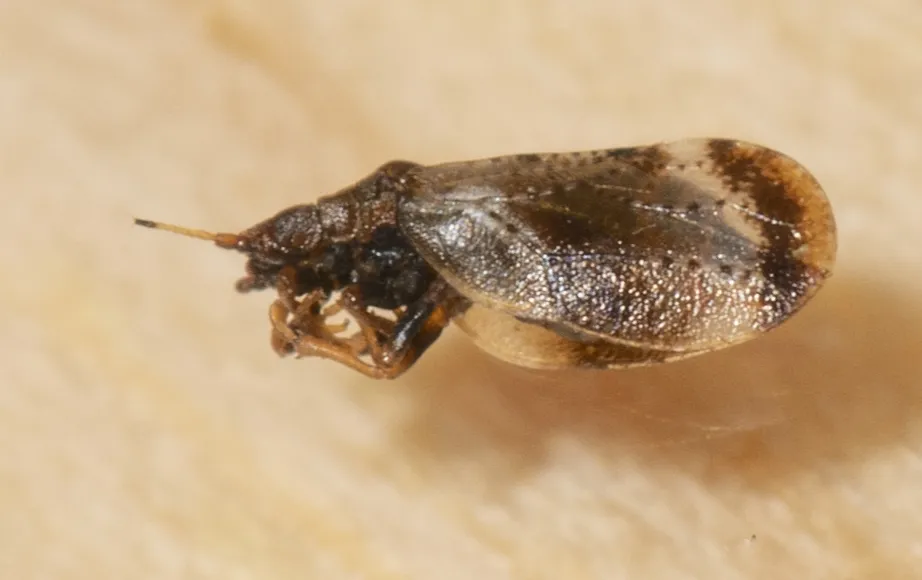
Livia bifasciata
Livia bifasciata
Identification: Forewings with dark spots along veins, a dark apical band and a broad dark medial transverse band; head long, deeply cleft anteriorly, and with antenna segment 2 elongate.
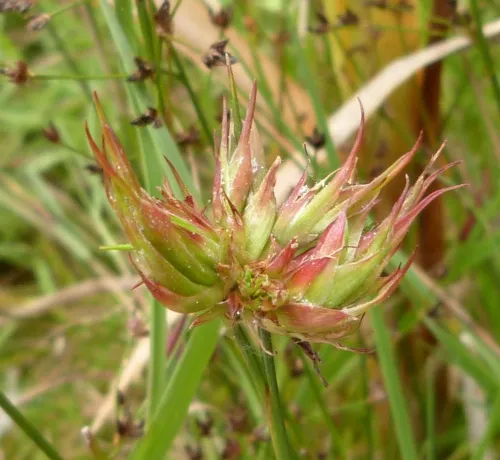
Livia juncorum
Livia juncorum
Livia juncorum is a small (2.5 mm) brown jumping plant louse that causes galls to form on certain Juncus rush species. The shoots become shortened and thickened and bunch into a mass up to 8 cm long including the flowers whose parts become leafy and
Livia maculipennis
Livia maculipennis
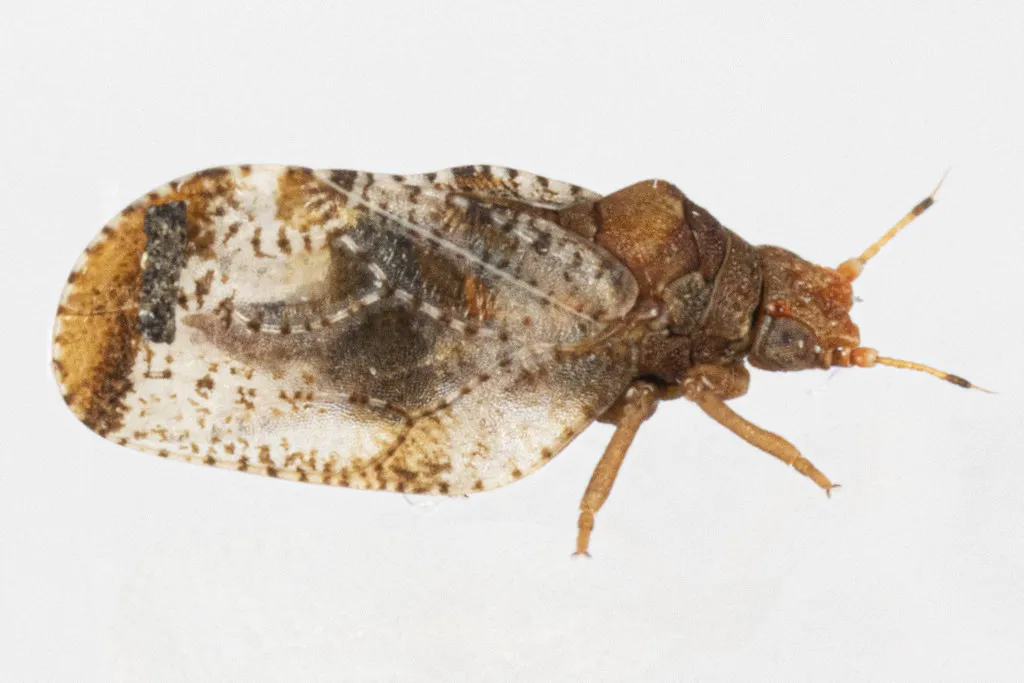
Identification: Forewings rhomboidal with dark spots along veins, a dark apical band and a dark medial transverse band; veins M and Rs strongly arched. Head short, weakly-notched anteriorly, and with antenna segment 2 short.
Livia saltatrix
Livia saltatrix
Identification: Forewings with irregular brown band along the apical and anal wing margins; head with lobes of vertex broadly rounded; antenna segment 2 not particularly swollen; male paramere slender, tapering to a conspicuous anteriorly-directed ho
Livia vernaliforma
Livia vernaliforma
Identification: Forewings unpatterned, elongate & narrow, with straight costal margin
Livia vernalis
Livia vernalis
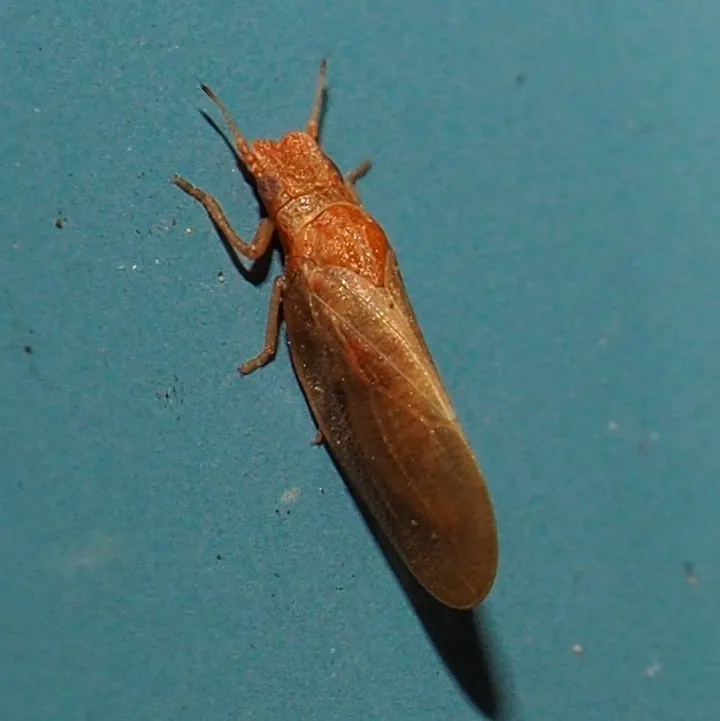
Identification: Wings unpatterned, oblong-oval; head with vertex lobes broadly rounded; male paramere distinctly hooked anteriorly midway
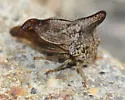
Locust Treehopper
Thelia bimaculata
Identification: Males sport a bright yellow band along the lower lateral margins of the pronotum Often protected by ants. Damage to the host is practically non-existent. Aphelopus theliae , a wasp in the Dryinidae family, is a parasite on this membra
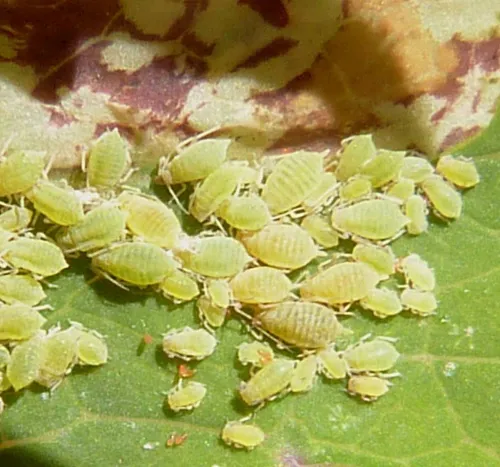
Longicaudus trirhodus
Longicaudus trirhodus
Apterae of Longicaudus trirhodus on their primary host (Rose) are pale yellowish-green and lightly wax-dusted, with slightly darker green transverse bands across the abdomen. Apterae on the secondary hosts (Columbine) are more yellow-green. The third
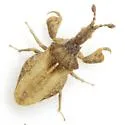
Lophoscutus prehensilis
Lophoscutus prehensilis
Identification: The scutellum is supposedly parallel-sided and roughly punctured throughout whole disc in L. prehensilis whereas the scutellum of L. uhleri is supposedly not parallel-sided and roughly punctured on posterior pronotal lobe and base of
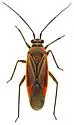
Lopidea apache
Lopidea apache
Identification: "Very similar to heidemanni , distinguished by the presence of a well developed sensory lobe, the short medial flange of the right paramere and its southwestern distribution." (Hopefully, someday we'll have entries for L. heidemanni f
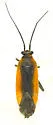
Lopidea confluenta
Lopidea confluenta
Identification: slightly more ovate and robust than robiniae , is frequently very similar in coloration but usually more orange or reddish. It has frequently been labeled robiniae in collections and the only certain way of determining the yellow form
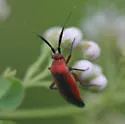
Lopidea instabilis
Lopidea instabilis
Identification: from the thick and short second antennal segment and the red femora. … WonGun Kim, 23 February, 2009
Lopidea intermedia 0
Lopidea intermedia
Identification: Bright red with fuscous and blackish as exhibited in media , shorter and more compact, the antennae shorter also; second antennal segment linear, in length (1.31 mm.) less than the width of the pronotum (1.48 mm.) at the base. Similar
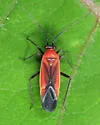
Lopidea media
Lopidea media
Identification: Det. Brad Barnd, 2013, ID'd from specimen
Lopidea pteleae 0
Lopidea pteleae
Type Locality: Inks Lake State Park, Burnet Co., Texas, 17 Apr 1966 (J. C. Schaffner)
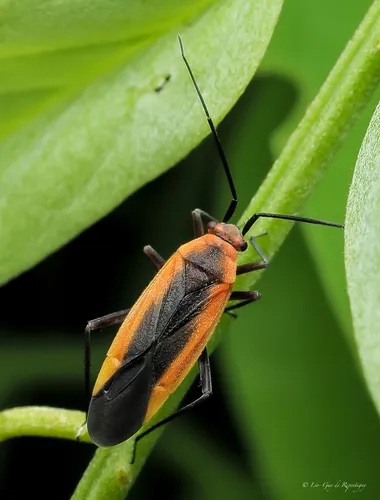
Lopidea robiniae
Lopidea robiniae
Identification: distinguished from the pale forms of confluenta (=confluens) only by the genital claspers Type Locality: MD
Lopidea robusta 0
Lopidea robusta
Identification: spmn from Tahoe City has the black spot on the callosities extended back across the disk nearly to the hind margin of the pronotum. Type Locality: Mexico
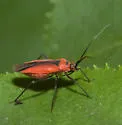
Lopidea staphyleae
Lopidea staphyleae
Identification: There are a dozen or so species listed for Illinois, but this is the only one reported from that particular plant genus. Male.-Length 6.50, width 2.05. Antennae, first segment, length 0.71, thickness 0.15; second, 2.48, thickness 0.10
Lopidea texana 0
Lopidea texana
Identification: Very similar to major in size and general structure, but in color more orange red than carmine; male genital claspers distinctive of the species. Lopidea major (L), Lopidea texana (R) Type Locality: Austin, Texas (C. T. Brues) Allotyp
Lopus decolor
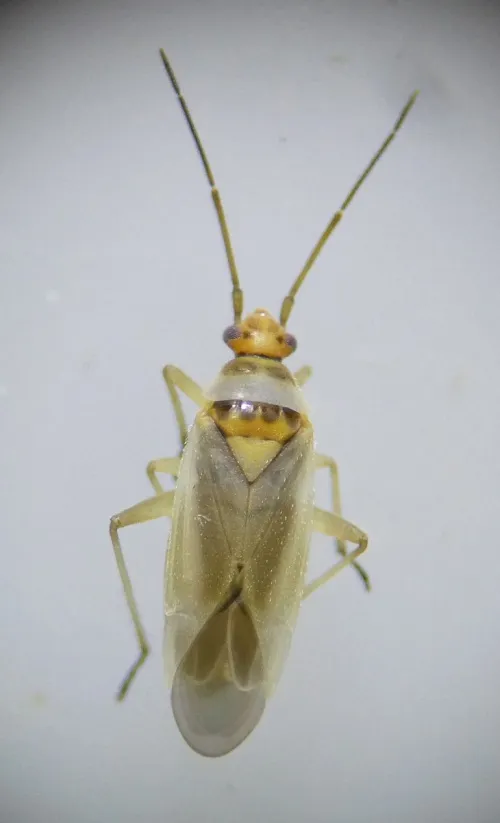
Lopus decolor
Length 4 to 5 mm. A fairly small greyish-yellow bug which is elongate oval in shape. The head has two darker marks bordering the eyes and the tarsi are entirely dark. There are other, very similar species and care is needed with identification. Quite
Loricula bipunctata 0
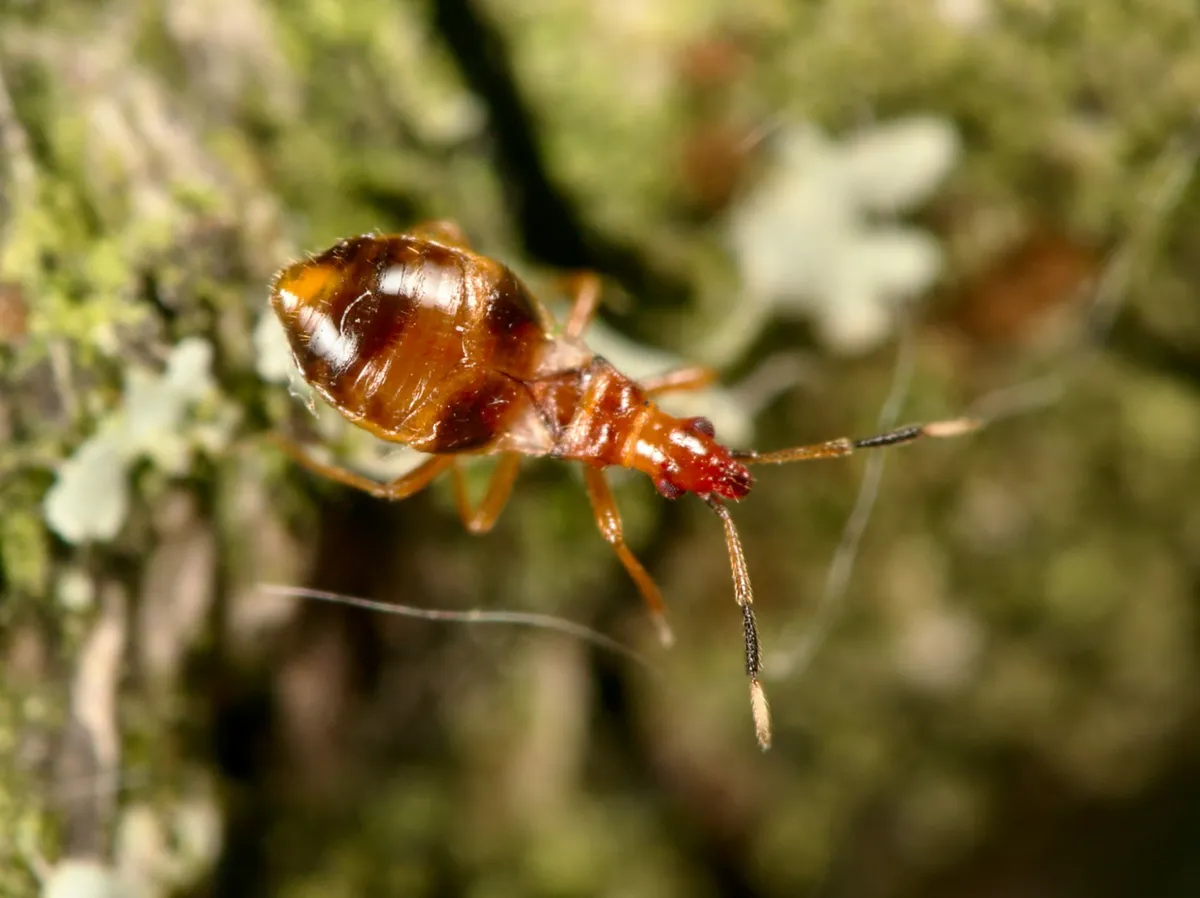
Loricula bipunctata
Identification: adult female earliest record in our area: BC 1990
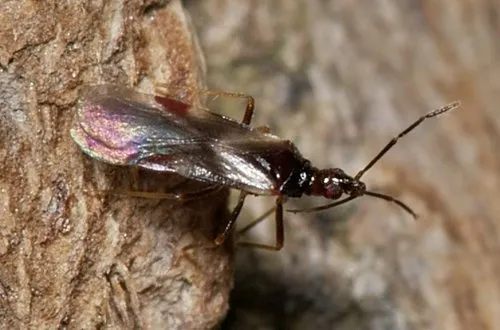
Loricula elegantula
Loricula elegantula
Length 1.5 to 2.3 mm. A genus of small and inconspicuous bugs, in which the females are very broad-bodied and brachypterous, and the 2nd antennal segment is longer than the 4th. In L. elegantula females the forebody is entirely orange-red and the for
Loxa flavicollis
Loxa flavicollis
Identification: Antennae variable, usually uniformly lighter than disk of head, occasionally tinged with red or slightly darker than disk of head, basal two segments sometimes possessing fine dark brown to piceus line on inferior surface. Humeri mode
Loxa viridis
Loxa viridis
Identification: Antennae highly variable in color, from almost entirely pale to dark, mostly possessing some red coloration and at least one fine brown to piceus line on two basal segments; apical three segments commonly darker at apex than at base (
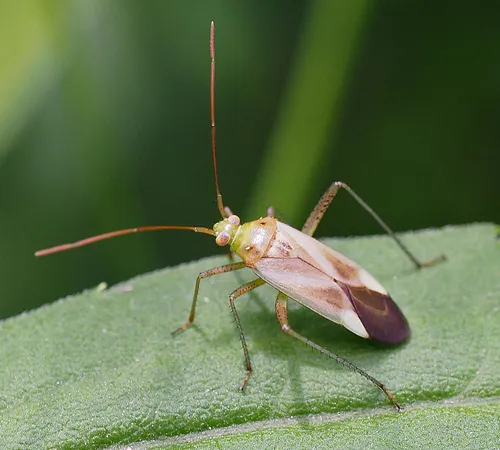
Lucerne Bug
Adelphocoris lineolatus
Length 8 to10 mm. Although one of several similar pale greenish species. Defining features include its large size and rather elongate body shape. The spines on the hind tibia are equal to or greater than the tibial width. The prominent pale cuneus an
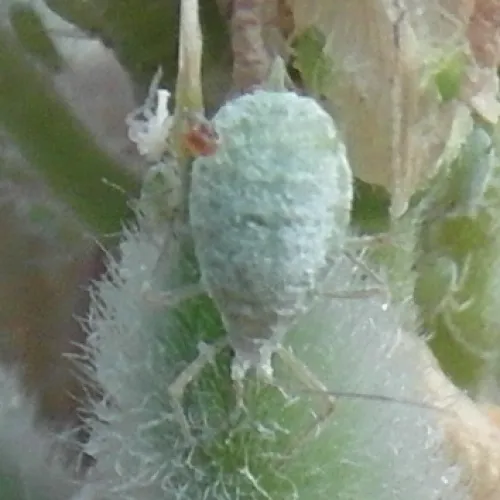
Lupin Aphid
Macrosiphum albifrons
It has a bluish-green body covered with a white wax. Its large size (3.5 to 4.5 mm) makes it easily distinguishable from other aphid species. Lives, as itscommon name suggests, on lupin. Probably fairly frequent and widespread, but little recorded in
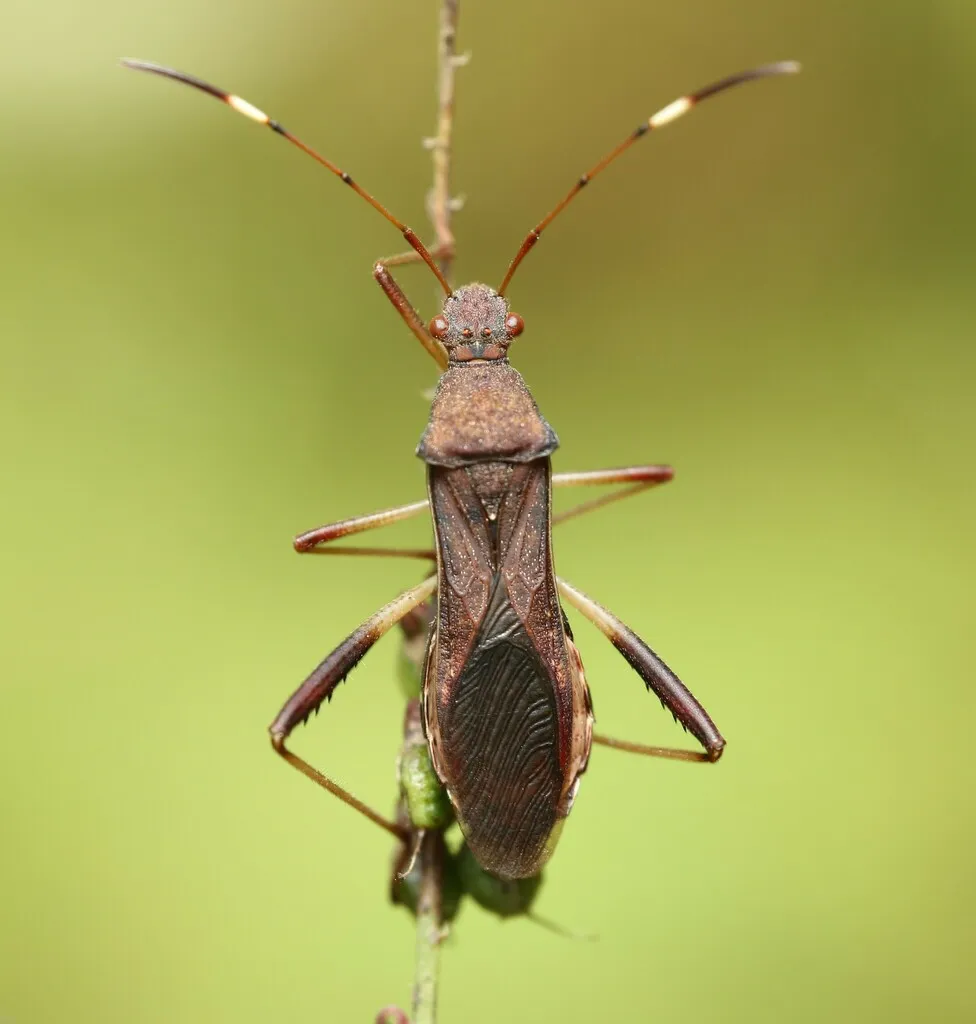
Lupine Bug
Megalotomus quinquespinosus
Identification: note pale base to antennal clubs (not strictly diagnostic), tip of scutellum white, base of hind femora pale
Lycioides lycioides
Lycioides lycioides
Identification: Resembling loculatus in form, but with a broader, shorter head. Head, creamy to orange red, almost unmarked. Pronotum dark. The red head and dark pronotum render this a striking little species. Holotype female, Tucson, Arizona, July 2
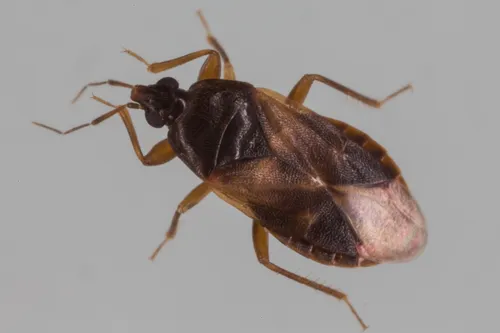
Lyctocoris campestris
Lyctocoris campestris
Identification: ferruginous, shining, legs testaceous; hemelytra slightly shorter and narrower than the abdomen; membranous portion transparent, apex broadly fuscous
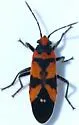
Lygaeus analis
Lygaeus analis
three specimens in the USNM collection that were intercepted at Hidalgo, Progreso, and Pharr, Texas from Mexico. (T. Henry, pers. comm. to V. Belov, 2019)
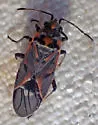
Lygaeus truculentus
Lygaeus truculentus
Identification: The only species in our area with apical ¾ of wing membrane whitish-gray
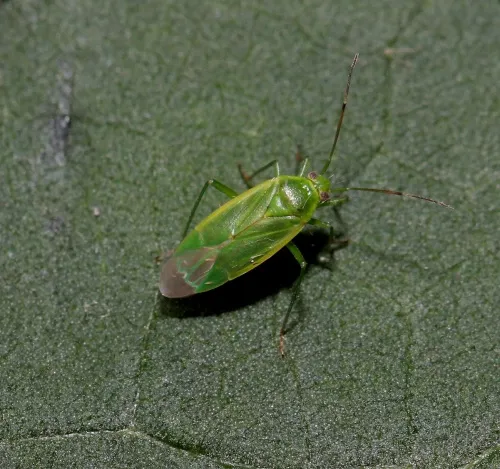
Lygocoris rugicollis
Lygocoris rugicollis
Length 5.5 to 7.0 mm. Lygocoris species can be distinguished from similar green bugs by the very fine and inconspicuous pale brown tibial spines and at high magnification, the break in the keel between the eyes. The pronotum is rather straight-sided.
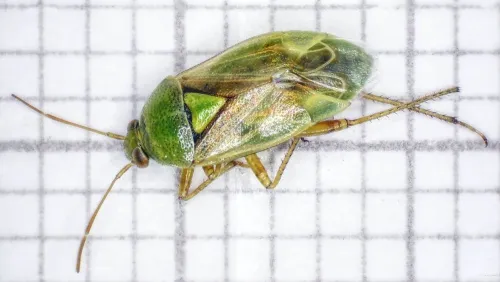
Lygus maritimus
Lygus maritimus
5 to 6 mm. Markings variable but colour predominantly green, pronotum often rose-tinged in the posterior half. Pubescence on middle of corium sparse; lateral spacing of the hairs generally greater than hair length. Punctures on middle of corium widel
Lygus pratensis
Lygus pratensis
Length 6-7 mm. This genus is one of the most problematic Mirid groups to identify. The five UK species can overlap considerably in colour, markings and size; some specimens cannot be determined. The most reliable identification features concern the f
Macrocephalus dorannae
Macrocephalus dorannae
Identification: Two species of Macrocephalus with an arrow-shaped scutellar callus are known from the United States: dorannae Evans and barberi Evans. The former is described from Arizona and the latter is described from California. Given that sever
Macrolophus brevicornis
Macrolophus brevicornis
Identification: A1 is less than width of head across the eyes; apical ¼ of A2 black; basal ⅔ of corium without fuscous points at bases of hairs except one row bordering claval suture
Macrolophus mimuli
Macrolophus mimuli
Identification: Very similar in appearance to two other species, M. lopezi (known from Baja California) and M. saileri (southern AZ, Mexico). Distinguished from M. lopezi "by the larger size, and length of first antennal segment greater than width of
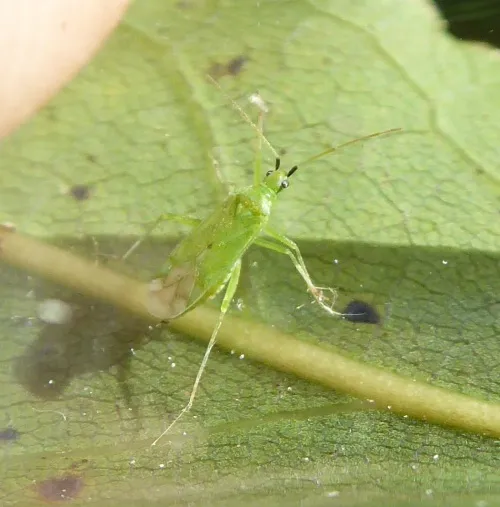
Macrolophus rubi
Macrolophus rubi
A small (4 mm) green bug, usually found on bramble. Macrolophus species can be recognised by the dark bar between the rather small eyes and the pronotum. This species can be separated from the scarcer Macrolophus pygmaeus by the relative length of th
Macrolophus separatus
Macrolophus separatus
Identification: Antennal segment 1 is wholly black.
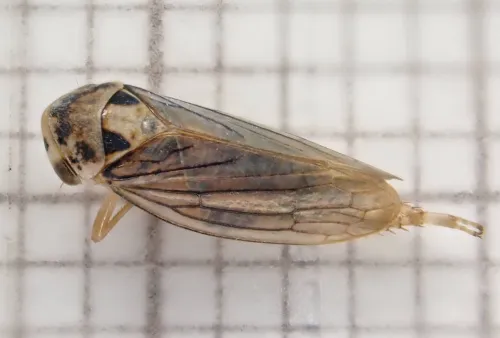
Macropsis fuscula
Macropsis fuscula
Greyish-yellow with a paler inner margin to the clavus. Males have dark veins on the forewings; females have veins that are dark at the base and pale at the apex. The extent of the dark markings on the face, scutellum and pronotum is very variable. D
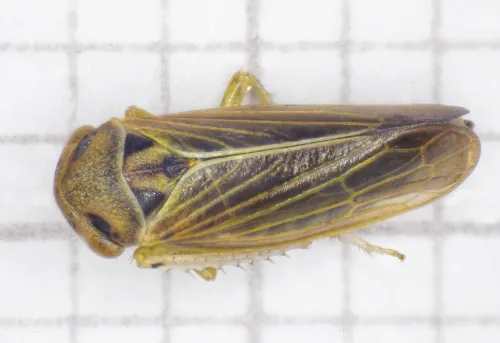
Macropsis infuscata
Macropsis infuscata
Length 5 mm. This species is quite variable, and males are much darker than females. Identification requires examination of internal male genitalia. Provide detailed photos taken from top, side and front of a specimen. Confirmation of identification
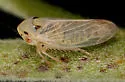
Macropsis notata
Macropsis notata
Identification: The pattern of dark spots is distinctive earliest NA record: NH 1922
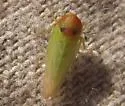
Macropsis rufocephalus
Macropsis rufocephalus
Identification: Yellowish green. Female with vertex, pronotum, anterior two-thirds of scutellum, and half of face reddish brown, Scutellum with black spots in basal angles, apical angle yellowish green. Elytra pale greenish hyaline, veins green. Epim
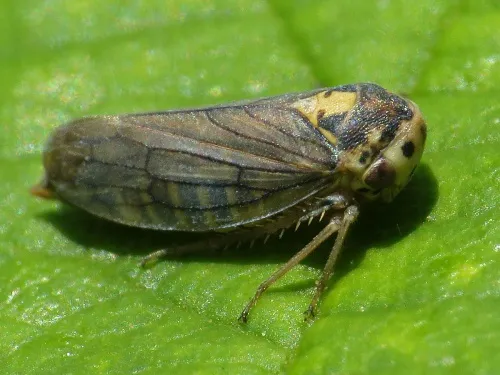
Macropsis scotti
Macropsis scotti
Length 5mm. Dark brown wing veins and a dark inner margin to the clavus. The facial markings are sparse with the central mark (if present at all) being made up of two close lines rather than a large spot. Detailed photographs of top, side and front.
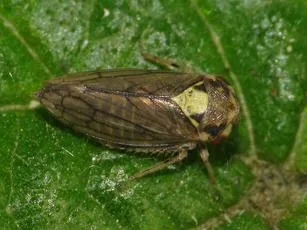
Macropsis scutellata
Macropsis scutellata
Length 5mm. Pale yellow with dark brown wing veins and a very dark inner margin to the clavus. The facial markings variable but the two lower dark marks often resemble arrowheads. Markings on the pronotum are also variable. Good quality photographs t
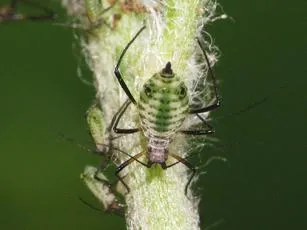
Macrosiphoniella millefolii
Macrosiphoniella millefolii
The Apterae of Macrosiphoniella millefolii are of moderate size, green and wax powdered except for a spinal stripe on the abdomen and presiphuncular spots Good photographs required, please state the host species when submitting records. Macrosiphonie