
Lateral-lined Sharpshooter
Cuerna costalis
This record describes Cuerna costalis (species). Recorded family: Cicadellidae. Recorded order: Hemiptera.
Identification and Appearance
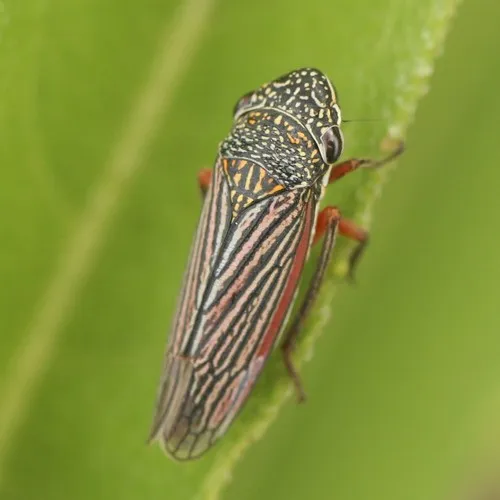
Black and red with longitudinal stripes on forewing; a conspicuous white stripe runs from the eye along the side of the abdomen; tip of abdomen with red spot. The only species in the genus with red on legs , per Andy Hamilton . Dets. M. A. Quinn, 2017
Wikipedia reference for Cuerna costalis: https://en.wikipedia.org/wiki/Cuerna_costalis.
Classification
- Kingdom
- Animalia
- Phylum
- Arthropoda
- Class
- Insecta
- Order
- Hemiptera (True Bugs, Cicadas, Hoppers, Aphids and Allies)
- Suborder
- Auchenorrhyncha
- Superfamily
- Membracoidea
- Family
- Cicadellidae (Typical Leafhoppers)
- Subfamily
- Cicadellinae
- Tribe
- Proconiini
- Genus
- Cuerna
Imported taxonomy record. Source availability varies; see the source references and editorial policy below.
Habitat and Range
Habitat
fields, meadows
Geographic Range
e US to NM (NM-FL-NY-NE), Ont. / ne. Mex. (BG data)
Seasonal Activity
yr round in the south (BG data)
Diet and Behavior
Diet: polyphagous Asteraceae: Ambrosia artemisiifolia (ragweed), Amphiachyris sp., Dahlia sp. (dahlia), Helianthus petiolaris, Helianthus sp. (sunflower); Bignoniaceae: Campsis radicans (trumpet creeper); Brassicaceae: Brassica rapa (turnip); Chenopodiaceae: Beta vulgaris (beet); Fabaceae: Albizia julibrissin (silktree), Arachis hypogaea (peanut), Cassia occidentalis (coffeeweed), Cassia tora, Cercis sp. (redbud), Lespedeza sp. (lespedeza), Lupinus angustifolius (blue lupine), Pisum sativum var. (Austrian pea), Pisum sativum (garden pea), Vigna sinensis (cowpea); Lythraceae: Lagerstroemia indica (crapemyrtle); Malvaceae: Gossypium herbaceum (cotton), Hibiscus esculentus (okra); Oleaceae: Ligustrum sp. (privet); Onagraceae: Oenothera biennis (evening primrose); Phytolaccaceae: Phytolacca americana (pokeweed); Poaceae: Cynodon dactylon (Bermuda grass), Digitaria sanguinalis (crab grass), Lolium multiflorum (rye grass), Panicum texanum (Texas millet), Setaria viridis (green bristlegrass), Sorghum halepense (Johnson grass), Triticum aestivum (wheat), Zea mays (corn); Polygonaceae: Rumex sp. (dock); Rosaceae: Fragaria ananassa (strawberry), Prunus angustifolia (chickasaw plum), Prunus persica (peach); Vitaceae: Vitis sp. (grapevine). Asclepiadaceae: Asclepias viridis (green milkweed) (BG data)
Life History
normally two generations per year; overwinters as an adult under matted grass in fields
About True Bugs, Cicadas, Hoppers, Aphids and Allies: the wider group
Order-level background for Hemiptera, the group containing Cuerna costalis. Species-specific details appear above.
Group overview
Hemiptera (true bugs) includes over 80,000 described species across cicadas, aphids, leafhoppers, shield bugs, and bed bugs. Aphids alone cost global agriculture an estimated $2.5 billion annually in crop losses.
Ecological role of the group
Many Hemiptera are essential food sources for birds and predatory insects. Cicadas provide massive nutrient pulses during emergence events - a single Brood X emergence can involve trillions of individuals across 15 states.
Economic and practical significance of the group
The brown marmorated stink bug (Halyomorpha halys) caused $37 million in apple crop losses in a single year in the U.S. Mid-Atlantic region. Bed bug infestations in the U.S. increased by 500% between 2001-2010, costing the hotel industry hundreds of millions annually.
Recorded sources for this group: USDA, EPA, University research. Imported estimates may describe particular regions or reporting periods.
Photos of Lateral-lined Sharpshooter (3)
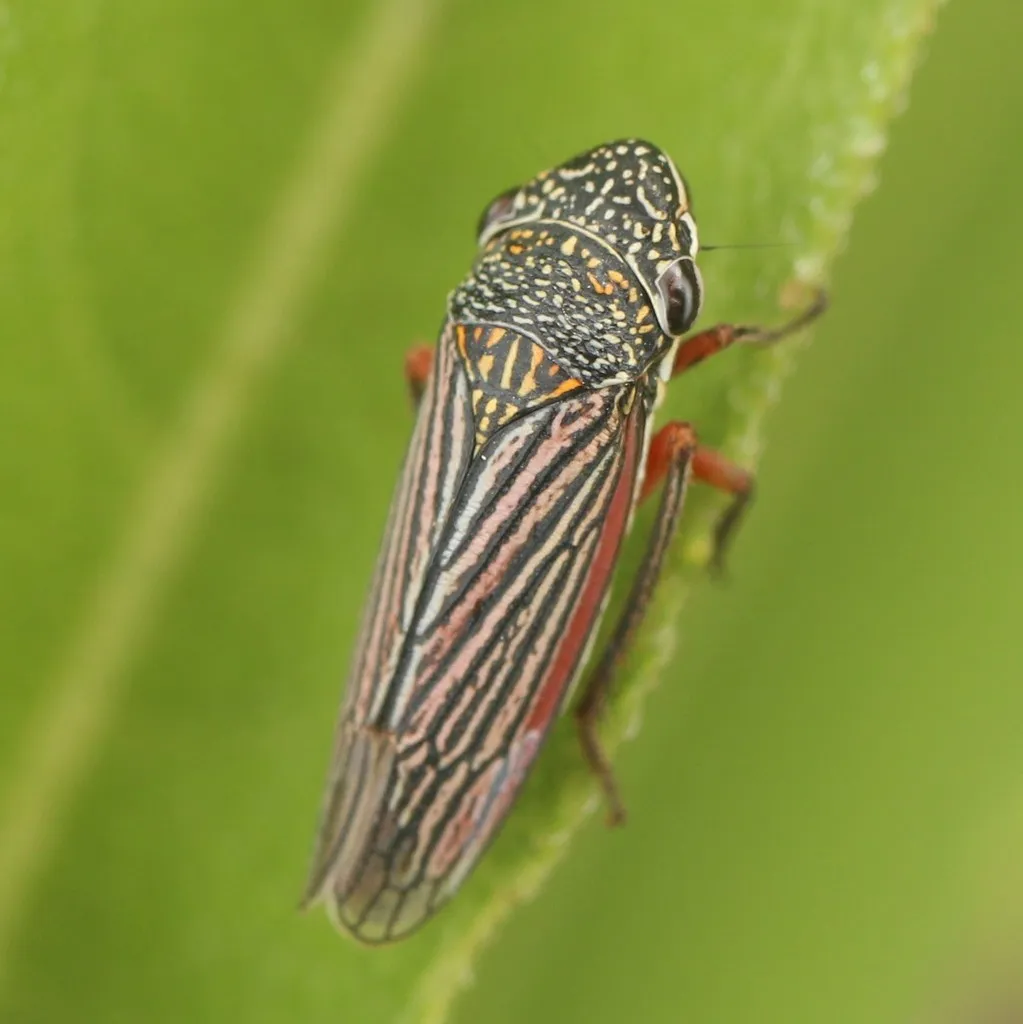
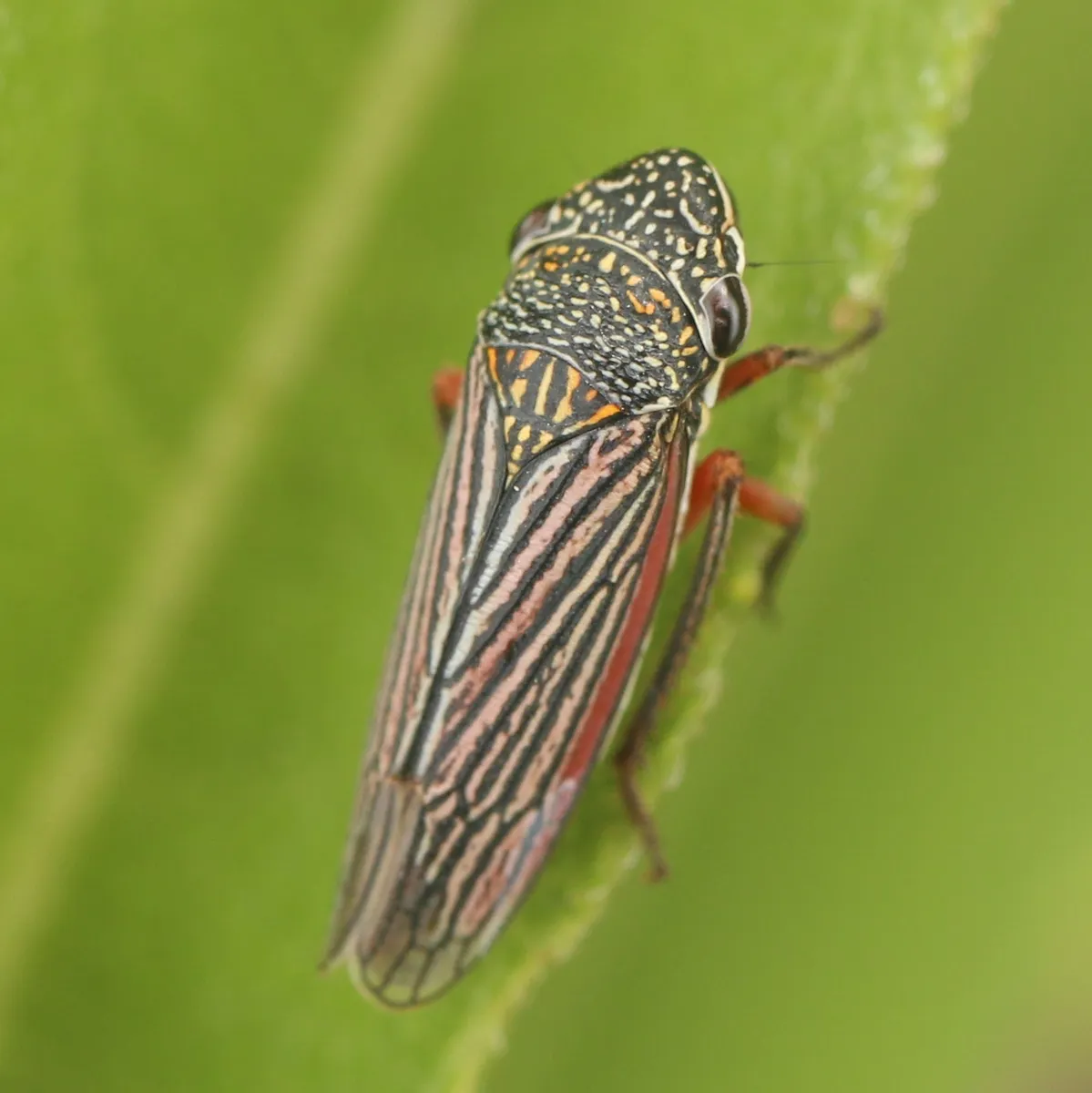
Photo credits: Contributed by Robin McLeod; Additional contributions by Bbarnd , Mike Quinn , v belov , KenW , TurtleDude
Frequently Asked Questions About Lateral-lined Sharpshooter
What is Lateral-lined Sharpshooter?
Lateral-lined Sharpshooter (Cuerna costalis) is a species in the family Cicadellidae, within the order Hemiptera.
How do you identify Lateral-lined Sharpshooter?
Black and red with longitudinal stripes on forewing; a conspicuous white stripe runs from the eye along the side of the abdomen; tip of abdomen with red spot. The only species in the genus with red on legs , per Andy Hamilton . Dets. M. A. Quinn, 2017
Where is Lateral-lined Sharpshooter found?
| Feature | Details |
|---|---|
| Habitat | fields, meadows |
| Range | e US to NM (NM-FL-NY-NE), Ont. / ne. Mex. (BG data) |
What does Lateral-lined Sharpshooter eat?
The diet of the Lateral-lined Sharpshooter includes polyphagous Asteraceae: Ambrosia artemisiifolia (ragweed), Amphiachyris sp., Dahlia sp. (dahlia), Helianthus petiolaris, Helianthus sp. (sunflower); Bignoniaceae: Campsis radicans (trumpet creeper); Brassicaceae: Brassica rapa (turnip); Chenopodiaceae: Beta vulgaris (beet); Fabaceae: Albizia julibrissin (silktree), Arachis hypogaea (peanut), Cassia occidentalis (coffeeweed), Cassia tora, Cercis sp. (redbud), Lespedeza sp. (lespedeza), Lupinus angustifolius (blue lupine), Pisum sativum var. (Austrian pea), Pisum sativum (garden pea), Vigna sinensis (cowpea); Lythraceae: Lagerstroemia indica (crapemyrtle); Malvaceae: Gossypium herbaceum (cotton), Hibiscus esculentus (okra); Oleaceae: Ligustrum sp. (privet); Onagraceae: Oenothera biennis (evening primrose); Phytolaccaceae: Phytolacca americana (pokeweed); Poaceae: Cynodon dactylon (Bermuda grass), Digitaria sanguinalis (crab grass), Lolium multiflorum (rye grass), Panicum texanum (Texas millet), Setaria viridis (green bristlegrass), Sorghum halepense (Johnson grass), Triticum aestivum (wheat), Zea mays (corn); Polygonaceae: Rumex sp. (dock); Rosaceae: Fragaria ananassa (strawberry), Prunus angustifolia (chickasaw plum), Prunus persica (peach); Vitaceae: Vitis sp. (grapevine). Asclepiadaceae: Asclepias viridis (green milkweed) (BG data).
When is Lateral-lined Sharpshooter active?
Lateral-lined Sharpshooter: seasonal activity - yr round in the south (BG data).
What is the life cycle of a Lateral-lined Sharpshooter?
normally two generations per year; overwinters as an adult under matted grass in fields