
True Bugs, Cicadas, Hoppers, Aphids and Allies
Order Hemiptera
The True Bugs, Cicadas, Hoppers, Aphids and Allies (Order Hemiptera) includes 7,349 species across 120 families and 1,727 genera in our directory.
About True Bugs, Cicadas, Hoppers, Aphids and Allies
Hemiptera (true bugs) includes over 80,000 described species across cicadas, aphids, leafhoppers, shield bugs, and bed bugs. Aphids alone cost global agriculture an estimated $2.5 billion annually in crop losses.
Economic Impact
The brown marmorated stink bug (Halyomorpha halys) caused $37 million in apple crop losses in a single year in the U.S. Mid-Atlantic region. Bed bug infestations in the U.S. increased by 500% between 2001-2010, costing the hotel industry hundreds of millions annually.
Ecological Role
Many Hemiptera are essential food sources for birds and predatory insects. Cicadas provide massive nutrient pulses during emergence events - a single Brood X emergence can involve trillions of individuals across 15 states.
Families in Hemiptera (120)
Species in Hemiptera (7,349)
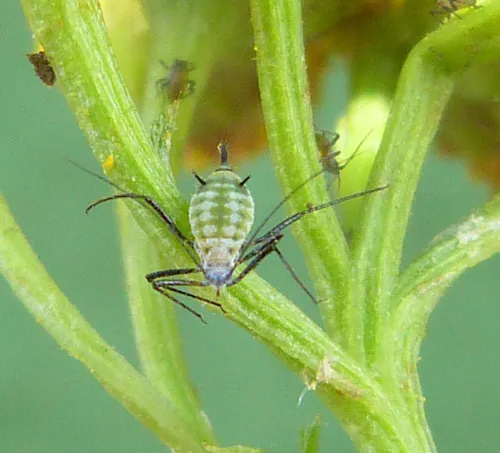
Macrosiphoniella tanacetaria
Macrosiphoniella tanacetaria
Macrosiphoniella tanacetaria apterae are large wax powdered green or pinkish-brown aphids. For a more detailed description of this species please use the ‘Further info:’ link below. Please add good quality images to support your record, and also stat
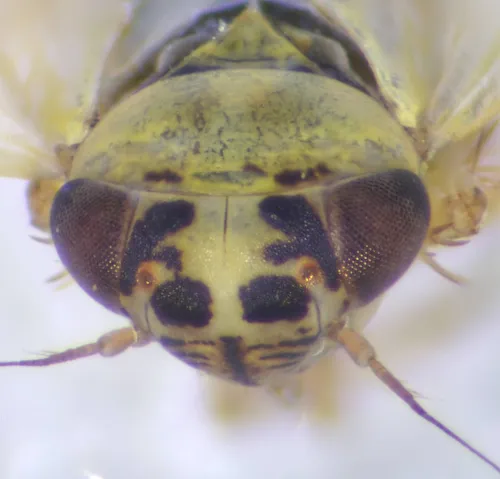
Macrosteles laevis
Macrosteles laevis
Length 3-4mm. Macrosteles is an extremely difficult and diverse genus. The vertex has several dark spots or bars and the frons has dark markings; both features are variable. The forewings are greyish or green-yellow, often with brown longitudinal str
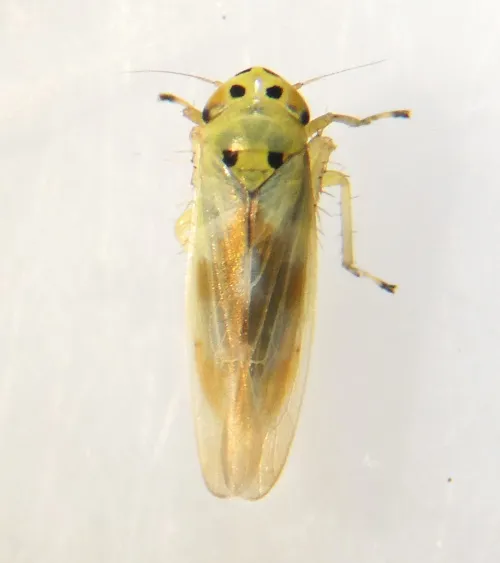
Macrosteles sardus
Macrosteles sardus
Length 3-4mm. Macrosteles is an extremely difficult and diverse genus. The vertex has several dark spots or bars and the frons has dark markings; both features are variable. The forewings are greyish or green-yellow, often with brown longitudinal str
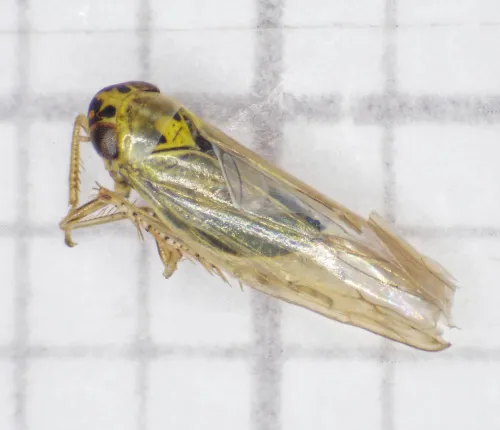
Macrosteles sexnotatus
Macrosteles sexnotatus
Length 3-4mm. Macrosteles is an extremely difficult and diverse genus. The vertex has several dark spots or bars and the frons has dark markings; both features are variable. The forewings are greyish or green-yellow, often with brown longitudinal str
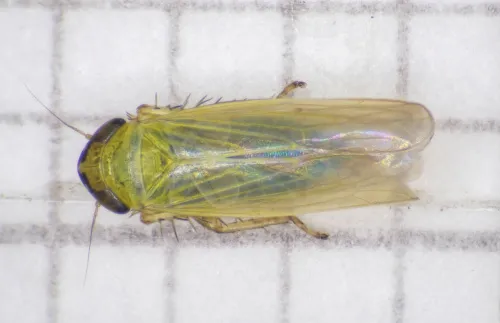
Macrosteles viridigriseus
Macrosteles viridigriseus
Length 2.9-3.8mm. Macrosteles is an extremely difficult and diverse genus. The vertex has several dark spots or bars and the frons has dark markings; both features are variable. The forewings are greyish or green-yellow, often with brown longitudinal
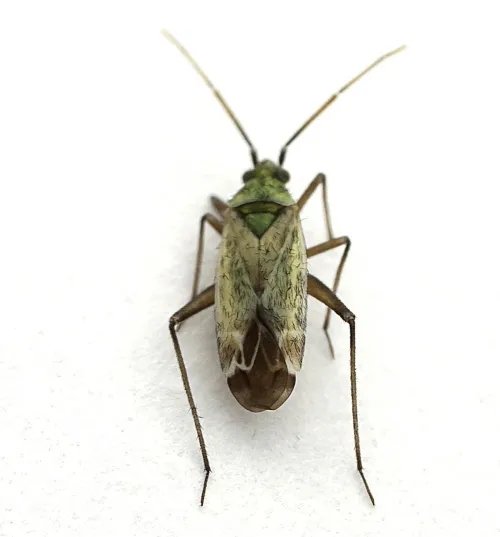
Macrotylus paykulli
Macrotylus paykulli
Length 3 to 4 mm. A parallel-sided grey-green species, characterised by a dense covering of coarse, dark hairs on the forewings and a distinctive wing membrane pattern with an irregular black mark at apex of membrane cells. The tibial spines are fine
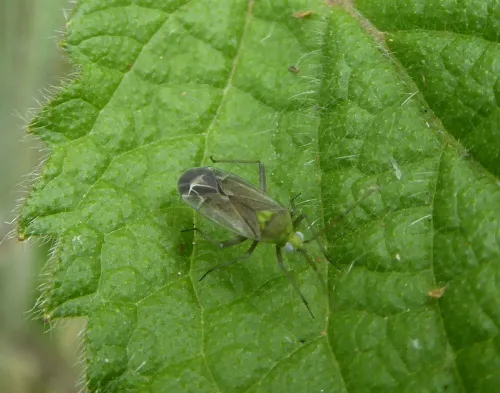
Macrotylus solitarius
Macrotylus solitarius
Length 5 mm. A distinctive genus comprising three rather parallel-sided grey-green species, characterised by a dense covering of coarse, dark hairs on the forewings and a striking wing membrane pattern. The tibial spines are fine and inconspicuous. I
Macrotylus tristis
Macrotylus tristis
Identification: "Dull slaty-black...Two minute pale spots on the vertex and there may be two more on the callosities and two on the basal and two on the apical lobe of the scutellum; the membranal nervures, basal margin of the cuneus and commissural
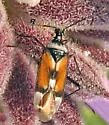
Macrotylus vanduzeei
Macrotylus vanduzeei
Identification: Distinguished from allied species by the truncated and slightly enlarged tips of the erect black bristles on dorsum; corium, except apex and the outer half of clavus, orange-colored. (Knight, 1932)
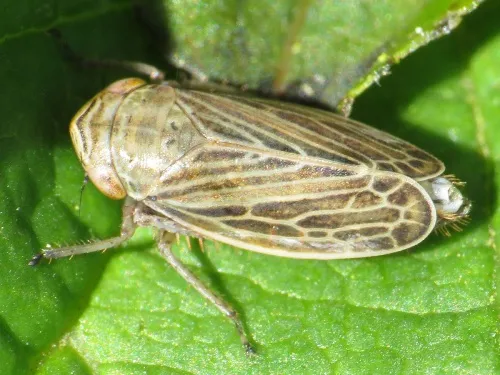
Macustus grisescens
Macustus grisescens
Length 5 to 6 mm. A brown leafhopper with pale veins on the forewings, and two curved dark lines on the tip of the vertex. There is a dark mark behind the eye, seen in side view. good photographs, preferably from a specimen - from top, side and front
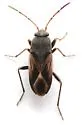
Malezonotus cf-grossus
Malezonotus cf-grossus
Identification: large size + pale spot near inner apical angle of corium + profemora black except at apex
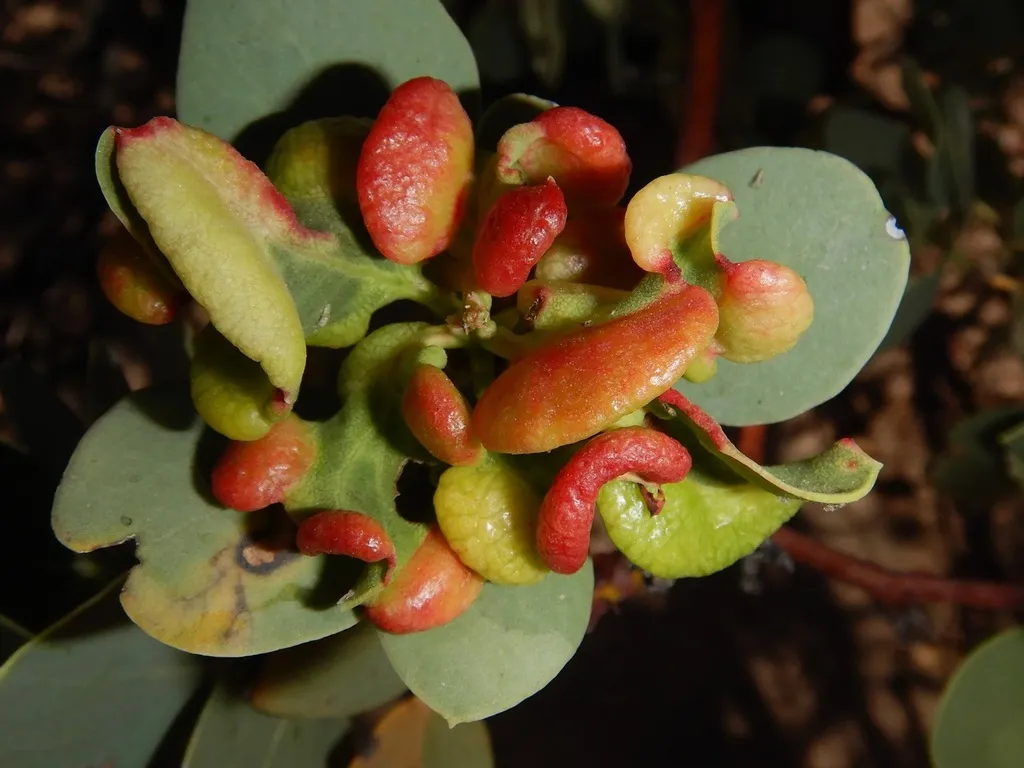
Manzanita Leaf Gall Aphid
Tamalia coweni
Identification: This aphid feeds on over 30 species of Arctostaphylos (manzanita). It induces pink/red fold galls, either along leaf edges, on the inflorescences, or, on some manzanitas, along the midrib vein.
Manzanita Psyllid
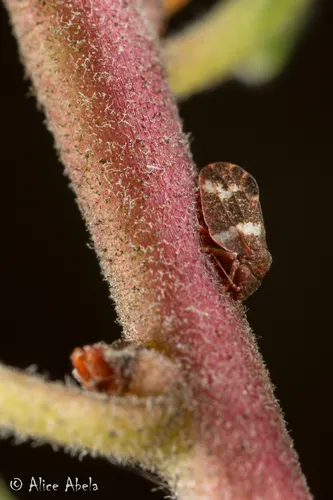
Neophyllura arctostaphyli
Nymphs occur on the ventral surface of leaves in cells constructed from white cottony wax secretion. In severe infestations they may also be found on the upper surface of leaves as well as the branches and buds of younger growth ( 3 )
Manzutus mexicanus
Manzutus mexicanus
Identification: This species is much larger than huachucanus and has a more slender appearance with bolder markings. Note the presence of a bold line in the middle of the pronotum, which huachucanus lacks (based on images of museum specimens).
Marganana suilla
Marganana suilla
Identification: "A broad, robust, brown species with black spots on pronotum. Vertex short and broadly rounded, decidedly more than twice as wide between eyes at base as median length. Brown tinged with orange, a round black spot on each side of pron
Marsh Damsel Bug
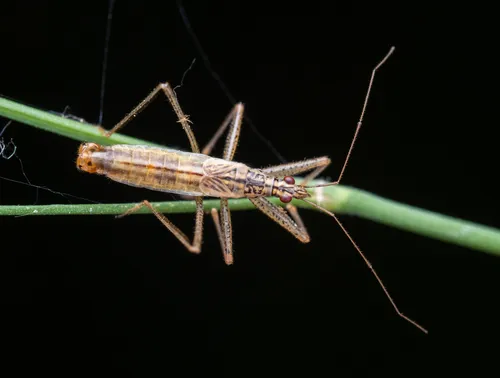
Nabis limbatus
Length 7.5 to 9.0 mm. N. limbatus has a broad body and very short wings. This species is always micropterous, and the forewings are shorter than in N. flavomarginatus , covering the 2nd and part of the 3rd abdominal segments only. The similar Reed Da
Mayana ramosus 0
Mayana ramosus
Mayana ramosus 0 (Mayana ramosus) is a species in the family Oxycarenidae, belonging to the order Hemiptera (True Bugs, Cicadas, Hoppers, Aphids and Allies). It is classified within the suborder Heteroptera, superfamily Lygaeoidea. This species belon
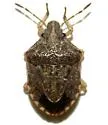
Mcphersonarcys aequalis
Mcphersonarcys aequalis
Identification: Clypeus distinctly elevated above mandibular plates Det. M. A. Quinn, 2017
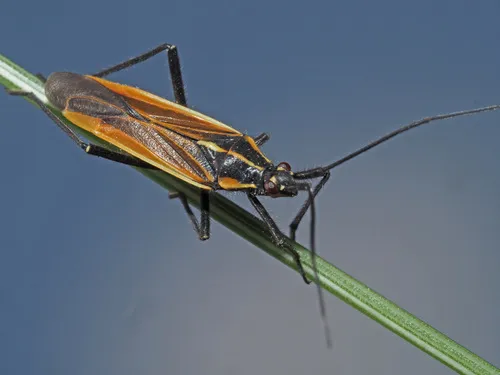
Meadow Plant Bug
Leptopterna dolabrata
Length 8.0-8.5 mm. Leptopterna species are large and common grass bugs which often have reddish or orange-yellow forewings. They have a transverse furrow between the eyes and the legs and antennae are covered in long dark hairs. There are two very si
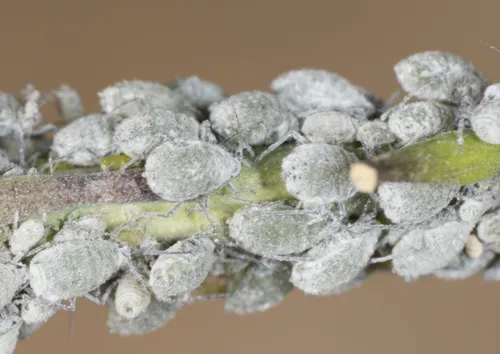
Mealy Cabbage Aphid
Brevicoryne brassicae
Brevicoryne brassicae apterae are green and wax-powdered. The head, tips of the antennae and the legs are dark. The body length of apterae is 1.9 to 2.7 mm. Spends its entire life cycle on Brassicas such as Cabbage and Oil-seed Rape. Most readily see
Mecidea major
Mecidea major
Identification: spiracles often darkened ; male antennomere II longer than III
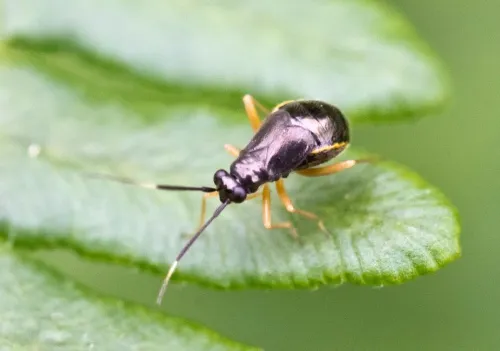
Mecomma ambulans
Mecomma ambulans
Length 2.5 to 4.5 mm. Mecomma species are sexually dimorphic; males are macropterous and females usually brachypterous. Male M. ambulans are separated from the more local M. dispar by the entirely dark antennae and by the pronotum, which is clearly w
Mecomma angustata
Mecomma angustata
Identification: "This species differs markedly from the other Mecomma in the rounded head and the tumid calli on the pronotum." The second antennal segment is linear in males and clavate in females.
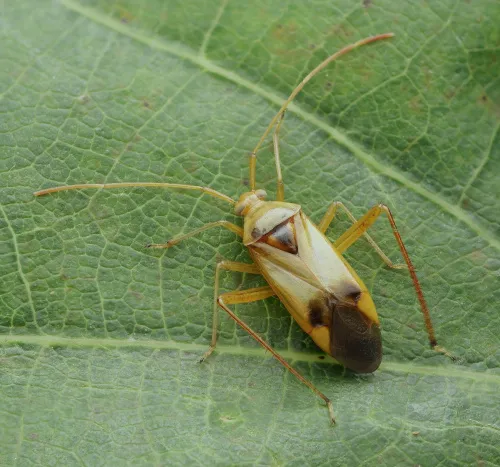
Megacoelum infusum
Megacoelum infusum
Length about 7 mm. A striking orange-brown bug with long legs and antennae. The upperside is smooth and almost completely hairless. The rear of the corium is usually dark and the cuneus entirely orange. The tibial spines in this species are roughly e
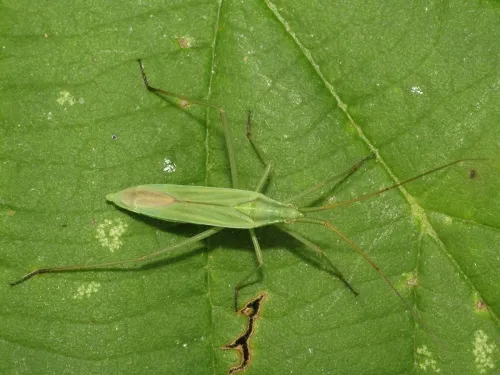
Megaloceroea recticornis
Megaloceroea recticornis
Length 8 to 10mm. This is an elongate grass bug with extremely long antennae and long slender hind legs which differentiate it from the similar-looking Stenodema species. Its colour varies from green to straw yellow in the adult, whilst nymphs are gr
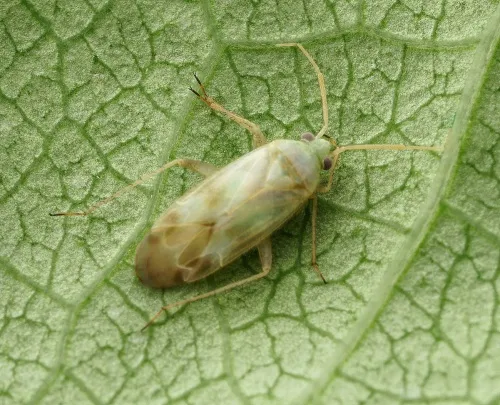
Megalocoleus molliculus
Megalocoleus molliculus
Length 4.5 mm. There are two species in this genus, both of which are fairly distinctive. The tibial spines are wider than the tibial width and the apical segment of the tarsi is dark. Megalocoleus molliculus is pale blue-green in colour, mottled wit
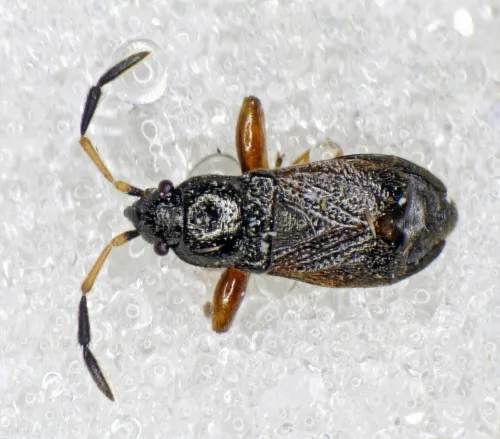
Megalonotus antennatus
Megalonotus antennatus
A medium-sized bug (4 to 5mm) with a dark pubescent and coarsely punctate pronotum. The fromt femora have one large tooth and several smaller ones. The legs and 2nd antennal segment are entirely pale brown. It is usually brachypterous, with short win
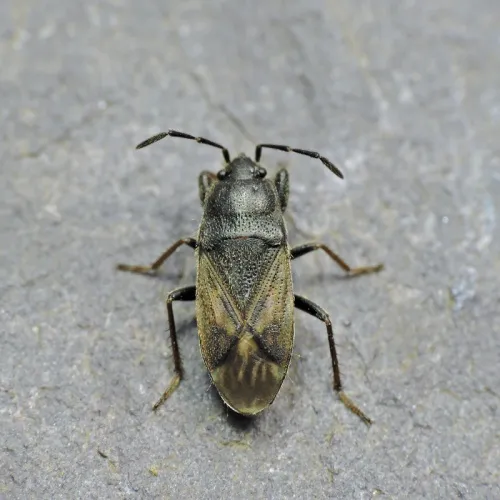
Megalonotus emarginatus
Megalonotus emarginatus
A medium-sized ground-bug (4.5 to 5.5 mm) with a dark, pubescent and coarsely punctate pronotum. Size, colouration, shape and wing developement are variable, but it has femora that are partly darkened, antennae that are partly pale, and prominent hin
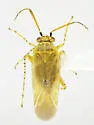
Megalopsallus brendae
Megalopsallus brendae
Identification: "Recognized by generally pale greenish coloration of dorsum contrasting with dark antennal segment 1."
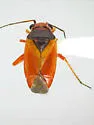
Megalopsallus ephedrae
Megalopsallus ephedrae
Identification: Red-tinged pale to bright red hemelytra, contrasting with dark scutellum and pronotum; femora and tibiae more or less unicolorous ( M. froeschneri looks similar in other respects, but has distal portion of femora and all of tibiae pal
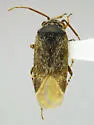
Megalopsallus humeralis
Megalopsallus humeralis
Identification: "Recognized by frequently dark coloration of most of dorsum and femora, or at least dark coloration of head, pronotum, scutellum, and femora, with pale hemelytra. Most easily confused with nigrofemoratus on basis of size, coloration,
Megalopsallus nicholi
Megalopsallus nicholi
Identification: "Recognized by castaneous head, pronotum, and scutellum contrasting with pale corium, clavus, and membrane, and cuneus always at least weakly darkened and reddish."
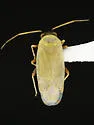
Megalopsallus nigricaput
Megalopsallus nigricaput
Identification: "Recognized unequivocally by the dark head, first antennal segment, coxae, femora, and thoracic sternum in contrast to otherwise almost white to weakly greenish coloration."
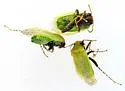
Megalopsallus pictipes
Megalopsallus pictipes
Identification: "Recognized by generally pale green coloration of dorsum and strongly contrasting deep red, often mottled, color of antennal segment 1 and all femora. Not easily confused with any other species."
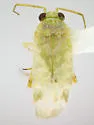
Megalopsallus rubropictipes
Megalopsallus rubropictipes
Identification: Recognized by relatively large size, pale green coloration, red eyes, and reddish femora... Similar to nuperus in general appearance and lack of strong sexual dimorphism (except in some populations of rubropictipes ), but distinguishe
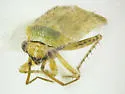
Megalopsallus sparsus
Megalopsallus sparsus
Identification: "Recognized among small, at least partly greenish, Megalopsallus species by gray to black eyes and frequently dark head, anterior lobe of pronotum, and mesoscutum. Thoracic pleuron and venter and abdominal venter infuscate in male, pa
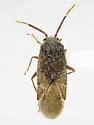
Megalopsallus teretis
Megalopsallus teretis
Identification: "Recognized by totally blackish brown coloration and spindle-shaped antennal segment 2 in female."
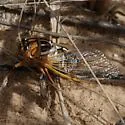
Megatibicen harenosus
Megatibicen harenosus
Identification: Similar to tremulus & dorsatus ‒ dealbatus
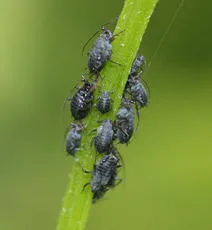
Megourella tribulis
Megourella tribulis
This small aphid is mainly black with a blue-grey bloom on part of its body Found on vetch, possibly on other plants too. We have been unable to find very much information relating to this species, but it seems to be associated with vetch. https://in
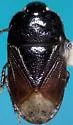
Melanaethus noctivagus
Melanaethus noctivagus
Identification: TYPE SPECIMEN [in CAS; kindly imaged upon my request by Rachel Diaz-Bastin; thanks to her, as well as Ken Schneider and David Bettman for their generous help]
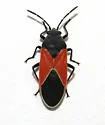
Melanopleurus belfragei
Melanopleurus belfragei
I have seen specimens labeled " Melanopleurus bicolor H.-S." (described from Brazil) that look just like M. belfragei . (Merrill Sweet, pers. comm.)
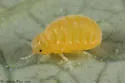
Melaphis asafitchi
Melaphis asafitchi
Identification: From InfluentialPoints , "It is possible to distinguish between two of the species in the Melaphis rhois species group ( Melaphis rhois and Melaphis asafitchi ) when they are on the primary host. For Melaphis rhois the length of the a
Melormenis infuscata
Melormenis infuscata
Described from Mexico. Reports of this species in the United States are probably in error and represent a group of undescribed species. This species is not a true Melormenis .
Memnonia flavida
Memnonia flavida
Identification: Resembles Hecalus , but the head is less strongly flattened, and the wing tips each have 2 small black dots. Females lack the brown wing tips of the male. --K.G.A. Hamilton
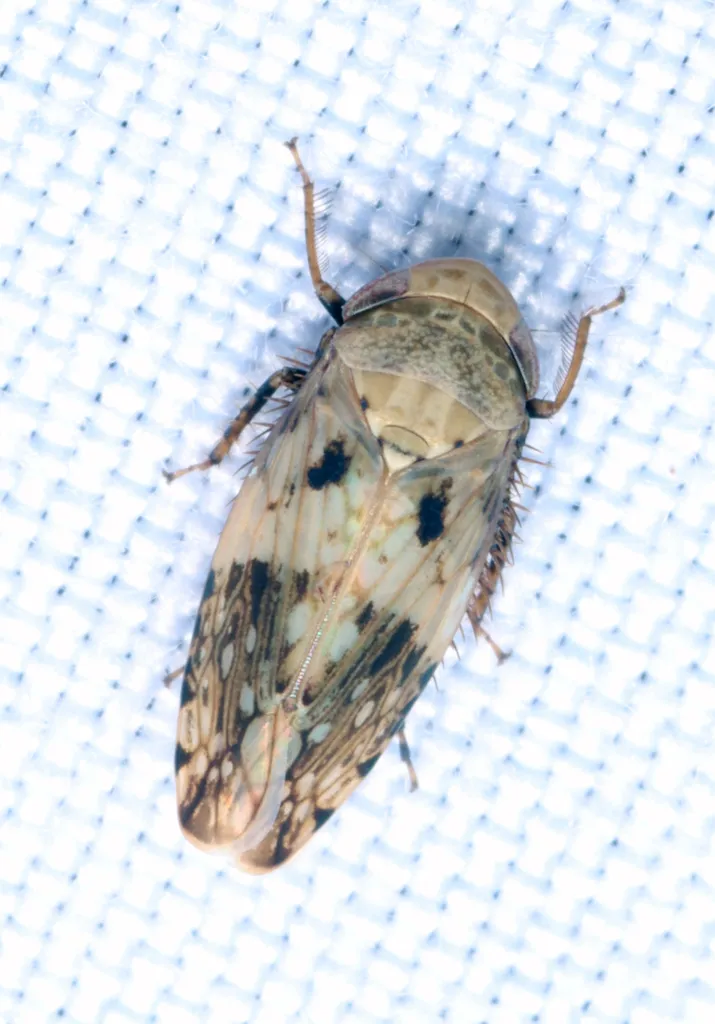
Menosoma cinctum
Menosoma cinctum
Identification: Det. Kyle Kittelberger, 2025 Described from numerous examples of both sexes collected at Ames, Iowa, two specimens from Texas (Aaron), and one from Washington, D. C. (Heideman).
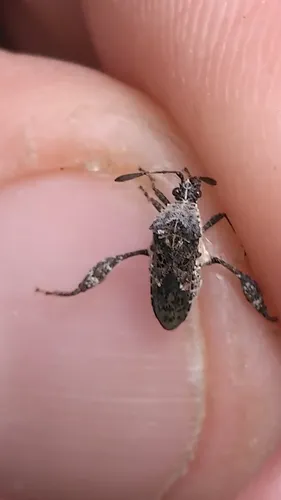
Merocoris typhaeus
Merocoris typhaeus
Identification: Differentiation of the three North American species in this genus is, perhaps, problematic. The description below is modified from Blatchley , and should be taken with a grain of salt, as that is an older reference. See guide page for
Mesovelia cryptophila
Mesovelia cryptophila
Identification: Commonly misidentified with M. amoena from which females are often inseparable; in collections, nymphs of M. mulsanti have also been commonly confused with M. cryptophila
Metacanthus tenellus
Metacanthus tenellus
Identification: from specimens taken in Brownsville, Cameron Co., TX, "the legs and basal antennal segment are conspicuously speckled (emphasis added) with black and the distal antennal segments are dark with pale apices." iNaturalist First US record
Metadelphax propinqua
Metadelphax propinqua
Identification: head narrow; wings have a dark mark where they meet over abdomen; large leaflike calcar ("spur") on hind leg [adapted from K.G.A. Hamilton's comments] earliest NA record: CA 1880 ( 3 )
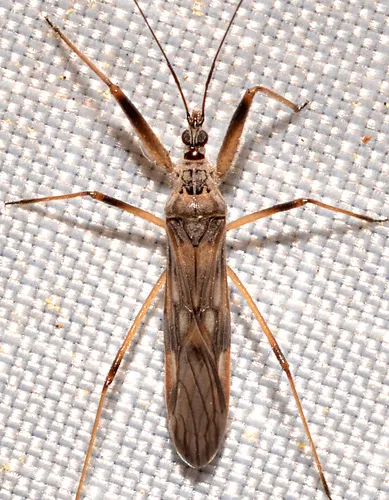
Metatropiphorus belfragii
Metatropiphorus belfragii
Identification: Very long first antennomere (at least twice as long as the head), no closed cells on the forewing membrane, rather small (6–7 mm), slender, and dark-colored Det. V. Belov, 2009 Type Locality: Texas
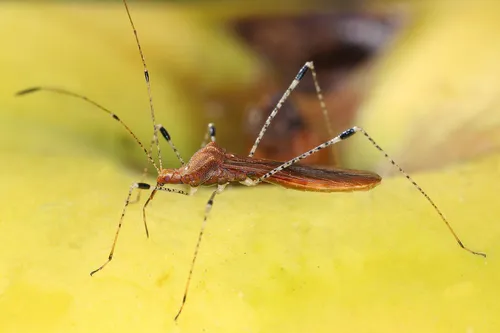
Metatropis rufescens
Metatropis rufescens
Length 9 to 11 mm. This is a large orange-brown stiltbug. This species can be identified with care but there are similar species that it could be confused with. It is a woodland species associated with Enchanter's-nightshade. Feeds on the leaves of E
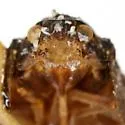
Metcracis fusca
Metcracis fusca
Identification: In M. fusca at least, frons with a dark band on anterior third
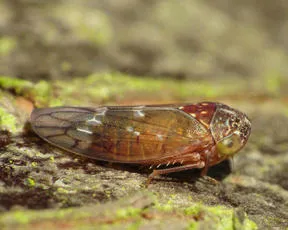
Metidiocerus rutilans
Metidiocerus rutilans
Length about 5 mm. The forewings are reddish-brown at the base, and hyaline in the apical third, with several white spots along the cubital vein. The scutellum is mainly brown with a pale apex; other small pale marks may be present and the dark trian
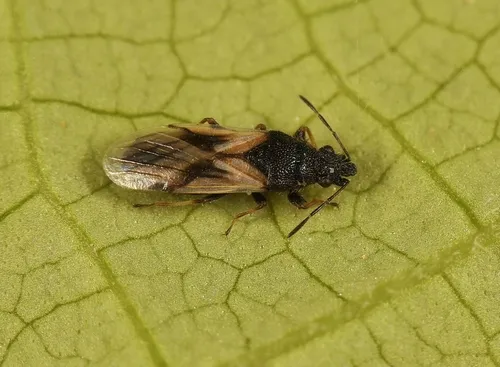
Metopoplax ditomoides
Metopoplax ditomoides
A small slender ground bug (3.5 - 4mm) with a dark and densely punctured pronotum and scutellum, and contrasting pale forewings. The pronotum is covered with short whitish hairs. Metapoplax fuscinerv i s has a bicoloured pronotum that is cream or pal
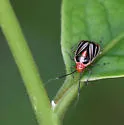
Metriorrhynchomiris illini
Metriorrhynchomiris illini
Identification: A2 clavate, embolium white, and cuneus rose colored. Type Locality: Illinois
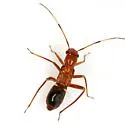
Mexicomiris texanus
Mexicomiris texanus
Type Locality: Ft. Sam Houston, Bexar Co., Texas, 6.IV.1953, B.J. Adelson; 2 males, 1 female; NMNH.
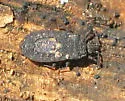
Mezira emarginata
Mezira emarginata
Identification: Separated from M. lobata by the less explanate anterolateral pronotal angles, more shallow transverse pronotal sulcus, and more evenly granulate posterior pronotal lobe.
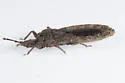
Mezira lobata
Mezira lobata
Identification: Separated from M. emarginata in having large explanate anterolateral corners of the pronotum, a deep transverse pronotal sulcus, and more rugose elevations to the posterior pronotal lobe.
Microcentrus cf-caryae
Microcentrus cf-caryae
These hickory-associated forms roughly match Microcentrus caryae , but females are horned as opposed to unhorned. One of the defining characteristics of M. caryae is the absence of horns in both sexes.
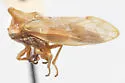
Microcentrus nicholi
Microcentrus nicholi
Identification: "Much smaller and more fragile than lynx , with small slender superhumerals in the female and only low carinae in the males. Color yellowish testaceous. Face short, sharply retreating on a line below the eyes, thus appearing still sho
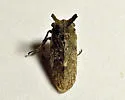
Microcentrus perditus
Microcentrus perditus
Identification: back with earlike processes; dark brown ( 4 ) uncommon
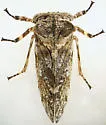
Microcentrus solussidus
Microcentrus solussidus
Identification: " Microcentrus solussidus is morphologically most similar to M. lunatus n.sp. Microcentrus solussidus differs from the morphologically similar M. perditus and M. lynx in having the forewing crossvein r-m2 basad of the fork of vein M,
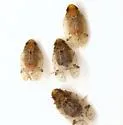
Microledrida flava
Microledrida flava
Identification: This species may be recognized by its pale yellow color, practically unmarked wings and distinct male genitalia Holotype: Brownsville, Cameron Co., Texas. November 21, 1911. In the collection of the Illinois State Laboratory Natural H
Microledrida olor
Microledrida olor
Identification: Det. L. B. O'Brien previously known only from the types, taken at Brownsville, TX (Kramer 1983)
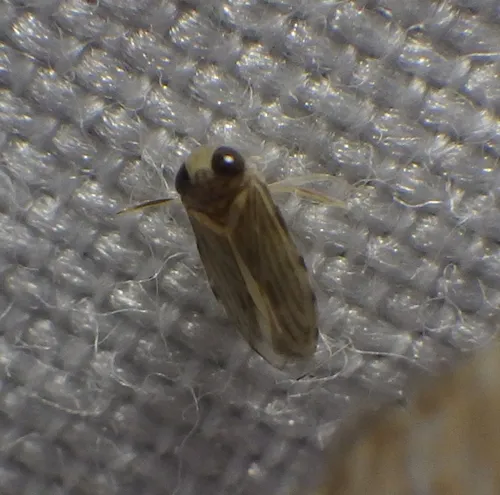
Micronecta ludibunda
Micronecta ludibunda
Identification: tiny size, exposed scutellum & striping are distinctive Possibly introduced thru the aquarium plant trade
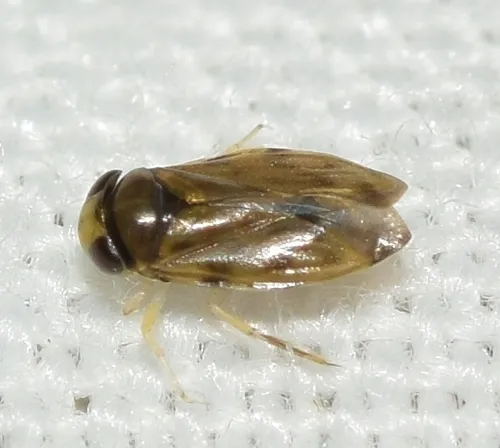
Micronecta scholtzi
Micronecta scholtzi
Micronecta scholtzi is a species of lesser water boatman. With a length of 2 to 2.5 mm Micronecta scholtzi is generally larger than the other species of Mirconecta and has a distinctive pattern of brown markings on the vertex, sometimes described as
Microtomus luctuosus
Microtomus luctuosus
Identification: adults have all black hind femora , nymphs share red hind femora with most (all?) members of Microtomus adults come to light
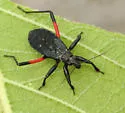
Microtomus purcis
Microtomus purcis
Identification: nymphs and adults w/ red hind femora - uncommon redwing form
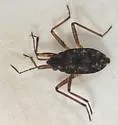
Microvelia fasciculifera
Microvelia fasciculifera
Identification: males have a tubercule on last abdominal segment
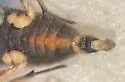
Microvelia gerhardi
Microvelia gerhardi
Identification: males have enlarged and darkened front femur
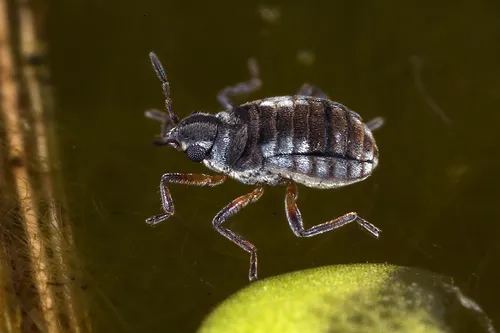
Microvelia reticulata
Microvelia reticulata
This very small (less than 2 mm) semi aquatic bug is a member of the Water Cricket family with a silvery appearance. It can walk or swim rapidly over the surface of ponds and lakes. This is made possible by a covering of fine water-repellent hairs ov
Micrutalis parva
Micrutalis parva
very long series of Micrutalis spmns in the TAMUIC ( 3 ) , but only Micrutalis calva are determined to sp. for Texas...
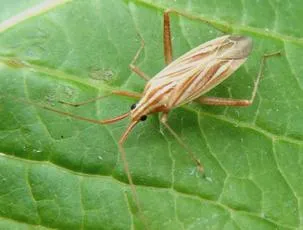
Miridius quadrivirgatus
Miridius quadrivirgatus
Length 9 to11 mm. A large and long-legged species with a long 1st antennal segment and diagnostic markings; unbroken orangey-red and cream stripes run the full length of the head, pronotum and scutellum. The red cuneus is variable. It is associated w
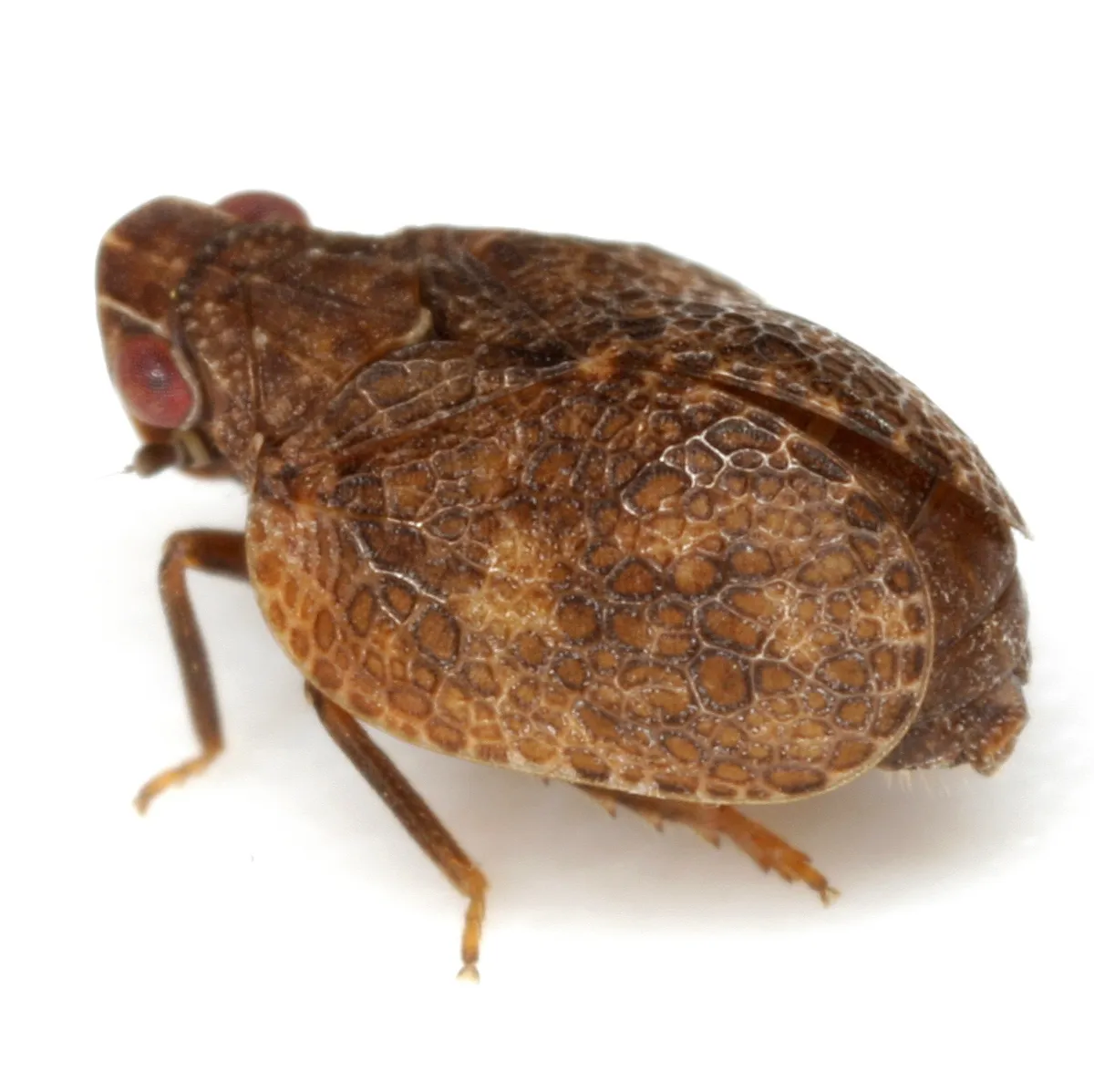
Misodema reticulata
Misodema reticulata
Identification: Misodema can be recognized among the Gaetuliini by: the forewings not strap-like, covering the abdomen; forewing opaque, elongate, costal margin nearly straight; vertex obtusely produced for distance nearly equal to width of eye; hind
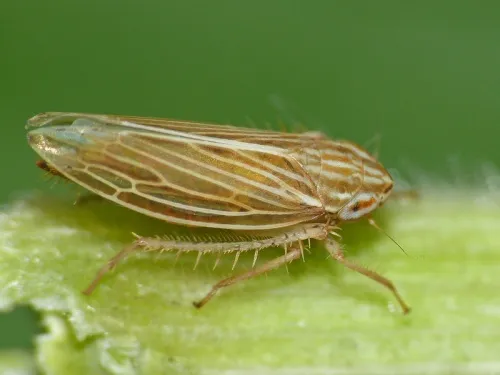
Mocydia crocea
Mocydia crocea
A small leafhopper with a striped appearance. Forewings noticeably pointed compared to other leafhoppers; light brown with paler veins, and often with a dark mark in the apical cell. Careful examination of the venation in the wing apex wll confirm id
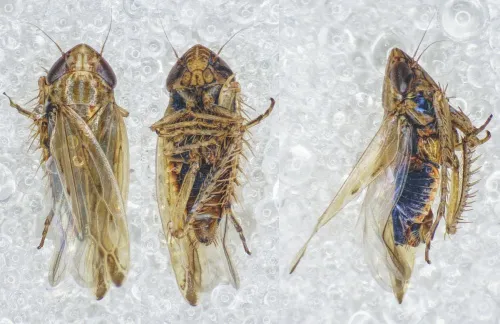
Mocydiopsis attenuata
Mocydiopsis attenuata
Difficult to identify, females can be indistinguishable. Male anal tube (final abdominal segment) is long in M. attenuata, nearly as long as the rest of the abdomen. It has a dark spot on the clavus and other dark marks on forewing. Dissection of mal
Momar fumidus
Momar fumidus
Identification: "From maculifrons this species may be readily separated by the long uniform colored elytra, the narrow face and the fact that the upper bars on the front in that species tend to coalesce while in fumida they are reduced to small disti
Monalocorisca maculata 0
Monalocorisca maculata
Type Locality: Brownsville, Texas, April 26, 1937 (H. J. Crawford)
Monalocorisca rostrata 0
Monalocorisca rostrata
Identification: antennomere 2 short, scarcely equal to width of head through eyes; rostrum slightly surpassing apex of metacoxae, and lateral pronotal carinae
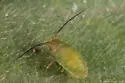
Monaphis antennata
Monaphis antennata
Identification: All viviparae alate. Very large ventrally flattened, highly cryptic green aphids with relatively short legs and very long, conspicuously blackish antennae, and an elongate dark pterostigma. Males alate, smaller than viviparae and red
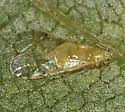
Monellia microsetosa
Monellia microsetosa
Identification: Viviparae are alate, pale yellow, summer generations developing 2-3 pairs of conspicuous spots of intense yellow internal pigment. Antennae are banded and leading edge of forewing is spotted with black.
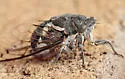
Moore's Cactus Dodger
Cacama moorei
Identification: Male opercula primarily orange, reaching to sternite IV, ventral surface orange, rostrum reaching to middle of posterior coxae, found in the Sonoran Desert (Fig. 3). . . . . . . . . . . . . . . . . . . . . . . . . . . . . . . . . . .
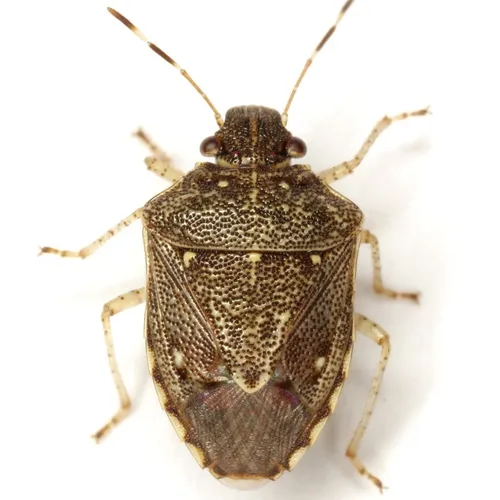
Mormidea cubrosa
Mormidea cubrosa
Mormidea cubrosa (Mormidea cubrosa) is a species in the family Pentatomidae, commonly known as stink bugs, belonging to the order Hemiptera (True Bugs, Cicadas, Hoppers, Aphids and Allies). It is classified within the subfamily Pentatominae, tribe Ca
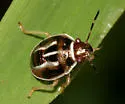
Mormidea lugens
Mormidea lugens
Identification: A small stinkbug, recognized by the bronzy coloration and white boundary around the scutellum Andrew Meeds reared this 5th instar to this adult Parasitized by the tachinid Cylindromyia lobata and used as nest provisions by the wasps B
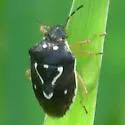
Mormidea pama
Mormidea pama
Identification: Mormidea pama , unlike M. pictiventris , always has that little white spot or ingression at the middle of the white anterolateral pronotal margin. (D.B.Thomas, pers.comm. to MAQ, 2019) Det. M. A. Quinn, 2019 Type Locality: La Lima Hon
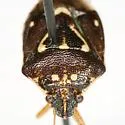
Mormidea pictiventris
Mormidea pictiventris
Identification: Differing from M. pama as follows: pale narrow border margin along anterolateral margin of pronotum usually even, not intruding between anterior and humeral angles. Narrow band along margin of connexiva entirely pale, not formed by pa
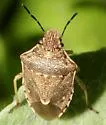
Moromorpha tetra
Moromorpha tetra
Identification: Small flat spine on each side of pronotum arising at posterior angle and projecting over the corium see
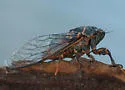
Mountain Cicada
Okanagana bella
Identification: Identification usually requires exposed views of the uncus; both dorsal and lateral, and multiple other views. Generally best identified by a specimen except where there aren't any similar species. Without a recording of the song this
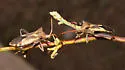
Mozena arizonensis
Mozena arizonensis
Identification: large (to massive!) hind femora, very prominent pronotal corners, pale antennae w darker tips
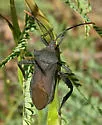
Mozena cf-pallisteri
Mozena cf-pallisteri
Identification: An all-dark Mozena that appears to represent a species as of yet unverified from the US, either M. pallisteri or possibly ventralis .
Mozena lunata
Mozena lunata
Identification: adults have pale terminal antennal tips : immatures variable in color, but basal half of penultimate antennal segment is pale:
Mozena obtusa
Mozena obtusa
Identification: adults w dark antennal tips immatures have all black ant. and lack prominent pronotal corners of lunata (see below) on Prosopis glandulosa blooms and leaves, P. laevigata considerably reduces seed production, destroys tender growth, r
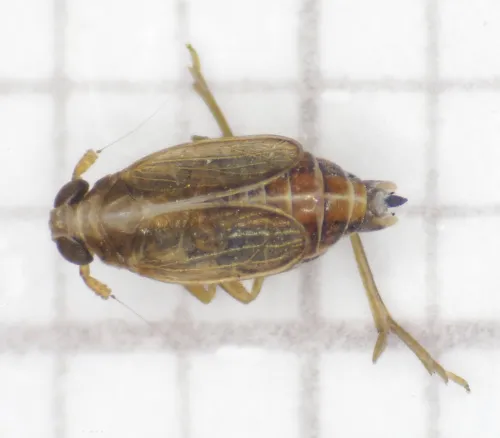
Muellerianella fairmairei
Muellerianella fairmairei
Length 2.5 to 4 mm. Brachypterous (short-winged) and macropterous (long-winged) form occur. A brown planthopper, with a broad pale zone down the central part of the pronotum and scutellum. Females cannot be identifed with certainty; males can be sepa
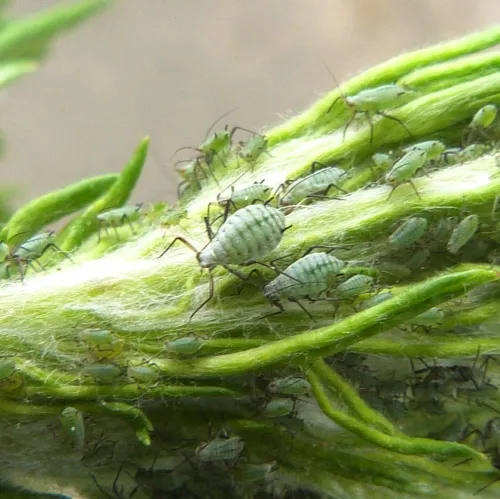
Mugwort Aphid
Macrosiphoniella artemisiae
Macrosiphoniella artemisiae apterae are greyish-green and wax powdered. The antennae and legs are mostly black, except for the base of antennal segment III and the basal part of the front femur which are brown. The siphunculi and cauda are entirely b

Mulberry Whitefly
Tetraleurodes mori
Probably introduced from tropical, subtropical regions.
Mullein Bug
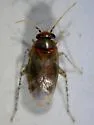
Campylomma verbasci
First found in the US in 1886 Used as biocontrol of orchard pests. Its populations, especially early in the season, have to be monitored so that they don't damage fruits in the absence of sufficient prey. In Europe it is not known to damage fruits an
Multareis cornutus
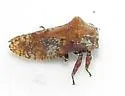
Multareis cornutus
A highly variable species. Males lack pronotal "horns" while females bear or lack them. This species is separated from Centrodontus atlas by the color pattern of the forewings and the presence of "preocular tubercles", rounded projections on the head
Multareoides bifurcatus
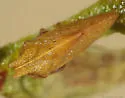
Multareoides bifurcatus
Identification: This species has the longest, sharpest "horns" on the crest. … Andy Hamilton, 25 September, 2008
Multareoides digitatus
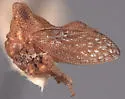
Multareoides digitatus
Identification: Pronotal "horns" more broadly separated and rounded at apex compared to M. bifurcatus .
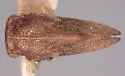
Multareoides planifrons
Multareoides planifrons
Identification: Lacks the "horns" on the pronotum found in the other two species in the genus.