
Ligyrocoris barberi
This record describes Ligyrocoris barberi (species). Recorded family: Rhyparochromidae. Recorded order: Hemiptera.
Identification and Appearance
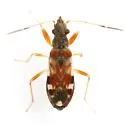
see Sweet for key. pterygopolymorphic throughout its range Det. V. Belov, 2019 Type Locality: Texas, Brazos Co., College Station, July 25, 1964, M. H. Sweet. While a widespread species, L. barberi is relatively uncommon overall and is infrequently encountered in general collecting. In Texas, despite Sweet's extensive collecting throughout the state, Sweet only encountered the species in College Station. it is significant that at each location where L. barberi was found [in College Station], the insects disappeared with concomitant massive invasions of fire ants ( Solenopsis invicta ). It seems possible that increased predation pressure exerted by fire ants may have disrupted the already delicate population dynamics of L. barberi in the area. I have not found L. barberi in the College Station area for the past 6 years despite careful searching for this species.
Classification
- Kingdom
- Animalia
- Phylum
- Arthropoda
- Class
- Insecta
- Order
- Hemiptera (True Bugs, Cicadas, Hoppers, Aphids and Allies)
- Suborder
- Heteroptera
- Superfamily
- Lygaeoidea
- Family
- Rhyparochromidae (Dirt-colored Seed Bugs)
- Subfamily
- Rhyparochrominae
- Tribe
- Myodochini
- Genus
- Ligyrocoris
Imported taxonomy record. Source availability varies; see the source references and editorial policy below.
Habitat and Range
Habitat
found in TX on the ground in open areas in dry prairie habitats where Rudbeckia hirta (Black-eyed Susan), its annual composite host plant grew. not found in early successional communities in Texas, despite the large invasion of Rudbeckia into such communities
Geographic Range
se US (NC-n.FL to KS-e.TX) , uncommon
Diet and Behavior
Life History
overwintered as eggs in diapause. The eggs hatched in March and the nymphs fed on overwintered, fallen, ripe seeds of Rudbeckia . This generation became adult from late April to June. In May late-instar nymphs and adults often ascended the plant to feed on the ripening seed heads of Rudbeckia . The spring generation began laying its eggs at this time, and the young nymphs of the second generation developed on the Rudbeckia seeds now falling to the ground. By early July the second generation adults appeared. The presence in early July of first to fifth instar nymphs at the same time as the second generation adults attests to the extended oviposition period by the first (spring) generation adults. From an adult female a parasitic tachinid fly Catharosia sp. emerged and pupated on Nov. 8, 1979.
Additional species information
Species notes from the sources
Etymology: Ligyrocoris barberi Sweet 1986
About True Bugs, Cicadas, Hoppers, Aphids and Allies: the wider group
Order-level background for Hemiptera, the group containing Ligyrocoris barberi. Species-specific details appear above.
Group overview
Hemiptera (true bugs) includes over 80,000 described species across cicadas, aphids, leafhoppers, shield bugs, and bed bugs. Aphids alone cost global agriculture an estimated $2.5 billion annually in crop losses.
Ecological role of the group
Many Hemiptera are essential food sources for birds and predatory insects. Cicadas provide massive nutrient pulses during emergence events - a single Brood X emergence can involve trillions of individuals across 15 states.
Economic and practical significance of the group
The brown marmorated stink bug (Halyomorpha halys) caused $37 million in apple crop losses in a single year in the U.S. Mid-Atlantic region. Bed bug infestations in the U.S. increased by 500% between 2001-2010, costing the hotel industry hundreds of millions annually.
Recorded sources for this group: USDA, EPA, University research. Imported estimates may describe particular regions or reporting periods.
Photos of Ligyrocoris barberi (5)
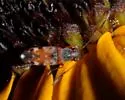
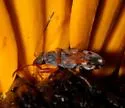
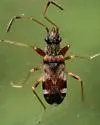
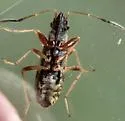
Photo credits: Contributed by v belov; Additional contributions by Mike Quinn
Frequently Asked Questions About Ligyrocoris barberi
What is Ligyrocoris barberi?
Ligyrocoris barberi is a species in the family Rhyparochromidae, within the order Hemiptera.
How big is Ligyrocoris barberi?
~4.5 mm
How do you identify Ligyrocoris barberi?
see Sweet for key. pterygopolymorphic throughout its range Det. V. Belov, 2019
Where is Ligyrocoris barberi found?
| Feature | Details |
|---|---|
| Habitat | found in TX on the ground in open areas in dry prairie habitats where Rudbeckia hirta (Black-eyed Susan), its annual composite host plant grew. not found in early successional communities in Texas, despite the large invasion of Rudbeckia into such communities |
| Range | se US (NC-n.FL to KS-e.TX) , uncommon |
What is the life cycle of a Ligyrocoris barberi?
overwintered as eggs in diapause. The eggs hatched in March and the nymphs fed on overwintered, fallen, ripe seeds of Rudbeckia . This generation became adult from late April to June. In May late-instar nymphs and adults often ascended the plant to feed on the ripening seed heads of Rudbeckia . The spring generation began laying its eggs at this time, and the young nymphs of the second generation developed on the Rudbeckia seeds now falling to the ground. By early July the second generation adults appeared. The presence in early July of first to fifth instar nymphs at the same time as the second generation adults attests to the extended oviposition period by the first (spring) generation adults. From an adult female a parasitic tachinid fly Catharosia sp. emerged and pupated on Nov. 8, 1979.