
Chrysis viridula
This record describes Chrysis viridula (species). Recorded family: Chrysididae. Recorded order: Hymenoptera.
Identification and Appearance
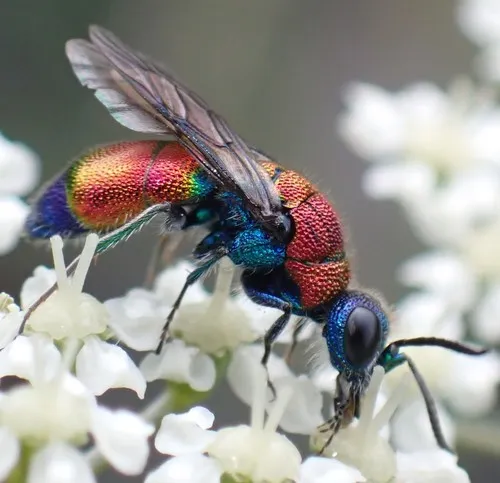
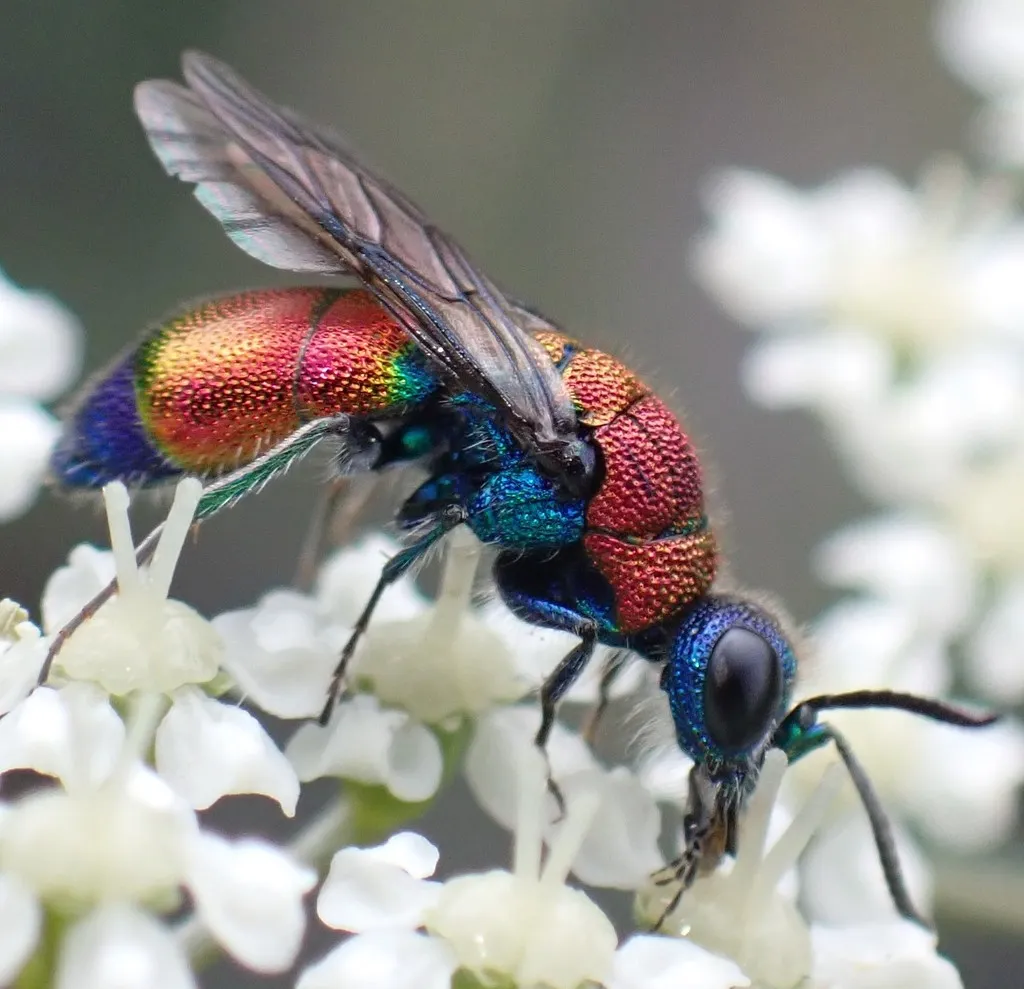
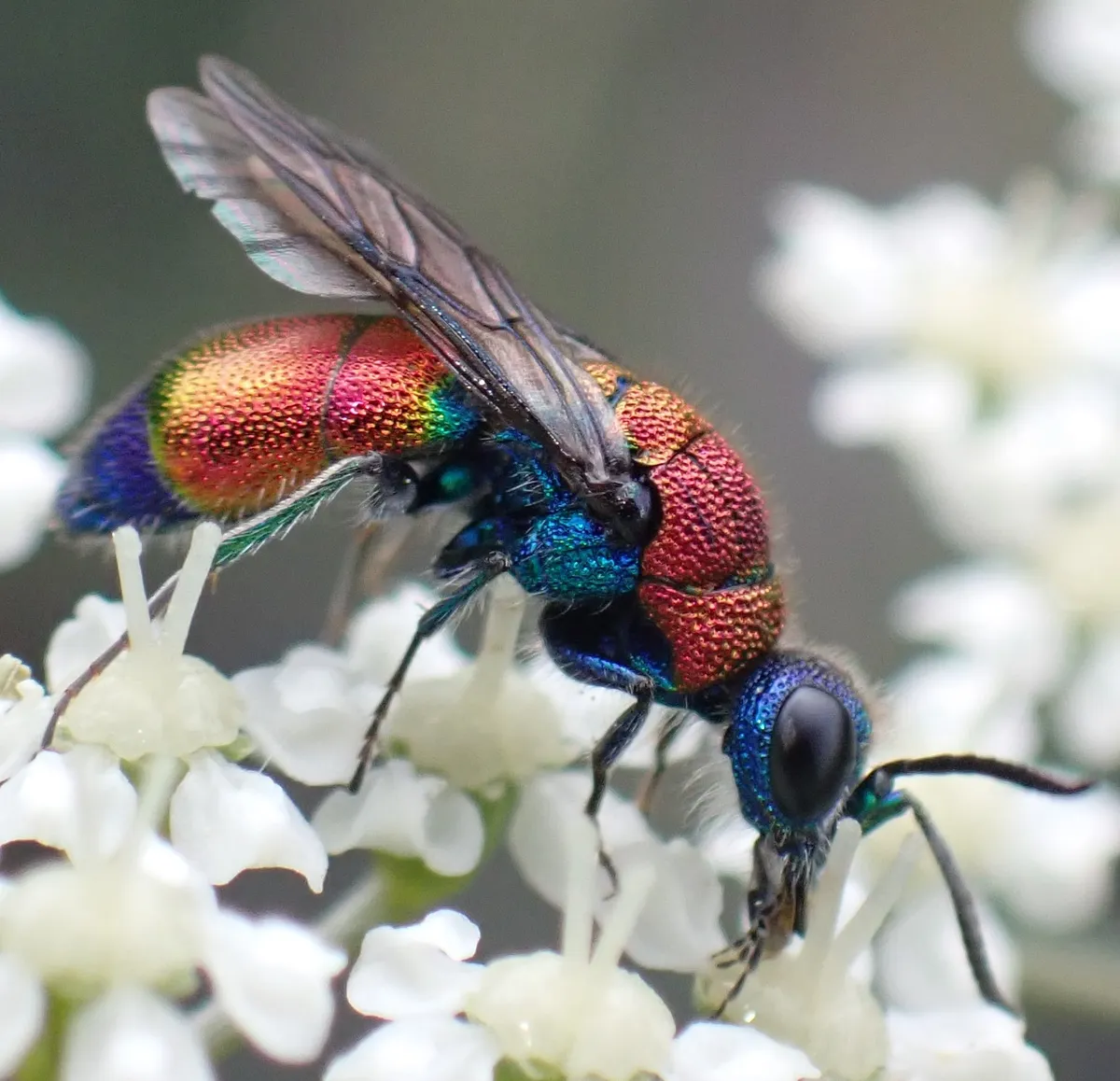
This is a brightly coloured wasp with a metallic sheen. There are other quite similar species, and care is needed with identification. Unless identified by a recognised expert, a photo is required. If the photo doesn't show the key ID features then in the comments box describe the size and identifying characters you have observed. Found around the nest sites of its host which are usually in bare vertical banks of hard earth, often of clay or sometimes sand. Probably univoltine; June to August, sometimes during May and rarely in September. A parasitoid of the eumenid wasps Odynerus spinipes and Odynerus melanocephalus. The adult chrysidid oviposits in the cell of its host while the host larva is spinning its cocoon, or just after the cocoon has been completed (the adult is able to open the cocoon to lay its egg). On hatching, the chrysidid larva consumes the host larva. Widespread throughout southern England and north to North-east Yorkshire. In Wales, mostly confined to coastal areas. This species may be suffering a decline in numbers at present.
Wikipedia reference for Chrysis viridula: https://en.wikipedia.org/wiki/Chrysis_viridula.
Classification
- Kingdom
- Animalia
- Phylum
- Arthropoda
- Class
- Insecta
- Order
- Hymenoptera
- Family
- Chrysididae
- Genus
- Chrysis
Imported taxonomy record. Source availability varies; see the source references and editorial policy below.
Habitat and Range
Habitat
Found around the nest sites of its host which are usually in bare vertical banks of hard earth, often of clay or sometimes sand.
Seasonal Activity
Probably univoltine; June to August, sometimes during May and rarely in September.
Diet and Behavior
Life History
A parasitoid of the eumenid wasps Odynerus spinipes and Odynerus melanocephalus. The adult chrysidid oviposits in the cell of its host while the host larva is spinning its cocoon, or just after the cocoon has been completed (the adult is able to open the cocoon to lay its egg). On hatching, the chrysidid larva consumes the host larva.
Additional species information
Recorded status
Widespread throughout southern England and north to North-east Yorkshire. In Wales, mostly confined to coastal areas. This species may be suffering a decline in numbers at present.
About Flies: the wider group
Order-level background for Hymenoptera, the group containing Chrysis viridula. Species-specific details appear above.
Group overview
Hymenoptera includes over 150,000 described species of ants, bees, wasps, and sawflies. Earth harbors approximately 20 quadrillion (20×10^15) ants, with a combined biomass of ~12 megatons of dry carbon - exceeding the combined biomass of all wild birds and mammals (PNAS, 2022).
Ecological role of the group
About 35% of the world's food crops depend on animal pollinators. The chocolate industry, valued at over $100 billion, depends on pollinating flies and midges. Ants are the dominant soil engineers in most terrestrial ecosystems, turning more soil than earthworms in many habitats.
Economic and practical significance of the group
Pollinators contribute $235-577 billion worth of annual global food production (FAO). In the U.S., bee pollination alone benefits crops valued at $18 billion annually, and honey bees are responsible for $5.4 billion in agricultural productivity. Between April 2023-2024, 55.1% of managed honey bee colonies were lost. The U.S. bee population dropped from 5 million to 2.5 million.
Recorded sources for this group: FAO, USDA, EPA, PNAS (2022), US Fish & Wildlife Service. Imported estimates may describe particular regions or reporting periods.
Photos of Chrysis viridula (3)
Frequently Asked Questions About Chrysis viridula
What is Chrysis viridula?
Chrysis viridula is a species in the family Chrysididae, within the order Hymenoptera.
Where is Chrysis viridula found?
Habitat: Found around the nest sites of its host which are usually in bare vertical banks of hard earth, often of clay or sometimes sand.
When is Chrysis viridula active?
Chrysis viridula: seasonal activity - Probably univoltine; June to August, sometimes during May and rarely in September..
What is the life cycle of a Chrysis viridula?
A parasitoid of the eumenid wasps Odynerus spinipes and Odynerus melanocephalus. The adult chrysidid oviposits in the cell of its host while the host larva is spinning its cocoon, or just after the cocoon has been completed (the adult is able to open the cocoon to lay its egg). On hatching, the chrysidid larva consumes the host larva.