
True Bugs, Cicadas, Hoppers, Aphids and Allies
Order Hemiptera
The True Bugs, Cicadas, Hoppers, Aphids and Allies (Order Hemiptera) includes 7,349 species across 120 families and 1,727 genera in our directory.
About True Bugs, Cicadas, Hoppers, Aphids and Allies
Hemiptera (true bugs) includes over 80,000 described species across cicadas, aphids, leafhoppers, shield bugs, and bed bugs. Aphids alone cost global agriculture an estimated $2.5 billion annually in crop losses.
Economic Impact
The brown marmorated stink bug (Halyomorpha halys) caused $37 million in apple crop losses in a single year in the U.S. Mid-Atlantic region. Bed bug infestations in the U.S. increased by 500% between 2001-2010, costing the hotel industry hundreds of millions annually.
Ecological Role
Many Hemiptera are essential food sources for birds and predatory insects. Cicadas provide massive nutrient pulses during emergence events - a single Brood X emergence can involve trillions of individuals across 15 states.
Families in Hemiptera (120)
Species in Hemiptera (7,349)
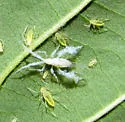
Oestlundiella flava
Oestlundiella flava
Identification: All viviparae are alate, delicate, lemon yellow with plumes of bluish white wax developing on antennae and legs.
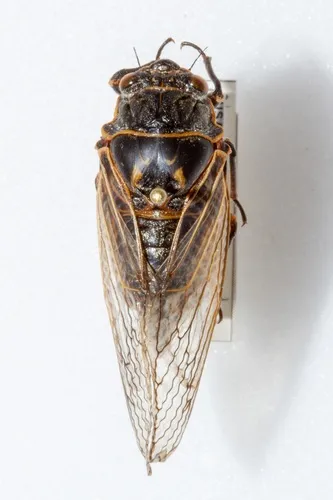
Okanagana annulata
Okanagana annulata
Identification: Broad red borders to tergites, moderate fuscation of marginal cells, pointed front. Diagnosis tends to be very detailed. Of the fratercula group, it's one of the easier to ID. Song: Peak frequency 10.2kHz +/- 0.4 Syllable Rate 79.6 +/
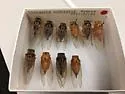
Okanagana arboraria
Okanagana arboraria
Identification: One of the more variable species of Okanagana. There are two main color forms; a rare red form and the more typical dark form with a strong degree of gradation. In the dark form the mesonotum is black with variably extensive red marki
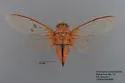
Okanagana arctostaphylae
Okanagana arctostaphylae
Identification: Unmistakable. Separated from O. opacipennis by the black line down the abdomen. One of the most poorly known Okanagana . There are three widely separated localities for the species and it hasn't been seen since it was described. O. op
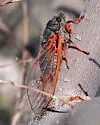
Okanagana aurora
Okanagana aurora
Identification: Bright red basal venation and costae are unmistable and unique. Okanagana magnifica has strongly thickened marginal cells and is larger, without the red basal venation but does look superficially similar.
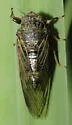
Okanagana balli
Okanagana balli
Identification: Allopatric, with no confusing species. Gerry Bunker, a well versed cicada specialist, provided the following commentary and information. Okanagana balli is the only Okanagana species known to exist at the James Woodworth Prairie & is
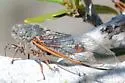
Okanagana cruentifera
Okanagana cruentifera
Identification: Generally best separated from tristis rubrobasalis by the shape of the uncus, more pronounced front, and generally different aspect. Abdomen usually has extensive black. The black border to the base of the pronotum quickly separates i
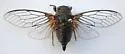
Okanagana ferrugomaculata
Okanagana ferrugomaculata
Identification: Similar to O. tristis but pronotum pale on hind margin, head narrow with pronounced front, and two patches of rufous on either side of the pronotum. Underside largely pale. Female's last abdominal sternite with a single deep V-shaped
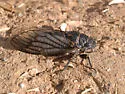
Okanagana fumipennis
Okanagana fumipennis
Identification: Identified by the opaque, whitish wings. Song: Syllable Rate (beats/second) 57.6 +/- 2.8 Peak Freq (kHz) 8.4 +/- 0.7 Distinctive among Okanagana.
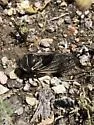
Okanagana gibbera
Okanagana gibbera
Identification: Fairly distinct among Okanagana with one exception. Wings have yellow venation except at the marginal cells which are thick, black, and fuscous. A relatively large species. Front prominent. Very similar to O. luteobasalis, but the ven
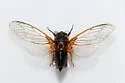
Okanagana luteobasalis
Okanagana luteobasalis
Identification: Very similar to the smaller fratercula and was once lumped in with it. Identification requires an entire suite of features and close measurements to separate the two. Okanagana gibbera is also similar but considerably larger. Type loc
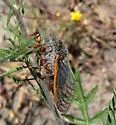
Okanagana magnifica
Okanagana magnifica
Identification: Identified by yellow costa extending past the node, black dorsum and pronotum. Wings with apical cells thickened. A protoperiodical cicada that is dependent on a cumulative precipitation schedule. A very similar species, Okanagana spe
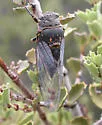
Okanagana mariposa
Okanagana mariposa
Identification: Male genitalia distinctively squared off at apex. A protoperiodical cicada that is dependent on a cumulative precipitation schedule.
Okanagana napa
Okanagana napa
Identification: Similar to O. lurida Another poorly known species.
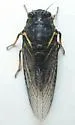
Okanagana nigrodorsata
Okanagana nigrodorsata
Identification: Completely black dorsum, pronotum, and head with a bright yellow membrane visible with wings folded are distinctive. Larger than superficially similar ornata.
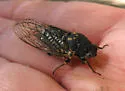
Okanagana noveboracensis
Okanagana noveboracensis
Identification: Similar to Okanagana rimosa, but separated by the dull dorsum and lack of red borders to abdominal tergites. Okanagana canadensis (Provancher, 1889) was recently sunk into this species in Cole et al. 2023. This is the common northern
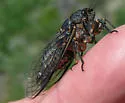
Okanagana occidentalis
Okanagana occidentalis
Okanagana lurida Davis, 1919 recently synonymized with Okanagana occidentalis (Walker, 1866) in Cole et al. 2023.
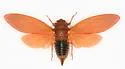
Okanagana opacipennis
Okanagana opacipennis
Identification: Opaque brown wings and black abdomen distinctive. This is a specialist of manzanita Arctostaphylos spp. . Usually local to small areas.
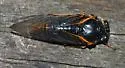
Okanagana ornata
Okanagana ornata
Identification: Resembles O. nigrodorsata but is easily differentiated by the yellow-orange border on the last abdominal tergites. The border of the anal cell is more orange than yellow. It is also much smaller. Song is distinctive within its communi
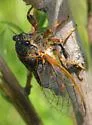
Okanagana rimosa
Okanagana rimosa
Identification: Potentially can be confused with bella in western part of range, but in the east it is distinctive. Shiny dorsum and red-bordered abdominal tergites distinctive in that part of the range.
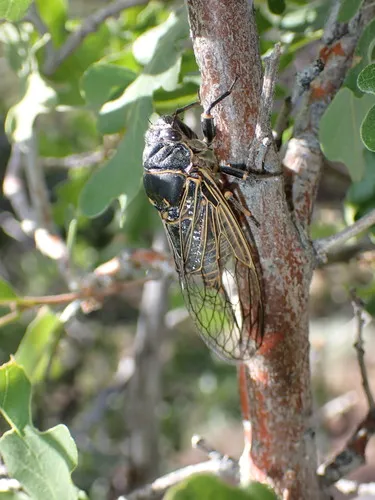
Okanagana schaefferi
Okanagana schaefferi
Identification: Okanagana schaefferi is the big brother to O. fratercula, and thankfully much more distinctive. Both share fuscous marginal cells and very prominent fronts. On schaefferi the tergites are strongly bordered with red (moreso than in fra
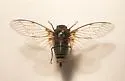
Okanagana tanneri
Okanagana tanneri
Identification: Head with strongly produced front. Areas of pronotum lateral to midline broadly marked with yellow/brown. Posterior margin of pronotum yellow. Mesonotum with two large yellow markings and two smaller forming semicircle anterior to cru
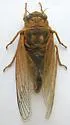
Okanagana vandykei
Okanagana vandykei
Identification: Unmistakable in range. Superficially similar to synodica, but vandykei is easily twice the size and they are allopatric. Two large marks on the dorsum and orange pronotum immediately identify this species.
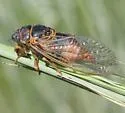
Okanagana wymorei
Okanagana wymorei
Identification: Small Okanagana with fairly short-wings, abundant orange markings. Drops from perch when approached, rarely flying. Song a continuous whine, often pulsing. Lower-pitched than O. vanduzeei . Allopatric from other congeners
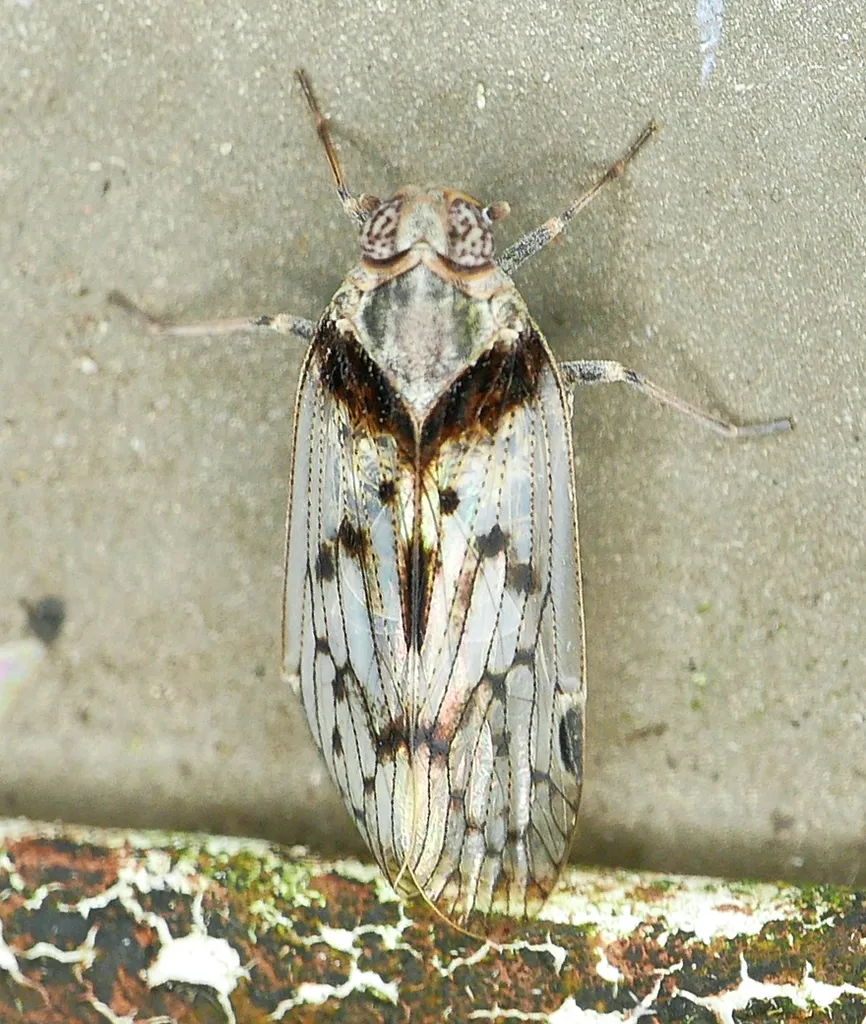
Oliaridus aridus
Oliaridus aridus
Identification: pronotum dark, the carinae and margins broadly light, scutellum testaceous, a dark stripe outside the carinae. Elytra milky or hyaline, nervures very lightly marked, stigma and cross nervures fuscous.
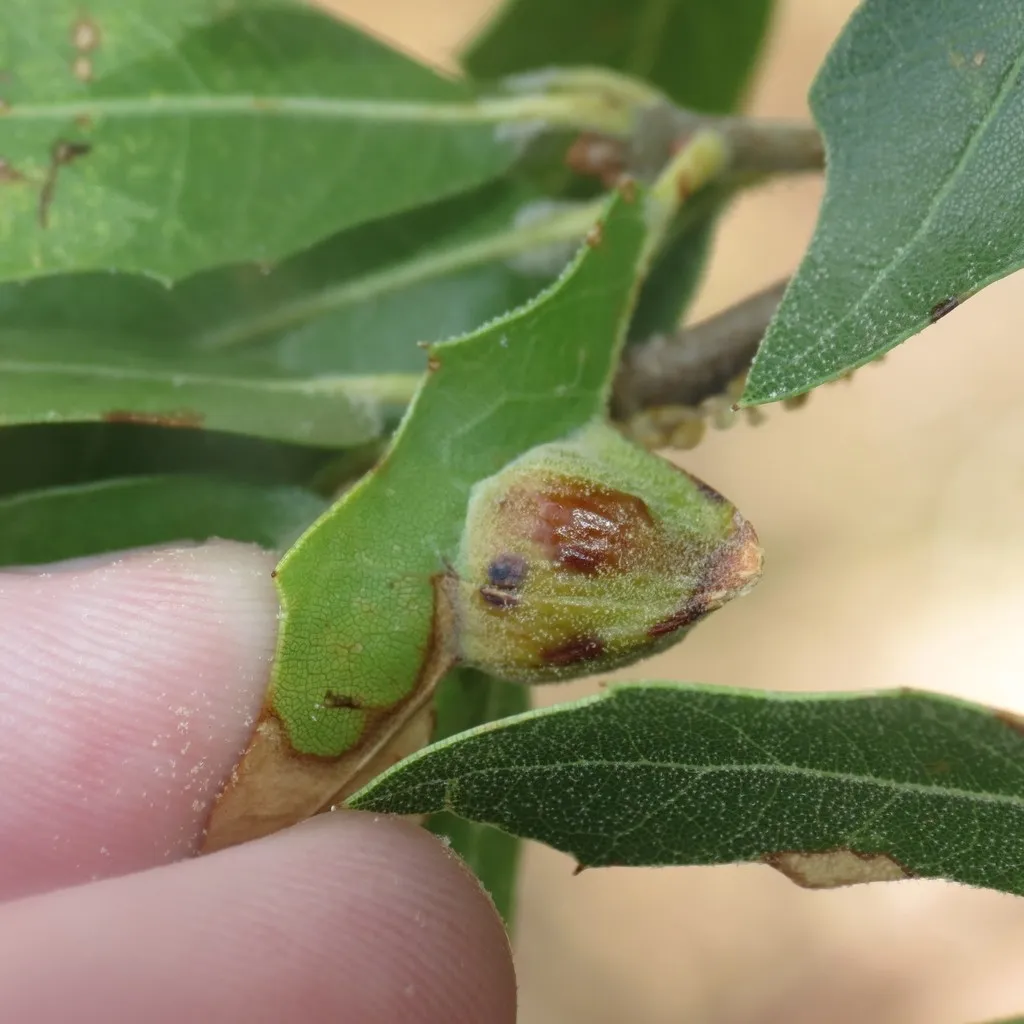
Olliffiella cristicola
Olliffiella cristicola
Identification: The female induces a gall that projects on the underside of Emory oak ( Quercus emoryi ) leaves. The dorsal side of the leaf has an open slit at the top of the gall. Olliffiella cristicola galls are often inhabited by the thrips Torvo
Oncerometopus atriscutis
Oncerometopus atriscutis
Identification: "Suggestive of nigriclavus but with black scutellum and longer second antennal segment which in both sexes exceeds the combined length of segments III and IV." Det. Jason Botz, 2020 Type Locality: AZ
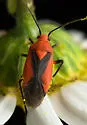
Oncerometopus nigriclavus
Oncerometopus nigriclavus
Identification: Dets. WonGun Kim Type Locality: Texas (BELFRAGE). Belfrage was based in Bosque County, Texas.
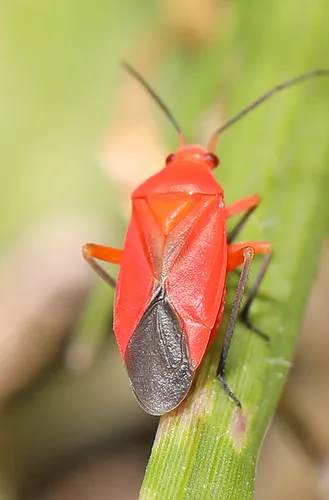
Oncerometopus ruber
Oncerometopus ruber
Identification: "Scutellum red, clavus reddish, tibiae largely pale" , femorae largely red, apical clavus occasionally dark but not black as in nigriclavus basal ant. segments are generally reddish; scutellum is orange, surrounded by red. Type Locali
Oncerotrachelus acuminatus
Oncerotrachelus acuminatus
Identification: Det. Ken Wolgemuth, 2021 comes to light ( 4 )
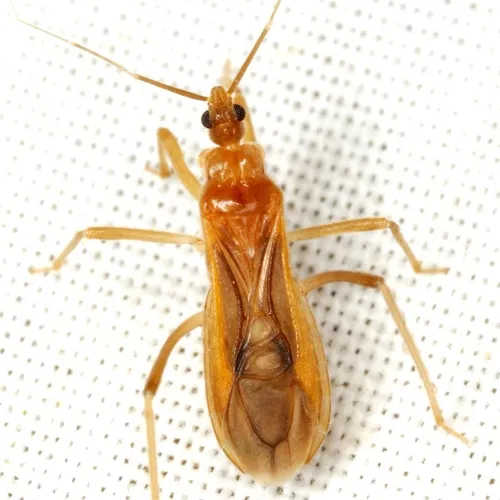
Oncerotrachelus pallidus
Oncerotrachelus pallidus
Identification: Body and appendages are much less hairy than O. acuminatus (which has long hairs especially on legs and antennae) and is a more or less uniform pale brown, lacking dark markings. Compared with 0. acuminatus Say the body parts and appe
Oncocephalus geniculatus
Oncocephalus geniculatus
Identification: The dark patches inside the cells of the hemelytra and the presence of a lateral tubercle anterior to the transverse constriction of the pronotum separate this species from O. nubilus and O. variabilis . It is difficult to separate t
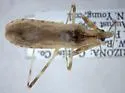
Oncocephalus nubilus
Oncocephalus nubilus
Identification: characteristics that separate this from both O. geniculatus and O. apiculatus : [1] hemelytra membrane without dark patches and [2] the posterior angle of the anterior pronotal lobe lacking a tubercle. ~D.r.swanny
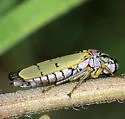
Oncometopia alpha
Oncometopia alpha
Identification: Green wings and purple body distinctive. -- Dr. Hamilton
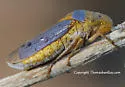
Oncometopia hamiltoni
Oncometopia hamiltoni
Identification: wings can be light blue, violet, or pink For basically half a century, what is now O. hamiltoni was misidentified as being O. clarior. Rakitov's 2016 paper fixed this issue and split out O. hamiltoni. So everything that was previously
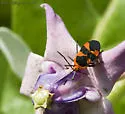
Oncopeltus aulicus
Oncopeltus aulicus
Identification: membrane with a white mark just basad of center
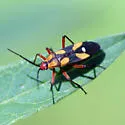
Oncopeltus guttaloides
Oncopeltus guttaloides
Identification: a more slender shape, and the red femorae, variable Type Locality: Mexico
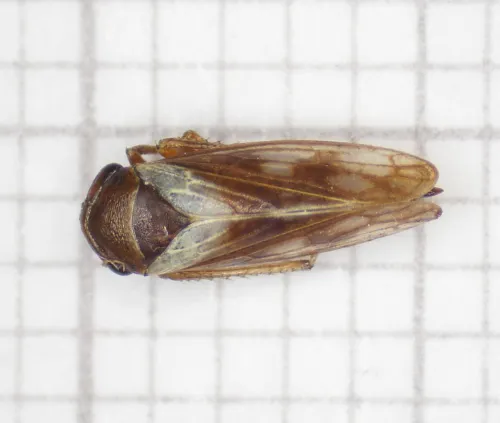
Oncopsis alni
Oncopsis alni
Length 5 - 6 mm; females larger than males. Sexually dimorphic and variable in colouration and intensity of markings. Nymphs cannot be verified. Predominantly yellowish-brown to reddish-brown. Detailed examination of the specimen is needed to identif
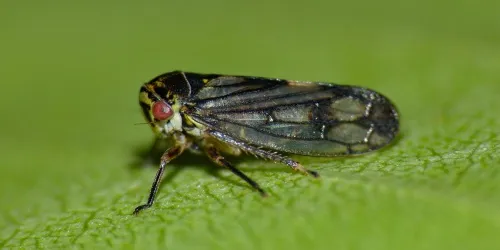
Oncopsis flavicollis
Oncopsis flavicollis
Length 4.5 - 5.5; females larger than males. Sexually dimorphic and variable in colouration and intensity of markings. Nymphs cannot be verified. Males have dark scutellum with yellow spots towards apex and dark veins on forewings, with hyaline cells
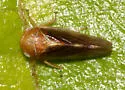
Oncopsis sobria
Oncopsis sobria
Identification: the male appears dark brown to black, while the female is a lighter shade of brown or orange in coloration (K.G.A. Hamilton)
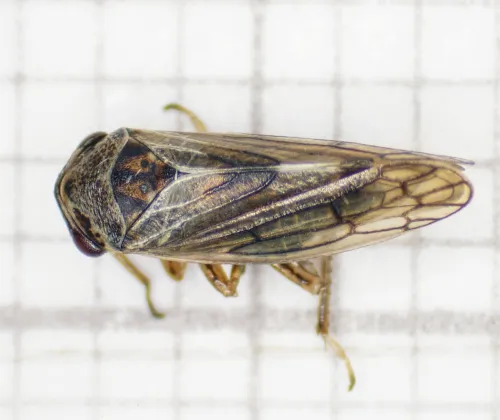
Oncopsis subangulata
Oncopsis subangulata
Length 4.5 - 5.5; females larger than males. Sexually dimorphic and variable in colouration and intensity of markings. Nymphs cannot be verified. Males have dark scutellum with yellow spots towards apex and dark veins on forewings, with hyaline cells
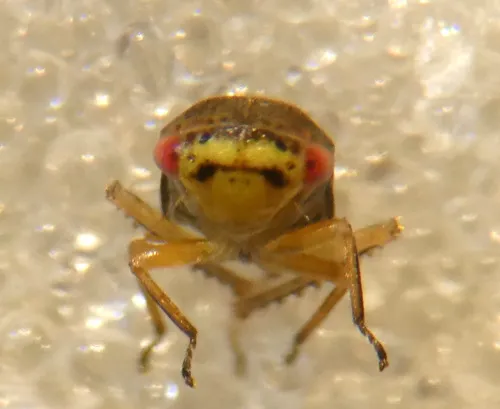
Oncopsis tristis
Oncopsis tristis
Length 3.7 - 4.6; smaller than other two species on Birch; females larger than males. Sexually dimorphic and variable in colouration and intensity of markings. There is usually a band across the face between the eyes, darker in males. Males have grey
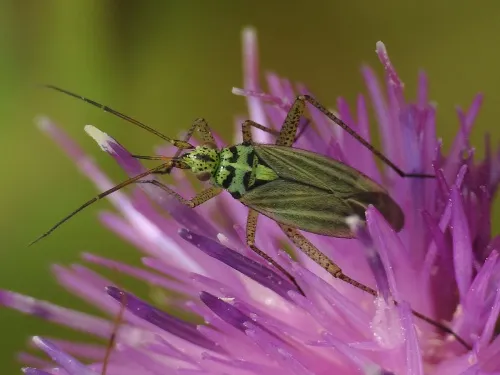
Oncotylus viridiflavus
Oncotylus viridiflavus
Length 5 to 6 mm. The black patterning on the head and pronotum combined with the blueish green colour are unique amongst the UK Miridae . This species can be identified with care but there are similar species that it could be confused with. Occasion
One-spotted Stink Bug
Euschistus variolarius
Identification: The only reliable way to separate variolarius from servus is a ventral view. E. variolarius males have one big spot on the pygophore; servus , none. females have no dark spot at anterior corner on the edge of each abdominal segment (p
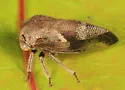
Ophiderma griseum
Ophiderma griseum
"This species is close to flaviguttula Godg., belonging to the group with banded elytra, but differs conspicuously in its more robust structure, greater average length, more slender and sharper pronotal apex, and in particular in the blue-gray shades
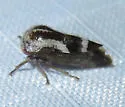
Ophiderma pubescens
Ophiderma pubescens
Identification: Males are similar to those of Ophiderma griseum , but the humeral arches are often less well-defined and the forewings lack a median maculation.
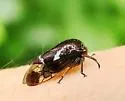
Ophiderma salamandra
Ophiderma salamandra
Identification: "Larger and not as hairy as O. pubescens" [Andy Hamilton]
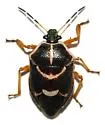
Oplomus dichrous
Oplomus dichrous
Identification: chevron-shaped prosternum characteristic; in identifying Asopines it helps to be color blind (actually there are some consistent patterns in some of the species) (D.B. Thomas, pers. comm.) our only representative of the subg. Polypoec
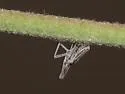
Orgamara acuta
Orgamara acuta
Identification: Cephalic process long and slender, nearly twice as long as the eye; the anterior tablet of the vertex longer than wide; O. reducta has shorter cephalic process
Orgamara reducta
Orgamara reducta
Identification: Cephalic process broader and shorter, extending beyond the eye, but little more than its length; anterior tablet of vertex rectangular.
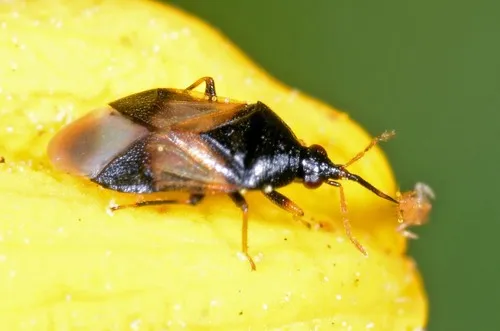
Orius insidiosus
Orius insidiosus
Identification: Early nymphs have slight yellowish tinge, getting progressively darker in each successive instar. Adults are mahogany color. by far the commonest anthocorid in the entire eastern & central part of the continent ; important predator of
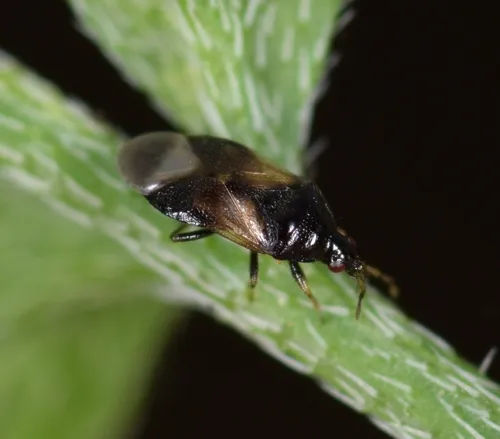
Orius laevigatus
Orius laevigatus
Length 2.2 to 2.5 mm. Front and rear angles of pronotum each with a long hair; mid-tibia pale brown; dorsal body surface not entirely black. Microscopic examination and/or dissection required. Can be found on various plants where it searches for prey
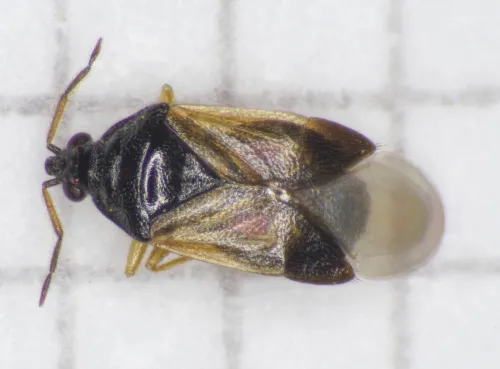
Orius laticollis
Orius laticollis
Length 1.9-2.5mm. Angles of pronotum without long hairs. Paramere distinctive - flagellum long, blade narrow, tooth of paramere closer to internal than to external margin. Not known. Few records exist, but probably under-recorded due to difficulty of
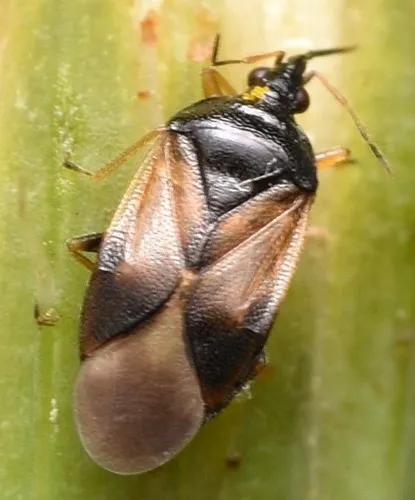
Orius majusculus
Orius majusculus
Length 2.5-2.7mm. Angles of pronotum without long hairs. Blade of paramere broad, rather abruptly narrowed and angled apically, flagellum a little longer than the blade. Microscopic examination and dissection required. No additional images available
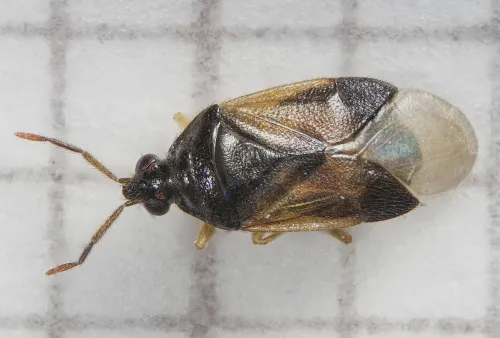
Orius vicinus
Orius vicinus
Length 2.0-2.6 mm. Small Flower Bug, sometimes called a Pirate Bug. Body more or less parallel, somewhat wider at abdomen in female. Head, pronotum, and scutellum dark brown or blackish; hemelytra yellowish brown, more rarely darker at cuneus. Head w
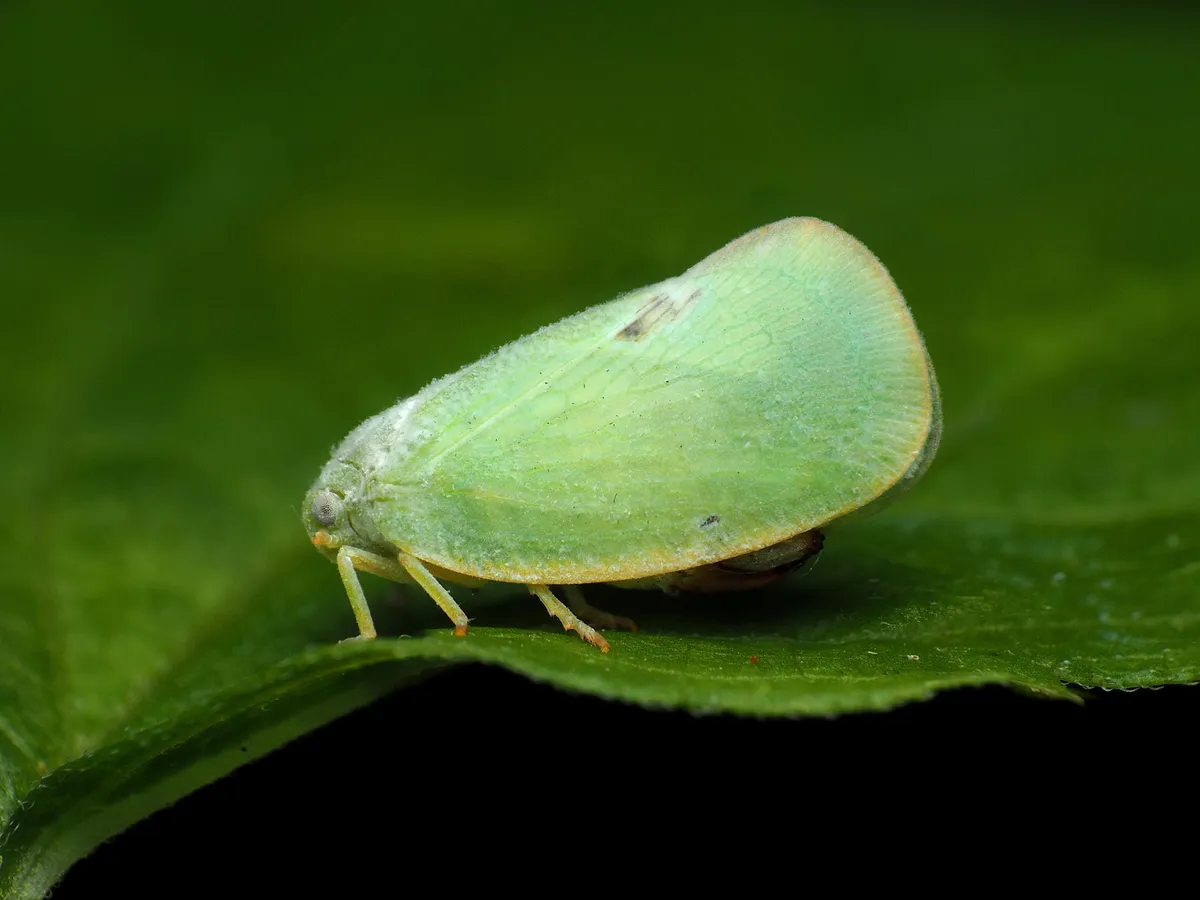
Ormenoides venusta
Ormenoides venusta
Identification: The only unmarked flatid in e. US with wing crossveins almost completely random - only a single row of them parallels the wing edge. Wings are narrower at the tip than in Anormenis and without a prominent double row of crossveins that
Orsillus depressus
Orsillus depressus
Length 6mm+. This bug has a browny orange appearance with pale marks on the scutellum, and is usually associated with Cypresses. The rostrum is very long, and the head is elongated in front of the eyes. Good quality photographs taken in the field or
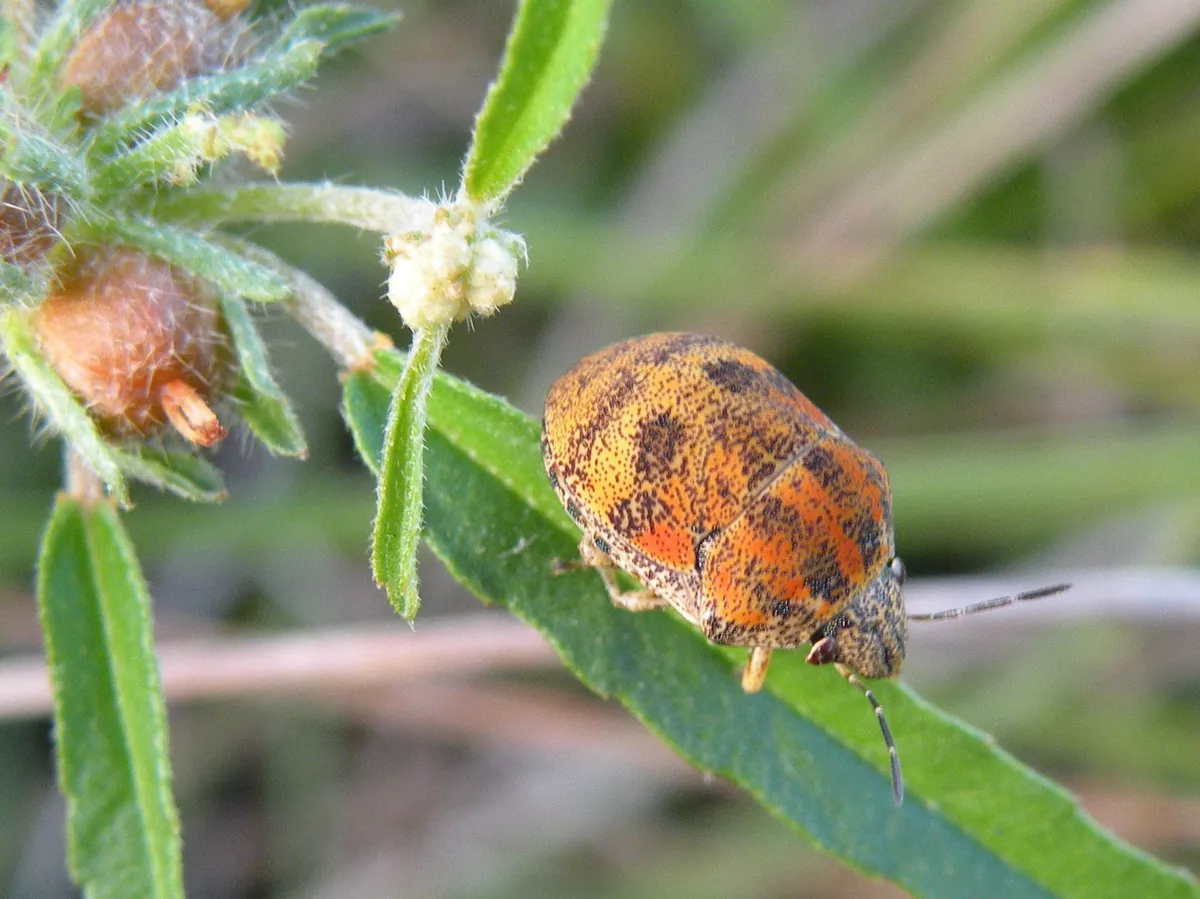
Orsilochides stictica
Orsilochides stictica
Identification: coloration light brown to orange-brown, usually with vague transverse markings
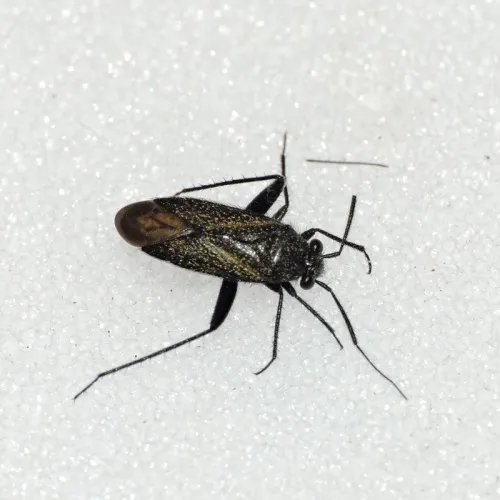
Orthocephalus coriaceus
Orthocephalus coriaceus
Length 4 to 5 mm. The two Orthocephalus species are very dark and rather squat plant bugs in which the hind tibiae are modified for jumping. The antennae are entirely black. This species is distinguished from the similar O. saltator by the entirely d
Orthocephalus saltator
Orthocephalus saltator
Identification: tibiae reddish-brown to dull yellowish on front and middle legs, and sometimes also hindlegs (a distinguishing feature); dorsal surface black with numerous silvery hairs; adult males have long wings that extend beyond abdomen; adult f
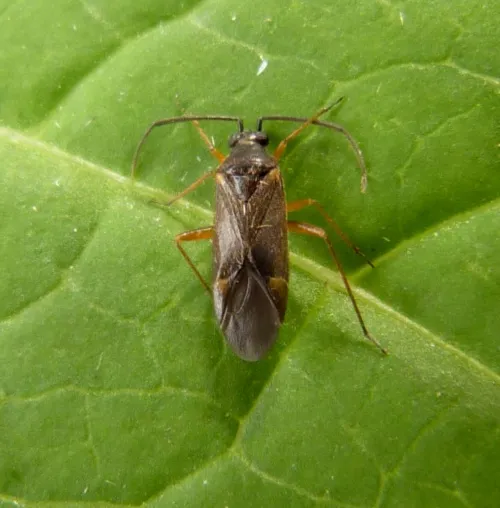
Orthonotus rufifrons
Orthonotus rufifrons
A distinctive dark plant bug which is covered in pale hairs, although the sexes are markedly dimorphic. Females are brachypterous and much more rounded in shape; the more elongate and parallel-sided males are macropterous. The 2nd antennal segment ha
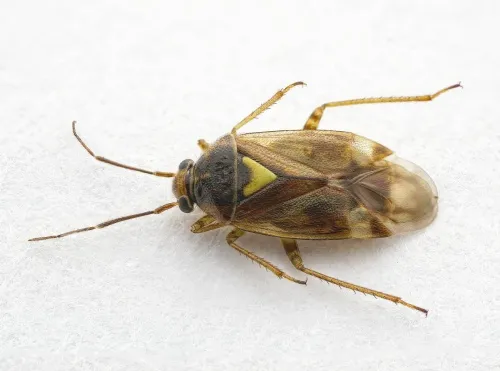
Orthops basalis
Orthops basalis
This genus contains three small bugs of around 5 mm. They generally have dark antennae. Although external characters are useful, some specimens cannot be reliably identified without dissection. Detailed examination of the specimen is needed to identi
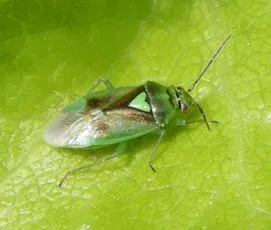
Orthops campestris
Orthops campestris
Length around 4 mm. This genus contains three similar species which are often found on umbellifers. They generally have dark antennae. Although external characters are useful, some specimens cannot be reliably identified without dissection. O. campes
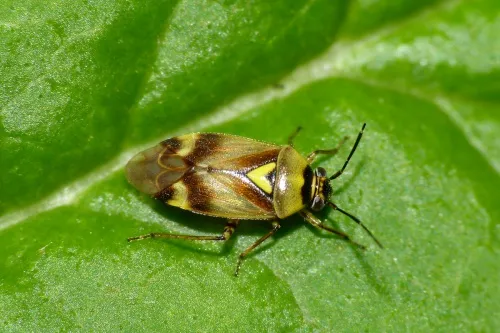
Orthops kalmii
Orthops kalmii
Length about 4.5 mm. This genus contains three small bugs (<5 mm) which are often found on umbellifers (Apiaceae). They generally have dark antennae. Although external characters are useful, some specimens cannot be reliably identified without dissec
Orthops scutellatus
Orthops scutellatus
Considered invasive in this country. (Capinera, John L. North American Vegetable Pests. The Pattern of Invasion. American Entomologist. Spring 2002)
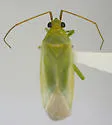
Orthotylus basicornis
Orthotylus basicornis
Identification: Green, large (~5.7-5.8 mm), first antennal segment darkened, tylus without dark mark, second antennal segment twice width of head
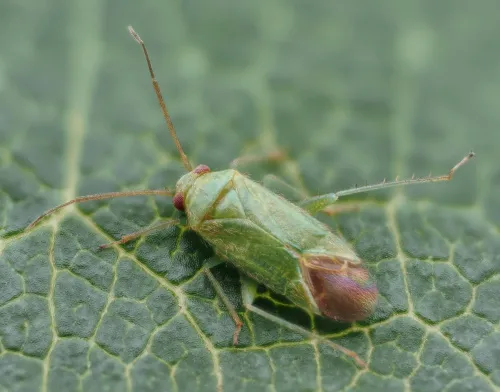
Orthotylus caprai
Orthotylus caprai
Length 3mm. Bright green, cuneus paler. Dorsal pubescence: dense semi-erect long brownish-black & fine prone yellowish hairs. Rostrum ≈ apex of hind coxae. Left clasper with 4-5 distinctive large teeth on outer edge of lobe. Tibial spines >tibia thic
Orthotylus coagulatus
Orthotylus coagulatus
Identification: Antennomere 2 longer than basal width of pronotum, dorsum mottled green with patches of whitish scales, dark spots on membrane behind veins, rostrum extends to about middle coxae, tibial spines brownish
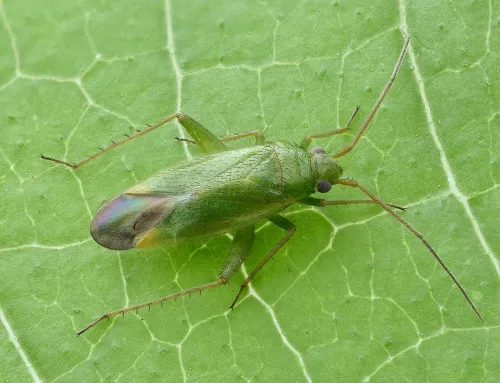
Orthotylus ericetorum
Orthotylus ericetorum
Green Mirid bugs are extremely similar and species identification based on external features is often difficult. The hostplant can be very informative. Orthotylus ericetorum is a small species (about 3.5 mm) found on heather. The upper surface is cov
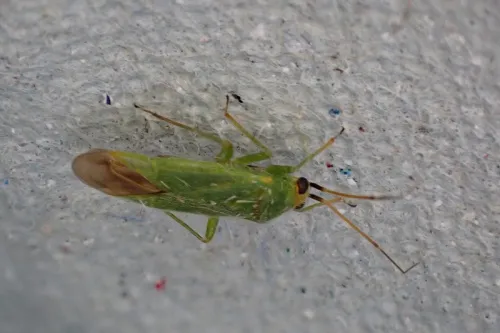
Orthotylus flavinervis
Orthotylus flavinervis
Length ~ 6.0 mm. Orthotylus is a large genus of predominantly green bugs. Many are extremely similar and species identification based on external features is often difficult. The hostplant can be very informative. O. flavinervis is one of the larger
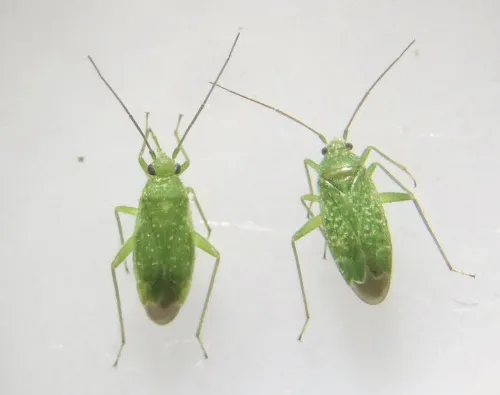
Orthotylus flavosparsus
Orthotylus flavosparsus
A small green bug that is similar to many other species. It has green wing membrane cells and patches of silvery hairs on the dorsal side, giving a white-speckled appearance It is associated with Chenopodiaceae such as fat-hen and oraches. Dissection
Orthotylus fuscicornis
Orthotylus fuscicornis
Identification: "Allied to hamatus Van D., but differs in the blackish antennae, longer second antennal segment, prominent white pubescence, and in the structure of the male genital claspers." The color of the antennae ranges from pale yellow to fusc
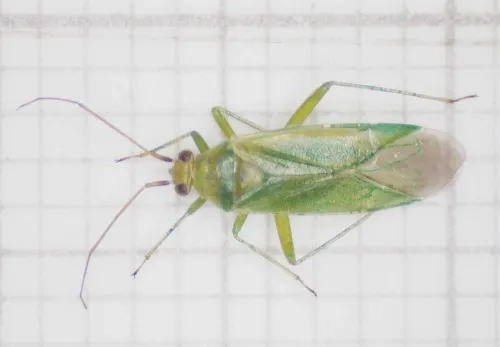
Orthotylus marginalis
Orthotylus marginalis
The genus Orthotylus contains several mainly green bugs which are very hard to separate with photographs. Noting the hostplant can be helpful, but a specimen is better. O. marginalis is about 6mm in length with a dense covering of pale hairs. The fir
Orthotylus modestus
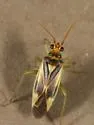
Orthotylus modestus
Identification: Pronotal markings transverse; when the pronotum is all black the second antennal joint [segment?] of the male is rufo-testaceous Legs green or yellowish, not infuscated; light-colored areas of dorsum greenish or fading to yellowish, n
Orthotylus nassatus
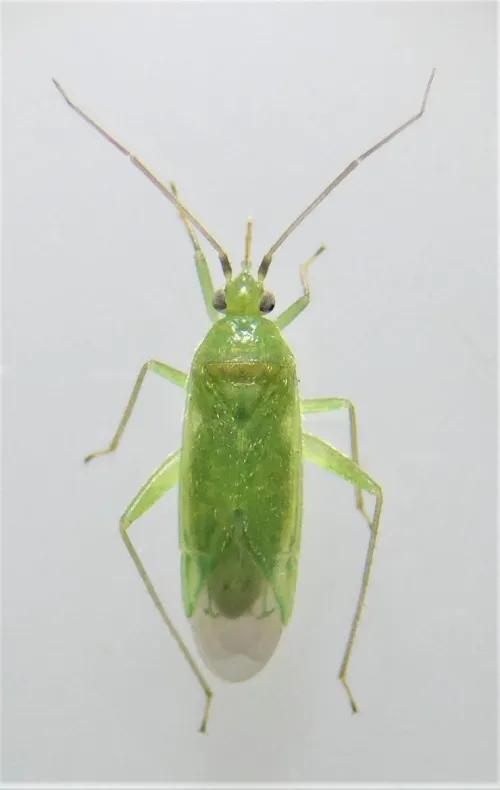
Orthotylus nassatus
Length ~5mm. A blue-green species, the first antennal segment is pale above with a dark line on the underside. Photos showing key features required. Dissection of male left clasper helps with confirmation. On a range of deciduous trees, including Oak
Orthotylus ochrotrichus
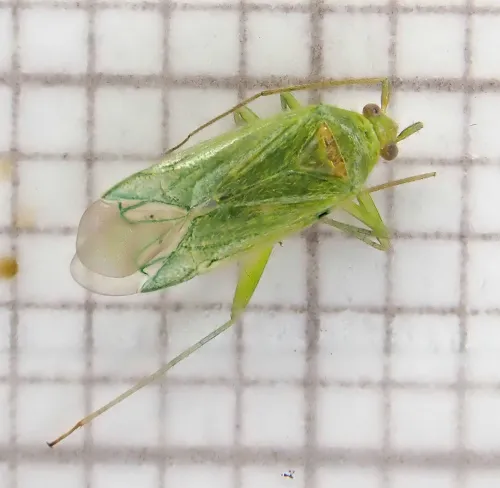
Orthotylus ochrotrichus
A ~5mm bright green species which is found on nettles and a variety of decidous trees, particularly elm. The length of the 2nd antennal segment is less than the 3rd and 4th combined. Extremely similar to O. prasinus, also found on elm, but this speci
Orthotylus ornatus
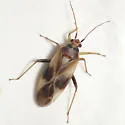
Orthotylus ornatus
Identification: variable, but usually hind femora fuscous and light-colored areas of dorsum occasionally tinged with salmon , also (but not diagnostic) buldging eyes, dark ant. (esp. A1-A2), and pale scutellum Type Locality: Described from three fema
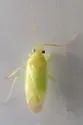
Orthotylus ramus
Orthotylus ramus
Identification: ant. pale orange, femora very pale green, end tarsi dark, subtle pale orange band along the pronotal-scutellar suture, apical wing membrane has a faint rose tinge. Dets. Michael Schwartz, 2025 Knight's indentifying characters, "hemely
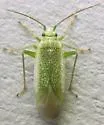
Orthotylus stanleyaea
Orthotylus stanleyaea
Identification: "Allied to brevirostris but with rostrum reaching to posterior margin of mesosternum; male claspers distinctive."
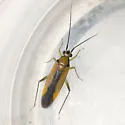
Orthotylus submarginatus
Orthotylus submarginatus
Identification: Dorsum pale salmon to orange; antennae, front of head, lateral margins of pronotal disk, scutellum, rather broad area on either side of commissure, embolium, area at apex of corium, apex of cuneus, and membrane, blackish or black; ros
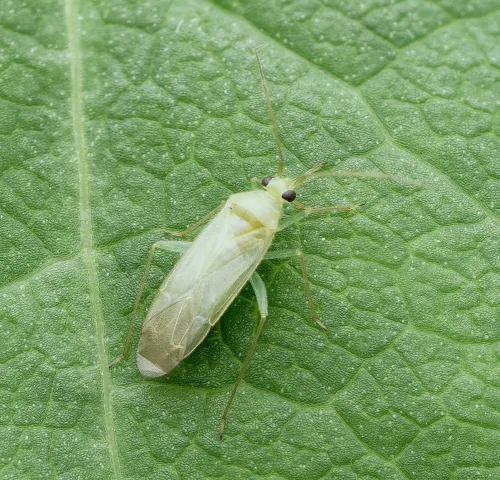
Orthotylus tenellus
Orthotylus tenellus
Length 4.0 to 4.5 mm. Orthotylus tenellus has a ground colour that is translucent pale yellow or yellow-green and the eyes are distinctively dark. The 1st antennal segment lacks long hairs. Unless identified by a recognised expert, a photo is require
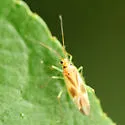
Orthotylus ute
Orthotylus ute
Identification: * Difference between male and female 1) antennae: male black, female brown; 2) scutellum: male black with median line pale, female all pale.
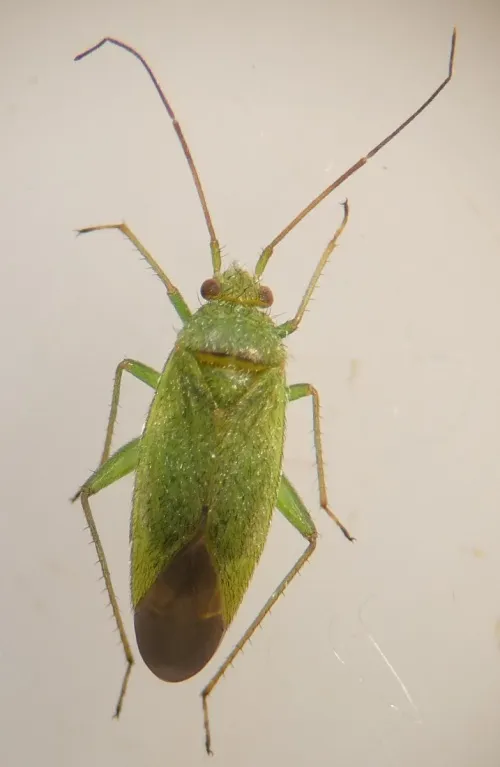
Orthotylus virescens
Orthotylus virescens
A narrow oval green bug found on Broom, about 4.5mm long. The dorsal surface is covered in erect dark hairs and it has a dark wing membrane. The rostrum is very short, reaching only to the hind margin of the mesobasisternum Other species of Orthotylu
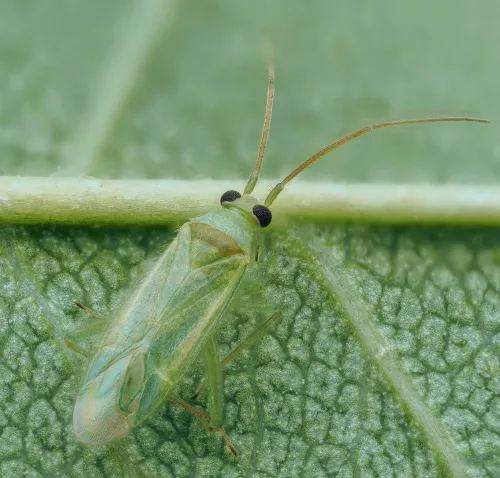
Orthotylus viridinervis
Orthotylus viridinervis
A narrow oval green bug found on Wych Elm and other tree species, including lime. 5-6mm long. The basal (1st) antennal segment is more or less equal in length to the head, and has more than 5 (usually 7) long hairs. The underside of the front femur h
Osbornellus auronitens
Osbornellus auronitens
Identification: Vertex yellow with the anterior traverse band black, and the posterior orange-red, black margined in middle, anteriorly. Pronotum yellowish, suffused with light brown posteriorly, and with orange-red areas near anterior margin and in
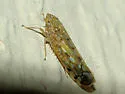
Osbornellus borealis
Osbornellus borealis
Identification: Markings and color similar to consors , but with the FW usually strongly tinged with brownish. Veins and markings relatively darker, giving the overall appearance of a darker insect.
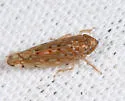
Osbornellus consors
Osbornellus consors
Identification: Vertex yellowish with brown & dark brown markings. Pronotum yellowish, heavily suffused with brown, and marked with dark brown. Scutellum yellow with dark brown margins. FW tinged with brown and dark brown veins.
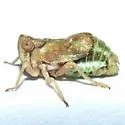
Osbornia arborea
Osbornia arborea
Identification: Usually brachypterous, wings at least partly reticulate most often collected sweeping
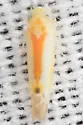
Ossiannilssonola flavomarginata
Ossiannilssonola flavomarginata
the one image we have is the first time this southern species has been found northwest of Utah (comments here )
Ossiannilssonola possibly undescribed affinity rossi
Ossiannilssonola aff-rossi
This species is currently referred to by Hamilton & Chandler 2017 as Ossiannilssonola rossi , but it may be a different species as the genitalia, range, and morphology differ slightly from Ossiannilssonola rossi sensu stricto. This species is found i
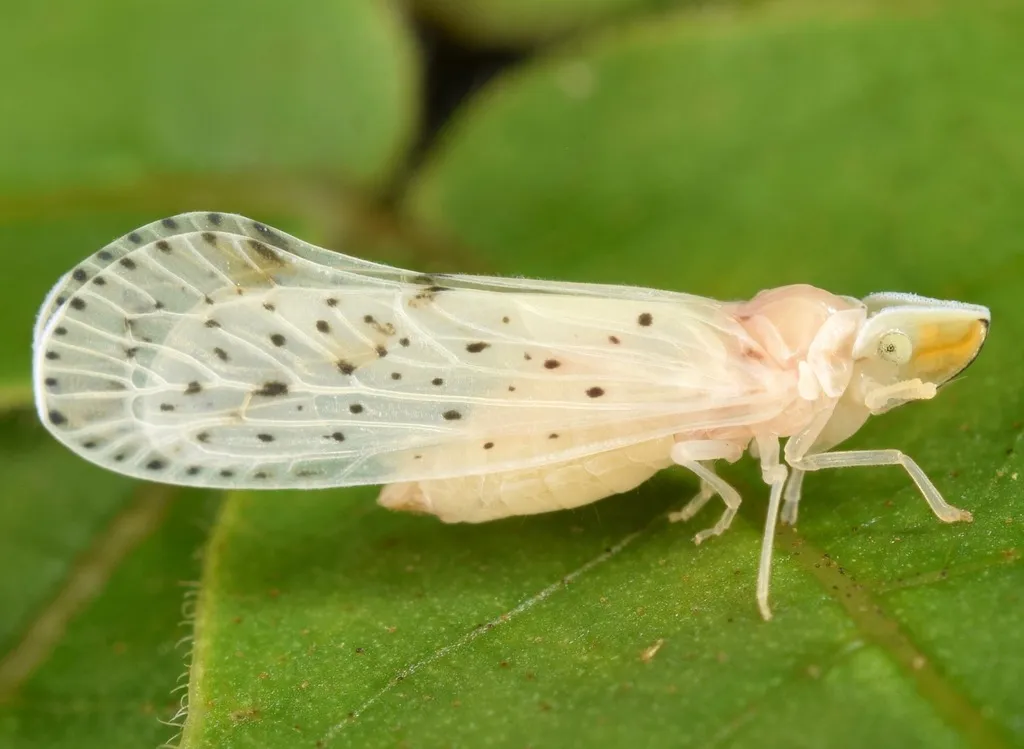
Otiocerus abbotii
Otiocerus abbotii
Identification: This is the only pale species in the genus marked only with spots. --Andy Hamilton, 27.viii.2013
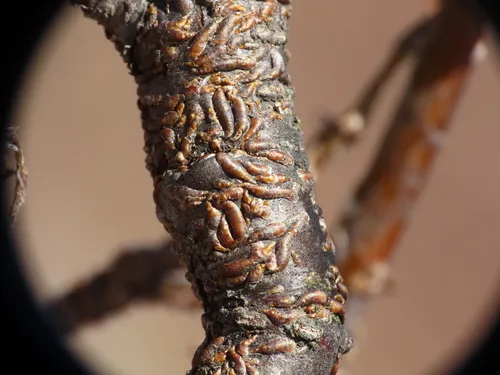
Oystershell Scale
Lepidosaphes ulmi
They can kill branches or even entire trees. An introduced species according to Invasive and exotic insects .
Ozophora maculata
Ozophora maculata
Identification: Within the O. laticephala species group (easy to recognize as a group because they are much smaller than other North Americaon Ozophora ), this species is distinguished by having the "fourth antennomere nearly unicolorous" (no distinc
Ozophora picturata
Ozophora picturata
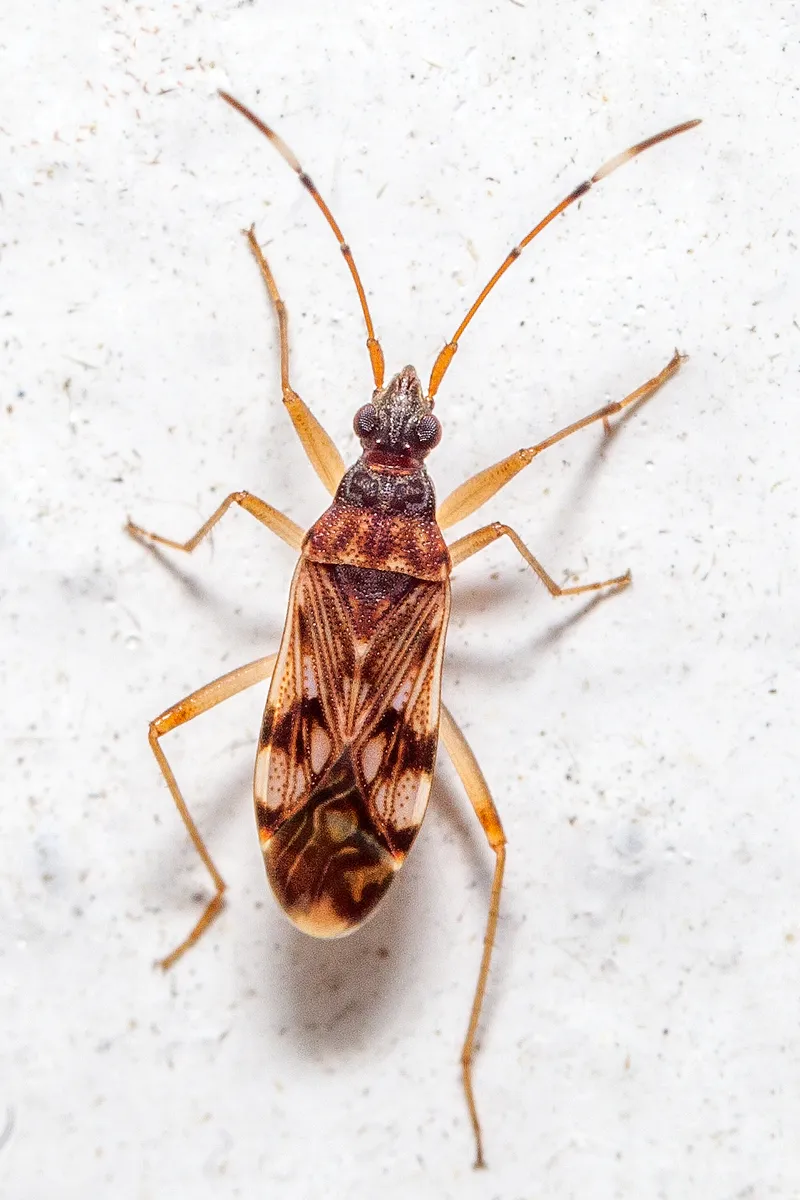
Identification: Basal part of antennomere 4 white . The easiest recognition feature for FL specimens is the distinct crimson streak along the posterior portion of each apical corial margin.
Ozophora trinotata
Ozophora trinotata
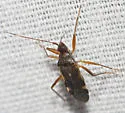
Identification: One of only two species of Ozophora in FL with long pubescence dorsally, the other being O. burmeisteri ; unlike the latter, hairs on metafemur longer than the femur's diameter (Note that uses the length of the tibial hairs to disting
Pagaronia furcata
Pagaronia furcata
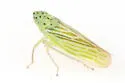
Identification: "resembling 13-punctata Ball but larger, more robust, and with much broader male plates. General ground color pale green to greenish white. Black spots on head and pronotum as in 13-punctata but frequently with an additional spot belo
Pagasa fusca
Pagasa fusca
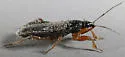
Identification: legs yellow, femora orange or reddish
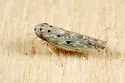
Painted Leafhopper
Endria inimicus
Identification: Easily recognized by having a pair of black spots on the head; a pair on the pronotum; and a pair on the base of the scutellum. Has an even more recognizable nymph, which has brown stripes down the sides. --K.G.A. Hamilton common gras
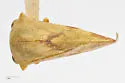
Palonica nogalana
Palonica nogalana
Identification: "Similar to viridia but smaller, narrower with a higher and more foliaceous crest, green with a dusky line on the back of the crest. Pronotum long low acute; crest nearly equilaterally triangular, much higher and more angular than in
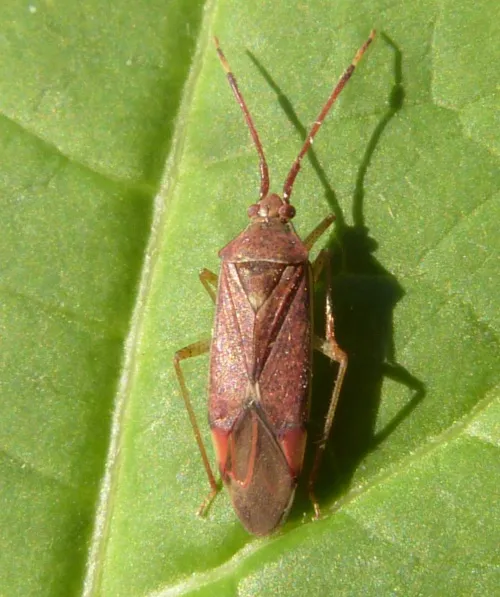
Pantilius tunicatus
Pantilius tunicatus
Length 8-10 mm. The large size (antennae shorter than the body) and spectacular colouring make it almost unmistakeable. The extent of the red markings is variable, and newly emerged adults can be almost entirely green. This bug may be found on the lo