
Ophiderma griseum
This record describes Ophiderma griseum (species). Recorded family: Membracidae. Recorded order: Hemiptera.
Identification and Appearance
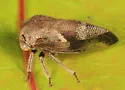
This species is close to flaviguttula Godg., belonging to the group with banded elytra, but differs conspicuously in its more robust structure, greater average length, more slender and sharper pronotal apex, and in particular in the blue-gray shades lacking reddish admixture, the insect being markedly gray, black and white instead of brownish. - Woodruff, 1919 ( 5 ) Ophiderma flaviguttula Goding, 1893 = Ophiderma pubescens (Emmons, 1854)
Classification
- Kingdom
- Animalia
- Phylum
- Arthropoda
- Class
- Insecta
- Order
- Hemiptera (True Bugs, Cicadas, Hoppers, Aphids and Allies)
- Suborder
- Auchenorrhyncha
- Superfamily
- Membracoidea
- Family
- Membracidae (Typical Treehoppers)
- Subfamily
- Smiliinae
- Tribe
- Smiliini
- Genus
- Ophiderma
Imported taxonomy record. Source availability varies; see the source references and editorial policy below.
Habitat and Range
Geographic Range
e US - Map
Diet and Behavior
Diet: Black oak, bur oak, red oak, and white oak. ( 4 ) Type from Quercus coccinea ( 5 )
Additional species information
Species notes from the sources
Etymology: Ophiderma grisea Woodruff 1919
About True Bugs, Cicadas, Hoppers, Aphids and Allies: the wider group
Order-level background for Hemiptera, the group containing Ophiderma griseum. Species-specific details appear above.
Group overview
Hemiptera (true bugs) includes over 80,000 described species across cicadas, aphids, leafhoppers, shield bugs, and bed bugs. Aphids alone cost global agriculture an estimated $2.5 billion annually in crop losses.
Ecological role of the group
Many Hemiptera are essential food sources for birds and predatory insects. Cicadas provide massive nutrient pulses during emergence events - a single Brood X emergence can involve trillions of individuals across 15 states.
Economic and practical significance of the group
The brown marmorated stink bug (Halyomorpha halys) caused $37 million in apple crop losses in a single year in the U.S. Mid-Atlantic region. Bed bug infestations in the U.S. increased by 500% between 2001-2010, costing the hotel industry hundreds of millions annually.
Recorded sources for this group: USDA, EPA, University research. Imported estimates may describe particular regions or reporting periods.
Photos of Ophiderma griseum (5)
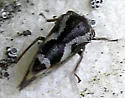
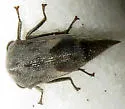
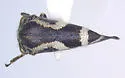
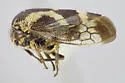
Photo credits: Contributed by john and jane balaban; Additional contributions by Mike Quinn , antarctica
Frequently Asked Questions About Ophiderma griseum
What is Ophiderma griseum?
Ophiderma griseum is a species in the family Membracidae, within the order Hemiptera.
Where is Ophiderma griseum found?
Range: e US - Map
What does Ophiderma griseum eat?
The diet of the Ophiderma griseum includes Black oak, bur oak, red oak, and white oak. ( 4 ) Type from Quercus coccinea ( 5 ).