
True Bugs, Cicadas, Hoppers, Aphids and Allies
Order Hemiptera
The True Bugs, Cicadas, Hoppers, Aphids and Allies (Order Hemiptera) includes 7,349 species across 120 families and 1,727 genera in our directory.
About True Bugs, Cicadas, Hoppers, Aphids and Allies
Hemiptera (true bugs) includes over 80,000 described species across cicadas, aphids, leafhoppers, shield bugs, and bed bugs. Aphids alone cost global agriculture an estimated $2.5 billion annually in crop losses.
Economic Impact
The brown marmorated stink bug (Halyomorpha halys) caused $37 million in apple crop losses in a single year in the U.S. Mid-Atlantic region. Bed bug infestations in the U.S. increased by 500% between 2001-2010, costing the hotel industry hundreds of millions annually.
Ecological Role
Many Hemiptera are essential food sources for birds and predatory insects. Cicadas provide massive nutrient pulses during emergence events - a single Brood X emergence can involve trillions of individuals across 15 states.
Families in Hemiptera (120)
Species in Hemiptera (7,349)
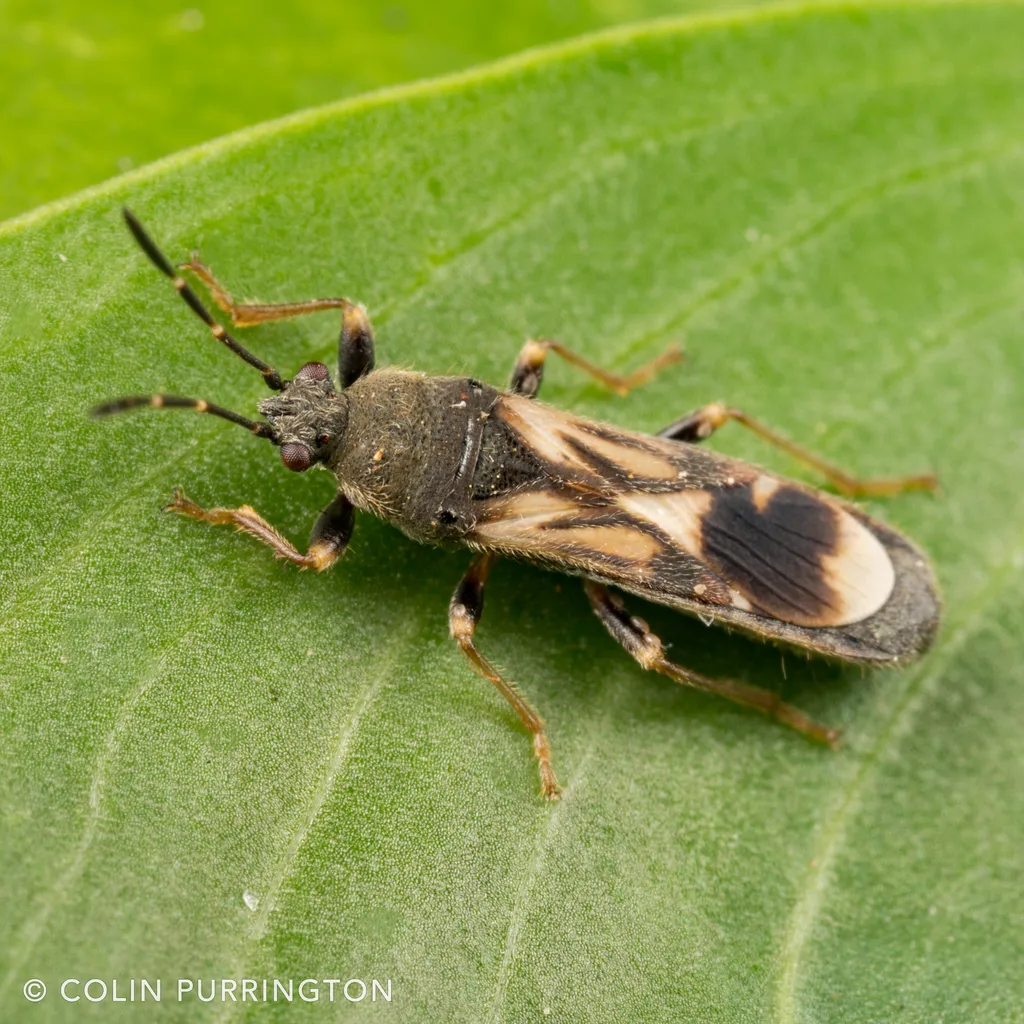
Myakka Bug
Ischnodemus variegatus
first collected in the US in Sarasota Co., FL 21.ix.2000
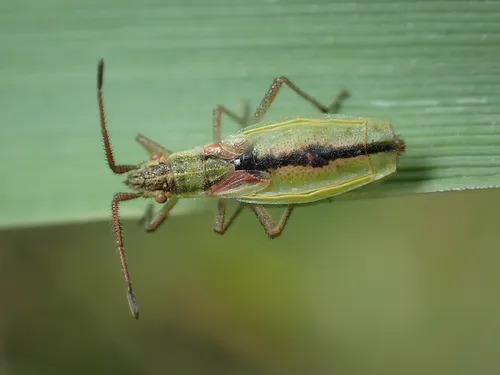
Myrmus miriformis
Myrmus miriformis
Length 6-8 mm (male) 8.5-10 mm (female). In contrast to other Rhopalid bugs, Myrmus miriformis is rather hairless as and adult and is elongate in shape, bearing a superficial resemblance to some of the Mirid grass bugs. Myrmus miriformis males have t
Myzocallis asclepiadis
Myzocallis asclepiadis
Identification: Pale green-yellow; later in the season, may have orange spots or be entirely orange. Even later in the season, wingless ones with more numerous dark spots or small plates appear, presumably they are sexual neotene adults. over the cou
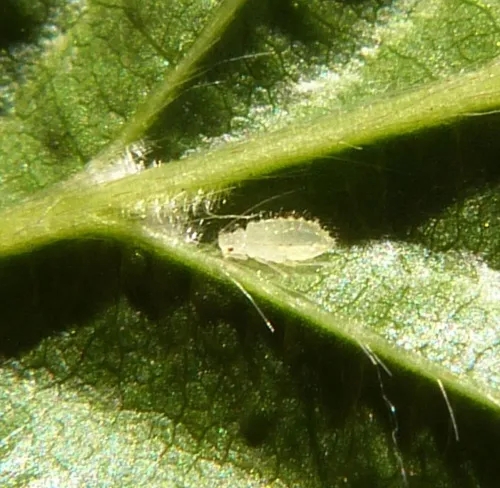
Myzocallis carpini
Myzocallis carpini
Immature Myzocallis carpini are pale and unmarked and have the body hairs (and a few basal antennal hairs) capitate, and very much longer than those of the adult. Winged adult M. carpini viviparae are pale yellow to yellowish white, with no dorsal ab
Myzocallis castanicola
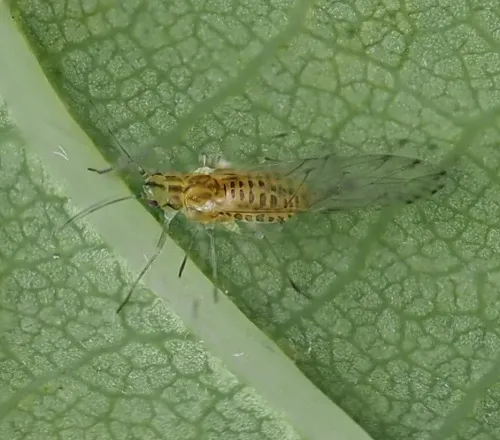
Myzocallis castanicola
Immature Myzocallis castanicola are yellowish-white or greenish-white with some brown-black dorsal markings. All adults are winged, yellow with paired black spots on the abdomen and a central dark median line on the head . The wing venation distinctl
Myzocallis coryli
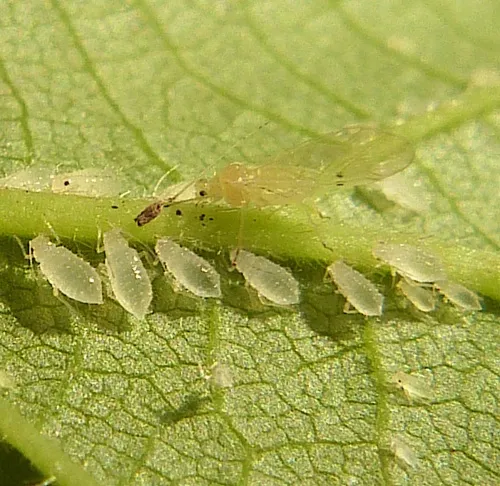
Myzocallis coryli
The body length of Myzocallis coryli alatae is 1.3 to 2.2 mm. It has ringed antennae and a inconspicuous dot on the wings of winged adults. For further details of this species please see the link below. Please provide good close-up images of the aphi
Myzocallis granovskyi
Myzocallis granovskyi
Identification: In life this species is yellow with black lateral margins around the eyes, on the thorax, and black costal margins on the wings. The antennae are banded, with dark spots at the apices of segments III-VI. The tibiae and tarsi are black
Myzocallis schreiberi
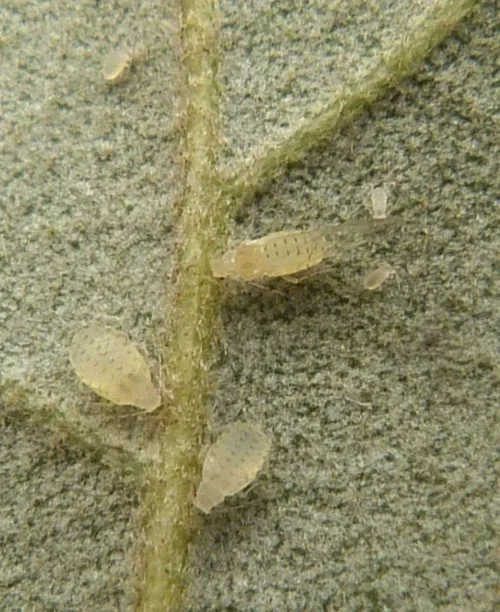
Myzocallis schreiberi
Immature Myzocallis schreiberi are whitish to pale straw yellow with four longitudinal rows of dark spots and long body hairs. Winged adult viviparae of M. schreiberi are pale yellow, with the head and the thorax slightly darker. The prothorax often
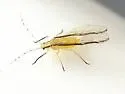
Myzocallis walshii
Myzocallis walshii
Identification: Specimens found earlier in the year are largely yellow with black pigment at apices of antennal segments and some weak pigment on foretibiae and on costal margin of forewing; later in the year pronotum with black pigment on each side,
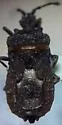
Nannium pusio
Nannium pusio
found a couple of these sensational bugs in TAMUIC, very distinctive
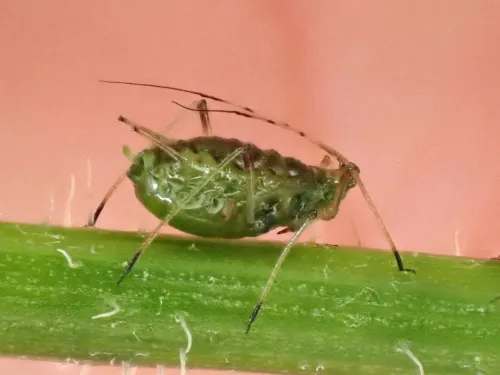
Nasonovia ribisnigri
Nasonovia ribisnigri
On the primary hosts, gooseberry and blackcurrant, the wingless apterae are bright shiny green. Winged adults have black markings on abdomen. On the secondary host (plant in Daisy family, Asteraceae, including Lettuce) apterae can be green, pink or y
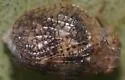
Neaethus grossus
Neaethus grossus
Identification: Hindwings long for the genus, not rudimentary, and much shorter than the forewings. Smaller than 4.5mm (vitripennis is larger). Pronotum only slightly narrower than head (unlike perlucida). Tegimna opaque and held somewhat diagonally,
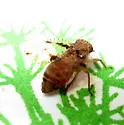
Neaethus maculatus
Neaethus maculatus
Identification: Per Dr. Hamilton, the only member of the genus with spotted wings
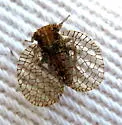
Neaethus similis
Neaethus similis
Identification: "Similar to N. jacintiensis , which also has wings only marked with brown veins, but occurring around the Bay Area instead of so. CA" --K.G.A. Hamilton
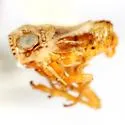
Nenema confragosum
Nenema confragosum
Identification: Tegmina obliquely depressed through middle; black areas of abdominal segments inflated; claval vein light brown
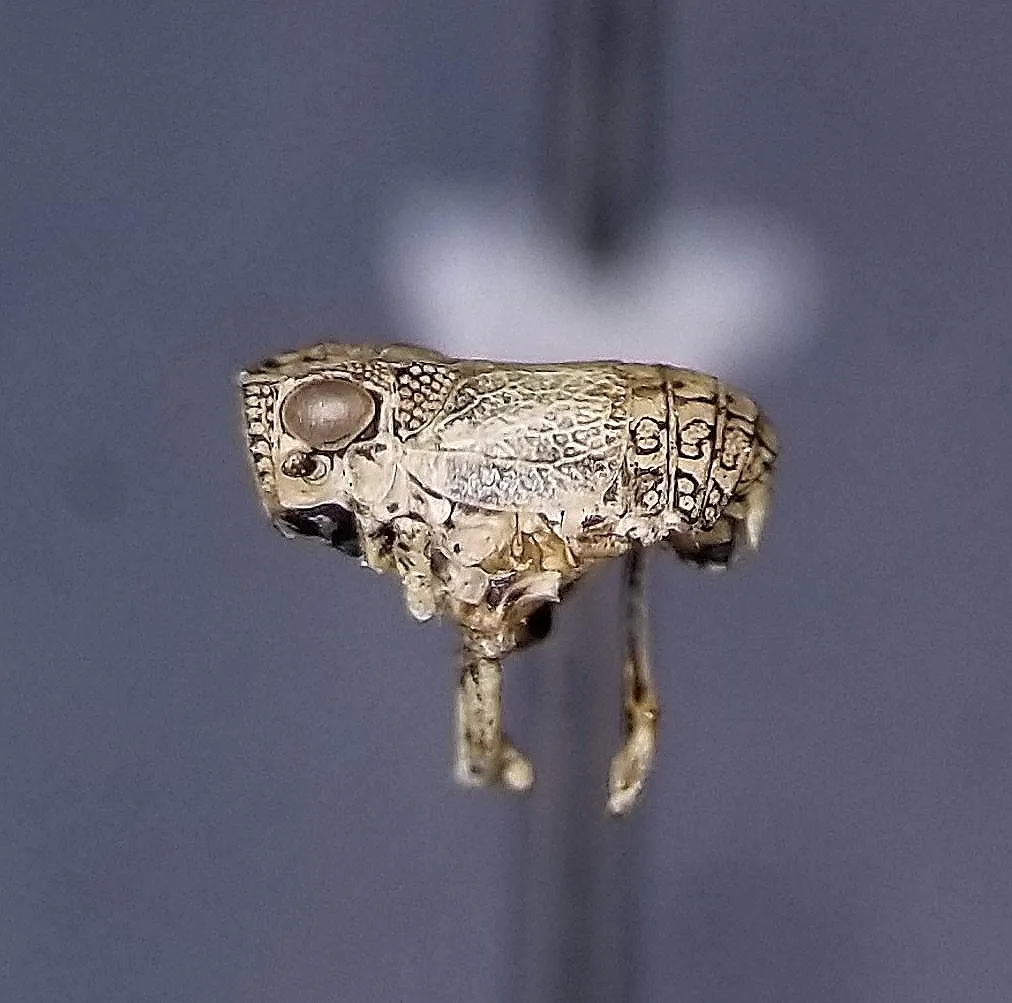
Nenema rugosum
Nenema rugosum
Identification: last couplet: Tegmina reticulate, veins conspicuously elevated; basal portion of postclypeus overhanging rest as a blunt tubercle (less pronounced in male)
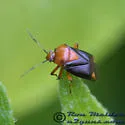
Neocapsus leviscutatus
Neocapsus leviscutatus
Identification: "Form and size of cardinalis ; elytra mostly deep blue-black; head, pronotum, scutellum and cuneus pale or sanguineous. Length 6 mm." (Van Duzee, 1912) - image from Dallas Co., TX Det. v belov, 2017 common at lights in Texas, nearly 5
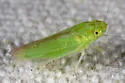
Neocoelidiana cf-filamenta
Neocoelidiana cf-filamenta
These specimens from Southern California are a good match for Neocoelidiana filamenta DeLong, 1953, a species from Central Mexico. Specimens are needed to confirm its identity.
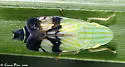
Neohecalus lineatus
Neohecalus lineatus
Identification: Females are much larger than males and lack the black markings
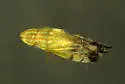
Neohecalus magnificus
Neohecalus magnificus
Identification: Males and females significantly different.
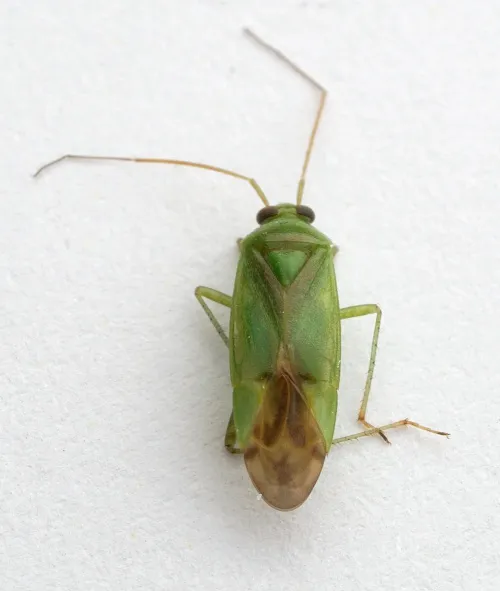
Neolygus contaminatus
Neolygus contaminatus
One of many similar green bugs found on various deciduous trees during summer. Length approximately 6 mm. The brown tibial spines arise from black spots and the 2nd antennal segment is longer than the width of the pronotum at the base. The clavus is
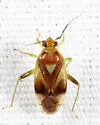
Neolygus knighti
Neolygus knighti
Identification: Similar to N. omnivagous but has somewhat distinct dark rays on the pronotum and a completely dark second antennal segment, as well as a somewhat more greenish yellow color.
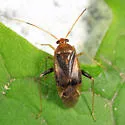
Neolygus omnivagus
Neolygus omnivagus
Identification: Det. Brad Barnd, 2022 (ID'd from specimen) Type Locality: NY Knight's keys suggest the femora are "dark brown to fuscous" but Kelton's description states the legs of males are "mostly pale green; apical half of hind femur dark brown"
Neolygus quercalbae 0
Neolygus quercalbae
long series collected by Quinn (2000) ( 3 ) on oak and elm i central Texas, but these are the only GBIF records for Texas or any surrounding state, thus I question this det.
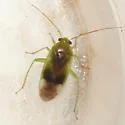
Neolygus tiliae
Neolygus tiliae
Identification: The males are distinguished by the dark brown colour of the scutellum, clavus, and most of corium, and by the genital claspers. The females are distinguished by teh relatively small size, by the greenish yellow colour of scutellum, cl
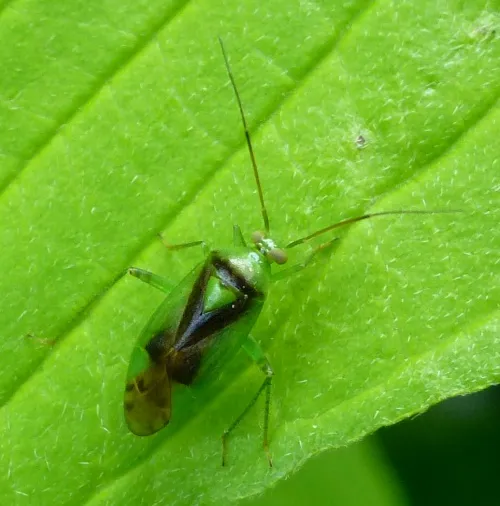
Neolygus viridis
Neolygus viridis
One of many similar green bugs found on various deciduous trees during summer. Length approximately 6 mm. The brown tibial spines arise from black spots and the 2nd antennal segment is longer than the width of the pronotum at the base. The clavus is
Neomegamelanus elongatus
Neomegamelanus elongatus
Identification: "The species with the shortest head in the genus....Females are short-winged." (Andy Hamilton)
Neomegamelanus lautus
Neomegamelanus lautus
Identification: The head is as long as the eye. Males are mottled black, females are pale. Head about twice as long as wide at base; upper hind corner of anal segment produced into a lobe; a single pair of curved fang-like processes arising from abou
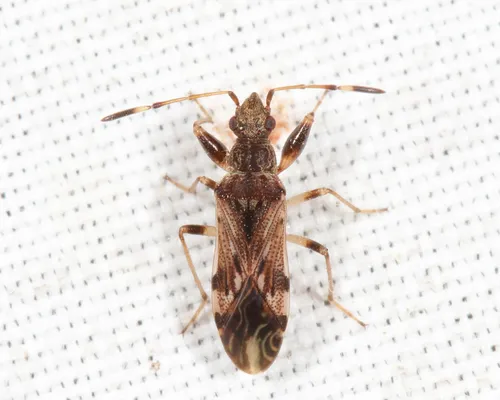
Neopamera albocincta
Neopamera albocincta
Identification: Base of terminal antennomere pale , size under 6 mm, ground color of clavus whitish with brown punctures More common in Florida than in more northerly areas. May be part of a species complex.
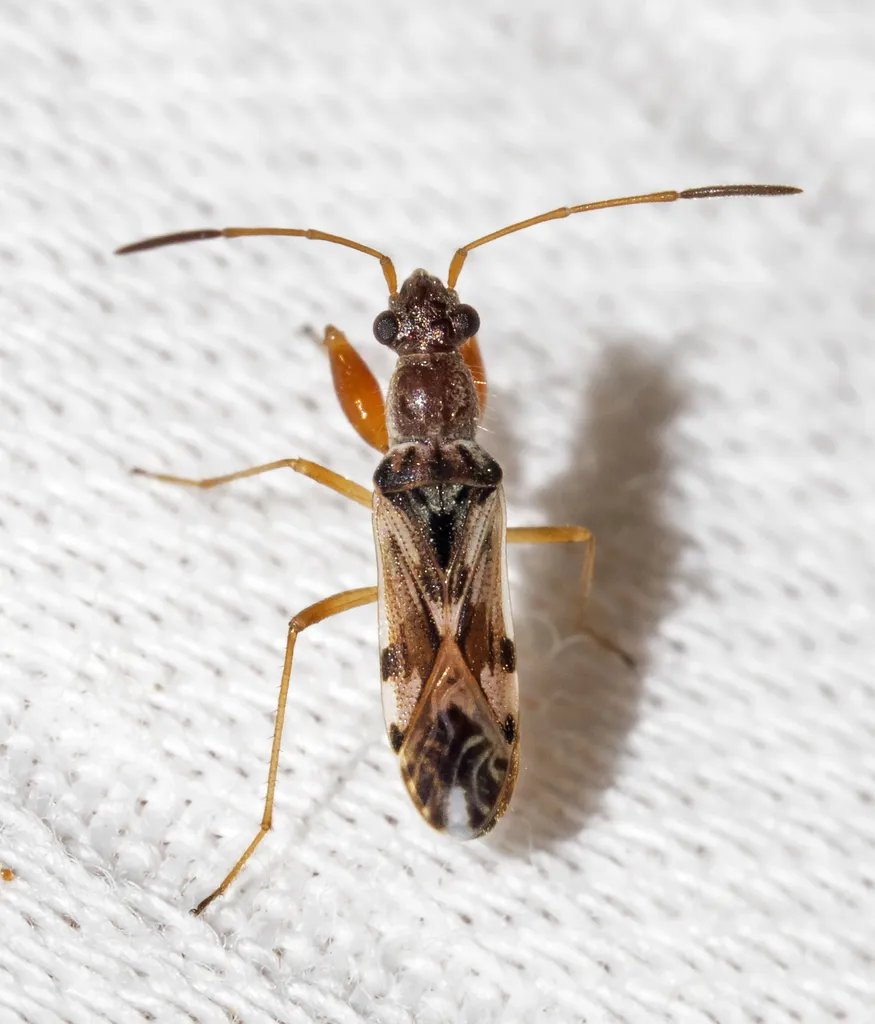
Neopamera bilobata
Neopamera bilobata
Identification: terminal antennomere all dark, and a prominent south-facing white triange in the middle of the wings (the triangle mark is usually visible even if the antennae are blurred.) "one of the commonest insects in the Southern United States"
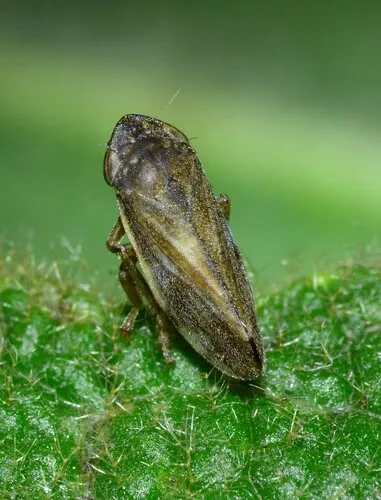
Neophilaenus campestris
Neophilaenus campestris
Neophilaenus can be separated from Philaenus by the straight costal margin along the basal part of the forewing (i.e the front part of the lower margin when the insect is viewed from the side). Length 5 to 6mm. A pale brownish froghopper. There are t
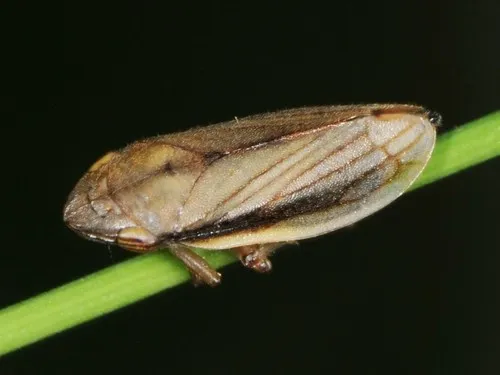
Neophilaenus lineatus
Neophilaenus lineatus
Neophilaenus can be separated from Philaenus by the straight costal margin along the basal part of the forewing (i.e the front part of the lower margin when the insect is viewed from the side). Length 5-7 mm. A brown froghopper found on grasslands, w
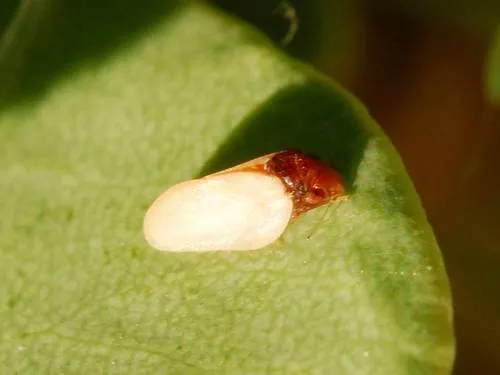
Neophyllura bicolor
Neophyllura bicolor
Identification: General color yellow, thorax red; forewings opaque, cream-colored
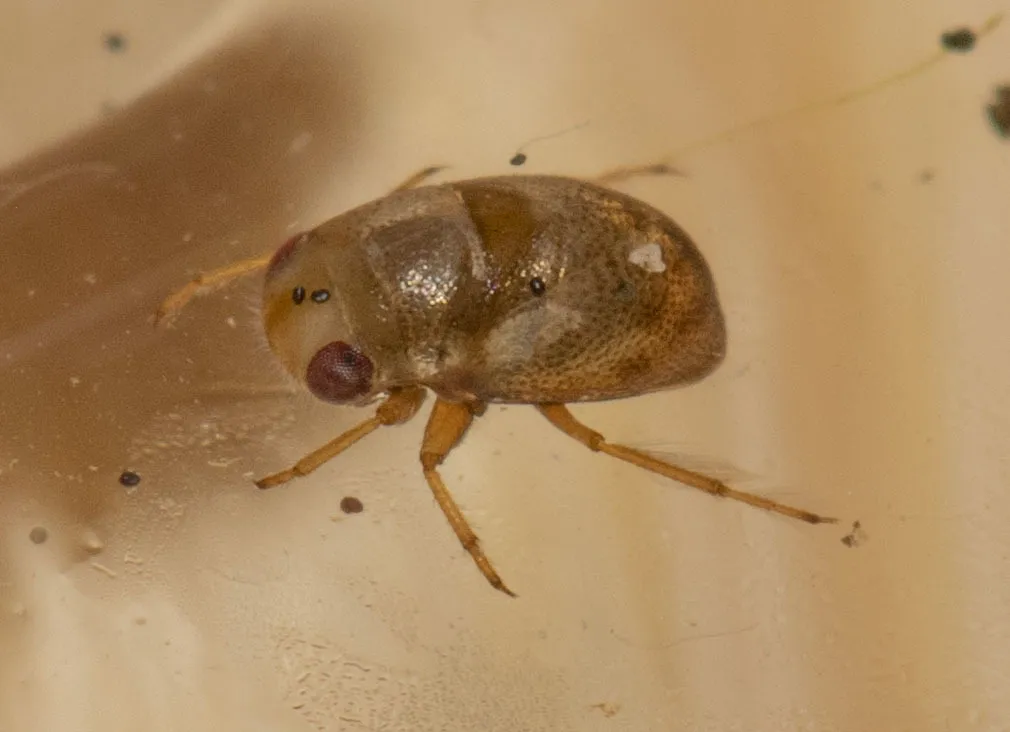
Neoplea striola
Neoplea striola
Historically considered the most common or only species of the genus in the northern US and southern Canada, but likely represent a complex of cryptic species; has been widely confused with other species, especially N. harnedi
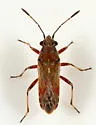
Neortholomus scolopax
Neortholomus scolopax
Identification: Neortholotnus scolopax can be difficult to recognize because of its variability in color and size. Although generally larger than N. jamaicensis , in the southern parts of its range, N. scolopax is about the same size. It can be separ
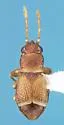
Neosuris castanea
Neosuris castanea
Identification: Det. T. J. Henry, 2014 Type Locality: Huachuca Mountains, Cochise Co., Arizona
Neosuris fulgida
Neosuris fulgida
Described from female Catal. Sprgs., Ariz., July 4, E. A. Schwarz (Type U. S. N. M.), and female Salton, Calif., H. G. Hubbard Collector (Paratype- U. S. N. M.).
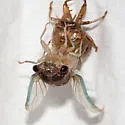
Neotibicen similaris
Neotibicen similaris
Identification: Tibicen similaris - General description 1) Legs: brownish - occasionally with light green at the joints and dark brown along the terminal ends of the tibia/tarsi 2) Pruinosity: pruinose venter (not heavily pruinose - similar to that s
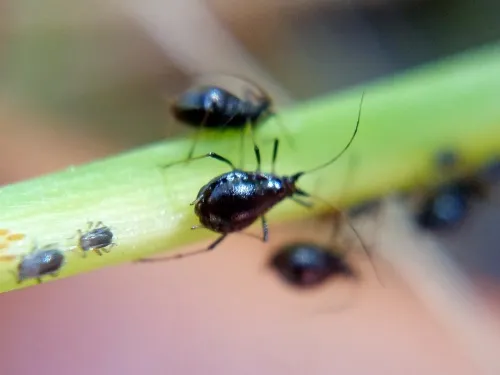
Neotoxoptera formosana
Neotoxoptera formosana
Adult apterae of Neotoxoptera are shining magenta-red to dark reddish brown or almost black, immatures are similarly coloured. The body length of the adult aptera is 1.6 to 2.3 mm. N. formosana alatae are very dark red to black with the wing veins he
Neotredecim Periodical Cicada
Magicicada neotredecim
Identification: Can only be identified by call in a certain range.
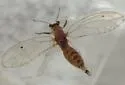
Neotriozella pyrifolii
Neotriozella pyrifolii
Identification: Genal processes slender, vertical, as long or longer than vertex, closely appressed; head large, about as broad as thorax, antennae about twice as long as width of head; forewings long, about 3x as long as wide, medial cell longer tha
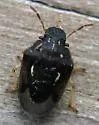
Neottiglossa cavifrons
Neottiglossa cavifrons
Identification: The most distinctive species in the genus; head with broadly rounded apex and distinctly concave surface covered with inward-curved hair is diagnostic
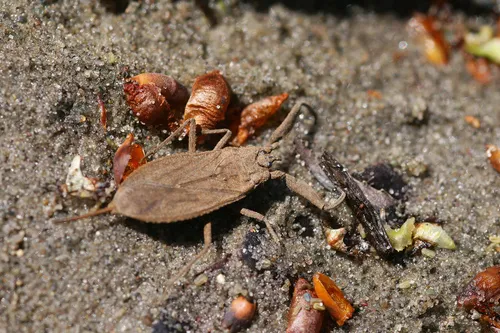
Nepa apiculata
Nepa apiculata
Identification: Broad body is distinctive in this family in our area
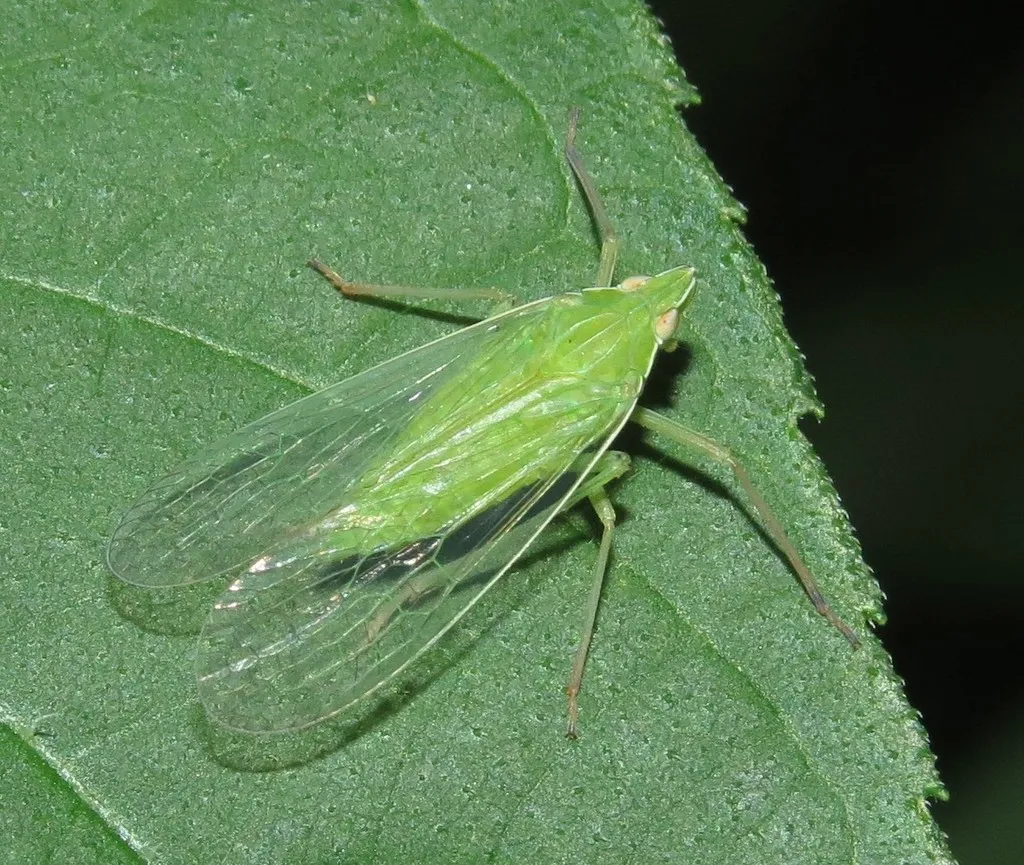
Nersia florida
Nersia florida
per Lois O'Brien, the only member of this genus in the US; all the US records of N. florens refer to N. florida
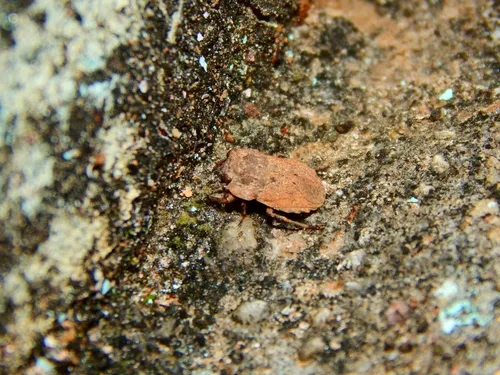
Nerthra fuscipes
Nerthra fuscipes
Identification: The only FL species Key to Florida spp. in which hemelytra aren't fused
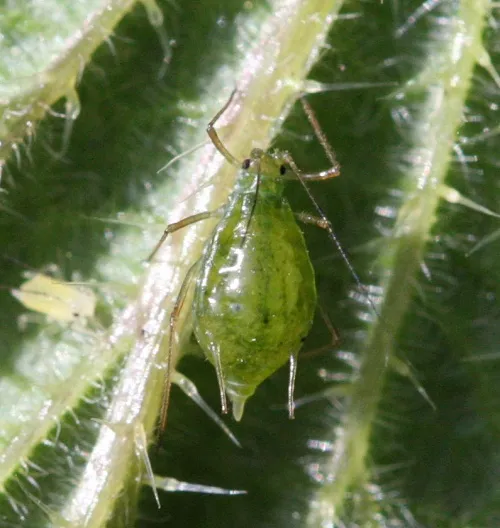
Nettle Aphid
Microlophium carnosum
A very variable species with winged and unwinged forms that may be various colours, often green or pink. The winged females are able to reproduce by parthenogenesis (asexually), giving birth to pregnant offspring. This phenomenon is known as telescop
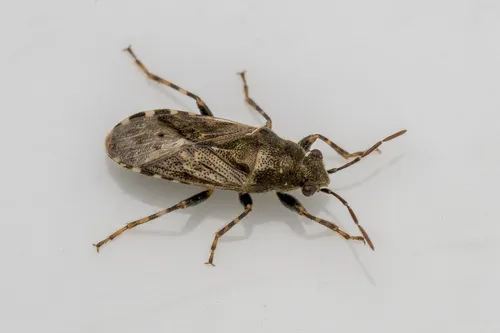
Nettle Groundbug
Heterogaster urticae
A medium to large groundbug, associated with nettles, with a distinctive pale and dark banded connexivum and tibias. The head and pronotum have long erect hairs. Large groups may occasionally be seen on nettles. Within the Lygaeidae, the banded conne
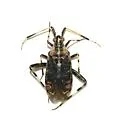
Neurocolpus arizonae
Neurocolpus arizonae
Identification: Distinguished from all other species by : 1) short rostrum (not reaching beyond mesocoxae); 2) short A1 (< A2/2); 3) pale median stripe on head and pronotum ; and 4) dark bands on tibiae . Dets. Jason Botz Type Locality: Tucson, Arizo
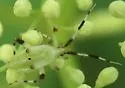
Neurocolpus jessiae
Neurocolpus jessiae
Identification: In early summer forms, 1) A1/A2 = 0.48-0.52 (male), 0.51-0.56 (female); 2) Pale to yellowish calli, collar, and cuneus; and 3) Apically dark hindlegs
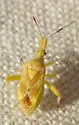
Neurocolpus simplex
Neurocolpus simplex
Identification: "Antennal segment I widest at the inflated apex; rostrum just attaining posterior margin of middle coxae; color uniformly yellowish or fulvous" (Knight, 1968). In males, "apical area of corium sometimes clouded with light brown to fus
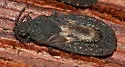
Neuroctenus elongatus
Neuroctenus elongatus
Identification: The large paratergites next to the simple ninth tergite in the females will separate this species from the other Neuroctenus species in our area
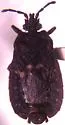
Neuroctenus pseudonymus
Neuroctenus pseudonymus
Identification: Recognized by the transverse fold on the seventh tergite of the male.
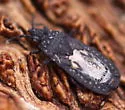
Neuroctenus simplex
Neuroctenus simplex
Identification: paratergites subquadrate, tergite IX notched
Neuroctenus unistellatus 0
Neuroctenus unistellatus
Identification: Vásárhelyi did not menion the large eighth paratergites in the male, unique among congeners in our area described from a series collected in Austin, TX; i think i have specimens that may represent this from. =v=
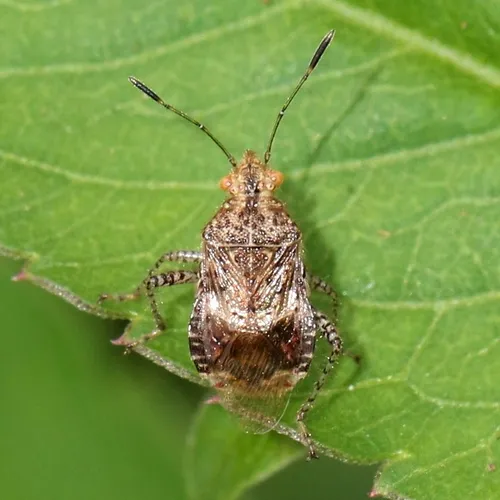
Niesthrea sidae
Niesthrea sidae
Identification: Color variable, ranging from gray through yellow to reddish yellow, usually with flecks to spots of brown or red scattered over pronotum, scutellum, pleura and venter of abdomen. Similar spots on veins of corium. (Sailer, 1961) Connex
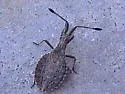
Nisoscolopocerus apiculatus
Nisoscolopocerus apiculatus
Identification: body mottled gray, pear-shaped (abdomen expanded, head and thorax narrow); wings short in adult, barely covering anterior portion of abdomen; antennae apparently 3-segmented, bent laterally almost 90 degrees after first segment; termi
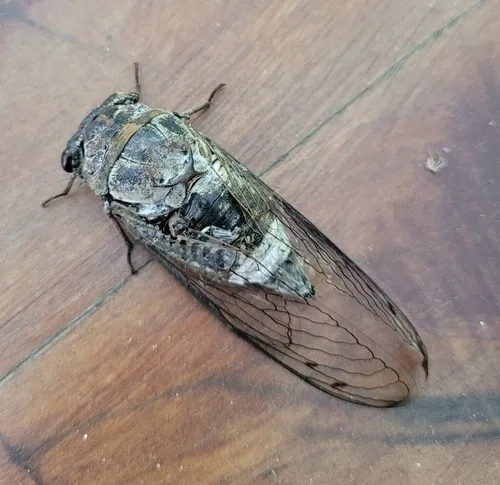
Northern Dusk Singing Cicada
Megatibicen grossus
Cicada auletes Germar was recently (Sanborn, 2023) found to be a synonym of Tettigonia grossa Fabricius. Since T. grossa is the older name, it takes priority. Replaced by Megatibicen resh in western Gulf States (Louisiana & Texas) Replaced by M. reso
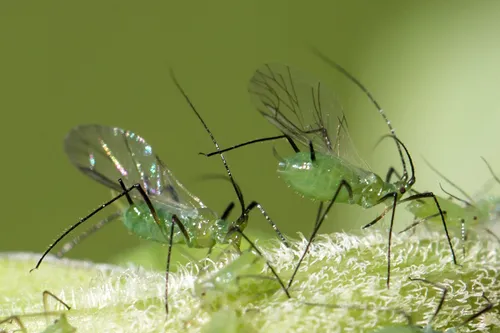
Northern Green Goldenrod Aphid
Uroleucon caligatum
Closely related and very similar to U. luteolum , which has a more southern distribution. Blackman & Eastop note the relationship needs to be studied further.
Norvellina apachana
Norvellina apachana
Identification: "Resembles pale N. bicolorata but with a pale face." - Joel Kits
Norvellina columbiana
Norvellina columbiana
Identification: The palest species in the genus. --Andy Hamilton
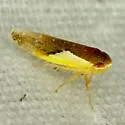
Norvellina flavida
Norvellina flavida
Identification: Similar to N. pulchella , but with a [bright] yellow wash on the costal edge of the wing. ―Joel Kits
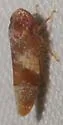
Norvellina helenae
Norvellina helenae
Identification: resembles N. chenopodii but much smaller; lighter areas bounding the saddle are coarsely reticulated (vs ivory in N. chenopodii )
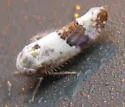
Norvellina novica
Norvellina novica
Identification: brown band of mostly even width (not tapering as much toward the wing edge) and more extensive dark colour at the wing tip than the similar N. seminuda. (modified comment per Joel Kits) Det. M. A. Quinn, 2020 rarely collected - (comme
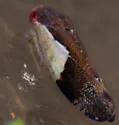
Norvellina scabra
Norvellina scabra
Described from three females and one male collected in Ames, Iowa; two of which were swept from white oak. This species is evidently very rare and apparently restricted to the Midwestern United States.
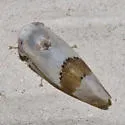
Norvellina seminuda
Norvellina seminuda
Identification: Similar to N. novica , but wings shorter. The brown band varies in exact shape, but is always at least as wide as the white space between it and the tip of the scutellum. In N. novica it is narrower than that space, in part due to the
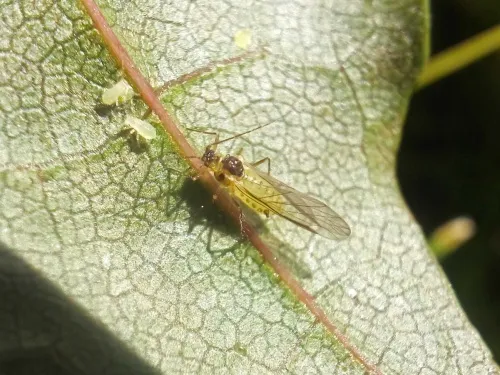
Norway Maple Periphyllus Aphid
Periphyllus lyropictus
Apterae 2 to 3 mm, relatively long-hairy and with short siphunculi and found in large colonies on the underside of Norway Maple leaves. Records should be supported by a photograph showing the aphids in as much detail as possible. Please also state th
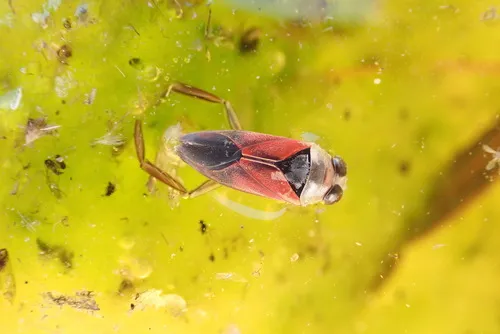
Notonecta lobata
Notonecta lobata
Identification: Color can be informative but highly variable. Typically red and black. Some specimens are brownish black with beige trimmings and others are greenish-tan. All have the head, pronotum and limbs yellow or gray and scutellum and membrane
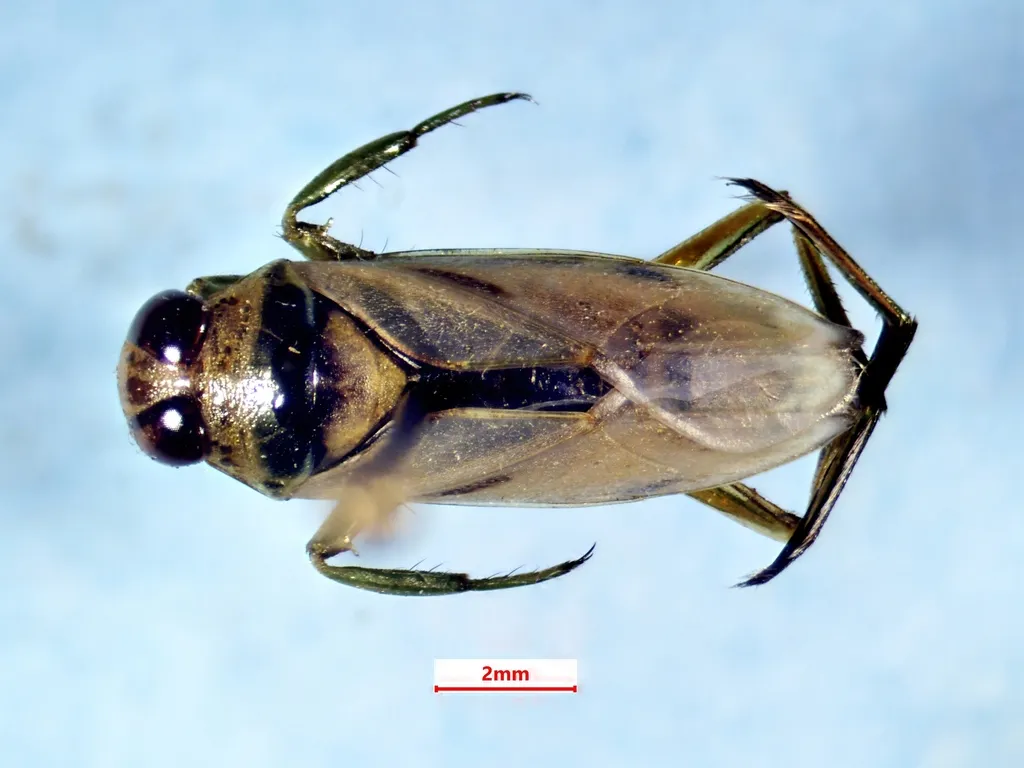
Notonecta lunata
Notonecta lunata
Identification: very similar N. raleighi but with more northern distribution
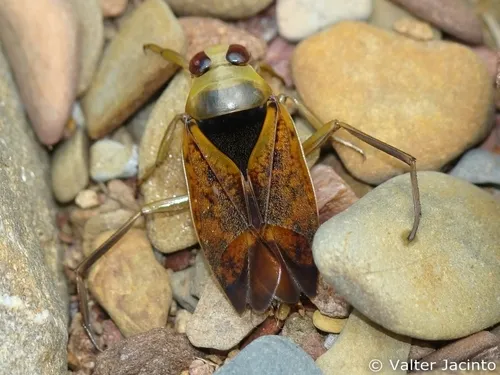
Notonecta maculata
Notonecta maculata
Notonecta are up to nearly 2 cm and commonly called backswimmers because they swim upside down and are often seen at the surface of the water. Notonecta maculata is light brown in colour with a number of dark markings and large reddish eyes. It is di
Notonecta montezuma
Notonecta montezuma
Identification: very similar to N. kirbyi ; nearly identical and possible the same species as N. impressa in Mexico
Notonecta obliqua
Notonecta obliqua
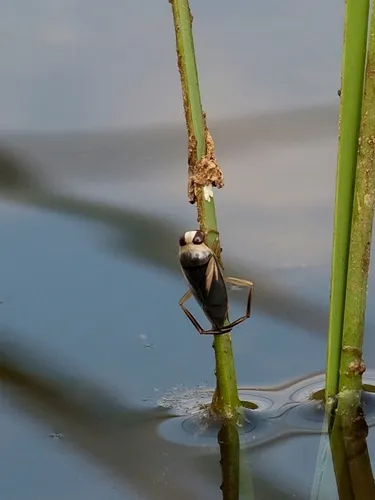
This distinctive species has dark elytra marked with bold whitish markings. There are four UK Notonecta species and whilst they look broadly similar they can all be separated in the field from the different elytral markings. See ID Aids below. Unless
Notonecta uhleri
Notonecta uhleri
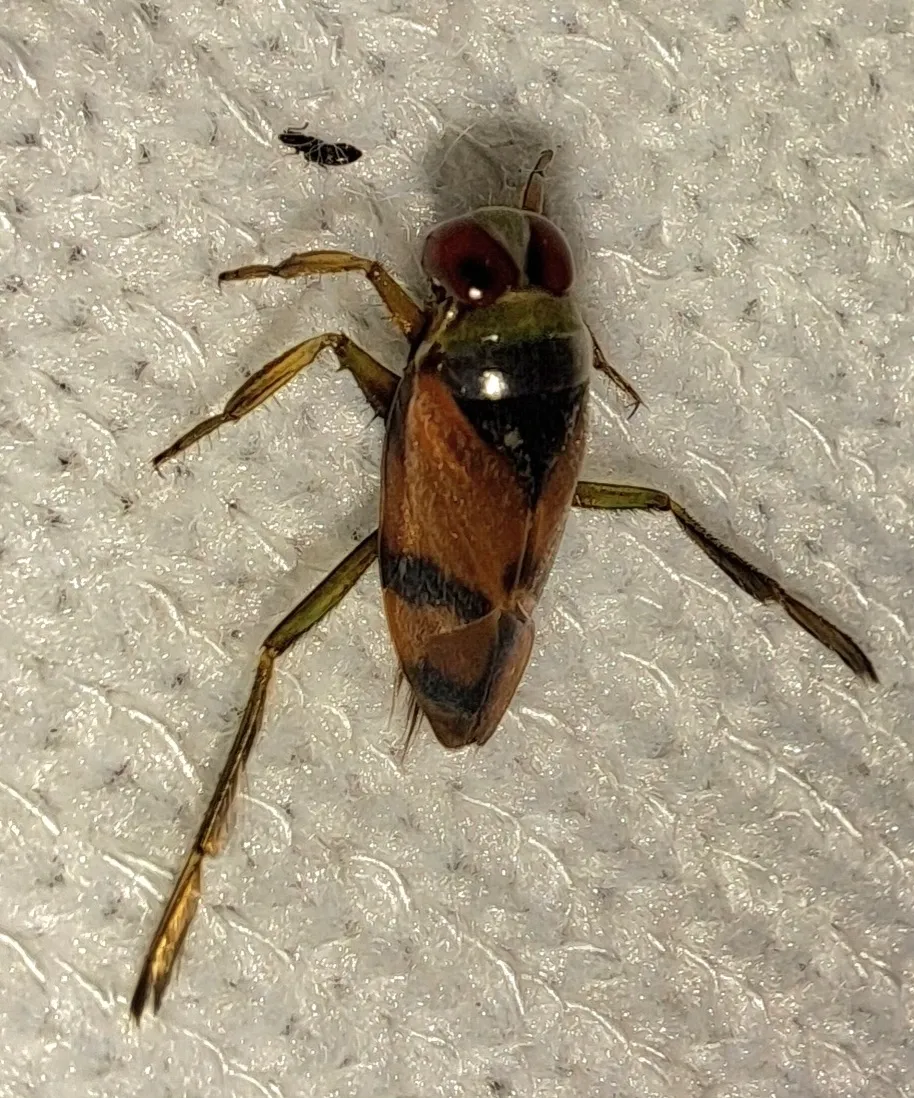
Identification: Hemielytra varying from dark brick-red to rich orange-yellow (Kirkaldy 1897)
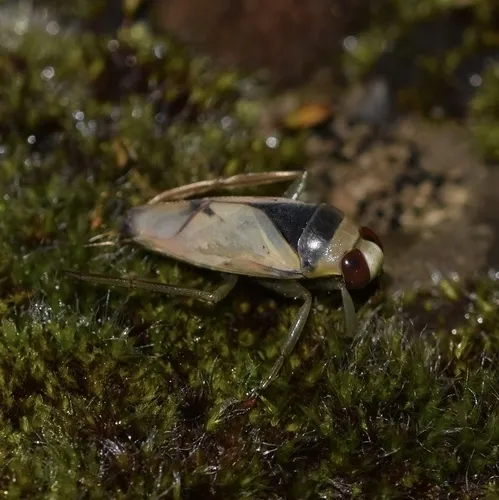
Notonecta viridis
Notonecta viridis
Length 13 to 15 mm. Distinguished by the front of the pronotum, which has pointed angles that extend partly around the eye. There are four UK Notonecta species and whilst they look broadly similar they can all be separated in the field from the diffe
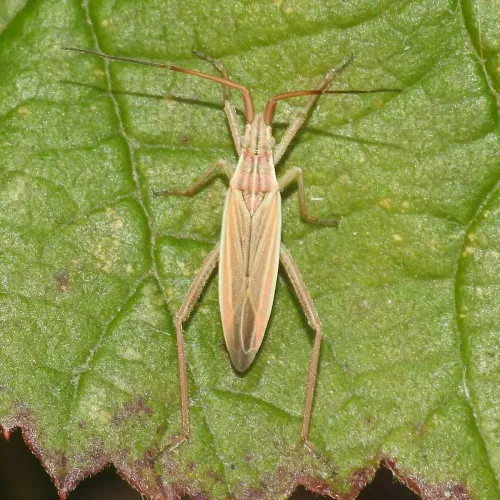
Notostira elongata
Notostira elongata
Length 7.5 to 8.5 mm. Notostira species are elongate grass bugs with a longitudinal furrow between the eyes. The genus is sexually dimorphic; males have a black central stripe on the upperside, with the margins yellowish-green, while females are much
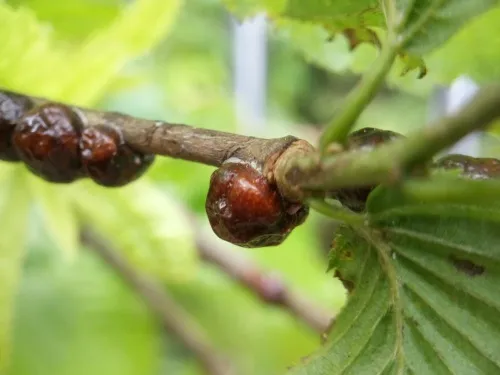
Nut Scale
Eulecanium tiliae
The Nut Scale Eulecanium tiliae causes damage to various woody plants including trees and shrubs such as Hawthorn. Oak, Ash, Field Maple and fruit trees such as Apple and Pear. The scale insects are oval, strongly convex, yellowish-brown to dark brow
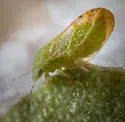
Nyctiphalerus rugipennis
Nyctiphalerus rugipennis
Identification: General color usually green, with body and legs often covered in irregular white spots; forewings coarsely rugose
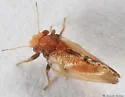
Nyctiphalerus vermiculosus
Nyctiphalerus vermiculosus
Identification: General color ranging from green to yellow to red, wings semihyaline, fumate apically, apical margin alternating black and white, sometimes with black spot at apex of clavus; forewings sometimes covered in a white waxy bloom.
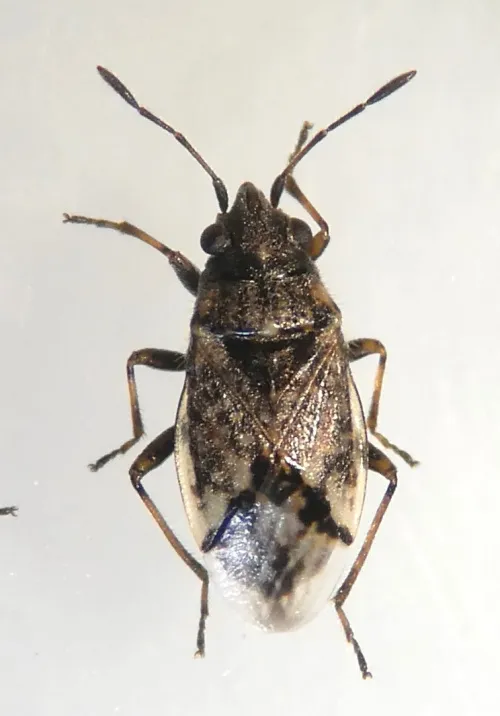
Nysius huttoni
Nysius huttoni
Length 2.5 to 4 mm. The adults often have a broad or squat outline and they have long erect hairs covering the pronotum and forewings. Long erect hairs on pronotum and forewings We recommend that a specimen is examined and photographed. The diagnosti
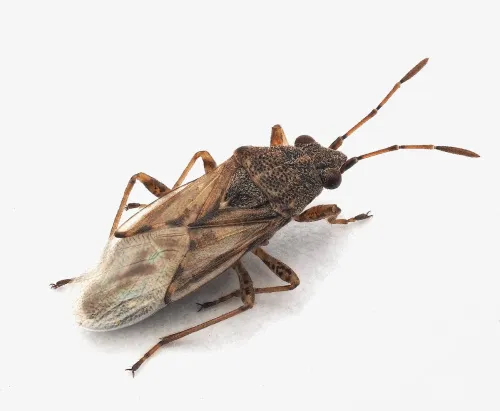
Nysius senecionis
Nysius senecionis
Length 4 to 5 mm. Nysius senecionis has the 2nd antennal segment pale with a dark ring at the base and the wing membrane is usually clear and unmarked. It is separated from the very similar N. graminicola by the shorter 1st segment of the hind tarsus
Nysius tenellus 0
Nysius tenellus
Identification: last couplet: Pronotum, viewed laterally, distinctly depressed before cicatrices; contracted basal part of costal margin devoid of fine hairs; membrane clear; basal part between apex of commissure and apices of coria distinctly shorte
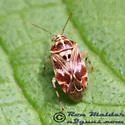
Oak Catkin Mirid
Tropidosteptes quercicola
Identification: Distinguished by the robust oval form, convex frons and scutellum, short rostrum, and coloration. (Johnston 1939) Det. M. A. Quinn, 2011 nymph Det. M. A. Quinn, 2024 Type Locality: College Station, Brazos Co., Texas, April 1, 1933 (H.
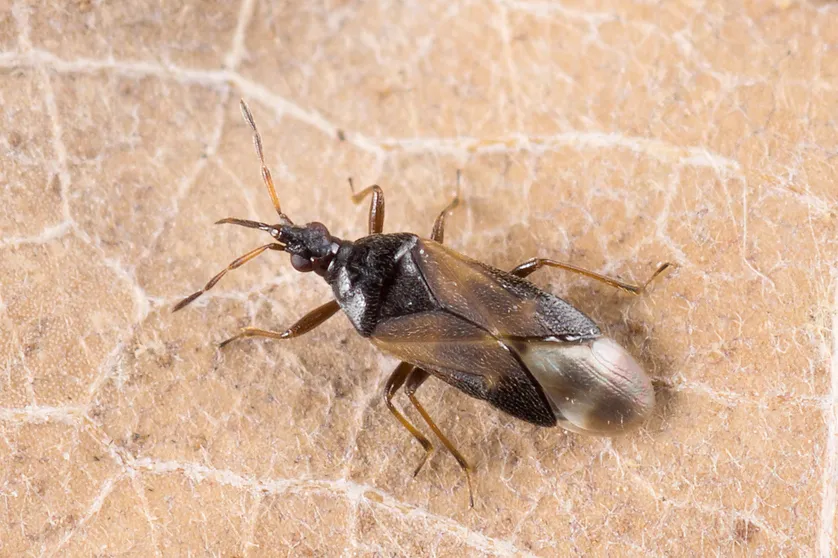
Oak Flower Bug
Anthocoris confusus
Brown or blackish ground colour. Antennae about as long as the head and pronotum, brownish, ant2 broadly ferruginous in the middle. Hemelytra elongated with parallel edges; dull above except on outer edge of exocoria and outer half of cuneus, which a
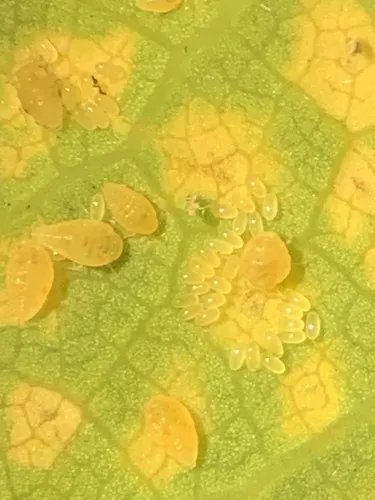
Oak Leaf Phylloxera
Phylloxera glabra
Phylloxera glabra fundatrices (over-wintering females) feeding on oak leaves in spring cause the leaf edges to curl inwards and become slightly thickened, causing a gall. Feeding by later generations causes necrotic spots on the leaves. The yellowish
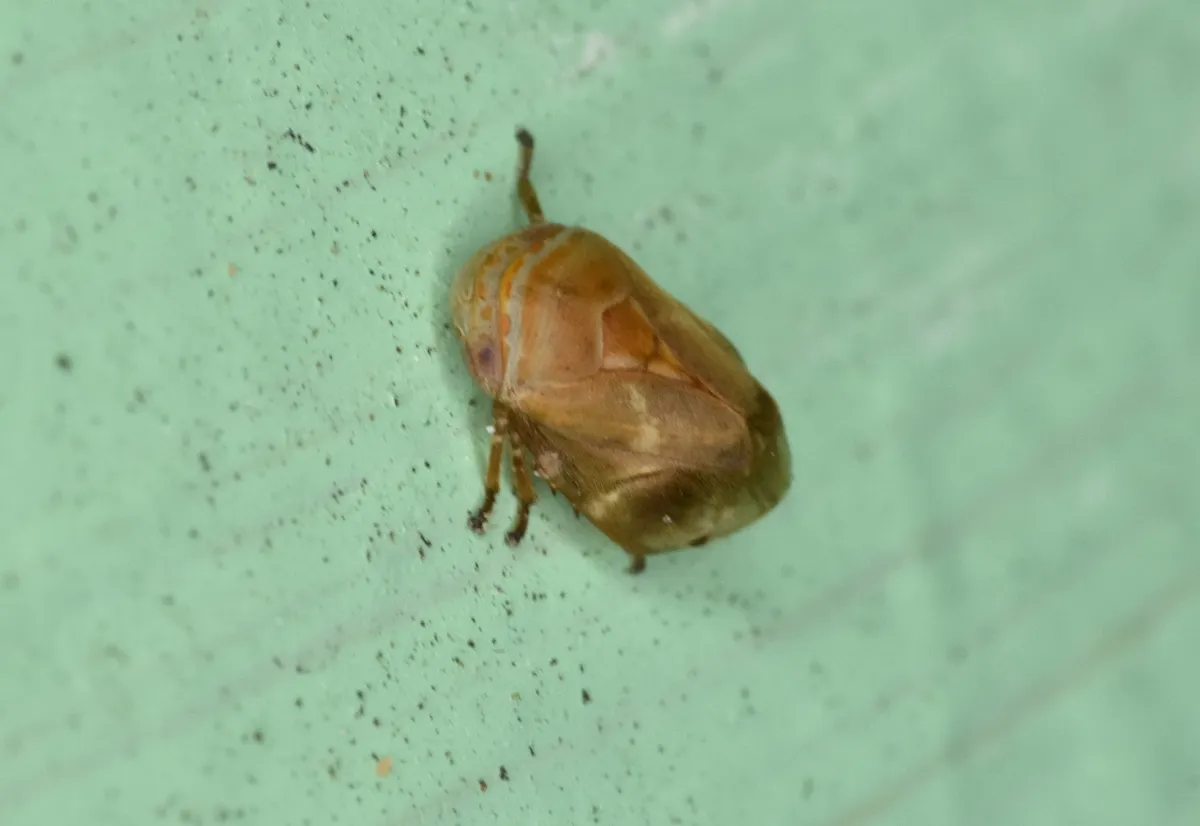
Oak Spittlebug
Clastoptera querci
This species was just described (Sept. 25, 2020). This species showed up in Florida about a decade ago, possibly from Cuba. Primary hosts are oak for nymphs and adults. The red markings on the vertex and anterior pronotum are distinctive, as is the g
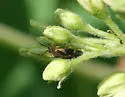
Obscure Plant Bug
Plagiognathus obscurus
Identification: Base of corium pale and at least basal portion of cuneus usually pale (fig. 10: obscurus 1, 2), a pattern of coloration also occurring in several other large, widespread, frequently collected species of Plagiognathus ; less commonly e
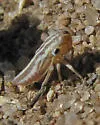
Occidental Sharpshooter
Cuerna occidentalis
Identification: naturalhistory.museumwales.ac.uk/sharpshooters/browserecord.php?-recid=437 This species is externally identical to C. unica (except for female eighth sternites), but is more southern in distribution: southern California and Baja.
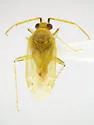
Occidentodema mcfarlandi
Occidentodema mcfarlandi
Identification: "Recognized by the overall pale golden-yellow coloration, the lack of a fuscous spot on the tylus, the numerous, small fuscous spots on the femora, particularly the metafemur, and by the strong fuscous lines along the dorsal margin of
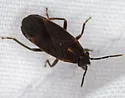
Ochrimnus (Ochrimnus) tripligatus
Ochrimnus tripligatus
Identification: a rather dark sp. with membrane uniformly black, lacking pale margins member of the nominate subgenus (2 spp. in our area, 8 total; FL, the Caribbean, Mesoamerica)
Ochrimnus (Phaeochrimnus) mimulus
Ochrimnus mimulus
Identification: Dorsum of head yellow on either side of midline in front of eyes; femora brown with base and apex pale yellow Det. Iustin Cret, 2019 our only representative of the subgenus Phaeochrimnus (9 spp., se. US to Brazil)
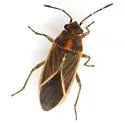
Ochrimnus carnosulus
Ochrimnus carnosulus
Identification: "color on the costa invades the nervures" Det. Michael Pirrello, 2021 Type Locality: San Diego, Calif.
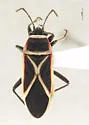
Ochrostomus pulchellus
Ochrostomus pulchellus
Identification: habitus photos First US record from Key Largo, FL
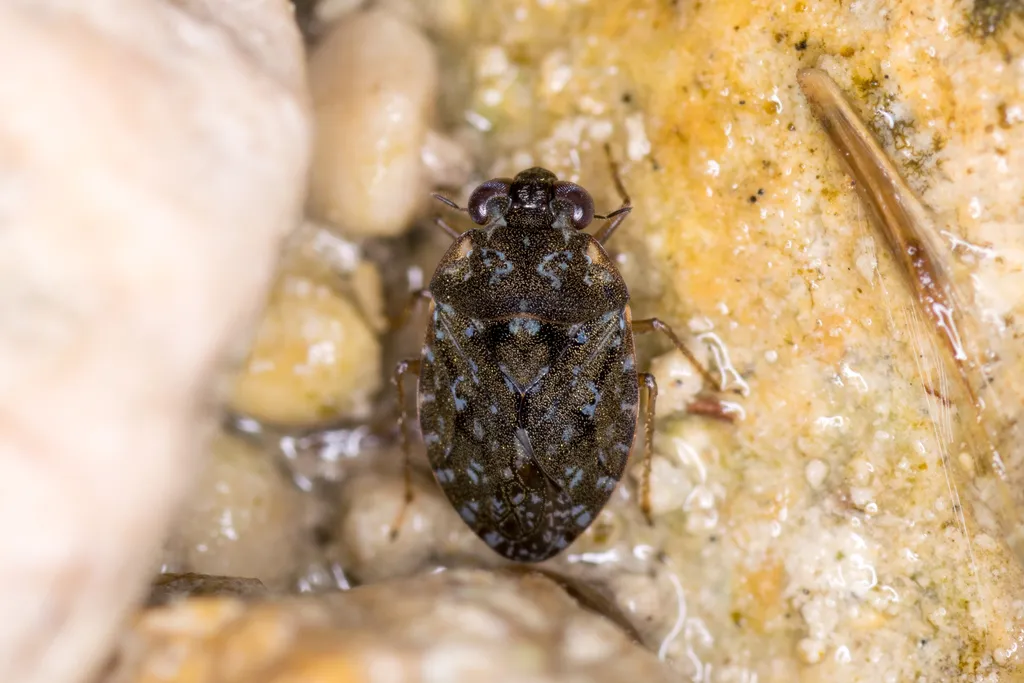
Ochterus banksi
Ochterus banksi
Identification: pronotal collar smooth, lacking teeth; lobe present near inner side of the flattened part of pronotum
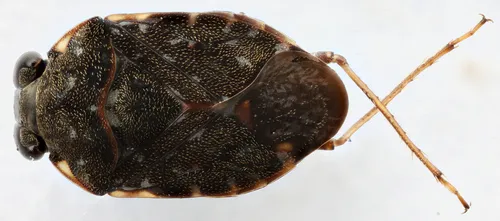
Ochterus perbosci
Ochterus perbosci
Identification: Anterior angles of pronotum with pointed projections; a series of yellow spots run along the edge of the hemelytra
Ochterus rotundus 0
Ochterus rotundus
Identification: easily recognized by the combination of: rotund, broadly ovate body; brilliant green frons with purple overtones; and broadly orange brown hemelytral margins, each with 6 prominent transverse lavender flecks
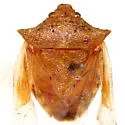
Odmalea schaefferi
Odmalea schaefferi
Identification: spmns should have distinct black spots on the scutellum at the apex of the frenum, and usually black spots on the basal angles of the scutellum. (D. Rider, pers. comm.) pale impunctate area on the forewing (D.B. Thomas, pers. comm.) T
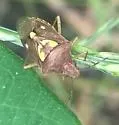
Oebalus insularis
Oebalus insularis
Identification: O. insularis vs O. ypsilongriseus : " O. ypsilongriseus has a second segment that is shorter than and hardly articulated on the third. O. insularis has a normal length second segment which is nearly as long as the third and generally
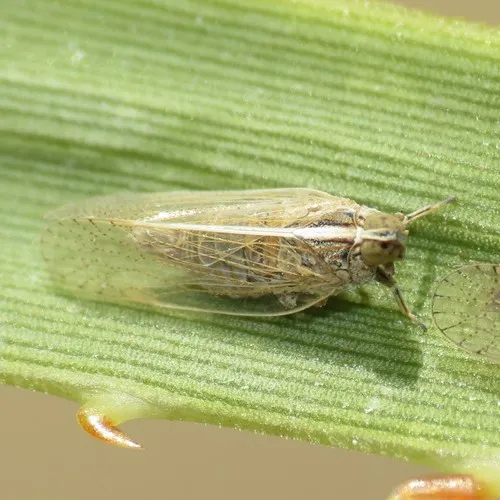
Oecleus nolinus
Oecleus nolinus
Identification: "Kramer, who did an excellent revision of the US Cixiidae from about 1977 to 1983, except that one has to use genitalia to identify anything (but then it is pretty sure to be correct), says Oecleus nolinus , with holotype from Tucson,
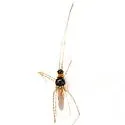
Oedalocanthus ornatus
Oedalocanthus ornatus
Identification: distinguished from all other berytids by the white, rounded and conical tubercles on the anterior and basal edges of the pronotal lobe. (Henry, 1996) AZ record based on one spmn coll'ed @ Rustler's Park, ca. 8000', Cochise Co., 3-IX-1
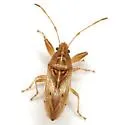
Oedancala bimaculata 0
Oedancala bimaculata
Type Locality: Panama first reported for the US ("Tex.") by Banks (1910) ( 3 ) , Van Duzee (1917) repeated the record, but with a questionmark ("Texas(?)")[cite:2469147,175], the record was then accepted (or even confirmed?) by Slater (1964) ( 4 )
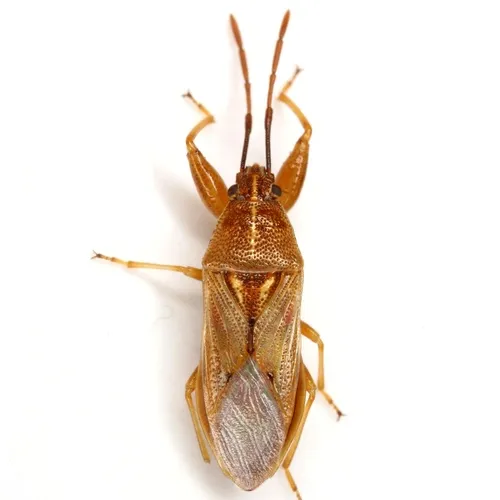
Oedancala crassimana
Oedancala crassimana
Identification: apical corial margin with dark spot, sometimes faint ( vs immaculate in other spp.)