
Nysius huttoni
This record describes Nysius huttoni (species). Recorded family: Lygaeidae. Recorded order: Hemiptera.
Identification and Appearance
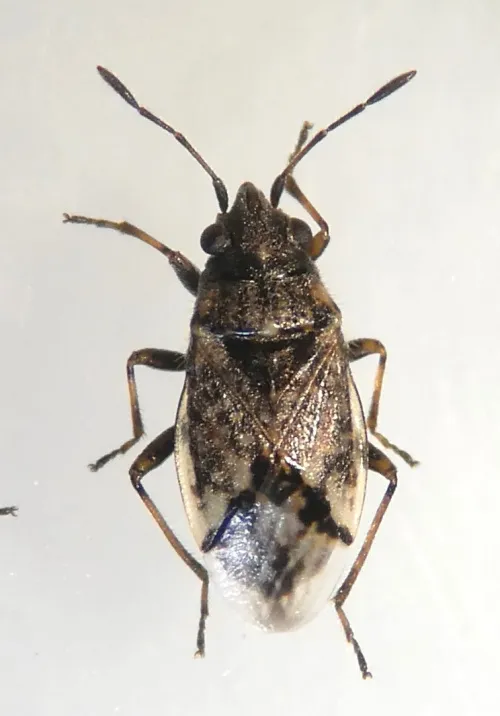
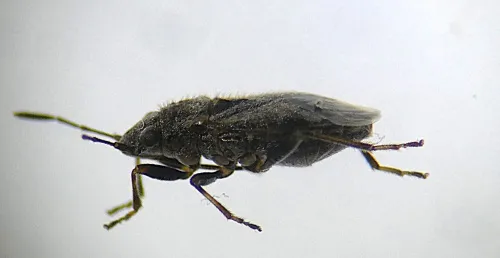
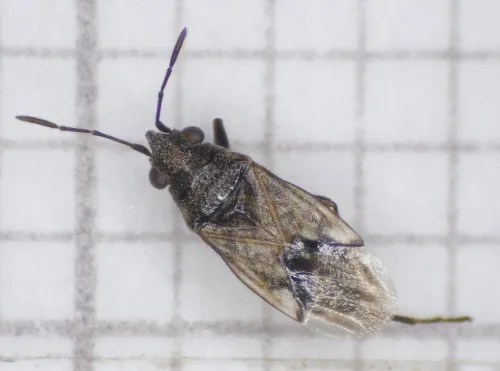
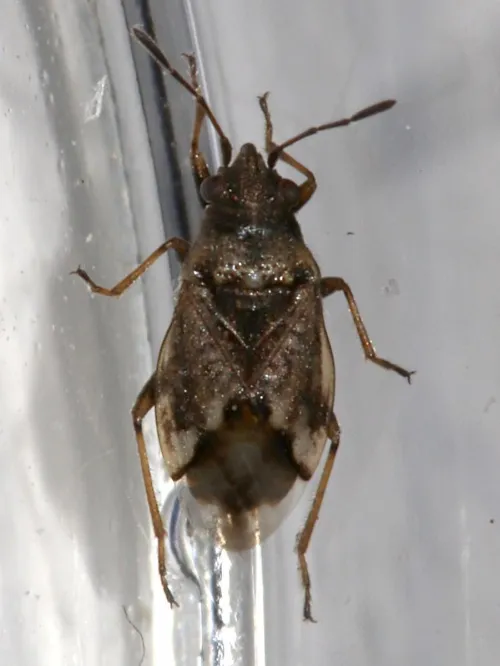
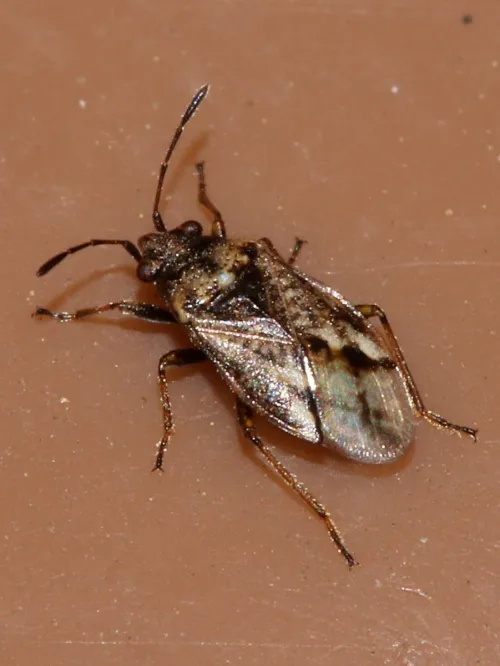
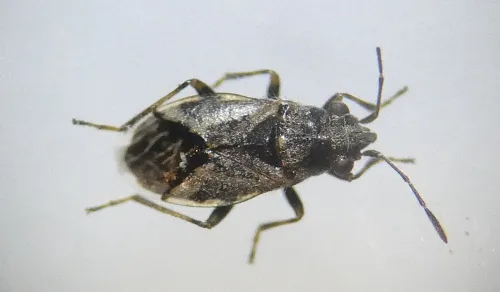
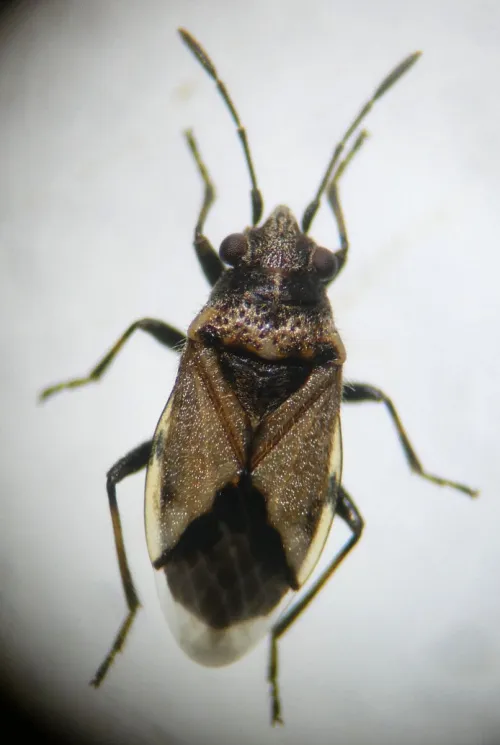
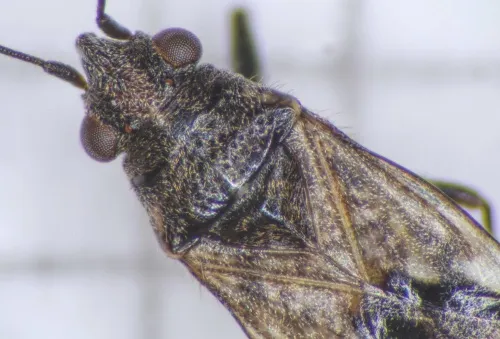
Length 2.5 to 4 mm. The adults often have a broad or squat outline and they have long erect hairs covering the pronotum and forewings. Long erect hairs on pronotum and forewings We recommend that a specimen is examined and photographed. The diagnostic long erect hairs can be difficult to see in a field photograph. Bare ground, dry grassland, arable land. The species has a wide host range, including cultivated crops such as wheat, oats, barley and brassicas, plus various grass and clover species. In its native New Zealand it is considered to be a pest species of wheat and mustard crops in hot summers. Native to New Zealand, but a recent arrival in Britain from Europe. It has spread rapidly in the UK since 2010. https://www.britishbugs.org.uk/heteroptera/Lygaeidae/Nysius_huttoni.html No additional images available for this species.
Classification
Habitat and Range
Habitat
Bare ground, dry grassland, arable land. The species has a wide host range, including cultivated crops such as wheat, oats, barley and brassicas, plus various grass and clover species. In its native New Zealand it is considered to be a pest species of wheat and mustard crops in hot summers.
Seasonal Activity
All year
Additional species information
Recorded status
Native to New Zealand, but a recent arrival in Britain from Europe. It has spread rapidly in the UK since 2010.
About True Bugs, Cicadas, Hoppers, Aphids and Allies: the wider group
Order-level background for Hemiptera, the group containing Nysius huttoni. Species-specific details appear above.
Group overview
Hemiptera (true bugs) includes over 80,000 described species across cicadas, aphids, leafhoppers, shield bugs, and bed bugs. Aphids alone cost global agriculture an estimated $2.5 billion annually in crop losses.
Ecological role of the group
Many Hemiptera are essential food sources for birds and predatory insects. Cicadas provide massive nutrient pulses during emergence events - a single Brood X emergence can involve trillions of individuals across 15 states.
Economic and practical significance of the group
The brown marmorated stink bug (Halyomorpha halys) caused $37 million in apple crop losses in a single year in the U.S. Mid-Atlantic region. Bed bug infestations in the U.S. increased by 500% between 2001-2010, costing the hotel industry hundreds of millions annually.
Recorded sources for this group: USDA, EPA, University research. Imported estimates may describe particular regions or reporting periods.
Photos of Nysius huttoni (9)
Frequently Asked Questions About Nysius huttoni
What is Nysius huttoni?
Nysius huttoni is a species in the family Lygaeidae, within the order Hemiptera.
How big is Nysius huttoni?
2.5 to 4 mm. The adults often have a broad or squat outline and they have long erect hairs covering the pronotum and forewings.
Where is Nysius huttoni found?
Habitat: Bare ground, dry grassland, arable land. The species has a wide host range, including cultivated crops such as wheat, oats, barley and brassicas, plus various grass and clover species. In its native New Zealand it is considered to be a pest species of wheat and mustard crops in hot summers.
When is Nysius huttoni active?
Nysius huttoni: seasonal activity - All year.