
Melaphis asafitchi
This record describes Melaphis asafitchi (species). Recorded family: Aphididae. Recorded order: Hemiptera.
Identification and Appearance
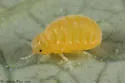
From InfluentialPoints , It is possible to distinguish between two of the species in the Melaphis rhois species group ( Melaphis rhois and Melaphis asafitchi ) when they are on the primary host. For Melaphis rhois the length of the apical rostral segment (RIV+V) of adult apterae on Rhus is 68 µm long (cf. Melaphis asafitchi on Rhus , which has RIV+V of adult apterae 68 µm long). From Foottit & Maw, the apical rostral segment of the adult winged female is 65 µm to 80 µm for M. rhois and 56 µm to 65 µm for M. asafitchi . . Foottit & Maw provide additional complex functions to discriminate most individuals of generations on Rhus from M. rhois , but a definitive diagnosis is only possible using mitochondrial COI-5P sequence. Moss-feeding populations cannot currently be discriminated from those of M. rhois . It causes no significant damage to the host plants.
Classification
- Kingdom
- Animalia
- Phylum
- Arthropoda
- Class
- Insecta
- Order
- Hemiptera (True Bugs, Cicadas, Hoppers, Aphids and Allies)
- Suborder
- Sternorrhyncha
- Superfamily
- Aphidoidea
- Family
- Aphididae (Aphids)
- Subfamily
- Eriosomatinae
- Tribe
- Fordini
- Genus
- Melaphis
Imported taxonomy record. Source availability varies; see the source references and editorial policy below.
Habitat and Range
Habitat
The interior surface of large globular leaf galls up to 50 mm long.
Geographic Range
From Gallformers , "[ M. asafitchi only]: Canada: southern Ontario, southern Québec, Nova Scotia (confirmed by COI-5P sequence); New Brunswick (based on morphology). United States of America: Pennsylvania, Washington (confirmed by COI-5P sequence); Illinois, Maine, Maryland, Minnesota, New York (based on morphology). " However, "The southern extent of the distribution of M. asafitchi is not yet known" (See Claude Pilon's comment on his M. asafitchi submission ).
Diet and Behavior
Life History
From InfluentialPoints , Rhus glabra (Smooth Sumac) and R. typhina (Staghorn Sumac) are its primary host in our range. Winged adults migrate to mosses in mid-September.
About True Bugs, Cicadas, Hoppers, Aphids and Allies: the wider group
Order-level background for Hemiptera, the group containing Melaphis asafitchi. Species-specific details appear above.
Group overview
Hemiptera (true bugs) includes over 80,000 described species across cicadas, aphids, leafhoppers, shield bugs, and bed bugs. Aphids alone cost global agriculture an estimated $2.5 billion annually in crop losses.
Ecological role of the group
Many Hemiptera are essential food sources for birds and predatory insects. Cicadas provide massive nutrient pulses during emergence events - a single Brood X emergence can involve trillions of individuals across 15 states.
Economic and practical significance of the group
The brown marmorated stink bug (Halyomorpha halys) caused $37 million in apple crop losses in a single year in the U.S. Mid-Atlantic region. Bed bug infestations in the U.S. increased by 500% between 2001-2010, costing the hotel industry hundreds of millions annually.
Recorded sources for this group: USDA, EPA, University research. Imported estimates may describe particular regions or reporting periods.
Photos of Melaphis asafitchi (5)
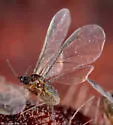
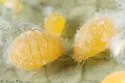
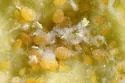
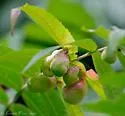
Photo credits: Contributed by Claude Pilon; Additional contributions by Edward Ruden
Frequently Asked Questions About Melaphis asafitchi
What is Melaphis asafitchi?
Melaphis asafitchi is a species in the family Aphididae, within the order Hemiptera.
How do you identify Melaphis asafitchi?
From InfluentialPoints , It is possible to distinguish between two of the species in the Melaphis rhois species group ( Melaphis rhois and Melaphis asafitchi ) when they are on the primary host. For Melaphis rhois the length of the apical rostral segment (RIV+V) of adult apterae on Rhus is 68 µm long (cf. Melaphis asafitchi on Rhus , which has RIV+V of adult apterae 68 µm long). From Foottit & Maw, the apical rostral segment of the adult winged female is 65 µm to 80 µm for M. rhois and 56 µm to 65 µm for M. asafitchi . . Foottit & Maw provide additional complex functions to discriminate most individuals of generations on Rhus from M. rhois , but a definitive diagnosis is only possible using mitochondrial COI-5P sequence. Moss-feeding populations cannot currently be discriminated from those of M. rhois .
Where is Melaphis asafitchi found?
| Feature | Details |
|---|---|
| Habitat | The interior surface of large globular leaf galls up to 50 mm long. |
| Range | From Gallformers , [ M. asafitchi only]: Canada: southern Ontario, southern Québec, Nova Scotia (confirmed by COI-5P sequence); New Brunswick (based on morphology). United States of America: Pennsylvania, Washington (confirmed by COI-5P sequence); Illinois, Maine, Maryland, Minnesota, New York (based on morphology). However, The southern extent of the distribution of M. asafitchi is not yet known (See Claude Pilon's comment on his M. asafitchi submission ). |
What is the life cycle of a Melaphis asafitchi?
From InfluentialPoints , Rhus glabra (Smooth Sumac) and R. typhina (Staghorn Sumac) are its primary host in our range. Winged adults migrate to mosses in mid-September.