
Moore's Cactus Dodger
Cacama moorei
This record describes Cacama moorei (species). Recorded family: Cicadidae. Recorded order: Hemiptera.
Identification and Appearance
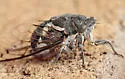
Male opercula primarily orange, reaching to sternite IV, ventral surface orange, rostrum reaching to middle of posterior coxae, found in the Sonoran Desert (Fig. 3). . . . . . . . . . . . . . . . . . . . . . . . . . . . . . . . . . . . . . . . . . . C. moorei Sanborn and Heath sp. n. Note - the venter in both genders is heavily pruinose, but the sternites, males' opercula and ventral exoskeleton are typically orange in color as described above. The call is a metallic chatter. initially identified as C. valvata but later identified from collected material as C. moorei Video courtesy of EB! Thanks for such a great video and recording!
Classification
- Kingdom
- Animalia
- Phylum
- Arthropoda
- Class
- Insecta
- Order
- Hemiptera (True Bugs, Cicadas, Hoppers, Aphids and Allies)
- Suborder
- Auchenorrhyncha
- Superfamily
- Cicadoidea
- Family
- Cicadidae (Cicadas)
- Subfamily
- Cicadinae
- Tribe
- Tacuini
- Genus
- Cacama (Cactus Dodgers)
Imported taxonomy record. Source availability varies; see the source references and editorial policy below.
Habitat and Range
Habitat
Scrub & desert
Geographic Range
USA, Arizona: found across the state of Arizona running in a wide band from the Mexican border north across the state to nr. the Nevada & Utah borders (Map in Sanborn's paper) MEXICO: n. Mexico ("Sonoran Desert") Type series. Holotype male UNITED STATES: “ARIZONA Pima County / Catalina Mtns. Mt. Lemmon / Babat Duag Vista Pt. / 24 June 1998 / A. Sanborn, coll. 1” (FSCA).
Diet and Behavior
Diet: Cacti (opuntia?)
Additional species information
Species notes from the sources
Etymology: Cacama moorei sp. n. Sanborn & M. Heath (Fig. 3) Cacama dissimilis Davis 1919: 70, 71, 76, 79, Plate XIV fig. 2 (misidentified). Cacama dissimilis Beamer and Beamer 1930: 297–298 (misidentified). Cacama n. sp. 2 Sanborn and Phillips 1995: 481. Etymology. The species is named in honor of Thomas E. Moore for his long commitment to the study of North American cicadas. Type series. Holotype male UNITED STATES: “ARIZONA Pima County / Catalina Mtns. Mt. Lemmon / Babat Duag Vista Pt. / 24 June 1998 / A. Sanborn, coll. 1” (FSCA).
About True Bugs, Cicadas, Hoppers, Aphids and Allies: the wider group
Order-level background for Hemiptera, the group containing Cacama moorei. Species-specific details appear above.
Group overview
Hemiptera (true bugs) includes over 80,000 described species across cicadas, aphids, leafhoppers, shield bugs, and bed bugs. Aphids alone cost global agriculture an estimated $2.5 billion annually in crop losses.
Ecological role of the group
Many Hemiptera are essential food sources for birds and predatory insects. Cicadas provide massive nutrient pulses during emergence events - a single Brood X emergence can involve trillions of individuals across 15 states.
Economic and practical significance of the group
The brown marmorated stink bug (Halyomorpha halys) caused $37 million in apple crop losses in a single year in the U.S. Mid-Atlantic region. Bed bug infestations in the U.S. increased by 500% between 2001-2010, costing the hotel industry hundreds of millions annually.
Recorded sources for this group: USDA, EPA, University research. Imported estimates may describe particular regions or reporting periods.
Photos of Moore's Cactus Dodger (5)
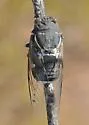
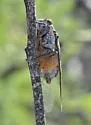
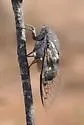
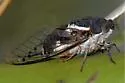
Photo credits: Contributed by Bill Reynolds; Additional contributions by David Ferguson
Frequently Asked Questions About Moore's Cactus Dodger
What is Moore's Cactus Dodger?
Moore's Cactus Dodger (Cacama moorei) is a species in the family Cicadidae, within the order Hemiptera.
How do you identify Moore's Cactus Dodger?
Male opercula primarily orange, reaching to sternite IV, ventral surface orange, rostrum reaching to middle of posterior coxae, found in the Sonoran Desert (Fig. 3). . . . . . . . . . . . . . . . . . . . . . . . . . . . . . . . . . . . . . . . . . . C. moorei Sanborn and Heath sp. n. Note - the venter in both genders is heavily pruinose, but the sternites, males' opercula and ventral exoskeleton are typically orange in color as described above. The call is a metallic chatter. initially identified as C. valvata but later identified from collected material as C. moorei Video courtesy of EB! Thanks for such a great video and recording!
Where is Moore's Cactus Dodger found?
| Feature | Details |
|---|---|
| Habitat | Scrub & desert |
| Range | USA, Arizona: found across the state of Arizona running in a wide band from the Mexican border north across the state to nr. the Nevada & Utah borders (Map in Sanborn's paper) MEXICO: n. Mexico (Sonoran Desert) Type series. Holotype male UNITED STATES: ARIZONA Pima County / Catalina Mtns. Mt. Lemmon / Babat Duag Vista Pt. / 24 June 1998 / A. Sanborn, coll. 1” (FSCA). |
What does Moore's Cactus Dodger eat?
The diet of the Moore's Cactus Dodger includes Cacti (opuntia?).