
Microvelia reticulata
This record describes Microvelia reticulata (species). Recorded family: Veliidae. Recorded order: Hemiptera.
Identification and Appearance
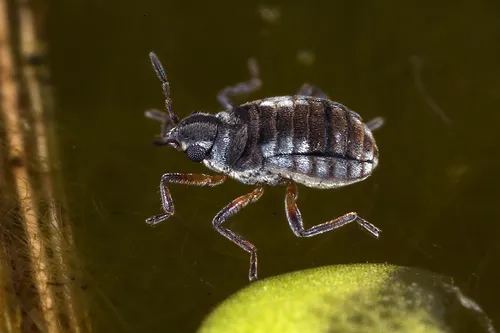
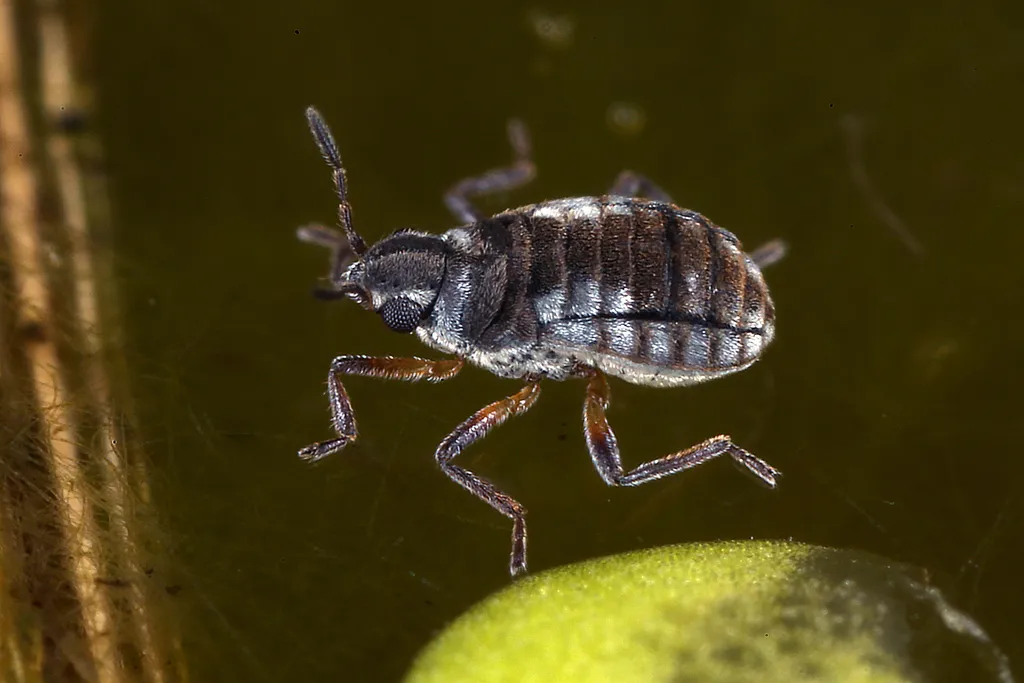
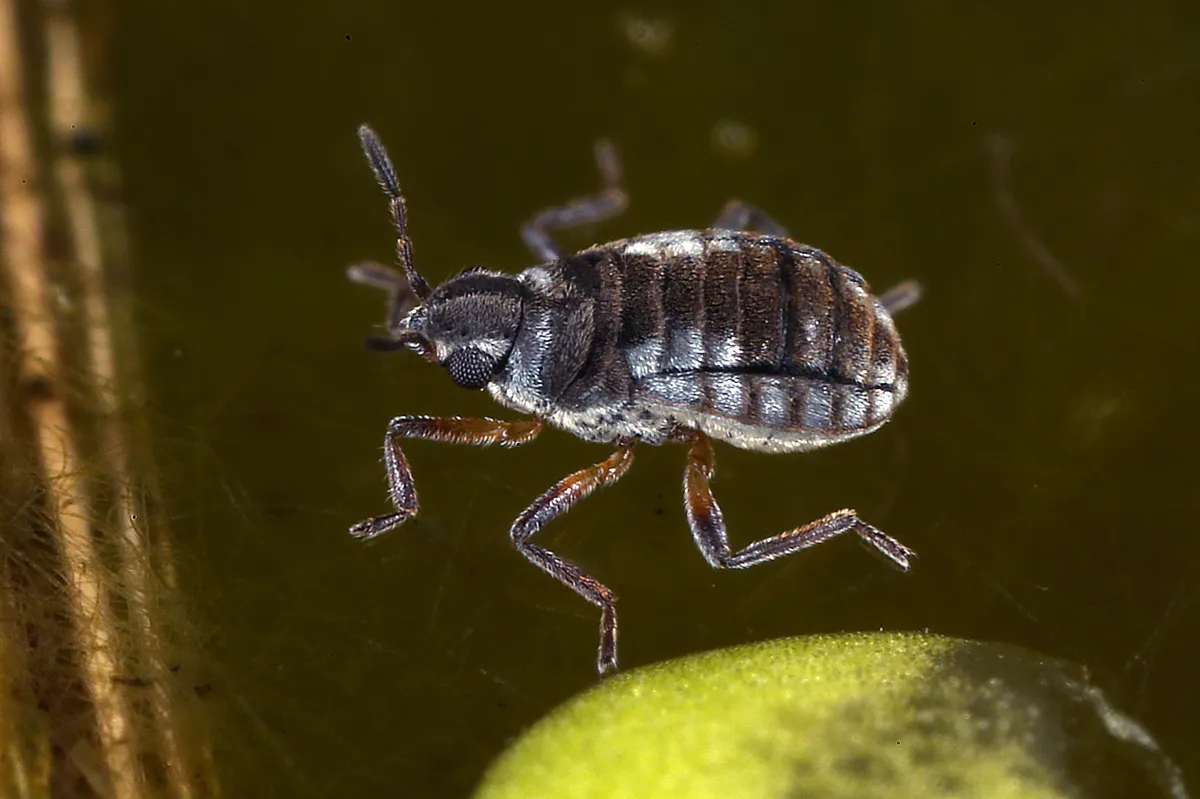
This very small (less than 2 mm) semi aquatic bug is a member of the Water Cricket family with a silvery appearance. It can walk or swim rapidly over the surface of ponds and lakes. This is made possible by a covering of fine water-repellent hairs over the body and legs, which allows the weight of the insect to be supported by the surface tension of the water. The dense covering of hairs gives these bugs a matt or velvety appearance. Often found in vegetation at margins of freshwater habitats. Microvelia mate throughout the summer and lay their eggs in rows on floating plants. The very small larvae become adult after five instars. The adults are predators of many small insects. Widespread and fairly frequent in Britain.
Wikipedia reference for Microvelia reticulata: https://en.wikipedia.org/wiki/Microvelia_reticulata.
Classification
Habitat and Range
Habitat
Often found in vegetation at margins of freshwater habitats.
Seasonal Activity
All year round.
Diet and Behavior
Life History
Microvelia mate throughout the summer and lay their eggs in rows on floating plants. The very small larvae become adult after five instars. The adults are predators of many small insects.
Additional species information
Recorded status
Widespread and fairly frequent in Britain.
About True Bugs, Cicadas, Hoppers, Aphids and Allies: the wider group
Order-level background for Hemiptera, the group containing Microvelia reticulata. Species-specific details appear above.
Group overview
Hemiptera (true bugs) includes over 80,000 described species across cicadas, aphids, leafhoppers, shield bugs, and bed bugs. Aphids alone cost global agriculture an estimated $2.5 billion annually in crop losses.
Ecological role of the group
Many Hemiptera are essential food sources for birds and predatory insects. Cicadas provide massive nutrient pulses during emergence events - a single Brood X emergence can involve trillions of individuals across 15 states.
Economic and practical significance of the group
The brown marmorated stink bug (Halyomorpha halys) caused $37 million in apple crop losses in a single year in the U.S. Mid-Atlantic region. Bed bug infestations in the U.S. increased by 500% between 2001-2010, costing the hotel industry hundreds of millions annually.
Recorded sources for this group: USDA, EPA, University research. Imported estimates may describe particular regions or reporting periods.
Photos of Microvelia reticulata (3)
Frequently Asked Questions About Microvelia reticulata
What is Microvelia reticulata?
Microvelia reticulata is a species in the family Veliidae, within the order Hemiptera.
Where is Microvelia reticulata found?
Habitat: Often found in vegetation at margins of freshwater habitats.
When is Microvelia reticulata active?
Microvelia reticulata: seasonal activity - All year round..
What is the life cycle of a Microvelia reticulata?
Microvelia mate throughout the summer and lay their eggs in rows on floating plants. The very small larvae become adult after five instars. The adults are predators of many small insects.