
Acadian Hairstreak - Hodges#4278
Satyrium acadicum
This record describes Satyrium acadicum (species). Recorded family: Lycaenidae. Recorded order: Lepidoptera.
Identification and Appearance
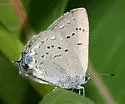
Generally considered to be uncommon, but can be quite abundant in some regions and in some years, always in close association with Willows. Adults rarely wonder far from their larval host Willows.
Classification
- Kingdom
- Animalia
- Phylum
- Arthropoda
- Class
- Insecta
- Order
- Lepidoptera (Butterflies and Moths)
- Superfamily
- Papilionoidea
- Family
- Lycaenidae (Blues, Coppers, Hairstreaks, Harvesters)
- Subfamily
- Theclinae
- Tribe
- Eumaeini
- Genus
- Satyrium
Imported taxonomy record. Source availability varies; see the source references and editorial policy below.
Habitat and Range
Habitat
Damp areas with Willows.
Geographic Range
Northern half of the US and southernmost Canada, from the east coast to the east base of the Rockies.
Seasonal Activity
1 brood, flies early summer, June to early July.
Diet and Behavior
Diet: Larval hosts include a variety of Willows ( Salix species). Adults are avid visitors of a variety of flowers, with Milkweeds ( Asclepias species) and Dogbanes ( Apocynum species) particularly favored.
Additional species information
Species notes from the sources
Etymology: Western populations are often segregated as subspecies montanensis , but this distinction has been debated. There is no obvious place to divide western from eastern populations (the distribution is broad and continuous), so it is difficult to decide at what point to stop calling them by one name and begin the other. Also, differences are difficult to quantify, and quoted distinctions do not seem to hold up to scrutiny (western specimens do not seem to be reliably separable from eastern based on any combination of characters). Western specimens do average paler in color, while northern (occasionally distinguished as subspecies watrini ) seem to average smaller and darker, but not consistently so. Variation seems to be minor and perhaps clinal across the entire distribution of the species, or perhaps might be more related to environmental influence than genetic differences.
About Butterflies and Moths: the wider group
Order-level background for Lepidoptera, the group containing Satyrium acadicum. Species-specific details appear above.
Group overview
Lepidoptera includes approximately 180,000 described species of butterflies and moths. Moths outnumber butterflies roughly 10:1. The monarch butterfly's eastern population has declined by more than 80% since the mid-1990s, and the western population by over 95% since the 1980s. The IUCN lists the migratory monarch as Vulnerable.
Ecological role of the group
Butterflies and moths are essential indicators of ecosystem health. As caterpillars, they are a primary food source for birds - a single nest of blue tit chicks requires ~10,000 caterpillars. Adult moths pollinate many night-blooming plants.
Economic and practical significance of the group
Lepidoptera are critical pollinators. In Europe, grassland butterfly species have declined by almost 50% since the early 1990s. In the UK, three-quarters of butterflies are in decline. In the U.S., five butterfly species have gone extinct since 1950, with 29 listed as endangered.
Recorded sources for this group: IUCN Red List, Xerces Society, USFWS, PNAS, WWF. Imported estimates may describe particular regions or reporting periods.
Photos of Acadian Hairstreak - Hodges#4278 (5)
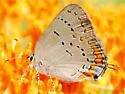
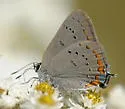
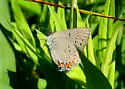
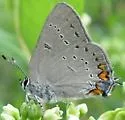
Photo credits: Contributed by Joel Kits; Additional contributions by Steve Nanz , tom murray , Nick Block , David Ferguson , marcie oconnor
Frequently Asked Questions About Acadian Hairstreak - Hodges#4278
What is Acadian Hairstreak - Hodges#4278?
Acadian Hairstreak - Hodges#4278 (Satyrium acadicum) is a species in the family Lycaenidae, within the order Lepidoptera.
How big is Acadian Hairstreak - Hodges#4278?
Medium sized hairstreak, with wingspan of about 30-32mm.
Where is Acadian Hairstreak - Hodges#4278 found?
| Feature | Details |
|---|---|
| Habitat | Damp areas with Willows. |
| Range | Northern half of the US and southernmost Canada, from the east coast to the east base of the Rockies. |
What does Acadian Hairstreak - Hodges#4278 eat?
The diet of the Acadian Hairstreak - Hodges#4278 includes Larval hosts include a variety of Willows ( Salix species). Adults are avid visitors of a variety of flowers, with Milkweeds ( Asclepias species) and Dogbanes ( Apocynum species) particularly favored..
When is Acadian Hairstreak - Hodges#4278 active?
Acadian Hairstreak - Hodges#4278: seasonal activity - 1 brood, flies early summer, June to early July..