
Flies
Order Hymenoptera
The Flies (Order Hymenoptera) includes 5,194 species across 102 families and 1,491 genera in our directory.
About Flies
Hymenoptera includes over 150,000 described species of ants, bees, wasps, and sawflies. Earth harbors approximately 20 quadrillion (20×10^15) ants, with a combined biomass of ~12 megatons of dry carbon - exceeding the combined biomass of all wild birds and mammals (PNAS, 2022).
Economic Impact
Pollinators contribute $235-577 billion worth of annual global food production (FAO). In the U.S., bee pollination alone benefits crops valued at $18 billion annually, and honey bees are responsible for $5.4 billion in agricultural productivity. Between April 2023-2024, 55.1% of managed honey bee colonies were lost. The U.S. bee population dropped from 5 million to 2.5 million.
Ecological Role
About 35% of the world's food crops depend on animal pollinators. The chocolate industry, valued at over $100 billion, depends on pollinating flies and midges. Ants are the dominant soil engineers in most terrestrial ecosystems, turning more soil than earthworms in many habitats.
Families in Hymenoptera (102)
Species in Hymenoptera (5,194)
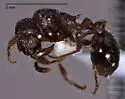
Myrmica tahoensis
Myrmica tahoensis
Identification: Variable in color, recognizable by coarse sculpture.
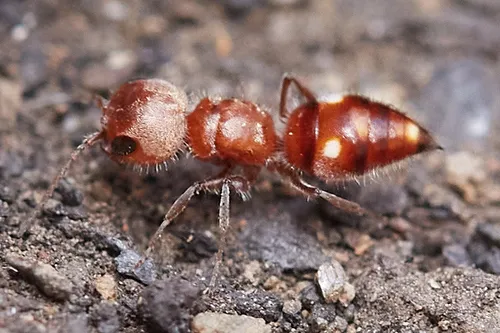
Myrmosula rutilans
Myrmosula rutilans
Identification: The male is quite different in appearance from the female. The one thing that both male and female have in common is the large head (wider than the pronotum).
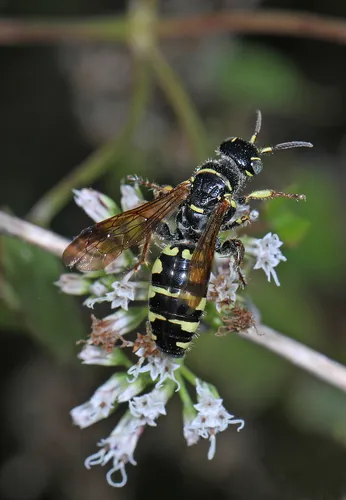
Myzinum carolinianum
Myzinum carolinianum
Identification: Females are identified through the following combination of characters: ♀ ♂ Among the largest-bodied species in NA
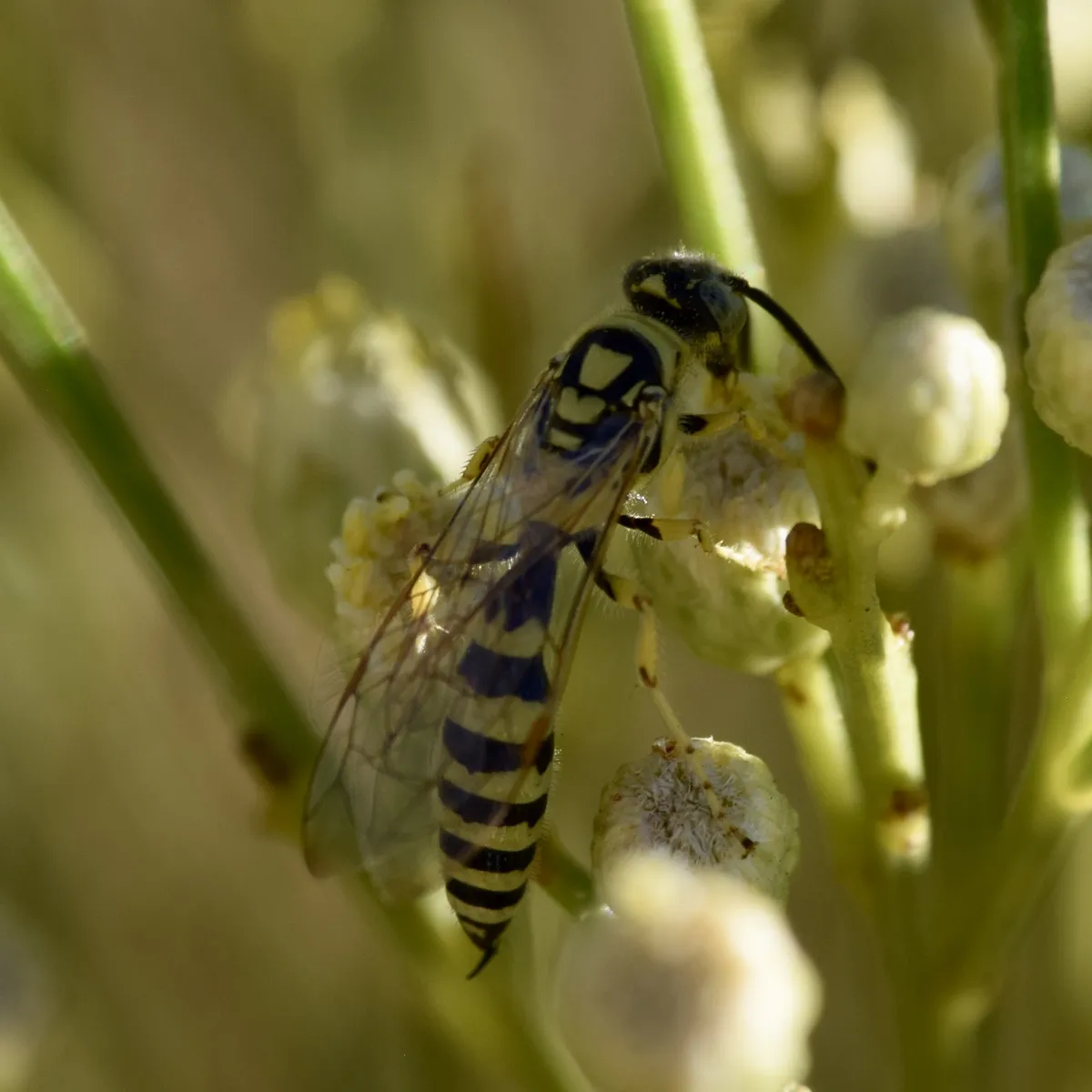
Myzinum frontale
Myzinum frontale
Identification: wings completely clear or lightly yellow ♀ ♂
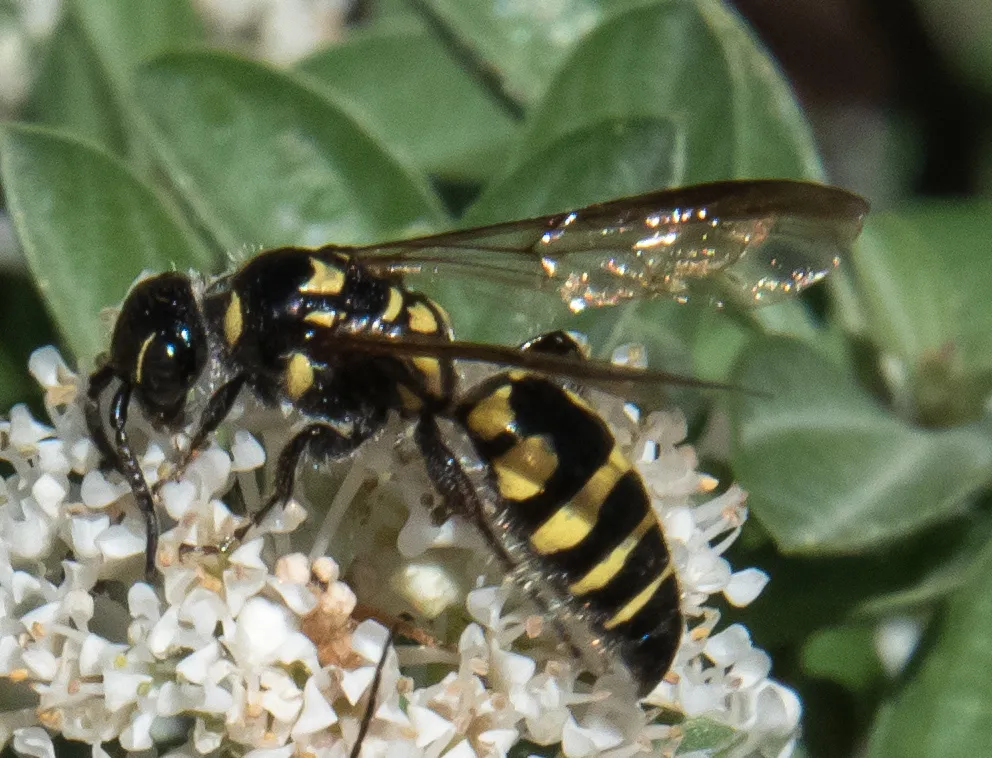
Myzinum maculatum
Myzinum maculatum
Identification: The males have clear wings obfuscate near apex [feature shared with a few other spp.]; female wings are distinctly bicolored. ♂ Det. Arturo Santos, 2020 The leg coloring in females may vary ("little to extensive yellow and reddish mar
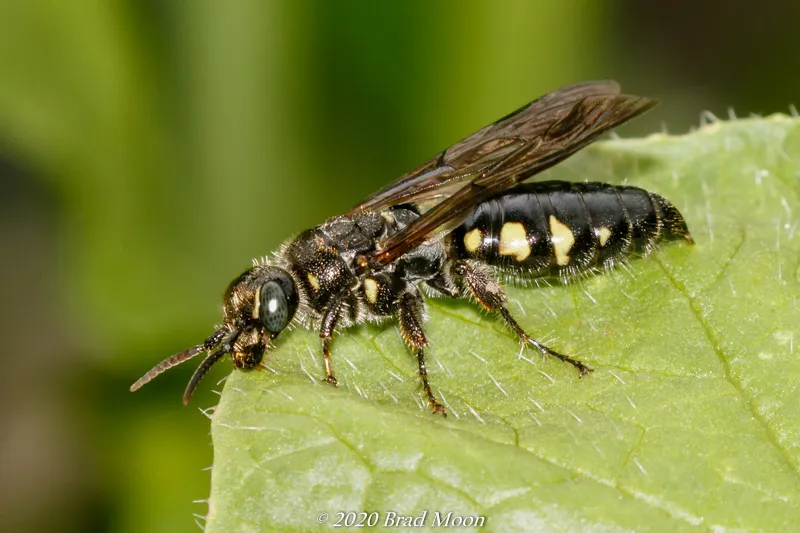
Myzinum obscurum
Myzinum obscurum
Identification: Males have clear wings. (other species share this quality) The yellow abdominal bands are thin. Females are identified through the following combination of characters: ♀ ♂
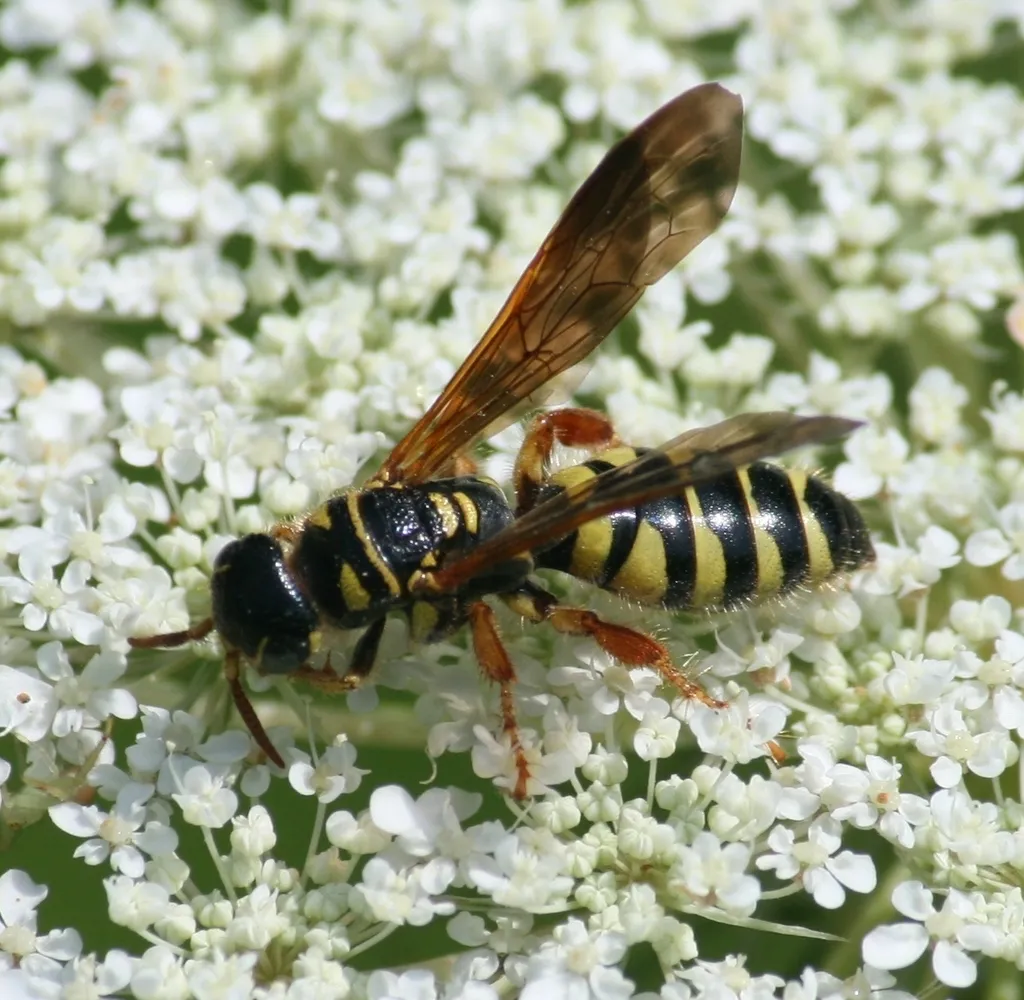
Myzinum quinquecinctum
Myzinum quinquecinctum
Identification: Both genders have the wings darkened evenly overall. Males have brown tinted wings. Females have orange tinted wings. ♂ Females have red antennae, including the flagellum. Sometimes you can see yellow coloring on the scape. ♀
Navajo Paper Wasp
Mischocyttarus navajo
Identification: A primarily black-and-yellow species with restricted ferruginous markings. This species can be separated from the similar and more variable M. flavitarsis by the combination of its darker wings, consistently black T1, and larger size.
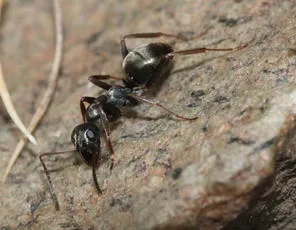
Negro Ant
Formica fusca
This wood ant is dark brown to black in colour. The worker can be up to 6mm long. This species is very similar to Formica lemani , which can be differentiated from F. fusca by the presence of short, stubby hairs on the promesonotal dorsum. Unless ide
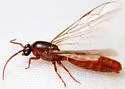
Neivamyrmex harrisii
Neivamyrmex harrisii
Identification: Large Neivamyrmex males with straight mandibles and larger ocelli than similar species ( nigrescens, opacithorax, texanus, carolinensis , and kiowapache ).
Neivamyrmex kiowapache
Neivamyrmex kiowapache
Type Locality: Colorado, Jefferson Co., Red Rock Park, 5.v.1999 (L. Davis); paratypes with same data.
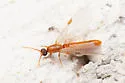
Neivamyrmex melshaemeri
Neivamyrmex melshaemeri
Identification: Small Neivamyrmex species with long curved mandibles, sharp corners on the head behind the eyes, and long hair all over the gaster. This species is most easily confused with Neivamyrmex fuscipennis .
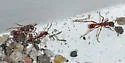
Neivamyrmex nigrescens
Neivamyrmex nigrescens
Identification: The worker is almost uniform dusky red coloring and matte mesosoma (and usually the head) are distinctive; the rear margin of the head scooped out, with acuminate corners. These are rather typical column-raiding army ants, much like t
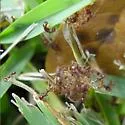
Neivamyrmex opacithorax
Neivamyrmex opacithorax
Identification: The worker is almost has a shiny red head and gaster and weakly-shinging to matte, slightly darker mesosoma; the rear margin of the head is scooped out, with angular but rounded corners. Det. Steven Wang, 2018 These are rather typical
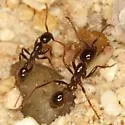
Neivamyrmex pilosus
Neivamyrmex pilosus
Identification: Males are relatively obvious with a clear mandible shot, since they have a convex bump on the inner edge of the mandible (our other Neivamyrmex have uninterrupted concave hoooked mandibles or straight ones). Workers are very shiny and
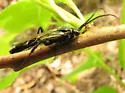
Nematus abbotii
Nematus abbotii
Identification: According to Dave Smith, of the Nematus larvae feeding on black locust, N. tibialis is the green one (may have some small black dots); N. abottii is almost all black.
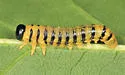
Nematus castaneae
Nematus castaneae
Identification: Key to Species (Larvae and Adults) Apparently rarely seen because various fungal diseases including chestnut blight has significantly reduced the populations of their host, American Chestnut.
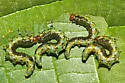
Nematus erythrogaster, or similar
Nematus cf-erythrogaster
These larvae most closely match Nematus erythrogaster among the known alder-feeding sawflies, but more rearing is needed to determine whether there are other similar species.
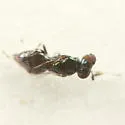
Neochrysocharis diastatae
Neochrysocharis diastatae
"A common species found across North America, and with a very wide host spectrum." (comment from Christer Hansson)
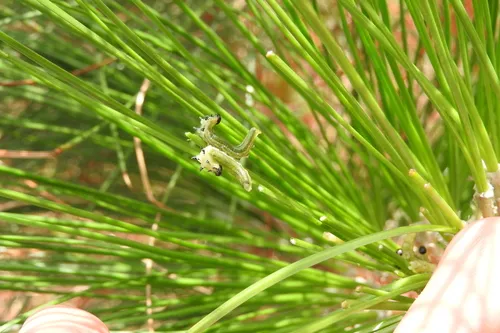
Neodiprion compar
Neodiprion compar
Identification: "Mask and dot on head capsule" -- comment by user clinnen
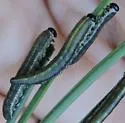
Neodiprion nanulus
Neodiprion nanulus
Identification: Full-grown larvae are dull grayish-green to black on top, greenish-white beneath, and about 18mm long. The head is black and 2 olive-green stripes run down the back to the rear end.
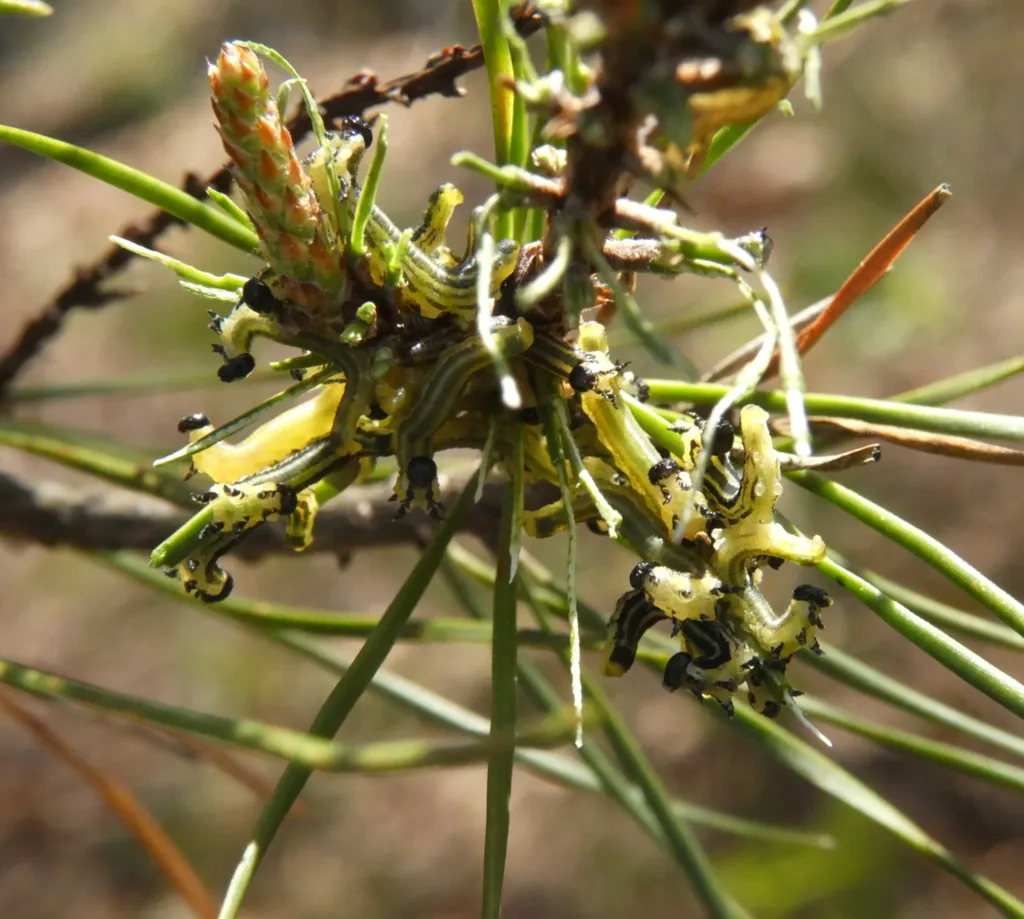
Neodiprion pratti
Neodiprion pratti
Identification: Newly hatched larvae are pale green with black head capsules and are about 3mm long. Full-grown larvae are spotted or marked with longitudinal black stripes. White-footed mice and ants destroy many cocoons in heavy infested areas. Dah
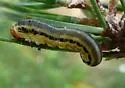
Neodiprion rugifrons
Neodiprion rugifrons
Identification: Full-grown larvae have orange-brown to bright orange heads with black eyespots. The prothorax is yellowish-green to light olive-green with dark markings. A dark lateral strip extends backward along each side from the prothorax to the
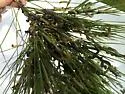
Neodiprion taedae
Neodiprion taedae
There are 2 larval parasites: a fly Hemipenthes sinuosa and a wasp Exenterus canadensis Hemipenthes sinuosa Exenterus canadensis
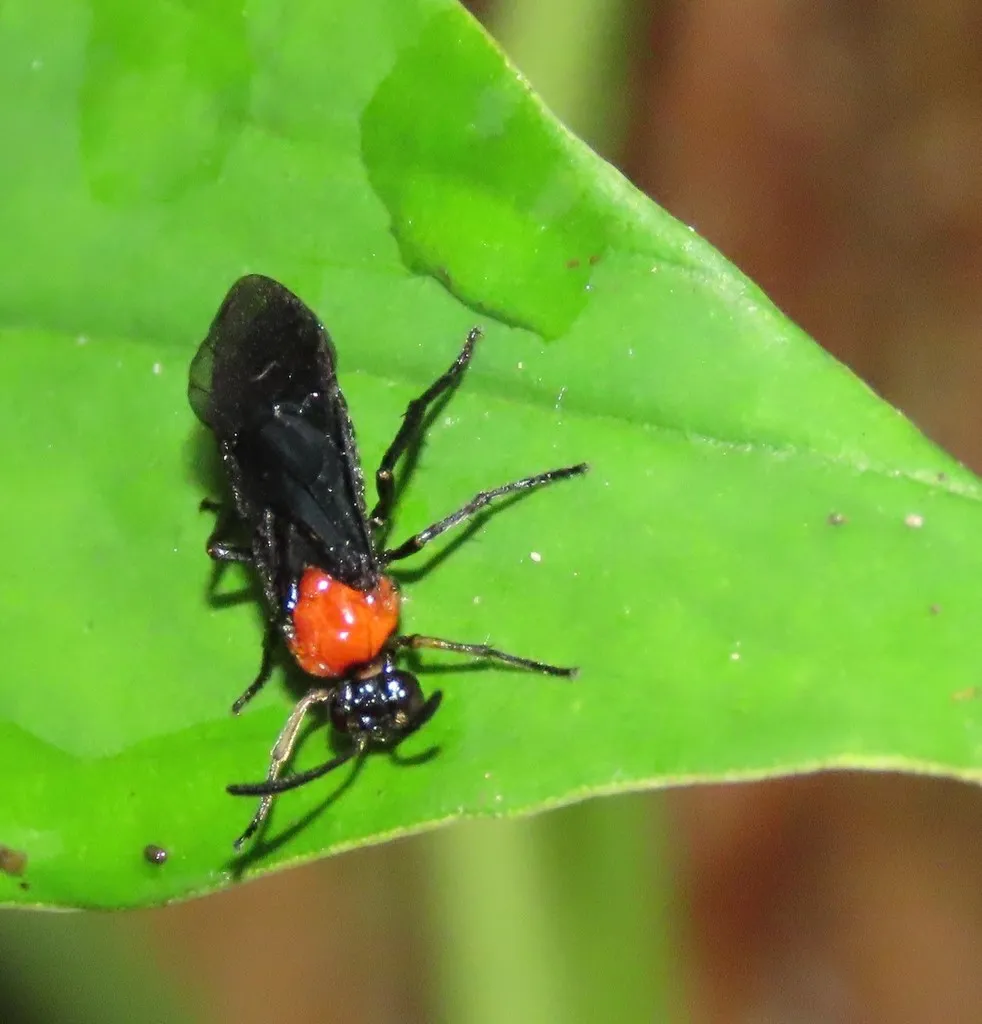
Neoptilia tora
Neoptilia tora
Identification: The youngest larvae are green, not purple. Adult males have forked antennae, photo Type Locality: Maxwell, Caldwell Co., Texas, June 2, 1930 (Maxwell is just e. of San Marcos, TX), also one paratype from San Antonio, Bexar Co., Sept.
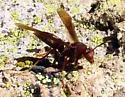
Neotropical Red Paper Wasp
Polistes canadensis
Identification: Very similar to P. major castaneicolor but has the first metasomal segment narrower (in dorsal view)
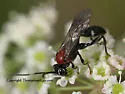
Neotypus nobilitator
Neotypus nobilitator
Identification: ♀ ♂ "The species [...] had been regarded as an invader here, but I wasn't aware of any host records when I did the ichneumonids in the 1979 catalog, but I now find that the Asian subspecies has been reared from Cupido argiades . This
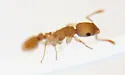
Nesomyrmex wilda
Nesomyrmex wilda
Identification: Looks very similar to Temnothorax and has 3 pairs of blunt spines on the thoracic dorsum. This combination of characters are found in no other US ant.
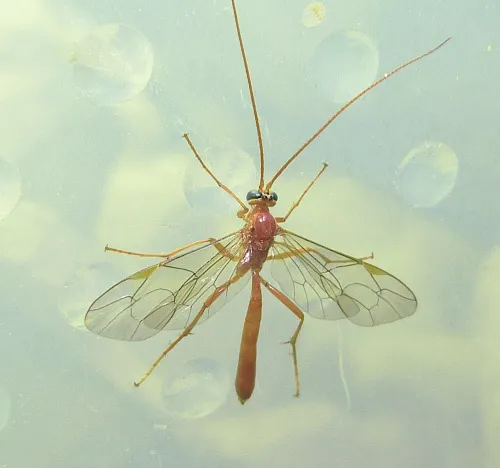
Netelia cristata
Netelia cristata
Variable in size, wing length usually c.14mm but occasionally as small as 8mm. Propodeum with lateral sections of transverse ridges, if these are lacking then with at least a slightly elevated ridge, propodeum medially with faint transverse striation
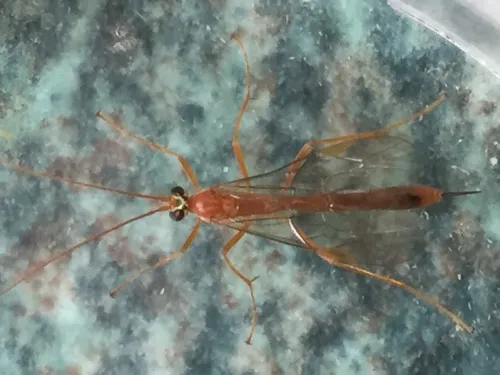
Netelia inedita
Netelia inedita
Netelia can be distinguished from the very similar Ophion species by the presence of an areolet in the wing (a tiny, roughly circular cell). Netelia inedita is a nocturnal ichneumon and is a pale orangey-brown colour including the legs and antennae.
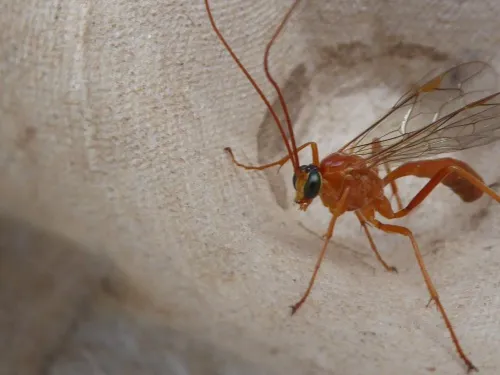
Netelia infractor
Netelia infractor
The genus Netelia can be distinguished from the very similar Ophion species by the present of an areolet in the wing - a tiny, roughly circular cell. Netelia infractor is largely orange and has a black stemmaticum (area between the ocelli) and a rath
Netelia johnsoni
Netelia johnsoni
Identification: Distinguished from other species by the lack of an areolet and lack of occipital carina.
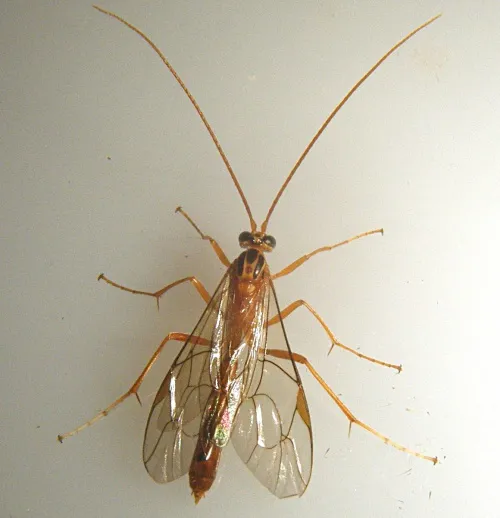
Netelia virgata
Netelia virgata
A medium sized largely orange-brown Ichneumon. The legs, antennae and wing stigmas are all pale orangey-brown in colour. Sometimes drawn to moth traps where its larval food species may occur. Fairly frequent in Britain, though not well recorded. No a
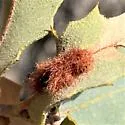
Neuroterus aliceae
Neuroterus aliceae
Identification: Gall. Brown fluffy leaf galls, consisting of an aggregated group of larval chambers ≥ 5 mm across, on midrib on the underside of leaf. Covered in a dense, somewhat woolly, coat of reddish-brown hairs. Similar in structure to Andricus
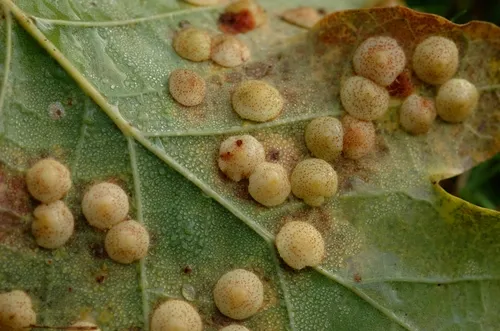
Neuroterus quercusbaccarum
Neuroterus quercusbaccarum
Small (3mm), dark wasps. Asexual females may be abundant during spring emergence. If reared directly from the gall (please include photo of gall) be aware that it may be a parasitoid or inquiline - always check. It must be keyed out and detailed phot
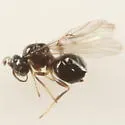
Neuroterus quercusverrucarum
Neuroterus quercusverrucarum
Causes fuzzy, white to brown galls, about 2.5 mm across, on the undersides of leaves of oaks in the white oak group, e.g. white oak ( Quercus alba ), swamp white oak ( Q. bicolor ), overcup oak ( Q. lyrata ), bur oak ( Q. macrocarpa ), dwarf chinquap
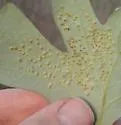
Neuroterus saltarius
Neuroterus saltarius
Forms galls on bur oak ( Quercus macrocarpa ) and swamp white oak ( Q. bicolor ). "After galls drop in June they jump about on the ground for some time as do the related species, Neuroterus saltatorius (Edwards) in Calif." Adults emerge from galls in
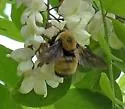
Nevada Bumble Bee
Bombus nevadensis
Identification: Females resemble Bombus morrisoni but usually has fewer yellow hairs on the vertex, a conspicuous spot in the middle of the scutum (formed by a bare area and also black hairs), and a darker hue to the yellow coat.
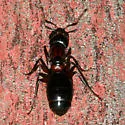
New York Carpenter Ant
Camponotus novaeboracensis
Identification: Relatively shiny, large carpenter ant worker with distinctly red mesosoma is unique over most of its range. In the western part, where it overlaps with C. vicinus , the unkeeled clypeus and relatively shorter limbs are technical chara
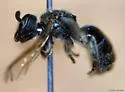
Nightmarish Metallic-Sweat Bee
Lasioglossum ephialtum
Identification: Part of the L. viridatum species-group, which are difficult to separate. Common
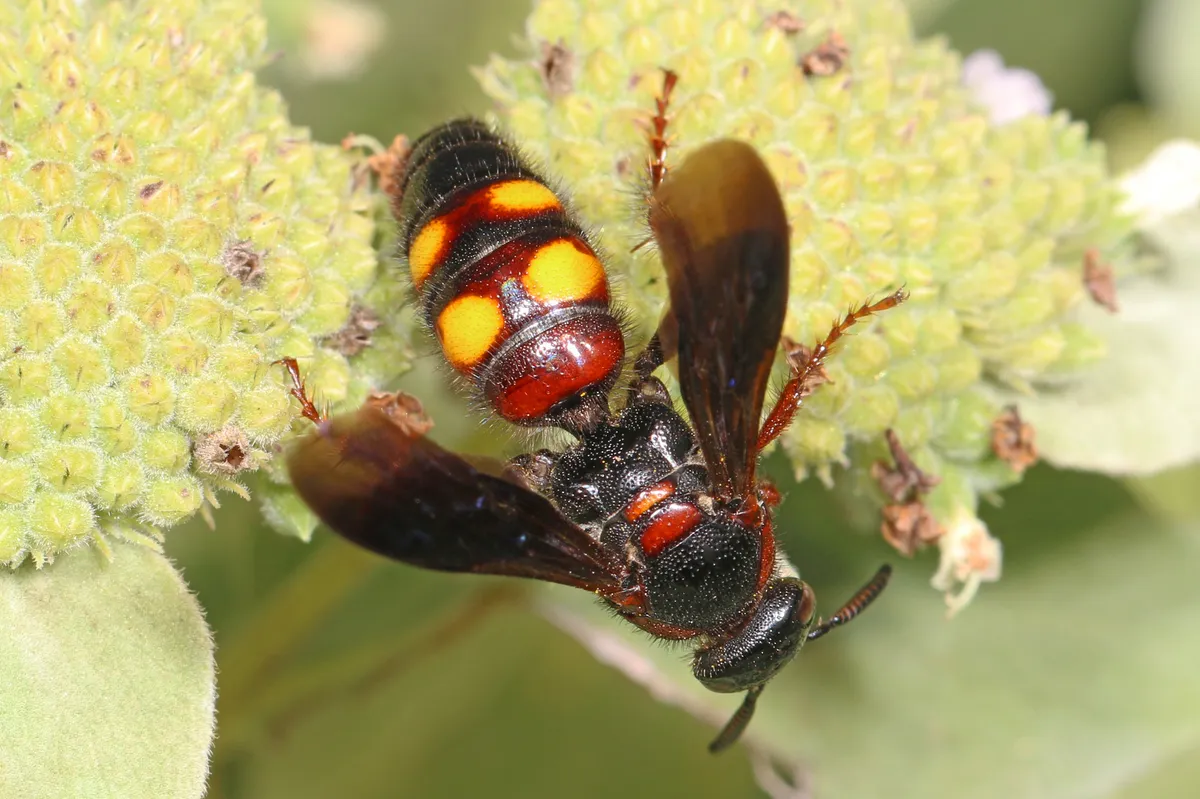
Noble Scoliid Wasp
Scolia nobilitata
Identification: Small scoliid with dark wings and reddish legs; abdomen dark, generally with 4-6 light yellow/orange spots. Overview of Species Subspecies are separated as follows: ( 4 ) ♀ ♂ 1. S. nobilitata nobilitata : wings very smoky, paired spot
Nomada articulata
Nomada articulata
Identification: Abdomen in females all red, no yellow spots
Nomada bella
Nomada bella
Identification: All black scutellum and broad yellow tergal bands (John Ascher) "This species is a cleptoparasite of Andrena (including A. imitatrix I suspect) commonly seen in the New England forest understory in early spring." -- John Ascher
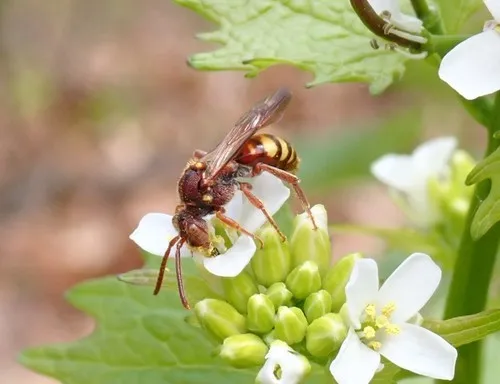
Nomada bethunei
Nomada bethunei
Types: Holotype male by Cockerell, 1903; #2174 and #13159. Locality: Canada (from Baker collection). In U.S. National Museum, Smithsonian - photos. Holotype female as Nomada (Xanthidium) pseudops by Cockerell, 1905 #0000107. Locality: Wisconsin by Gr
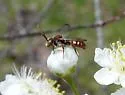
Nomada cuneata sensu Mitchell
Nomada cuneata
Gibbs et al. (2017) reported that the lectotype does not match this species as recognized by Mitchell (1962) and most subsequent authors.
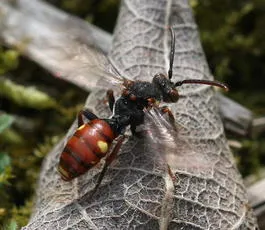
Nomada ferruginata
Nomada ferruginata
This Nomad bee has a red abdomen with yellow flashes at the sides. It has dull yellow legs with dark femora. It lacks stripes on the thorax and has a pair of bright yellow tubercles on the pronotum near to the wing bases. These tubercles and the enti
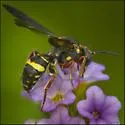
Nomada fervida
Nomada fervida
Identification: females have a high number and density of spine-like hairs lining the outer apical margin of the hind tibia (Discover Life). Visit Bidens , Ceanothus , Melilotus and Polygonum .
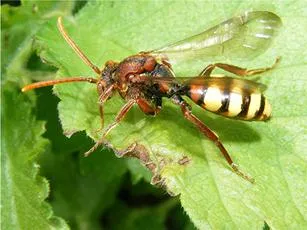
Nomada flava
Nomada flava
Nomada species are cuckoo bees, laying their eggs in the nests of other species - usually Andrena bees. Wing length: 7.5-10mm. N. flava has a yellow abdomen crossed by broad black stripes and with red patches at the front end. Females have red stripe
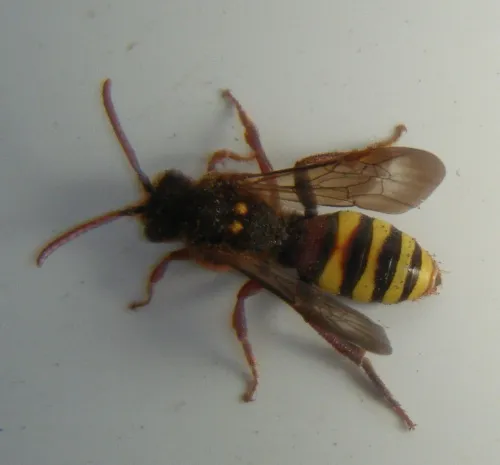
Nomada lathburiana
Nomada lathburiana
Length 7-9mm. Mainly with black and yellow bands except for tergite one which is extensively red. The male has a yellow face whereas the female has a red lower face. The male antennal segments have tiny protuberances on the hind face. Most solitary b
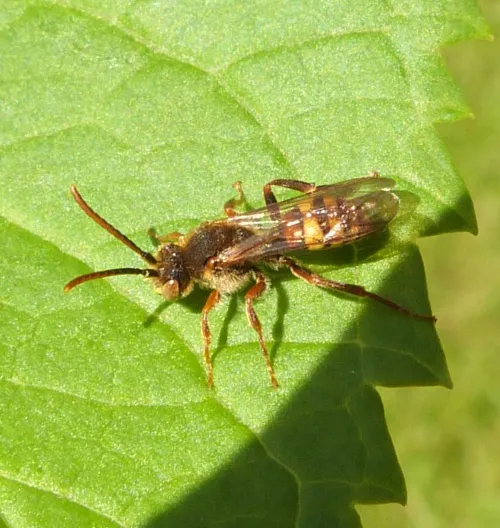
Nomada leucophthalma
Nomada leucophthalma
This is a large cuckoo bee (12 mm) with dark red, orange-tipped antennae (instead of just orange in the case of Nomada flava ) and dark legs. It has a yellow and black striped abdomen with a red band at the front. It also has a thick pile of orange h
Nomada placida
Nomada placida
Identification: Rectangular patch of yellow on scutellum (consolidated, i.e. not two spots as in other Nomada with yellow on the scutellum)
Nomada vicina
Nomada vicina
"Most common fall Nomada in New England." -- John Ascher Kleptoparasite, probably of Andrena hirticincta .
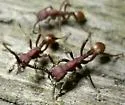
Nomamyrmex esenbeckii
Nomamyrmex esenbeckii
Identification: The largest doryline in the US by far. Very heavily armored ants. In the US doryline fauna, Nomamyrmex and Labidus are the only ones that have an obvious small tooth on the inside curve of the tarsal claw. This trait is found across a
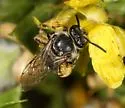
Nomia tetrazonata
Nomia tetrazonata
Nests in Soil. Neither turret nor nest chimney is present. Maximum depth of nest in soil is up to 50 cm
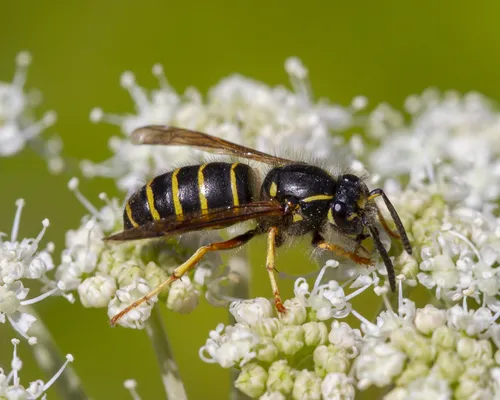
Northern Aerial Yellowjacket
Dolichovespula norvegicoides
Identification: Key to eastern Nearctic Dolichovespula species in the Identification Atlas of the Vespidae of the Northeastern Nearctic Region . Key to Nearctic Vespinae genera in the Identification Atlas of the Vespidae of the Northeastern Nearctic
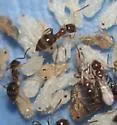
Nylanderia faisonensis
Nylanderia faisonensis
This is the most common species of Nylanderia in the SE US, particularly in forested areas. I (O. Yung) have taken this species commonly nesting under bark, in downed logs, in acorns, under rocks, etc.
Nylanderia flavipes
Nylanderia flavipes
An Asian species increasingly common from NJ to DC to NE Ohio.
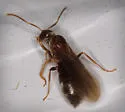
Nylanderia vividula
Nylanderia vividula
The fact that this species was first described from specimens collected in a greenhouse in Finland (and is widely distributed as an introduced species around the Mediterranean) lead authors to suggest its Palaearctic origin; however, N. vividula is c
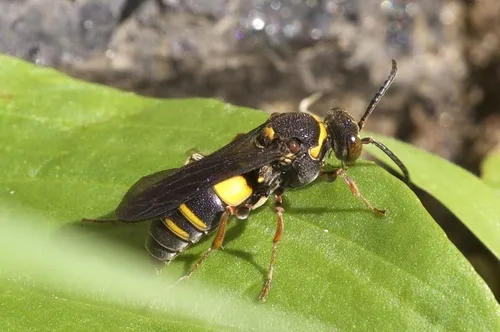
Nysson plagiatus
Nysson plagiatus
Identification: Separated from the similar N. aequalis by the broader yellow stripe on the first segment of the gaster (roughly 2x as wide) Individuals with reddish parts of the metasoma are known to occur in Texas. --Matthias Buck
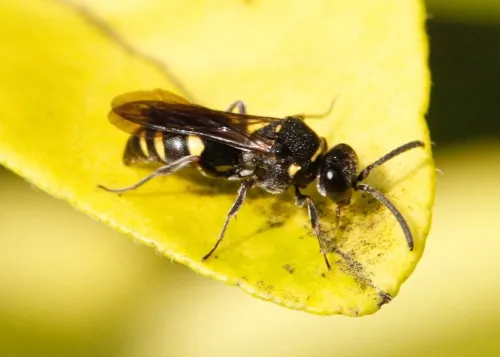
Nysson trimaculatus
Nysson trimaculatus
One of several similar black and yellow banded wasps. Care is needed with identification. Most solitary bees and wasps are difficult to identify, and can rarely be identified from photos taken in the field. All red-rated records should include a phot
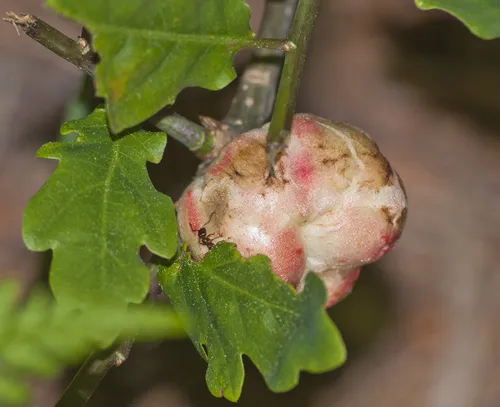
Oak Apple Gall Wasp
Biorhiza pallida
Size 2 to 3.5 mm, the sexual generation male and females wasps are a golden chestnut colour. The agamic wasps are larger, and wingless. Oak-apple galls are caused by the sexual gneration of wasps. They are large and spongy, pale green becoming cream/
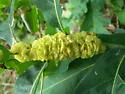
Oak Fig Gall Wasp
Trigonaspis quercusforticorne
Causes stem galls on white oak, chestnut oak, and dwarf chestnut oak ( Quercus alba, Q. prinus, Q. prinoides ).
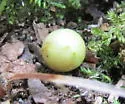
Oak Flower Gall Wasp
Callirhytis pulchra
Produces galls on catkins of red, black, and scarlet oak: "Green when fresh, the size of red currants, containing 4-5 cells, dropping in June." "Galls drop in late May and shrivel slightly; adults emerged June 10-20 (Chicago); May 28-June 6 (DC)." Fe
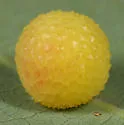
Oak Pea Gall Wasp
Acraspis pezomachoides
Forms galls on veins of white oak ( Quercus alba ). "Spherical or ellipsoidal, naked and faceted to spiny, young galls light green, rose-tinted, becoming yellow or brown, spines when present purplish red, diameter 1/4 inch, two-celled." Parasitoids:
Oak Petiole Gall Wasp
Andricus quercuspetiolicola
Larvae develop in petiole galls in various white oaks. The galls are globose, hard, and project equally above and below the petiole or midrib.
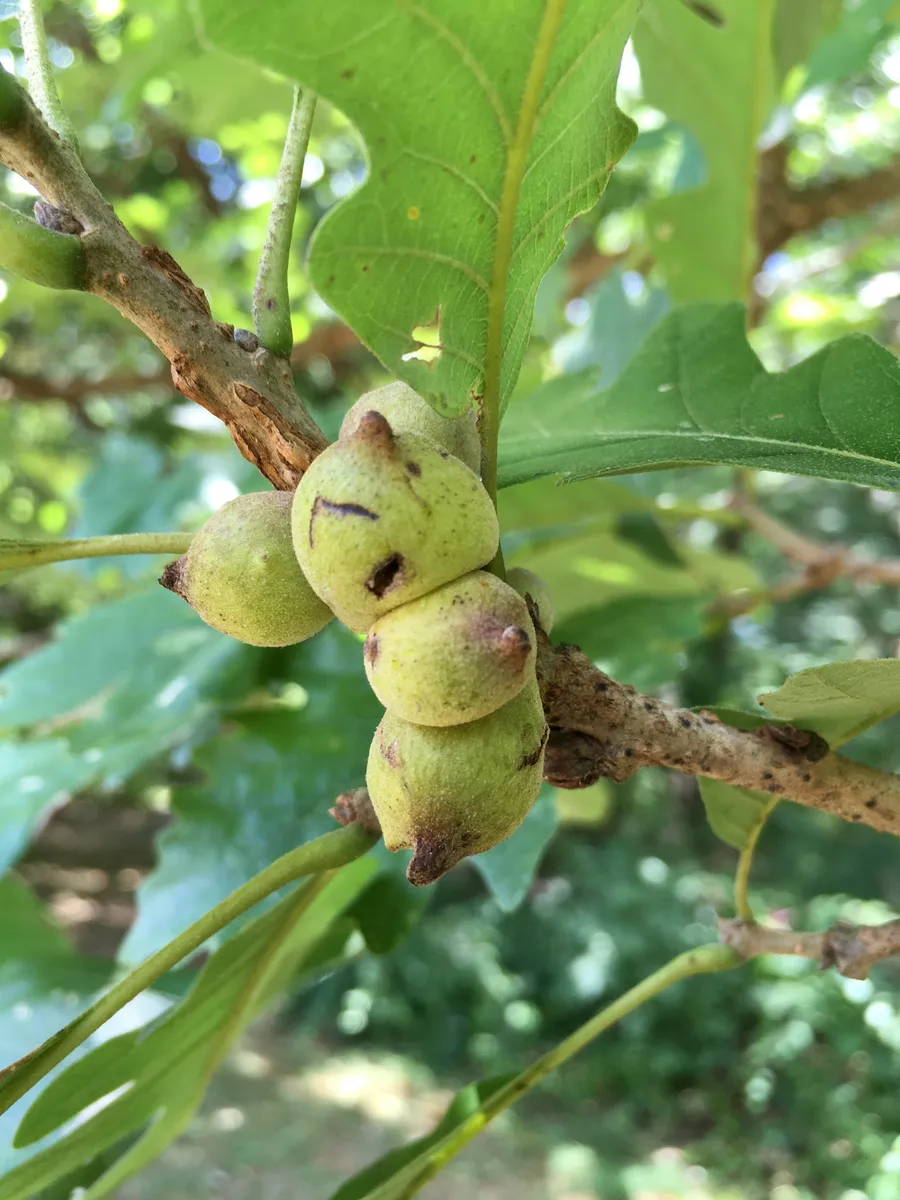
Oak Rough Bullet Gall Wasp
Disholcaspis quercusmamma
Identification: Galls are "globose, obscurely pointed, green [or] bright red, turning to brown or dark red." (Felt 1940) Parasitoids include 5 Sycophila spp. (Eurytomidae), one of which is pictured here:
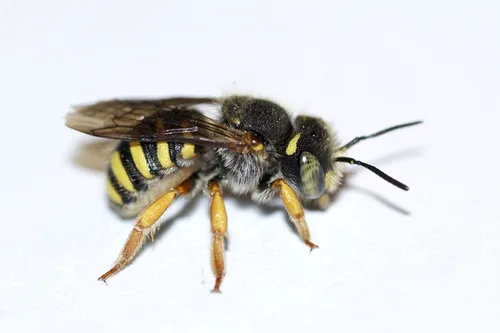
Oblong Wool-carder Bee
Anthidium oblongatum
Identification: Distinguished from A. maculatum by orange tegulae [comment at ] earliest NA record: e. PA 1995
Odontocolon mellipes
Odontocolon mellipes
Odontocolon mellipes (Odontocolon mellipes) is a species in the family Ichneumonidae, commonly known as ichneumonid wasps, belonging to the order Hymenoptera (Ants, Bees, Wasps and Sawflies). It is classified within the subfamily Xoridinae, superfami
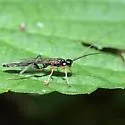
Odontocolon vicinum
Odontocolon vicinum
Identification: The male has fore and mid legs yellow and hind legs black except for trochanters and sometimes the bases of femora. "The female is distinct in its black abdomen, pale fulvous legs, strongly flaring temples, sparsely punctate lower hal
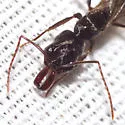
Odontomachus haematodus
Odontomachus haematodus
Identification: Large black aggressive species of Odontomachus (compared to O. brunneus). See Macgown et al. 2014 Because of its preference for disturbed habitats and its aggressive nature, this species can be a stinging nuisance pest. It can also co
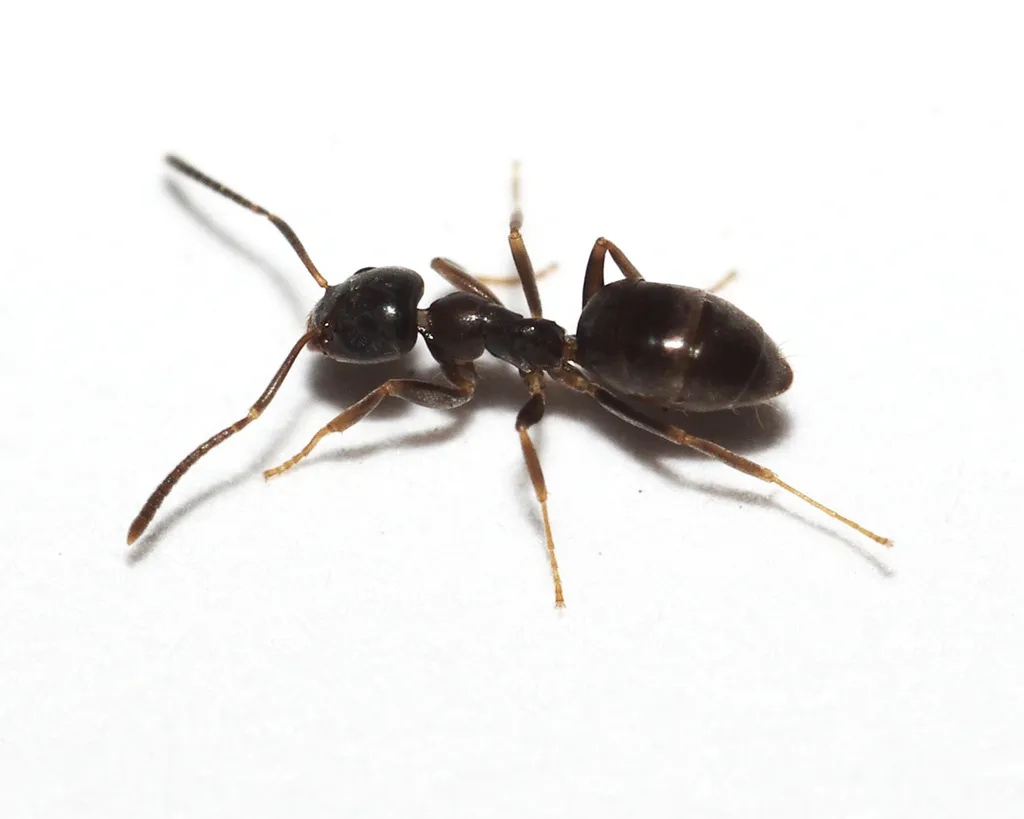
Odorous House Ant
Tapinoma sessile
Identification: The low, nodeless petiole distinctive, may not be readily visible but clearly seen here Alates are reared in spring, not uncommonly in wall spaces or window frames of houses, but naturally in the upper portions of leaf piles, under ba
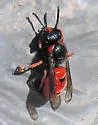
Odynerus cinnabarinus
Odynerus cinnabarinus
Identification: ♂ ♀ Males are similar to those of O. margaretellus but have more extensive red coloration (notably on the pronotum), shorter pubescence, and less strongly rolled antennae.
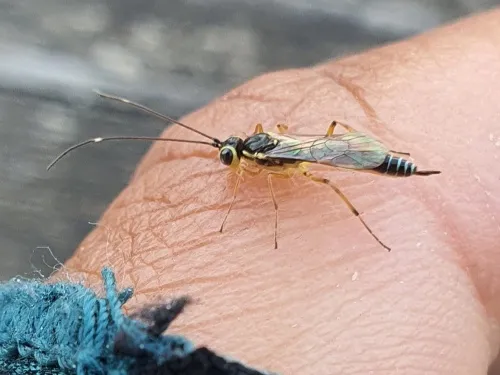
Oedemopsis scabricula
Oedemopsis scabricula
Unless identified by a recognised expert, a photo is required and the specimen should be examined with a microscope. In the comments box, state the key or ID method used and describe the size and identifying characters. Feeds on the larvae of certain
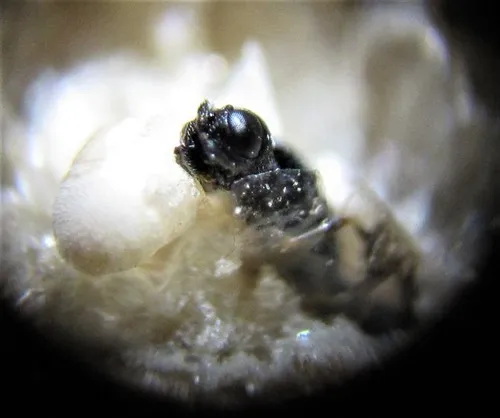
Oethecoctonus oecanthi
Oethecoctonus oecanthi
Identification: ..."distinctly excavate occiput" (comment by O. A. Popovici)
Okinawa Mud Wasp
Delta esuriens
Identification: D. higletti rendalli can also be yellow-marked; however, such individuals lack yellow on the metanotum earliest record in our area: FL 2011 (BG data)
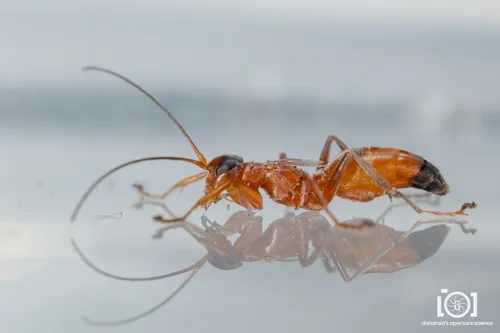
Olixon melinsula
Olixon melinsula
Identification: Female can be distinguished from O. banksii by the the presence of a malar sulcus connecting the eye and the mandible, and by coloration: O. banksii is uniformly reddish-brown, O. melinsula dark on the head, antennae (except base), ap
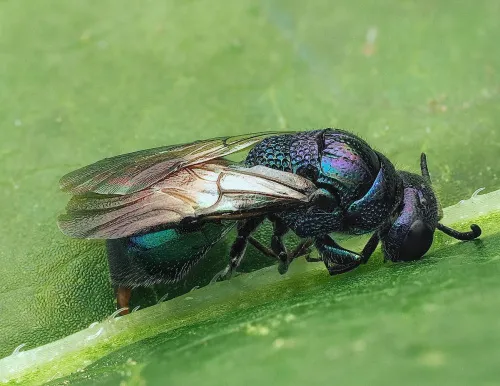
Omalus puncticollis
Omalus puncticollis
Length 3–6 mm. Mesoscutum with coarse punctures and long pubescence. Setae laterally on pronotum at least twice as long as diameter of mid-ocellus. Apical notch of T3 relatively deep. Flagellomeres short, not longer than broad. When threatened rolls
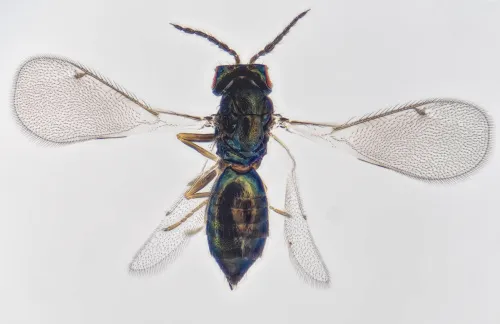
Omphale connectens
Omphale connectens
Length of body 1.0–2.4 mm. Forewing with row of admarginal setae with all, or most, from ventral marginal vein and with radial cell bare; face shiny with very weak sculpture and partly smooth, to completely smooth; forecoxa black or dark brown metall
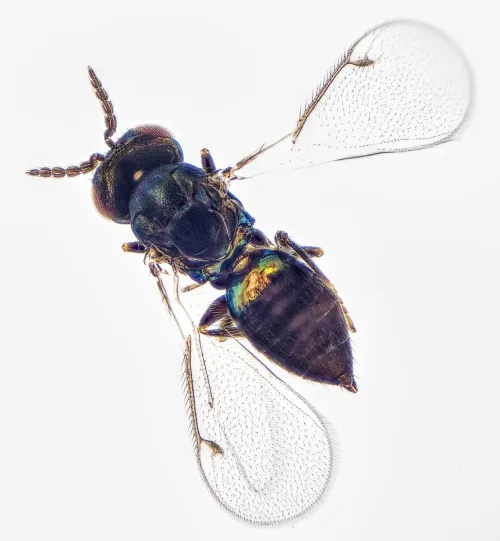
Omphale lugens
Omphale lugens
A green metallic wasp ~3mm long. Forewing with stigmal vein large and abruptly narrowed at base; female flagellum short (pedicel + flagellum 1.3× as long as distance between eyes). Unless identified by a recognized expert, explain how the specimen wa
Oobius agrili
Oobius agrili
introduced into NA to control A. planipennis (emerald ash borer) ( Bauer & Houping 2007 )
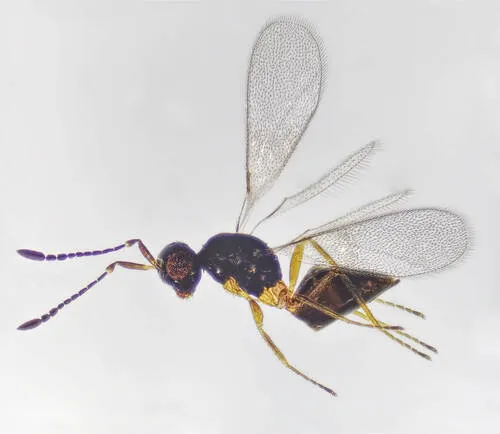
Ooctonus vulgatus
Ooctonus vulgatus
Ooctonus vulgatus is a tiny (1.5-2mm) parasitoid wasp, one of the large family of Fairy Wasps (Mymaridae) characterized by the following unique combination of features: Very similar to O. silvensis, which has F2 of the female antenna notably shorter
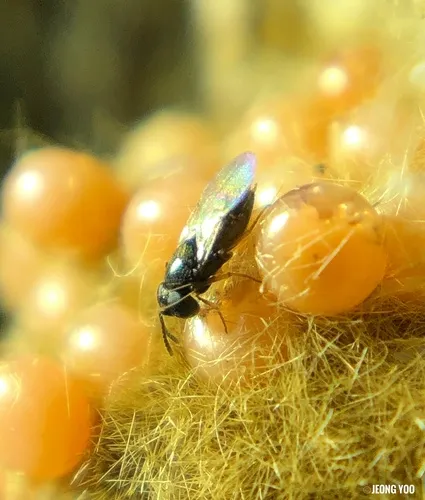
Ooencyrtus kuvanae
Ooencyrtus kuvanae
First introduced from Japan in 1909. Later, repeatedly introduced in the 1970s and 1980s to combat the invasive moth, Lymantria dispar . In 2017 it has been seen parasitizing eggs of another invader, the recently introduced Lycorma delicatula , the S
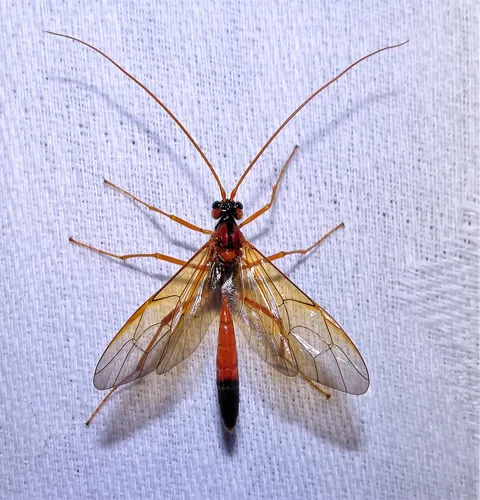
Opheltes glaucopterus
Opheltes glaucopterus
This is a large species. The legs, antennae and most of the abdomen are orange, but the last sections of the abdomen are black as are the sides of the thorax and an area above the waist. The wings are slightly orange shaded. Crepuscular or nocturnal
Ophion idoneus
Ophion idoneus
Identification: Typically recognized by the combination of small size and the lack of a ramellus in the forewing (or nearly so). Further, the flagellum has 51-57 flagellomeres, the anterior transverse carina of the propodeum is weakly convex, and the
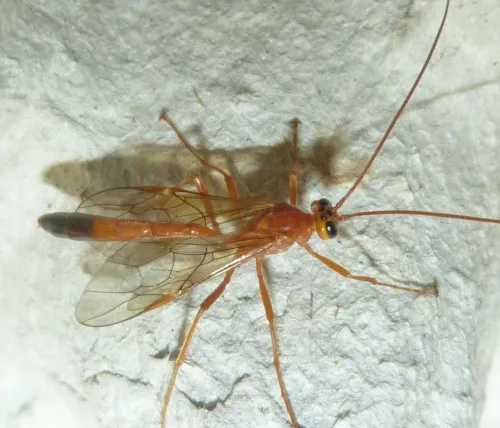
Ophion longigena
Ophion longigena
A mainly orange species, with some darkening towards the rear of the abdomen. Unless identified by a recognised expert, a photo is required and the specimen should be examined with a microscope. In the comments box, state the key or ID method used an
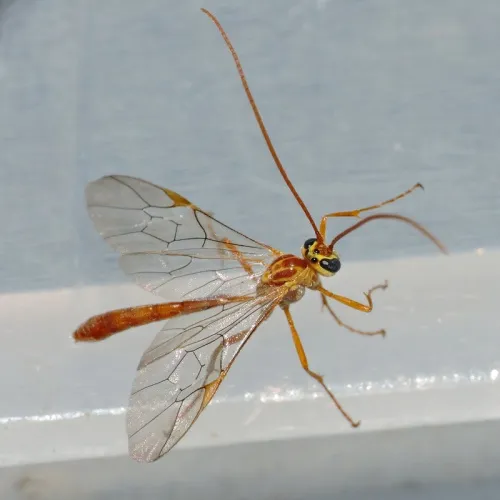
Ophion minutus
Ophion minutus
Quite similar in appearance to some other Ophion species, but smaller (around 10 mm). Unless identified by a recognised expert, a photo is required and the specimen should be examined with a microscope. In the comments box, state the key or ID method
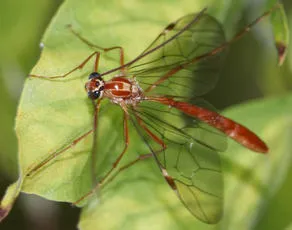
Ophion obscuratus agg.
Ophion obscuratus agg.
Length: 15 to 22 mm. Ophion obscuratus is identified the pale stripes on the thorax and by pale corners of the 'stigma' (the dark mark on the leading edge of the forewing). Many species of Ophion look similar therefore field identification is difficu
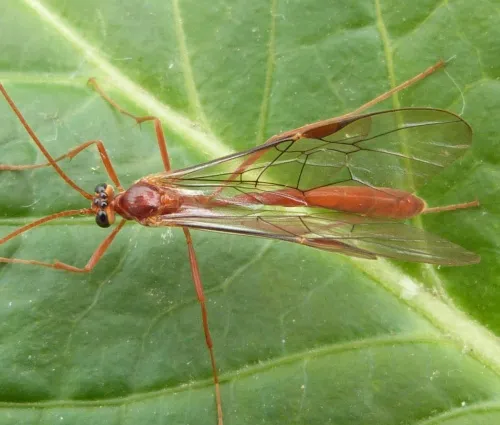
Ophion scutellaris
Ophion scutellaris
Length 14 to 20 mm. An orange brown Ichneumon, similar to others in the group such as O . obscuratus but with a very thin hind femur and lacking the thoracic yellow markings. The scattered records for this species are mostly from England.
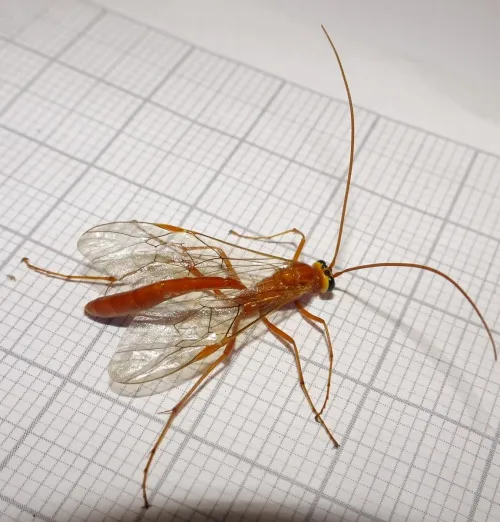
Ophion slaviceki
Ophion slaviceki
Ophion slaviceki is a large orange species (forewing 14‒17 mm); head with large ocelli usually touching, or almost touching, inner margin of compound eye; temple in female slightly shorter; male usually with temples more or less yellow. Unless identi
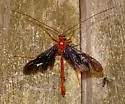
Ophion slossonae
Ophion slossonae
Identification: Noted as a large ophionine with often very dark wings and a contrasted fulvous (brownish-orange) pterostigma. The ocelli are especially large and prominent, further separated than in many other species. Per Marla Schwarzfeld: " Ophion
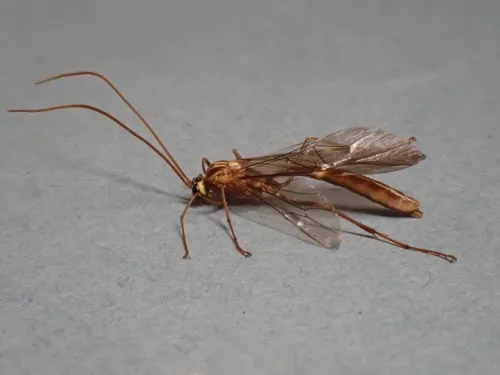
Ophion variegatus
Ophion variegatus
Length 15-22 mm. Identified the pale stripes on the thorax and by pale corners of the 'stigma' (the dark mark on the leading edge of the forewing). Many species of Ophion look similar therefore field identification is difficult. When viewed dorsally
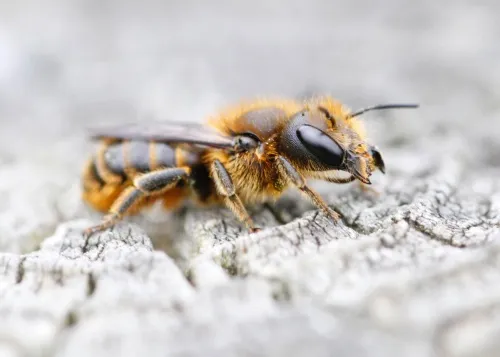
Orange-vented Mason Bee
Osmia leaiana
10mm females, 6mm males. As with all Osmia species, it has a large box-shaped head (similar in size to the thorax). Females have a dense orange pollen brush under the abdomen. Males lack the pollen brush and are generally dark, often metallic green,
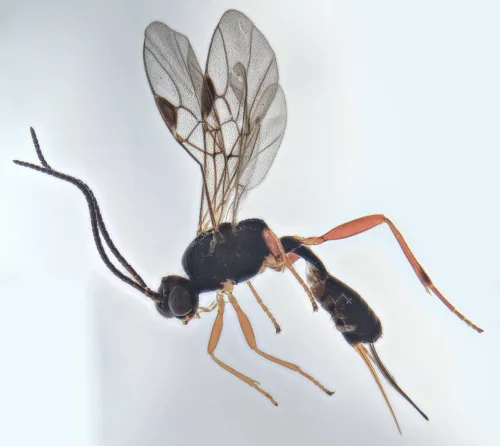
Orionis coxator
Orionis coxator
Face black; ovipositor sheath 1.4–1.6X length of the first tergite; hind coxa dorsally with some curved striae. Unless identified by a recognised expert, a photo is required and the specimen should be examined with a microscope. In the comments box,
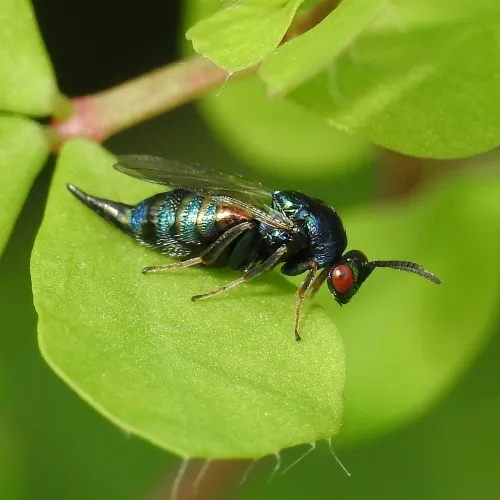
Ormyrus nitidulus
Ormyrus nitidulus
Female about 5 mm. It is steeply hunched; body all deep metallic blue & blue-green; gaster with bands of large puncturation; dark legs with pale knees and tarsi; black antennae. Male 2 to 2.5 mm, also steeply hunched; head green-gold; thorax & gaster
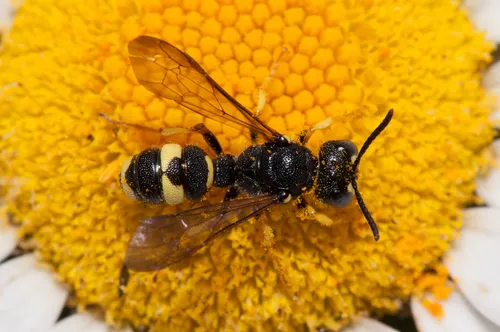
Ornate Tailed Digger Wasp
Cerceris rybyensis
A black and yellow banded species which is similar to several others. Care is needed with identification. Most solitary bees and wasps are difficult to identify, and can rarely be identified from photos taken in the field. All red-rated records shoul
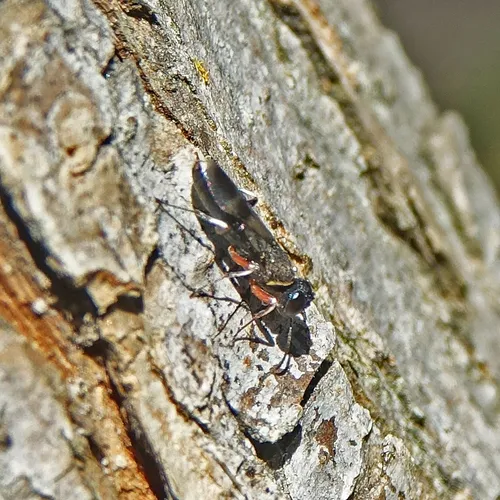
Orussus thoracicus
Orussus thoracicus
These insects are generally all black, but there is a rare red form.
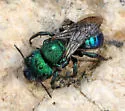
Osmia aglaia
Osmia aglaia
One of the native bees used in agriculture - see Oregon Berry Project .
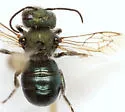
Osmia botitena
Osmia botitena
Identification: "...appears to be what I've been calling O. botitena , a somewhat problematic species since the type is AWOL." Det. John L. Neff, 2015 Central Texas Melittological Institute
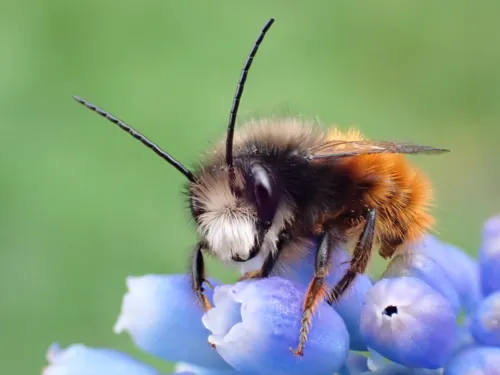
Osmia cornuta
Osmia cornuta
Dark thorax with dark hairs and bright orange-red abdomen (more strongly contrasting than Osmia bicornis). Long inwardly-curved facial horns on the head below the antennae (longer than in Osmia bicornis). Males have a large patch of long white hairs
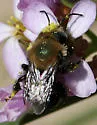
Osmia integra
Osmia integra
O. integra is known from coastal CA sand dunes (e.g., San Francisco, as recorded by White, 1952:293). It is similar in hair color to O. longula , but that is a montane species in California