
Neoptilia tora
This record describes Neoptilia tora (species). Recorded family: Argidae. Recorded order: Hymenoptera.
Identification and Appearance
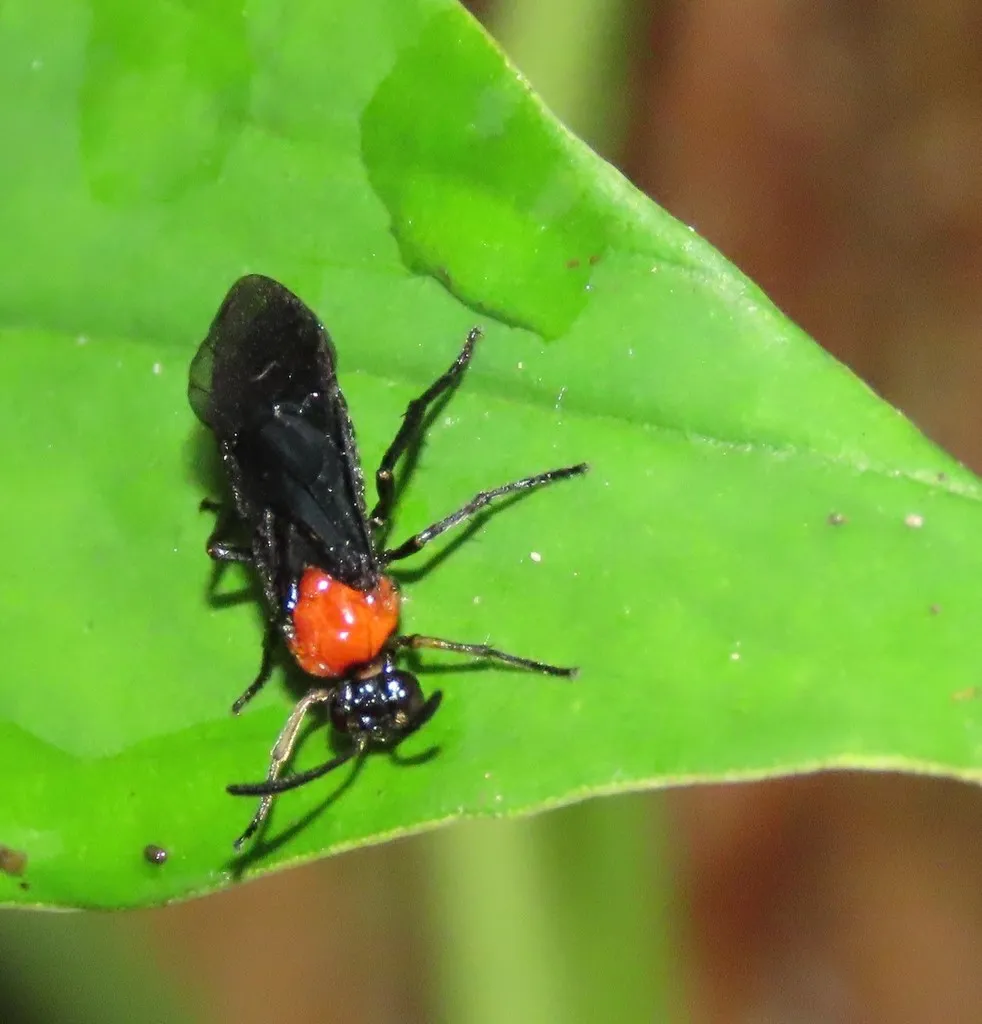
The youngest larvae are green, not purple. Adult males have forked antennae, photo Type Locality: Maxwell, Caldwell Co., Texas, June 2, 1930 (Maxwell is just e. of San Marcos, TX), also one paratype from San Antonio, Bexar Co., Sept. 19, 1968 Since this sp. was formally described in 1971, the Smithsonian collection acquired a couple of larvae (in alcohol) and one reared adult spmn from Roma, Starr Co., TX in 1975. (Note, the larvae loose their purple color in alcohol.) (D.R. Smith, pers comm. to MAQ, 2015) This 1975 southmost TX record suggests the sp. isn't endemic to c. TX, however, there are *a lot* of very active bug photographers across so. TX and I don't know of any other reports of purple larvae that far south...
Classification
- Kingdom
- Animalia
- Phylum
- Arthropoda
- Class
- Insecta
- Order
- Hymenoptera (Ants, Bees, Wasps and Sawflies)
- Family
- Argidae (Argid Sawflies)
- Subfamily
- Sterictiphorinae
- Genus
- Neoptilia
Imported taxonomy record. Source availability varies; see the source references and editorial policy below.
Habitat and Range
Geographic Range
c. to s. TX / Coahuila, Mex ( Múzquiz ) - Map known TX Counties: Bexar, Blanco, Caldwell, Guadalupe, Kerr, San Patricio, Travis, and Starr, also from Choke Canyon State Park. (BG data)(Flickr data)
Seasonal Activity
larvae: Apr-Nov (BG data)(Flickr data) adults: May-Sept
Diet and Behavior
Diet: Larvae host on various mallows (Malvaceae), including Velvet-leaf Mallow ( Allowissadula holosericea ), and Indian Mallow ( Abutilon fruticosum ) (Bugh 2010),(BG data)
Life History
larvae and pupae are communal brown mass on left is a collection of pupae that most of the adults in the unit tray emerged from.
Additional species information
Species notes from the sources
Etymology: Neoptilia tora Smith 1971
About Flies: the wider group
Order-level background for Hymenoptera, the group containing Neoptilia tora. Species-specific details appear above.
Group overview
Hymenoptera includes over 150,000 described species of ants, bees, wasps, and sawflies. Earth harbors approximately 20 quadrillion (20×10^15) ants, with a combined biomass of ~12 megatons of dry carbon - exceeding the combined biomass of all wild birds and mammals (PNAS, 2022).
Ecological role of the group
About 35% of the world's food crops depend on animal pollinators. The chocolate industry, valued at over $100 billion, depends on pollinating flies and midges. Ants are the dominant soil engineers in most terrestrial ecosystems, turning more soil than earthworms in many habitats.
Economic and practical significance of the group
Pollinators contribute $235-577 billion worth of annual global food production (FAO). In the U.S., bee pollination alone benefits crops valued at $18 billion annually, and honey bees are responsible for $5.4 billion in agricultural productivity. Between April 2023-2024, 55.1% of managed honey bee colonies were lost. The U.S. bee population dropped from 5 million to 2.5 million.
Recorded sources for this group: FAO, USDA, EPA, PNAS (2022), US Fish & Wildlife Service. Imported estimates may describe particular regions or reporting periods.
Photos of Neoptilia tora (2)
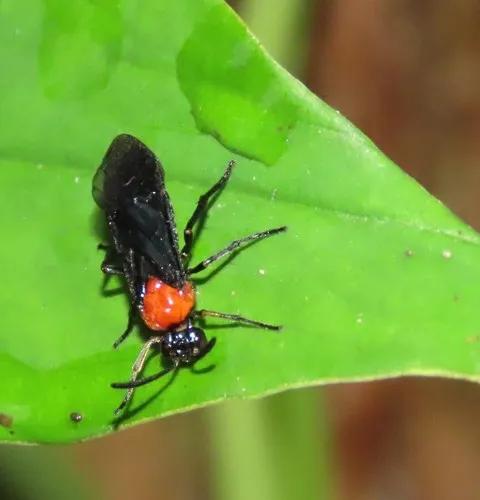
Photo credits: Contributed by Mike Quinn; Additional contributions by ceiseman
Frequently Asked Questions About Neoptilia tora
What is Neoptilia tora?
Neoptilia tora is a species in the family Argidae, within the order Hymenoptera.
How big is Neoptilia tora?
adults: 6.2-7.0 mm
How do you identify Neoptilia tora?
The youngest larvae are green, not purple. Adult males have forked antennae, photo
Where is Neoptilia tora found?
Range: c. to s. TX / Coahuila, Mex ( Múzquiz ) - Map known TX Counties: Bexar, Blanco, Caldwell, Guadalupe, Kerr, San Patricio, Travis, and Starr, also from Choke Canyon State Park. (BG data)(Flickr data)
What does Neoptilia tora eat?
The diet of the Neoptilia tora includes Larvae host on various mallows (Malvaceae), including Velvet-leaf Mallow ( Allowissadula holosericea ), and Indian Mallow ( Abutilon fruticosum ) (Bugh 2010),(BG data).
When is Neoptilia tora active?
Neoptilia tora: seasonal activity - larvae: Apr-Nov (BG data)(Flickr data) adults: May-Sept.
What is the life cycle of a Neoptilia tora?
larvae and pupae are communal brown mass on left is a collection of pupae that most of the adults in the unit tray emerged from.