Neuroterus quercusbaccarum
This record describes Neuroterus quercusbaccarum (species). Recorded family: Cynipidae. Recorded order: Hymenoptera.
Identification and Appearance
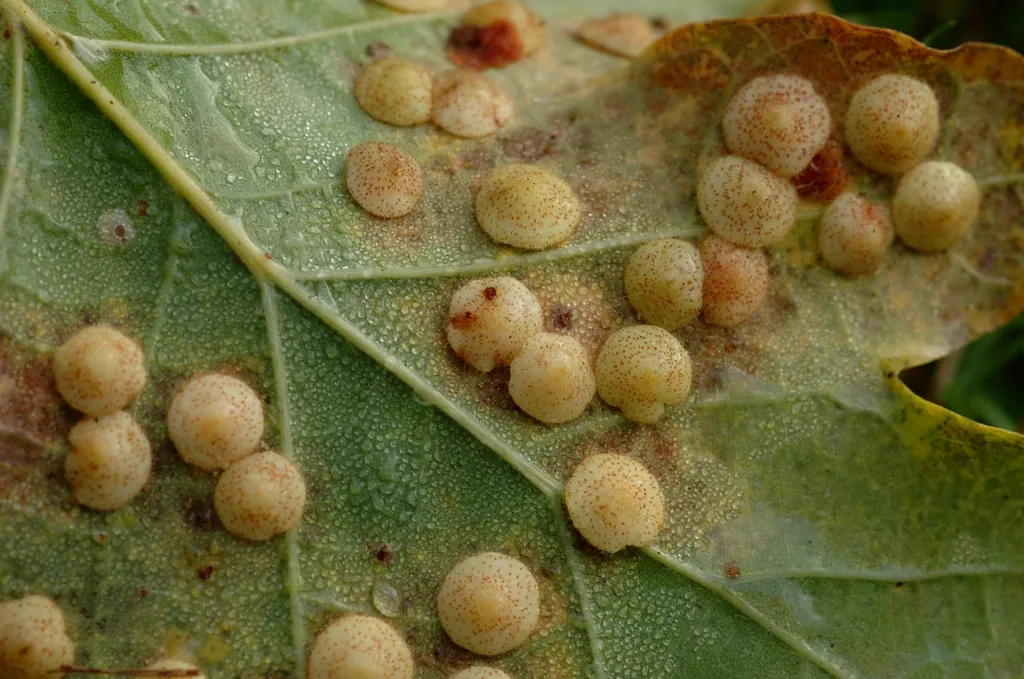
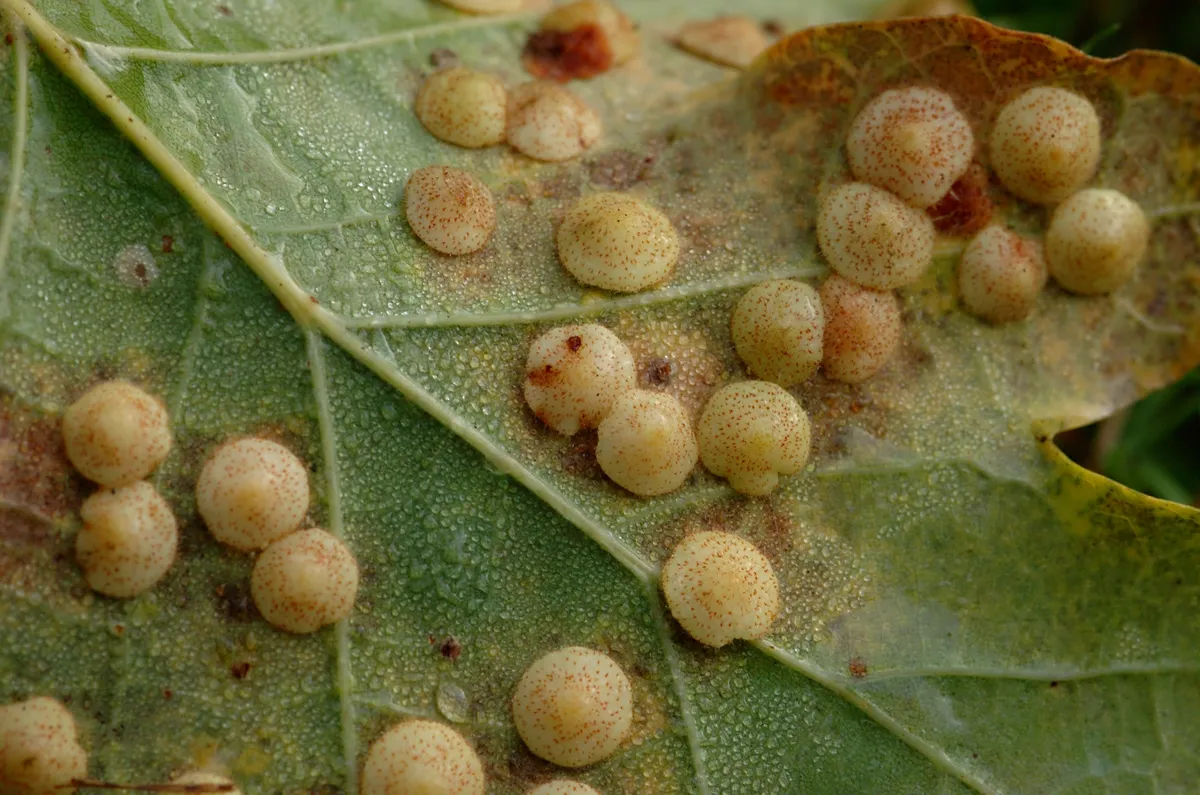
Small (3mm), dark wasps. Asexual females may be abundant during spring emergence. If reared directly from the gall (please include photo of gall) be aware that it may be a parasitoid or inquiline - always check. It must be keyed out and detailed photos included. Cynipoidea have complex life-cycles, and that of N. quercusbaccarum is a two-act play known as heterogony - an alternation between a sexual generation and an asexual (agamic) generation. The Sexual Generation (Spring): The sexual phase begins in the spring, from January to March or April, asexual females emerge from the leaf litter where they spent the winter. These females lay their eggs in developing Oak buds. This triggers the tree to grow a Currant Gall . Inside these galls, larvae develop rapidly. In June, both males and females emerge. They mate, and the fertilized females then seek out the undersides of maturing oak leaves to lay their eggs. The Asexual Generation (Summer to Winter): The eggs laid on the underside of Oak leaves cause the tree to form Common Spangle Galls . In autumn, before the leaves drop, the spangle galls detach from the leaf and fall to the ground. Inside the gall in the leaf litter, the larva develops into a pupa. Crucially, these larvae develop into females only. No mating is required for the next stage - parthenogenesis. These asexual females emerge the following spring. This alternating strategy is an evolutionary masterstroke. The sexual generation provides genetic diversity, while the asexual generation allows for a rapid population boom without the resource cost of finding a mate during the harsh transition from winter to spring. Common and widespread but not often recorded except as the gall rather than the adult wasp. Common and widespread but not often recorded except as the gall rather than the adult wasp. No additional images available for this species.
Wikipedia reference for Neuroterus quercusbaccarum: http://en.wikipedia.org/wiki/Neuroterus_quercusbaccarum.
Classification
- Kingdom
- Animalia
- Phylum
- Arthropoda
- Class
- Insecta
- Order
- Hymenoptera
- Family
- Cynipidae
- Genus
- Neuroterus
Imported taxonomy record. Source availability varies; see the source references and editorial policy below.
Diet and Behavior
Life History
Cynipoidea have complex life-cycles, and that of N. quercusbaccarum is a two-act play known as heterogony - an alternation between a sexual generation and an asexual (agamic) generation.
Additional species information
Recorded status
Common and widespread but not often recorded except as the gall rather than the adult wasp.
About Flies: the wider group
Order-level background for Hymenoptera, the group containing Neuroterus quercusbaccarum. Species-specific details appear above.
Group overview
Hymenoptera includes over 150,000 described species of ants, bees, wasps, and sawflies. Earth harbors approximately 20 quadrillion (20×10^15) ants, with a combined biomass of ~12 megatons of dry carbon - exceeding the combined biomass of all wild birds and mammals (PNAS, 2022).
Ecological role of the group
About 35% of the world's food crops depend on animal pollinators. The chocolate industry, valued at over $100 billion, depends on pollinating flies and midges. Ants are the dominant soil engineers in most terrestrial ecosystems, turning more soil than earthworms in many habitats.
Economic and practical significance of the group
Pollinators contribute $235-577 billion worth of annual global food production (FAO). In the U.S., bee pollination alone benefits crops valued at $18 billion annually, and honey bees are responsible for $5.4 billion in agricultural productivity. Between April 2023-2024, 55.1% of managed honey bee colonies were lost. The U.S. bee population dropped from 5 million to 2.5 million.
Recorded sources for this group: FAO, USDA, EPA, PNAS (2022), US Fish & Wildlife Service. Imported estimates may describe particular regions or reporting periods.