
Valley Carpenter Bee
Xylocopa sonorina
This record describes Xylocopa sonorina (species). Recorded family: Apidae. Recorded order: Hymenoptera.
Identification and Appearance
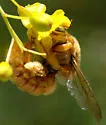
Female is black with brassy reflections, perhaps. Male is a striking tawny brown. Apparently, no other Xylocopa are so sexually dimorphic. Males: ] ] Females: 4/17/2020 introduced Name change based on Sheffield C, Heron J, Musetti L (2020) Xylocopa sonorina Smith, 1874 from Vancouver, British Columbia, Canada (Hymenoptera: Apidae, Xylocopinae) with comments on its taxonomy. Biodiversity Data Journal 8: e49918.
Classification
- Kingdom
- Animalia
- Phylum
- Arthropoda
- Class
- Insecta
- Order
- Hymenoptera (Ants, Bees, Wasps and Sawflies)
- Superfamily
- Trigonaloidea
- Family
- Apidae (Cuckoo, Carpenter, Digger, Bumble, and Honey Bees)
- Subfamily
- Xylocopinae
- Genus
- Xylocopa (Large Carpenter Bees)
Imported taxonomy record. Source availability varies; see the source references and editorial policy below.
Habitat and Range
Habitat
Valleys and foothills with deciduous trees such as oaks.
Geographic Range
sw US: CA-TX / plus Mexico including Baja California. Discover Life In Texas best known from El Paso and vicinity but also occurs locally elsewhere including the Dallas-Fort Worth area. In South Texas however the expected species in this subgenus is X. mexicanorum. Southern range limits in Mexico are uncertain due to high likelihood of misidentification. Described from the Hawaiian Islands, where introduced, and also occurs as an exotic species on various South Pacific islands.
Seasonal Activity
Carpenter bees overwinter as adults in the tunnels and emerge in the spring. (UC, Davis) May emerge earlier than X. californica ?
Diet and Behavior
Diet: Adults presumably take some pollen, like others of the genus. Due to their large size, carpenter bees cannot enter tubelike blossoms such as sage, so they slit the base of corolla, a practice known as "stealing the nectar" (without pollinating the flower). (UC, Davis). The Hosts section on its Discover Life species page lists known floral associations based on specimen records and images.
Life History
Carpenter bees tunnel through wood to make their nests, carving with their mandibles, but they don't ingest the wood. Only the females excavate the tunnels, which average six to 10 inches in depth. The males are territorial and can be quite aggressive. They hover and lie in wait for passing females. To build their nests, the females select telephone poles, fences, decks, railings, eaves, siding, outdoor furniture and tree trunks. They prefer bare, unpainted or weathered wood, especially redwood, cedar, cypress and pine. They generally avoid painted or pressure-treated wood. (UC, Davis)
Additional species information
Species notes from the sources
Etymology: Xylocopa varipuncta has been confirmed via DNA to be a junior synonym of X. sonorina X. sonorina refers to the sonorous sound of the bee.
About Flies: the wider group
Order-level background for Hymenoptera, the group containing Xylocopa sonorina. Species-specific details appear above.
Group overview
Hymenoptera includes over 150,000 described species of ants, bees, wasps, and sawflies. Earth harbors approximately 20 quadrillion (20×10^15) ants, with a combined biomass of ~12 megatons of dry carbon - exceeding the combined biomass of all wild birds and mammals (PNAS, 2022).
Ecological role of the group
About 35% of the world's food crops depend on animal pollinators. The chocolate industry, valued at over $100 billion, depends on pollinating flies and midges. Ants are the dominant soil engineers in most terrestrial ecosystems, turning more soil than earthworms in many habitats.
Economic and practical significance of the group
Pollinators contribute $235-577 billion worth of annual global food production (FAO). In the U.S., bee pollination alone benefits crops valued at $18 billion annually, and honey bees are responsible for $5.4 billion in agricultural productivity. Between April 2023-2024, 55.1% of managed honey bee colonies were lost. The U.S. bee population dropped from 5 million to 2.5 million.
Recorded sources for this group: FAO, USDA, EPA, PNAS (2022), US Fish & Wildlife Service. Imported estimates may describe particular regions or reporting periods.
Photos of Valley Carpenter Bee (5)
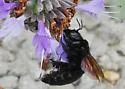
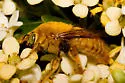
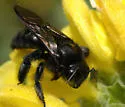
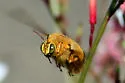
Photo credits: Contributed by Cotinis; Additional contributions by Beatriz Moisset , Hartmut Wisch , Mike Quinn , John S. Ascher , margarethe brummermann , hg
Frequently Asked Questions About Valley Carpenter Bee
What is Valley Carpenter Bee?
Valley Carpenter Bee (Xylocopa sonorina) is a species in the family Apidae, within the order Hymenoptera.
How big is Valley Carpenter Bee?
18-26 mm (Largest bees in CA) Their eggs are the largest of all insect eggs. The Valley carpenter bee egg can be 15mm long. (UC, Davis)
How do you identify Valley Carpenter Bee?
Female is black with brassy reflections, perhaps. Male is a striking tawny brown. Apparently, no other Xylocopa are so sexually dimorphic. Males: ] ] Females:
Where is Valley Carpenter Bee found?
| Feature | Details |
|---|---|
| Habitat | Valleys and foothills with deciduous trees such as oaks. |
| Range | sw US: CA-TX / plus Mexico including Baja California. Discover Life In Texas best known from El Paso and vicinity but also occurs locally elsewhere including the Dallas-Fort Worth area. In South Texas however the expected species in this subgenus is X. mexicanorum. Southern range limits in Mexico are uncertain due to high likelihood of misidentification. Described from the Hawaiian Islands, where introduced, and also occurs as an exotic species on various South Pacific islands. |
What does Valley Carpenter Bee eat?
The diet of the Valley Carpenter Bee includes Adults presumably take some pollen, like others of the genus. Due to their large size, carpenter bees cannot enter tubelike blossoms such as sage, so they slit the base of corolla, a practice known as stealing the nectar (without pollinating the flower). (UC, Davis). The Hosts section on its Discover Life species page lists known floral associations based on specimen records and images..
When is Valley Carpenter Bee active?
Valley Carpenter Bee: seasonal activity - Carpenter bees overwinter as adults in the tunnels and emerge in the spring. (UC, Davis) May emerge earlier than X. californica ?.
What is the life cycle of a Valley Carpenter Bee?
Carpenter bees tunnel through wood to make their nests, carving with their mandibles, but they don't ingest the wood. Only the females excavate the tunnels, which average six to 10 inches in depth. The males are territorial and can be quite aggressive. They hover and lie in wait for passing females. To build their nests, the females select telephone poles, fences, decks, railings, eaves, siding, outdoor furniture and tree trunks. They prefer bare, unpainted or weathered wood, especially redwood, cedar, cypress and pine. They generally avoid painted or pressure-treated wood. (UC, Davis)