
Texas Leaf-cutting Ant
Atta texana
This record describes Atta texana (species). Recorded family: Formicidae. Recorded order: Hymenoptera.
Identification and Appearance
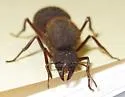
- Queen; - Male Photo of all castes (note, female reproductive has larger head than male) - Forestry Images Atta texana Photos - Alex Wild, The Diversity of Insects Leaf-cutting ants live in large colonies of up to 2 million.
Classification
- Kingdom
- Animalia
- Phylum
- Arthropoda
- Class
- Insecta
- Order
- Hymenoptera (Ants, Bees, Wasps and Sawflies)
- Superfamily
- Formicoidea
- Family
- Formicidae (Ants)
- Subfamily
- Myrmicinae
- Tribe
- Attini
- Genus
- Atta (Leaf-cutting Ants)
Imported taxonomy record. Source availability varies; see the source references and editorial policy below.
Habitat and Range
Habitat
Prefer sandy soils for nesting.
Geographic Range
LA to e. Mex. - Map
Diet and Behavior
Diet: In Texas these ants damage weeds, grasses, plum and peach trees, blackberry bushes and many other fruit, nut and ornamental plants as well as several cereal and forage crops. The ants do not eat the leaf fragments they collect, but take them into their underground nest where they use the material to raise a fungus garden. As the fungus grows, certain parts of it are eaten by the ants and fed to the larvae. This fungus is their only known source of food. Leaf-cutting ants will attack pine trees but ordinarily they do little damage when other green plants are available. During the winter when green plant material is scarce, seedling pines are frequently damaged in parts of east Texas and west central Louisiana. Where ants are abundant, it is almost impossible to establish natural pine reproduction. In such sites, young pine seedlings often are destroyed within a few days unless the ants are controlled before planting.
Life History
In addition to collecting leaves, they also occasionally collect berries: Walter et al. reports that about 50 species of insects and arachnids have been found within the nests in association with this ant. Per Walter et al. ; Spangler; Moser ; Waller & Moser , beetle nest associates of A. texana include: *, *same genus, but actual sp. is Oosternum attacomis Other than the two cetoniine scarabs, the other spp. appear to be obligate Atta nest associates, in at least part of their life cycle. Click on the thumbnail (then on the Info tab) for more information on each species.
About Flies: the wider group
Order-level background for Hymenoptera, the group containing Atta texana. Species-specific details appear above.
Group overview
Hymenoptera includes over 150,000 described species of ants, bees, wasps, and sawflies. Earth harbors approximately 20 quadrillion (20×10^15) ants, with a combined biomass of ~12 megatons of dry carbon - exceeding the combined biomass of all wild birds and mammals (PNAS, 2022).
Ecological role of the group
About 35% of the world's food crops depend on animal pollinators. The chocolate industry, valued at over $100 billion, depends on pollinating flies and midges. Ants are the dominant soil engineers in most terrestrial ecosystems, turning more soil than earthworms in many habitats.
Economic and practical significance of the group
Pollinators contribute $235-577 billion worth of annual global food production (FAO). In the U.S., bee pollination alone benefits crops valued at $18 billion annually, and honey bees are responsible for $5.4 billion in agricultural productivity. Between April 2023-2024, 55.1% of managed honey bee colonies were lost. The U.S. bee population dropped from 5 million to 2.5 million.
Recorded sources for this group: FAO, USDA, EPA, PNAS (2022), US Fish & Wildlife Service. Imported estimates may describe particular regions or reporting periods.
Photos of Texas Leaf-cutting Ant (5)
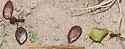
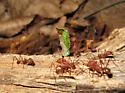
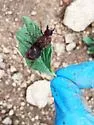
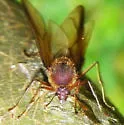
Photo credits: Contributed by Eric R. Eaton; Additional contributions by Mike Quinn , PaleoJon
Frequently Asked Questions About Texas Leaf-cutting Ant
What is Texas Leaf-cutting Ant?
Texas Leaf-cutting Ant (Atta texana) is a species in the family Formicidae, within the order Hymenoptera.
How big is Texas Leaf-cutting Ant?
Worker ants range from 1/16 to 1/2 inch long. The queen is about 3/4 inch long.
How do you identify Texas Leaf-cutting Ant?
- Queen; - Male Photo of all castes (note, female reproductive has larger head than male) - Forestry Images Atta texana Photos - Alex Wild, The Diversity of Insects
Where is Texas Leaf-cutting Ant found?
| Feature | Details |
|---|---|
| Habitat | Prefer sandy soils for nesting. |
| Range | LA to e. Mex. - Map |
What does Texas Leaf-cutting Ant eat?
The diet of the Texas Leaf-cutting Ant includes In Texas these ants damage weeds, grasses, plum and peach trees, blackberry bushes and many other fruit, nut and ornamental plants as well as several cereal and forage crops. The ants do not eat the leaf fragments they collect, but take them into their underground nest where they use the material to raise a fungus garden. As the fungus grows, certain parts of it are eaten by the ants and fed to the larvae. This fungus is their only known source of food. Leaf-cutting ants will attack pine trees but ordinarily they do little damage when other green plants are available. During the winter when green plant material is scarce, seedling pines are frequently damaged in parts of east Texas and west central Louisiana. Where ants are abundant, it is almost impossible to establish natural pine reproduction. In such sites, young pine seedlings often are destroyed within a few days unless the ants are controlled before planting..
What is the life cycle of a Texas Leaf-cutting Ant?
In addition to collecting leaves, they also occasionally collect berries: Walter et al. reports that about 50 species of insects and arachnids have been found within the nests in association with this ant. Per Walter et al. ; Spangler; Moser ; Waller & Moser , beetle nest associates of A. texana include: *, *same genus, but actual sp. is Oosternum attacomis Other than the two cetoniine scarabs, the other spp. appear to be obligate Atta nest associates, in at least part of their life cycle. Click on the thumbnail (then on the Info tab) for more information on each species.