
White-tailed Bumblebee
Bombus lucorum agg.
This record describes Bombus lucorum agg. (species). Recorded family: Apidae. Recorded order: Hymenoptera.
Identification and Appearance
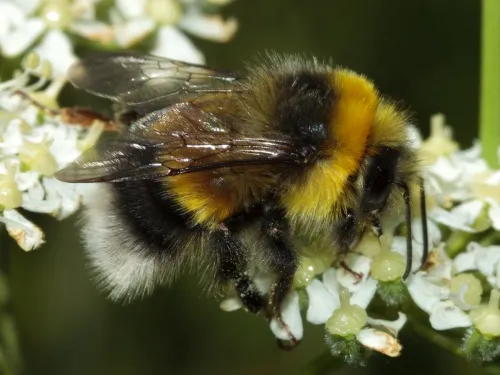
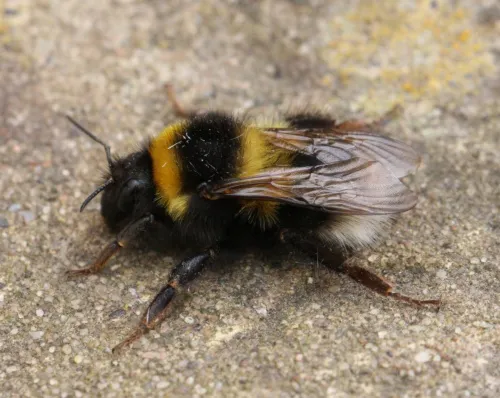
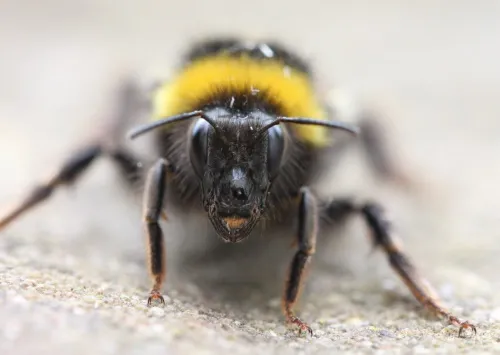
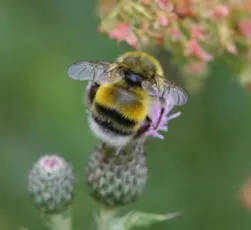
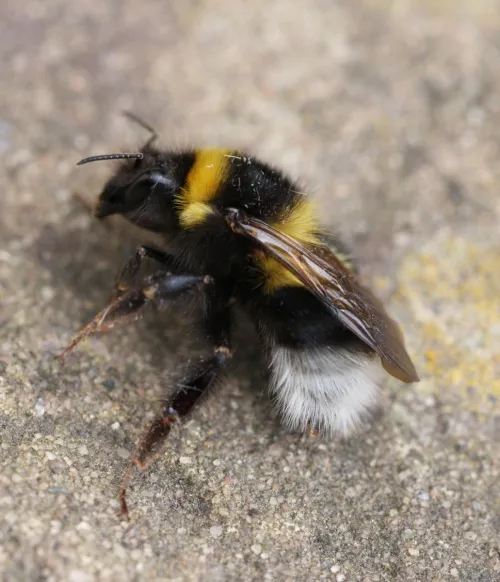
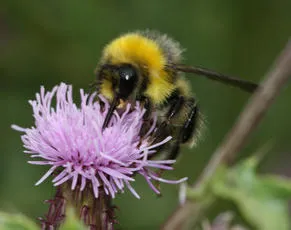
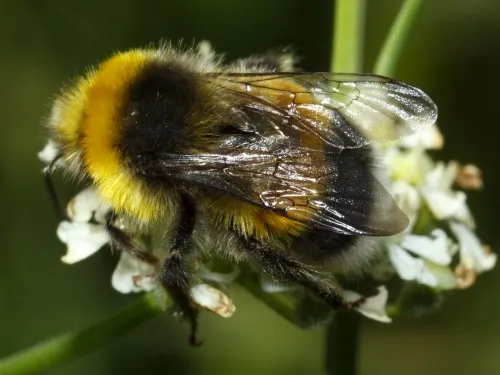
Lengths: Queen 19 to 20 mm, worker 11 to 17 mm, male 14 to16 mm. The Queens have a white tip to the abdomen. The species is slightly smaller than Bombus terrestris . In comparison, the yellow hair bands of B. terrestris appear more mustard-yellow whilst those of B. lucorum males are more lemon-yellow. However in workers there is much overlap in both the colour of the yellow bands and the whiteness of the 'tail' such that many cannot be separated. There are three almost identical species: Bombus lucorum, Bombus magnus , and Bombus cryptarum that cannot be easily differentiated from one another by their appearances and require DNA analysis so these three are treated as an aggregate. Workers of Buff-tailed Bumblebees and White-tailed Bumblebees can be almost impossible to tell apart. Unless it is a very clear example then record as White/Buff-tailed Bumblebee Workers - Bombus lucorum/terrestris . Queens are amongst the first bees to emerge in spring, males do not usually emerge until about August. The species has a short tongue for a bumblebee, so tends to forage on flowers with short corollas and daisy-type flowers; however it is sometimes resourceful enough to make a hole through the base of the corolla in other flowers to drink the nectar. They nest in the ground, often in an old mouse or vole nest. Widespread and fairly common in Britain, however populations are believed to be declining.
Classification
- Kingdom
- Animalia
- Phylum
- Arthropoda
- Class
- Insecta
- Order
- Hymenoptera
- Family
- Apidae
- Genus
- Bombus
Imported taxonomy record. Source availability varies; see the source references and editorial policy below.
Habitat and Range
Habitat
Around flowers.
Seasonal Activity
Queens are amongst the first bees to emerge in spring, males do not usually emerge until about August.
Diet and Behavior
Life History
The species has a short tongue for a bumblebee, so tends to forage on flowers with short corollas and daisy-type flowers; however it is sometimes resourceful enough to make a hole through the base of the corolla in other flowers to drink the nectar. They nest in the ground, often in an old mouse or vole nest.
Additional species information
Recorded status
Widespread and fairly common in Britain, however populations are believed to be declining.
About Flies: the wider group
Order-level background for Hymenoptera, the group containing Bombus lucorum agg.. Species-specific details appear above.
Group overview
Hymenoptera includes over 150,000 described species of ants, bees, wasps, and sawflies. Earth harbors approximately 20 quadrillion (20×10^15) ants, with a combined biomass of ~12 megatons of dry carbon - exceeding the combined biomass of all wild birds and mammals (PNAS, 2022).
Ecological role of the group
About 35% of the world's food crops depend on animal pollinators. The chocolate industry, valued at over $100 billion, depends on pollinating flies and midges. Ants are the dominant soil engineers in most terrestrial ecosystems, turning more soil than earthworms in many habitats.
Economic and practical significance of the group
Pollinators contribute $235-577 billion worth of annual global food production (FAO). In the U.S., bee pollination alone benefits crops valued at $18 billion annually, and honey bees are responsible for $5.4 billion in agricultural productivity. Between April 2023-2024, 55.1% of managed honey bee colonies were lost. The U.S. bee population dropped from 5 million to 2.5 million.
Recorded sources for this group: FAO, USDA, EPA, PNAS (2022), US Fish & Wildlife Service. Imported estimates may describe particular regions or reporting periods.
Photos of White-tailed Bumblebee (9)
Frequently Asked Questions About White-tailed Bumblebee
What is White-tailed Bumblebee?
White-tailed Bumblebee (Bombus lucorum agg.) is a species in the family Apidae, within the order Hymenoptera.
Where is White-tailed Bumblebee found?
Habitat: Around flowers.
When is White-tailed Bumblebee active?
White-tailed Bumblebee: seasonal activity - Queens are amongst the first bees to emerge in spring, males do not usually emerge until about August..
What is the life cycle of a White-tailed Bumblebee?
The species has a short tongue for a bumblebee, so tends to forage on flowers with short corollas and daisy-type flowers; however it is sometimes resourceful enough to make a hole through the base of the corolla in other flowers to drink the nectar. They nest in the ground, often in an old mouse or vole nest.