
Thyreodon atricolor
This record describes Thyreodon atricolor (species). Recorded family: Ichneumonidae. Recorded order: Hymenoptera.
Identification and Appearance
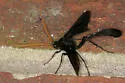
A very distinct and large species with a black body, black wings, and orange-yellow antennae. Distinguishable as an Ophioninae by the laterally compressed abdomen with a distinct, circular knob between the first and second segments. Further distinguishable as a Thyreodon by the very large, bulging propodeum. Unlike most Ophioninae, however, the ocelli are very small and inconspicuous. The basal tarsomere is just slightly shorter than the total length of subsequent tarsomeres, not slightly longer as in Therion or nearly twice as long as in Heteropelma (both Anomaloninae: Gravenhorstiini). Variability Wings with a fulvo-hyaline (yellowish translucent) spot around the discosubmarginal cell Face and legs flavous or ferruginous Although most members of the huge family Ichneumonidae are difficult to identify, this large species is an easily recognized, day active, slow flying parasitoid of sphinx moth caterpillars.
Classification
- Kingdom
- Animalia
- Phylum
- Arthropoda
- Class
- Insecta
- Order
- Hymenoptera (Ants, Bees, Wasps and Sawflies)
- Superfamily
- Ichneumonoidea
- Family
- Ichneumonidae (Ichneumonid Wasps)
- Subfamily
- Ophioninae
- Genus
- Thyreodon
Imported taxonomy record. Source availability varies; see the source references and editorial policy below.
Habitat and Range
Geographic Range
The most northern species of the genus, occurring in our area from latitudes in Texas all the way into Canada, and from the east coast west to MB, se. ID, CO, and AZ. * BugGuide evidence for as far west as SK
Diet and Behavior
Diet: Larval hosts: caterpillars of Sphingidae including Lapara bombycoides (northern pine sphinx moth), Lapara coniferarum (southern pine sphinx moth), and Paonias excaecatus (blinded sphinx moth)
Life History
Diurnal unlike most other Ophioninae, which are nocturnal. ( 3 )
About Flies: the wider group
Order-level background for Hymenoptera, the group containing Thyreodon atricolor. Species-specific details appear above.
Group overview
Hymenoptera includes over 150,000 described species of ants, bees, wasps, and sawflies. Earth harbors approximately 20 quadrillion (20×10^15) ants, with a combined biomass of ~12 megatons of dry carbon - exceeding the combined biomass of all wild birds and mammals (PNAS, 2022).
Ecological role of the group
About 35% of the world's food crops depend on animal pollinators. The chocolate industry, valued at over $100 billion, depends on pollinating flies and midges. Ants are the dominant soil engineers in most terrestrial ecosystems, turning more soil than earthworms in many habitats.
Economic and practical significance of the group
Pollinators contribute $235-577 billion worth of annual global food production (FAO). In the U.S., bee pollination alone benefits crops valued at $18 billion annually, and honey bees are responsible for $5.4 billion in agricultural productivity. Between April 2023-2024, 55.1% of managed honey bee colonies were lost. The U.S. bee population dropped from 5 million to 2.5 million.
Recorded sources for this group: FAO, USDA, EPA, PNAS (2022), US Fish & Wildlife Service. Imported estimates may describe particular regions or reporting periods.
Photos of Thyreodon atricolor (5)
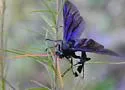
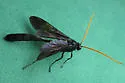
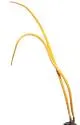
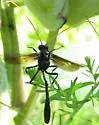
Photo credits: Contributed by tom murray; Additional contributions by john and jane balaban , edanko , PaleoJon
Frequently Asked Questions About Thyreodon atricolor
What is Thyreodon atricolor?
Thyreodon atricolor is a species in the family Ichneumonidae, within the order Hymenoptera.
How big is Thyreodon atricolor?
Very large, ~ 30-35 mm
How do you identify Thyreodon atricolor?
A very distinct and large species with a black body, black wings, and orange-yellow antennae. Distinguishable as an Ophioninae by the laterally compressed abdomen with a distinct, circular knob between the first and second segments. Further distinguishable as a Thyreodon by the very large, bulging propodeum. Unlike most Ophioninae, however, the ocelli are very small and inconspicuous. The basal tarsomere is just slightly shorter than the total length of subsequent tarsomeres, not slightly longer as in Therion or nearly twice as long as in Heteropelma (both Anomaloninae: Gravenhorstiini). Variability Wings with a fulvo-hyaline (yellowish translucent) spot around the discosubmarginal cell Face and legs flavous or ferruginous
Where is Thyreodon atricolor found?
Range: The most northern species of the genus, occurring in our area from latitudes in Texas all the way into Canada, and from the east coast west to MB, se. ID, CO, and AZ. * BugGuide evidence for as far west as SK
What does Thyreodon atricolor eat?
The diet of the Thyreodon atricolor includes Larval hosts: caterpillars of Sphingidae including Lapara bombycoides (northern pine sphinx moth), Lapara coniferarum (southern pine sphinx moth), and Paonias excaecatus (blinded sphinx moth).
What is the life cycle of a Thyreodon atricolor?
Diurnal unlike most other Ophioninae, which are nocturnal. ( 3 )