
True Bugs, Cicadas, Hoppers, Aphids and Allies
Order Hemiptera
The True Bugs, Cicadas, Hoppers, Aphids and Allies (Order Hemiptera) includes 7,349 species across 120 families and 1,727 genera in our directory.
About True Bugs, Cicadas, Hoppers, Aphids and Allies
Hemiptera (true bugs) includes over 80,000 described species across cicadas, aphids, leafhoppers, shield bugs, and bed bugs. Aphids alone cost global agriculture an estimated $2.5 billion annually in crop losses.
Economic Impact
The brown marmorated stink bug (Halyomorpha halys) caused $37 million in apple crop losses in a single year in the U.S. Mid-Atlantic region. Bed bug infestations in the U.S. increased by 500% between 2001-2010, costing the hotel industry hundreds of millions annually.
Ecological Role
Many Hemiptera are essential food sources for birds and predatory insects. Cicadas provide massive nutrient pulses during emergence events - a single Brood X emergence can involve trillions of individuals across 15 states.
Families in Hemiptera (120)
Species in Hemiptera (7,349)
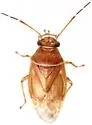
Tropidosteptes vittifrons
Tropidosteptes vittifrons
Identification: Similar to adustus , "but distinguished by the narrower calli with black cephalic margins and the more closely punctate pronotal disk." In females, "black marks on frons and calli frequently reduced to dark brown."
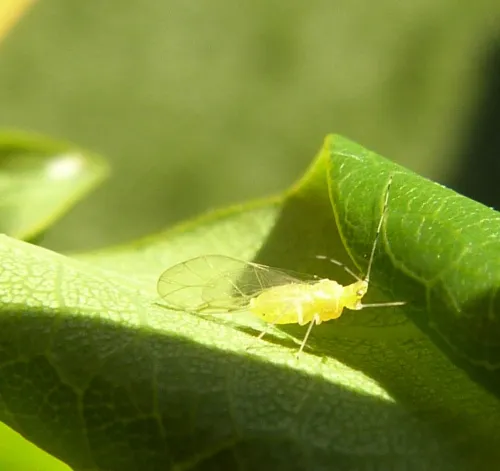
Tuberculatus annulatus
Tuberculatus annulatus
Immature Tuberculatus annulatus are yellowish or green with pale antennae apart from black bands at the tips of the segments. The adult winged viviparae are very variable in colour, ranging from yellowish, greyish-green or pink to purple in summer. F
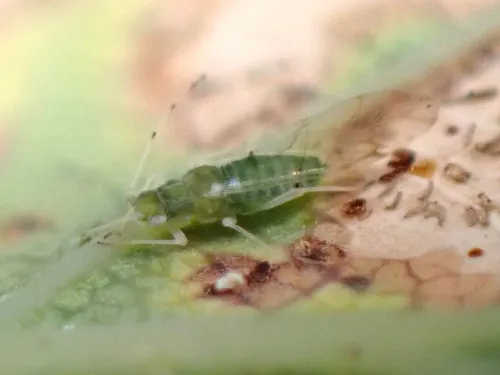
Tuberculatus borealis
Tuberculatus borealis
Length 1.9-2.3mm. Alate (winged) females are generally pale blue-green, yellow mottled with green, or light yellow. Unless identified by a recognised expert, a photo is required and the specimen should be examined with a microscope. In the comments b
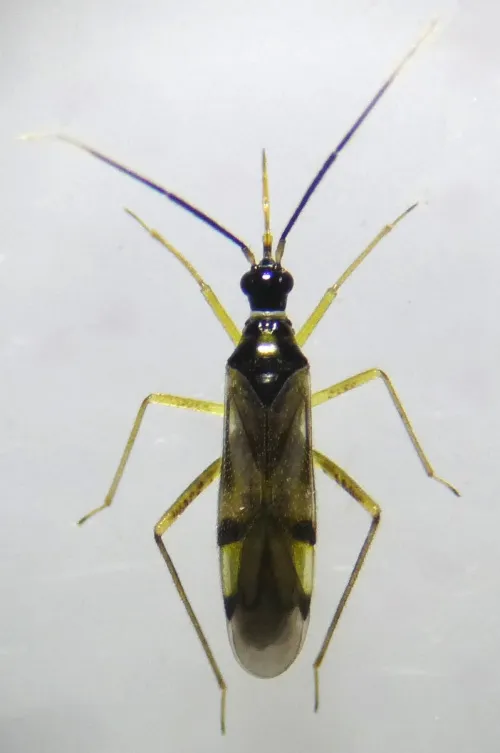
Tupiocoris rhododendri
Tupiocoris rhododendri
Length 4 to 5 mm. The structure and markings are distinctive. Features to look for are the black pronotum and white collar, as well as the antennal pattern. The eyes are placed relatively far forward. Around areas where Rhododendron is present. First
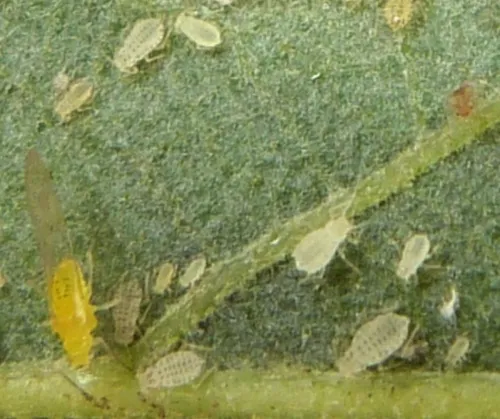
Turkey Oak Aphid
Myzocallis boerneri
The body length of Myzocallis boerneri alatae is 1.3 to 2.2 mm. For most of the year, immature M. boerneri are very pale yellow, or whiish with paired dusky spinal and marginal spots and many capitate hairs on the dorsum. Adult viviparous alatae of M
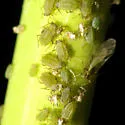
Turnip Aphid
Lipaphis pseudobrassicae
This species is often confused with Lipaphis erysimi . As far as we know, L. erysimi only occurs in northern Europe, whereas L. pseudobrassicae is widely distributed. The two species are extremely similar, but L. pseudobrassicae has relatively longer
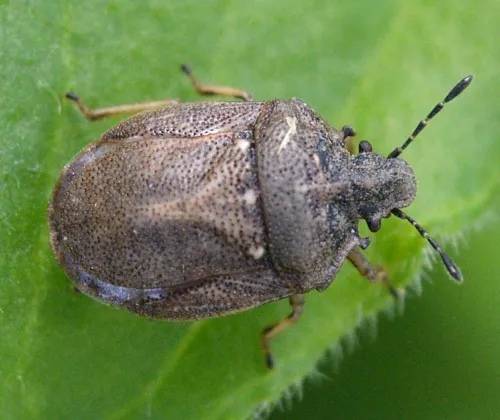
Turtle Shieldbug
Podops inuncta
Length 5 to 6 mm. A fairly small shieldbug with two unmistakeable features; a long tongue-like scutellum which reaches the rear of the abdomen and two small projections on the pronotum at each side of the head. Found in dry and damp habitats, it is s
Tuxedo drakei
Tuxedo drakei
Identification: "Recognized by the relatively small size in combination with the pale antennae, the extensive cream-colored fascia reaching to R-M, athe hind femur castaneous on distal one-half, and the habit of breeding on Fremontodendron ."
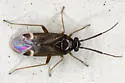
Tuxedo flavicollis
Tuxedo flavicollis
Identification: Male: relatively large size, uniformly dark coloration of the dorsum, except for the pale base of the cuneus
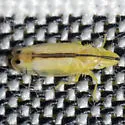
Two-spotted Leafhopper
Sophonia orientalis
Identification: Adults are yellow with a brown stripe down the center of the back and two prominent eye spots on the tail end; its real eyes being concolorous with the body, the bug seems to be moving backwards when walking. (Jones et al.) earliest N
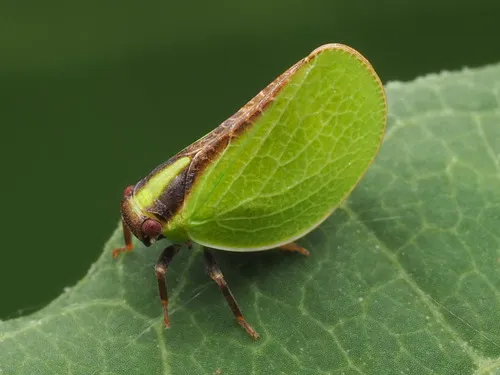
Two-striped Planthopper
Acanalonia bivittata
Identification: Reticulation prominent over all the forewings usually green (occasionally pink) with broad prominently-veined wings held vertically; reddish stripe along inner edge of wing the most common and widespread member of the genus
Tylocentrus quadricornis
Tylocentrus quadricornis
Identification: "Near Tylocentrus reticulatus VanDuzee but differing principally in the shape of the head and clypeus, the shape of the posterior process and in having four distinct pronotal horns in the female." - Funkhouser, 1919
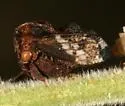
Tylopelta gibbera
Tylopelta gibbera
rare in FL At least one cryptic species in the U.S. which is separated by COI, but morphologically indistinct.
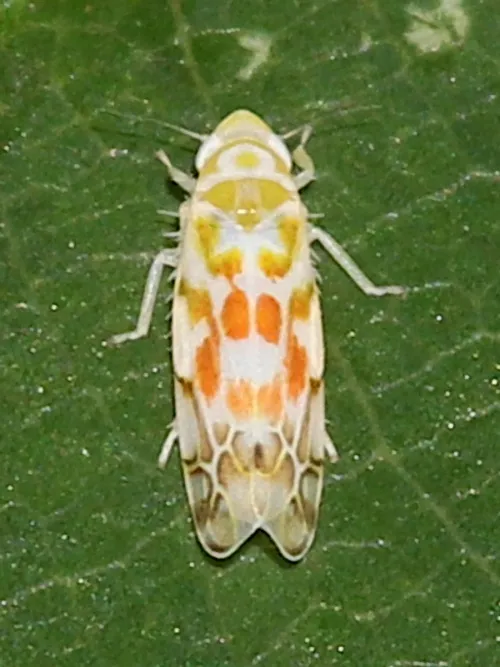
Typhlocyba quercus
Typhlocyba quercus
Length 3 to 3.5 mm. The pattern of orange and yellow spots and darker marks at wing apex is unique in UK leafhoppers. Mianly Oak, plus Hornbeam, Plum, Blackthorn and Birch. Common (ref: UK Auchenorrhyncha checklist 2021 ) Few records for such a disti
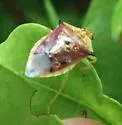
Tyrannocoris jole
Tyrannocoris jole
Identification: Pale with contrastingly dark humeral angles and straight, smooth anterolateral pronotal margins Apparently has been detected in FL since 1985 in limited numbers (pers. comm w/S. Halbert to AM) but apparently becoming more established
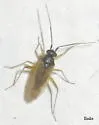
Tytthus fuscicornis
Tytthus fuscicornis
As of the time of the 2012 revision, this species was only known from a macropterous male and a brachypterous female from Grant County, NM.
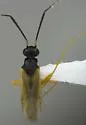
Tytthus piceus
Tytthus piceus
Identification: Per Jason Botz, "The one US species with a bulbous head, uniformly pale legs, and antennal segment I pale with a dark basal ring."
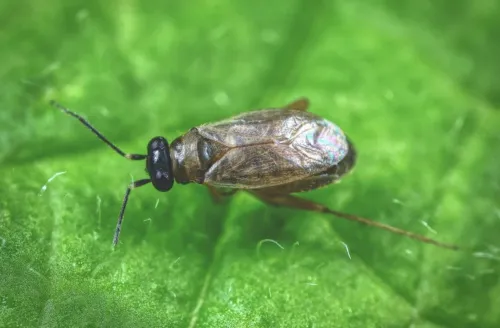
Tytthus pygmaeus
Tytthus pygmaeus
2.6 to 3 mm; Ant1 dark with apex pale; pronotum with variable amounts of black; pubescence of short pale hairs. Fore-wings pale greenish yellow, legs yellow. No additional images available for this species.
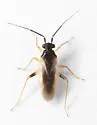
Tytthus vagus
Tytthus vagus
Identification: macropterous; head, pronotum, scutellum, and antennae black; legs pale, with distal ⅓‒½ of metafemora infuscated
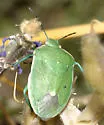
Uhler's Stink Bug
Chlorochroa uhleri
Identification: unlike other congeners, C. sayi and uhleri both have a narrow embolium. In uhleri it widens slightly apically whereas in sayi the embolar suture parallels the hemelytral margin. Also, sayi has a purple membrane, vs clear in uhleri . (
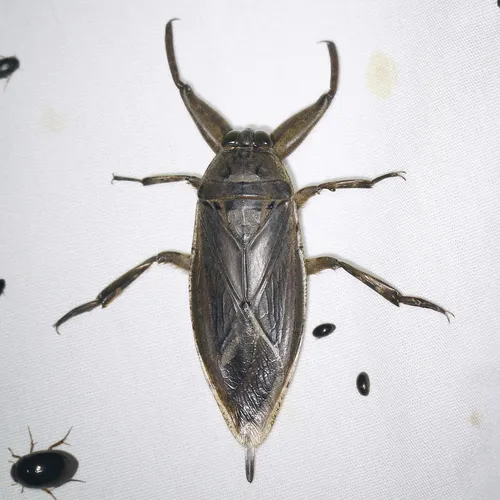
Uhler's Water Bug
Lethocerus uhleri
Identification: middle and hind legs distinctly banded; interocular space not over three-fourths width of eye; costal margin almost straight and subparallel very common species, because of dispersal flights
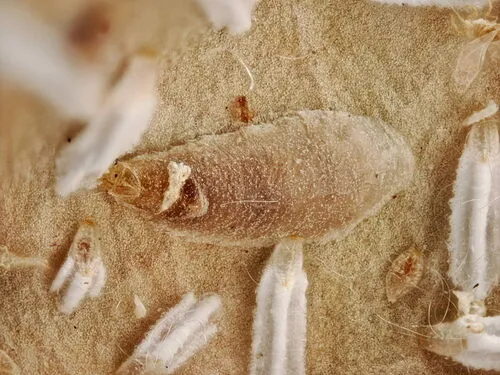
Unaspis euonymi
Unaspis euonymi
Euonymus Scale is a tiny, sap-sucking insect that infests the stems and foliage of Euonymus. This insect has a soft flattened body that is covered by a shell or scale. Male and female Euonymus Scale Insects differ in appearance. The males are mainly
Undescribed Idiocerus Species
Idiocerus n-species
Identification: In many aspects resembles I. albolinea (found in Canada and adjacent states) but is southerly in distribution; has also been confused with I. alternatus : some specimens from North Carolina in NCSU collection labeled as alternatus act
Unoka gillettei
Unoka gillettei
Identification: the black and white bands are distinctive, as is the bluntly rounded head much wider than the thorax --Andy Hamilton
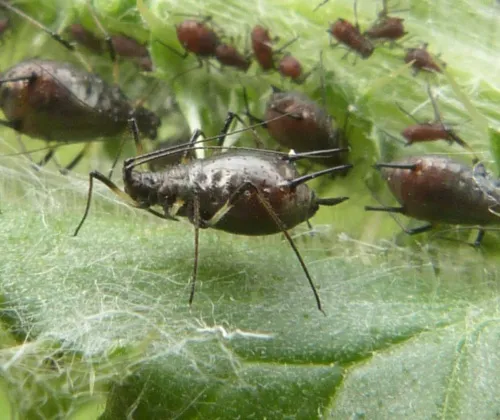
Uroleucon aeneum
Uroleucon aeneum
The body length of the adult Dark-tailed Thistle Aphid ( Uroleucon aeneum ) apterae is 3.0 to 4.3 mm. The cauda (tail) in this species is black which helps to identify it (see below). Large Thistle Aphid ( Uroleucon cirsii ) is similar and also uses
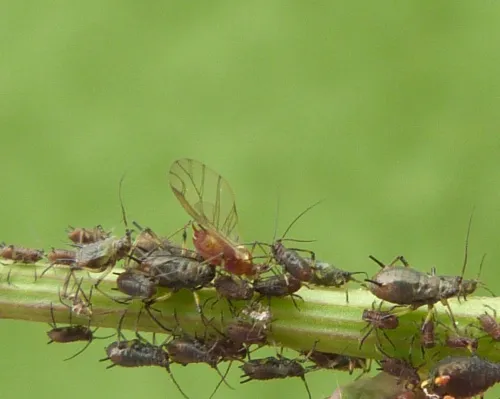
Uroleucon hypochoeridis
Uroleucon hypochoeridis
Uroleucon hypochoeridis is a large pinkish-grey aphid with pale legs that are darkened towards the apices of the segments. Immatures are grey with a reddish-pink suffusion around the bases of the siphunculi. Uroleucon cichorii also occurs (rarely?) o
Uroleucon luteolum
Uroleucon luteolum
Closely related and very similar to U. caligatum , which has a more northern distribution. Blackman & Eastop note the relationship needs to be studied further.
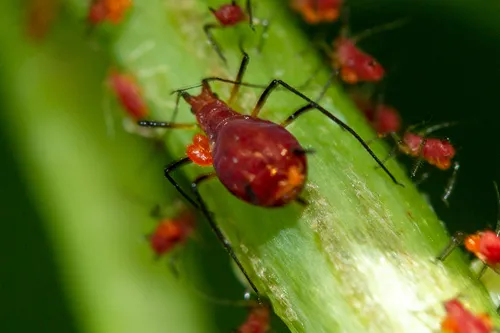
Uroleucon obscuricaudatum
Uroleucon obscuricaudatum
Identification: Red with smoky or dusky cauda, darker than abdomen.
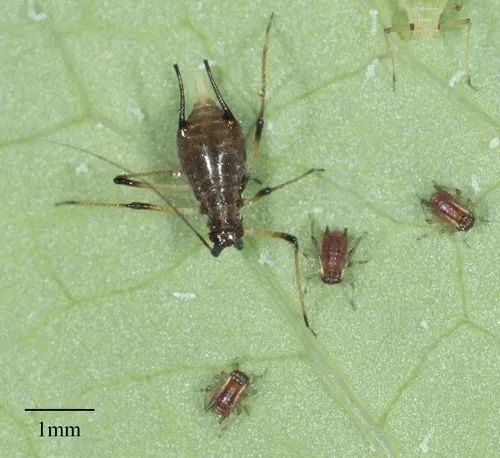
Uroleucon sonchi
Uroleucon sonchi
This is a large, dark brownish aphid with a glossy shine. Thought to be common and widespread in Britain, but little recorded. https://influentialpoints.com/Gallery/Uroleucon_sonchi_Large_sowthistle_aphid.htm
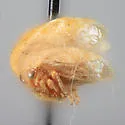
Vanduzea nolina
Vanduzea nolina
Identification: Adapted from description: "Slightly larger than typical [ V. ] laeta , with a broader and slightly more arched profile to pronotum. The pronotum is less pubescent, the apical cell is even broader and shorter. Color bright green in lif
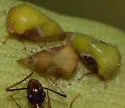
Vanduzea segmentata
Vanduzea segmentata
Has seemingly spread east from sw US (see: [cite:2469147] ) over time, as have some of its weedy western plant associates such as cowpen daisy and common sunflower.
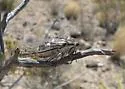
Variegated Cactus Dodger
Cacama variegata
Identification: NOTE: "reddish-brown coloration to the pronotum and posterior edging distinctly reddish-brown " TL - "San Benito, Texas" Refer to pages 68-79 for details on th Cacama spp. in the USA (variegata p. 73) Common and alert!
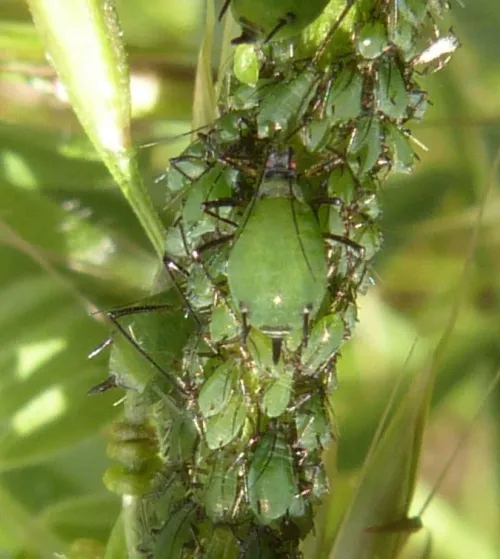
Vetch Aphid
Megoura viciae
Aphids can rarely be described as handsome creatures, but Megoura viciae is perhaps as close as it gets! A large shiny green globular bodied aphid with black head, legs and antennae. It also has startling red eyes. The leaves at the tip of the shoot
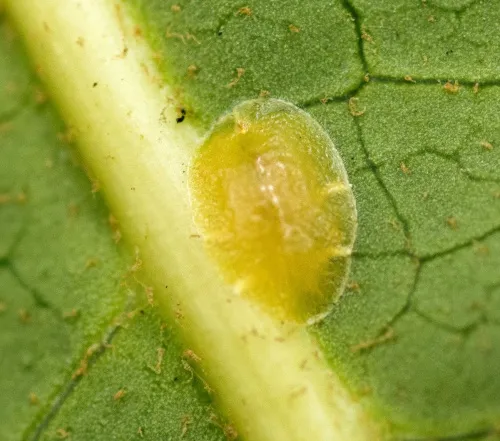
Viburnum Cushion Scale
Lichtensia viburni
This species is mainly found on the foliage of Viburnum tinus and Ivy. Adult females are flat, oval, pale yellow and up to 4mm long. Males are 2.5mm long, white and elongate ovals. In May-June the females become covered with a white fluffy wax coatin
Virginia Creeper Treehopper
Telamona ampelopsidis
Identification: variable in coloration, often sexually dimorphic. shape of crest also somewhat variable. see mating pair of two color forms here: variant with almost sinuate crest a la Heliria : typical form:
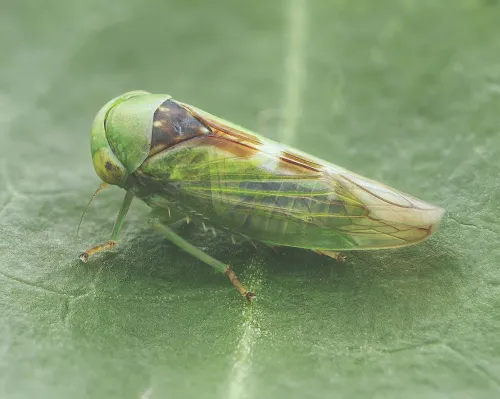
Viridicerus ustulatus
Viridicerus ustulatus
Length 4-5mm. A bright green leafhopper, small than others in this subfamily, with the scutellum and inner margins of the wings dark reddish-brown. The antennae are long. Good photographs of a specmen required; from top, side and face; note host plan
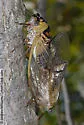
Walker's Cicada
Megatibicen pronotalis
1) Songs of pronotalis and dealbatus are identical. 2) Appears to cross with dealbatus - with which it may be conspecific (?). 3) Both pronotalis and dealbatus will call well after sunset (during the day upto ~10:00pm or later), an unusual behavior f
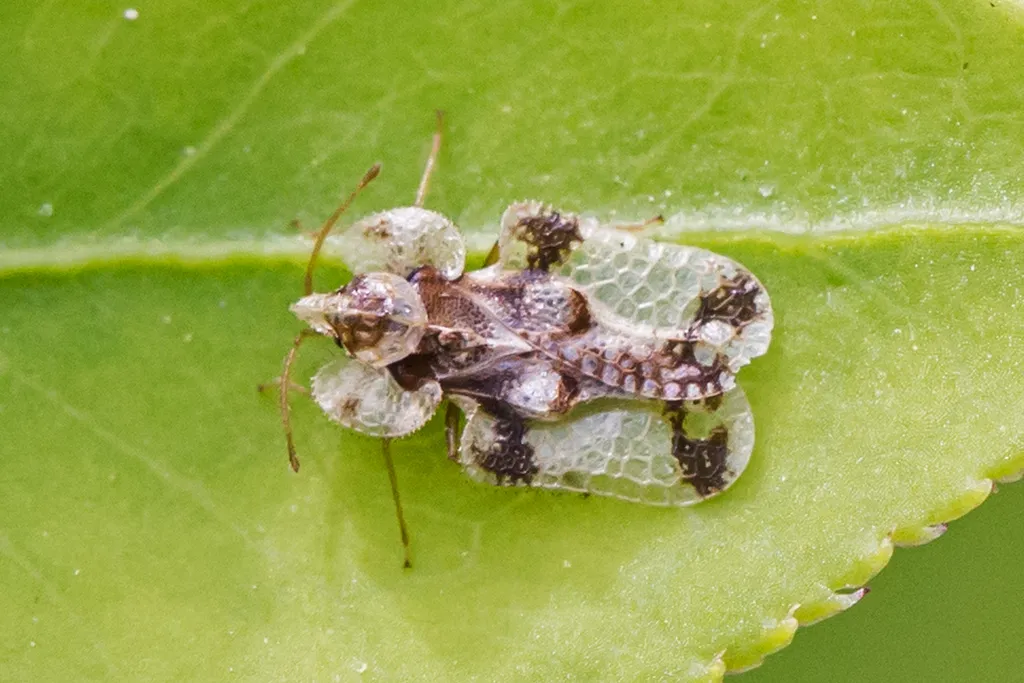
Walnut Lace Bug
Corythucha juglandis
"adults and nymphs are found together on the lower surfaces of walnut leaflets... More than 100 nymphs and adults may be present on one leaflet. Areas where they have fed are easily recognized because of cast skins, excrement, and dark, discolored pa
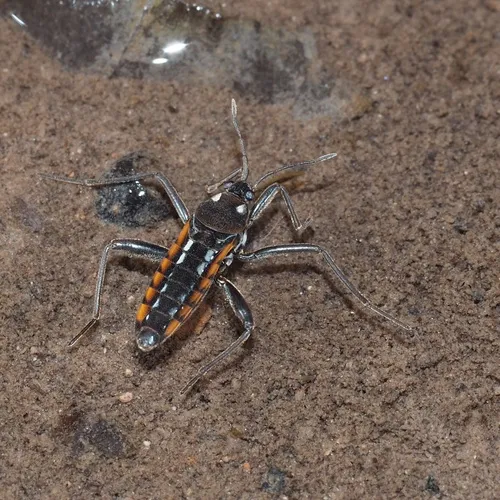
Water Cricket
Velia caprai
Length: up to 8.5mm. May be winged or wingless. It has a stouter and shorter body than pondskaters, with two transverse red lines along the abdomen in adults plus pairs of white spots on the thorax and abdomen. Velia saulii is very similar, though mu
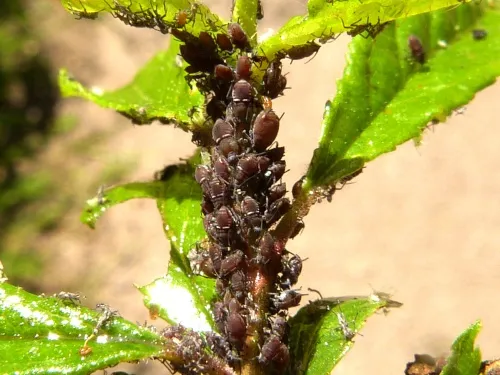
Water Lily Aphid
Rhopalosiphum nymphaeae
Apterae of Rhopalosiphum nymphaeae are reddish-brown on the primary host ( Prunus species – Plum and Blackthorn), and more or less shiny reddish-brown to dark olive on the secondary host (Water-lily). R. nymphaeae alatae are shining brown, sometimes
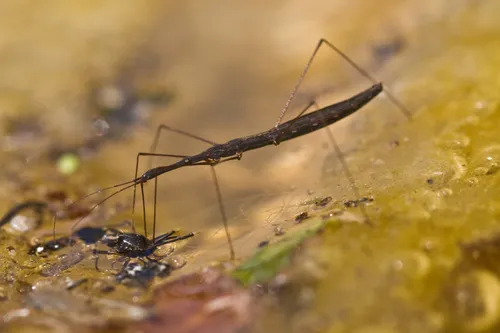
Water Measurer
Hydrometra stagnorum
Length about 13mm. It has a very long, thin head, a slender body and its antennae resemble a fourth pair of legs. Usually wingless but occasionally fully winged. It often has a dark greyish or even black appearance. Ditches, ponds and slow moving str
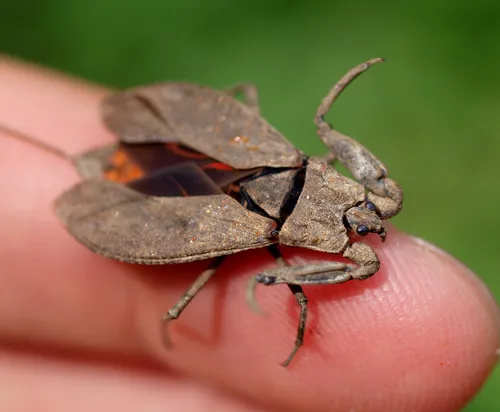
Water Scorpion
Nepa cinerea
The water scorpion is a large, brown, leaf-shaped predatory water bug. The long tail acts as a breathing tube to penetrate the water surface, exactly like a snorkel. Clean well-vegetated ponds and other still or gently flowing water. Feeds on Insects
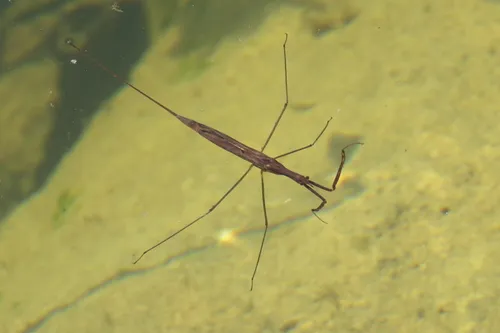
Water Stick Insect
Ranatra linearis
The Water Stick Insect is the largest water insect in the UK and looks like a mantis. It has a 4 cm body length (7 cm including the breathing tube). It relies on camouflage for protection, when threatened it will adopt a stiff and dead posture to mim
Weda tumidifrons
Weda tumidifrons
Holotype: Male, Plano, Texas, July 1907, E.S. Tucker, U.S.N.M. type no. 61517. Paratypes: Texas: male, Esperanza Ranch, Brownsville, C. Schaeffer; male and female, College Station, April 8, 1928, H.G. Johnston; and May 20, 1928, J.C. Gaines; female,
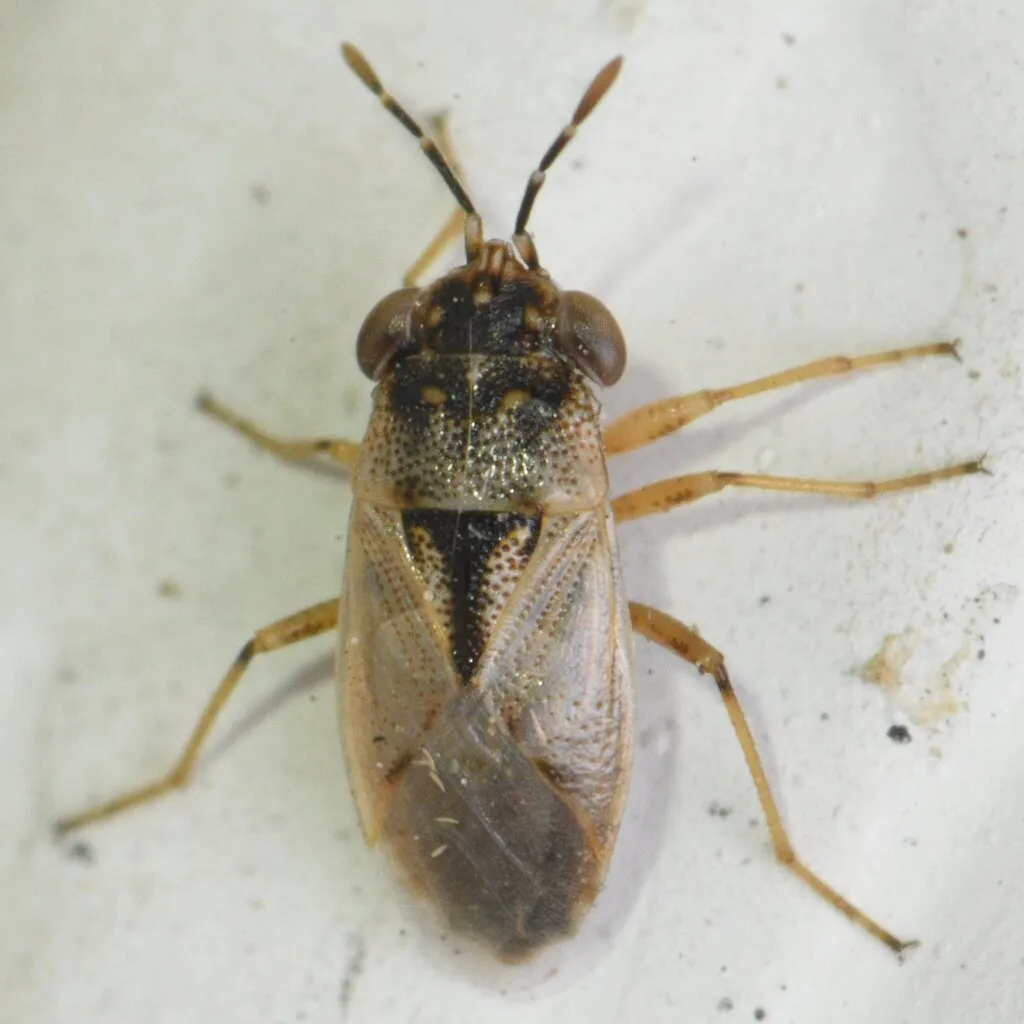
Western Big-eyed Bug
Geocoris pallens
Males of G. pallens and G. bullatus have white pigmentation on dorsal surface of the antennae; females do not (Tamaki & Weeks 1972)
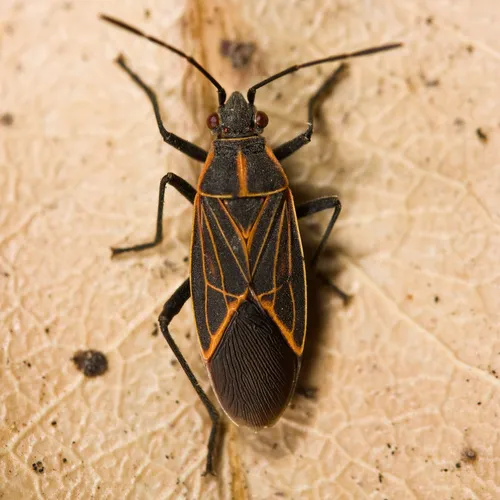
Western Boxelder Bug
Boisea rubrolineata
Identification: like B. trivittata , but veins of the corium are prominent and red-colored
Western Bush Cicada
Megatibicen tremulus
Identification: This species can be separated from its close relative Tibicen dorsatus by using both morphological and behavioral characteristics. Morphologically, the sub-costa is the same color as the costa in T. tremulus . The tymbal covers are bl
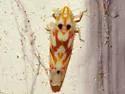
Western Grape Leafhopper
Erythroneura elegantula
When a share parasitoid, Anagrus epos is introduced as a control, the invading leafhopper species, Erythroneura variabilis replaces the native E. elegantula .
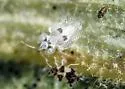
Western Sycamore Lacebug
Corythucha confraterna
Identification: Differs from the eastern C. ciliata by dark-marked wing veins and hood carina, many more rows of spines on wings and paranota, and smaller size.
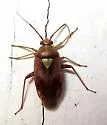
Western Tarnished Plant Bug
Lygus hesperus
Identification: Recognized by long A2 and A3, long labium, always reaching the base of the abdomen, dense, long hairs, dense punctation, sometimes overall reddish-cast, and usually red apex of the tibiae, especially the metatibia of otherwise pale fe
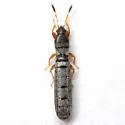
Wheelerodemus muhlenbergiae
Wheelerodemus muhlenbergiae
All specimens from Oklahoma were taken on M. reverchonii , a short bushy grass, whereas those in Texas were collected mostly on the much larger M. lindheimeri , with only a few found on the co-occurring M. reverchonii .
White Pine Aphid
Cinara strobi
Identification: Adults are longlegged, and spider-like in appearance. The body is shiny dark brown with a white stripe down the middle of the back. White powdery spots on the sides are often present. Heavy infestations of aphids may kill young trees
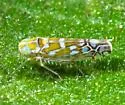
Wild Olive Leafhopper
Diceratalebra interrogata
Identification: This small species with its extensive pale green markings seems quite distinct in character from any previously described member of this genus. Male holotype, female allotype, 36 paratypes, Starr County, TEXAS, June 2, 1939, D. J. and
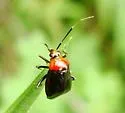
Wild Onion Mirid
Metriorrhynchomiris dislocatus
Identification: exceedingly variable; in some specimens entire forewing black, except costal margin and base of radial vein
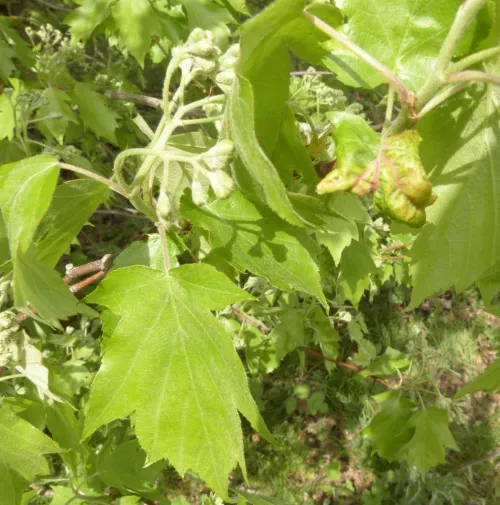
Wild Service Aphid
Dysaphis aucupariae
Apterae of the aphid Dysaphis aucupariae cause pseudogalls on the leaves of Wild Service-tree (Sorbus torminalis) The pseudogall is initially pale yellow green, but soon becomes tinged with red. Its form is somewhat variable, either curled from the l
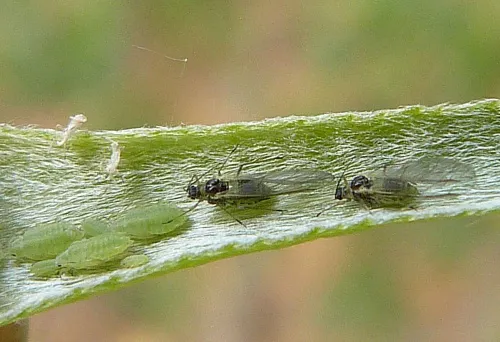
Willow-carrot Aphid
Cavariella aegopodii
The body length of Cavariella aegopodii apterae is 1.5 to 2.8 mm, they are greenish or reddish. The alate of Cavariella aegopodii has a central black patch on the abdominal dorsum, and a dark cauda and siphunculi. Unless identified by a recognised ex
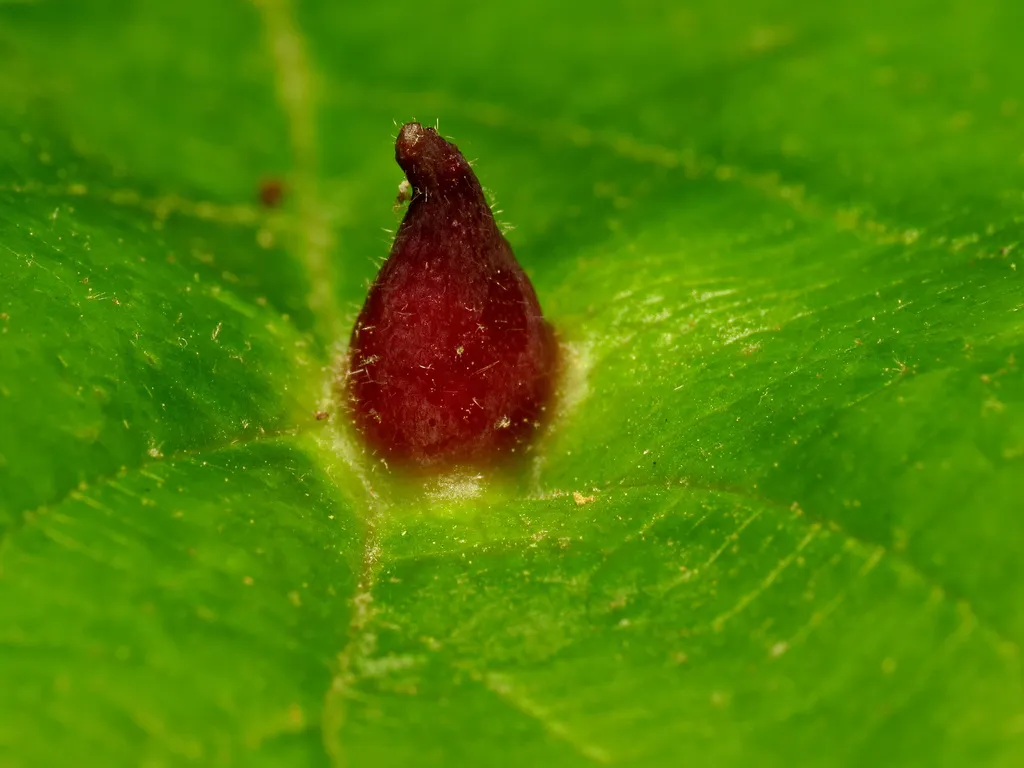
Witch Hazel Cone Gall Aphid
Hormaphis hamamelidis
At lower altitudes they have a secondary host: river birch ( Betula nigra ) but at higher ones they have fewer generations and only one host, witchhazel. They may be two separate species.
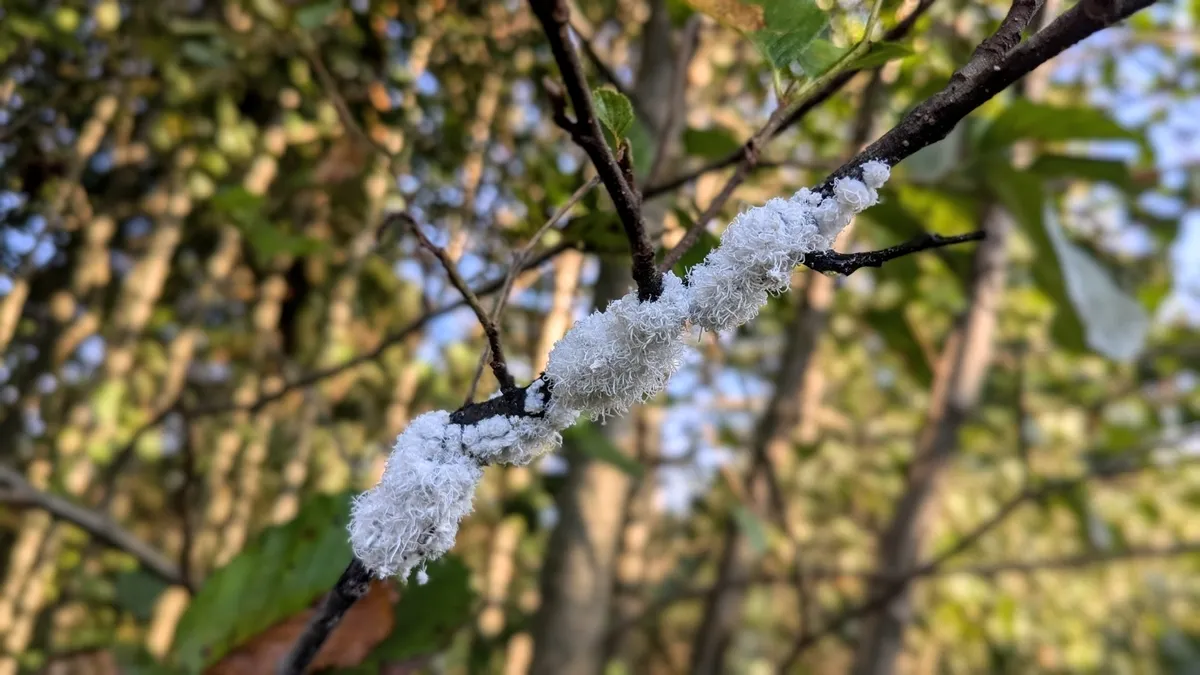
Woolly Alder Aphid
Prociphilus tessellatus
Identification: Gray to black in color. It gets its name from the fluffy, white wax found on its abdomen. Colonies are obvious because of their white, fuzzy appearance. They are usually seen on leaves, twigs or bark. Although infested leaves shrivel
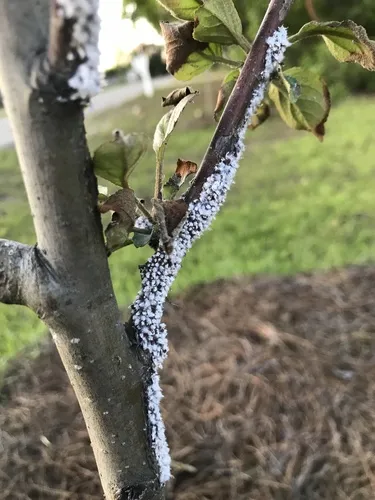
Woolly Apple Aphid
Eriosoma lanigerum
Identification: Reddish-purplish with characteristic bluish-white woolly masses of wax on its body This aphid transmits perennial canker. It is more of a problem when pesticides have destroyed its natural enemies. The larvae of Heringia calcarata (Sy
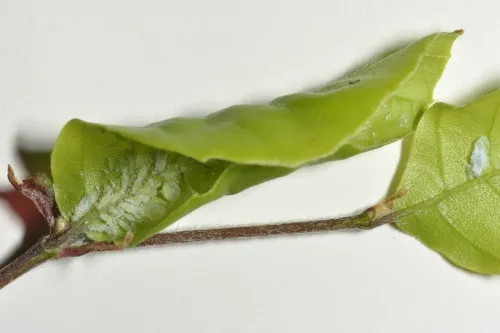
Woolly Beech Aphid
Phyllaphis fagi
The aphids are covered entirely by white waxy filaments that are secreted from its body. The aphids cause irregular upward bulges on the leaves, with the aphids living in shallow depressions underneath and causing the leaf to curl downwards Thought t
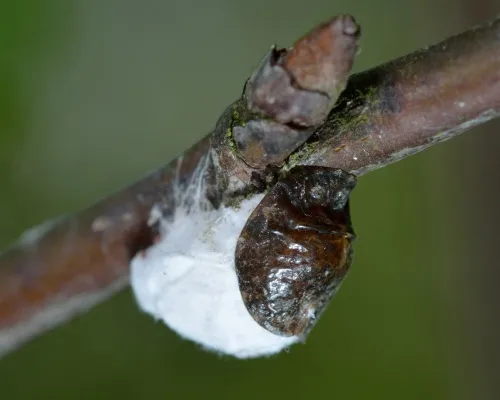
Woolly Vine Scale Insect
Pulvinaria vitis
Adult females are oval, moderately convex, with transverse wrinkles, dark brown; up to 9 mm long. Ovisac forms beneath female body, which is tilted upwards; ovisac strongly convex, white, about 8 mm long. Feeds on a wide range of woody plants. It has
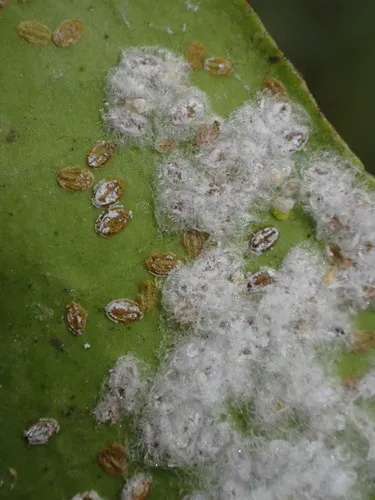
Woolly Whitefly
Aleurothrixus floccosus
earliest record in our area: FL 1909 (not established at that time) pest of citrus
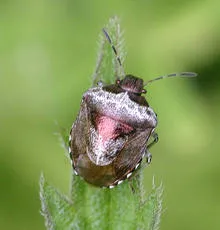
Woundwort Shieldbug
Eysarcoris venustissimus
Length 5-7 mm. The Woundwort Shieldbug is a small greenish-grey species. The head and the front of both the pronotum and scutellum are copper coloured, while the connexivum is marked with black and white. Adult: All year - new adults may be found fro
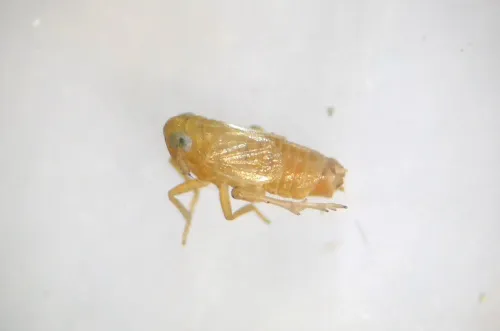
Xanthodelphax straminea
Xanthodelphax straminea
Length 2.5 to 3.5 mm (macropters ~4 mm). Entirely yellow-orange in colour. Examination of genitalia will confirm ID; Male has very short parameres compared to X flaveola. The nationally rare Xanthodelphax flaveola males have longer parameres; not rec
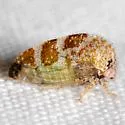
Xantholobus arenatus
Xantholobus arenatus
Identification: HOLOTYPE Type series of 8 adult spmns plus nymphs coll’ed by E. D. Ball on May 5, 1934 in “Leverton”, Texas.
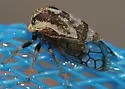
Xantholobus intermedius
Xantholobus intermedius
Most certainly not a true Xantholobus . It is more closely related to certain Cyrtolobus species.
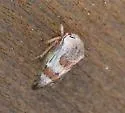
Xantholobus nigrocinctus
Xantholobus nigrocinctus
Identification: Dets. Solomon Hendrix, 2023 Described from one female taken by Van Duzee near Manitou, Colorado August 2d 1900.
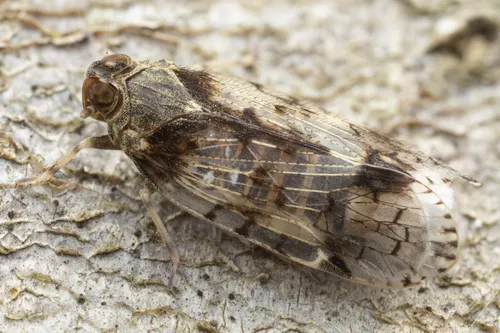
Xenoliarus placitus
Xenoliarus placitus
The most commonly encountered pentastirine cixiid in the southeastern United States. Does not appear to get farther north than Massachusetts. Highly variable in color. Note sexual dimorphism: female male dark form (always female) pale form
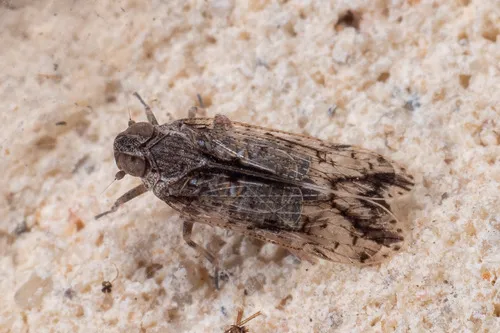
Xenoliarus teximus
Xenoliarus teximus
Identification: Holotype Type Locality: Texas: Bastrop National [sic] Park, 1.V.1941, D.J. & J.N. Knull Collrs.
Xerophloea foveolata
Xerophloea foveolata
Identification: A yellowish-brown to green species with a distinctive "hump" at the posterior end of the pronotum. "Crown with anterior margin broadly angular, not produced anteriorly; interocular width about twice median length. Pronotum with median
Xerophloea majesta
Xerophloea majesta
Identification: "Crown with anterior margin distinctly angulate (much more so than in major ) strongly produced anteriorly; interocular width about 1.5 times median length. Pronotum with median length about equal to or slightly greater than median le
Xerophloea major
Xerophloea major
Identification: "Crown with anterior margin broadly rounded, strongly produced anteriorly; disk nearly flat; interocular width about 1.5 times median length. Pronotum with median length slightly greater than median length of crown; width about equal
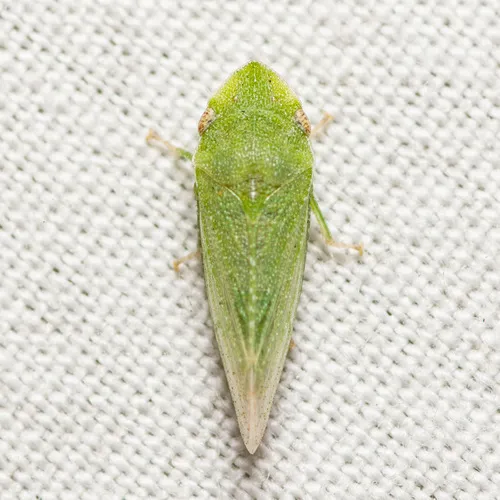
Xerophloea peltata
Xerophloea peltata
Identification: "Crown with anterior margin broadly angulate; interocular width about 1.5 times median length. Pronotum with median length about 1.75 times median length of crown, slightly broader than basal half of head; posterior two-thirds inflate
Xerophloea viridis
Xerophloea viridis
Identification: "Crown with anterior margin angulate, slightly produced anteriorly; interocular width about 1.75 times median length. Pronotum with median length about twice median length of crown, distinctly broader than basal half of head. Body uni
Xestocephalus fulvocapitatus
Xestocephalus fulvocapitatus
Identification: The dorsum is ochre-yellow, and the wing markings are coarser, more checkered than in X. superbus.
Xestocephalus lunatus
Xestocephalus lunatus
the identity of this species is unclear; it may possibly be a synonym of X. superbus . no reliable characters are currently known for differentiating the two species.
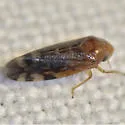
Xestocephalus provancheri
Xestocephalus provancheri
Identification: A brown species with unmarked produced vertex Head narrower than pronotum, a little less than twice as wide as long, an eighth longer at middle than next to eye, strongly produced. Pronotum one-fourth longer than vertex, a little more
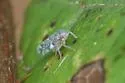
Xestocephalus superbus
Xestocephalus superbus
"This tiny leafhopper is an 'ant-guest', living as an immature in the tunnels of ant nests, where it presumably feeds on the roots of plants. Adults fly around a lot, looking for other ant nests. They are quite common transcontinentally, although sel
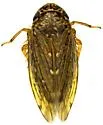
Xestocephalus tucsoni
Xestocephalus tucsoni
Identification: Face brownish black with trace of pale arcs on front, on upper part a dark bat-shaped figure enclosed by light area. Markings of vertex, pronotum and scutellum dark brown to black on tan background; elytra largely semihyaline, with da
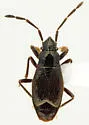
Xestocoris tibialis
Xestocoris tibialis
Identification: Male readily distinguished by the greatly expanded fore tibiae. Based on details in O'Donnell's redescription of both X. tibialis and X. nitens , the females of X. nitens may be distinguished by the more obscure outer border of the cl
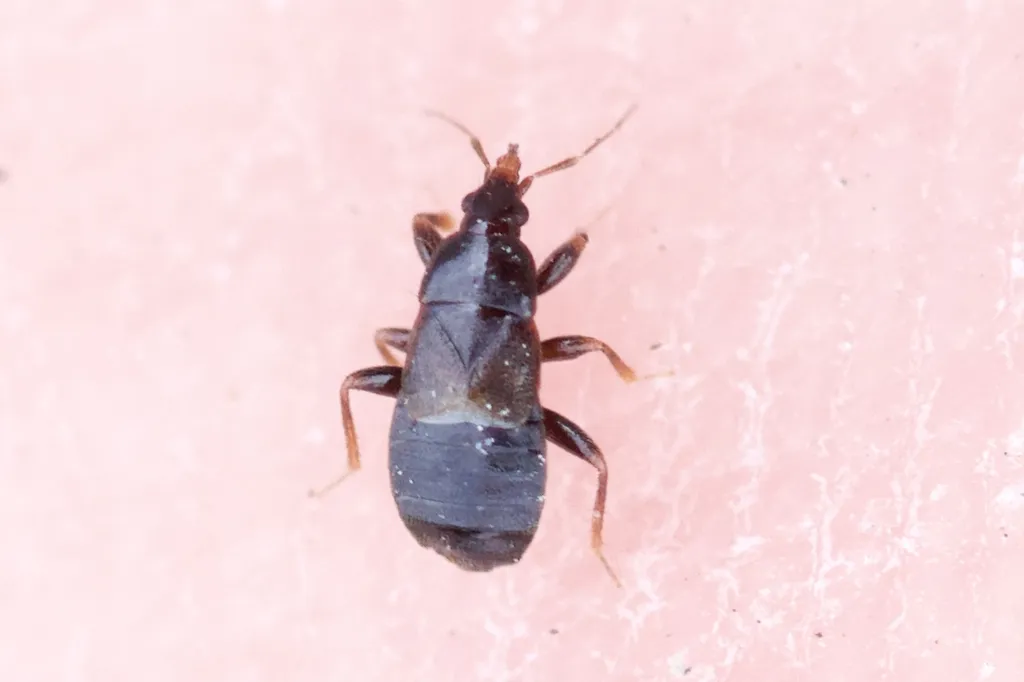
Xylocoris cursitans
Xylocoris cursitans
Identification: Both macropterous (winged) and brachypterous (reduced wings) forms known listed as native to Canada and the US in ITIS ( 3 )
Xylocoris sordidus 0
Xylocoris sordidus
Identification: dorsal habitus photo (Santos et al. 2020) • holotype earliest record in our area: TX 1871
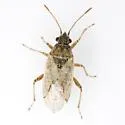
Xyonysius adjunctor
Xyonysius adjunctor
Identification: scan-bugs.org - photos from Texas Tech Univ. Det. P.D. Ashlock, 1972 Type Locality: Texas
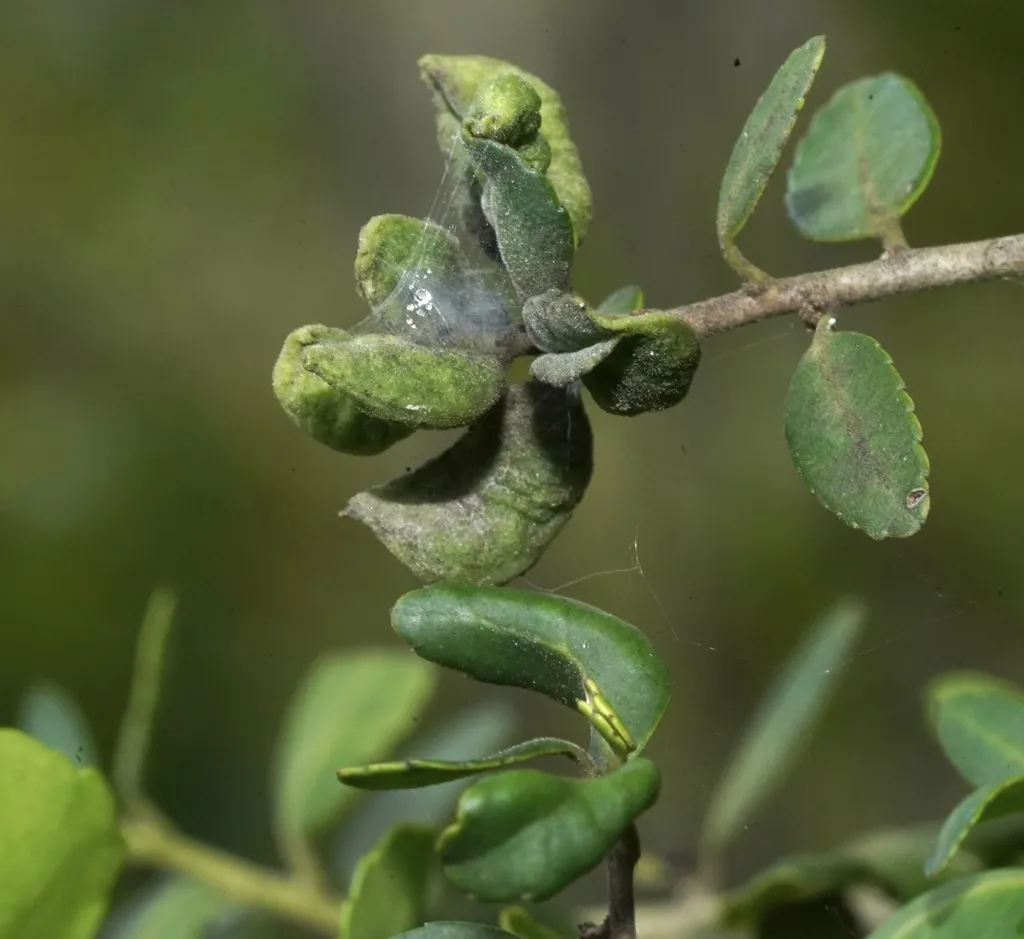
Yaupon Psyllid
Gyropsylla ilecis
Identification: Cubital cell very elongate; pterostigma large; clypeus tubular and projecting perpendicularly from underside of head
Yellow Clover Aphid
Therioaphis trifolii
Identification: Therioaphis adults have a dark band from eye to eye on the ventral side of the face. [Natalie Hernandez email] Introduced from Europe, 1879
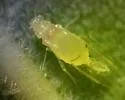
Yellow Pecan Aphid
Monelliopsis pecanis
Identification: Similar to Monellia caryella, but holds the wings roof-like over the abdomen at rest, instead of flat.
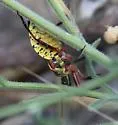
Yellow-bellied Bee Assassin
Apiomerus flaviventris
Identification: Sympatric with the following members of the crassipes group (separated by genitalia): A. californicus , A. cazieri , A. montanus , and A. spissipes . Easily separated from A. californicus and A. montanus by their black coloration. S
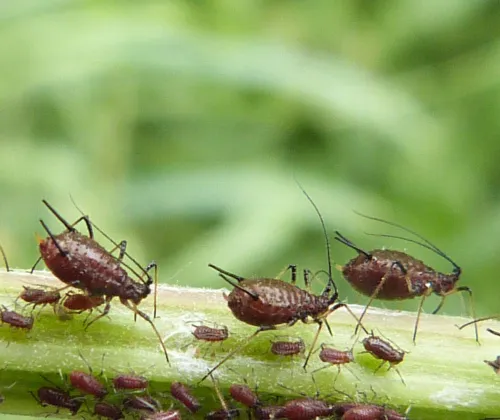
Yellow-legged Knapweed Aphid
Uroleucon jaceicola
Apterae of Uroleucon jaceicola are dark bronze-brown but in this species the legs are mainly yellowish with black around the 'knees'. and the cauda (tail) is also pale. Uroleucon jaceicola lives on the stems of Common Knapweed. In spring it is found
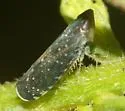
Yellowfaced Leafhopper
Scaphytopius frontalis
Identification: Vertex and thorax pale yellow, heavily marked with deep fuscous-brown so as to appear largely dark; forewing ochreous, closely irrorated with deep fuscous-brown so as to appear largely that color, with diagonal whitish areas in the co
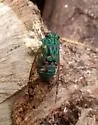
Zammara smaragdula
Zammara smaragdula
A tropical species that has a single record from Florida, undoubtedly emerged from the soil of an imported plant.
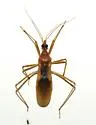
Zeluroides americanus
Zeluroides americanus
Identification: Easily separated from the other United States reduviines by the testaceous coloring and large size.
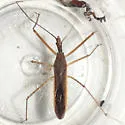
Zelus cervicalis
Zelus cervicalis
Zelus cervicalis (Zelus cervicalis) is a species in the family Reduviidae, commonly known as assassin bugs, belonging to the order Hemiptera (True Bugs, Cicadas, Hoppers, Aphids and Allies). It is classified within the subfamily Harpactorinae, tribe
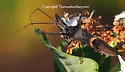
Zelus janus
Zelus janus
Identification: coloration extremely variable, immatures pale w matching leg banding recent addition to our fauna, not treated in Henry & Froeschner (1988) ( 5 ) , regularly recorded in s. TX since 2016 ( 4 )
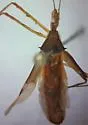
Zelus nugax
Zelus nugax
second record , also from the Sabal Palm Sanctuary ( 3 )
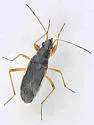
Zeridoneus knulli
Zeridoneus knulli
Identification: darkened, distally thickened (clubbed) penultimate ant. segment Dets. M. A. Quinn Type Locality: male: Gillespie Co., V-7-'46. In collection of The Ohio State University. Entomolgists Josef and Dorothy Knull spent many summers collect
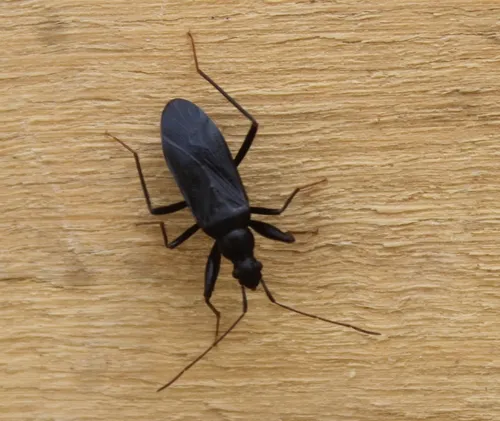
Zeropamera nigra
Zeropamera nigra
Identification: Drawing of female paratype , entire body and the femora black; very nearly nude; antennae, rostrum, tibia and tarsi sordid fusco-testaceous. Holotype: Male, Mt. Wilson, Los Angeles Co., California, February 2, 1940 (Collected by J. R.
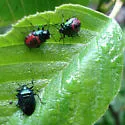
Zicrona americana
Zicrona americana
Zicrona americana (Zicrona americana) is a species in the family Pentatomidae, commonly known as stink bugs, belonging to the order Hemiptera (True Bugs, Cicadas, Hoppers, Aphids and Allies). It is classified within the subfamily Asopinae, suborder H
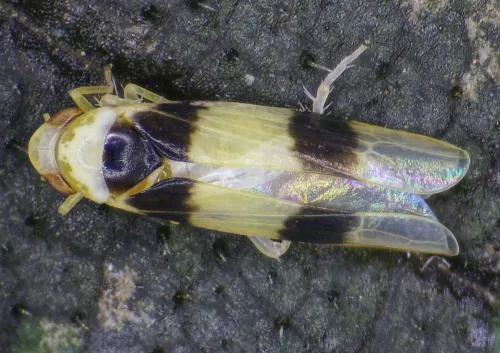
Zonocyba bifasciata
Zonocyba bifasciata
Local (ref: UK Auchenorrhyncha checklist 2021 ) https://www.britishbugs.org.uk/homoptera/Cicadellidae/Typhlocyba_bifasciata.html No additional images available for this species.
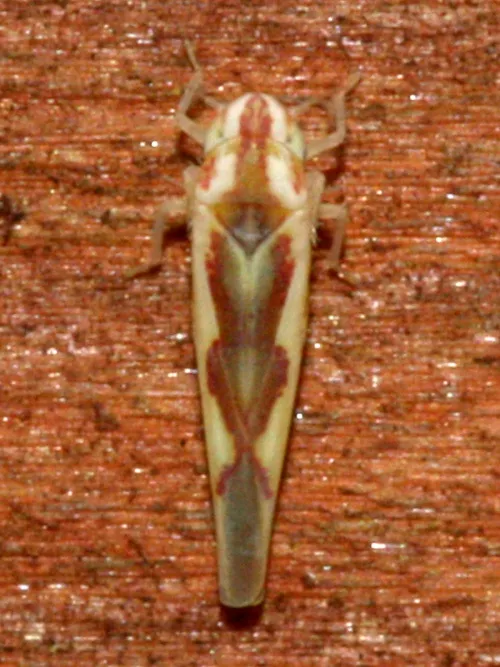
Zygina angusta
Zygina angusta
Length 3 mm. The red zigzag pattern on the forewing rarely reaches the scutellum, and the area of clavus between the zigzag has a dark smoky tint. The scutellum is mostly brown and the hind tarsi of males have a pale basal and adjacent segment. Male
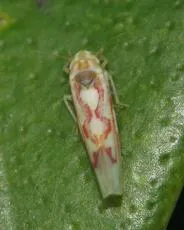
Zygina flammigera
Zygina flammigera
Length 3 mm. Forewings with a red zigzag pattern. The area of the clavus between the red zigzags is pale. and the scutellum is brown. In males, the basal segment and adjacent segment of the rear tarsi are pale and the apical segment and part of the m