
Viburnum Cushion Scale
Lichtensia viburni
This record describes Lichtensia viburni (species). Recorded family: Coccidae. Recorded order: Hemiptera.
Identification and Appearance
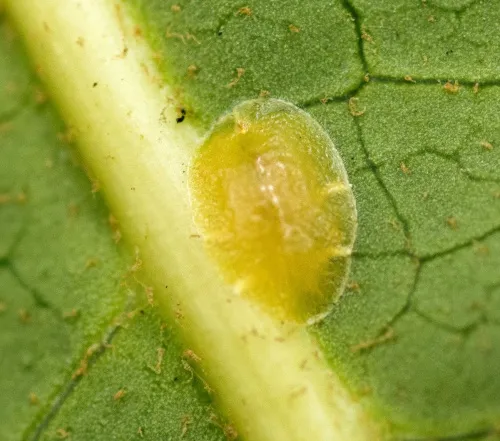
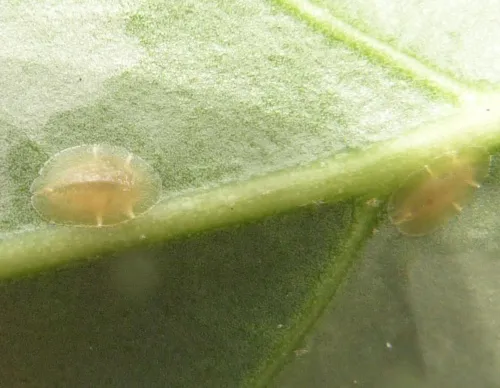
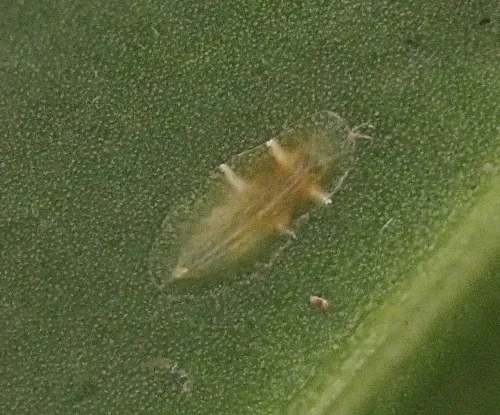
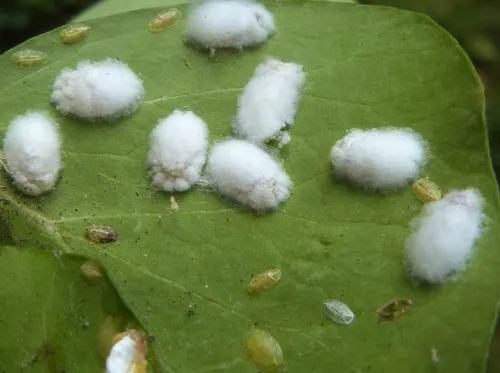
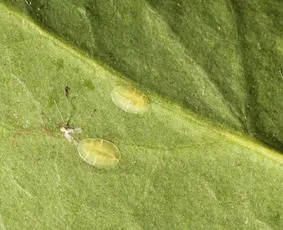
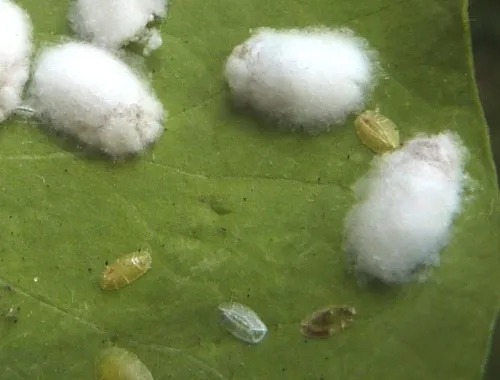
This species is mainly found on the foliage of Viburnum tinus and Ivy. Adult females are flat, oval, pale yellow and up to 4mm long. Males are 2.5mm long, white and elongate ovals. In May-June the females become covered with a white fluffy wax coating in which the eggs are laid. The larvae hatch from the eggs in late June. A pest of olive groves in the Mediterranean region, it is also associated with Ivy and some Viburnum species. In warm regions it is double brooded but there is usually only one generation per year in northern Europe. Once fertilised, females become swollen and move to the leaves of the host plant. Their bodies become covered in a white waxy wool-like covering. This becomes the ovisac (egg sac) and is almost filled with eggs. The female dies and remains within the ovisac. https://bladmineerders.nl/parasites/animalia/arthropoda/insecta/hemiptera/sternorrhyncha/coccoidea/coccidae/lichtensia/lichtensia-viburni/
Identification notes
- online help
Classification
Habitat and Range
Habitat
A pest of olive groves in the Mediterranean region, it is also associated with Ivy and some Viburnum species.
Diet and Behavior
Life History
In warm regions it is double brooded but there is usually only one generation per year in northern Europe. Once fertilised, females become swollen and move to the leaves of the host plant. Their bodies become covered in a white waxy wool-like covering. This becomes the ovisac (egg sac) and is almost filled with eggs. The female dies and remains within the ovisac.
Additional species information
Recorded status
Status in Britain not known.
About True Bugs, Cicadas, Hoppers, Aphids and Allies: the wider group
Order-level background for Hemiptera, the group containing Lichtensia viburni. Species-specific details appear above.
Group overview
Hemiptera (true bugs) includes over 80,000 described species across cicadas, aphids, leafhoppers, shield bugs, and bed bugs. Aphids alone cost global agriculture an estimated $2.5 billion annually in crop losses.
Ecological role of the group
Many Hemiptera are essential food sources for birds and predatory insects. Cicadas provide massive nutrient pulses during emergence events - a single Brood X emergence can involve trillions of individuals across 15 states.
Economic and practical significance of the group
The brown marmorated stink bug (Halyomorpha halys) caused $37 million in apple crop losses in a single year in the U.S. Mid-Atlantic region. Bed bug infestations in the U.S. increased by 500% between 2001-2010, costing the hotel industry hundreds of millions annually.
Recorded sources for this group: USDA, EPA, University research. Imported estimates may describe particular regions or reporting periods.
Photos of Viburnum Cushion Scale (6)
Frequently Asked Questions About Viburnum Cushion Scale
What is Viburnum Cushion Scale?
Viburnum Cushion Scale (Lichtensia viburni) is a species in the family Coccidae, within the order Hemiptera.
How do you identify Viburnum Cushion Scale?
- online help
Where is Viburnum Cushion Scale found?
Habitat: A pest of olive groves in the Mediterranean region, it is also associated with Ivy and some Viburnum species.
What is the life cycle of a Viburnum Cushion Scale?
In warm regions it is double brooded but there is usually only one generation per year in northern Europe. Once fertilised, females become swollen and move to the leaves of the host plant. Their bodies become covered in a white waxy wool-like covering. This becomes the ovisac (egg sac) and is almost filled with eggs. The female dies and remains within the ovisac.