
Stictocephala terminalis
This record describes Stictocephala terminalis (species). Recorded family: Membracidae. Recorded order: Hemiptera.
Identification and Appearance
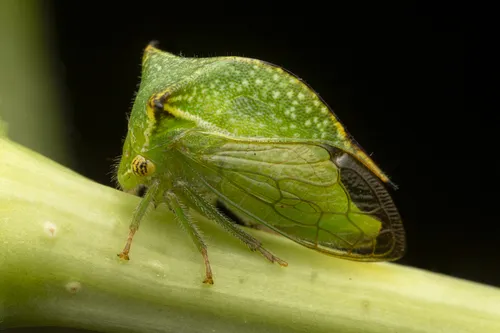
Images placed here are tentative ID's. This species was described from a female specimen from North America and is poorly known. The specimens here match the type specimen well and do not match any other described ceresine. Given the presence of undescribed ceresines in the southern U.S., there is the possibility that several undescribed entities are represented here. A comprehensive revision of the group is needed. Images on this page were previously referred to as Stictocephala taurina based on prior museum identifications and literary records. However, the type material of Ceresa taurina does not match (see below). This species was considered a junior synonym of two neotropical species ( Smilia axillaris Germar, 1835 per Butler, 1877 and Smilia brunnicornis Germar, 1835 per Goding, 1929), but was revalidated and transfered to Stictocephala by Andrade, 2005.
Classification
- Kingdom
- Animalia
- Phylum
- Arthropoda
- Class
- Insecta
- Order
- Hemiptera (True Bugs, Cicadas, Hoppers, Aphids and Allies)
- Suborder
- Auchenorrhyncha
- Superfamily
- Membracoidea
- Family
- Membracidae (Typical Treehoppers)
- Subfamily
- Smiliinae
- Tribe
- Ceresini
- Genus
- Stictocephala
Imported taxonomy record. Source availability varies; see the source references and editorial policy below.
Additional species information
Species notes from the sources
Etymology: Stictocephala terminalis (Walker, 1851)
About True Bugs, Cicadas, Hoppers, Aphids and Allies: the wider group
Order-level background for Hemiptera, the group containing Stictocephala terminalis. Species-specific details appear above.
Group overview
Hemiptera (true bugs) includes over 80,000 described species across cicadas, aphids, leafhoppers, shield bugs, and bed bugs. Aphids alone cost global agriculture an estimated $2.5 billion annually in crop losses.
Ecological role of the group
Many Hemiptera are essential food sources for birds and predatory insects. Cicadas provide massive nutrient pulses during emergence events - a single Brood X emergence can involve trillions of individuals across 15 states.
Economic and practical significance of the group
The brown marmorated stink bug (Halyomorpha halys) caused $37 million in apple crop losses in a single year in the U.S. Mid-Atlantic region. Bed bug infestations in the U.S. increased by 500% between 2001-2010, costing the hotel industry hundreds of millions annually.
Recorded sources for this group: USDA, EPA, University research. Imported estimates may describe particular regions or reporting periods.
Photos of Stictocephala terminalis (2)
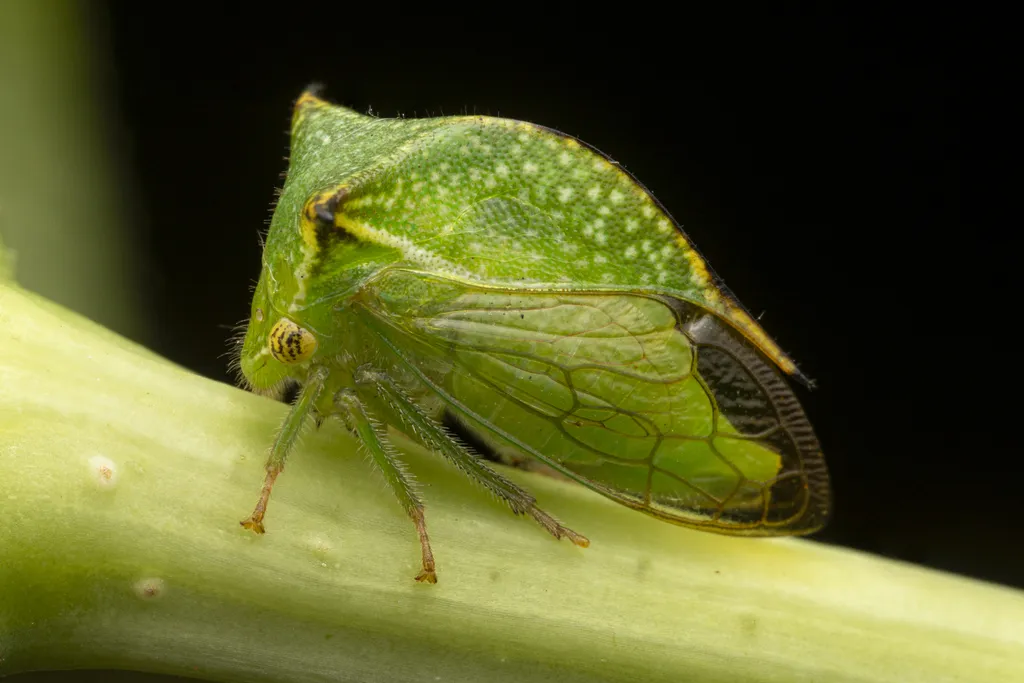
Photo credits: Contributed by Solomon V. Hendrix