
Asian Woolly Hackberry Aphid
Shivaphis celti
This record describes Shivaphis celti (species). Recorded family: Aphididae. Recorded order: Hemiptera.
Identification and Appearance
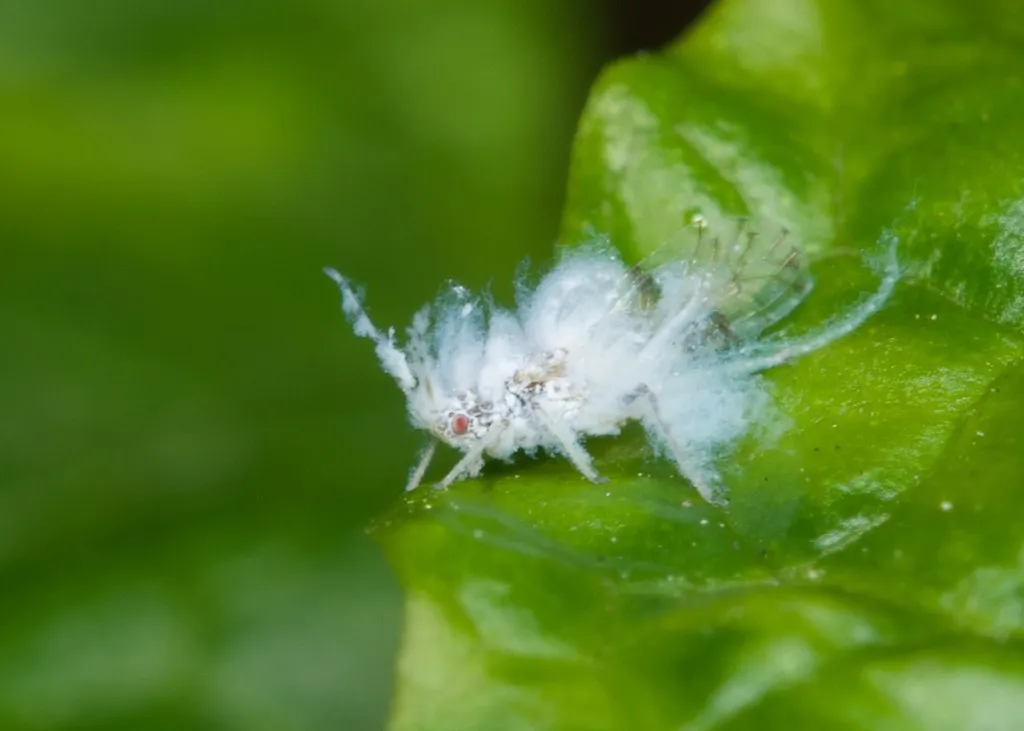
These aphids are covered in a bluish white wax that forms from conspicuous abdominal glands. The winged forms have shading along the wing veins, particularly toward the edge of the wings. While generally obscured like most of the insect by the waxy covering, the antennae are marked with alternating black and white bands. While there are other species in the genus Shivaphis in Asia, only S. celtis is known to occur in the Western Hemisphere. Accidently introduced in the Southeast US in the late 1990's. First found in Georgia (1996), then Florida (1997), Texas and California (both 2002) These aphids produce copious amounts of clear, sticky honeydew, that will coat anything beneath their host tree, including, to many people's chagrin, vehicles. While the honeydew may be bothersome to people, they don't seem to pose any real threat to their host trees.
Wikipedia reference for Shivaphis celti: http://en.wikipedia.org/wiki/Shivaphis_celti.
Classification
- Kingdom
- Animalia
- Phylum
- Arthropoda
- Class
- Insecta
- Order
- Hemiptera (True Bugs, Cicadas, Hoppers, Aphids and Allies)
- Suborder
- Sternorrhyncha
- Superfamily
- Aphidoidea
- Family
- Aphididae (Aphids)
- Subfamily
- Calaphidinae
- Tribe
- Panaphidini
- Genus
- Shivaphis
Imported taxonomy record. Source availability varies; see the source references and editorial policy below.
Habitat and Range
Habitat
On the leaves of hackberry, particularly the undersides.
Geographic Range
se US, Calif. (BG data) Will no doubt spread from these areas to others wherever Hackberry occurs along with a suitable climate. Native to India, China, Japan, and Korea.
Seasonal Activity
May-Oct. (BG data)
Diet and Behavior
Diet: Varieties of Hackberry, Celtis spp.
Life History
Summer adults are all winged or wingless females that reproduce parthenogenetically. In the fall, winged males appear and mating occurs, producing eggs that overwinter on tree branches.
Additional species information
Species notes from the sources
Etymology: Shivaphis celti Das & B.C., 1918
About True Bugs, Cicadas, Hoppers, Aphids and Allies: the wider group
Order-level background for Hemiptera, the group containing Shivaphis celti. Species-specific details appear above.
Group overview
Hemiptera (true bugs) includes over 80,000 described species across cicadas, aphids, leafhoppers, shield bugs, and bed bugs. Aphids alone cost global agriculture an estimated $2.5 billion annually in crop losses.
Ecological role of the group
Many Hemiptera are essential food sources for birds and predatory insects. Cicadas provide massive nutrient pulses during emergence events - a single Brood X emergence can involve trillions of individuals across 15 states.
Economic and practical significance of the group
The brown marmorated stink bug (Halyomorpha halys) caused $37 million in apple crop losses in a single year in the U.S. Mid-Atlantic region. Bed bug infestations in the U.S. increased by 500% between 2001-2010, costing the hotel industry hundreds of millions annually.
Recorded sources for this group: USDA, EPA, University research. Imported estimates may describe particular regions or reporting periods.
Photos of Asian Woolly Hackberry Aphid (3)
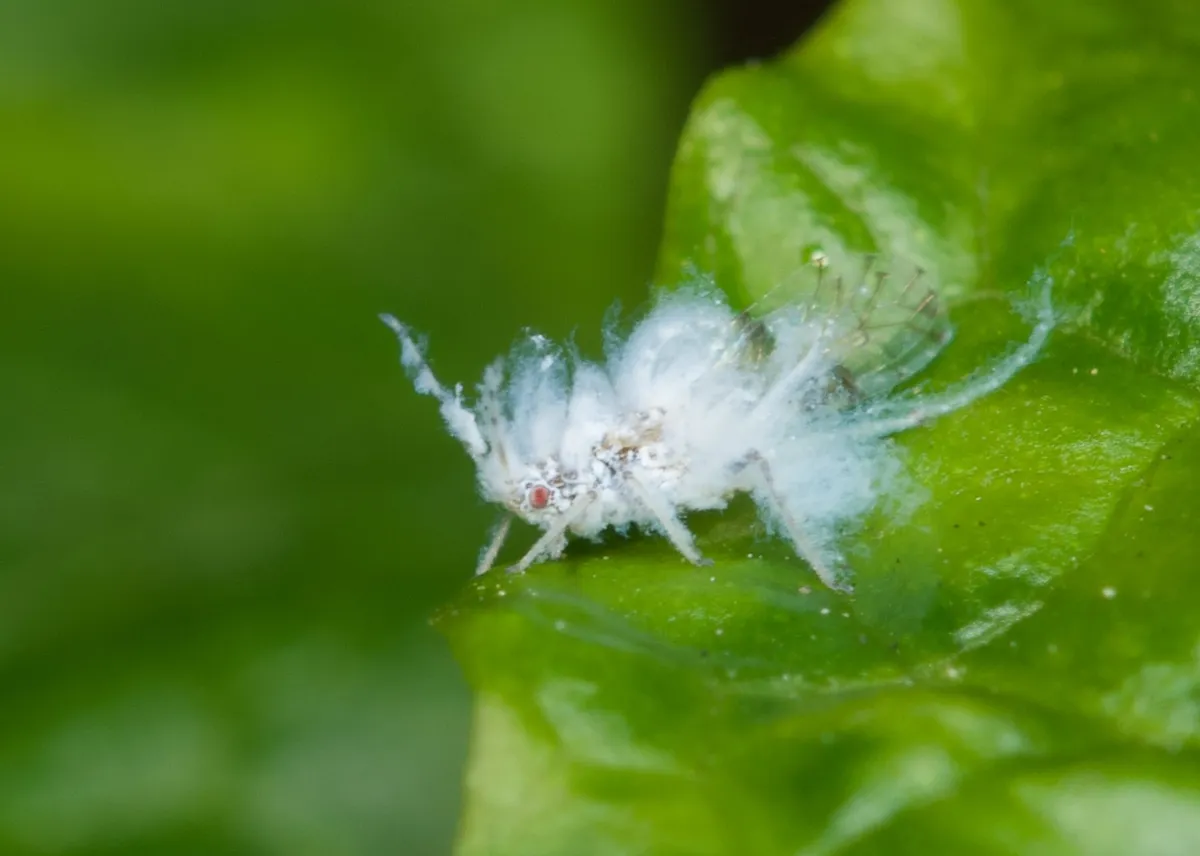
Photo credits: Contributed by Troy Bartlett; Additional contributions by Beatriz Moisset , Mike Quinn
Frequently Asked Questions About Asian Woolly Hackberry Aphid
What is Asian Woolly Hackberry Aphid?
Asian Woolly Hackberry Aphid (Shivaphis celti) is a species in the family Aphididae, within the order Hemiptera.
How big is Asian Woolly Hackberry Aphid?
~2mm
How do you identify Asian Woolly Hackberry Aphid?
These aphids are covered in a bluish white wax that forms from conspicuous abdominal glands. The winged forms have shading along the wing veins, particularly toward the edge of the wings. While generally obscured like most of the insect by the waxy covering, the antennae are marked with alternating black and white bands.
Where is Asian Woolly Hackberry Aphid found?
| Feature | Details |
|---|---|
| Habitat | On the leaves of hackberry, particularly the undersides. |
| Range | se US, Calif. (BG data) Will no doubt spread from these areas to others wherever Hackberry occurs along with a suitable climate. Native to India, China, Japan, and Korea. |
What does Asian Woolly Hackberry Aphid eat?
The diet of the Asian Woolly Hackberry Aphid includes Varieties of Hackberry, Celtis spp..
When is Asian Woolly Hackberry Aphid active?
Asian Woolly Hackberry Aphid: seasonal activity - May-Oct. (BG data).
What is the life cycle of a Asian Woolly Hackberry Aphid?
Summer adults are all winged or wingless females that reproduce parthenogenetically. In the fall, winged males appear and mating occurs, producing eggs that overwinter on tree branches.