
Aphis grossulariae
This record describes Aphis grossulariae (species). Recorded family: Aphididae. Recorded order: Hemiptera.
Identification and Appearance
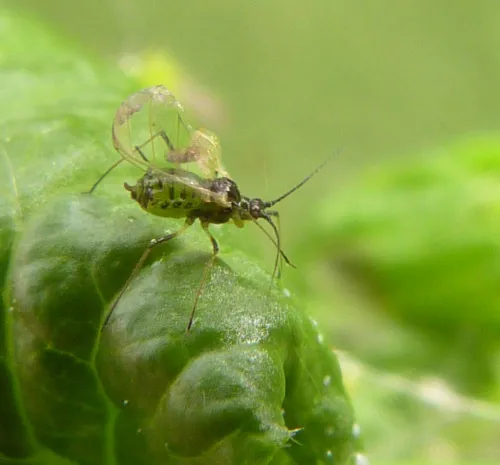
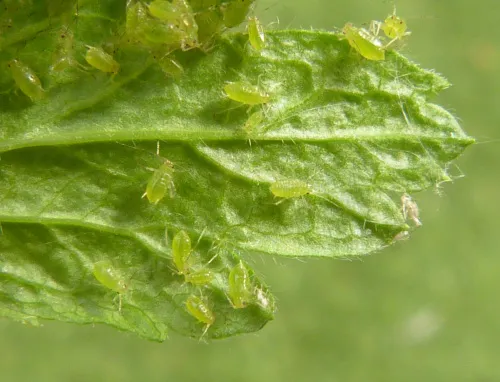
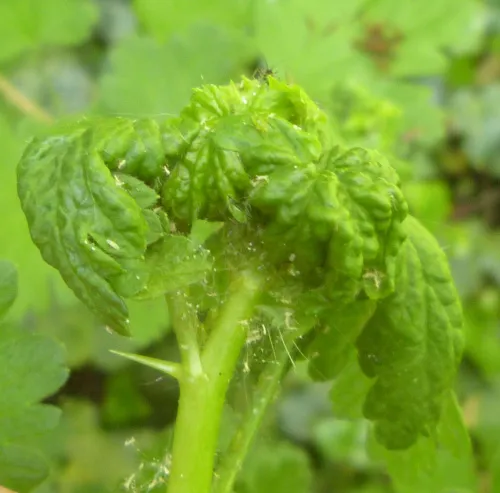
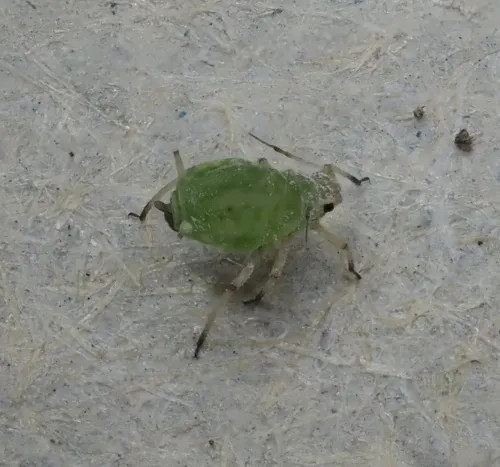
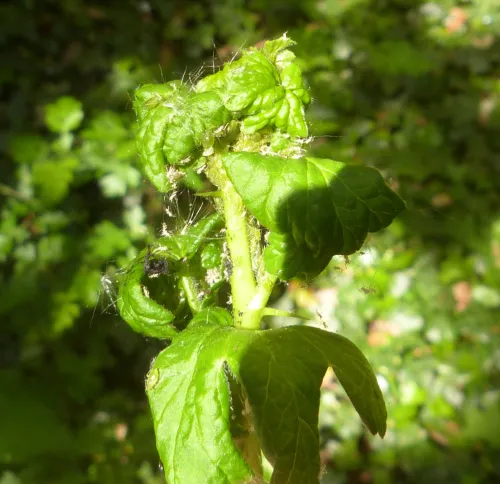
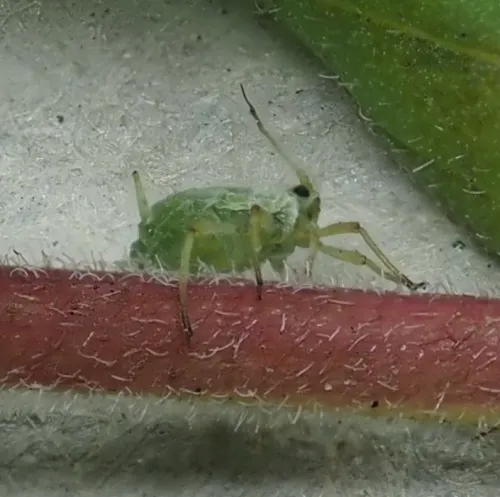
Dense colonies of Aphis grossulariae at the growing tips of Gooseberry cause severe deformation and clumping of young leaves. The adult aptera is dull green to dark green and is slightly to moderately wax powdered. The antennae are shorter than the body. The alate has the head and thorax black, the abdomen green with dark stripes, the siphunculi and antennae dark and the cauda pale. Unless identified by a recognised expert, a photo is required. If the photo doesn't show the key ID features then in the comments box describe the size and identifying characters you have observed. Associated with Willowherb and Gooseberry. A new generation will hatch around April and numbers will build towards summer. True status in Britain is difficult to determine due to lack of records. https://influentialpoints.com/Gallery/Aphis_grossulariae_gooseberry-willowherb_aphid.htm
Classification
Habitat and Range
Habitat
Associated with Willowherb and Gooseberry.
Seasonal Activity
A new generation will hatch around April and numbers will build towards summer.
Additional species information
Recorded status
True status in Britain is difficult to determine due to lack of records.
About True Bugs, Cicadas, Hoppers, Aphids and Allies: the wider group
Order-level background for Hemiptera, the group containing Aphis grossulariae. Species-specific details appear above.
Group overview
Hemiptera (true bugs) includes over 80,000 described species across cicadas, aphids, leafhoppers, shield bugs, and bed bugs. Aphids alone cost global agriculture an estimated $2.5 billion annually in crop losses.
Ecological role of the group
Many Hemiptera are essential food sources for birds and predatory insects. Cicadas provide massive nutrient pulses during emergence events - a single Brood X emergence can involve trillions of individuals across 15 states.
Economic and practical significance of the group
The brown marmorated stink bug (Halyomorpha halys) caused $37 million in apple crop losses in a single year in the U.S. Mid-Atlantic region. Bed bug infestations in the U.S. increased by 500% between 2001-2010, costing the hotel industry hundreds of millions annually.
Recorded sources for this group: USDA, EPA, University research. Imported estimates may describe particular regions or reporting periods.
Photos of Aphis grossulariae (6)
Frequently Asked Questions About Aphis grossulariae
What is Aphis grossulariae?
Aphis grossulariae is a species in the family Aphididae, within the order Hemiptera.
Where is Aphis grossulariae found?
Habitat: Associated with Willowherb and Gooseberry.
When is Aphis grossulariae active?
Aphis grossulariae: seasonal activity - A new generation will hatch around April and numbers will build towards summer..