
Mimic Crescent - Hodges#4481.2
Phyciodes incognitus
This record describes Phyciodes incognitus (species). Recorded family: Nymphalidae. Recorded order: Lepidoptera.
Identification and Appearance
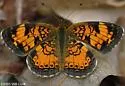
Mimic Crescent is a recently described species that is similar to the common and widespread Pearl Crescent (P. tharos) and the Northern Crescent (P. cocyta) of the northern US/Canada. It is dubbed Mimic because its appearance mimics the Northern Crescent, while the mitochondrial DNA is more similar to that of Pearl Crescent. On average, they are slightly larger and have a higher, stronger flight than typical Pearl Crescent. Probably indistinguishable from Northern Crescent in the field, though Northern Crescent is not known to occur in the range of Mimic Crescent. Identification criteria differ for males and females. Males can be recognized by their longer, more square-tipped abdomens. Females have shorter, more pointed abdomens. Male Mimic Crescents have orange on the underside of the antennal club tips: This, the relatively large size, and the rich fulvous color help to identify them. Pearl Crescent males generally have black antennal club tips -- they may show some orange on the antennal clubs, but not on the underside. The veins of the hindwing of Mimic Crescent tend to be orange, not black, through the median band of spots. In darker specimens, this is often limited to the middle vein that comes from the middle of the hindwing cell. Females are more difficult to separate. Antennal club color of females is not known to differ between Pearl and Mimic. Besides the clues from size and flight style, females above are usually marked much like the males, female Pearl Crescents generally have a more contrasting pattern. Before any editor removes this species page because of lumping, please see comments in the forum here .
Classification
- Kingdom
- Animalia
- Phylum
- Arthropoda
- Class
- Insecta
- Order
- Lepidoptera (Butterflies and Moths)
- Superfamily
- Papilionoidea
- Family
- Nymphalidae (Brush-footed Butterflies)
- Subfamily
- Nymphalinae
- Tribe
- Melitaeini
- Genus
- Phyciodes (Crescents)
Imported taxonomy record. Source availability varies; see the source references and editorial policy below.
Habitat and Range
Habitat
Small openings, road cuts, and woodland edges, mainly in middle (2,500-4,000 feet) elevations. The species occurs in dry sites and appears to avoid wetlands, fields, and other cultivated/urban areas.
Geographic Range
So far, known only from the southern Appalachians. Described from Clay County, North Carolina, Mimic Crescent has been collected in two adjacent counties in the mountains of southern NC and photographed in three counties in the northern mountain region. The full range and abundance of this taxon has yet to be worked out.
Seasonal Activity
Two broods: early May to late June or early July, and late July through September.
Diet and Behavior
Diet: Food plants are presumed to be asters.
Additional species information
Species notes from the sources
Etymology: The status of this taxon and closley related taxa are complicated and not universally agreed upon. Scott suggested that P. cocyta diminutor might be a full species with P. incognitus as a synonym. Pelham treated incognitus as a subspecies of Phyciodes cocyta . Scott treated diminutor as a full species with incognitus as a synonym. Pelham's online checklist updated July 1, 2017 continues to treat both incognitus and diminutor as subspecies of Phyciodes cocyta . Pelham (pers. comm. 7/5/2017) does not dismiss Scott but advises that treating diminutor as a subspecies is in his opinion better supported given a lack of lack of corroboration of Scott's treatment. Both Pelham and Scott agree that incognitus should not be given full species status.
About Butterflies and Moths: the wider group
Order-level background for Lepidoptera, the group containing Phyciodes incognitus. Species-specific details appear above.
Group overview
Lepidoptera includes approximately 180,000 described species of butterflies and moths. Moths outnumber butterflies roughly 10:1. The monarch butterfly's eastern population has declined by more than 80% since the mid-1990s, and the western population by over 95% since the 1980s. The IUCN lists the migratory monarch as Vulnerable.
Ecological role of the group
Butterflies and moths are essential indicators of ecosystem health. As caterpillars, they are a primary food source for birds - a single nest of blue tit chicks requires ~10,000 caterpillars. Adult moths pollinate many night-blooming plants.
Economic and practical significance of the group
Lepidoptera are critical pollinators. In Europe, grassland butterfly species have declined by almost 50% since the early 1990s. In the UK, three-quarters of butterflies are in decline. In the U.S., five butterfly species have gone extinct since 1950, with 29 listed as endangered.
Recorded sources for this group: IUCN Red List, Xerces Society, USFWS, PNAS, WWF. Imported estimates may describe particular regions or reporting periods.
Photos of Mimic Crescent - Hodges#4481.2 (5)
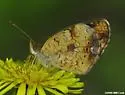
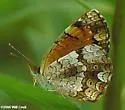
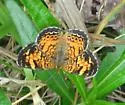
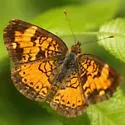
Photo credits: Contributed by Will Cook; Additional contributions by cotinis , Steve Nanz , David Ferguson
Frequently Asked Questions About Mimic Crescent - Hodges#4481.2
What is Mimic Crescent - Hodges#4481.2?
Mimic Crescent - Hodges#4481.2 (Phyciodes incognitus) is a species in the family Nymphalidae, within the order Lepidoptera.
How big is Mimic Crescent - Hodges#4481.2?
Averages slightly larger than Pearl Crescent.
How do you identify Mimic Crescent - Hodges#4481.2?
Mimic Crescent is a recently described species that is similar to the common and widespread Pearl Crescent (P. tharos) and the Northern Crescent (P. cocyta) of the northern US/Canada. It is dubbed Mimic because its appearance mimics the Northern Crescent, while the mitochondrial DNA is more similar to that of Pearl Crescent. On average, they are slightly larger and have a higher, stronger flight than typical Pearl Crescent. Probably indistinguishable from Northern Crescent in the field, though Northern Crescent is not known to occur in the range of Mimic Crescent. Identification criteria differ for males and females. Males can be recognized by their longer, more square-tipped abdomens. Females have shorter, more pointed abdomens. Male Mimic Crescents have orange on the underside of the antennal club tips: This, the relatively large size, and the rich fulvous color help to identify them. Pearl Crescent males generally have black antennal club tips -- they may show some orange on the antennal clubs, but not on the underside. The veins of the hindwing of Mimic Crescent tend to be orange, not black, through the median band of spots. In darker specimens, this is often limited to the middle vein that comes from the middle of the hindwing cell. Females are more difficult to separate. Antennal club color of females is not known to differ between Pearl and Mimic. Besides the clues from size and flight style, females above are usually marked much like the males, female Pearl Crescents generally have a more contrasting pattern.
Where is Mimic Crescent - Hodges#4481.2 found?
| Feature | Details |
|---|---|
| Habitat | Small openings, road cuts, and woodland edges, mainly in middle (2,500-4,000 feet) elevations. The species occurs in dry sites and appears to avoid wetlands, fields, and other cultivated/urban areas. |
| Range | So far, known only from the southern Appalachians. Described from Clay County, North Carolina, Mimic Crescent has been collected in two adjacent counties in the mountains of southern NC and photographed in three counties in the northern mountain region. The full range and abundance of this taxon has yet to be worked out. |
What does Mimic Crescent - Hodges#4481.2 eat?
The diet of the Mimic Crescent - Hodges#4481.2 includes Food plants are presumed to be asters..
When is Mimic Crescent - Hodges#4481.2 active?
Mimic Crescent - Hodges#4481.2: seasonal activity - Two broods: early May to late June or early July, and late July through September..