
One-spotted Prepona - Hodges#4551.5
Archaeoprepona demophon
This record describes Archaeoprepona demophon (species). Recorded family: Nymphalidae. Recorded order: Lepidoptera.
Identification and Appearance
· · Print References · Internet References · Works Cited
Representative Images
Show images of: caterpillars · adults · both
Classification Kingdom Animalia (Animals)
Phylum Arthropoda (Arthropods)
Subphylum Hexapoda (Hexapods)
Class Insecta (Insects)
Order Lepidoptera (Butterflies and Moths)
Superfamily Papilionoidea (Butterflies and Skippers)
Family Nymphalidae (Brush-footed Butterflies)
Subfamily Charaxinae (Leafwings and relatives)
Tribe Preponini (King Shoemakers and Agrias Butterflies)
Genus Archaeoprepona
Species demophon (One-spotted Prepona - Hodges#4551.5)
Hodges Number 4551.5
Synonyms and other taxonomic changes Archaeoprepona demophon (Linnaeus, 1758)
Numbers 1 sp. has strayed n. of Mex., there are 5 spp. of Archaeoprepona in Mexico, A. demophon is the most common.
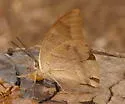
Identification note rounded postmedian line ( 1 )
Range southmost TX (as a stray) to Amazon Basin - Map
( 2 ) (MPG)
Habitat In Costa Rica: Widespread and common from sea level to 1,600 m on both slopes, in association with all forest and old second-growth habitats. ( 2 )
Season Oct-Dec in s. TX (MPG)
Food Larvae host on Barbados Cherry - Malpighia glabra (Malpighiaceae) ( 2 )
Remarks First U.S. Record: National Butterfly Center, Mission, Hidalgo Co., Texas - 2007 (Bordelon 2008)
Print References Bordelon, C. 2008. 2007 Season Summary: Zone 6 Texas. News of the Lepidopterists' Society 50(supplement S1): 91.
Internet References Moth Photographers Group - MPG
Butterflies of America - BOA
NABA-South Texas - NABA
Works Cited 1. A Swift Guide to the Butterflies of Mexico and Central America Glassberg, J. 2007. Sunstreak Books, Morristown, NJ. 266 pp. 2. The Butterflies of Costa Rica and Their Natural History, Vol. I: Papilionidae, Pieridae, Nymphalidae Philip J. Devries. 1987. Princeton Univ Press.
Identification notes
note rounded postmedian line
Classification
- Kingdom
- Animalia
- Phylum
- Arthropoda
- Class
- Insecta
- Order
- Lepidoptera (Butterflies and Moths)
- Superfamily
- Papilionoidea
- Family
- Nymphalidae (Brush-footed Butterflies)
- Subfamily
- Charaxinae
- Tribe
- Preponini
- Genus
- Archaeoprepona
Imported taxonomy record. Source availability varies; see the source references and editorial policy below.
Habitat and Range
Habitat
In Costa Rica: "Widespread and common from sea level to 1,600 m on both slopes, in association with all forest and old second-growth habitats.
Geographic Range
southmost TX (as a stray) to Amazon Basin - Map (MPG)
Seasonal Activity
Oct-Dec in s. TX (MPG)
Diet and Behavior
Diet: Larvae host on Barbados Cherry - Malpighia glabra (Malpighiaceae)
About Butterflies and Moths: the wider group
Order-level background for Lepidoptera, the group containing Archaeoprepona demophon. Species-specific details appear above.
Group overview
Lepidoptera includes approximately 180,000 described species of butterflies and moths. Moths outnumber butterflies roughly 10:1. The monarch butterfly's eastern population has declined by more than 80% since the mid-1990s, and the western population by over 95% since the 1980s. The IUCN lists the migratory monarch as Vulnerable.
Ecological role of the group
Butterflies and moths are essential indicators of ecosystem health. As caterpillars, they are a primary food source for birds - a single nest of blue tit chicks requires ~10,000 caterpillars. Adult moths pollinate many night-blooming plants.
Economic and practical significance of the group
Lepidoptera are critical pollinators. In Europe, grassland butterfly species have declined by almost 50% since the early 1990s. In the UK, three-quarters of butterflies are in decline. In the U.S., five butterfly species have gone extinct since 1950, with 29 listed as endangered.
Recorded sources for this group: IUCN Red List, Xerces Society, USFWS, PNAS, WWF. Imported estimates may describe particular regions or reporting periods.
Photos of One-spotted Prepona - Hodges#4551.5 (3)
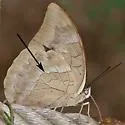
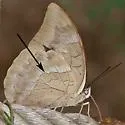
Photo credits: Contributed by Mike Quinn; Additional contributions by David Ferguson
Frequently Asked Questions About One-spotted Prepona - Hodges#4551.5
What is One-spotted Prepona - Hodges#4551.5?
One-spotted Prepona - Hodges#4551.5 (Archaeoprepona demophon) is a species in the family Nymphalidae, within the order Lepidoptera.
How do you identify One-spotted Prepona - Hodges#4551.5?
note rounded postmedian line
Where is One-spotted Prepona - Hodges#4551.5 found?
| Feature | Details |
|---|---|
| Habitat | In Costa Rica: Widespread and common from sea level to 1,600 m on both slopes, in association with all forest and old second-growth habitats. |
| Range | southmost TX (as a stray) to Amazon Basin - Map (MPG) |
What does One-spotted Prepona - Hodges#4551.5 eat?
The diet of the One-spotted Prepona - Hodges#4551.5 includes Larvae host on Barbados Cherry - Malpighia glabra (Malpighiaceae).
When is One-spotted Prepona - Hodges#4551.5 active?
One-spotted Prepona - Hodges#4551.5: seasonal activity - Oct-Dec in s. TX (MPG).