
Pharaoh Ant
Monomorium pharaonis
This record describes Monomorium pharaonis (species). Recorded family: Formicidae. Recorded order: Hymenoptera.
Identification and Appearance
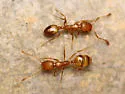
Not native. Seems to have a very spotty distribution across most of its introduced US range, and populations can stay localized, though infestations can reach very high densities. Does not seem to be particularly great at invading native habitat, since it is rarely found in wild areas.
Classification
- Kingdom
- Animalia
- Phylum
- Arthropoda
- Class
- Insecta
- Order
- Hymenoptera (Ants, Bees, Wasps and Sawflies)
- Superfamily
- Formicoidea
- Family
- Formicidae (Ants)
- Subfamily
- Myrmicinae
- Tribe
- Solenopsidini
- Genus
- Monomorium (Pharaoh and Timid Ants)
Imported taxonomy record. Source availability varies; see the source references and editorial policy below.
Habitat and Range
Habitat
Does not nest outdoors except in southern latitudes; it has adapted to field conditions in southern Florida. In colder climates, it has become established in heated buildings.
Geographic Range
Throughout the world, probably from Africa
About Flies: the wider group
Order-level background for Hymenoptera, the group containing Monomorium pharaonis. Species-specific details appear above.
Group overview
Hymenoptera includes over 150,000 described species of ants, bees, wasps, and sawflies. Earth harbors approximately 20 quadrillion (20×10^15) ants, with a combined biomass of ~12 megatons of dry carbon - exceeding the combined biomass of all wild birds and mammals (PNAS, 2022).
Ecological role of the group
About 35% of the world's food crops depend on animal pollinators. The chocolate industry, valued at over $100 billion, depends on pollinating flies and midges. Ants are the dominant soil engineers in most terrestrial ecosystems, turning more soil than earthworms in many habitats.
Economic and practical significance of the group
Pollinators contribute $235-577 billion worth of annual global food production (FAO). In the U.S., bee pollination alone benefits crops valued at $18 billion annually, and honey bees are responsible for $5.4 billion in agricultural productivity. Between April 2023-2024, 55.1% of managed honey bee colonies were lost. The U.S. bee population dropped from 5 million to 2.5 million.
Recorded sources for this group: FAO, USDA, EPA, PNAS (2022), US Fish & Wildlife Service. Imported estimates may describe particular regions or reporting periods.
Photos of Pharaoh Ant (5)
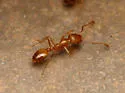
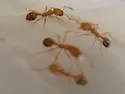
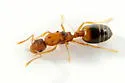
Photo credits: Contributed by Martin Hauser; Additional contributions by Beatriz Moisset , Steven Wang , PaleoJon