
Lasius brunneus
This record describes Lasius brunneus (species). Recorded family: Formicidae. Recorded order: Hymenoptera.
Identification and Appearance
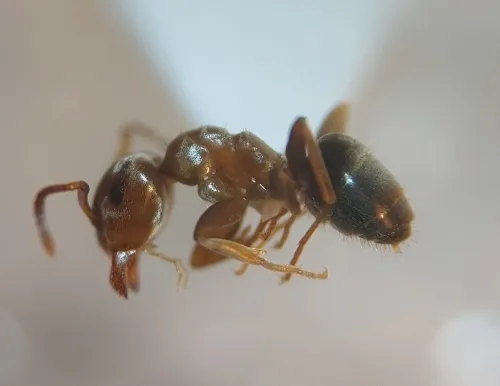
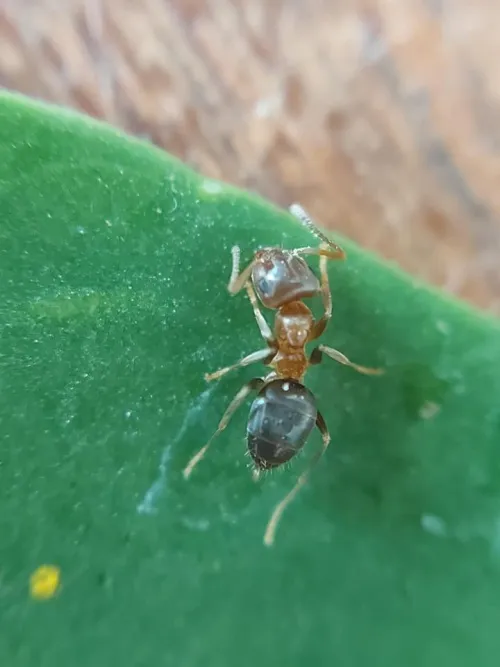
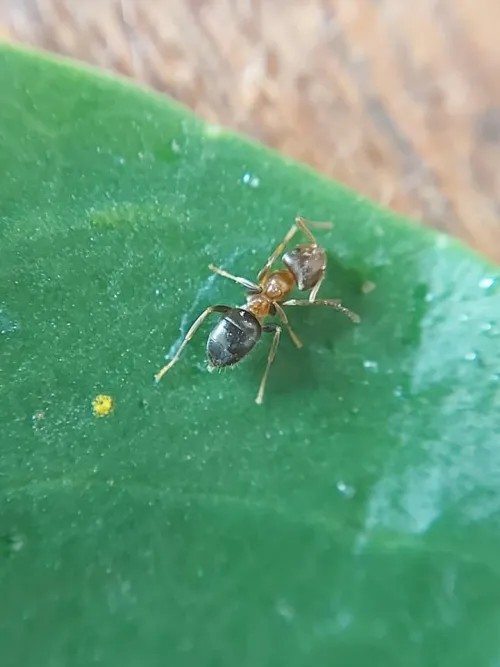
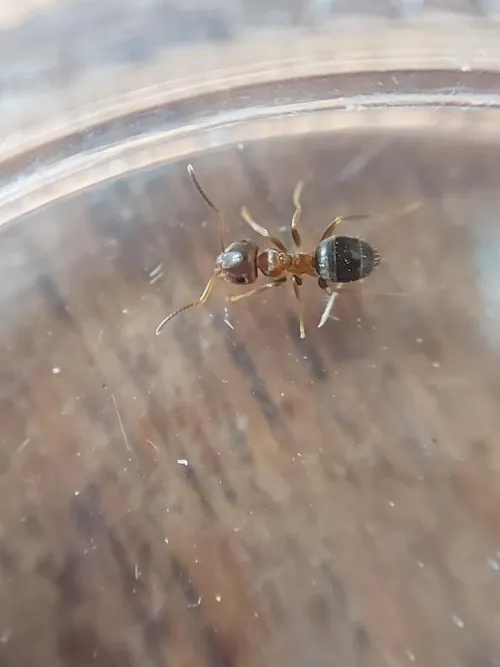
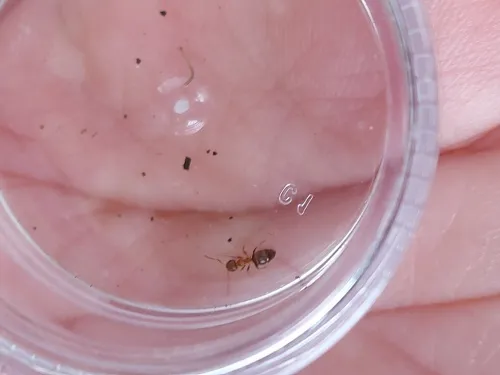
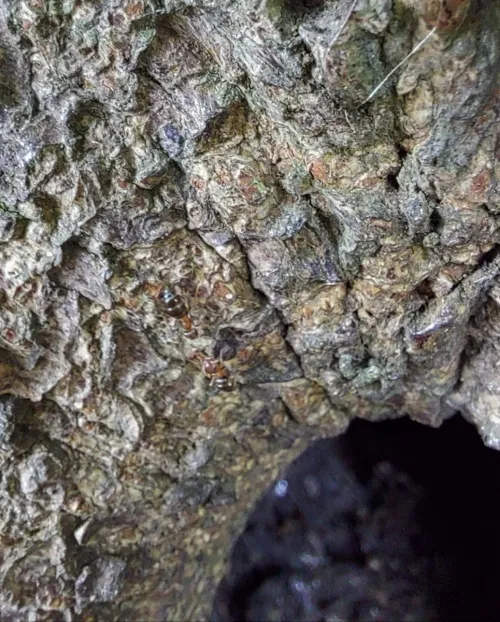
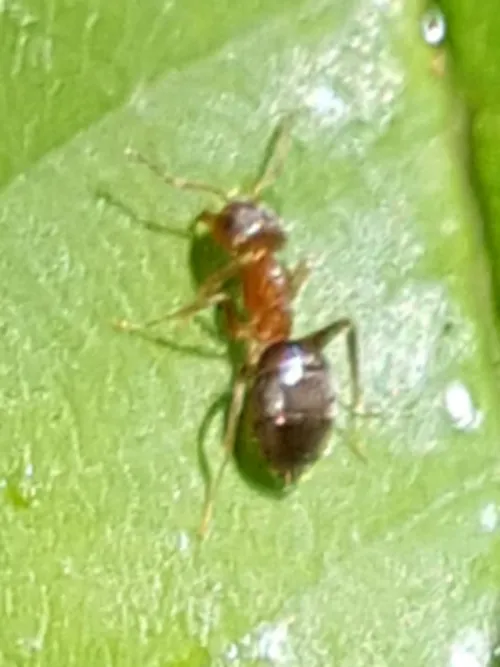
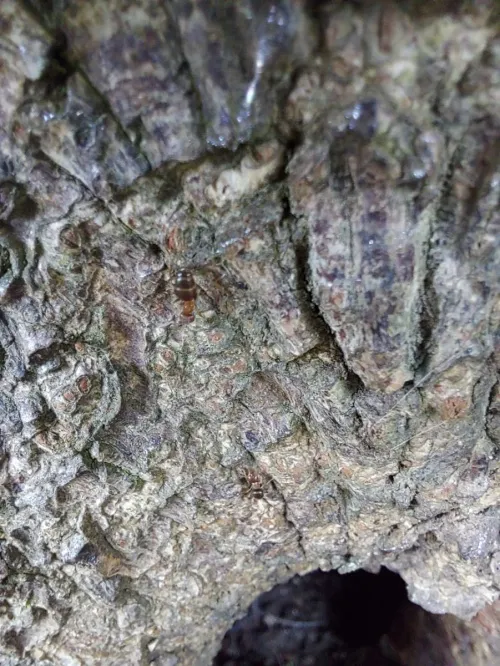
Workers of this species look superficially like the common black garden ant Lasius niger but can be distinguished by, amongst other characters, their lighter brownish-red head and alitrunk contrasting with a dark/black gaster Can be confused with Lasius niger and L. alienus. Unless identified by a recognised expert, a photo is required and the specimen should be examined with a microscope. In the comments box, state the key or ID method used and describe the size and identifying characters. An arboreal species. Found almost exclusively nesting in living old oak trees or occasionally fallen timber. Often the only outward signs of a tree being inhabited are small piles of frass resulting from excavations within the tree. Tunnels created by the ants can be found by removing the bark but the nest itself is difficult to locate and can be deep within the roots, trunk or boughs. Mating flights occur in June or early July and are reported to take place early in the day. Workers may be seen any time between early spring and late autumn. Workers are fugitive and rarely seen away from their host tree or even on its surface. Most activity occurs in bark crevices or tunnels under the bark where the ants tend large tree aphids such as those of the genus Stomaphis. The excreta of these Homoptera forms the majority of their diet, although they may also take other small insects found on or under the bark such as psocids and beetle larvae. Nationally Notable 'A' species – Nationally scarce and generally restricted to Central and southern English counties. https://www.bwars.com/ant/formicidae/formicinae/lasius-brunneus
Classification
- Kingdom
- Animalia
- Phylum
- Arthropoda
- Class
- Insecta
- Order
- Hymenoptera
- Family
- Formicidae
- Genus
- Lasius
Imported taxonomy record. Source availability varies; see the source references and editorial policy below.
Habitat and Range
Habitat
An arboreal species. Found almost exclusively nesting in living old oak trees or occasionally fallen timber. Often the only outward signs of a tree being inhabited are small piles of frass resulting from excavations within the tree. Tunnels created by the ants can be found by removing the bark but the nest itself is difficult to locate and can be deep within the roots, trunk or boughs.
Seasonal Activity
Mating flights occur in June or early July and are reported to take place early in the day. Workers may be seen any time between early spring and late autumn.
Diet and Behavior
Life History
Workers are fugitive and rarely seen away from their host tree or even on its surface. Most activity occurs in bark crevices or tunnels under the bark where the ants tend large tree aphids such as those of the genus Stomaphis. The excreta of these Homoptera forms the majority of their diet, although they may also take other small insects found on or under the bark such as psocids and beetle larvae.
Additional species information
Recorded status
Nationally Notable 'A' species – Nationally scarce and generally restricted to Central and southern English counties.
About Flies: the wider group
Order-level background for Hymenoptera, the group containing Lasius brunneus. Species-specific details appear above.
Group overview
Hymenoptera includes over 150,000 described species of ants, bees, wasps, and sawflies. Earth harbors approximately 20 quadrillion (20×10^15) ants, with a combined biomass of ~12 megatons of dry carbon - exceeding the combined biomass of all wild birds and mammals (PNAS, 2022).
Ecological role of the group
About 35% of the world's food crops depend on animal pollinators. The chocolate industry, valued at over $100 billion, depends on pollinating flies and midges. Ants are the dominant soil engineers in most terrestrial ecosystems, turning more soil than earthworms in many habitats.
Economic and practical significance of the group
Pollinators contribute $235-577 billion worth of annual global food production (FAO). In the U.S., bee pollination alone benefits crops valued at $18 billion annually, and honey bees are responsible for $5.4 billion in agricultural productivity. Between April 2023-2024, 55.1% of managed honey bee colonies were lost. The U.S. bee population dropped from 5 million to 2.5 million.
Recorded sources for this group: FAO, USDA, EPA, PNAS (2022), US Fish & Wildlife Service. Imported estimates may describe particular regions or reporting periods.
Photos of Lasius brunneus (8)
Frequently Asked Questions About Lasius brunneus
What is Lasius brunneus?
Lasius brunneus is a species in the family Formicidae, within the order Hymenoptera.
Where is Lasius brunneus found?
Habitat: An arboreal species. Found almost exclusively nesting in living old oak trees or occasionally fallen timber. Often the only outward signs of a tree being inhabited are small piles of frass resulting from excavations within the tree. Tunnels created by the ants can be found by removing the bark but the nest itself is difficult to locate and can be deep within the roots, trunk or boughs.
When is Lasius brunneus active?
Lasius brunneus: seasonal activity - Mating flights occur in June or early July and are reported to take place early in the day. Workers may be seen any time between early spring and late autumn..
What is the life cycle of a Lasius brunneus?
Workers are fugitive and rarely seen away from their host tree or even on its surface. Most activity occurs in bark crevices or tunnels under the bark where the ants tend large tree aphids such as those of the genus Stomaphis. The excreta of these Homoptera forms the majority of their diet, although they may also take other small insects found on or under the bark such as psocids and beetle larvae.