
Family Ants (Formicidae)
Formicidae is a family in the order Hymenoptera. Browse 564 named species recorded in this family, or open an individual profile for its available identification and natural-history information.
Guides
Species in Formicidae (564)
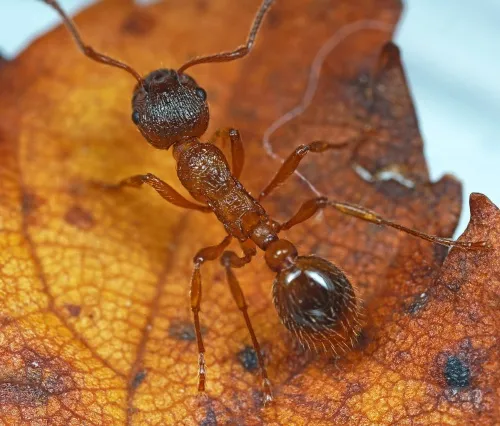
Myrmica ruginodis
Myrmica ruginodis
Myrmica ruginodis can be distinguished from Myrmica rubra by the length of pair of spines projecting from the rear of the main part of the thorax. In Myrmica rugodinis these spines are relatively long - as long as the distance between their tips. Myr
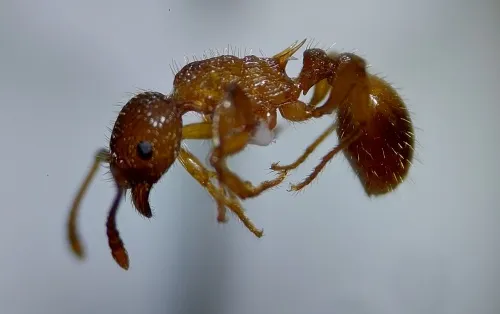
Myrmica sabuleti
Myrmica sabuleti
Myrmica sabuleti is another reddish brown ant similar to other Myrmica species. Adult workers are typically 4 to 5 mm in length. Generally they are characterised by quite narrow frons and a well-developed lobe at the scape base. Can be confused with
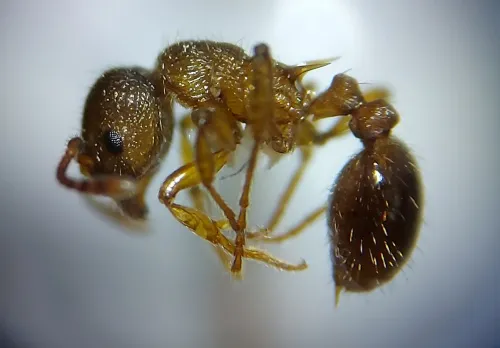
Myrmica scabrinodis
Myrmica scabrinodis
A common red ant found in many habitats with variation in colour from yellow red to blackish brown according to habitat. Examination of the base of the scapes is required to separate it from other Myrmica species. Adult workers are typically 4 to 5 m
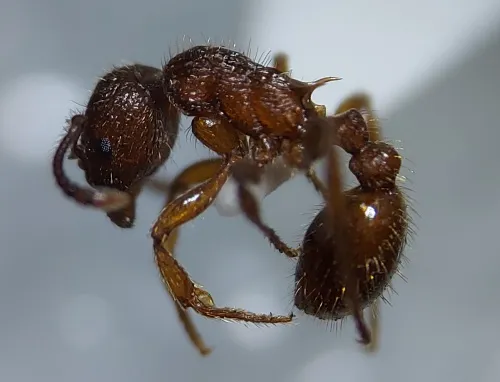
Myrmica schencki
Myrmica schencki
Very similar to Myrmica lobicornis. Workers and queens of both of these species have the antennal scape sharply angled at the base, with this bend bearing a broad upright flange. However, in M. schencki this flange is more strongly developed, with th
Myrmica specioides
Myrmica specioides
Identification: Sharp bend at the base of the scape, with a distinct flange. See here for ID details: http://ants.biology.utah.edu/antsofwashington/genera/myrmica/species/rubra/rubra.html Introduced; found in Puget Sound and Southwestern BC, includin
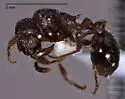
Myrmica tahoensis
Myrmica tahoensis
Identification: Variable in color, recognizable by coarse sculpture.
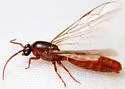
Neivamyrmex harrisii
Neivamyrmex harrisii
Identification: Large Neivamyrmex males with straight mandibles and larger ocelli than similar species ( nigrescens, opacithorax, texanus, carolinensis , and kiowapache ).
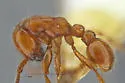
Neivamyrmex kiowapache
Neivamyrmex kiowapache
Type Locality: Colorado, Jefferson Co., Red Rock Park, 5.v.1999 (L. Davis); paratypes with same data.
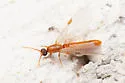
Neivamyrmex melshaemeri
Neivamyrmex melshaemeri
Identification: Small Neivamyrmex species with long curved mandibles, sharp corners on the head behind the eyes, and long hair all over the gaster. This species is most easily confused with Neivamyrmex fuscipennis .
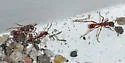
Neivamyrmex nigrescens
Neivamyrmex nigrescens
Identification: The worker is almost uniform dusky red coloring and matte mesosoma (and usually the head) are distinctive; the rear margin of the head scooped out, with acuminate corners. These are rather typical column-raiding army ants, much like t
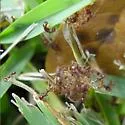
Neivamyrmex opacithorax
Neivamyrmex opacithorax
Identification: The worker is almost has a shiny red head and gaster and weakly-shinging to matte, slightly darker mesosoma; the rear margin of the head is scooped out, with angular but rounded corners. Det. Steven Wang, 2018 These are rather typical
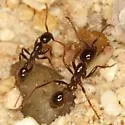
Neivamyrmex pilosus
Neivamyrmex pilosus
Identification: Males are relatively obvious with a clear mandible shot, since they have a convex bump on the inner edge of the mandible (our other Neivamyrmex have uninterrupted concave hoooked mandibles or straight ones). Workers are very shiny and
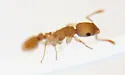
Nesomyrmex wilda
Nesomyrmex wilda
Identification: Looks very similar to Temnothorax and has 3 pairs of blunt spines on the thoracic dorsum. This combination of characters are found in no other US ant.
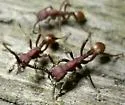
Nomamyrmex esenbeckii
Nomamyrmex esenbeckii
Identification: The largest doryline in the US by far. Very heavily armored ants. In the US doryline fauna, Nomamyrmex and Labidus are the only ones that have an obvious small tooth on the inside curve of the tarsal claw. This trait is found across a
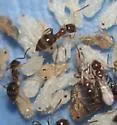
Nylanderia faisonensis
Nylanderia faisonensis
This is the most common species of Nylanderia in the SE US, particularly in forested areas. I (O. Yung) have taken this species commonly nesting under bark, in downed logs, in acorns, under rocks, etc.
Nylanderia flavipes
Nylanderia flavipes
An Asian species increasingly common from NJ to DC to NE Ohio.
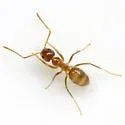
Tawny Crazy Ant
Nylanderia fulva
Identification: How to identify Nylanderia , crazy ant spp. - Alex Wild, Myrmecos Todd Staples, Texas Commissioner of Agriculture, suspects this to be a potentially serious agricultural pest. These ants show likelihood of being transported through mo
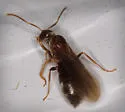
Nylanderia vividula
Nylanderia vividula
The fact that this species was first described from specimens collected in a greenhouse in Finland (and is widely distributed as an introduced species around the Mediterranean) lead authors to suggest its Palaearctic origin; however, N. vividula is c
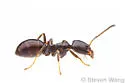
Copper-Bellied Ant
Ochetellus glaber
Identification: Small black dolichoderine ants with a sharp propodeum end, almost forming a right angle. Under ideal lighting conditions the abdomen has a faint copper sheen, but it otherwise appears dark. They taste quite chemically spicy, like a Do
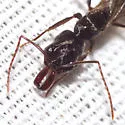
Odontomachus haematodus
Odontomachus haematodus
Identification: Large black aggressive species of Odontomachus (compared to O. brunneus). See Macgown et al. 2014 Because of its preference for disturbed habitats and its aggressive nature, this species can be a stinging nuisance pest. It can also co
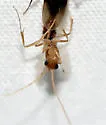
Rough-node Snapping Ant
Odontomachus ruginodis
Identification: I would rather lean for the very similar O. ruginodis (introduced, and now more common than O. brunneus ). 1st dorsal segment of the gaster appears to be shining, hairless or almost so, while O. brunneus is hairy and has a distinct wo
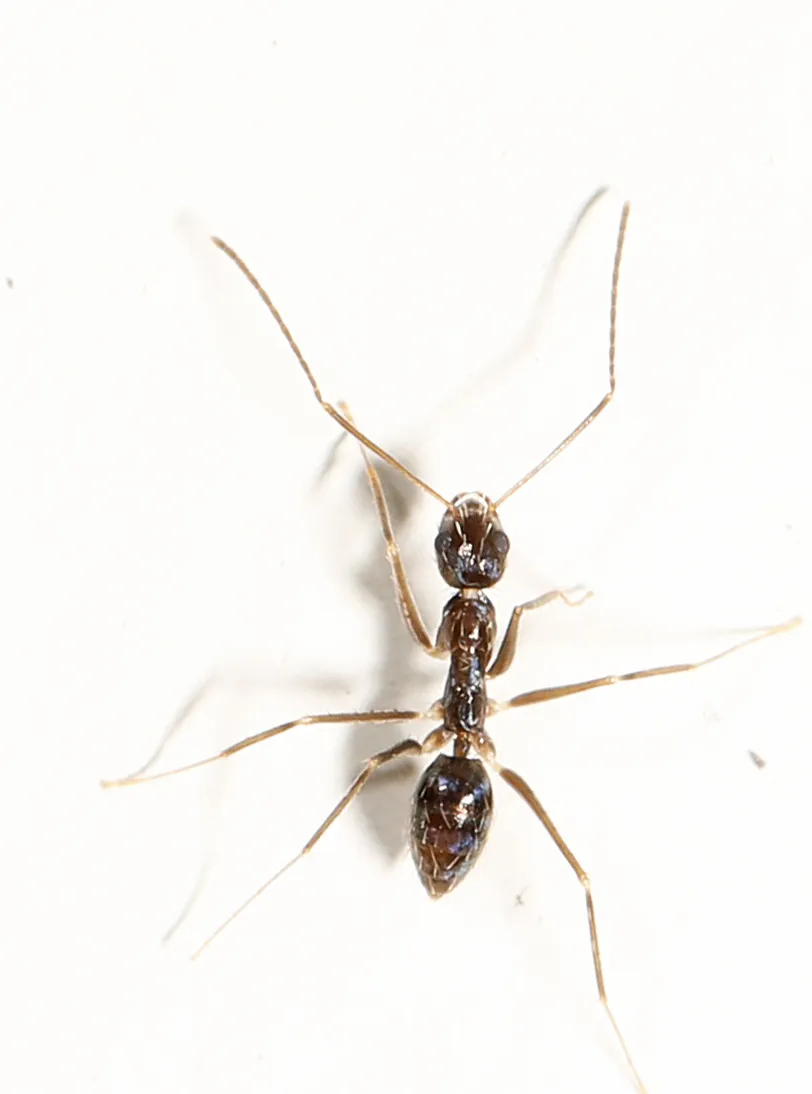
Longhorn Crazy Ant
Paratrechina longicornis
Identification: Bluish reflections are characteristic Host species for the ant cricket Myrmecophilus americanus
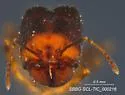
Pheidole clementensis
Pheidole clementensis
Identification: Part of the Pheidole californica complex in the pilfera group.
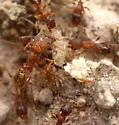
Pheidole constipata
Pheidole constipata
Described from numerous specimens taken from several colonies nesting under stones at Austin and New Braunfels, Texas.
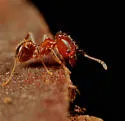
Pheidole dentata
Pheidole dentata
This is the most common species of Pheidole in the southern states. - TAMU
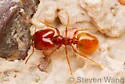
Pheidole gilvescens
Pheidole gilvescens
Identification: Member of the pilifera group with short spines on the major and small but distinct humeral angles (compared to the similar xerophila , which has no angles). Often lighter colored than xerophila .
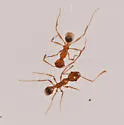
Pheidole morrisii
Pheidole morrisii
Identification: Easily recognized by size, orangey color, and virtual lack of propodeal spines.
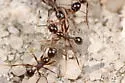
Pheidole obscurithorax
Pheidole obscurithorax
First observed by E.O. Wilson in the port city of Mobile, Alabama, in the early 1950's
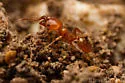
Pheidole porcula
Pheidole porcula
Identification: Very thick and strongly curved scape bases serve to distinguish this species from any other similar Pheidole in the region. The scape is the first elongated antennal segment. Can be locally common, but not often collected due to its s
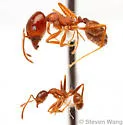
Pheidole sitiens
Pheidole sitiens
Identification: Shiny headed majors with long antennal scapes, among other notable differences with similar US species. Minors with very small propodeal spines. Restricted range in the US.
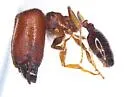
Pheidole tepicana
Pheidole tepicana
Identification: Antwiki Type locality: Tepic, Nayarit, collected by Eisen and Vaslit
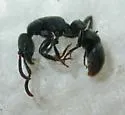
Platythyrea punctata
Platythyrea punctata
Identification: "The one Nearctic species is easily recognized. The two pectinate spurs on the hind leg immediately separate it from all other Nearctic ponerine genera."( Hedlund 2003) "Platythyrea is characterized by the following apomorphy (Bolton
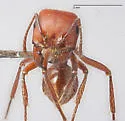
Pogonomyrmex apache
Pogonomyrmex apache
Identification: Excised clypeus is distinctive One of the least aggressive Pogonomyrmex.
Florida Harvester Ant
Pogonomyrmex badius
Identification: nest considered by Louisiana to be a "Species of Greatest Conservation Need" (SGCN) The only known host of the wasp Kapala floridana .
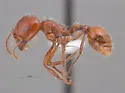
Pogonomyrmex bigbendensis
Pogonomyrmex bigbendensis
Identification: Anterior margin of clypeus weakly concave (nearly straight); rugae on dorsum of head very fine, parts of surface smooth and glossy Type nest series (workers only) from Rio Grande Village (565 m), Big Bend National Park, Brewster Co.,
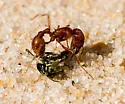
Pogonomyrmex comanche
Pogonomyrmex comanche
Type Locality: Milano, Milam Co., Texas considered by Louisiana and Texas to be a "Species of Greatest Conservation Need" (SGCN)
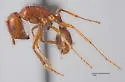
Pogonomyrmex hoelldobleri
Pogonomyrmex hoelldobleri
Identification: Lack of circumocular whorls, especially above the eye. A small Pogonomyrmex , similar to magnacanthus and mohavensis . Many old specimens of hoelldobleri were misidentified as magnacanthus .
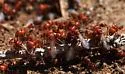
Maricopa Harvester Ant
Pogonomyrmex maricopa
Identification: They lack propodeal spines, have a straight anterior edge to their clypeus, and are larger and more strongly punctate in the intrarugal areas than P. californicus. [Comment by Paul Lenhart]
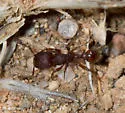
Pogonomyrmex pima
Pogonomyrmex pima
Identification: Similar to P. imberbiculus but without a strongly forwards protruding clypeal flange (right below the antennal insertions).
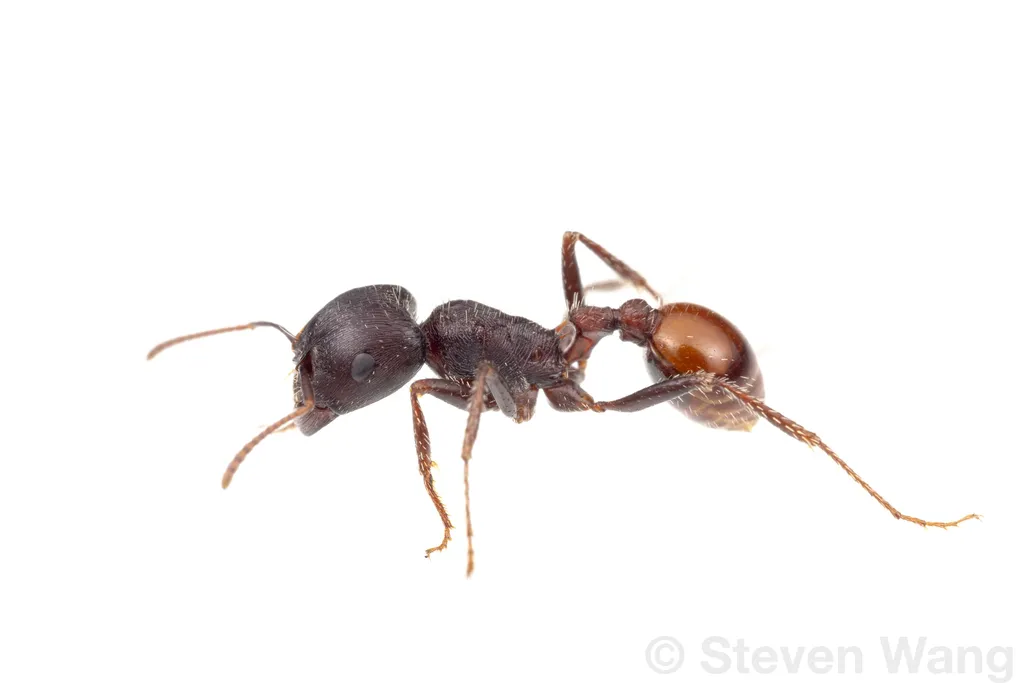
Rough Harvester Ant
Pogonomyrmex rugosus
Identification: Color and size is distinctive in range except for the dark morph of Veromessor andrei , but Pogonomyrmex has a continuous mesonotal profile (one hump) and Veromessor has an impressed metanotal groove (two humps). This species hybridiz
Western Amazon ant
Polyergus mexicanus
Future study may provide the wherewithal to recognize several species within the current concept of P. mexicanus . In particular, the West Coast populations formerly named 'umbratus' and 'laeviceps' seem somewhat distinctive, and another interior wes
Sanwald's Amazon ant 0
Polyergus sanwaldi
Identification: Dull integument, numerous stout dark bristle on rear margin of head, in mixed species colonies with host Formica dolosa . This ant is quite similar in appearance to the southern species P. longicornis , distinguished morphologically b
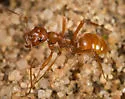
Wine-red Amazon ant
Polyergus vinosus
Identification: In full face view, antennal scapes reaching or often exceeding the rear margin of the head in repose. The only essentially chaparral Polyergus .
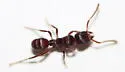
Poneracantha triangularis
Poneracantha triangularis
Identification: Propodeal teeth diagnostic for this species. Larger (5 vs. 4mm), darker in color and has slightly coarser longitudinal grooves than G. hartmanni. Formerly Gnamptogenys triangularis -- moved to Poneracantha by Camacho et al., 2022.
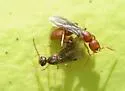
Proceratium chickasaw
Proceratium chickasaw
Identification: second gastric tergite more protruding than in P. pergandei .
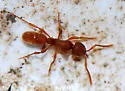
Proceratium pergandei
Proceratium pergandei
Identification: More strongly protruding second gastric tergite than most US Proceratium, but less so than Proceratium chickasaw .
Pseudomyrmex caeciliae
Pseudomyrmex caeciliae
Identification: Similar to P. elongatus but in our region only found in Texas. The two species overlap further south. Seems to be treated as Pseudomyrmex elongatus in
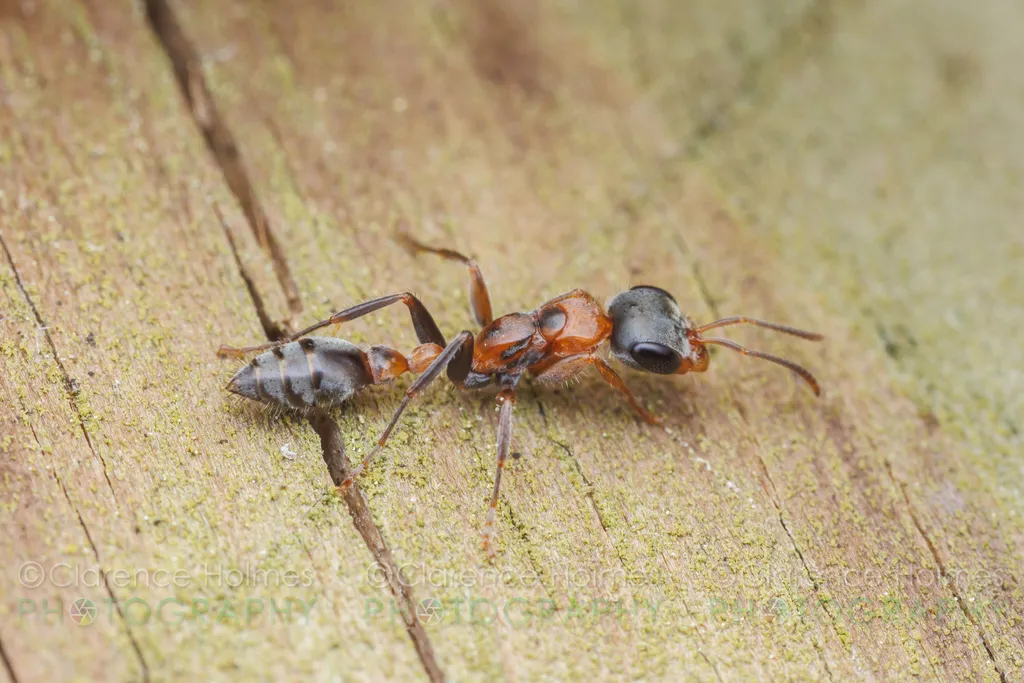
Graceful Twig Ant
Pseudomyrmex gracilis
Identification: A long, solitary, wasp-like ant. Large eyes, two segmented petiole, well developed sting. Color varies with geographic distribution, and can range from dark brown-black, to orange-brown, or a mixture of orange and brown [bicolored]. T
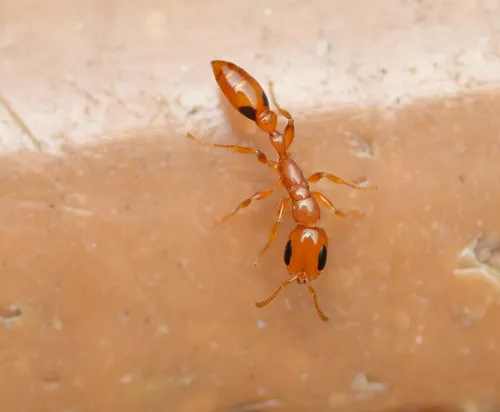
Pseudomyrmex simplex
Pseudomyrmex simplex
Identification: Very simply identified among its genus by the orange body and paired black spots on the gaster. Synemosyna petrunkevitchi (Araneae: Salticidae) is a jumping spider that mimics this ant:
Solenopsis globularia
Solenopsis globularia
Identification: enormous globular postpetiole distinctive
Thief Ant
Solenopsis molesta
Identification: See Thompson (1989) below. A very abundant and widely distributed species that goes mostly unnoticed because of its small size.
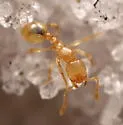
Solenopsis pergandei
Solenopsis pergandei
Identification: Queens are yellow and very large (among the small Solenopsis) at ~4.5mm. In workers, the short head, coarse punctures on the head, and the perfectly round postpetiole separate this species from other US thief ants.
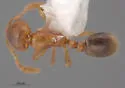
Solenopsis picta
Solenopsis picta
Identification: A tiny Solenopsis, usually with bicolored workers, as opposed to other thief ants in the US that have either fully dark or pale yellow workers. Much smaller than the "fire ants".
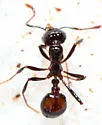
Black Imported Fire Ant
Solenopsis richteri
Introduced from South America, probably Argentina, sometime near 1918. A hybrid of this and S. invicta (also introduced) is becoming very common and displacing this species.
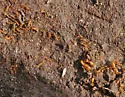
Thief ant (but one of several)
Solenopsis texana
Identification: Separated from the very similar and as also common S. molesta by the very short antennal segments 3-7.
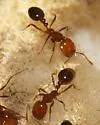
Southern Fire Ant
Solenopsis xyloni
Identification: Generally similar to S. invicta in color and morphology. Differentiation is based on the lack of median tooth on the clypeus. Due to variation within colonies, several major workers should be examined in order to ensure that this feat
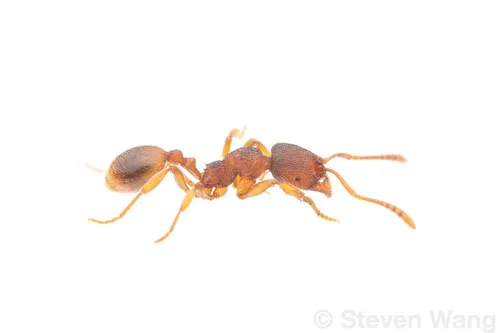
Stenamma schmittii
Stenamma schmittii
Identification: Minute eyes with few facets, net-like sculpture diagnostic for this eastern species
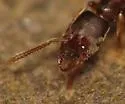
Stigmatomma pallipes
Stigmatomma pallipes
"Not a particularly rare ant, but rarely encountered because of its cryptic, subterranean life...It is a specialist predator of geophilomorph centipedes." - James C. Trager
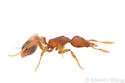
Strumigenys dietrichi
Strumigenys dietrichi
Identification: Due to its wide distribution there can be some variation in the clypeal hairs, sometimes with some having slightly expanded tips but never as bulbous as in S. ornata . Very similar to S. boltoni , but boltoni has a clypeus that is upt
Strumigenys mixta_nr
Strumigenys mixtanr
S. mixta recorded in AZ in Booher 2021 as nonnative, but has subtle differences with central American mixta -- calling it mixta_nr for now
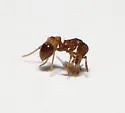
Strumigenys pulchella
Strumigenys pulchella
Identification: Flagellate apiscrobal hair is diagnostic within the pulchella group. This is the wiry thin hair sticking out the side of the face at the top of the antennal scrobes, highlighted in green here:
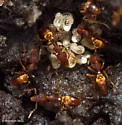
Strumigenys reflexa
Strumigenys reflexa
Identification: The arrangement of clypeal hairs is diagnostic within the pulchella-group.
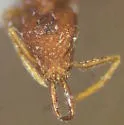
Strumigenys silvestrii
Strumigenys silvestrii
Identification: In respects to S. louisianae : longer (less heart shaped) head, less "scaly" hairs on the head, different shaped lamellae underneath the propodeal spines. Workers also have much smaller eyes. Most easily confused with Strumigenys loui
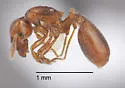
Strumigenys superstes
Strumigenys superstes
known from a single queen specimen described here- Booher, D. and Uhey, D., 2020. New Native Trap-Jaw Ant, Strumigenys Smith1, from the Neotropical Excisa Species Group Discovered in a Disjunct Region and Climate on the Colorado Plateau. Southwestern
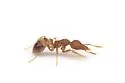
Strumigenys talpa
Strumigenys talpa
nominal species of the talpa-group, which includes Strumigenys archboldi, Strumigenys filitalpa, Strumigenys talpa, and Strumigenys wrayi
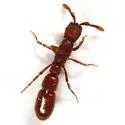
Syscia augustae
Syscia augustae
Type Locality: on the banks of Waller Creek, Austin, Travis Co., Texas
Tapinoma litorale
Tapinoma litorale
Not a rare ant, but rarely seen because of its small size and twig-dwelling habits (often in mangroves)
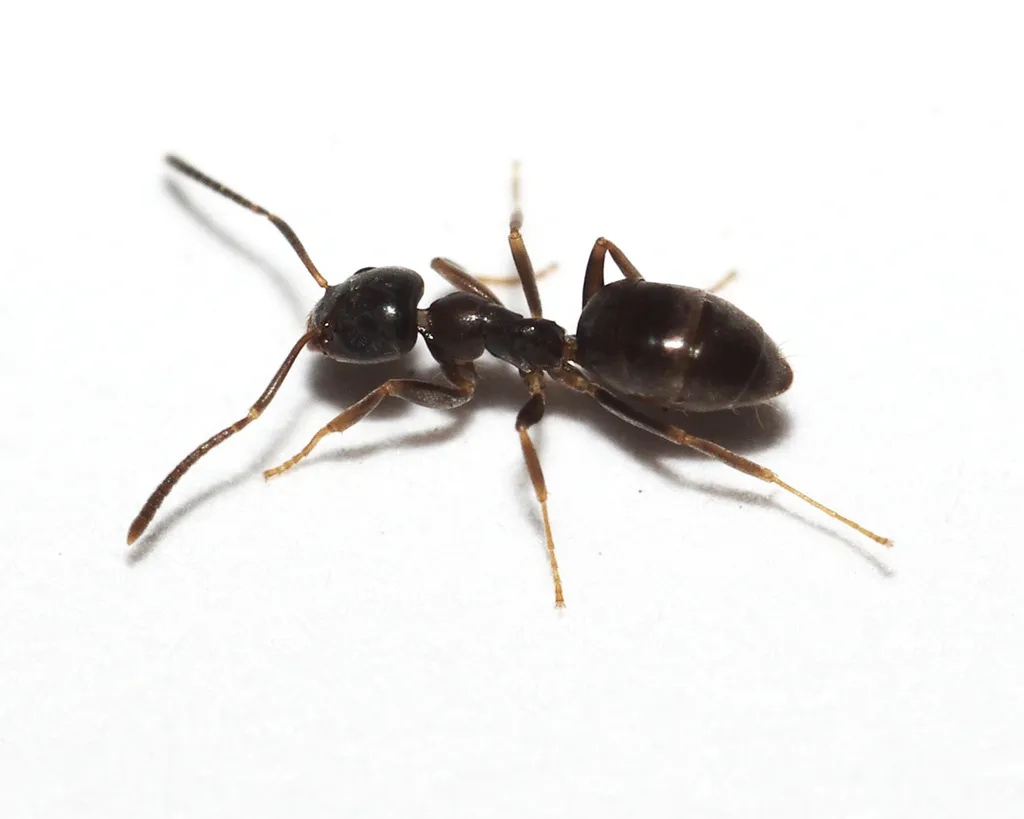
Odorous House Ant
Tapinoma sessile
Identification: The low, nodeless petiole distinctive, may not be readily visible but clearly seen here Alates are reared in spring, not uncommonly in wall spaces or window frames of houses, but naturally in the upper portions of leaf piles, under ba
Temnothorax ambiguus
Temnothorax ambiguus
Identification: The typical species of old fields and prairie (comment by James C. Trager).
Temnothorax caryaluteus
Temnothorax caryaluteus
Identification: The workers of this species can be differentiated from other members of the Temnothorax schaumii-group by range and the length of the spines. The range of T. caryaluteus is primarily allopatric to the northern T. ambiguus . It can be
Temnothorax obturator
Temnothorax obturator
Identification: Rounder petiole than most other Temnothorax (as opposed to angled), small propodeal spines united by a carina.
Temnothorax schaumii
Temnothorax schaumii
"An arboreal species with short spines and the head shining, the latter character state visible at low magnification in the field. Nests are usually in dead branches or under loose bark on live hardwoods or conifers, usually the former. Can be either
Temnothorax texanus
Temnothorax texanus
Widely associated with ecologically intact, sandy-soil grassland and open woodland habitats in the US Southeast, extending well north along the Atlantic Coast and in the Mississippi Valley. (comment by James C. Trager) "Nests are in soil, usually onl
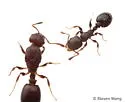
Temnothorax whitfordi
Temnothorax whitfordi
Identification: Smooth and shiny dark brown Temnothorax with 11 segmented antennae, distinctive within the subgenus. Similar to T. emmae, differing in minor sculpture differences and color. More aggressive than typical Temnothorax
Tetramorium atratulum
Tetramorium atratulum
Obligate parasite of Tetramorium caespitum The species A. atratulus was moved under the genus Tetramorium after the genus Anergates was synonymized with Tetramorium by Ward et. al. 2015.
Tetramorium caldarium
Tetramorium caldarium
Identification: Much smaller than the common T. bicarinatum , and paler in color. Antennal scrobes less pronounced than the similar T. simillimum .
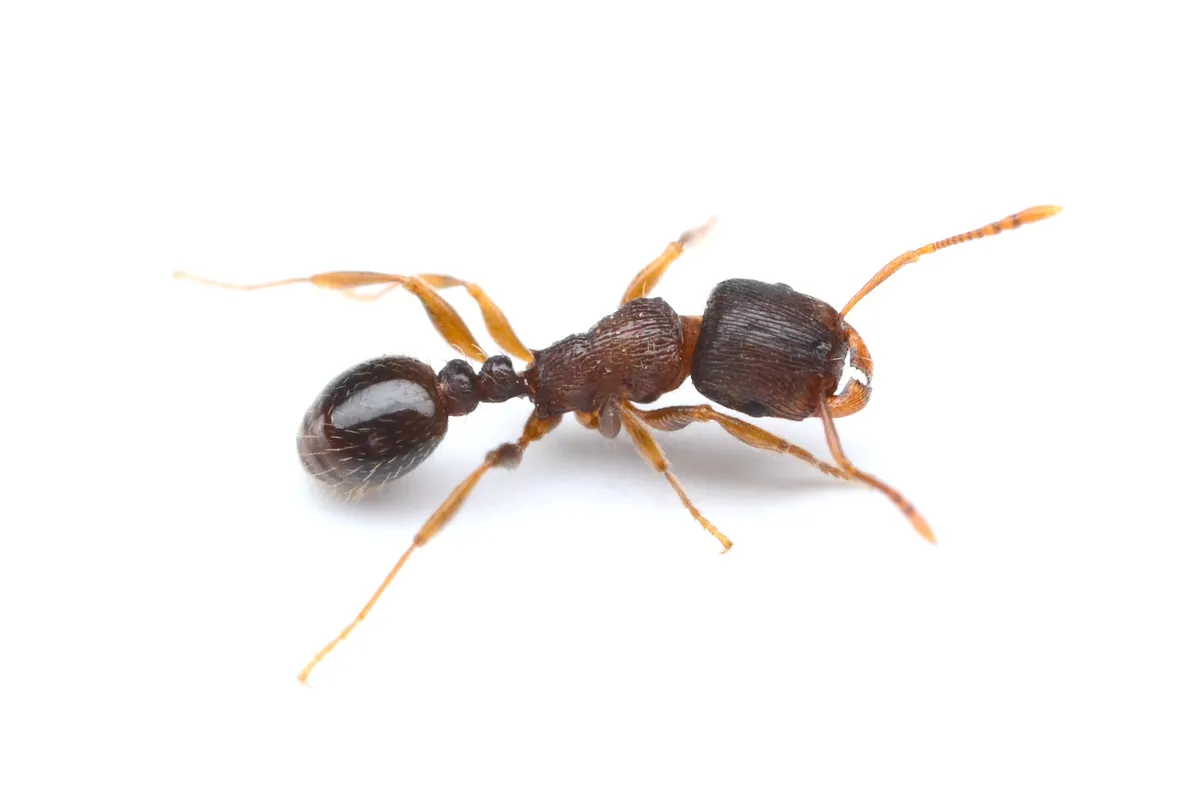
(Immigrant) Pavement Ant
Tetramorium immigrans
Introduced from Europe. It is parasitized by another imported Myrmicine Anergates atratulus (also introduced).
Tetramorium insolens
Tetramorium insolens
This species is native to Australasia but is invasive to parts of Southeast Asia, Oceania, Hawaii, and is also recorded from California. It is probably rare in California.
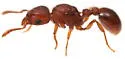
Wooly Pavement Ant
Tetramorium lanuginosum
Identification: Very hairy and round myrmicine ants with long propodeal spines and obvious antennal scrobes.
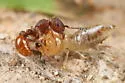
Tetramorium spinosum
Tetramorium spinosum
Identification: Similar to T. hispidum , but with relatively smaller eyes and longer hairs on the back. Part of the Tetramorium tortuosum-group , which are the only Tetramorium native to the New World, an otherwise Old World genus.
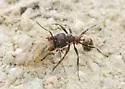
Veromessor andrei
Veromessor andrei
Identification: Two main colors, one brown-purple and one red. They seem to be modeled after two species of Pogonomyrmex , P. rugosus & P. occidentalis Corresponding V. andrei :
Veromessor chamberlini
Veromessor chamberlini
Identification: base of scape widened, spines long (lobognathus, the other species with expanded scapes, has short spines)
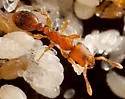
Vollenhovia emeryi
Vollenhovia emeryi
Colonies of this species vary heavily in range -- recently split colonies may consist of just a queen and a dozen workers, to full colonies which have dozens of queens and thousands of workers. I believe the largest colonies I have collected have had
Desert Leaf-cutting Ant
Acromyrmex versicolor
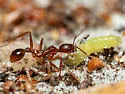
Aphaenogaster flemingi
Aphaenogaster flemingi
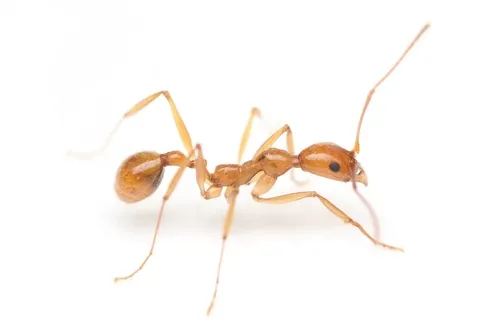
Aphaenogaster floridana
Aphaenogaster floridana
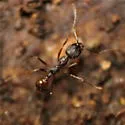
Aphaenogaster fulva
Aphaenogaster fulva
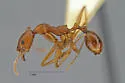
Aphaenogaster huachucana
Aphaenogaster huachucana
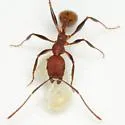
Aphaenogaster lamellidens
Aphaenogaster lamellidens
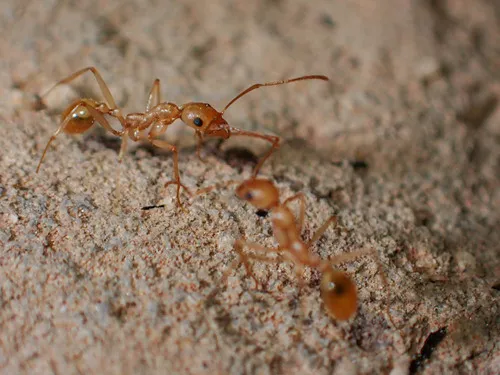
Aphaenogaster megommata
Aphaenogaster megommata
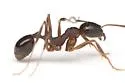
Aphaenogaster miamiana
Aphaenogaster miamiana
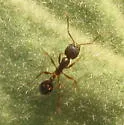
Western Collared Ant
Aphaenogaster occidentalis
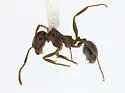
Aphaenogaster patruelis
Aphaenogaster patruelis
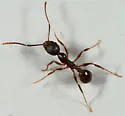
Pitch-black Collared Ant
Aphaenogaster picea
Winnow Ant
Aphaenogaster rudis
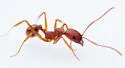
Aphaenogaster texana
Aphaenogaster texana
Aphaenogaster uinta
Aphaenogaster uinta
Aphaenogaster umphreyi
Aphaenogaster umphreyi
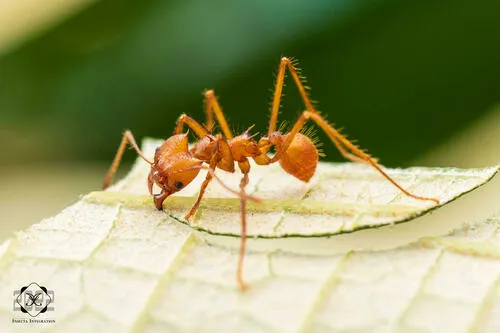
Hairy-headed leafcutter ant
Atta cephalotes
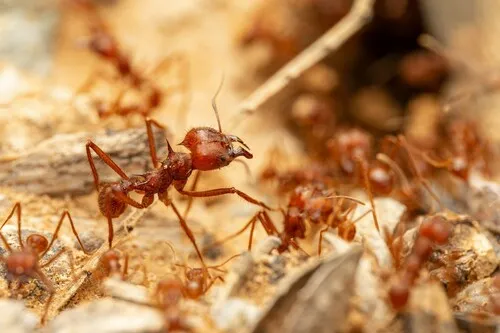
Mexican Leaf-cutting Ant
Atta mexicana