
Spiders
Order Araneae
The Spiders (Order Araneae) includes 1,848 species across 82 families and 552 genera in our directory.
About Spiders
As of 2023, 51,673 spider species in 136 families have been recorded, though an estimated 150,000 species exist. Spiders rank 7th in total species diversity among all organism orders. Only 0.5% of spider species pose any risk to human health.
Economic Impact
The global spider community kills an estimated 400-800 million tons of prey annually (2017 study). Spiders provide billions of dollars in natural pest control for agriculture. Spider silk is 5× stronger than steel of the same diameter, driving a biomaterials research industry.
Ecological Role
Spider venom contains complex peptides with diverse pharmacological activities, making them valuable for drug development research. Spiders produce up to 7 types of silk from specialized glands. Spider silk genes have been inserted into mammals and plants for biotech applications.
Families in Araneae (82)
Species in Araneae (1,848)
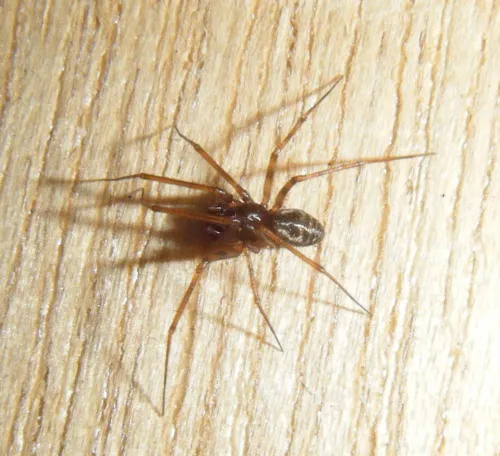
Lepthyphantes leprosus
Lepthyphantes leprosus
Confirmation of this species requires examination of the genitals of mature specimens. L. leprosus is found in all types of buildings, from newly built houses (noticed within nine months of completion) to derelict barns. It forms small webs across co
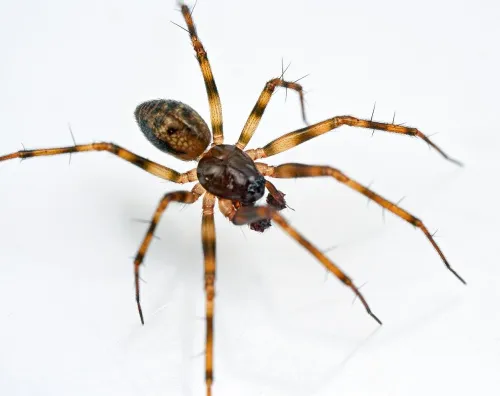
Lepthyphantes minutus
Lepthyphantes minutus
Confirmation of this species requires examination of the genitals of mature specimens. Tree trunks, old bird nests and sometimes in houses. Builds a small sheet web
Lepthyphantes turbatrix
Lepthyphantes turbatrix
Identification: "Carapace orange-yellow suffused with dusky, darker at the margin. Legs orange-yellow. Abdomen dark with scattered silvery spots and marked with interrupted transverse light bands and a pair of light spots, one at each side at base."
Leptoctenus byrrhus
Leptoctenus byrrhus
Identification: Female (we think this placement in the Guide is highly likely, but have not received voucher specimens yet): Male (we think this placement in the Guide is highly likely, but have not received voucher specimens yet): "We have observed
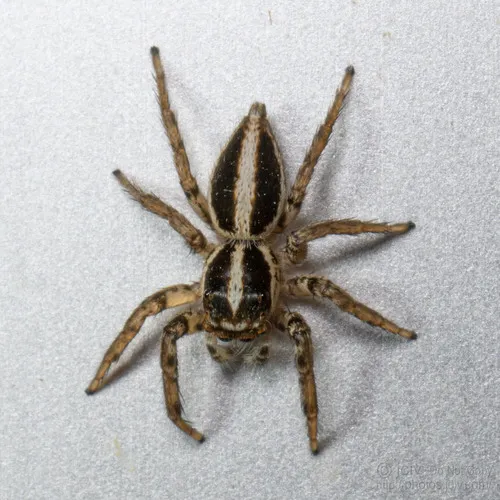
Leptofreya ambigua
Leptofreya ambigua
Leptofreya ambigua is a species of jumping spider. The species was first described by Carl Ludwig Koch in 1846.
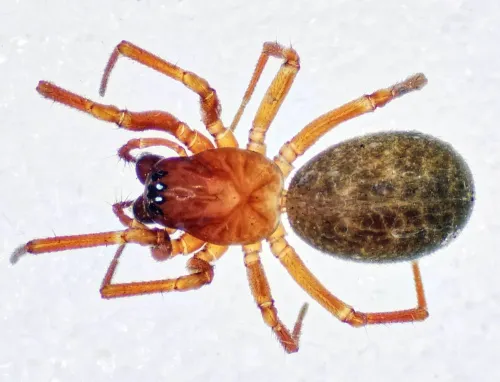
Leptorhoptrum robustum
Leptorhoptrum robustum
Length 3 to 4.8 mm. Prosoma brown, with dark margin and radial stripes. Sternum brown, tinged with black. Legs yellow-brown. Opisthosoma grey to almost black. Confirmation to species level requires examination of the genitalia of mature specimens. Fo
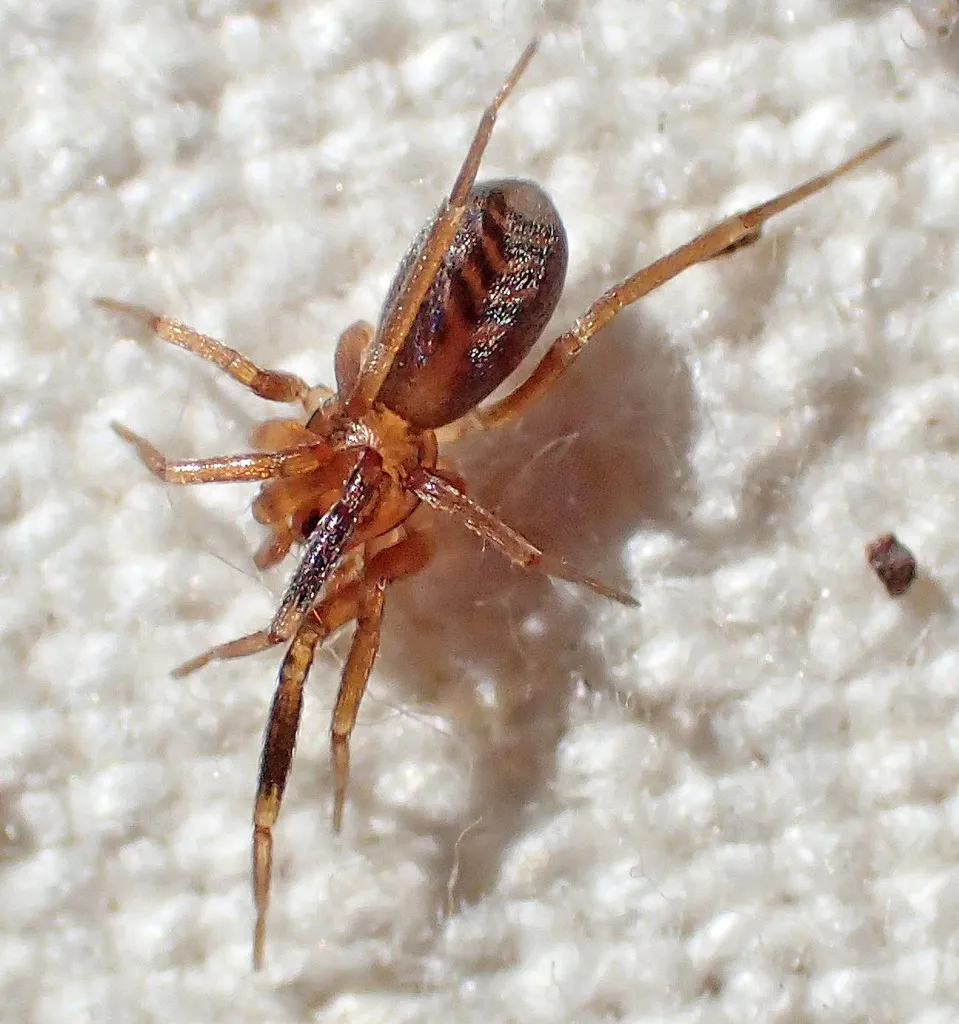
Lesser Antmimic Guardstone Spider
Phrurotimpus certus
Phrurotimpus certus is a species of true spider in the family Phrurolithidae. It is found in the United States and Canada.
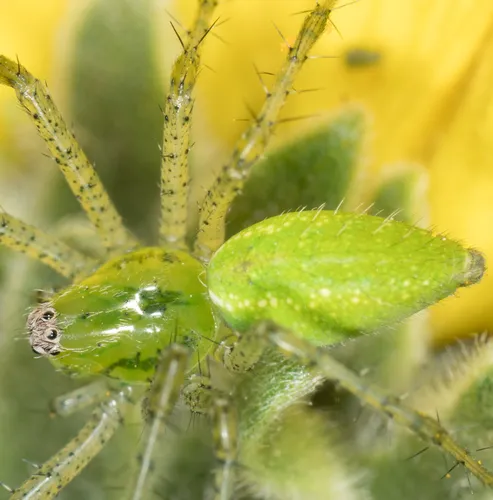
Lesser Green Lynx Spider
Peucetia longipalpis
Identification: First described by Frederick Octavius Picard-Cambridge in 1902 from an adult male collected in Amula, Guerrero, Mexico (Brady, 1964). Unfortunately there is little information available on this species, and the description by Brady (1
Leucauge argyra
Leucauge argyra
Identification: The thing that catches our [JJB] eye about L. argyra is that the three lines on the back run parallel only about halfway across the back when the outer two suddenly bend inward before flowing parallel once again to the end of the abdo
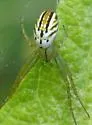
Lined Orbweaver
Mangora gibberosa
Identification: Palp Epigynum More common in fields than woods.
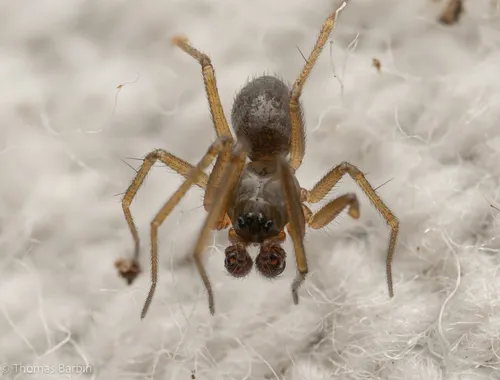
Linyphantes pualla
Linyphantes pualla
Linyphantes pualla is a species of sheetweb spider in the family Linyphiidae. It is found in the United States and Canada.
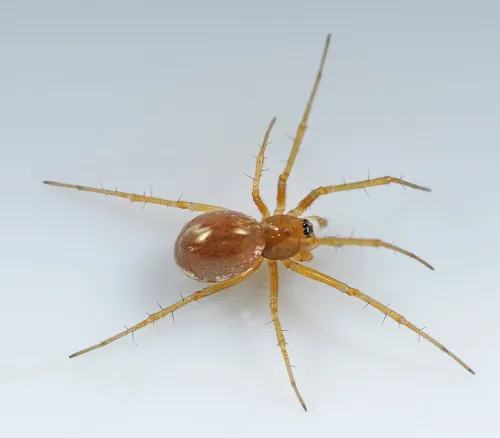
Linyphia hortensis
Linyphia hortensis
Size about 4 mm. The male has a dark brown rather cylindrical abdomen that usually has two pale patches at the top. The female is broader bodied and more strongly marked. The spider is found on low vegetation, especially dog's-mercury, mostly but not
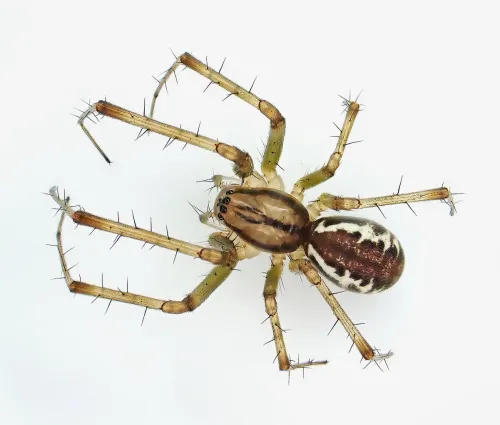
Linyphia triangularis
Linyphia triangularis
The female is about 6 mm and the male slightly smaller at 5 mm. A small but well-marked spider with a tuning fork shaped mark on the carapace behind the eyes. It can be found in bushes and vegetation. It is abundant and widespread in Britain.
Litopyllus cubanus
Litopyllus cubanus
Litopyllus cubanus is a species of ground spider in the family Gnaphosidae. It is found in the United States, Bahama Islands, and Cuba.
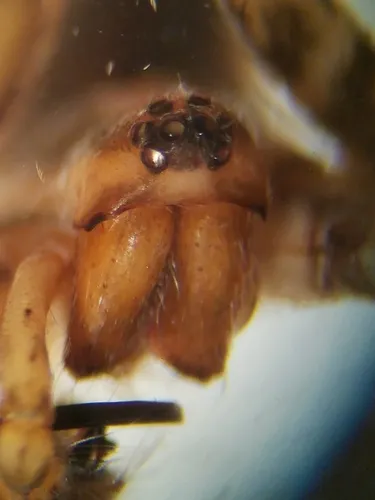
Long Stylet Funnelweb Spider
Agelenopsis longistyla
Agelenopsis longistyla is a species of funnel weaver in the spider family Agelenidae. It is found in the United States.
Lupettiana mordax
Lupettiana mordax
Identification: It is the only anyphaenid that has such porrect chelicerae (they extend forward). This is a very obvious characteristic in the males. See example here:
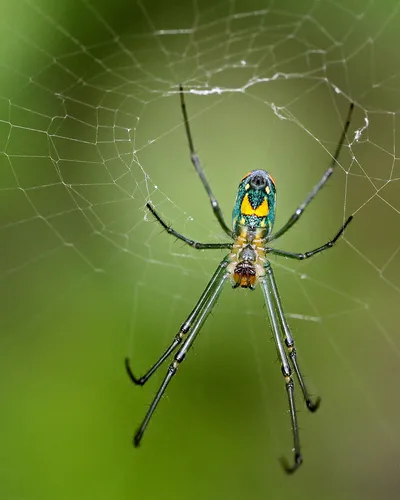
Mabel Orchard Orbweaver
Leucauge argyrobapta
Leucauge argyrobapta, or Mabel's orchard orb weaver, is a species of long-jawed orb weaver in the spider family Tetragnathidae. It is found from the United States south to Brazil.
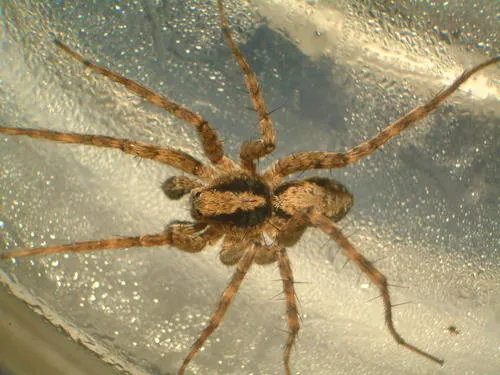
Mackenzie's Thin-legged Wolf Spider
Pardosa mackenziana
Identification: Female epigyne: Male left palp, ventral view left palp, retrolateral view left palp, distoventral view Info from Rod Crawford regarding Pardosa of Washington: Pardosa mackenziana [& P. dorsalis which is likely a synonym] females can't
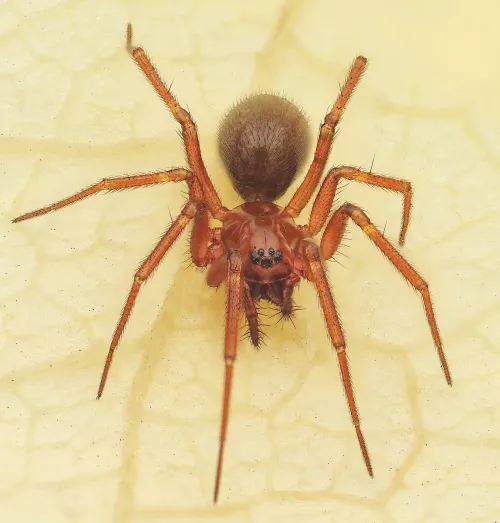
Macrargus rufus
Macrargus rufus
A small spider with a length of little more than 3.5mm. Unless identified by a recognised expert, a photo is required and the specimen should be examined with a microscope. In the comments box, state the key or ID method used and describe the size an
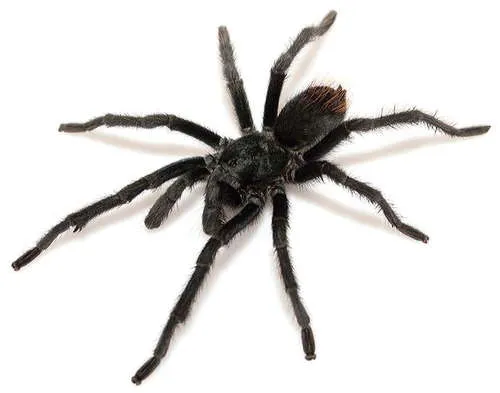
Madera Canyon Tarantula
Aphonopelma madera
Aphonopelma madera is a species of spiders in the family Theraphosidae, found in United States (Arizona).
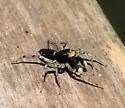
Maevia b
Maevia b
Identification: This page is created for individuals east of the Appalachians.
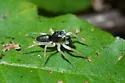
Maevia expansa
Maevia expansa
Identification: Males are similar to M inclemens but have large areas of white scales around the AMEs (large forward facing eyes in center: Anterior Median Eyes). Males are dimorphic with a black form and a grayish form. Adult females are best identi
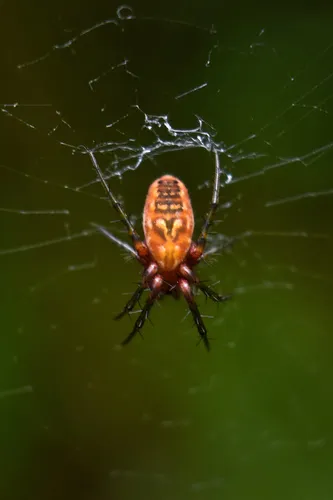
Mangora passiva
Mangora passiva
Identification: Recognized by the two upside-down, comma-shaped light marks on dark background.

Mangora spiculata
Mangora spiculata
Identification: Rereading the key we found that maculata has only three pair of spots at the end of the abdomen while spiculata has more spots or blotches. This is the coastal species from NJ down around to TX. … john and jane balaban, 5 August, 2009
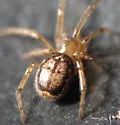
Marbled Cobweb Spider
Enoplognatha marmorata
Identification: Epigynum: Ventral/Dorsal Palp:Ventral/Lateral
Marpissa formosa
Marpissa formosa
Identification: Male Palp Female This species is largely replaced by Marpissa bina in Florida, Georgia, and North Carolina (where there may be some overlap).
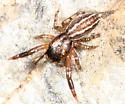
Marpissa lineata
Marpissa lineata
Identification: Palp: Epigynum: Marpissa dentoides Barnes, 1958 is similar, and found in parts of the same range. There are currently (8/14/25) no records on BugGuide. Males (only) can be differentiated by structure of the pedipalp. Some images are f
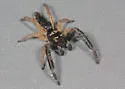
Marpissa robusta
Marpissa robusta
Identification: Male/Female Palp Epigynum This page was created based on the identification of this image by Dr. Lenny Vincent .
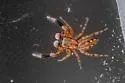
Marpissa sulcosa
Marpissa sulcosa
Identification: This species is very similar in appearance to M. lineata which it replaces in Florida.
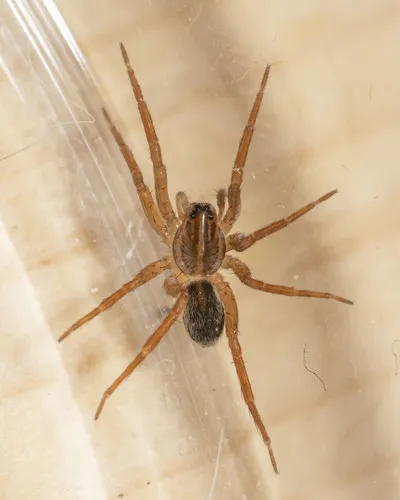
Marx pirate spider
Trebacosa marxi
Trebacosa marxi is a species of wolf spider in the family Lycosidae. It is found in the United States and Canada.
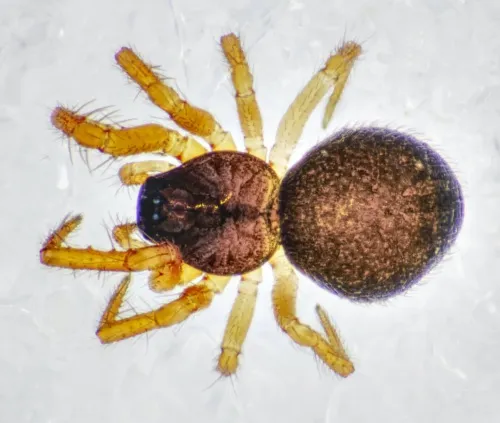
Maso gallicus
Maso gallicus
Length 1.4 to 2.2 mm. Grey-brown, 3 large spines on femur I & II. Identification of this species requires examination of the genitalia. http://srs.britishspiders.org.uk/portal.php/p/Summary/s/Maso+gallicus No additional images available for this spec
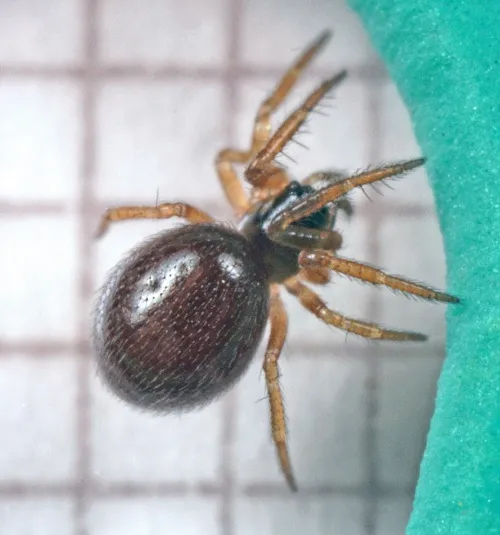
Maso sundevalli
Maso sundevalli
Microscopic examination of genitalia is required to confirm identity. Females year round but peak time is in summer. http://srs.britishspiders.org.uk/portal.php/p/Summary/s/Maso+sundevalli
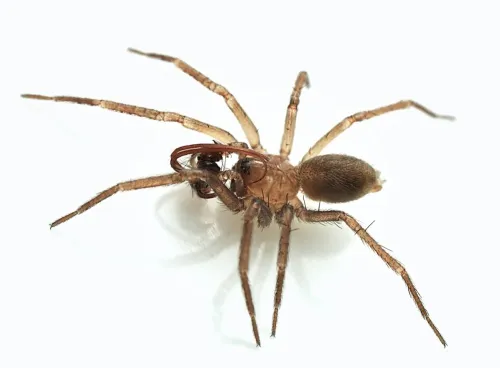
Mastigusa diversa
Mastigusa diversa
Body length 3 to 3.5 mm. Prosoma light yellow-brown. Sternum yellow-brown. Legs yellow-brown. Opisthosoma light yellowish, sometimes with vague brownish or blackish pattern. Male palps highly distinctive. In natural light females have metallic blue i
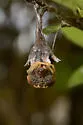
Mastophora bisaccata
Mastophora bisaccata
Identification: Where M. bisaccata, stowei & yeargani overlap in range they can be separated by the following: 1. M. bisaccata has only venter of femur I dark. 2. M. stowei has all femora dark dorsally and clypeus dark. 3. M. yeargani has no dorsal d
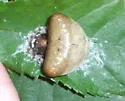
Mastophora phrynosoma
Mastophora phrynosoma
Identification: This species apparently has a characteristic habitus and egg sac morphology - please see text and figures 24-27 in 1955 Gertsch paper found on genus info. page.
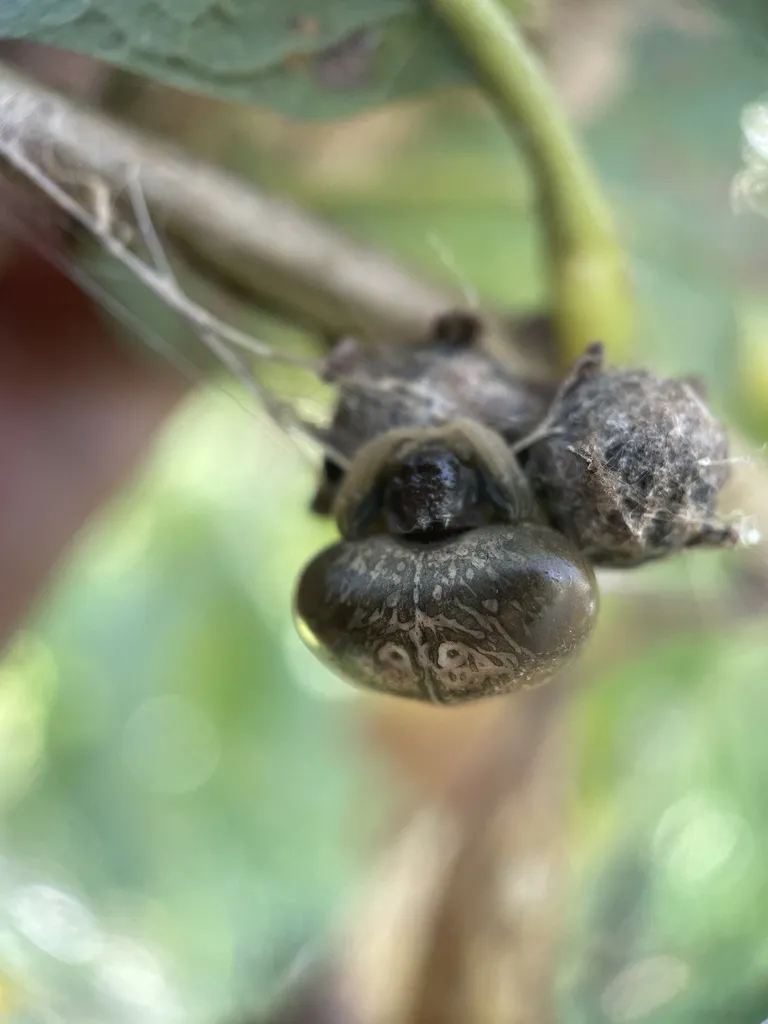
Mastophora stowei
Mastophora stowei
Identification: Where M. bisaccata, stowei & yeargani overlap in range they can be separated by the following: 1. M. bisaccata has only venter of femur I dark. 2. M. stowei has all femora dark dorsally and clypeus dark. 3. M. yeargani has no dorsal d
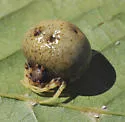
Mastophora timuqua
Mastophora timuqua
Identification: Mastophora timuqua is distinguished .. by lacking dorsal abdominal pattern and by having ringed legs.
Mastophora yeargani
Mastophora yeargani
Identification: Where M. bisaccata, stowei & yeargani overlap in range they can be separated by the following: 1. M. bisaccata has only venter of femur I dark. 2. M. stowei has all femora dark dorsally and clypeus dark. 3. M. yeargani has no dorsal d
Mecaphesa rothi
Mecaphesa rothi
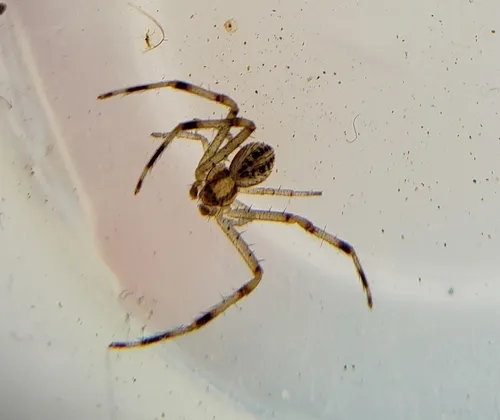
Mecaphesa rothi is a species of crab spider in the family Thomisidae. It is found in the United States.
Mecaphesa schlingeri
Mecaphesa schlingeri
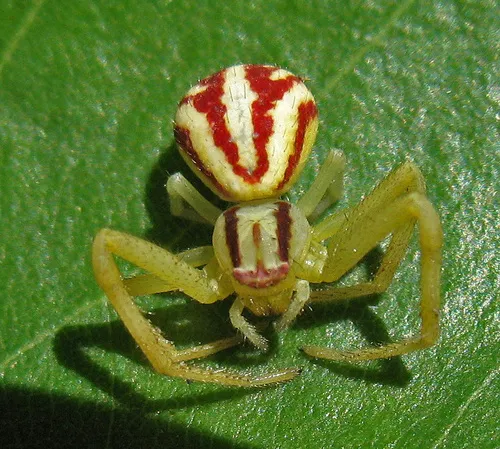
Identification: To paraphrase Schick (see page 120 of reference below): Dorsum of abdomen characteristically marked with broad red stripes including a pair of lateral stripes originating at anterior dorsolateral margin of abdomen and curving ventrad
Mediterranean Recluse
Loxosceles rufescens
An introduced species. The bites of these spiders do not produce the severe reactions typically associated with the brown recluse spider. "Loxosceles rufescens apparently has not been associated with cases of human loxoscelism, but in experiments don
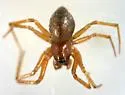
Mermessus fradeorum
Mermessus fradeorum
Identification: Small differences in epigynum and by the different shape of the dorsal plate. In males differences in the shape of the embolic division and the papal tibia. There is also a trichobothria on metatarsus IV. Male:
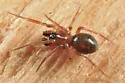
Mermessus maculatus
Mermessus maculatus
In the 1940s, when Kaston wrote that it was "our commonest species of the genus" in Spiders of Connecticut, the genus he was referring to was Eperigone, named by Crosby & Bishop in 1928. Much later, according to the World Spider Catalog, it was deter
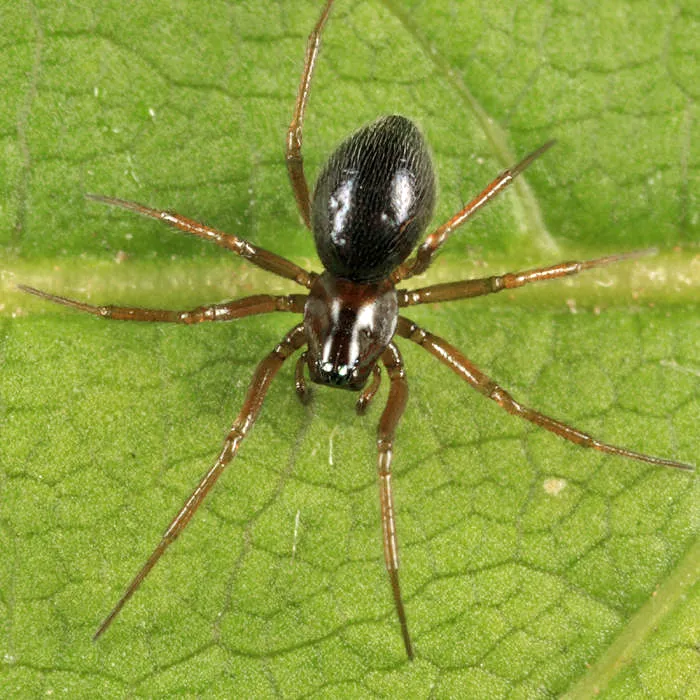
Mermessus tridentatus
Mermessus tridentatus
Mermessus tridentatus is a species of dwarf spider in the family Linyphiidae. It is found in the United States, Canada, and Puerto Rico. It was described by America arachnologist James Henry Emerton in 1882.
Metacyrba taeniola
Metacyrba taeniola
Identification: Western T. t. similis with reddish femur IV. Eastern T. t. taeniola with dark femur IV.
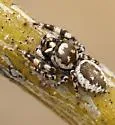
Metaphidippus chera
Metaphidippus chera
Identification: Male Palp Female Epigynum Maddison describes this species as "one of the most common salticids in the southwestern United States and northern Mexico ".
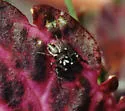
Metaphidippus manni
Metaphidippus manni
Identification: "Dense white patches on chelicerae and cheek patches that contrast against a dark, shiny body distinguish males immediately". Female
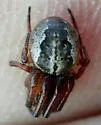
Metazygia wittfeldae
Metazygia wittfeldae
Identification: Levi, 1977. On page 90 of Levi's bulletin it says "The capapace (in Metazygia) differs from that of Nuctenea (Larinioides) by lacking fine setae".
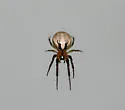
Metazygia zilloides
Metazygia zilloides
Identification: Adult male: Females: Epigynum: Palp: Unlike the related Eustala , Metazygia makes a retreat.
Metellina curtisi
Metellina curtisi
Identification: Adult Female Adult Male Juvenile Male
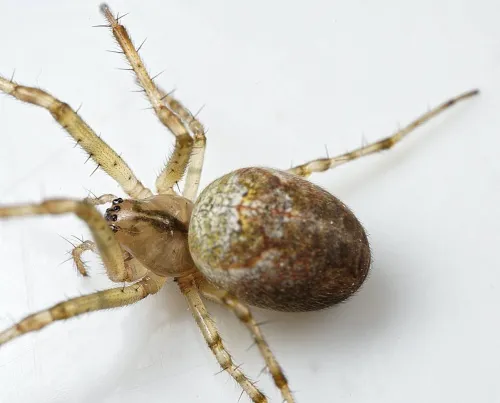
Metellina mengei
Metellina mengei
Metellina mengei resembles M. segmentata although on average M. mengei may be slightly smaller. Having said that, there is size variation in both species which creates an overlap. Mature M. mengei tend to predominate in spring and early summer (remem
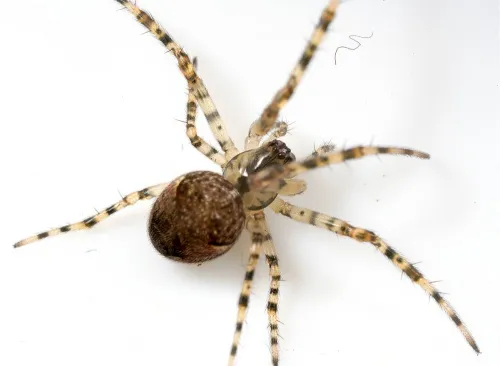
Metellina merianae
Metellina merianae
Length 8 to 12 mm. Quite variable in pattern and colour. Prosoma yellowish green, with irregular black stripes, margin black. Sternum black. Chelicerae red-brown. Legs yellowish green, annulated and spotted irregularly with black. Opisthosoma greenis
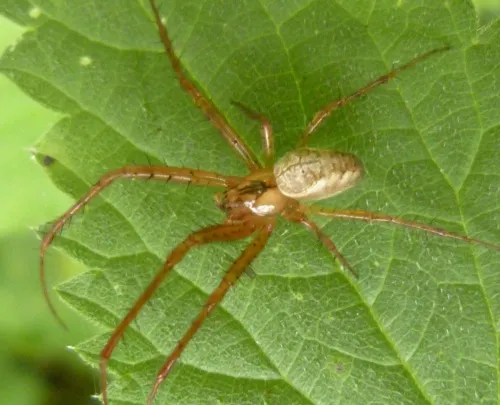
Metellina segmentata
Metellina segmentata
4-8mm (female), 4-6mm (male). Usually has yellow, red and orange tones on the abdomen. The carapace has a dark tuning fork mark in the centre. Metellina segmentata closely resembles M. mengei . Mature M. mengei tend to predominate in spring and early
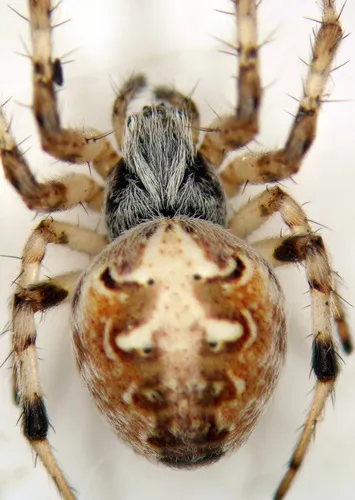
Metepeira arizonica
Metepeira arizonica
Identification: Like M. crassipes (unlike M. grinnelli and gosoga) the carapace is very dark brownish black except for the light transverse anterior head region. The following image is closest to the ventral drawing in the work cited: (two white vent
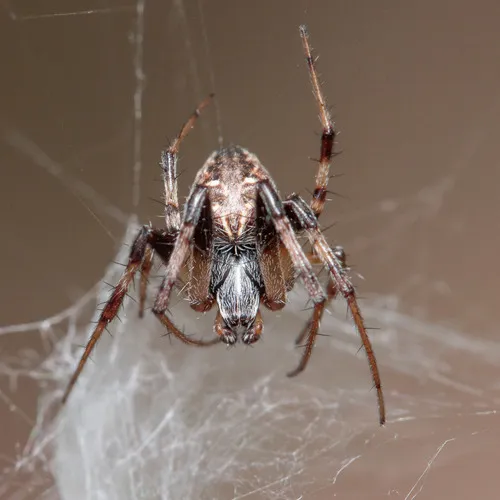
Metepeira comanche
Metepeira comanche
Identification: Anterior light area of head grades gradually into dark area posteriorly. A median light streak in many specimens just anterior to thoracic depression. Legs banded. Venter often with white transverse bar connecting with longitudinal
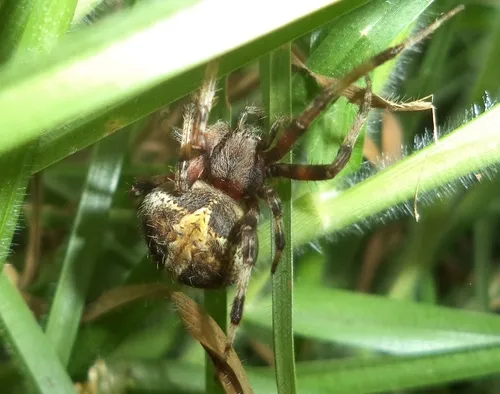
Metepeira crassipes
Metepeira crassipes
Identification: The white sternal band may be broken as in grinnelli . This species is smaller than grinnelli . Females can be confused with arizonica , males are more often confused with ventura . Ventral view has both abdominal vertical white band
Metepeira foxi
Metepeira foxi
Identification: Metepeira foxi differs from all other species north of Mexico, except grandiosa and datona by not having a white longitudinal line on the sternum. It doesn't occur in Florida like datona.
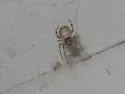
Metepeira gosoga
Metepeira gosoga
Identification: Light colored carapace having only the posterior head region dark, by the white abdomen. Two adjacent black marks surrounded by white pigment on the venter. There is a second form that Piel 2001 says is more common than the one Levi d
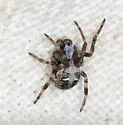
Metepeira grandiosa
Metepeira grandiosa
Identification: 2 subspecies - both have no median longitudinal band on the black sternum. - I don't know if these two are still considered subspecies. - alpina - Coxae never black. - grandiosa - More variable than the others.
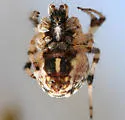
Metepeira minima
Metepeira minima
Identification: The following image is closest to the ventral drawing in the work cited: (two white ventral marks & 4 spots around spinnerets)
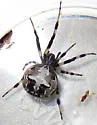
Metepeira palustris
Metepeira palustris
Identification: No median longitudinal band on the black sternum. Black coxae, sometimes yellow coxae or both black and yellow coxae. This species was formerly considered a subspecies of M. grandiosa .
Metepeira spinipes
Metepeira spinipes
Identification: Coloring is pronounced and leg banding is more distinct than the similar M. labyrinthea . Most species have the ventral white line of the sternum broken by black pigment; sometimes the anterior or posterior part of the line is missing
Metepeira ventura
Metepeira ventura
Identification: A median light streak may be present on the carapace and the light sternal band is sometimes broken. The middle of the posterior head region often has a light streak not found in grinnelli, crassipes or arizonica . The following image

Metopobactrus prominulus
Metopobactrus prominulus
This is one of the 'money spiders' in the Linyphidae family - which has more UK species than any other. Most are small and need microscopic examination to identify. No additional images available for this species.
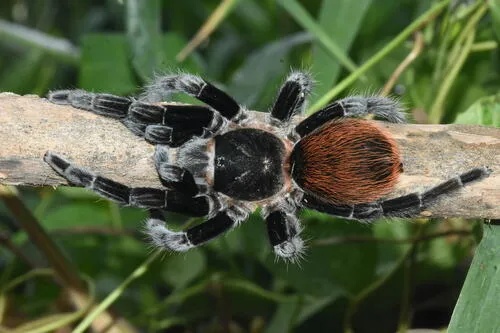
Mexican Red-rump Tarantula
Tliltocatl vagans
Tliltocatl vagans (synonym Brachypelma vagans) is a species of tarantula known commonly as the Mexican red rump. It ranges predominantly in Mexico (including the Yucatán Peninsula), but is also found in Central America. They are terrestrial, burrowin
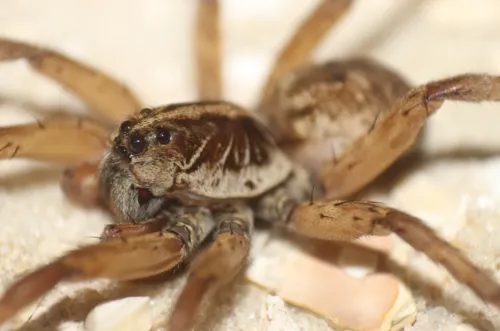
Miami Wolf Spider
Hogna miami
Hogna miami, commonly known as the Florida wolf spider or Miami wolf spider, is a species of wolf spider in the family Lycosidae found in the southern portion of the state of Florida.
Micaria constricta
Micaria constricta
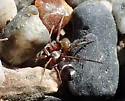
Identification: Epigynum (undissected-ventral/dissected ventral/dissected dorsal)
Micaria foxi
Micaria foxi
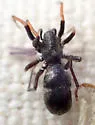
Identification: Epigynum (undissected ventral/dissected dorsal) Distinguished from M. rossica by the shorter embolus of males and the smaller epigynal septum of females.
Micaria gertschi
Micaria gertschi
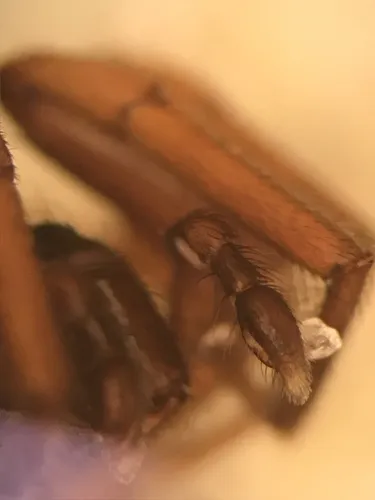
Micaria gertschi is a species of ground spider in the family Gnaphosidae. It is found in the United States and Canada.
Micaria gosiuta
Micaria gosiuta
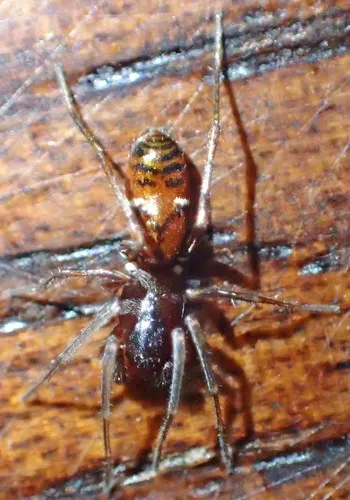
Identification: Palp Epigynum "This species resembles M. longipes and M. delicatula but can be distinguised by the basal bulge on the retrolateral tibial apophysis of males and the relatively short paramedian epigynal ducts of females."
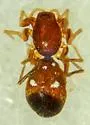
Micaria jeanae
Micaria jeanae
Identification: Epigynum "This species seems closest to M. pasadena but can be distinguished by the two equally long tibial apophyses of males and the narrow, hood-like anterior epigynal margin of females."
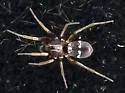
Micaria longispina
Micaria longispina
Identification: Epigynum "closest to M. idana and M. medica but can be distinguished by the ventrally directed and expanded tip of the embolus and the curved lateral ridges of the epigynum."
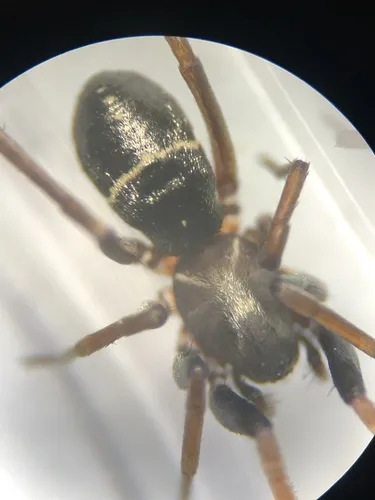
Micaria medica
Micaria medica
Identification: Epigynum Distinguished from M. idana and M. longispina by the absence of a median apophysis in males and by the entire anterior epigynal margin of females.
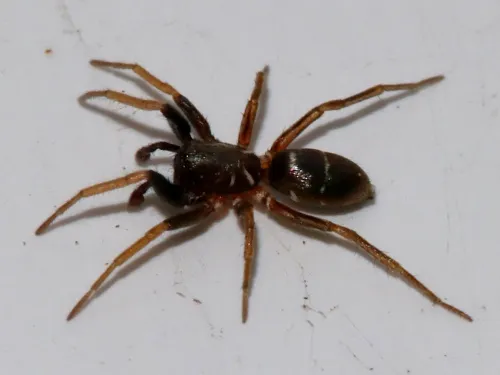
Micaria micans
Micaria micans
Micaria micans has a dark longitudinal stripes on the dorsal of femora III and IV (sometimes also recognizable on the tibiae of these legs), caused by stripe-like arrangement of dark hairs and dark pigmentation of the cuticule; it prefers warm, dry s
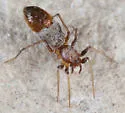
Micaria nye
Micaria nye
"This species can be recignized by the oddly shaped embolus and the elongated paramedian epigynal ducts."
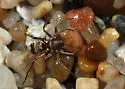
Micaria pasadena
Micaria pasadena
Micaria pasadena is a species of ground spider in the family Gnaphosidae. It is found in the United States and Mexico.
Micaria pulicaria
Micaria pulicaria
Identification: Palp Epigynum "This species seems closest to M. tripunctata but can be distinguished by the shorter, wider embolus of males and the relatively shorter paramedian ducts of females."
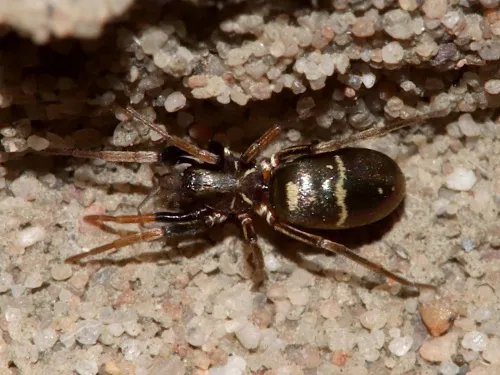
Micaria pulicaria sensu lato
Micaria pulicaria sensu lato
A distinctive pattern of white on the dark abdomen and a radial pattern on the carapace help with identification. In 2019 DNA analysis split the species Micaria pulicaria into two: The colour difference is a reliable and supported by DNA. There are a
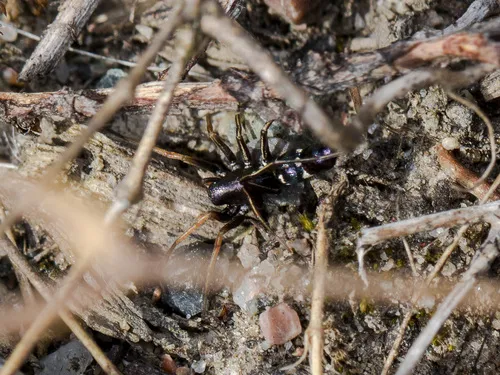
Micaria rossica
Micaria rossica
Identification: M. rossica can be distinguished from C. longipalpa by its thinner tibiae and femur coloration (femurs I-III are red while femur IV is black). "This species seems closest to M. foxi but can be distinguished by the longer embolus of mal
Micaria triangulosa
Micaria triangulosa
Identification: "This distinctive species can be recognized easily by the short, basally situation retrolateral tibial apophysis of males and the triangular anteromedian epigynal depression of females." Palp Epigynum
Micrargus herbigradus
Micrargus herbigradus
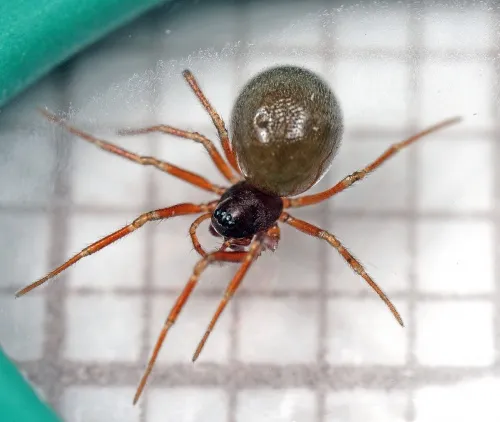
Unless identified by a recognised expert, a photo is required and the specimen should be examined with a microscope. In the comments box, state the key or ID method used and describe the size and identifying characters. Usually found in moss, leaf li
Micrargus subaequalis
Micrargus subaequalis
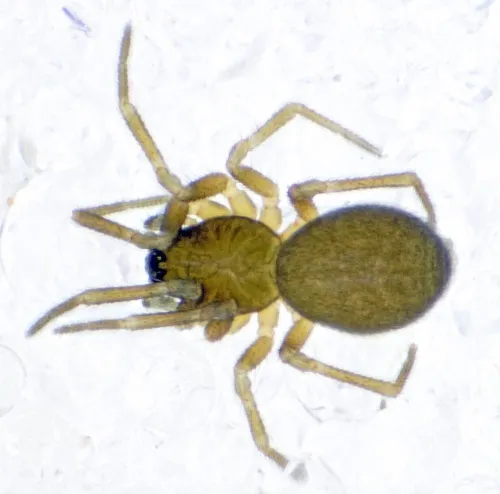
Males 1.6 to 2 mm, females 1.5 to 2.2mm. Prosoma light to dark brown. Opisthosoma grey. This species can only be confirmed by examination of the genitalia of mature specimens. Grassland, gardens and damp places such as marshland grass, woodland leaf
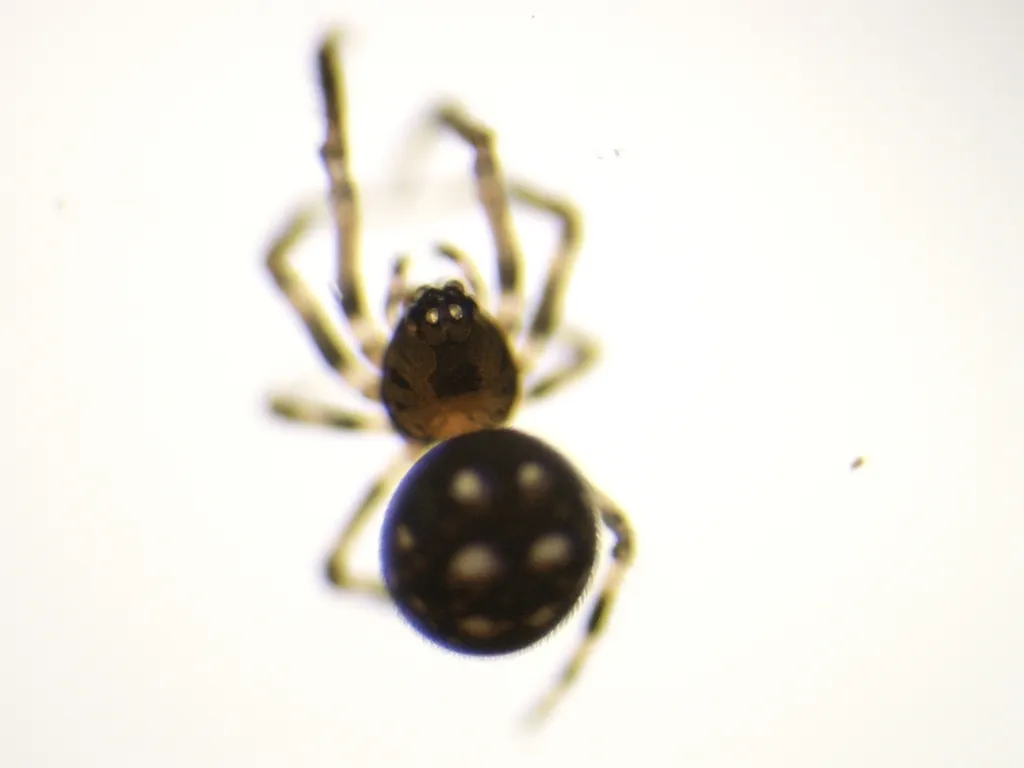
Microdipoena guttata
Microdipoena guttata
Microdipoena guttata is a species of true spider in the family Mysmenidae. It is found in a range from the United States to Paraguay.
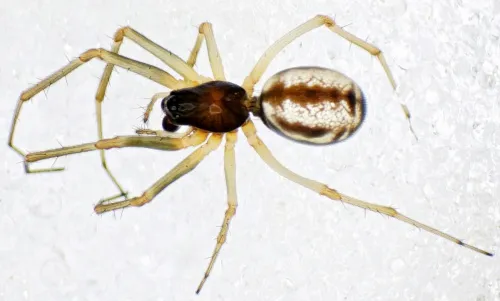
Microlinyphia pusilla
Microlinyphia pusilla
This species displays strong sexual dimorphism: The male is black and shiny with a narrow abdomen that often has two white spots, and with a body length (excluding legs) of around 5 mm; The female is slightly larger with a much plumper, slivery abdom
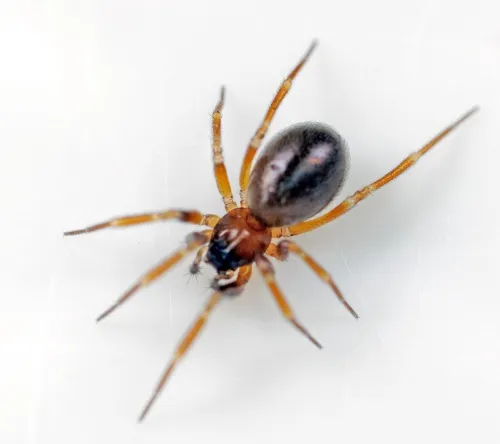
Microneta viaria
Microneta viaria
A small (2 to 3mm) sheetweb spider. Positive identification requires careful examination of male palps (4-5 long spines on patella) or female epigyne. Usually found in woodland litter and leaf litter under scrub and in hedgerows. Sometimes found in g
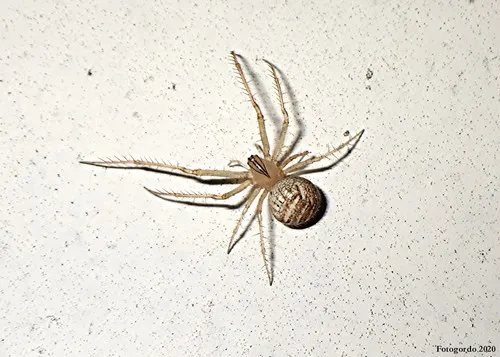
Mimetus epeiroides
Mimetus epeiroides
Identification: The carapace is light yellow with four thin black lines extending from the eyes to converge at the dorsal groove. The abdomen is yellow with black markings, especially on the posterior half. On the front of each chelicera near its bas
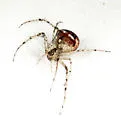
Mimetus puritanus
Mimetus puritanus
Identification: While many of the markings are variable, a double V-shaped mark on the white cephalothorax is distinctive. This species is the most common species in the family.

Minyriolus pusillus
Minyriolus pusillus
This is one of the 'money spiders' in the Linyphidae family - which has more UK species than any other. Most are small and need microscopic examination to identify. No additional images available for this species.
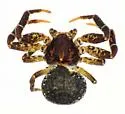
Modysticus floridanus
Modysticus floridanus
Modysticus floridanus (Modysticus floridanus) is a species in the family Thomisidae, commonly known as crab spiders, belonging to the order Araneae (Spiders). This species belongs to the genus Modysticus. As a member of class Arachnida, phylum Arthro
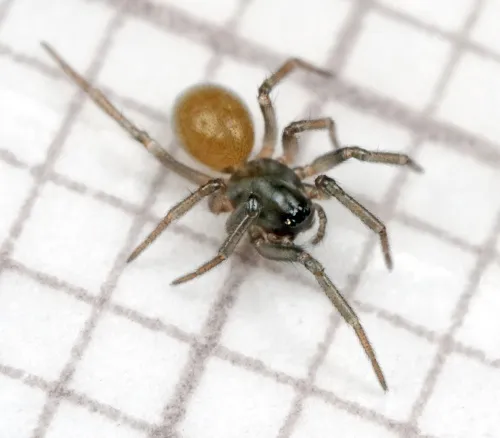
Monocephalus fuscipes
Monocephalus fuscipes
This is a very small (2 mm) spider. The colouring is variable, but the abdomen is usually brown or black. Confirmation of this species requires examination of the genitals of mature specimens. Confirmation of this species requires examination of the
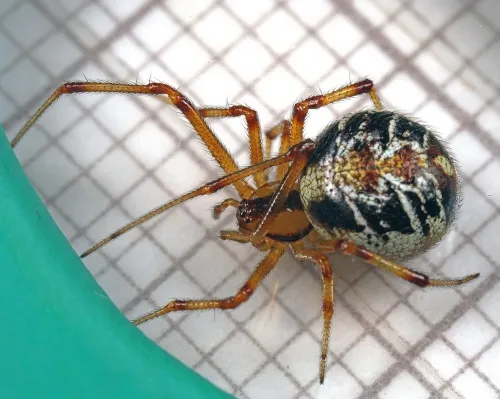
Mothercare Spider
Phylloneta sisyphia
Size 3 mm to 4 mm. The Mothercare Spider has a very rounded abdomen which has distinctive black and white markings on the back and some orange-brown streaks on the underside. Hedgerows and on various other vegetation. Often in gorse or thistles. The
Mouse Spider
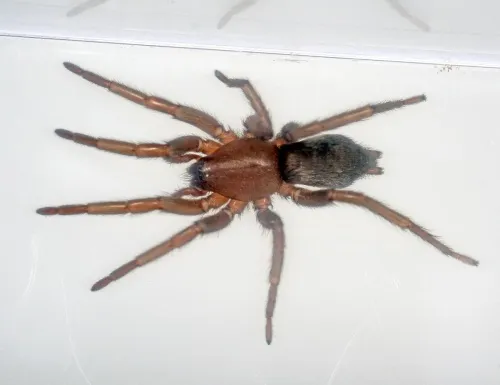
Scotophaeus blackwalli
Approximately 9 to 12 mms long. The Mouse Spider gets its name from the grey coloured abdomen which is covered in tiny hairs and resembles mouse fur. 3 dorsal spines on femur III & IV. Scotophaeus scutulatus (rare) - 2 dorsal spines (proximal and med
Murricia uva
Murricia uva
Identification: Refer to Foord's description at the link below Most records of Hersiliidae in Florida, including many identified as Yabisi habanensis , are probably either M. uva or Iviraiva pachyura . The two confirmed Florida records of M. uva were
Myrmarachne formicaria
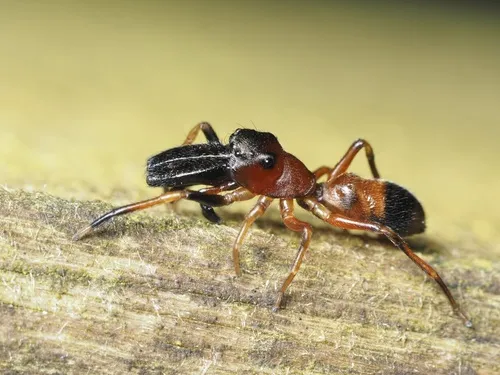
Myrmarachne formicaria
Identification: It is the only ant-like North American jumping spider in which the male chelicerae project forward more than 50% of the carapace length, and in which the female palpal tarsus is dorsoventrally flattened and bent downward distally. (Br
Neopisinus cognatus
Neopisinus cognatus
Identification: Prominent, spindle like setae on the dorsal tubercles. Type: Mexico, Tabasco, Teapa
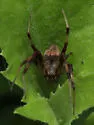
Neoscona utahana
Neoscona utahana
Identification: On dorsal side of abdomen, look for a dark 'V'-shaped folium that is bordered on the outside by a thin white line. Immature female: Likely adult female: Adult male:
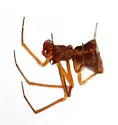
Neospintharus furcatus
Neospintharus furcatus
Identification: "Head of male has two short median processes; one on clypeus extending upward, and one above medial eyes, both bearing stiff hairs at tips." (Banks, 1908)
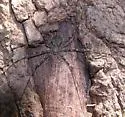
Neotama mexicana
Neotama mexicana
Identification: Their posterior spinnerets are as long as the abdomen. Also, the legs of the third pair are dramatically shorter than any of the other six. When an insect approaches the waiting spider, the spider jumps over the prey. The spider then
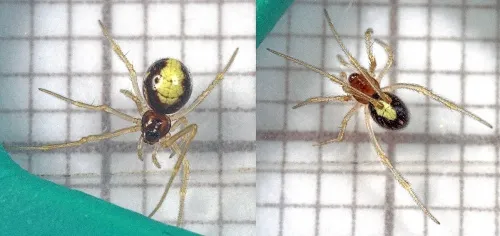
Neottiura bimaculata
Neottiura bimaculata
A small dark coloured spider with a broad whitish or yellowish dorsal stripe. The webs of this species are found on low vegetation, bushes and sometimes the lower branches of trees in a wide variety of habitats. Both sexes are mature mainly in early
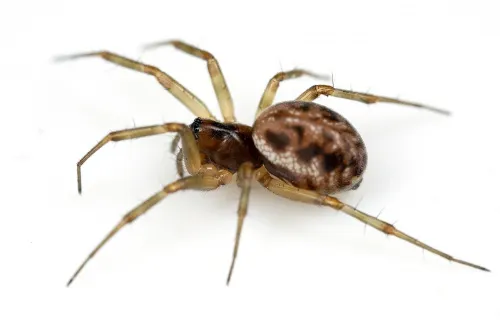
Neriene clathrata
Neriene clathrata
The abdominal markings often vary in intensity, but usually show some mottling and often a whitish area towards the head. The species is found in a wide range of habitats including grassland, heathland, marshes, scrub, woodland and gardens where it o