
Family Long-jawed Orb Weavers (Tetragnathidae)
Tetragnathidae is a family in the order Araneae. Browse 35 named species recorded in this family, or open an individual profile for its available identification and natural-history information.
Species in Tetragnathidae (35)
Azilia affinis
Azilia affinis
Identification: The web is vertical to horizontal and loose with a closed hub. The posterior hump is more distinct in some specimens, almost absent in specimens from Florida.
Leucauge argyra
Leucauge argyra
Identification: The thing that catches our [JJB] eye about L. argyra is that the three lines on the back run parallel only about halfway across the back when the outer two suddenly bend inward before flowing parallel once again to the end of the abdo
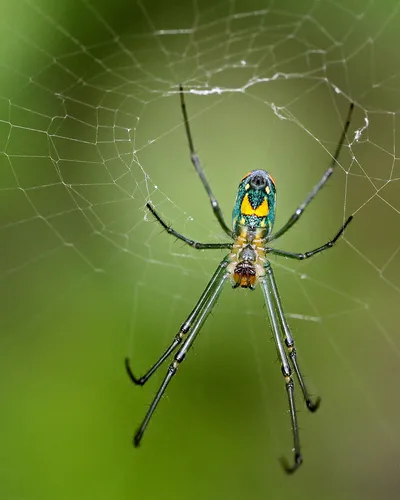
Mabel Orchard Orbweaver
Leucauge argyrobapta
Leucauge argyrobapta, or Mabel's orchard orb weaver, is a species of long-jawed orb weaver in the spider family Tetragnathidae. It is found from the United States south to Brazil.
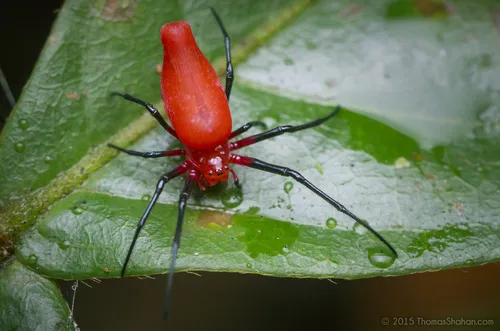
Dominican Spider
Leucauge licina
Identification: Female characterized by bright red abdomen and cephalothorax with black markings and two parallel rows of trichobothria on the fourth femurs (they look like a eyelashes). The elongated "tail" is sometimes forked and sometimes pointed,
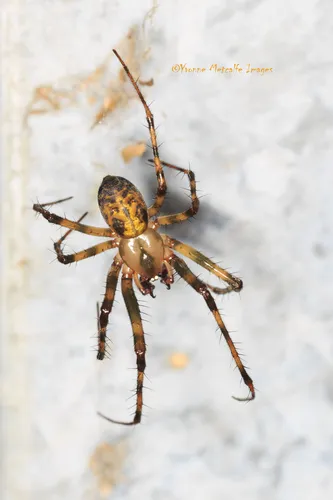
Eastern Cave Long-jawed Spider
Meta ovalis
Meta ovalis is a species of long-jawed orb weaver in the family of spiders known as Tetragnathidae. It is found in the United States and Canada.
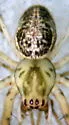
Metellina curtisi
Metellina curtisi
Identification: Adult Female Adult Male Juvenile Male
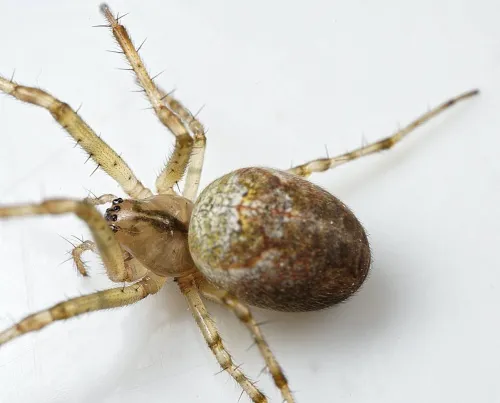
Metellina mengei
Metellina mengei
Metellina mengei resembles M. segmentata although on average M. mengei may be slightly smaller. Having said that, there is size variation in both species which creates an overlap. Mature M. mengei tend to predominate in spring and early summer (remem
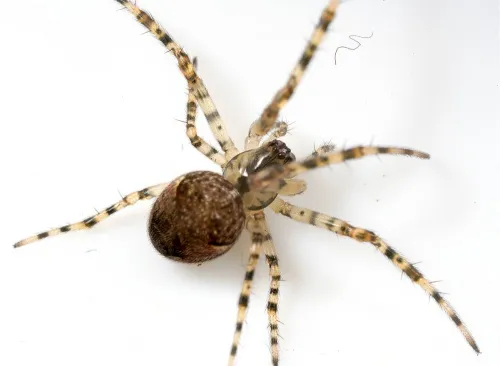
Metellina merianae
Metellina merianae
Length 8 to 12 mm. Quite variable in pattern and colour. Prosoma yellowish green, with irregular black stripes, margin black. Sternum black. Chelicerae red-brown. Legs yellowish green, annulated and spotted irregularly with black. Opisthosoma greenis
Metellina segmentata
Metellina segmentata
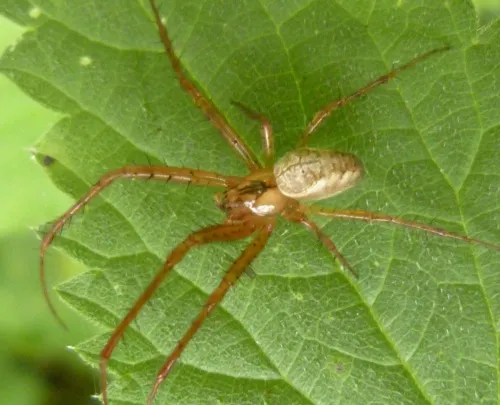
4-8mm (female), 4-6mm (male). Usually has yellow, red and orange tones on the abdomen. The carapace has a dark tuning fork mark in the centre. Metellina segmentata closely resembles M. mengei . Mature M. mengei tend to predominate in spring and early
Pachygnatha clercki
Pachygnatha clercki
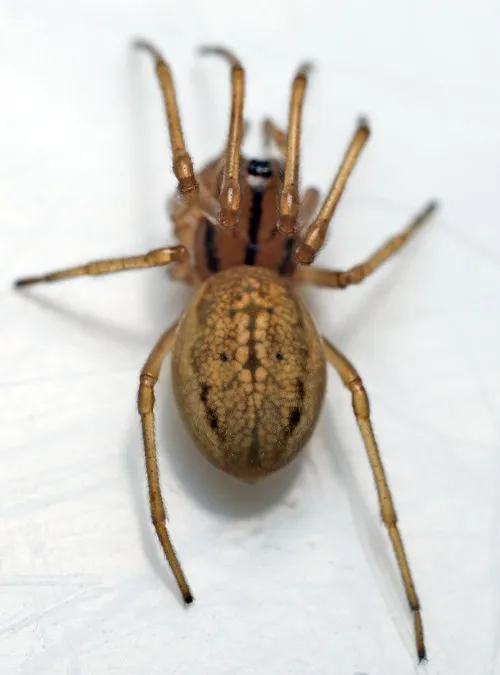
4-6mm. Prosoma yellow-brown with dark margin and median stripe. Chelicerae same colour as prosoma. Opisthosoma mostly light yellow, folium vague, sometimes with dark median line. Pachygnatha clercki is a ground-living species usually found in wet hab
Pachygnatha degeeri
Pachygnatha degeeri
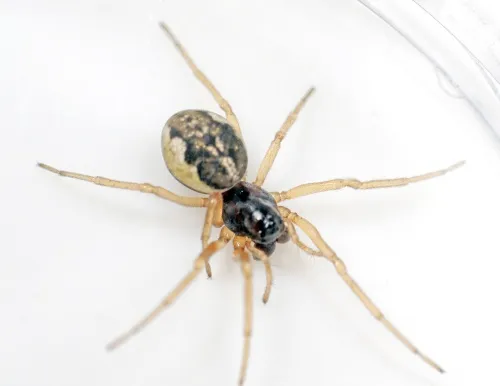
3-4mm. Prosoma dark brown. Chelicerae same colour as prosoma. Opisthosoma with distinct folium, medially with 2-3 longitudinal silver spots. Mainly in grassland and in low vegetation, but also comes into gardens. Spring to autumn but adults may be fo
Pachygnatha listeri
Pachygnatha listeri
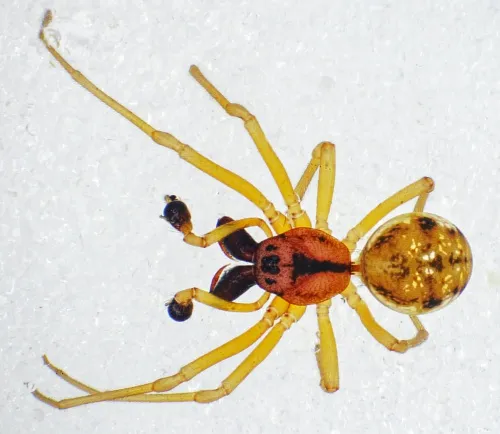
Length 3 to 5mm. Prosoma reddish yellow, or brown with dark median band, margin not darkened. Sternum dark brown. Chelicerae dark brown. Legs yellow-orange. Opisthosoma grey, mostly with almost black folium dorsally, with bright pairs of spots along
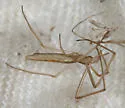
Tetragnatha caudata
Tetragnatha caudata
Identification: Not diagnostic, but can separate some species:
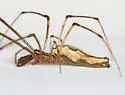
Tetragnatha elongata
Tetragnatha elongata
Identification: Not diagnostic, but can separate some species: Voucher Specimens: Female: Male: Male Palp - The conductor tappers evenly to its tip and ends in a small hook:
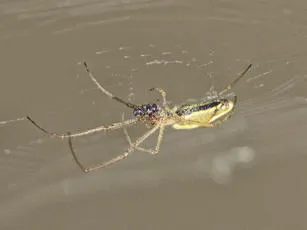
Tetragnatha extensa
Tetragnatha extensa
This is a very difficult species to identify as there are other similar species and certain identification requires detailed examination. If we cannot be certain that an image is T. extensa but it is likely to be this species, it is highlighted in a
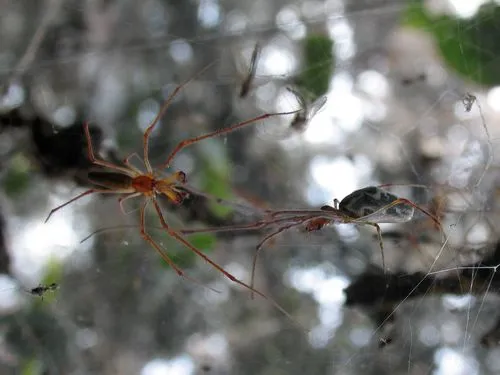
Tetragnatha guatemalensis
Tetragnatha guatemalensis
Identification: Not diagnostic, but can separate some species: Male: Male Palp with flattened and extended Paracymbium: This species has been recorded building massive, possibly social, webs. See Texas Entomology and Jackman et al.
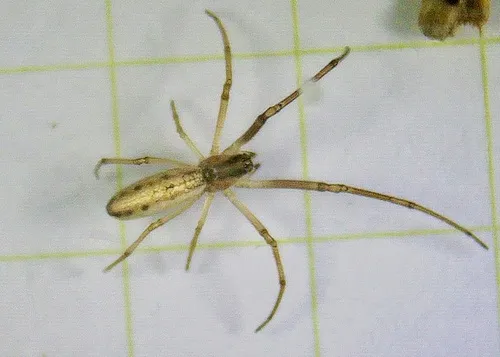
Silver Longjawed Orbweaver
Tetragnatha laboriosa
Identification: Not diagnostic, but can separate some species: Female Male Laboriosa has silvery patches on abdomen and the lateral eyes are distinctly separated from each other. The carapace marks are straight, diverging lines. Actually, the carapac
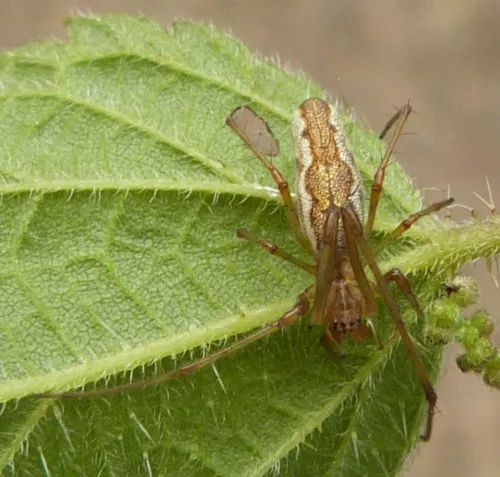
Tetragnatha montana
Tetragnatha montana
This is a very difficult species to identify as there are other similar species and certain identification requires detailed examination. If we cannot be certain that an image is T. montana but it is likely to be this species, it is highlighted in a
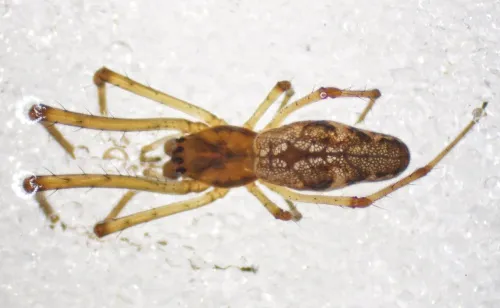
Tetragnatha nigrita
Tetragnatha nigrita
Body length male: 6 to 8 mm, female: 7 to 11 mm. Prosoma dark brown to almost black. Chelicerae dark brown, basally with distinct tubercle. Legs dark brown. Opisthosoma dark brown to almost black, vague folium laterally flanked with silver-white, med
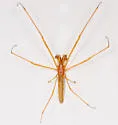
Tetragnatha nitens
Tetragnatha nitens
Identification: Not diagnostic, but can separate some species:
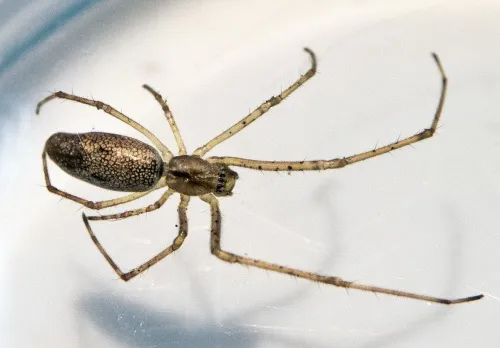
Tetragnatha obtusa
Tetragnatha obtusa
A well marked spider with a rather distinctive triangular shape to the body. Cephalic region of prosoma USUALLY darker than thoracic region. However there are other similar species, and Tetragnatha obtusa and T. nigrita can only reliably be separated
Tetragnatha pallescens
Tetragnatha pallescens
Identification: Not diagnostic, but can separate some species: Female: Male:
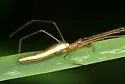
Tetragnatha straminea
Tetragnatha straminea
Identification: Not diagnostic, but can separate some species: Palp: Epigynum:
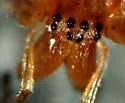
Tetragnatha versicolor
Tetragnatha versicolor
Identification: Not diagnostic, but can separate some species: Male Palp: Epigyinum: A widespread Tetragnatha species that is found throughout North America. Levi writes that the species is quite variable, "the abdominal patterns vary from completely
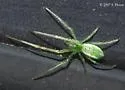
Tetragnatha viridis
Tetragnatha viridis
Identification: Living specimens can be distinguished from other species in this genus by their green color. (specimens lose their color when dead and closely resemble T. versicolor ). Not diagnostic, but can separate some species:
Dolichognatha pentagona
Dolichognatha pentagona
Glenognatha foxi
Glenognatha foxi
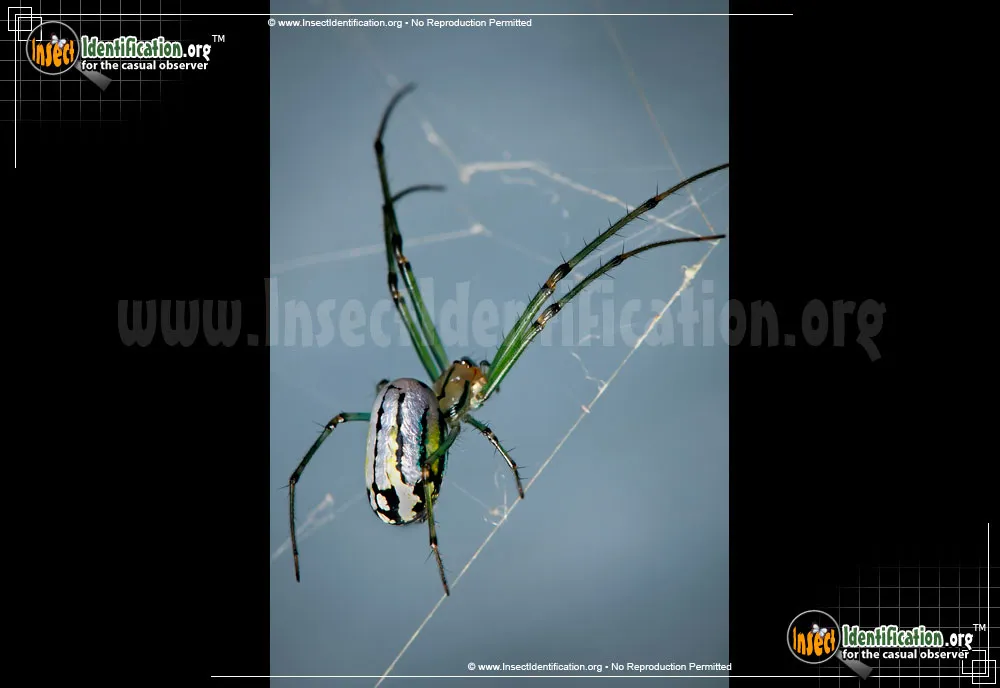
Venusta Orchard Spider
Leucauge venusta
Metellina mimetoides
Metellina mimetoides
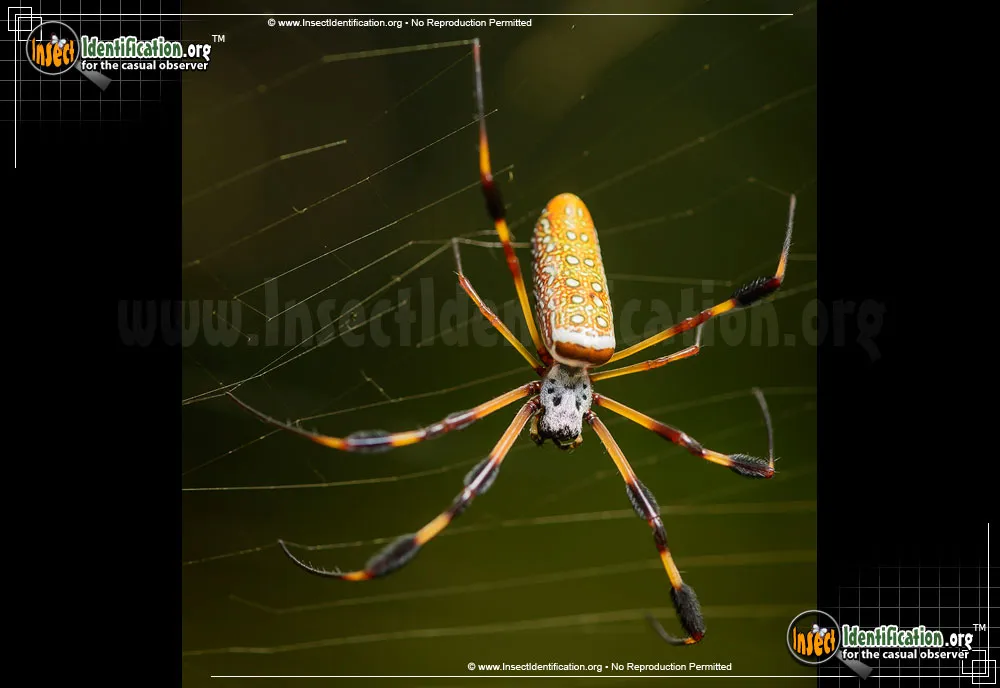
Golden Silk Orbweaver
Nephila clavipes
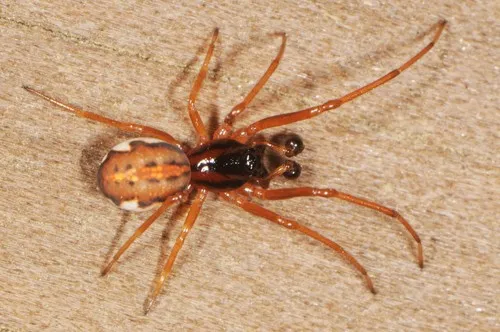
Big-eyed Thick-jawed Spider
Pachygnatha autumnalis
Pachygnatha brevis
Pachygnatha brevis
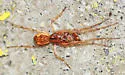
Pachygnatha furcillata
Pachygnatha furcillata
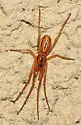
Pachygnatha tristriata
Pachygnatha tristriata
Pachygnatha xanthostoma
Pachygnatha xanthostoma