
Family Jumping Spiders (Salticidae)
Salticidae is a family in the order Araneae. Browse 269 named species recorded in this family, or open an individual profile for its available identification and natural-history information.
Guides
Species in Salticidae (269)
Admestina archboldi
Admestina archboldi
The type specimen of this spider was collected at Archbold Biological Station on 26 March 1989 by William H. Piel.
Attulus finschi
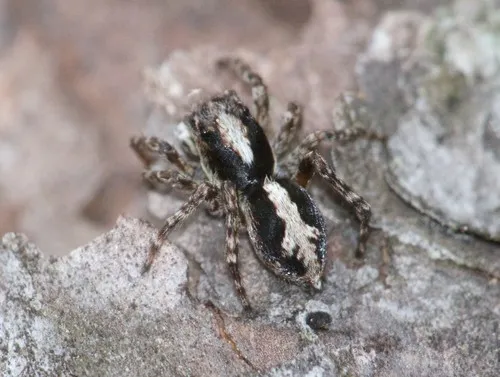
Attulus finschi
Attulus finschi is a species of spider from the jumping spider family Salticidae. It is found in Russia, Canada, and the United States.
Cheliferoides longimanus
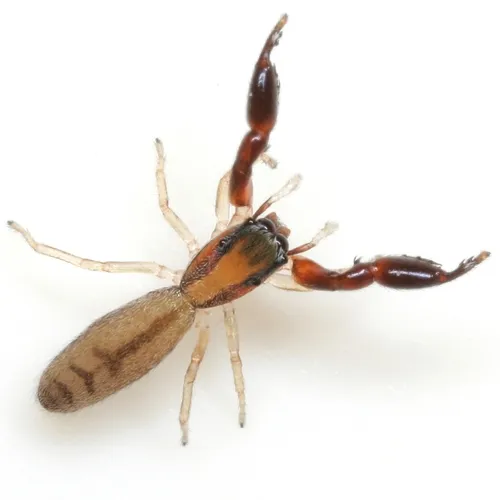
Cheliferoides longimanus
Identification: - - - - male - - - - - - - - - - female - - - - Type: Llano Grande, below Weslaco, Hidalgo Co., Texas (male, April 28, 1934, S. Mulaik, holotype, AMNH)
Colonus hesperus
Colonus hesperus
Identification: Unlike the other two species, Colonus hesperus does not have the two longitudinal white stripes on the abdomen. Instead, the abdomen is yellowish with scattered black setae and numerous black dots. Epigynum: Palp:
Colonus puerperus
Colonus puerperus
Identification: Epigynum: Palp: See "Notes on the jumping spiders Colonus puerperus (Hentz 1846) and Colonus sylvanus (Hentz 1846) in the southeastern United States" for info on distinguishing Colonus puerperus from Colonus sylvanus .
Colonus sylvanus
Colonus sylvanus
Identification: Epigynum: Palp: See "Notes on the jumping spiders Colonus puerperus (Hentz 1846) and Colonus sylvanus (Hentz 1846) in the southeastern United States" for info on distinguishing Colonus sylvanus from Colonus puerperus .
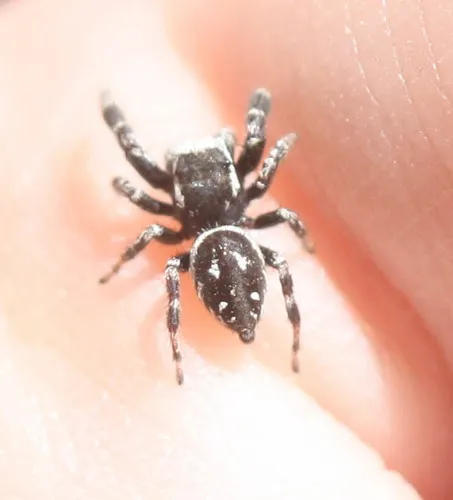
Dendryphantes nigromaculatus
Dendryphantes nigromaculatus
Dendryphantes nigromaculatus is a jumping spider species, known by the common name black-marked jumping spider, in the genus Dendryphantes that lives in the United States and Canada.
Eris flava
Eris flava
Identification: Note the male face pattern with a white line under the eyes that extends across the entire clypeus. This fieldmark is typically absent on the more common E. militaris . Palp The female is typically light brown, yellow, or golden with
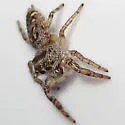
Bronze Jumper
Eris militaris
Identification: Epigynum Palp More information about distinguishing E. militaris from E. flava in Maddison's paper.
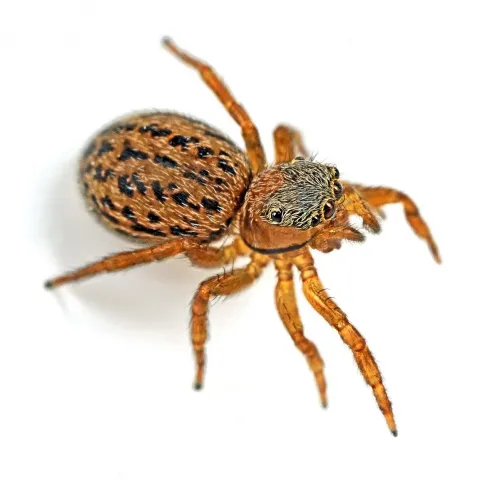
Euophrys frontalis
Euophrys frontalis
The species is sexually dimorphic. The females are brown with darker rather zig-zag lines running along the length of the abdomen. These stripes are not as pronounced in the male which has red rimmed eyes and enlarged front legs used in courtship whi
Euophrys monadnock
Euophrys monadnock
The white femora of preserved specimens are orange on live specimens.
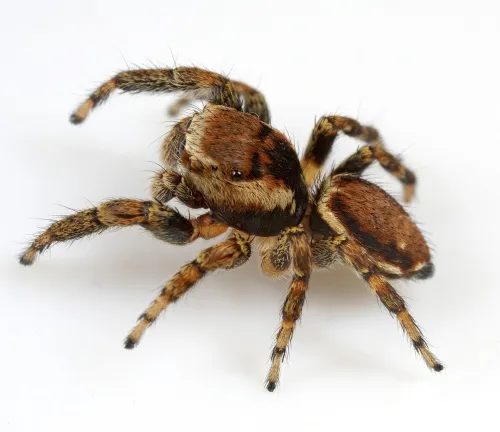
Evarcha falcata
Evarcha falcata
The abdomen is chestnut brown patterned with black and with a conspicuous pale crescent at the anterior end. Mainly a woodland spider which occurs in the foliage of trees and on lower vegetation such as heather and gorse in woodland clearings. March
Evarcha hoyi
Evarcha hoyi
Identification: Tentative placement of Evarcha hoyi images in BugGuide is based on the ranges given by Marusik and Logunov . It is possible they can not be identified from habitus images alone.[jb] Epigynum: Palp: Please see Jay Barnes' comment here
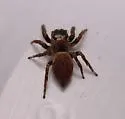
Evarcha proszynskii
Evarcha proszynskii
Identification: Tentative placement of Evarcha proszynskii images in BugGuide is based on the ranges given by Marusik and Logunov . It is possible they can not be identified from habitus images alone.[jb] Epigynum: Palp:
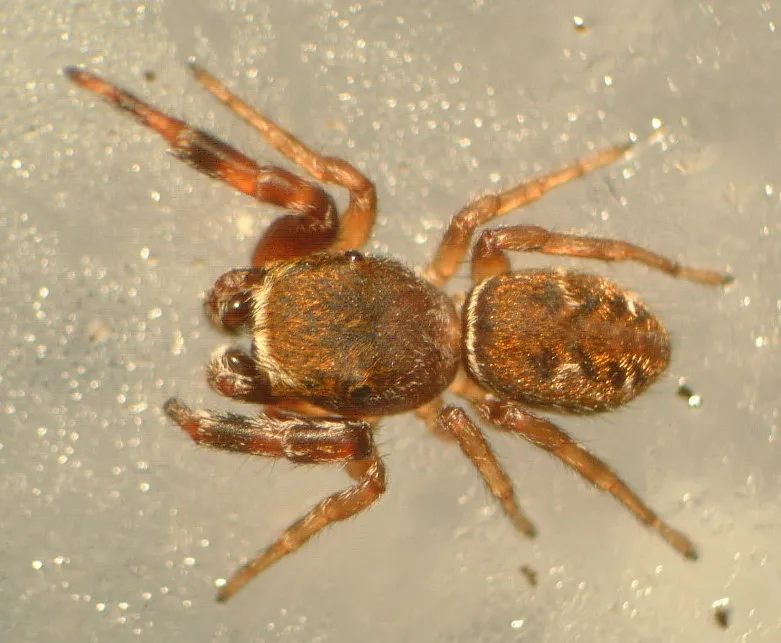
Ghelna canadensis
Ghelna canadensis
Ghelna canadensis is a species of jumping spider in the family Salticidae. It is found in the United States and Canada.
Habronattus amicus
Habronattus amicus
Identification: A distinct characteristic of the male is its "hairy" abdomen. Also note the unmodified 1st and 3rd legs and the black tarsi at the end of the male forelegs. Male: Female: This species exhibits a wide degree of geographic variation wit
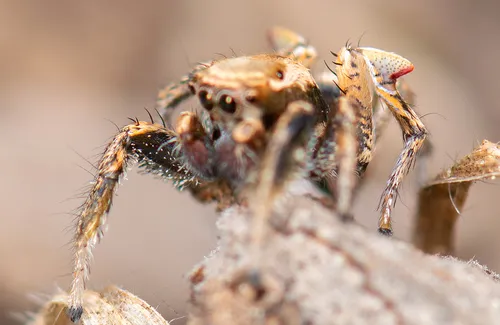
Habronattus californicus
Habronattus californicus
Habronattus californicus is a species of jumping spider in the family Salticidae. It is found in the United States and Mexico.
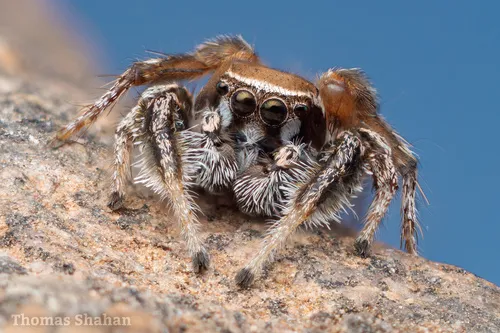
Habronattus clypeatus
Habronattus clypeatus
Identification: Male Female H. dossenus and H. clypeatus are very similar and both occur in southern Arizona. In the eastern part of their overlapping range, they are fairly distinct, but in the western part, they may be difficult to tell apart, espe
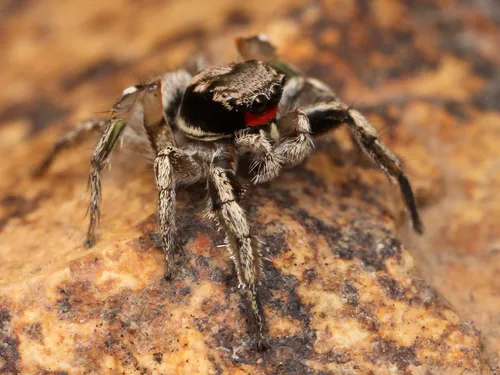
Habronattus coecatus
Habronattus coecatus
Habronattus coecatus is a species of jumping spiders from a Salticidae family, that can be found in Mexico, the United States, and Bermuda.
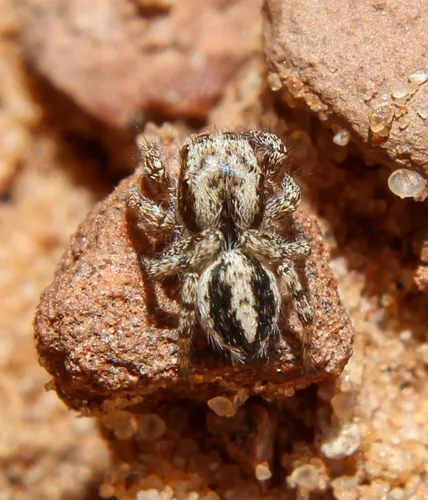
Habronattus conjunctus
Habronattus conjunctus
Habronattus conjunctus is a species of jumping spider in the family Salticidae. It is found in the United States and Mexico.
Habronattus dossenus
Habronattus dossenus
Identification: Male H. dossenus and H. clypeatus are very similar and both occur in southern Arizona. In the eastern part of their overlapping range, they are fairly distinct, but in the western part, they may be difficult to tell apart, especially
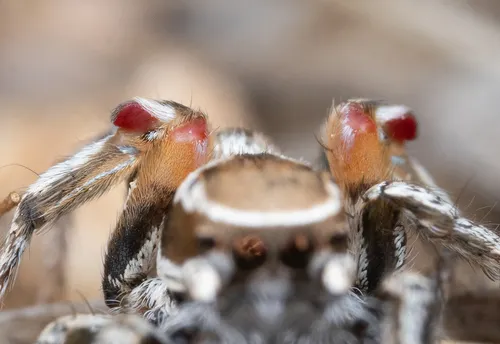
Habronattus formosus
Habronattus formosus
Habronattus formosus is a species of jumping spider in the family Salticidae. It is found in the United States.
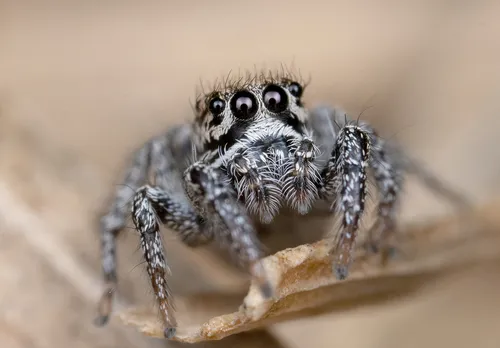
Habronattus icenoglei
Habronattus icenoglei
Habronattus icenoglei is a species of jumping spider (family Salticidae). It is found in the southwestern United States and north-central Mexico.
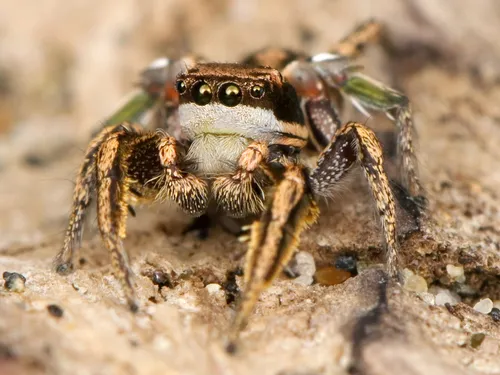
Habronattus klauseri
Habronattus klauseri
Habronattus klauseri is a species of jumping spider in the family Salticidae. It is found in the United States and Mexico.
Habronattus luminosus
Habronattus luminosus
Identification: Male First specimens known collected at Sunglow, AZ (Cochise Co.) by B. & V. Roth, in July 1977. Face of male turns greenish in alcohol. In life, face of male is bright blue, surrounded by orange. Rediscovered by M. Girard in 2012 in
Habronattus orbus
Habronattus orbus
Identification: Male Female Epigynum (ventral/dorsal):
Habronattus peckhami
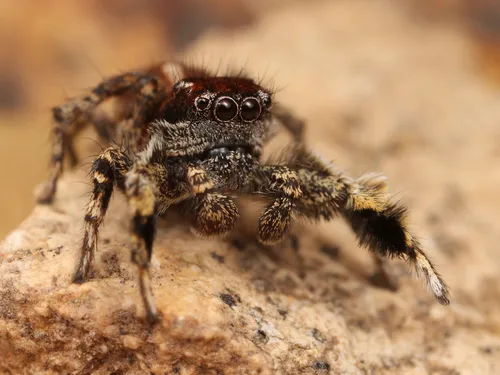
Habronattus peckhami
Habronattus peckhami is a species of spider in the family Salticidae. It is found in the USA.
Habronattus sabulosus
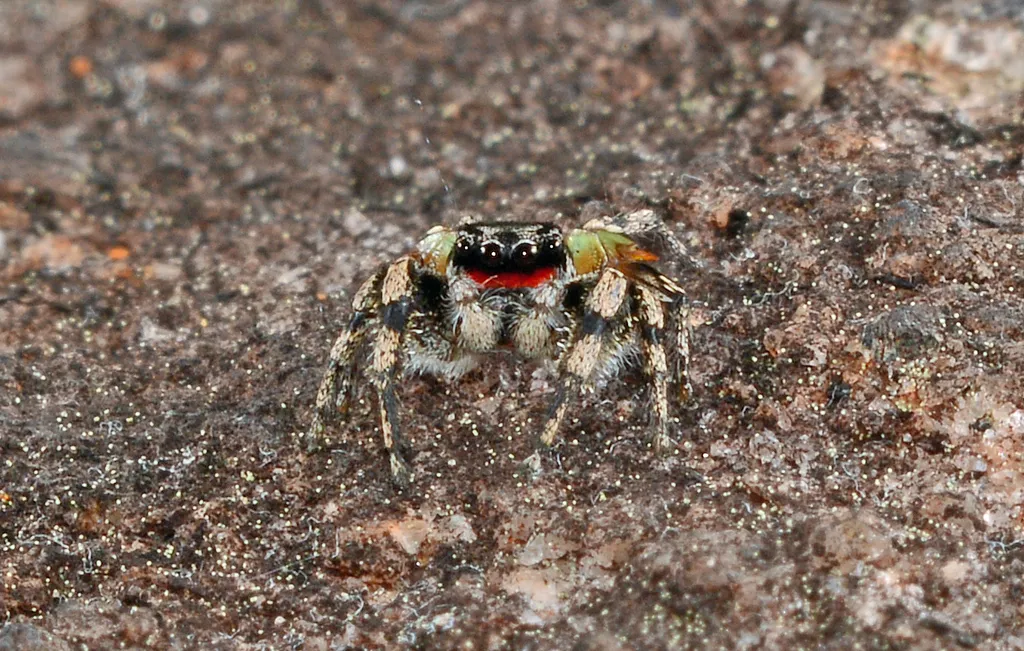
Habronattus sabulosus
Habronattus sabulosus is a species of jumping spider in the family Salticidae. It is found in the southeastern United States.
Hakka himeshimensis
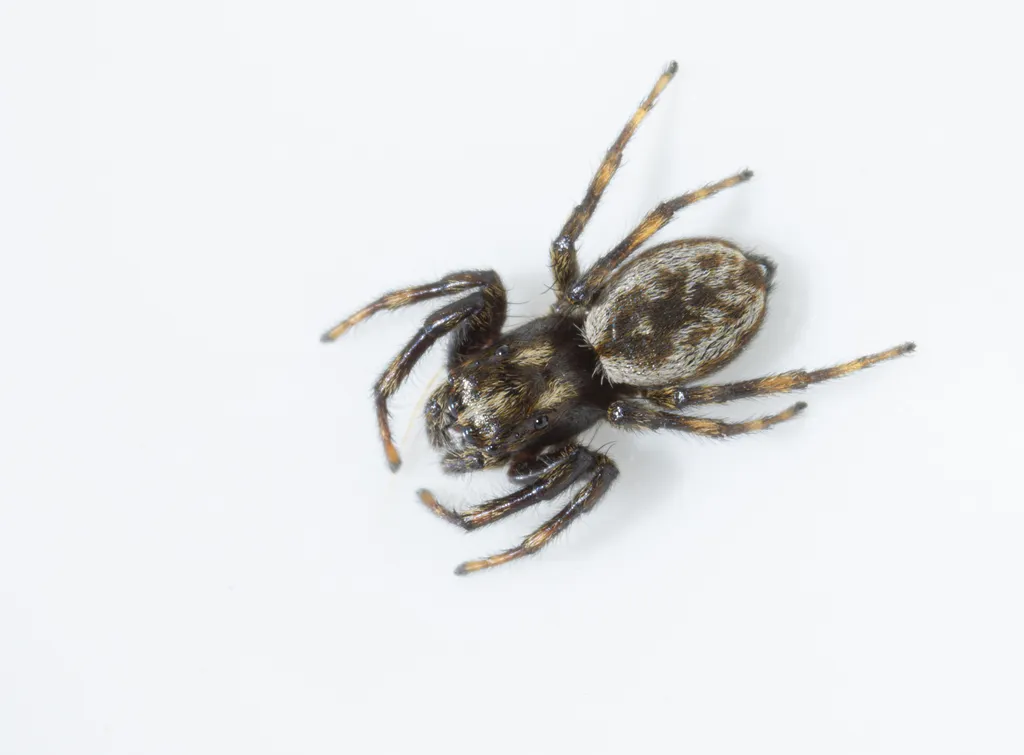
Hakka himeshimensis
Hakka himeshimensis is a species of the spider family Salticidae (jumping spiders). It is the only species in the genus Hakka. H. himeshimensis is native to East Asia, but has been introduced to the United States. It is most commonly found in rocky c
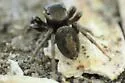
Adanson's House Spider
Hasarius adansoni
This is an introduced species that originated in Africa and the Middle East but has spread around the world.
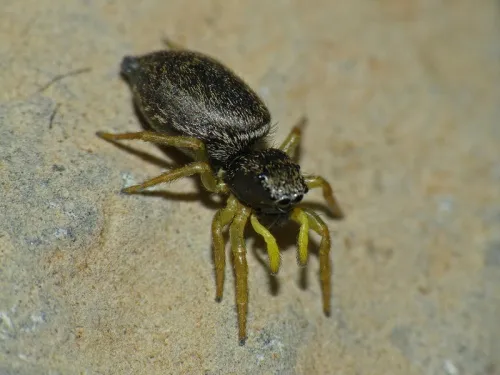
Heliophanus flavipes
Heliophanus flavipes
A small species at around 5 mm. A striking spider with a dark body covered with numerous paler hairs which are sometimes golden. Its legs and palps are a golden lemony yellow in colour. Identification of this species "Requires examination at high mag
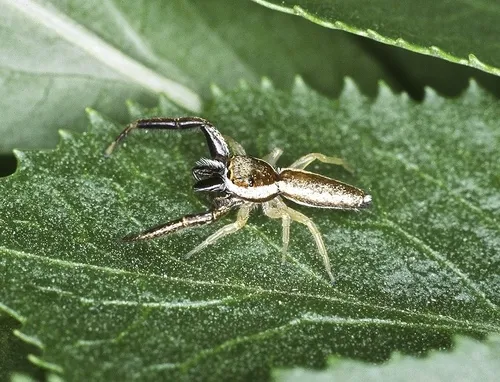
Hentzia alamosa
Hentzia alamosa
Hentzia alamosa is a species of jumping spider in the family Salticidae. It is only known from Texas in the United States.
Hyetussa complicata
Hyetussa complicata
Identification: H. complicata mature males have a single pair of lateral abdominal spots, females have two pairs. pers. comm. GB Edwards Type: Texas (male, Hidalgo Co., below Weslaco, Llano Grande, April 27, 1934, S. Mulaik, holotype, AMNH)
Hypositticus pubescens
Hypositticus pubescens
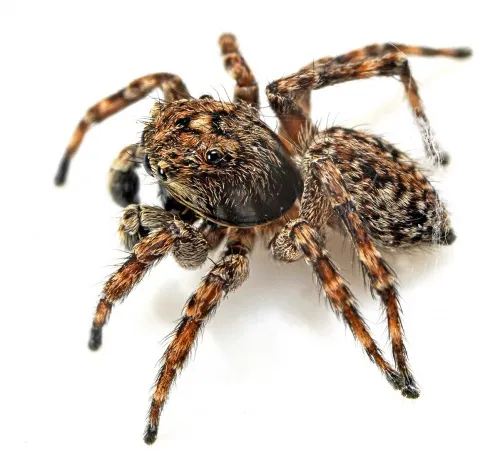
A small (5 mm) but sprightly jumping spider with a large and quite angular head and a hairy body patterned with browns, black and light greys. Identification of this species "Requires examination at high magnification in good lighting, typically exam
Leptofreya ambigua
Leptofreya ambigua
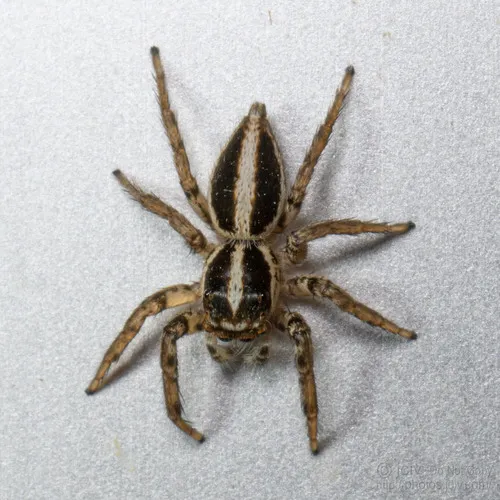
Leptofreya ambigua is a species of jumping spider. The species was first described by Carl Ludwig Koch in 1846.
Maevia b
Maevia b
Identification: This page is created for individuals east of the Appalachians.
Maevia expansa
Maevia expansa
Identification: Males are similar to M inclemens but have large areas of white scales around the AMEs (large forward facing eyes in center: Anterior Median Eyes). Males are dimorphic with a black form and a grayish form. Adult females are best identi
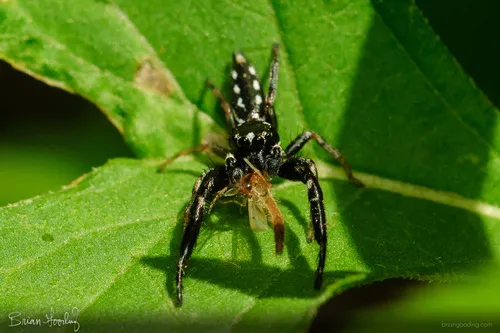
Marpissa formosa
Marpissa formosa
Identification: Male Palp Female This species is largely replaced by Marpissa bina in Florida, Georgia, and North Carolina (where there may be some overlap).
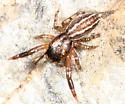
Marpissa lineata
Marpissa lineata
Identification: Palp: Epigynum: Marpissa dentoides Barnes, 1958 is similar, and found in parts of the same range. There are currently (8/14/25) no records on BugGuide. Males (only) can be differentiated by structure of the pedipalp. Some images are f
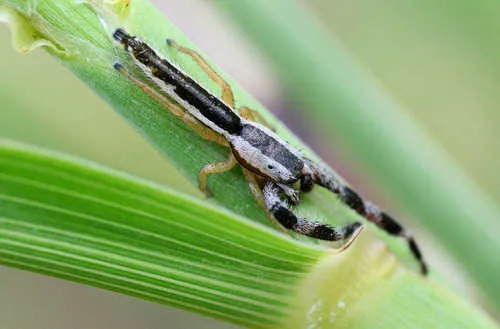
Pike Slender Jumper
Marpissa pikei
Marpissa pikei is a species of jumping spider that is found in the eastern United States, Texas, New Mexico, Arizona and Cuba.
Marpissa robusta
Marpissa robusta
Identification: Male/Female Palp Epigynum This page was created based on the identification of this image by Dr. Lenny Vincent .
Marpissa sulcosa
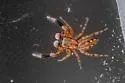
Marpissa sulcosa
Identification: This species is very similar in appearance to M. lineata which it replaces in Florida.
Gray Wall Jumper
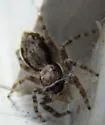
Menemerus bivittatus
Identification: Female & Male together Non-native, likely introduced from the Old World tropics.
Metacyrba taeniola
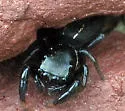
Metacyrba taeniola
Identification: Western T. t. similis with reddish femur IV. Eastern T. t. taeniola with dark femur IV.
Metaphidippus chera
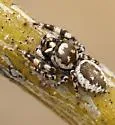
Metaphidippus chera
Identification: Male Palp Female Epigynum Maddison describes this species as "one of the most common salticids in the southwestern United States and northern Mexico ".
Metaphidippus manni
Metaphidippus manni
Identification: "Dense white patches on chelicerae and cheek patches that contrast against a dark, shiny body distinguish males immediately". Female
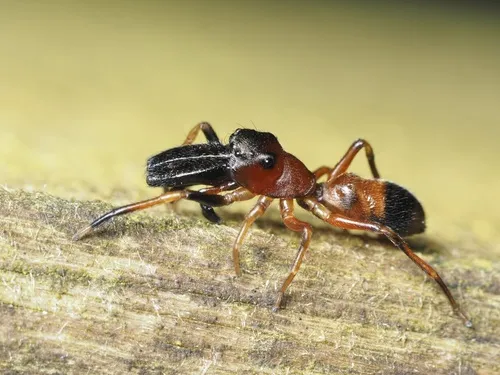
Myrmarachne formicaria
Myrmarachne formicaria
Identification: It is the only ant-like North American jumping spider in which the male chelicerae project forward more than 50% of the carapace length, and in which the female palpal tarsus is dorsoventrally flattened and bent downward distally. (Br
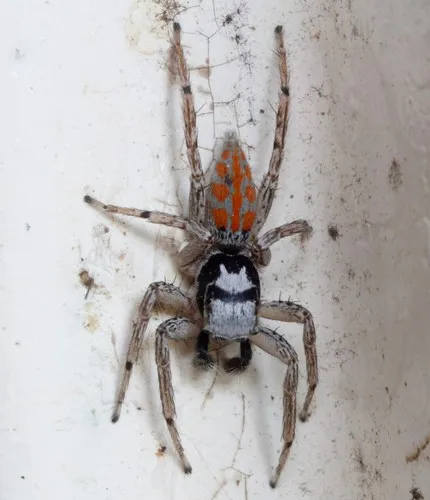
Three-lined Maevia
Paramaevia poultoni
Paramaevia poultoni is a species of jumping spider in the family Salticidae. It is found in the United States.
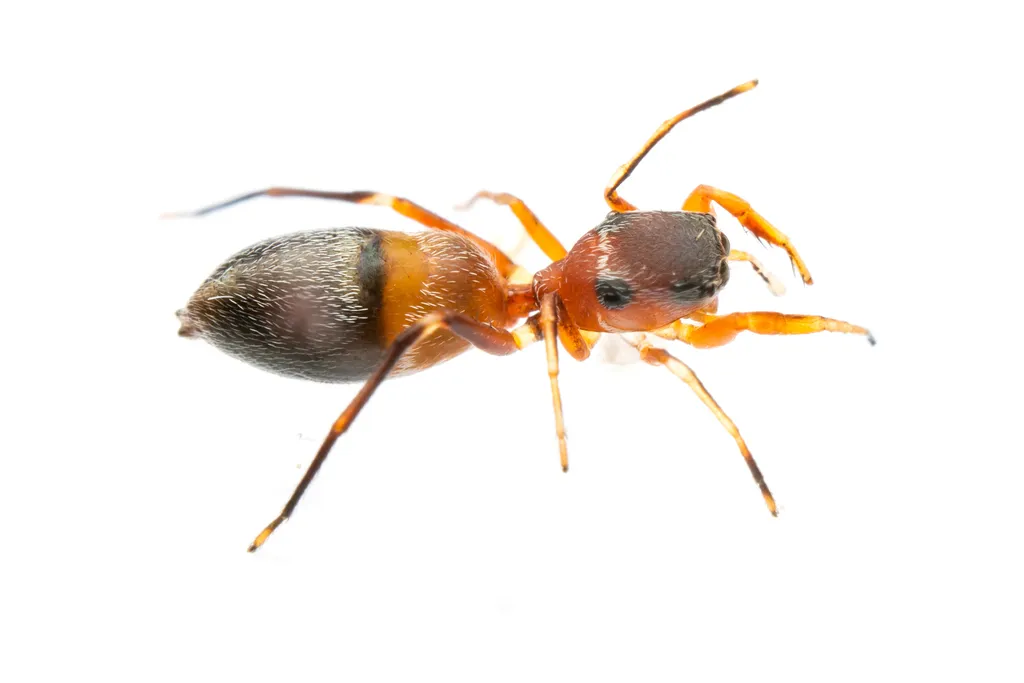
Peckhamia americana
Peckhamia americana
Peckhamia americana is a species of jumping spider in the family Salticidae. It is found in the United States, Mexico, and Hispaniola.
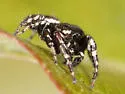
Pelegrina aeneola
Pelegrina aeneola
Pelegrina aeneola (Pelegrina aeneola) is a species in the family Salticidae, commonly known as jumping spiders, belonging to the order Araneae (Spiders). This species belongs to the genus Pelegrina. As a member of class Arachnida, phylum Arthropoda,
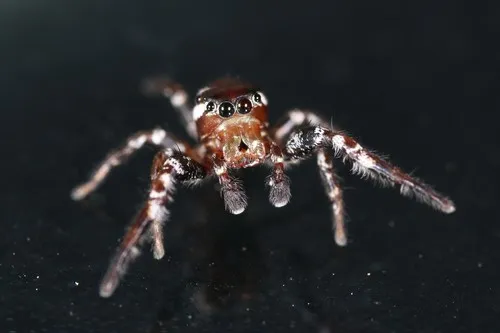
Pelegrina exigua
Pelegrina exigua
Pelegrina exigua is a species of jumping spider in the family Salticidae. It is found in the United States.
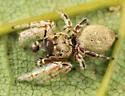
Pelegrina flaviceps
Pelegrina flaviceps
Identification: Palp (ventral/lateral) Epigynum (ventral/dorsal) Males can be distinguished from the closely related flavipedes and exigua by the dark lateral spots on the chelicerae and pale yellow legs.
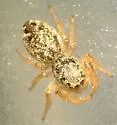
Pelegrina insignis
Pelegrina insignis
Identification: Maddison mentions that the female's face and legs are yellowish Palp Epigynum
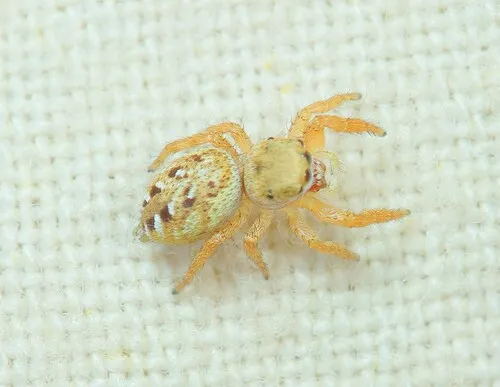
Pelegrina sabinema
Pelegrina sabinema
Pelegrina sabinema is a species of jumping spider in the family Salticidae. It is found in the United States.
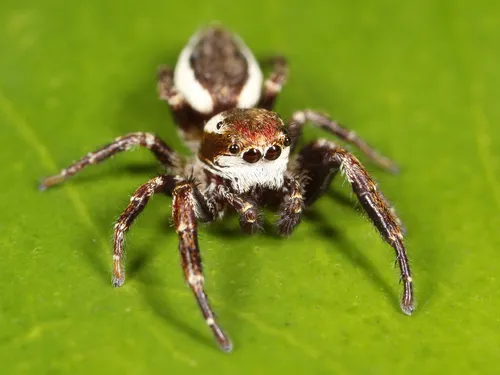
Phanias albeolus
Phanias albeolus
Phanias albeolus is a species of jumping spider in the family Salticidae. It is found in the United States.
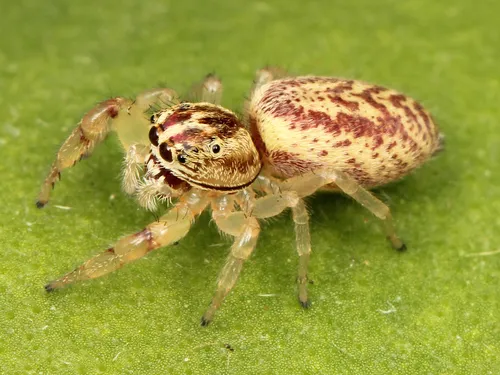
Phanias watonus
Phanias watonus
Identification: Male is similar in appearance to Phanias harfordi , but without the solid covering of white scales on the face. Palp Epigynum
Phidippus apacheanus
Phidippus apacheanus
Identification: Male/Female Male P. cardinalis can be distinguished from male P. apacheanus by the lack of the shiny, green chelicerae found in the latter. See images of faces below ( P. cardinalis/P. apacheanus ):
Phidippus aureus
Phidippus aureus
Identification: Female Phidippus aureus is a rare species within the purpuratus complex and is closest in affinity to species like P. ardens/ apacheanus . Widespread, but never common- this is a smaller-sized member of the group- closer to P. ardens
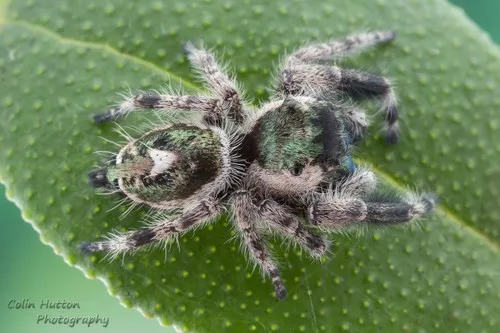
Phidippus bidentatus
Phidippus bidentatus
Phidippus bidentatus is a species of jumping spider in the family Salticidae. It is found in a range from the United States to Costa Rica.
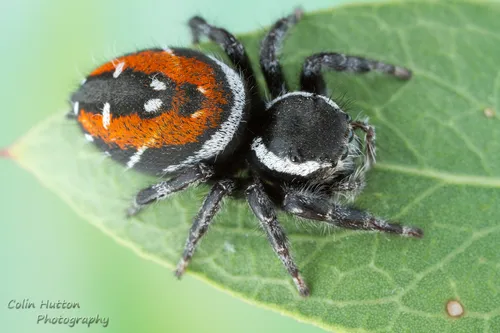
Cardinal Jumper
Phidippus cardinalis
Identification: Male/Female Palp Epigynum Male P. cardinalis can be distinguished from male P. apacheanus by the lack of the shiny, green chelicerae found in the latter. See images of faces below ( P. cardinalis/P. apacheanus ):
Phidippus carneus
Phidippus carneus
Identification: Male Females have a melanistic form which is only known from New Mexico and Texas currently. Females of the montivagus form are more typical.
Phidippus clarus
Phidippus clarus
Identification: Male/Female Palp Epigynum (ventral/dorsal) The female constructs a conspicuous white retreat and egg case near the tops of plants
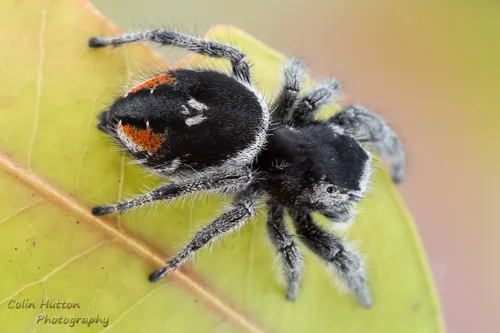
Phidippus concinnus
Phidippus concinnus
Phidippus concinnus is a species of jumping spider found in Idaho and California in the United States....
Phidippus cryptus
Phidippus cryptus
Identification: Adult Male Voucher specimen: Left palp (ventral/lateral): Female
Phidippus mystaceus
Phidippus mystaceus
Identification: Large, variable in color. Three sets of abdominal markings apparently distinctive. Male Female
Phidippus nikites
Phidippus nikites
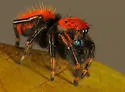
Identification: Male/Female Palp This species is closely related to Phidippus apacheanus and looks very similar. However, according to Edwards 2004 , unlike P. apacheanus , which stays the same color throughout its life cycle (usually red, sometimes
Phidippus octopunctatus
Phidippus octopunctatus
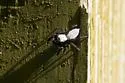
Identification: Male/Female Epigynum (ventral/dorsal)
Phidippus richmani
Phidippus richmani
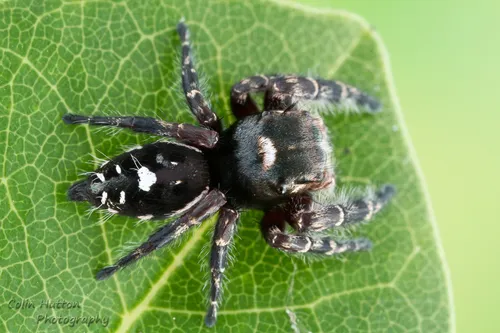
Phidippus richmani is a species of jumping spider (Salticidae) native to the United States.
Phidippus whitmani
Phidippus whitmani
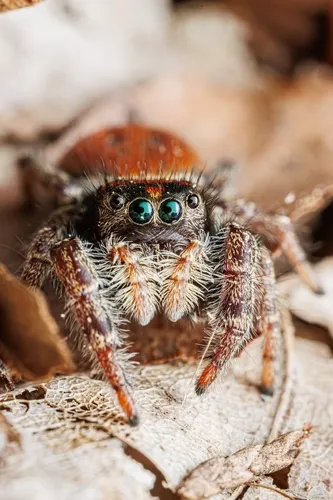
Identification: Male/Female There appears to be a melanistic version in the southern parts of its range.
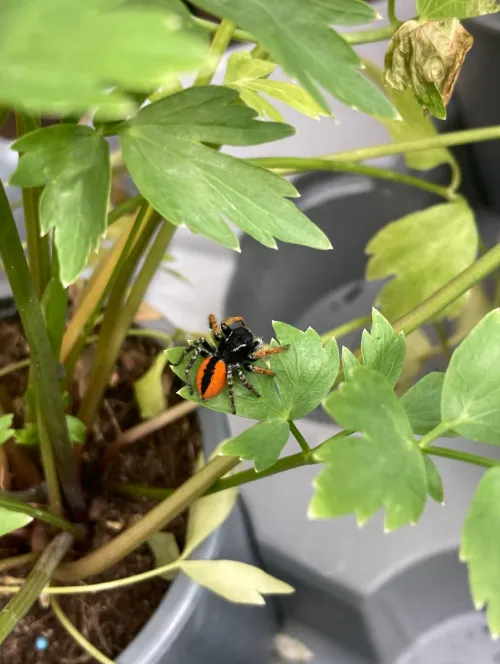
Philaeus chrysops
Philaeus chrysops
A non-native jumping spider sometimes imported with plants or for the pet trade from Europe and North Africa. Length 5.5-9.7mm. Opisthosoma - females and juvenile males: black with 2 long white spots, sometimes formed like 2 parallel lines; male red
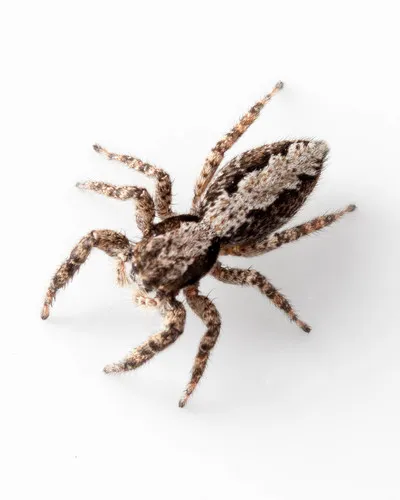
California Flattened Jumping Spider
Platycryptus californicus
Platycryptus californicus is a species of jumping spider in the family Salticidae. It is found in North and Central America.
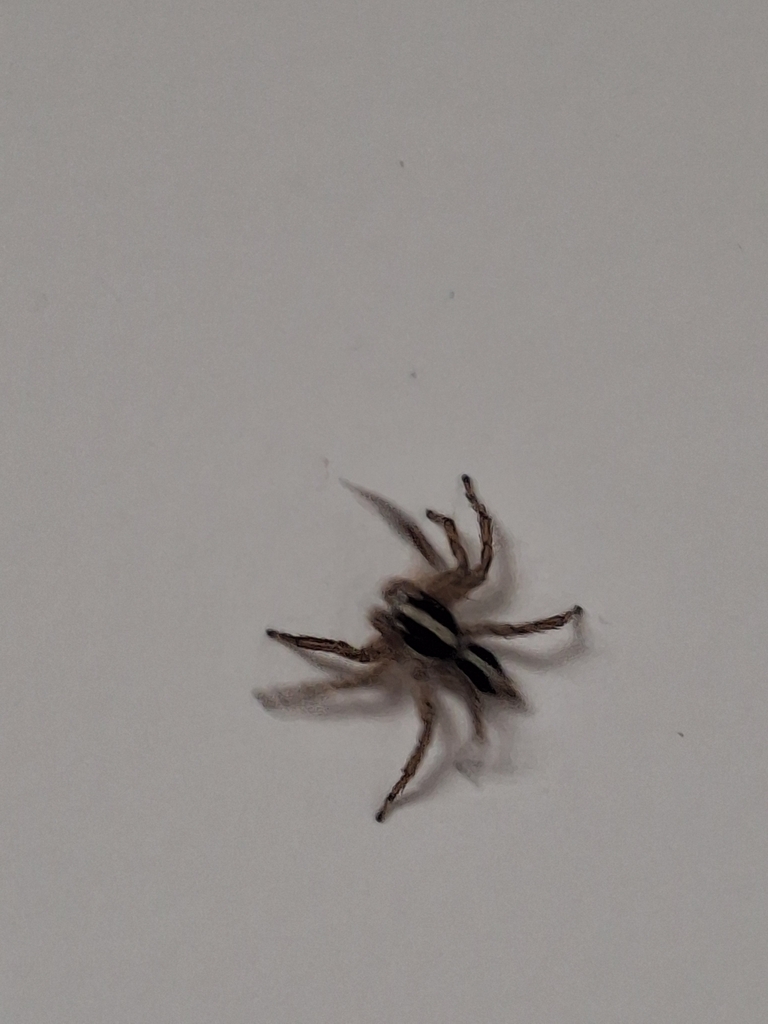
Pantropical Jumping Spider
Plexippus paykulli
(c) Gab Buffo, some rights reserved (CC BY)Plexippus paykulli is a jumping spider in the family Salticidae. It is native to south east Asia but has spread to other parts of the world. In the United States it is called the pantropical jumping spider. It is usually associated with buildings and
Poultonella alboimmaculata
Poultonella alboimmaculata
According to Bothrops07, seems to be densely populated in very small locations, and absent everywhere else. In Oklahoma, most often found in tall grassland in broomsedge bluestem, but can also be found on ragweed, milkweed, saplings, and fences. Seem
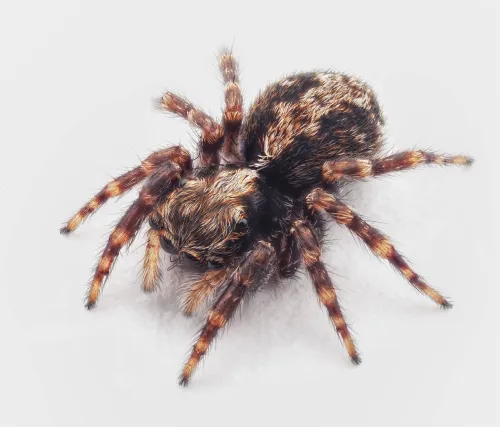
Pseudeuophrys lanigera
Pseudeuophrys lanigera
A jumping spider with a body length of 3 to 4 mm. Identification of this species "Requires examination at high magnification in good lighting, typically examination of the genitalia." Bee, L., Oxford, G., & Smith, H. (2020). Britain's Spiders: A Fiel
Rhetenor texanus
Rhetenor texanus
Identification: Palp Epigynum Type: Texas (male, Cameron Co., Brownsville, May 25, 1934, J. N. Knull, holotype, AMNH)
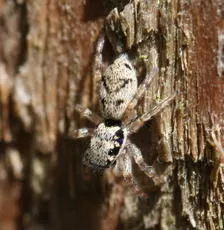
Salticus cingulatus
Salticus cingulatus
It has more white on the abdomen with dark triangular markings. Legs pale with distinct annulations. Usually away from habitation on tree trunks, gate posts etc. Very similar to S. scenicus but usually much paler due to more white hairs on the abdome
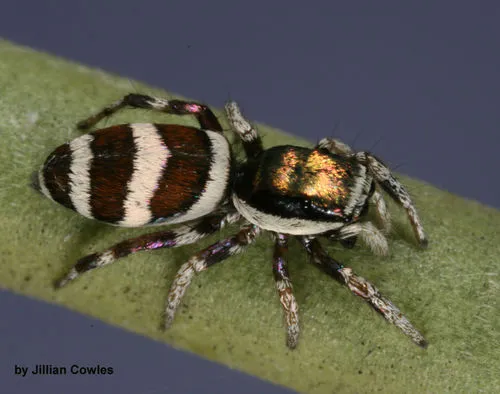
Salticus palpalis
Salticus palpalis
Identification: The cephalothorax is covered in iridescent scales; the abdomen is brick-red with four transverse pure white bands, the last of them at the spinnerets.
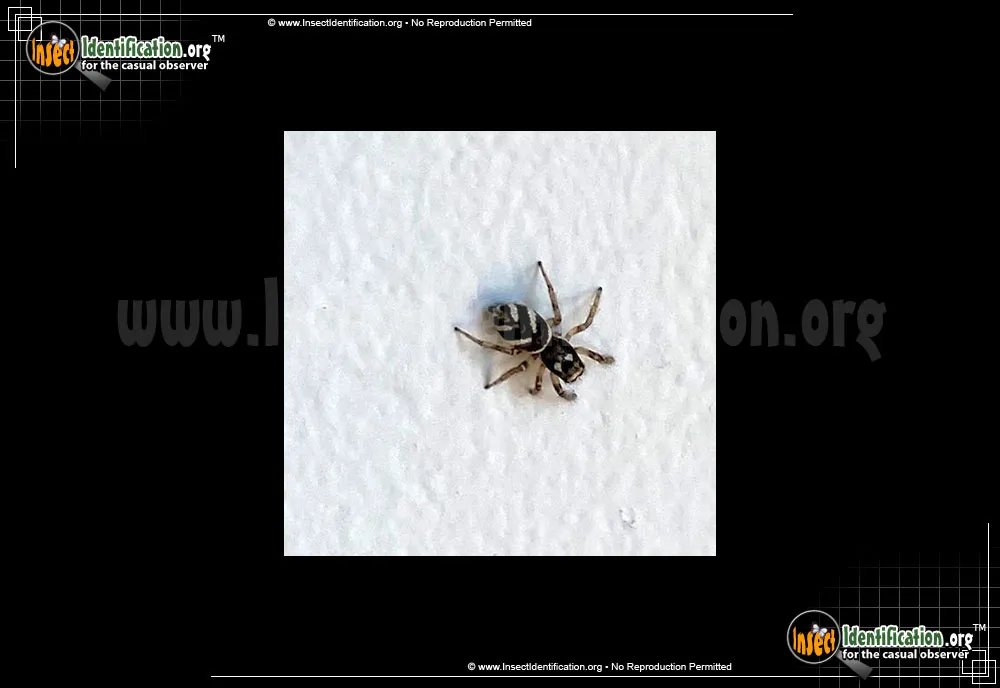
Salticus scenicus
Salticus scenicus
The female has a black abdomen with white stripes whereas the male has a brown abdomen with white stripes. However the patterning is variable and records are best confirmed by examination of genital structures. Legs mottled yellow brown with indistin
Sarinda hentzi
Sarinda hentzi
Identification: An orange-brown ant mimic . Characters : Epigynum
Sassacus cyaneus
Sassacus cyaneus
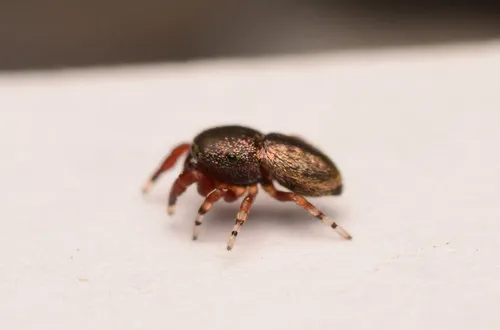
Sassacus cyaneus is a species of jumping spider. It used to be the only described species of the genus Agassa, but was transferred to the genus Sassacus in 2008. It seems to be closely related to S. papenhoei, but differs in the form of the carapace.
Sassacus paiutus
Sassacus paiutus
Identification: Gertsch, 1934 indicates the mouthparts and chelicerae are brown. Femur I is brown, but the remaining joints are lighter. The posterior legs are yellow. The abdomen is overlaid with white scales.
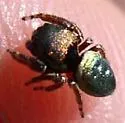
Sassacus papenhoei
Sassacus papenhoei
Identification: Palp Generally covered in "metallic green and pink or coppery scales ... abdomen usually green or blue".(Richman, 2008)
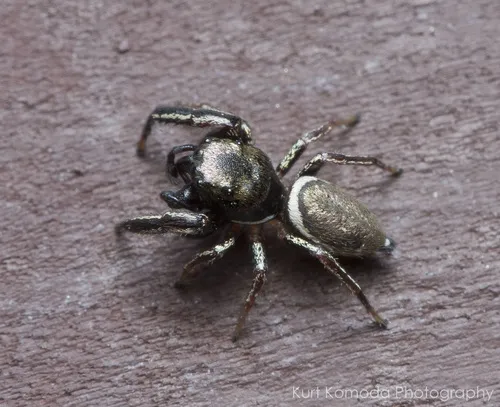
Sassacus vitis
Sassacus vitis
Identification: Palp Epigynum (ventral/dorsal) The body is covered in iridescent scales which flash either green or gold in strong light (often doesn't show up well in photographs). This iridescence has been explained as mimicking of certain beetles,
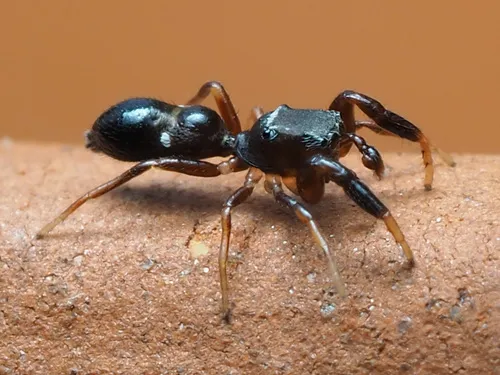
Synageles bishopi
Synageles bishopi
Synageles bishopi is a species of jumping spider. It is native to the continental United States.
Synageles occidentalis
Synageles occidentalis
Identification: Palp Epigynum Cutler writes that species often confused with S. noxiosus , but genitalia is very different: Cutler, 1988a
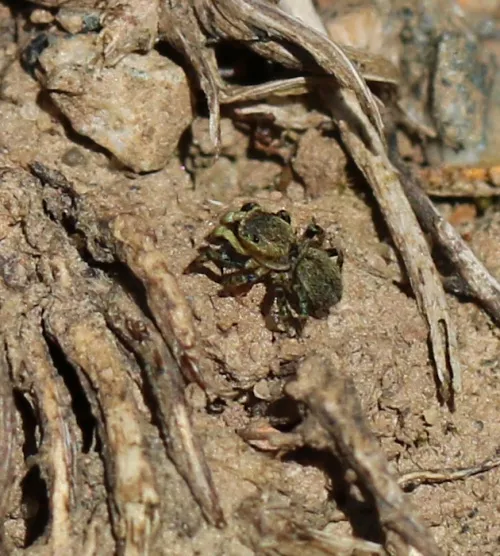
Talavera aequipes
Talavera aequipes
Talavera aequipes is a small jumping spider. There are very similar species, but this species is the most frequent of these spiders in our area. Identification of this species "Requires examination at high magnification in good lighting, typically ex
Tutelina elegans
Tutelina elegans
Identification: Male/Female Palp (ventral/lateral) Epigynum (ventral/dorsal)
Tutelina harti
Tutelina harti
Identification: Palp Epigynum In my experience, the female dorsal abdomen pattern is variable in the field because the scales may be rubbed off. See examples below. -ChH
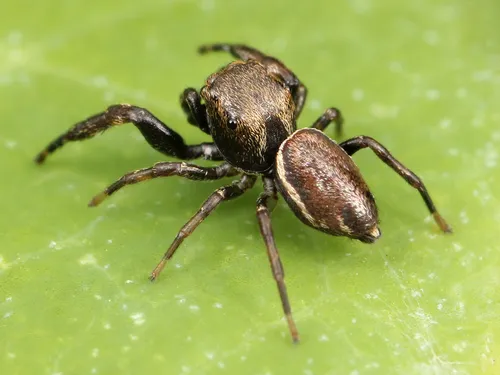
Zygoballus nervosus
Zygoballus nervosus
Zygoballus nervosus is a species of jumping spider which occurs in the eastern United States and Canada.
Zygoballus sexpunctatus
Zygoballus sexpunctatus
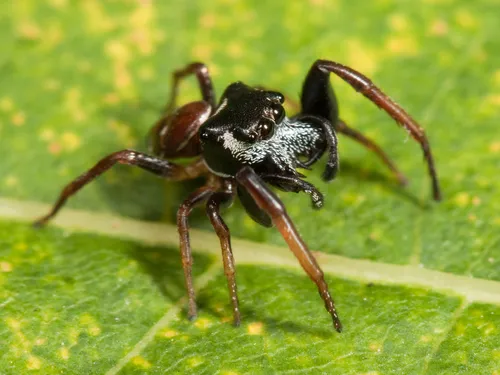
Identification: Palp Epigynum Both males and females typically have a thin band of white scales along the lower edge of the carapace on the sides, unlike Z. rufipes . Males have a black carapace and a spot of white scales at beginning of thoracic slo
Admestina tibialis
Admestina tibialis
Admestina wheeleri
Admestina wheeleri
Attidops cinctipes
Attidops cinctipes
Attidops cutleri
Attidops cutleri
Attidops youngi
Attidops youngi
Attinella concolor
Attinella concolor
Attinella juniperi
Attinella juniperi
Attulus ammophilus
Attulus ammophilus
Attulus fasciger
Attulus fasciger
Attulus floricola
Attulus floricola