
Spiders
Order Araneae
The Spiders (Order Araneae) includes 1,848 species across 82 families and 552 genera in our directory.
About Spiders
As of 2023, 51,673 spider species in 136 families have been recorded, though an estimated 150,000 species exist. Spiders rank 7th in total species diversity among all organism orders. Only 0.5% of spider species pose any risk to human health.
Economic Impact
The global spider community kills an estimated 400-800 million tons of prey annually (2017 study). Spiders provide billions of dollars in natural pest control for agriculture. Spider silk is 5× stronger than steel of the same diameter, driving a biomaterials research industry.
Ecological Role
Spider venom contains complex peptides with diverse pharmacological activities, making them valuable for drug development research. Spiders produce up to 7 types of silk from specialized glands. Spider silk genes have been inserted into mammals and plants for biotech applications.
Families in Araneae (82)
Species in Araneae (1,848)
Falconina gracilis
Falconina gracilis
Identification: Male: Female: "This South American species has been introduced to the Gulf States and seems to be associated with the imported fire ant, Solenopsis invicta in Texas (J Cokendolpher, pers. comm.)" ( 4 )
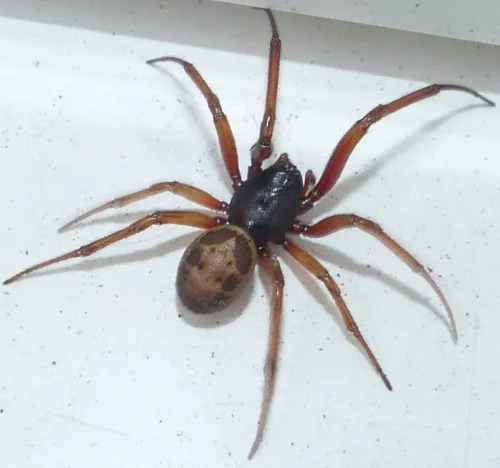
False Widow Spider
Steatoda nobilis
Sometimes known as the Noble False Widow spider - adults are usually larger than both Steatoda bipunctata and Steatoda grossa - the body length of an adult female false widow spider is around 15 millimetres, males are a little smaller. Maximum leg le
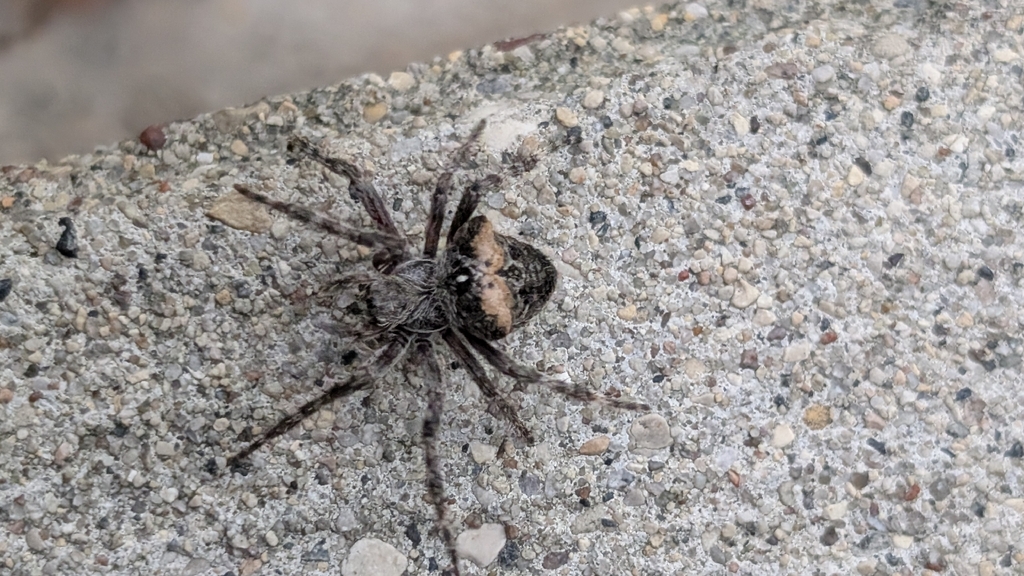
Fierce Orbweaver
Araneus saevus
(c) Aedan Rooney, some rights reserved (CC BY)Identification: “It is apparently quite consistent in color and pattern, being dark gray with a large, broad white slash down the front of the abdomen." - Terry Thormin Light-colored specimens of this species also occur:
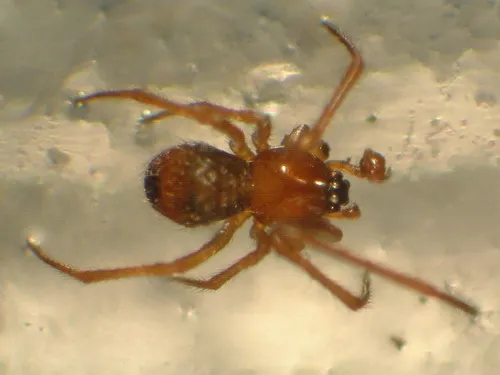
Fingered Cobweaver
Hentziectypus globosus
Identification: All specimens examined ... had the characteristic black spot on the abdomen, and the species can thereby readily be distinguished from A. conjuncta . Epigynum: Palp:
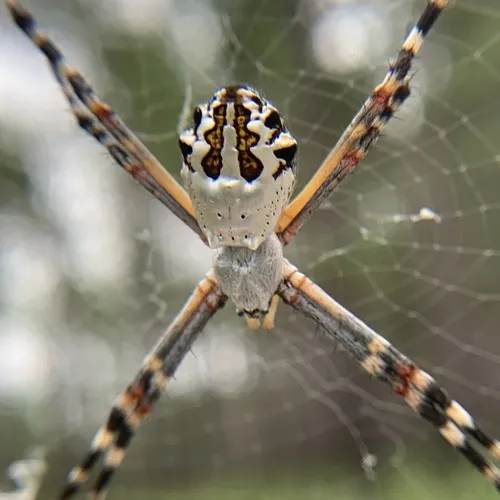
Florida Argiope
Argiope florida
Argiope florida, known generally as the Florida argiope or Florida garden spider, is a species of orb weaver in the family of spiders known as Araneidae. It is found in the United States.
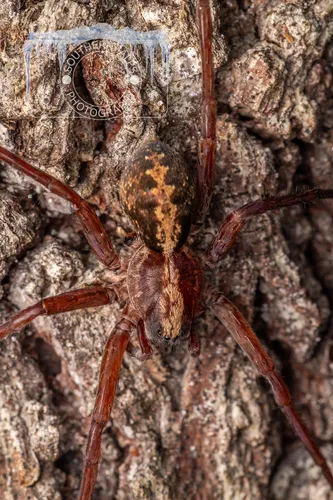
Florida wandering spiders
Ctenus captiosus
Ctenus captiosus, known generally as the Florida false wolf spider or tropical wolf spider, is a species of wandering spider in the family Ctenidae. It is found in the United States.
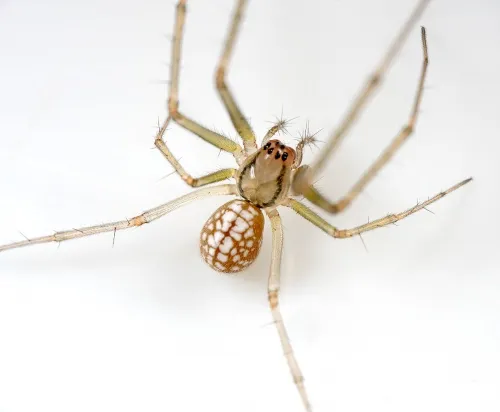
Floronia bucculenta
Floronia bucculenta
Length. 4 to 5 mm. Prosoma yellowish with wide black margins extending to the eye area. A median strip or another type of prosoma drawing is not pronounced. Opisthosoma dorsally brown to grey base colour and a clear white spot or plate-like marbling,
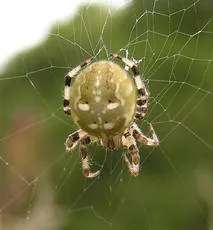
Four-spotted Orb Weaver
Araneus quadratus
Females can reach 17 mm in length, males approximately half that. The abdomen colour is quite variable, ranging from dark brown to bright orange or yellowy-green. The legs are banded. The appearance of males is quite different from that of the larger
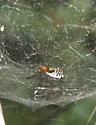
Frontinella huachuca
Frontinella huachuca
Identification: "Carapace pale yellowish brown, the pars thoracica faintly marked with dusky radiating lines, the clothing a very sparse covering of inconspicuous short hairs. Dorsum of abdomen creamy white, medially marked with a narrow longitudinal
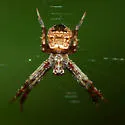
Gea heptagon
Gea heptagon
Identification: Palp This is the only member belonging to this genus.
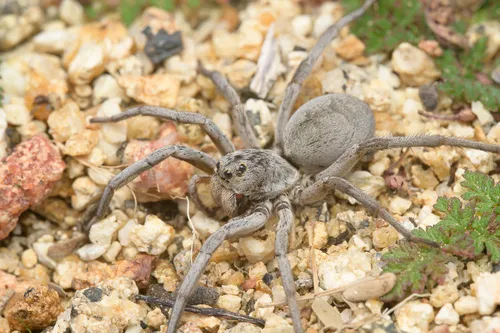
Geolycosa gosoga
Geolycosa gosoga
Geolycosa gosoga is a species of wolf spider in the family Lycosidae. It is found in the United States.
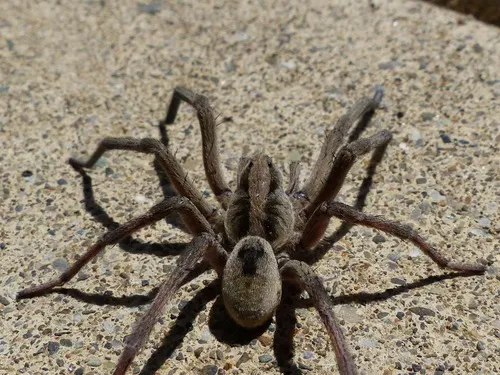
Geolycosa turricola
Geolycosa turricola
Geolycosa turricola is a species of wolf spider in the family Lycosidae. It is found in the United States.
Geolycosa wrighti
Geolycosa wrighti
Geolycosa wrighti lines its burrows thickly with silk. The burrow entrance is not decorated with a turret, as is the case with many Geolycosa burrows.
Gertsch's Triangleweaver
Hyptiotes gertschi
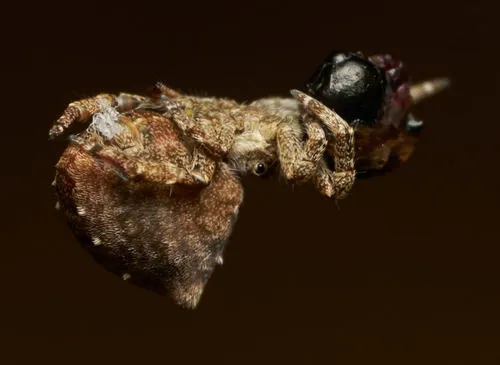
Identification: Adults can be distinguished from other species of Hyptiotes by specific features of the epigynum or palp. Given the known distribution of the four species in the genus, it might be reasonable to include geographic location as a diagn
Gertschanapis shantzi
Gertschanapis shantzi
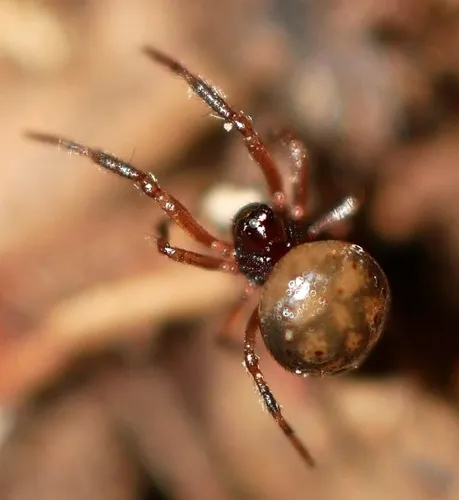
Gertschanapis is a genus of North American araneomorph spiders in the Anapidae family, containing the single species, Gertschanapis shantzi. It was first described by Norman I. Platnick & Raymond Robert Forster in 1990, and has only been found in Uni
Ghelna canadensis
Ghelna canadensis
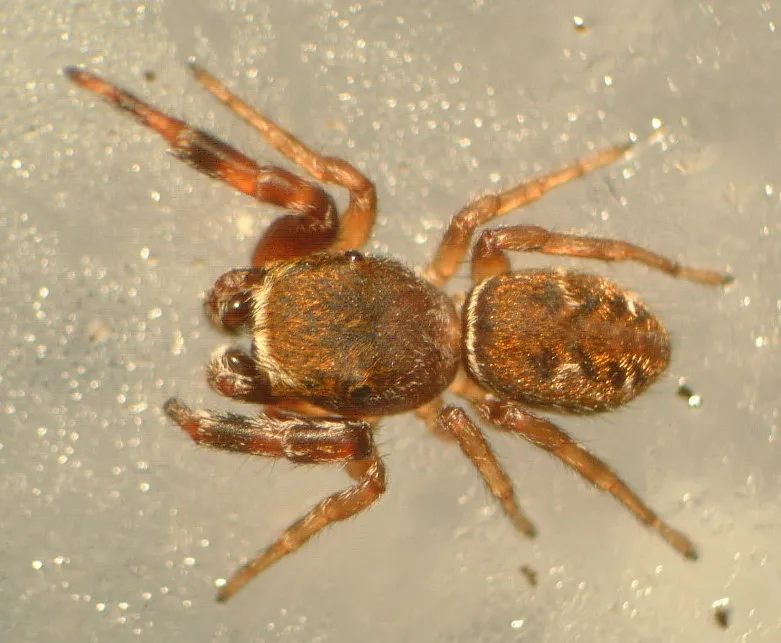
Ghelna canadensis is a species of jumping spider in the family Salticidae. It is found in the United States and Canada.
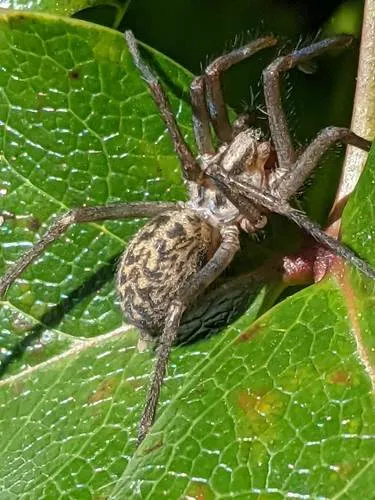
Giant House Spider
Eratigena duellica
Eratigena duellica, the giant house spider, is a species of funnel weaver in the spider family Agelenidae. It is found in Canada, the United States, and Europe. The related species Eratigena atrica is also called the Giant house spider.
Giant Lichen Orbweaver
Araneus bicentenarius
Identification: Female (dorsal/ventral) Male coloration as in female, but with a longitudinal white mark anterior on dorsum; second tibia unusually large.
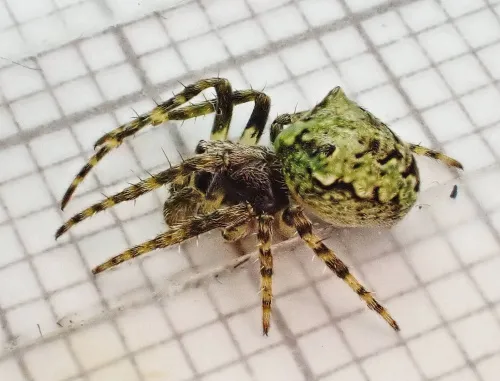
Gibbaranea gibbosa
Gibbaranea gibbosa
A medium-sized orb-weaver (females up to 7mm long) with prominent tubercles on the shoulders of the abdomen. It is often attractively marked with some degree of green and sometimes also pinkish red. The spider spins an orb web on trees and shrubs, es
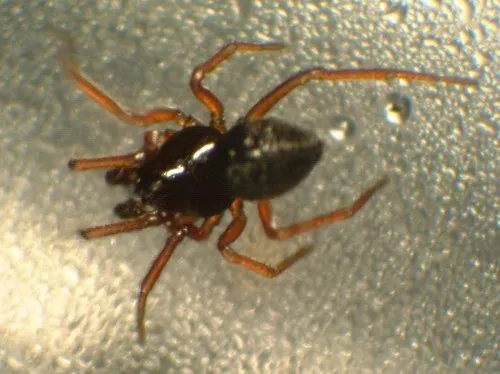
Glyphesis scopulifer
Glyphesis scopulifer
Glyphesis scopulifer is a species of dwarf spider in the family Linyphiidae. It is found in the United States and Canada.
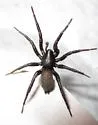
Gnaphosa borea
Gnaphosa borea
Identification: Left Palp (ventral, retrolateral, mesal-ventral)
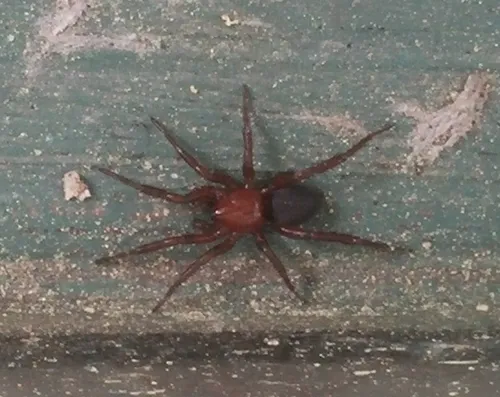
Gnaphosa sericata
Gnaphosa sericata
Gnaphosa sericata is a species of ground spider in the family Gnaphosidae. It is found in a range from the United States to Guatemala and Cuba.
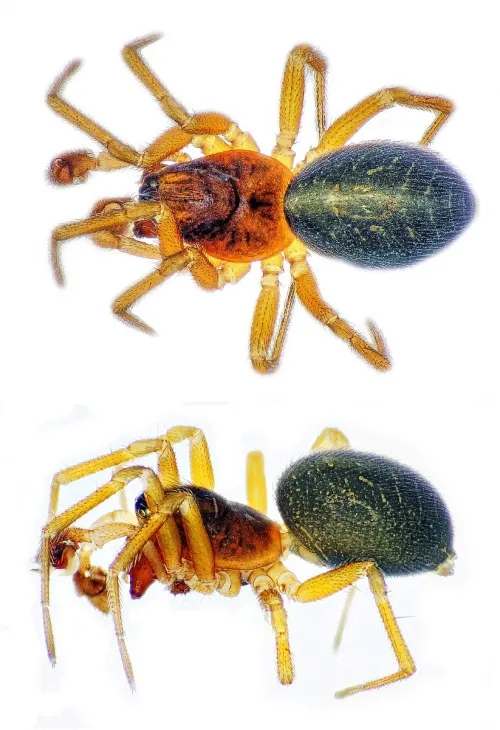
Gnathonarium dentatum
Gnathonarium dentatum
2-3mm long, prosoma brown, eye region, foveal area and radial stripes darker. Legs orange-yellow. Opisthosoma grey-black, dorsally with brighter longitudinal stripes. This is one of the 'money spiders' in the Linyphidae family - which has more UK spe
Golden Silk Orbweaver
Trichonephila clavipes
Identification: Male Female has a long cylindrical body, up to about 50mm or 2" by the end of the season, yellow to brownish-orange abdomen with silvery spots and silvery cephalothorax. Three of its four pairs of legs have hairy black patches above t
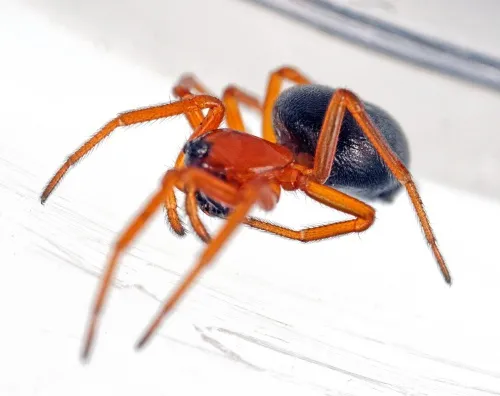
Gonatium rubellum
Gonatium rubellum
This is one of the 'money spiders' in the Linyphidae family - which has more UK species than any other. Most are small and need microscopic examination to identify.
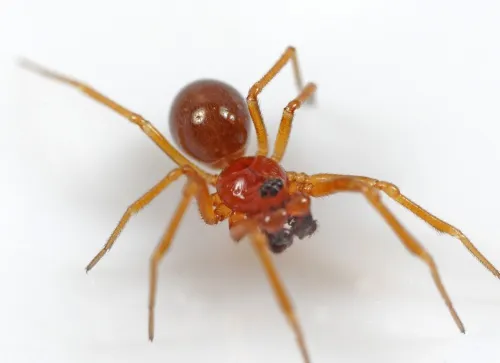
Gonatium rubens
Gonatium rubens
Found in a variety of open habitats, in grass tussocks, mosses and gorse. All year round peaking August to October, with female numbers spiking again in April and May. Widespread and quite frequent in Britain. 5874 British records for this species to
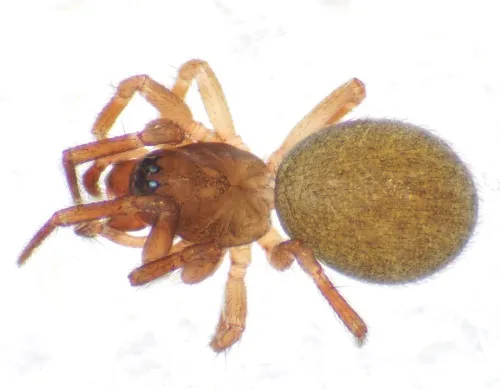
Gongylidiellum vivum
Gongylidiellum vivum
Length 1.2-2mm. Prosoma yellow-brown. Legs yellow-brown. Opisthosoma light grey to black-grey. Microscopic examination of the of the genitalia is required to confirm this species. In moss, grass and leaf litter, often in damp situations. Adults of bo
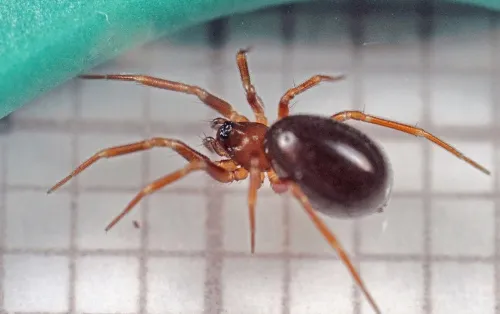
Gongylidium rufipes
Gongylidium rufipes
A small dark bodied spider. Detailed examination is needed for correct identification. Gongylidium rufipes occurs mainly in undergrowth and on bushes and trees in woodland but also in damp and wet situations and in a wide variety of other habitats in
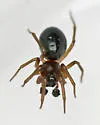
Grammonota angusta
Grammonota angusta
Identification: Palp: Epigynum-ventral "Tibia of palpus armed dorsolaterally with a large apophysis, at the base of which is a sharp tooth on the dorsal surface; a second, smaller tooth at middle of distal margin."
Grammonota capitata
Grammonota capitata
Grammonota capitata is a species of dwarf spider in the family Linyphiidae. It is found in the United States.
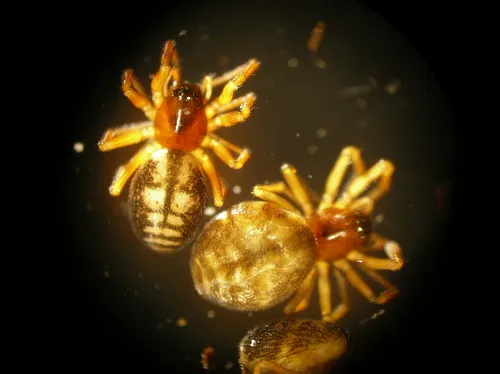
Grammonota kincaidi
Grammonota kincaidi
Grammonota kincaidi is a species of dwarf spider in the family Linyphiidae. It is found in the United States.
Gray Wall Jumper
Menemerus bivittatus
Identification: Female & Male together Non-native, likely introduced from the Old World tropics.
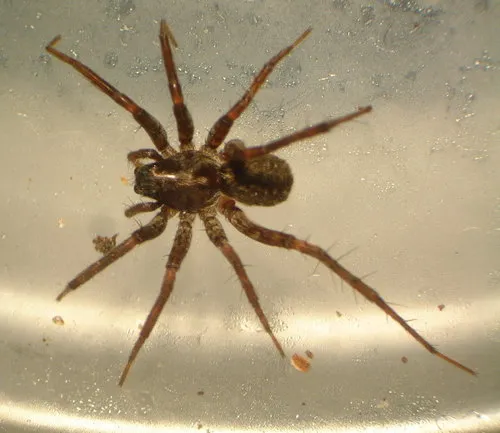
Groenland Wolf Spider
Pardosa groenlandica
Pardosa groenlandica is a species of wolf spider in the family Lycosidae. It is found in Russia, Canada, the United States, and Greenland.
Habronattus amicus
Habronattus amicus
Identification: A distinct characteristic of the male is its "hairy" abdomen. Also note the unmodified 1st and 3rd legs and the black tarsi at the end of the male forelegs. Male: Female: This species exhibits a wide degree of geographic variation wit
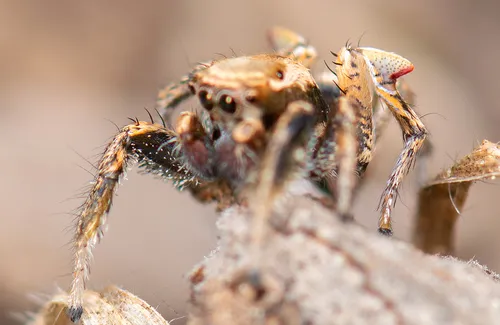
Habronattus californicus
Habronattus californicus
Habronattus californicus is a species of jumping spider in the family Salticidae. It is found in the United States and Mexico.
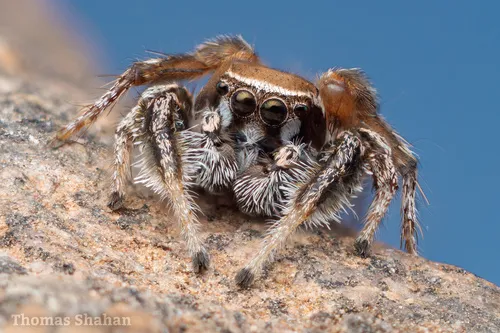
Habronattus clypeatus
Habronattus clypeatus
Identification: Male Female H. dossenus and H. clypeatus are very similar and both occur in southern Arizona. In the eastern part of their overlapping range, they are fairly distinct, but in the western part, they may be difficult to tell apart, espe
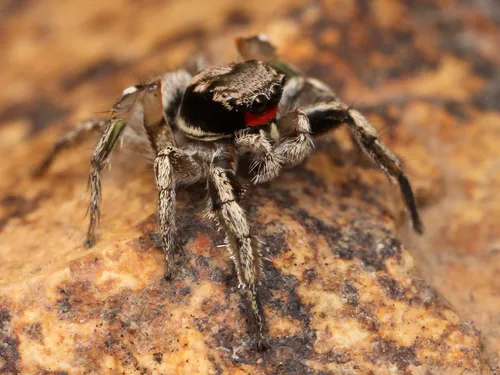
Habronattus coecatus
Habronattus coecatus
Habronattus coecatus is a species of jumping spiders from a Salticidae family, that can be found in Mexico, the United States, and Bermuda.
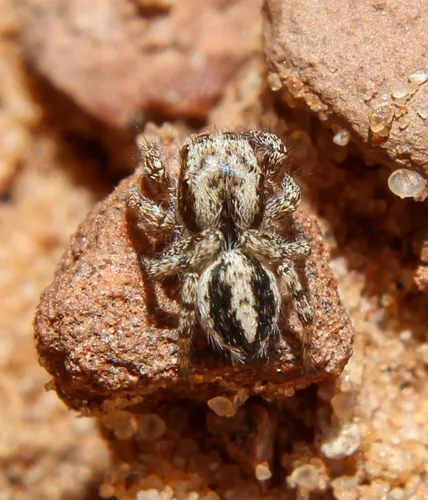
Habronattus conjunctus
Habronattus conjunctus
Habronattus conjunctus is a species of jumping spider in the family Salticidae. It is found in the United States and Mexico.
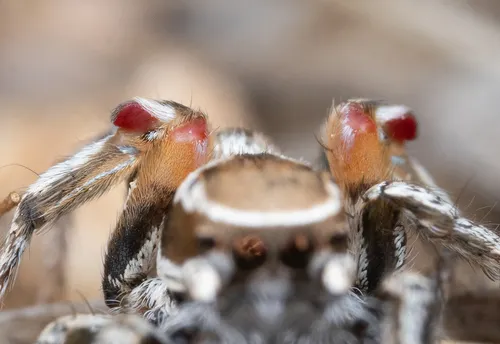
Habronattus dossenus
Habronattus dossenus
Identification: Male H. dossenus and H. clypeatus are very similar and both occur in southern Arizona. In the eastern part of their overlapping range, they are fairly distinct, but in the western part, they may be difficult to tell apart, especially
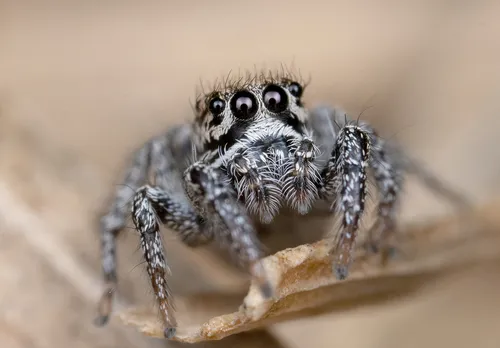
Habronattus formosus
Habronattus formosus
Habronattus formosus is a species of jumping spider in the family Salticidae. It is found in the United States.
Habronattus icenoglei
Habronattus icenoglei
Habronattus icenoglei is a species of jumping spider (family Salticidae). It is found in the southwestern United States and north-central Mexico.
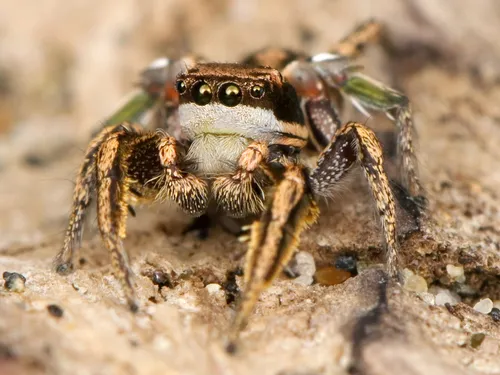
Habronattus klauseri
Habronattus klauseri
Habronattus klauseri is a species of jumping spider in the family Salticidae. It is found in the United States and Mexico.
Habronattus luminosus
Habronattus luminosus
Identification: Male First specimens known collected at Sunglow, AZ (Cochise Co.) by B. & V. Roth, in July 1977. Face of male turns greenish in alcohol. In life, face of male is bright blue, surrounded by orange. Rediscovered by M. Girard in 2012 in
Habronattus orbus
Habronattus orbus
Identification: Male Female Epigynum (ventral/dorsal):
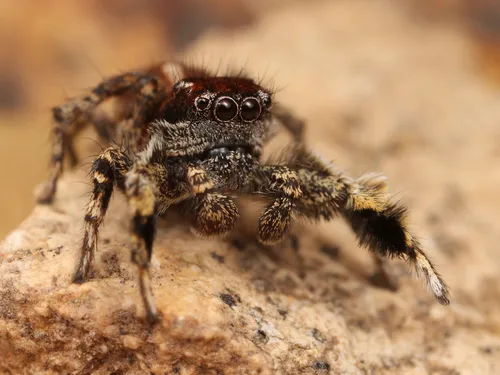
Habronattus peckhami
Habronattus peckhami
Habronattus peckhami is a species of spider in the family Salticidae. It is found in the USA.
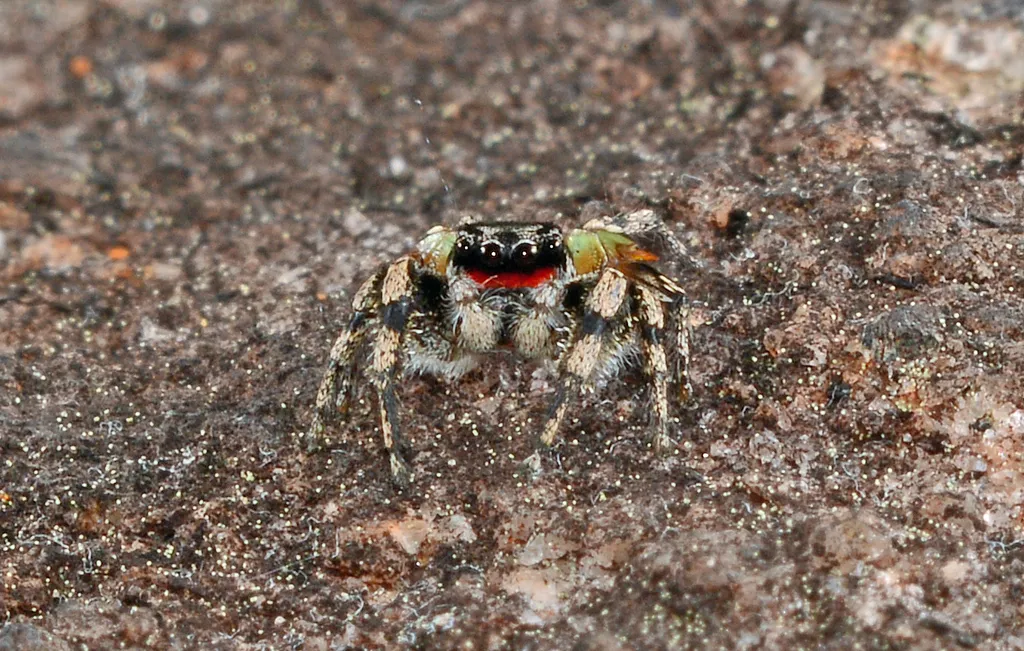
Habronattus sabulosus
Habronattus sabulosus
Habronattus sabulosus is a species of jumping spider in the family Salticidae. It is found in the southeastern United States.
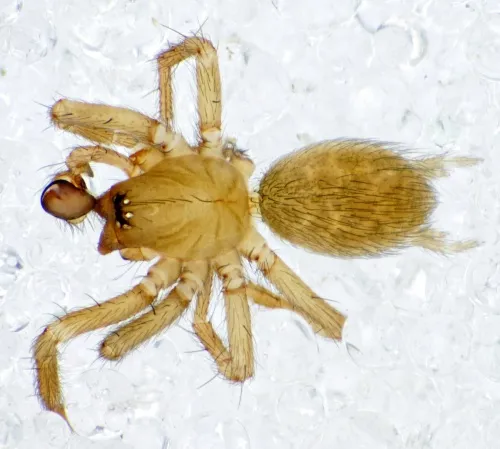
Hahnia helveola
Hahnia helveola
Length 2.2-3mm. Prosoma yellow-brown, with distinct spot in foveal region. Opisthosoma pale yellow with dark chevrons. This species can only be confirmed by examination of the genitalia of mature specimens. Widespread in south east England, scattered
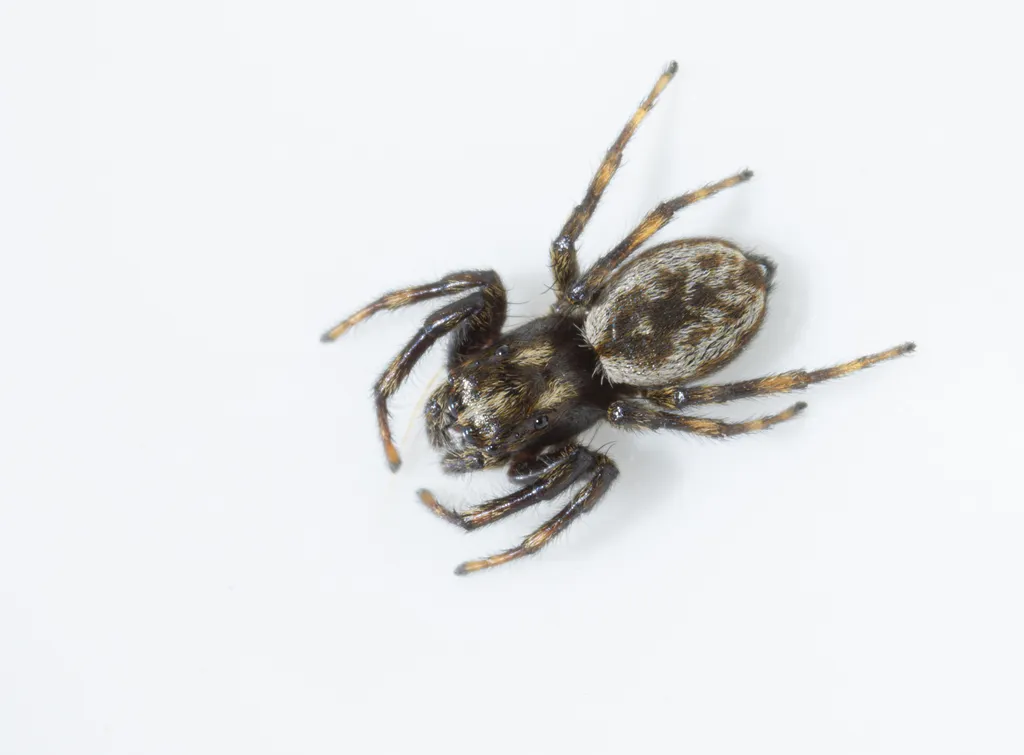
Hakka himeshimensis
Hakka himeshimensis
Hakka himeshimensis is a species of the spider family Salticidae (jumping spiders). It is the only species in the genus Hakka. H. himeshimensis is native to East Asia, but has been introduced to the United States. It is most commonly found in rocky c
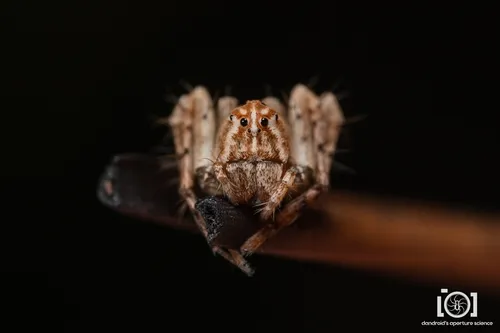
Hamataliwa helia
Hamataliwa helia
Hamataliwa helia is a species of lynx spider in the family Oxyopidae. It is found in the United States, Mexico, Guyana, Thailand, Malaysia (Sarawak), Brunei, and Indonesia (Sumatra).
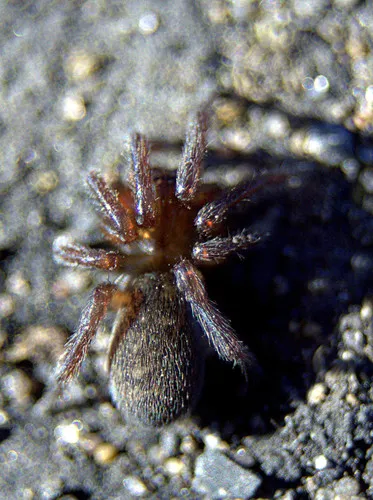
Haplodrassus bicornis
Haplodrassus bicornis
Haplodrassus bicornis is a species of ground spider in the family Gnaphosidae. It is found in the United States and Canada.
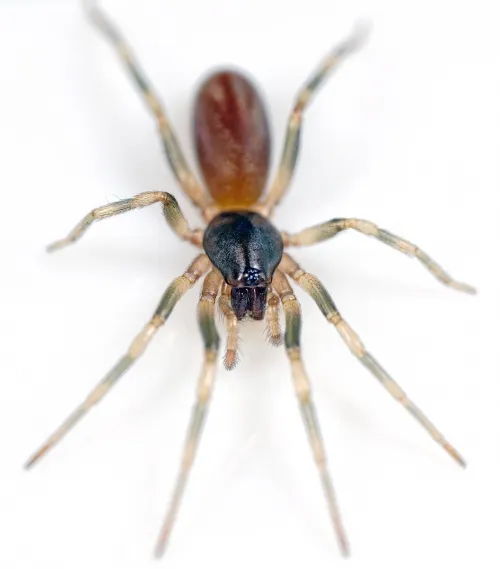
Harpactea hombergi
Harpactea hombergi
5 to 7 mm. Carapace dark brown, tapering towards head area with six eyes. Abdomen grey-brown, tubular. Legs annulated. Unless identified by a recognised expert, a photo is required. If the photo doesn't show the key ID features then in the comments b
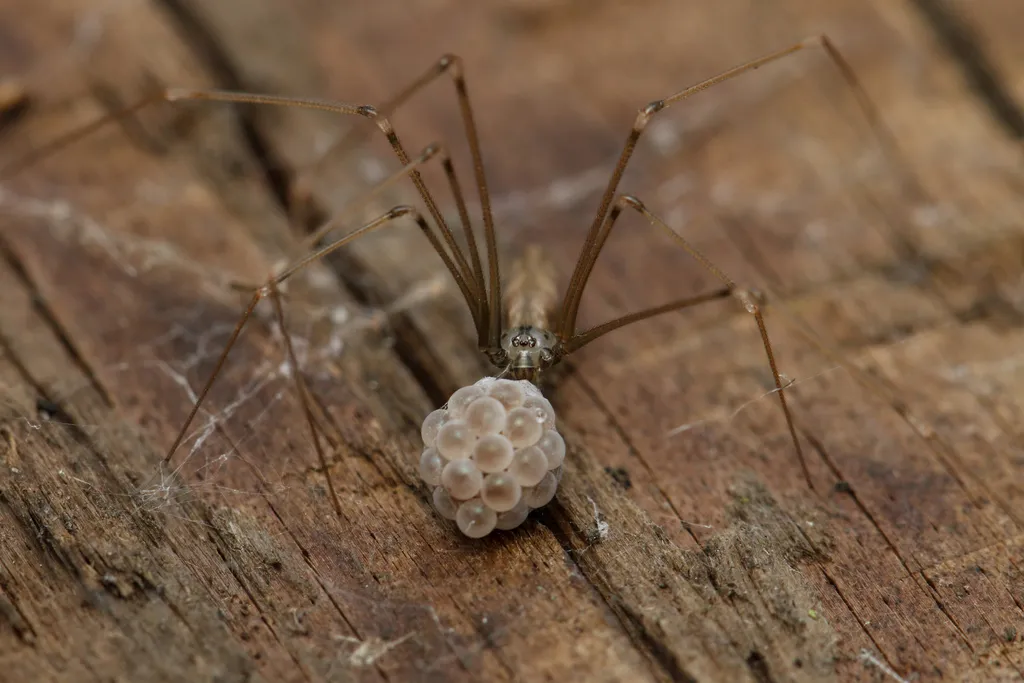
Harvestman Cellar Spider
Pholcus opilionoides
Identification: Epigynum It will be rare for BugGuide to get submissions of any of the ten endemic (native) Pholcus , so it will mostly only be the three (so far) introduced/non-native species that we will see and need to differentiate, thus here is
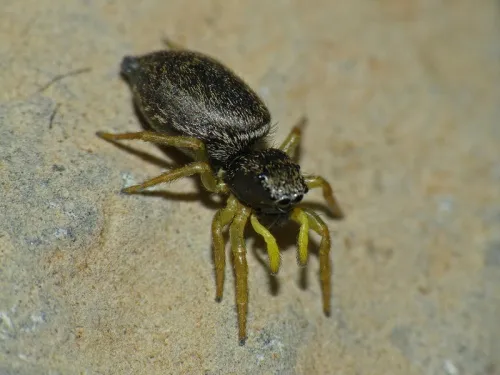
Heliophanus flavipes
Heliophanus flavipes
A small species at around 5 mm. A striking spider with a dark body covered with numerous paler hairs which are sometimes golden. Its legs and palps are a golden lemony yellow in colour. Identification of this species "Requires examination at high mag
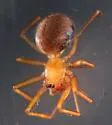
Helophora insignis
Helophora insignis
Identification: Male/Female Palp, retrolateral view Epigynum
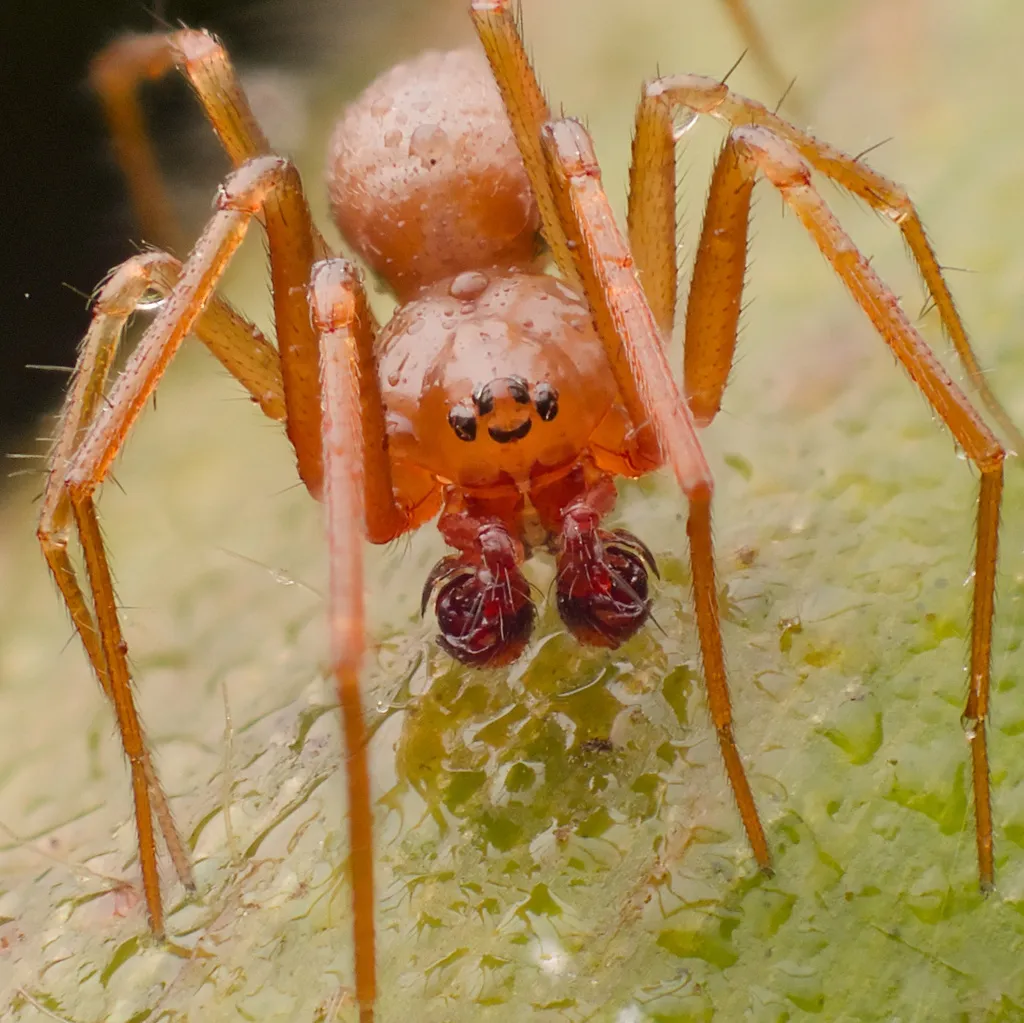
Helophora reducta
Helophora reducta
Helophora reducta is a species of sheetweb spider in the family Linyphiidae. It is found in the United States.
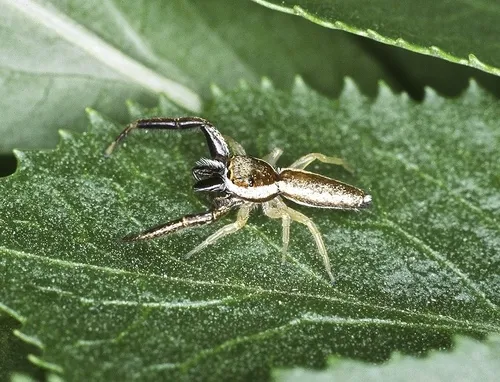
Hentzia alamosa
Hentzia alamosa
Hentzia alamosa is a species of jumping spider in the family Salticidae. It is only known from Texas in the United States.
Herpyllus cockerelli
Herpyllus cockerelli
Identification: Palp Syntypes were collected from Mesilla Park, Dona Ana Co., New Mexico.
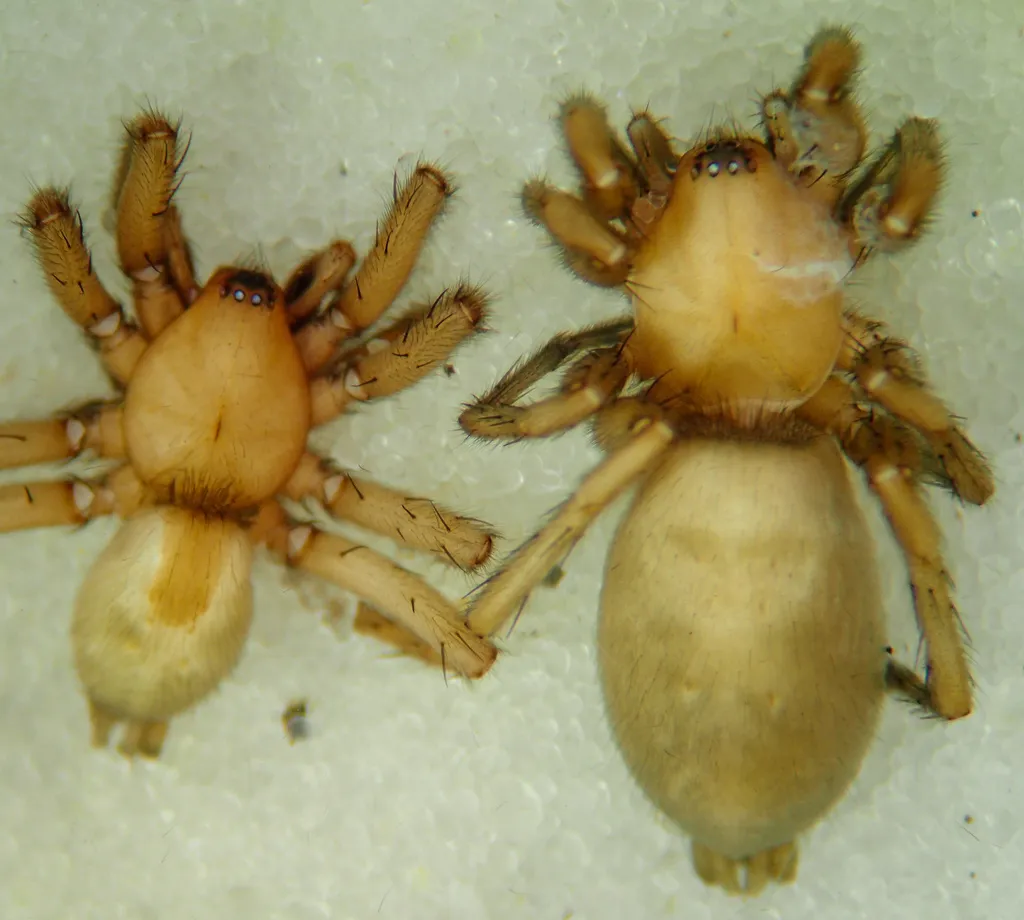
Herpyllus hesperolus
Herpyllus hesperolus
Identification: Palp Epigynum (undissected/ventral dissected/dorsal dissected)
Heser schmitzi
Heser schmitzi
Identification: Similar to Heser nilicola , which is also found in California, but can be distinguished by details of the genitalic morphology. Palp Epigynum
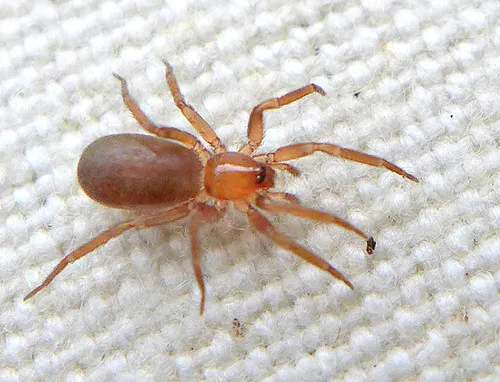
Hesperocranum rothi
Hesperocranum rothi
Hesperocranum is a genus of spiders in the family Liocranidae. It was first described in 1991 by Ubick & Platnick. As of 2017, it contains only one species, Hesperocranum rothi, found in the U.S.
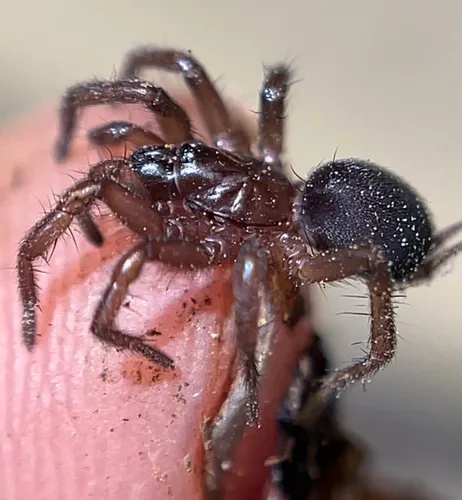
Hexura rothi
Hexura rothi
Hexura rothi is a species of spider in the Mecicobothriidae family. It was described by Gertsch & Platnick, 1979 - USA.
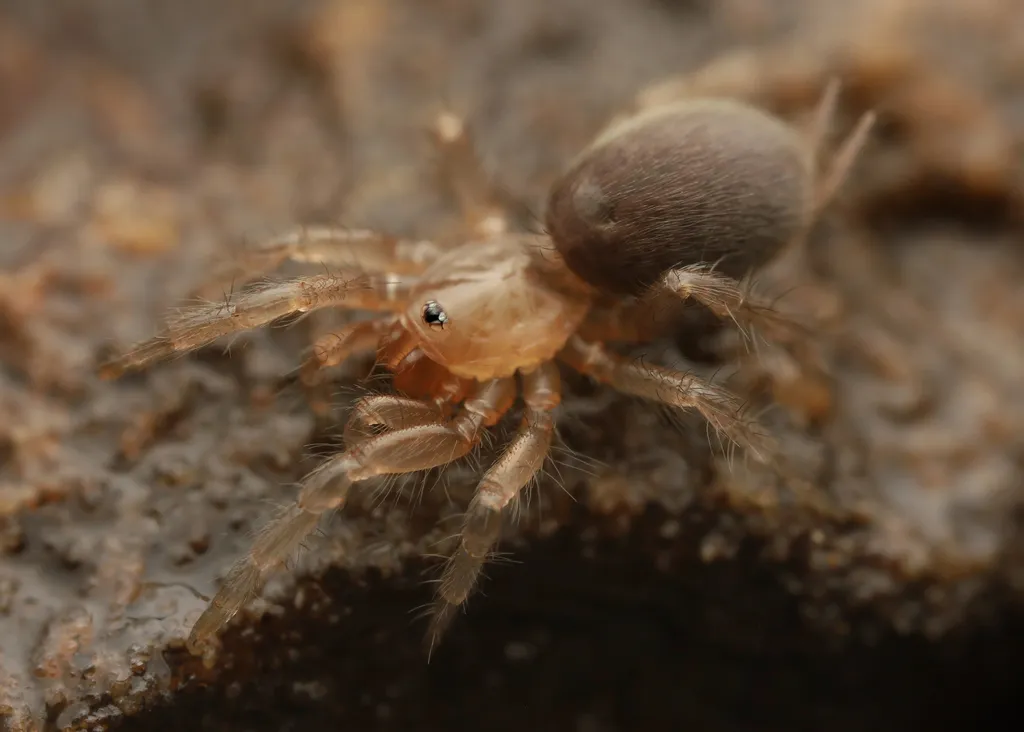
Hexurella apachea
Hexurella apachea
Hexurella apachea is a species of spider native to the United States. It was first described by Gertsch and Platnick in 1979. It is from the family Hexurellidae.
Hibana cambridgei
Hibana cambridgei
Identification: Epigynum (undissected/dissected ventral/dissected dorsal):
Hogna angusta
Hogna angusta
Identification: At one point described as an inland form (FL) of H. timuqua due to the male palp being identical, and species being similar in appearance. However, there is obvious difference in the female epigynum, currently separating the two. H. t
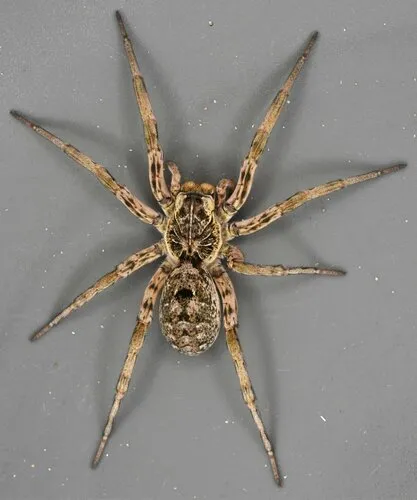
Hogna baltimoriana
Hogna baltimoriana
Identification: Very similar to lenta, but with markings more pronounced. However, the coxae are not black beneath, the sternum may be. Sternum black, chelicerae dark reddish to black. Abdomen yellowish with 5 or 6 chevrons posteriorly. Heart mark br
Hogna coloradensis
Hogna coloradensis
Identification: Drawing on Slowik & Cushing , this is clearly Hogna coloradensis. They write that the species "can be separated from all other Hogna and Lycosidae by a dark area immediately anterior to the epigastric furrow as well as a small dark ar
Hogna frondicola
Hogna frondicola
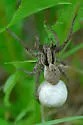
Identification: Dark brown with light grey markings. The venter is black. Carapace generally has a wide grey stripe down the center and white on the edges. There are also two to four black dots in the center of the abdomen.
Hogna timuqua
Hogna timuqua
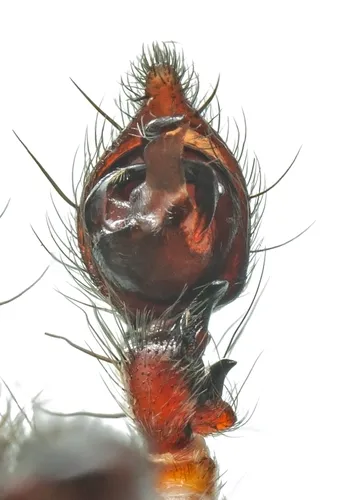
Identification: Wallace, 1942 Fig. 5, 6 male Fig. 20 female Fig. 19 = angusta
Hololena dana
Hololena dana
Hololena dana is a species of funnel weaver in the family of spiders known as Agelenidae. It is found in the United States.
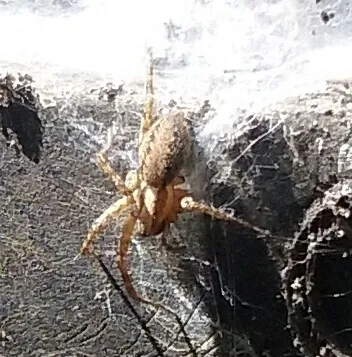
Hololena santana
Hololena santana
Hololena santana is a species of funnel weaver in the family of spiders known as Agelenidae. It is found in the United States.
Hololena tentativa
Hololena tentativa
Hololena tentativa is a species of funnel weaver in the family of spiders known as Agelenidae. It is found in the United States.
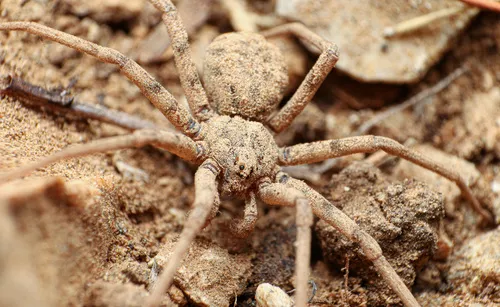
Homalonychus selenopoides
Homalonychus selenopoides
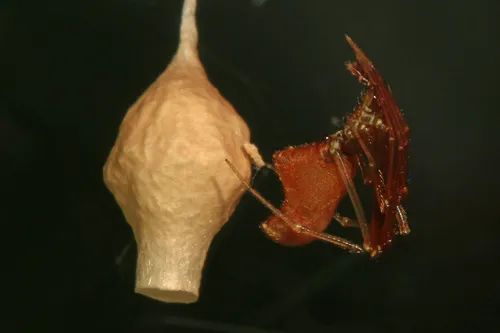
Homalonychus selenopoides is a species of true spider in the family Homalonychidae. It is found in the United States and Mexico.
Horned Parasitic Cobweaver
Neospintharus trigonum
Identification: The male has two horns tipped with hair on the tip of the cephalothorax (head).
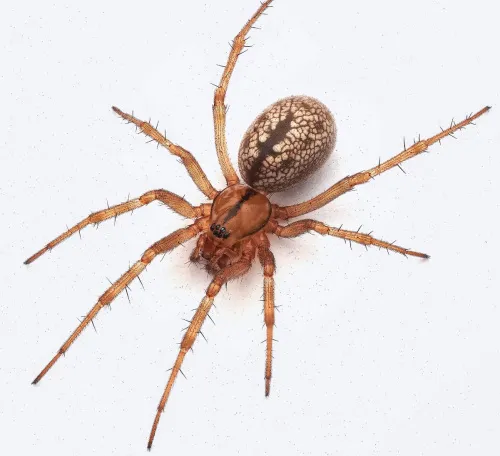
Horse-head spider
Stemonyphantes lineatus
Relatively easy to identify, this is a stunningly marked and colourful spider. The pinkish mottled body has a darker central band of varying strength. The head is light brown and also has a darker central line. Usually found at or near ground level i
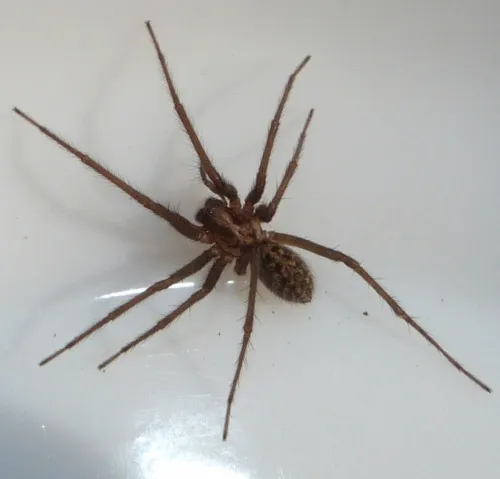
House Spider
Eratigena duellica sensu stricto
Examination of the genitalia is required to confirm this species, and some specimens may be intermediate hybrids. If in doubt, record to genus only as Eratigena or as Giant House-spider agg. In hollow trees, under stones in warm locations, often in b
Humpbacked Orbweaver
Eustala anastera
Identification: E. anastera has 6 basic patterns. Here are 3 that match Levi's drawing very well: Epigynum & scape
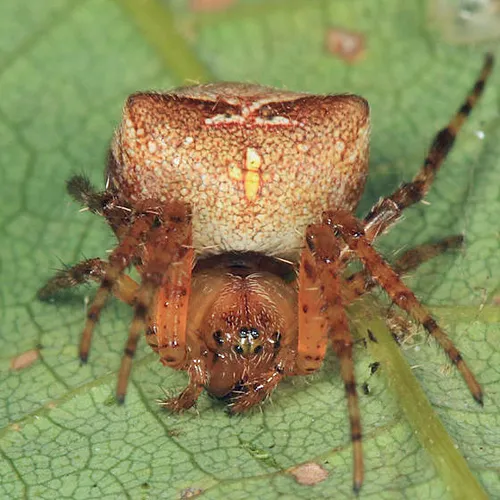
Humped bog orbweaver
Araneus corticarius
Araneus corticarius is a species of orb weaver in the family of spiders known as Araneidae. It is found in the United States and Canada.
Hybauchenidium gibbosum
Hybauchenidium gibbosum
Identification: Palp: Epigynum: The cephalic region of the male
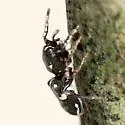
Hyetussa complicata
Hyetussa complicata
Identification: H. complicata mature males have a single pair of lateral abdominal spots, females have two pairs. pers. comm. GB Edwards Type: Texas (male, Hidalgo Co., below Weslaco, Llano Grande, April 27, 1934, S. Mulaik, holotype, AMNH)
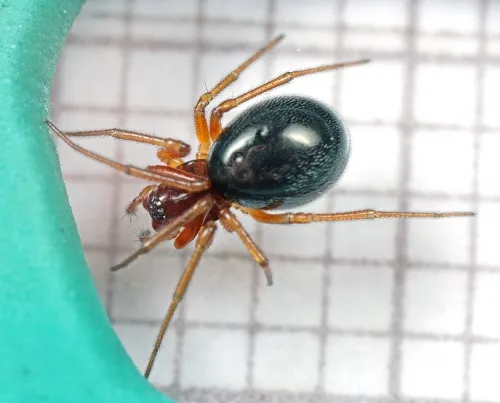
Hylyphantes graminicola
Hylyphantes graminicola
Males: 2.25 to 2.6 mm, females: 2.5 to 3.0 mm. Confirmation requires microscopic examination of the genitalia of adult specimens. Favours Gorse but can also be found on Hawthorn and Blackthorn. http://srs.britishspiders.org.uk/portal.php/p/Summary/s/
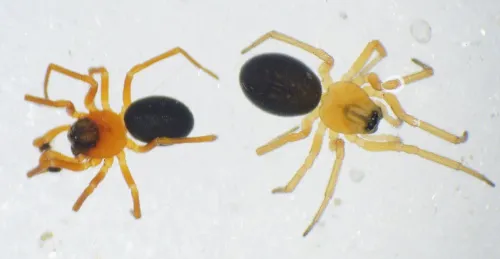
Hypomma bituberculatum
Hypomma bituberculatum
Male: 2.2 to 2.5 mm, female 2.5 to 3 mm. Prosoma red-orange to red-brown. Legs yellow to red-orange. Opisthosoma black. Examination of the genitalia is required to confirm this species. http://srs.britishspiders.org.uk/portal.php/p/Summary/s/Hypomma+
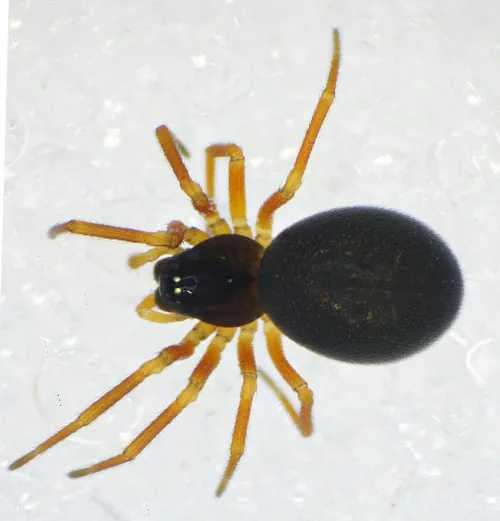
Hypomma cornutum
Hypomma cornutum
Size 2.1 to 2.8 mm. Prosoma brown to red-brown. Legs yellow-orange. Opisthosoma black. This species can only be confirmed by examination of the genitalia of mature specimens. Mainly found in woodland, on bushes, trees and herbaceous vegetation. Wides
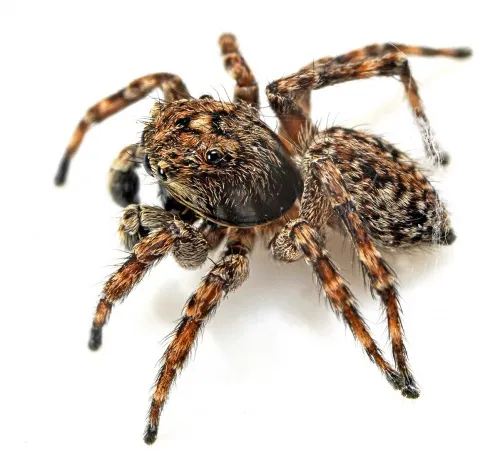
Hypositticus pubescens
Hypositticus pubescens
A small (5 mm) but sprightly jumping spider with a large and quite angular head and a hairy body patterned with browns, black and light greys. Identification of this species "Requires examination at high magnification in good lighting, typically exam
Hypselistes florens
Hypselistes florens
Identification: The cephalothorax is bright orange. The coxae, trochanters and femora are similar in coloring, but the remaining leg segments are grey or pigmented with black. See pictures below of the male's cephalic lobe and distinctive pedipalp. T
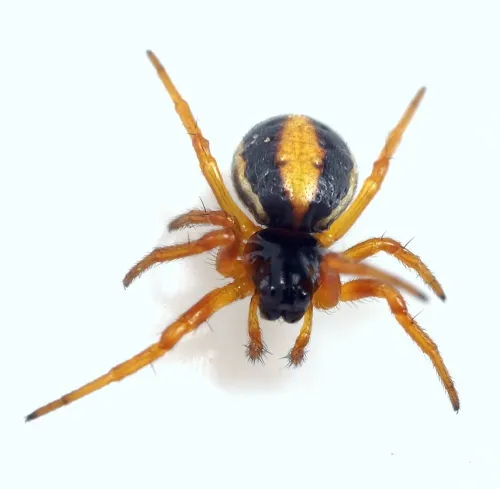
Hypsosinga pygmaea
Hypsosinga pygmaea
Body length 3 to 4.5 mm. Prosoma black-brown, eye region and margin slightly brighter. Prosoma black-brown. Sternum black (c.f. Hypsosinga sanguinea - sternum yellowish red, sometimes darkened). Legs reddish yellow, unicoloured. Opisthosoma strongly
Iberina montana
Iberina montana
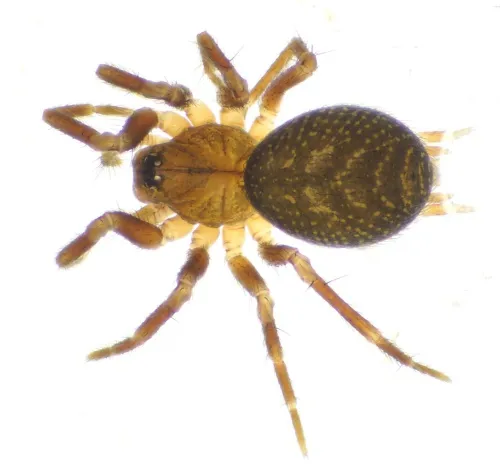
Length 1.4 to 2 mm. Prosoma yellowish, suffused with black. Opisthosoma dark with vague chevrons. This species can only be confirmed by examination of the genitalia of mature specimens. In leaf litter and moss in damp areas. Occasionally in grassland
Invisible Spider
Drapetisca socialis
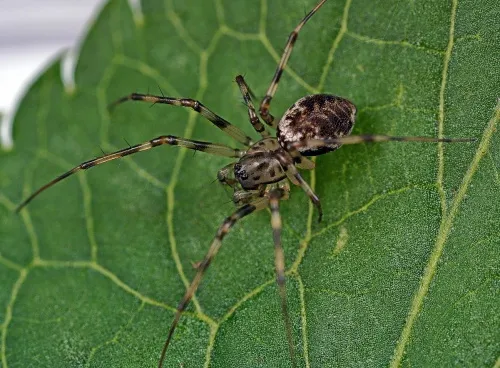
The white on the abdomen varies but the pattern on the carapace is recognisable. They are smallish spiders, up to 4 mm. This spider is usually found on the lower trunks of trees, particularly Beech. It spins a very fine web which is almost invisible
Kaestneria pullata
Kaestneria pullata
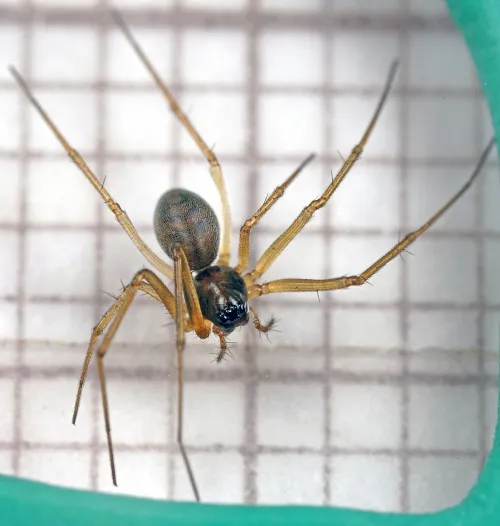
Males: 2 to 3 mm, females: 2 to 3.2 mm. Variable in appearance but generally dark, abdomen often with paler chevrons. Microscopic examination of genitalia is required to confirm identity. Widespread in much of Britain, becoming scattered in the north
Kaira altiventer
Kaira altiventer
Identification: "The epigynum of the female, unlike that of K. alba, has a flat, triangular, curved scape, the tip projecting anteriorly and, like K . alba but unlike others, no humps or tubercles on the posterior of the abdomen. The tiny male can be
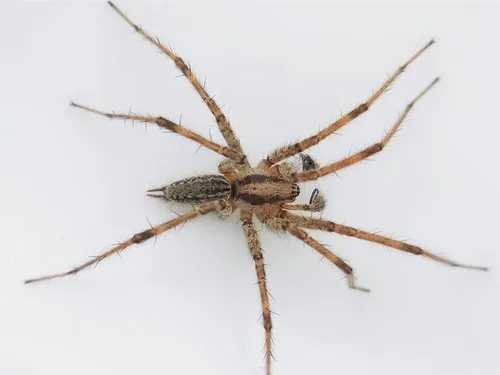
Kaston’s Funnelweb Spider
Agelenopsis kastoni
Agelenopsis kastoni is a species of funnel weaver in the family of spiders known as Agelenidae. It is found in the United States.
Khalotyna calcarata
Khalotyna calcarata
Identification: Palp Common Dictynid throughout the Western United States.
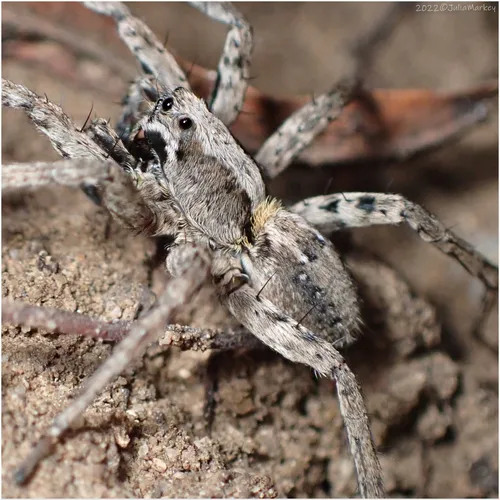
Koch's Wolf Spider
Alopecosa kochi
Identification: The female of this species has short banded legs, a broad tan stripe down the center of the carapace and faint paired white/tan spots along opposite sides of the abdomen. The male
Kukulcania hurca
Kukulcania hurca
Close to K. geophila but larger, paler in coloration with longer legs.
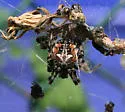
Labyrinth Orbweaver
Metepeira labyrinthea
Identification: The Spiders of the Eastern US says that the Metepeira labyrinthea can be distinguished from other orbweavers by having longer terminal leg segments "(tarsus plus metatarsus longer than tibia plus patella)". It does have the longitudin
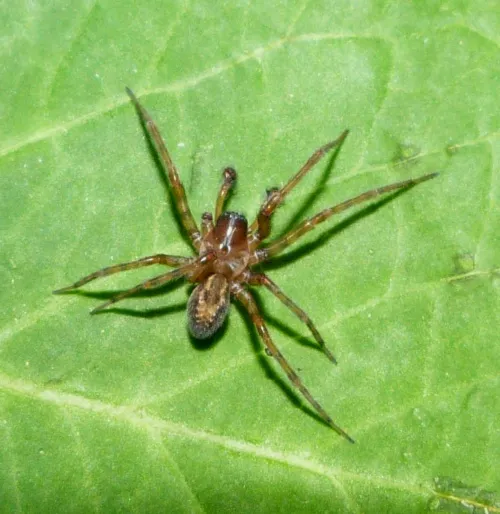
Lace-weaver Spider
Amaurobius similis
Female to 12 mm; male to 8 mm. Distinctive, with a glossy brown carapace and legs and a velvety abdomen with a dark anterior wedge-shaped marking surrounded by cream. It often lives around buildings where it occupies holes in walls, fences, window fr
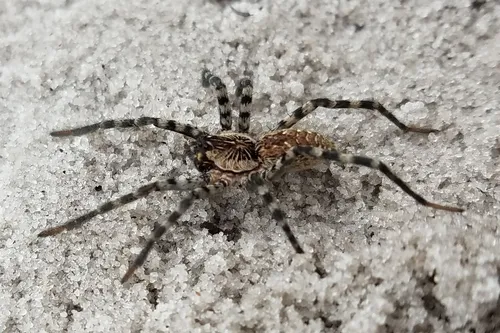
Lake Placid Funnel-web Spider
Sosippus placidus
Sosippus species are not wholly dependent on their webs for prey capture. They will abandon their webs and forage like typical lycosids if no prey for extended periods. Should potential prey escape web before the spider can reach it, placidus will re
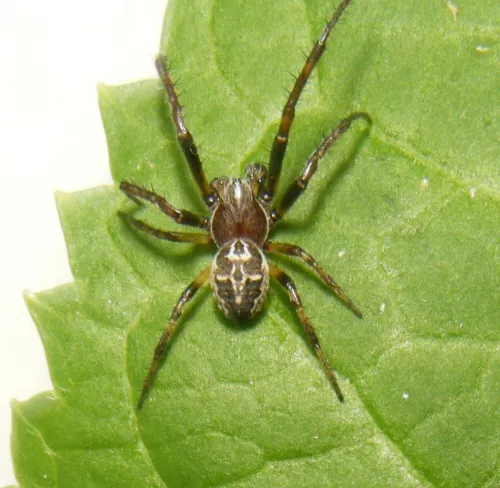
Larinioides cornutus
Larinioides cornutus
Females reach a body length of about 13 mm, males up to 8 mm. A variable species with a dark, distinct V-shape on the abdomen above which there a two pincer like markings. Prosoma (cephalothorax) brown (c.f. Larinioides sclopetarius - prosoma grey).
Larinioides patagiatus
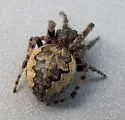
Larinioides patagiatus
Identification: The Larinioides page describes how to differentiate species of this genus. The carapace of this species can be yellow to orange. Vouchers (Female/Male) Palp Epigynum Eye Arrangement: Web
Larinioides sclopetarius
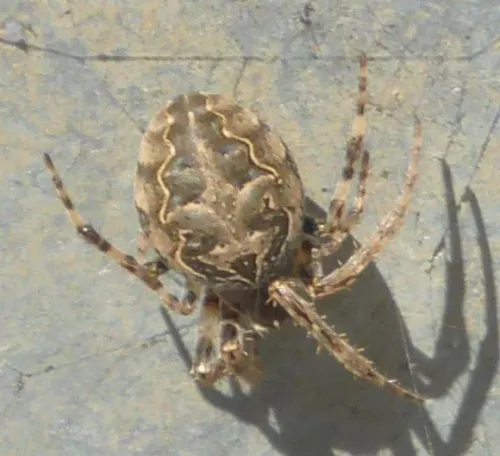
Larinioides sclopetarius
Females reach a body length of about 10 mm, males are somewhat smaller. Generally black and white and sometimes velvet-like in appearance, prosoma (cephalothorax) grey (c.f. Larinioides cornutus - prosoma brown). Confirmation of this species: "Requir
Lathys humilis
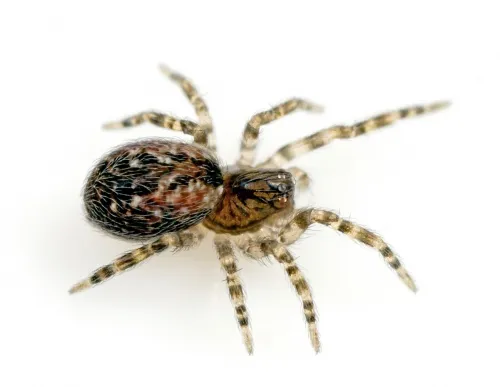
Lathys humilis
To 2.5mm. Legs grey and annulated. The opisthosoma is greenish brown with a dark or red-brown pattern dorsally, consisting of longitudinal lines and chevrons. The spider occurs on bushes and trees in woodland and scrub, and can be beaten off oak, hol