
Family Orb Weavers (Araneidae)
Araneidae is a family in the order Araneae. Browse 147 named species recorded in this family, or open an individual profile for its available identification and natural-history information.
Guides
Species in Araneidae (147)
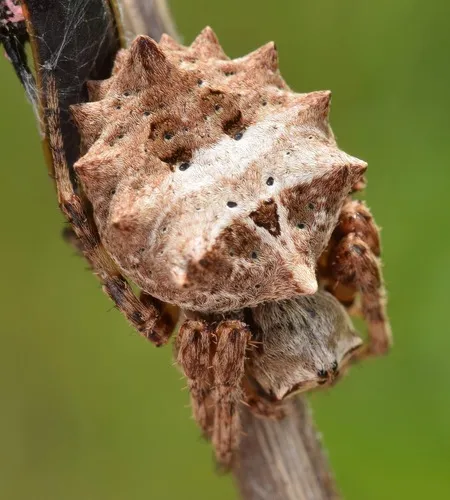
Starbellied Orbweaver
Acanthepeira stellata
Acanthepeira stellata, known generally as the starbellied orbweaver or starbellied spider, is a species of orb weaver in the spider family Araneidae. It is found in a range from Canada to Mexico.
Aculepeira carbonarioides
Aculepeira carbonarioides
This species was generally found in the center of the web during the day while packardi was more often found in a retreat next to the web in daylight hours.
Aculepeira packardi
Aculepeira packardi
Identification: Female This species was generally found in a retreat next to the web in daylight hours while carbonarioides was more often found at the center of the web during the day.
Agalenatea redii
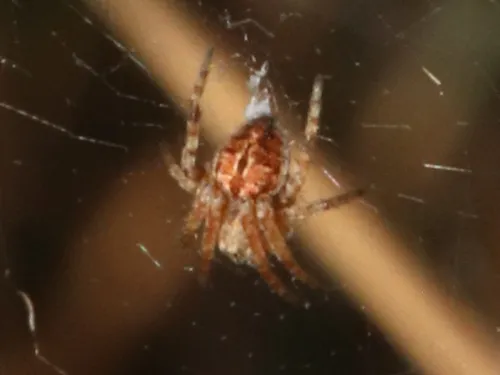
Agalenatea redii
Length 5-10mm. Prosoma eye region pale, sternum brown, often with bright median spot. Chelicerae brown. Legs brown, vaguely annulated. Opisthosoma brown, densely haired, with brown longitudinal stripe always visible. On dry grass, shrubs and bushes,
Bifurcate Trashline Orbweaver
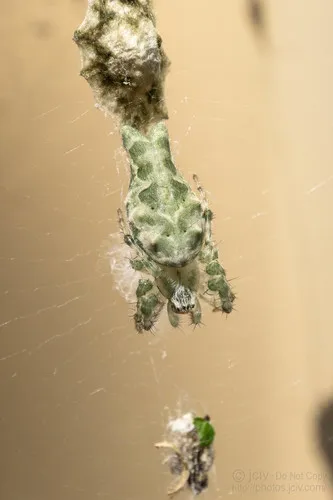
Allocyclosa bifurca
Allocyclosa is a genus of orb weaver spiders that contains only one species, Allocyclosa bifurca. It was first described in 1887 by McCook under the name Cyrtophora bifurca, and was transferred to its own genus in 1999. It is the only Cyclosa species
Araneus alboventris
Araneus alboventris
Identification: Carapace, sternum, legs greenish yellow. Bright yellow rings around posterior median eyes. Abdomen dorsum with black patch bordered by crimson red border on golden yellow background. Epigynum
Araneus andrewsi
Araneus andrewsi
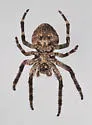
Identification: Female (adult/juvenile) -also see remarks below Epigynum Compare these two different voucher females, collected only 32 miles apart in California:
Giant Lichen Orbweaver
Araneus bicentenarius
Identification: Female (dorsal/ventral) Male coloration as in female, but with a longitudinal white mark anterior on dorsum; second tibia unusually large.
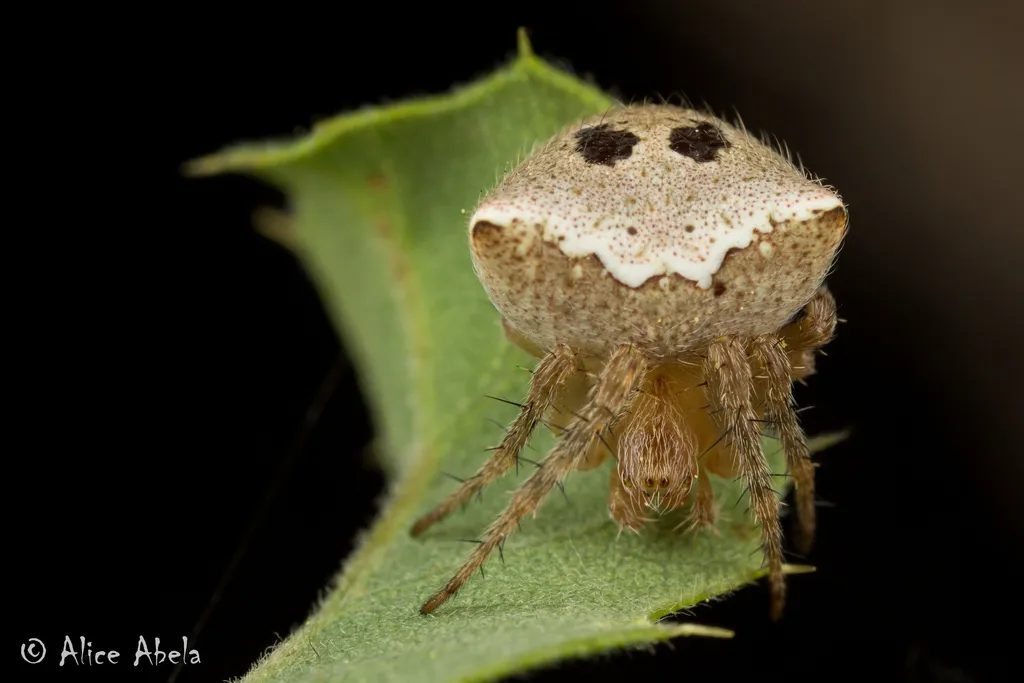
Araneus bispinosus
Araneus bispinosus
Identification: Palp Epigynum See notes below about distinguishing A. bispinosus from A. montereyensis .
Araneus bivittatus
Araneus bivittatus
Identification: A. bivittatus is the only species (of the small Araneus ) that has the abdomen longer than wide, widest in the middle, with a median anterior hump and two longitudinal dorsal red or green bands on the abdomen.
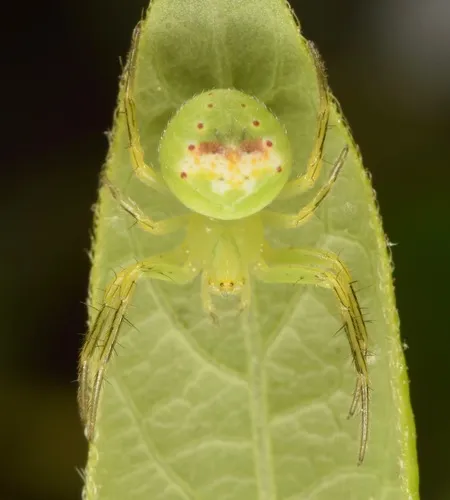
Araneus bonsallae
Araneus bonsallae
Identification: To separate from other similar looking green Araneus, look for the dark patch on the dorsum. Palp
Araneus calusa
Araneus calusa
Identification: Distinct red mark anterior on each lateral hump. A pair of red spots posteriorly on each side.
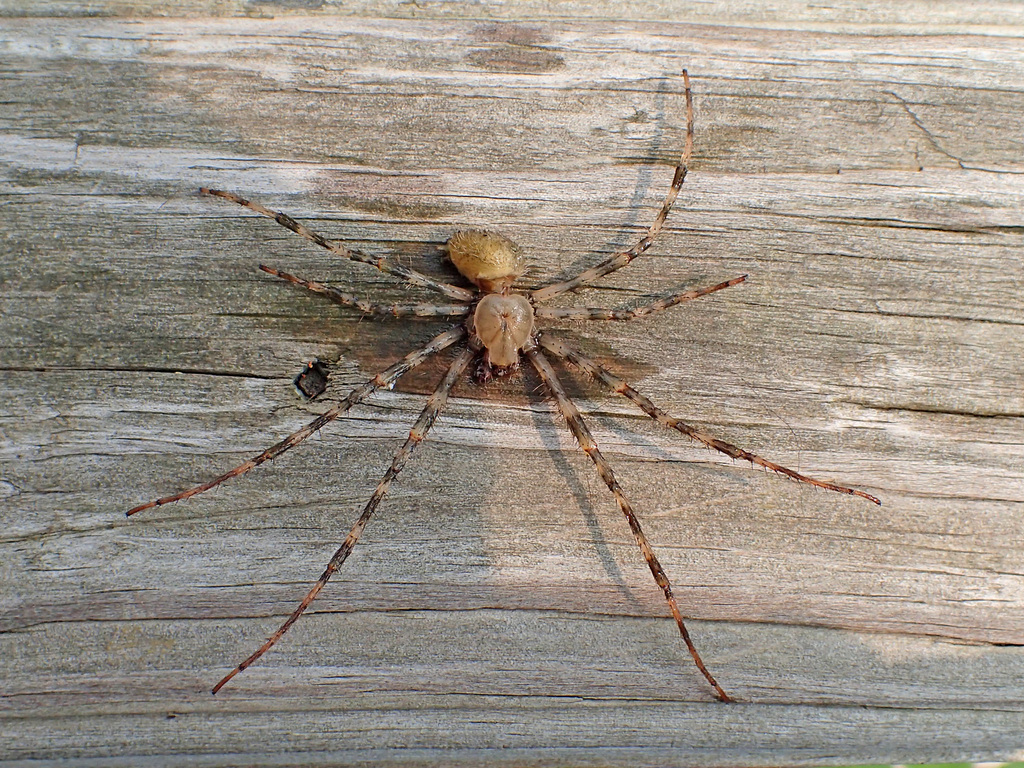
Barn Spider
Araneus cavaticus
no rights reservedIdentification: Araneus cavaticus is often confused with Neoscona crucifera . These two species can be differentiated using two main features: 1) Araneus cavaticus has 'shoulders' near the front on the dorsal side of the abdomen. A. cavaticus N. cru
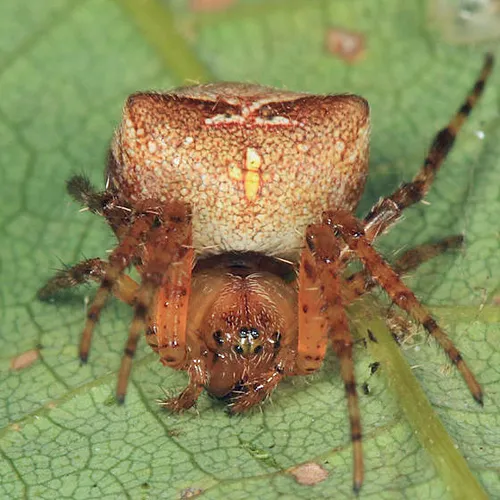
Humped bog orbweaver
Araneus corticarius
Araneus corticarius is a species of orb weaver in the family of spiders known as Araneidae. It is found in the United States and Canada.
Araneus detrimentosus
Araneus detrimentosus
Identification: Typical fresh female: Male Abdomen can sometimes be white or white with brown marks. It can looks very similar to A. thaddeus but the only area it appears they overlap is southern Arizona.
Araneus gadus
Araneus gadus
Identification: Female legs banded, male legs not banded.
Araneus gemma
Araneus gemma
Identification: Female: carapace and abdomen vary in color from gray to brownish purple. The abdomen has anterior paired humps and may have a medial light stripe that varies in length. Male: similar in color and pattern to the female. This species is
Araneus illaudatus
Araneus illaudatus
Identification: It closely resembles A. gemma . Ventral view
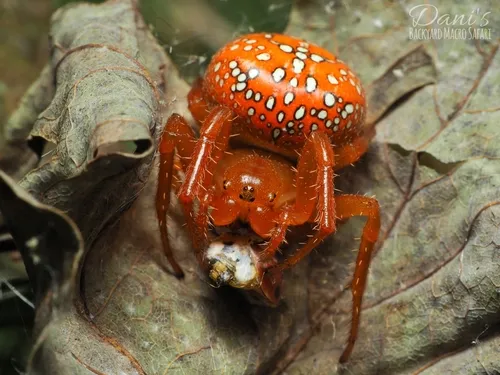
Araneus iviei
Araneus iviei
Araneus iviei is a species of orb weaver in the family of spiders known as Araneidae. It is found in the United States and Canada.
Araneus juniperi
Araneus juniperi
Identification: Juniperi differs from bivittatus by having the abdomen subspherical rather than oval, and the bands much less distinct, separated by lighter green rather than white. Palp
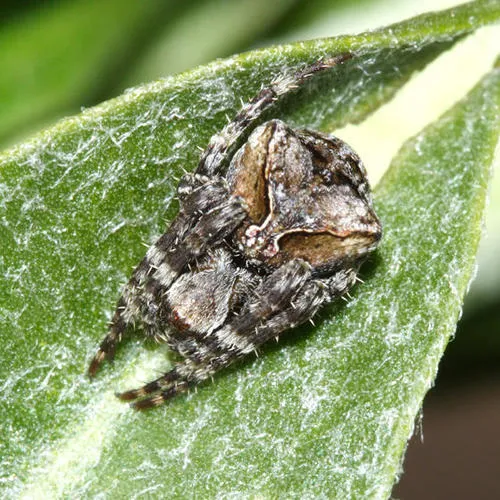
Araneus mammatus
Araneus mammatus
Araneus mammatus is a species of orb weaver in the spider family Araneidae. It is found in the United States.
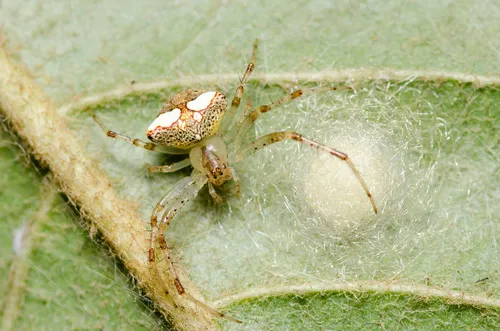
Black-spotted Orbweaver
Araneus miniatus
Araneus miniatus is a species of orb weaver in the family of spiders known as Araneidae. It is found in the United States.
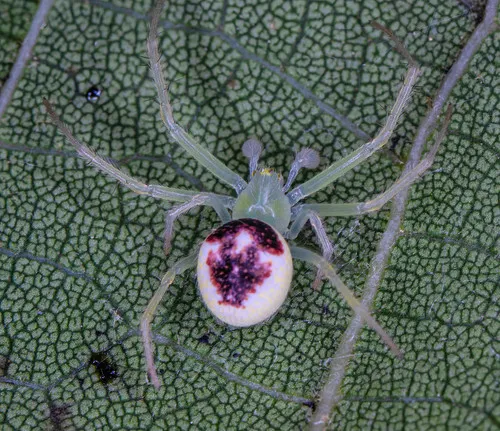
Araneus niveus
Araneus niveus
Araneus niveus is a species of orb weaver in the family of spiders known as Araneidae. It is found in the United States.
Araneus nordmanni
Araneus nordmanni
Identification: Epigynum (ventral/posterior/lateral)
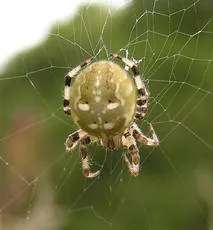
Four-spotted Orb Weaver
Araneus quadratus
Females can reach 17 mm in length, males approximately half that. The abdomen colour is quite variable, ranging from dark brown to bright orange or yellowy-green. The legs are banded. The appearance of males is quite different from that of the larger
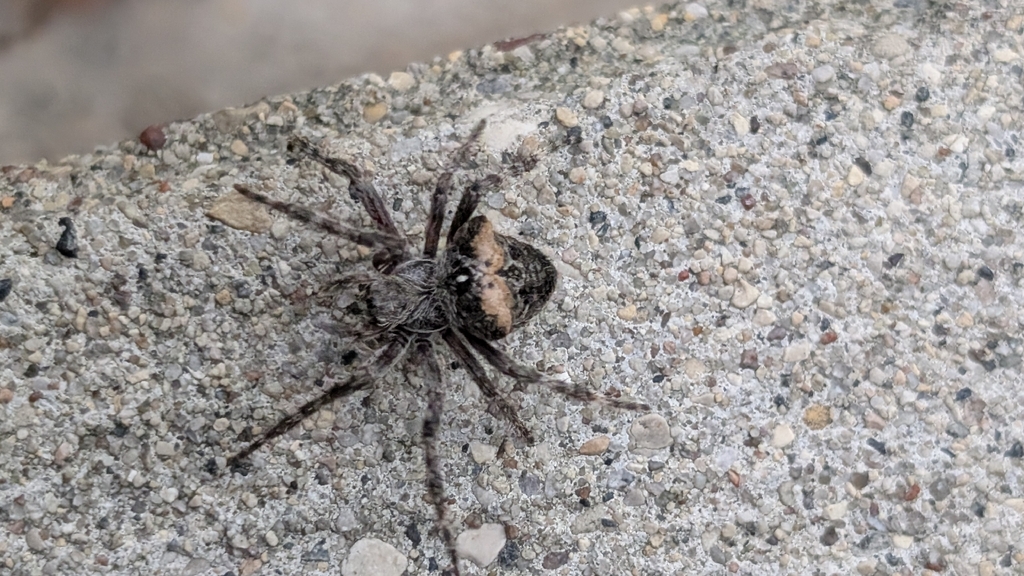
Fierce Orbweaver
Araneus saevus
(c) Aedan Rooney, some rights reserved (CC BY)Identification: “It is apparently quite consistent in color and pattern, being dark gray with a large, broad white slash down the front of the abdomen." - Terry Thormin Light-colored specimens of this species also occur:
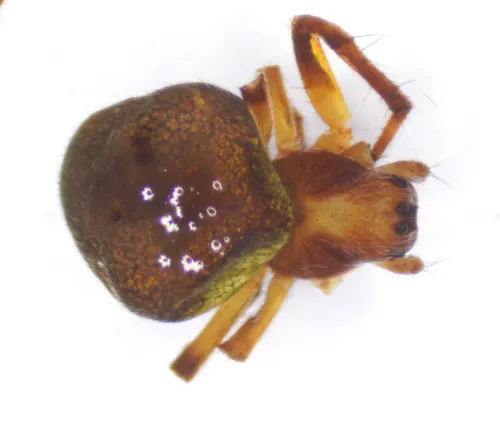
Araneus sturmi
Araneus sturmi
Length male: 4-5.5mm. Prosoma brown. Sternum unicoloured brown, darker than coxa. Opisthosoma red-brown. https://srs.britishspiders.org.uk/portal.php/p/Summary/s/Araneus+sturmi No additional images available for this species.
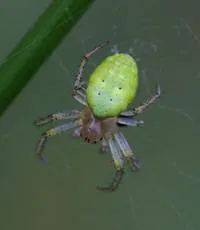
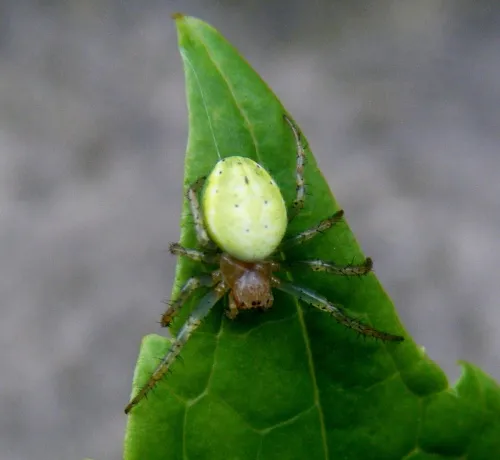
Cucumber Green Orb Spider
Araniella cucurbitina sensu lato
Mainly along woodland edges, hedgerows and other well wooded areas. They spin a small web between leaves and don't hide away but rely on colour for camouflage. Predatory mainly on flying insects caught in its orb web.
Cucumber Green Orb Spider
Araniella cucurbitina sensu stricto
Araniella cucurbitina - Conspicuous red spot above spinnerets, visible only from below. Male femur I with ventral median part lacking bristles (regularly 3 bristles basally, 1 bristle distally). Females difficult to identify as this species with cert
Sixspotted Orbweaver
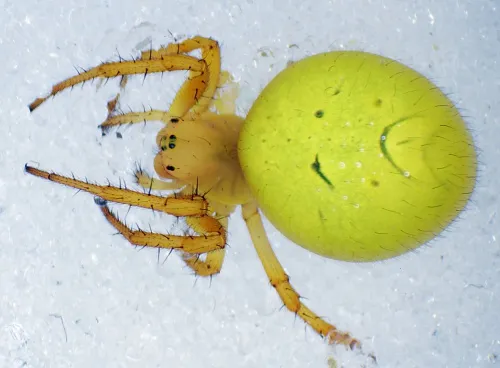
Araniella displicata
Identification: The possession of three (rarely four) pairs of small black spots on the abdominal dorsum is somewhat diagnostic for this species (Sacher, 1990). Females Males Juveniles Egg Sacs Palp
Araniella inconspicua
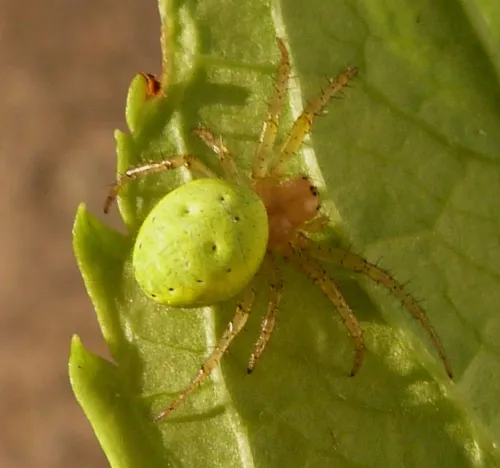
Araniella inconspicua
Body length male 4 to 5 mm, female 5 to 8.7mm. Prosoma brown. Legs brown. Opisthosoma dorso-laterally always without black spots, ventrally without spots. Detailed examination of genitalia of mature specimens is required to confirm this species. http
Araniella opisthographa
Araniella opisthographa
Araniella cucurbitina - Conspicuous red spot above spinnerets, visible only from below. Male femur I with ventral median part lacking bristles (regularly 3 bristles basally, 1 bristle distally). Females difficult to identify as this species with cert
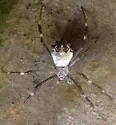
Argiope blanda
Argiope blanda
Identification: Very similar to A. argentata , however the adult doesn't have the rounded "Mickey Mouse ear" shaped protusions on the anterior of the abdomen. The ventral markings are also different. Epigynum The images placed here are from the sout
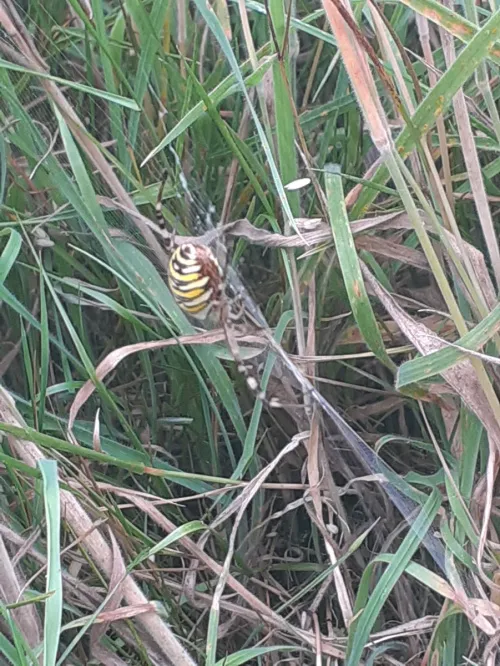
Wasp Spider
Argiope bruennichi
Males 7-8mm, females 10-22mm. Large, brightly coloured and distinctively patterned spider. Juveniles and males may be less obvious than mature females. The large orb web is also distinctive with a vertical zig-zag stabilimentum. Grassland and scrub,
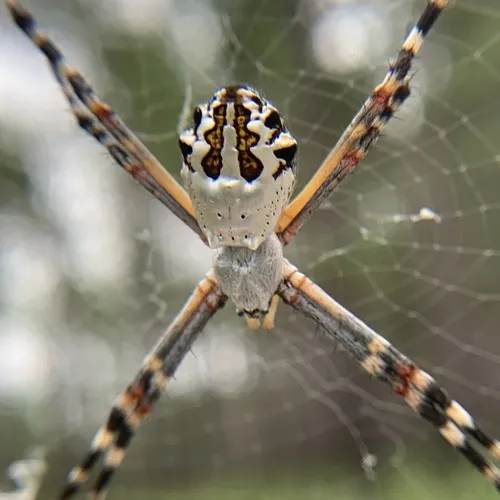
Florida Argiope
Argiope florida
Argiope florida, known generally as the Florida argiope or Florida garden spider, is a species of orb weaver in the family of spiders known as Araneidae. It is found in the United States.
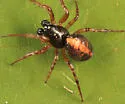
Cercidia prominens
Cercidia prominens
Levi was unsure if this species was introduced to North America due to its spotty distribution. It is well known from the Old World.
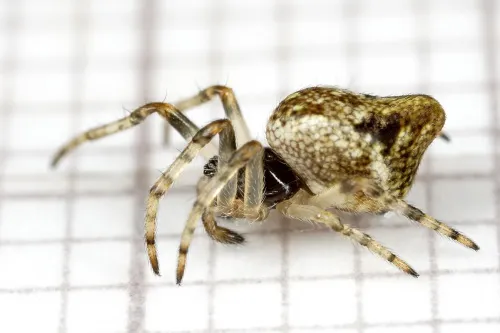
Cyclosa conica
Cyclosa conica
This is an odd looking spider. It has a single tubercle (hump) on the rear of its abdomen This spider can be quite variable in colour and pattern, however its shape is so distinctive that it is hard to mistake. Usually found in well wooded areas, oft
Eriophora ravilla
Eriophora ravilla
Identification: Generally dull brown, sometimes with white or yellow "shoulders" on the abdomen. An alternate color form, seen sometimes in males and sub-adult females, has a large yellow-green patch on top of the abdomen. Also, according to Levi: "S
Humpbacked Orbweaver
Eustala anastera
Identification: E. anastera has 6 basic patterns. Here are 3 that match Levi's drawing very well: Epigynum & scape
Eustala californiensis
Eustala californiensis
Identification: Carapace light brown with paired dark brown patches and dark longitudinal mark in thoracic cleft. Sides with gray lines. One dorsal hump.
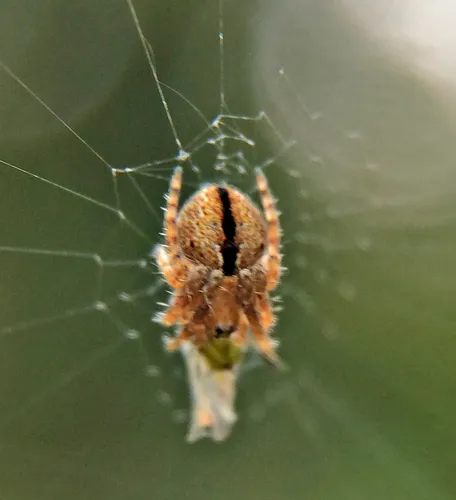
Riparian Duncecap Orbweaver
Eustala cepina
Eustala cepina is a species of orb weaver in the family of spiders known as Araneidae. It is found in North America.
Eustala rosae
Eustala rosae
Identification: Look for the three posterior humps or tubercles in a row to separate from other Eustala in the area.
Spinybacked Orbweaver
Gasteracantha cancriformis
Identification: This species can be easily distinguished from all other spiders. Females may be 5 to nearly 9 mm in length, but 10 to 13 mm wide. They have six pointed abdominal projections frequently referred to as "spines." The carapace, legs, and
Gea heptagon
Gea heptagon
Identification: Palp This is the only member belonging to this genus.
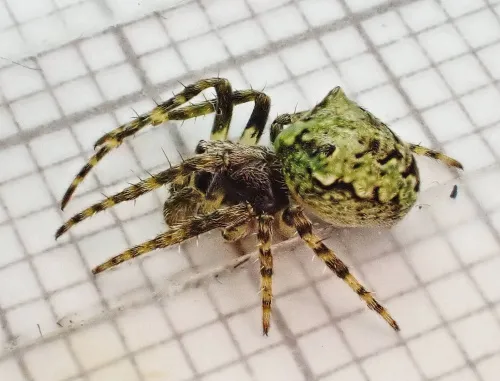
Gibbaranea gibbosa
Gibbaranea gibbosa
A medium-sized orb-weaver (females up to 7mm long) with prominent tubercles on the shoulders of the abdomen. It is often attractively marked with some degree of green and sometimes also pinkish red. The spider spins an orb web on trees and shrubs, es
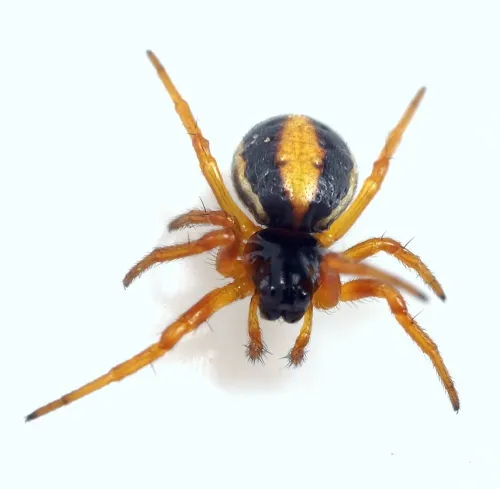
Hypsosinga pygmaea
Hypsosinga pygmaea
Body length 3 to 4.5 mm. Prosoma black-brown, eye region and margin slightly brighter. Prosoma black-brown. Sternum black (c.f. Hypsosinga sanguinea - sternum yellowish red, sometimes darkened). Legs reddish yellow, unicoloured. Opisthosoma strongly
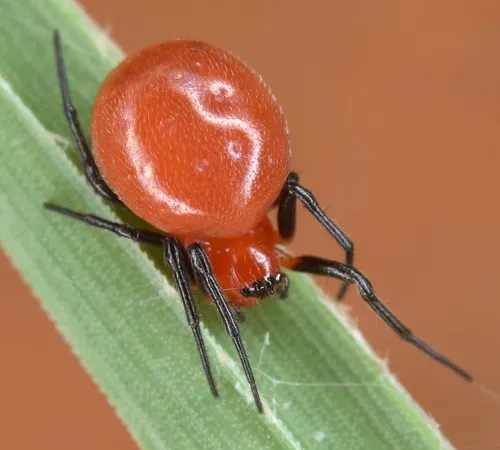
Rubens Orbweaver
Hypsosinga rubens
Identification: Poster median eyes (PME) largest distinguishes Hypsosinga from Singa (Levi, 1972a). Color and size morphology can vary considerably. Male voucher specimen: Palp Epigynum Typical FL variation for females
Pale Frilled Orbweaver
Kaira alba
Identification: Strong resemblance to a leaf or flower bud. Overall warty, bristly, irregular appearance.
Kaira altiventer
Kaira altiventer
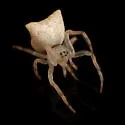
Identification: "The epigynum of the female, unlike that of K. alba, has a flat, triangular, curved scape, the tip projecting anteriorly and, like K . alba but unlike others, no humps or tubercles on the posterior of the abdomen. The tiny male can be
Smooth Frilled Orbweaver
Kaira hiteae
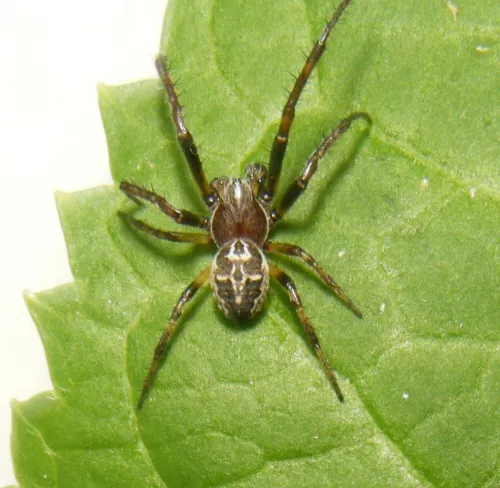
Identification: Similar overall shape to others of this genus, but the surface of the abdomen is almost entirely smooth, lacking the bristly texture of the other two species known from the USA.
Larinioides cornutus
Larinioides cornutus
Females reach a body length of about 13 mm, males up to 8 mm. A variable species with a dark, distinct V-shape on the abdomen above which there a two pincer like markings. Prosoma (cephalothorax) brown (c.f. Larinioides sclopetarius - prosoma grey).
Larinioides patagiatus
Larinioides patagiatus
Identification: The Larinioides page describes how to differentiate species of this genus. The carapace of this species can be yellow to orange. Vouchers (Female/Male) Palp Epigynum Eye Arrangement: Web
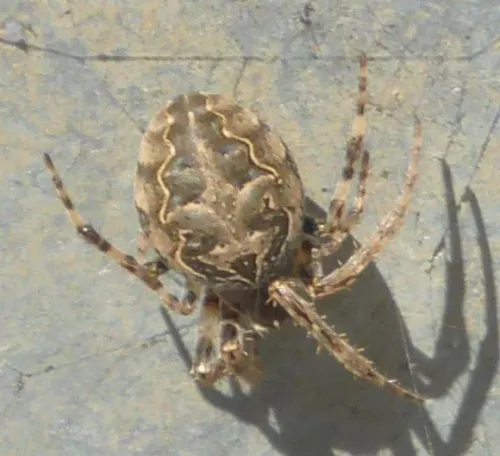
Larinioides sclopetarius
Larinioides sclopetarius
Females reach a body length of about 10 mm, males are somewhat smaller. Generally black and white and sometimes velvet-like in appearance, prosoma (cephalothorax) grey (c.f. Larinioides cornutus - prosoma brown). Confirmation of this species: "Requir
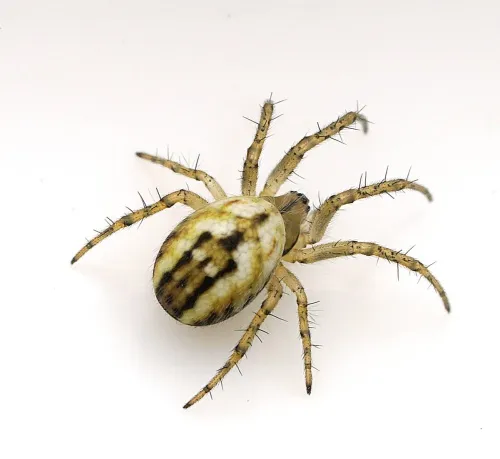
Cricket Bat Spider
Mangora acalypha
Male 3 mm, female up to 6 mm. Prosoma light greenish, with black margin and median stripe. Sternum almost black. Legs yellowish. Tibia III with 2 rows of plumose trichobothria. Opisthosoma whitish yellow, rarely greenish, posteriorly with "Cricket Ba
Lined Orbweaver
Mangora gibberosa
Identification: Palp Epigynum More common in fields than woods.
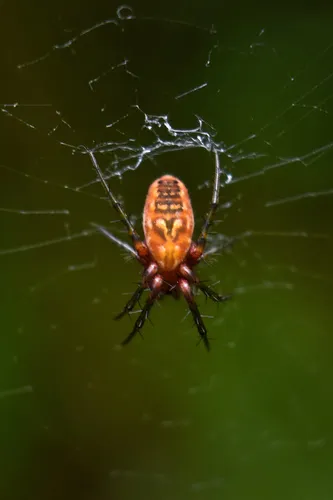
Mangora passiva
Mangora passiva
Identification: Recognized by the two upside-down, comma-shaped light marks on dark background.

Mangora spiculata
Mangora spiculata
Identification: Rereading the key we found that maculata has only three pair of spots at the end of the abdomen while spiculata has more spots or blotches. This is the coastal species from NJ down around to TX. … john and jane balaban, 5 August, 2009
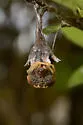
Mastophora bisaccata
Mastophora bisaccata
Identification: Where M. bisaccata, stowei & yeargani overlap in range they can be separated by the following: 1. M. bisaccata has only venter of femur I dark. 2. M. stowei has all femora dark dorsally and clypeus dark. 3. M. yeargani has no dorsal d
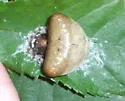
Mastophora phrynosoma
Mastophora phrynosoma
Identification: This species apparently has a characteristic habitus and egg sac morphology - please see text and figures 24-27 in 1955 Gertsch paper found on genus info. page.
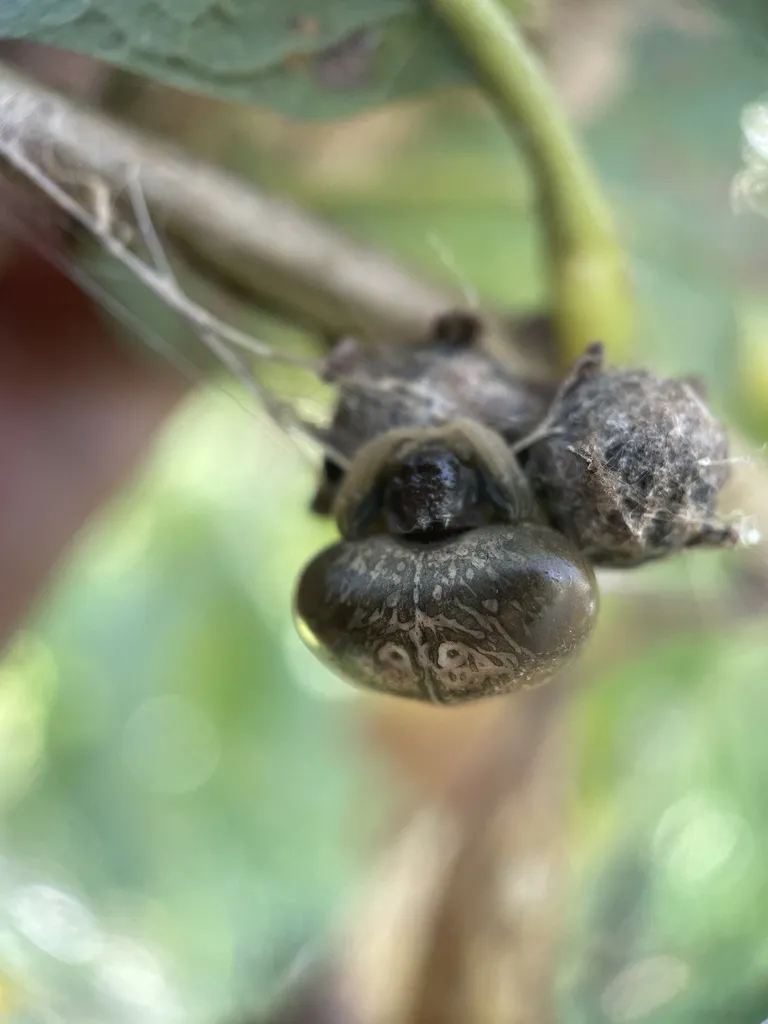
Mastophora stowei
Mastophora stowei
Identification: Where M. bisaccata, stowei & yeargani overlap in range they can be separated by the following: 1. M. bisaccata has only venter of femur I dark. 2. M. stowei has all femora dark dorsally and clypeus dark. 3. M. yeargani has no dorsal d
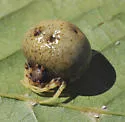
Mastophora timuqua
Mastophora timuqua
Identification: Mastophora timuqua is distinguished .. by lacking dorsal abdominal pattern and by having ringed legs.
Mastophora yeargani
Mastophora yeargani
Identification: Where M. bisaccata, stowei & yeargani overlap in range they can be separated by the following: 1. M. bisaccata has only venter of femur I dark. 2. M. stowei has all femora dark dorsally and clypeus dark. 3. M. yeargani has no dorsal d
Metazygia wittfeldae
Metazygia wittfeldae
Identification: Levi, 1977. On page 90 of Levi's bulletin it says "The capapace (in Metazygia) differs from that of Nuctenea (Larinioides) by lacking fine setae".
Metazygia zilloides
Metazygia zilloides
Identification: Adult male: Females: Epigynum: Palp: Unlike the related Eustala , Metazygia makes a retreat.
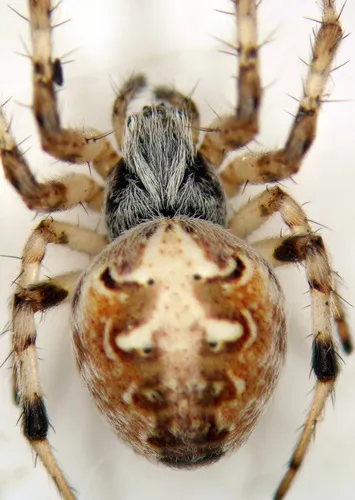
Metepeira arizonica
Metepeira arizonica
Identification: Like M. crassipes (unlike M. grinnelli and gosoga) the carapace is very dark brownish black except for the light transverse anterior head region. The following image is closest to the ventral drawing in the work cited: (two white vent
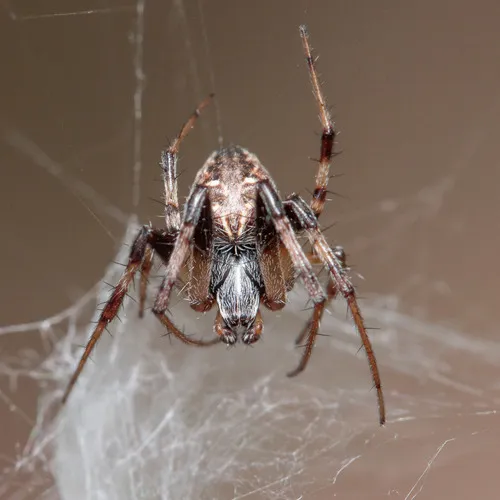
Metepeira comanche
Metepeira comanche
Identification: Anterior light area of head grades gradually into dark area posteriorly. A median light streak in many specimens just anterior to thoracic depression. Legs banded. Venter often with white transverse bar connecting with longitudinal
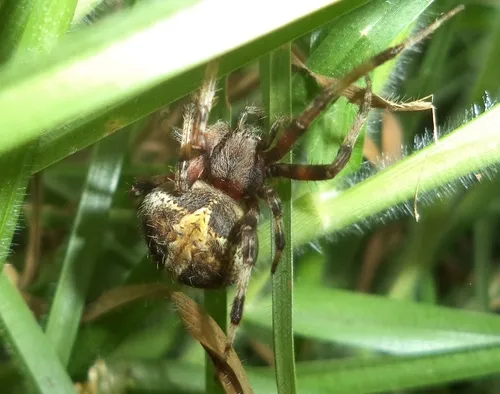
Metepeira crassipes
Metepeira crassipes
Identification: The white sternal band may be broken as in grinnelli . This species is smaller than grinnelli . Females can be confused with arizonica , males are more often confused with ventura . Ventral view has both abdominal vertical white band
Metepeira foxi
Metepeira foxi
Identification: Metepeira foxi differs from all other species north of Mexico, except grandiosa and datona by not having a white longitudinal line on the sternum. It doesn't occur in Florida like datona.
Metepeira gosoga
Metepeira gosoga
Identification: Light colored carapace having only the posterior head region dark, by the white abdomen. Two adjacent black marks surrounded by white pigment on the venter. There is a second form that Piel 2001 says is more common than the one Levi d
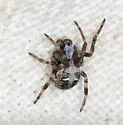
Metepeira grandiosa
Metepeira grandiosa
Identification: 2 subspecies - both have no median longitudinal band on the black sternum. - I don't know if these two are still considered subspecies. - alpina - Coxae never black. - grandiosa - More variable than the others.
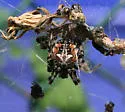
Labyrinth Orbweaver
Metepeira labyrinthea
Identification: The Spiders of the Eastern US says that the Metepeira labyrinthea can be distinguished from other orbweavers by having longer terminal leg segments "(tarsus plus metatarsus longer than tibia plus patella)". It does have the longitudin
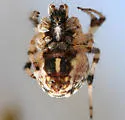
Metepeira minima
Metepeira minima
Identification: The following image is closest to the ventral drawing in the work cited: (two white ventral marks & 4 spots around spinnerets)
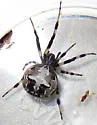
Metepeira palustris
Metepeira palustris
Identification: No median longitudinal band on the black sternum. Black coxae, sometimes yellow coxae or both black and yellow coxae. This species was formerly considered a subspecies of M. grandiosa .
San Miguel Island Orbweaver
Metepeira pimungan
Identification: White eye region. White median ventral mark on abdomen flanked by shorter parallel thin lines on either side. Black sternum with white teardrop shaped mark on the posterior half. Legs mostly white with with bands on legs 3 & 4. Spinne
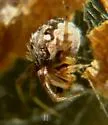
Metepeira spinipes
Metepeira spinipes
Identification: Coloring is pronounced and leg banding is more distinct than the similar M. labyrinthea . Most species have the ventral white line of the sternum broken by black pigment; sometimes the anterior or posterior part of the line is missing
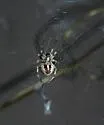
Metepeira ventura
Metepeira ventura
Identification: A median light streak may be present on the carapace and the light sternal band is sometimes broken. The middle of the posterior head region often has a light streak not found in grinnelli, crassipes or arizonica . The following image
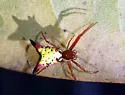
Arrowshaped Micrathena
Micrathena sagittata
Identification: Female: three pairs of pointed tubercles on the abdomen, with the rear pair large and spreading to give the abdomen a triangular look. Tubercles are black-tipped and red at the base. The center of the dorsum is yellow. Male abdomen do
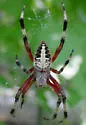
Spotted Orbweaver
Neoscona domiciliorum
Identification: More brightly colored than Neoscona crucifera , and with the part of the legs closest to the body bright red. Females "have a bright white or grayish yellow abdominal dorsum, with lateral wide, black stripes on each side." (University
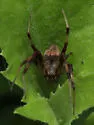
Neoscona utahana
Neoscona utahana
Identification: On dorsal side of abdomen, look for a dark 'V'-shaped folium that is bordered on the outside by a thin white line. Immature female: Likely adult female: Adult male:
Walnut Orb Weaver
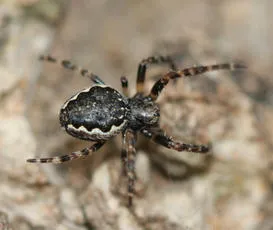
Nuctenea umbratica
Size: females can grow to 15 mm, males grow to 11 mm. They have a distinctive flattened body, which enable the species to hide in crevices. The walnut colouration of the abdomen gives the species its common name. The darker central portion with zig-z
Ocrepeira ectypa
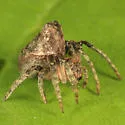
Ocrepeira ectypa
This nocturnal spider builds a specialized web with no sticky threads. Built in the fork of a small branch, the web consists of several radii connected to a small hub. The radii act like trip wires to alert the spider to prey walking along the branch
Golden Silk Orbweaver
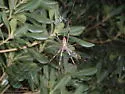
Trichonephila clavipes
Identification: Male Female has a long cylindrical body, up to about 50mm or 2" by the end of the season, yellow to brownish-orange abdomen with silvery spots and silvery cephalothorax. Three of its four pairs of legs have hairy black patches above t
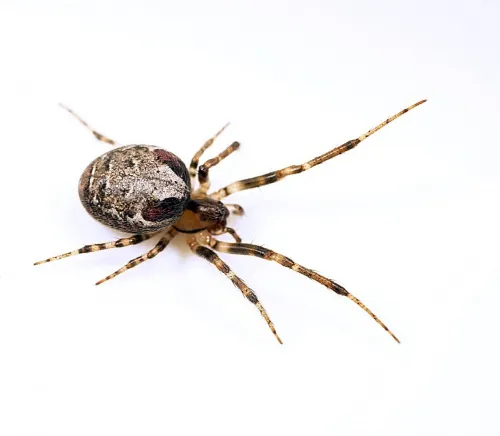
Zygiella atrica
Zygiella atrica
Size female about 6.5 mm, male smaller about 4 mm. Most (but not all) specimens have more red-brown colouration than Zygiella x-notata , but the species need to be separated by an expert for identification purposes. Very difficult to distinguish from
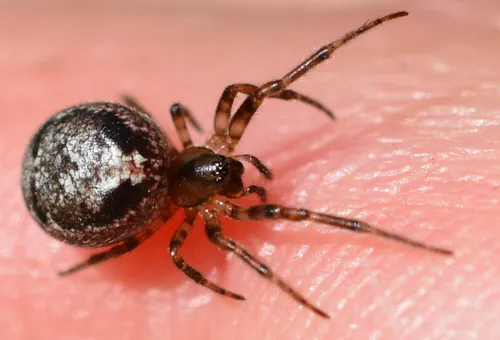
Zygiella dispar
Zygiella dispar
For the northwest: "Which species can't be told from color alone. Z. x-notata and Z. atrica occur in urbanized habitats, the former on buildings and the latter on trees. Z. dispar is found in natural forest." …Rod Crawford, 15 June, 2008
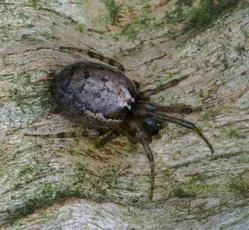
Zygiella x-notata
Zygiella x-notata
Zygiella x-notata females are up to 11mm in size, males up to 7mm. Variable in colour; the cephalothorax (first body section) is a translucent yellow brown; the opisthosoma (second body section or abdomen) has a leaf like pattern. Very difficult to d
Acacesia hamata
Acacesia hamata
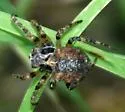
Acanthepeira cherokee
Acanthepeira cherokee
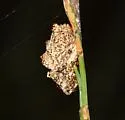
Acanthepeira marion
Acanthepeira marion
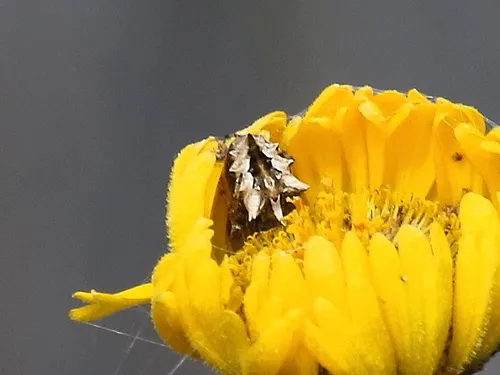
Acanthepeira venusta
Acanthepeira venusta
Araneus arizonensis
Araneus arizonensis
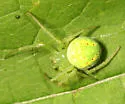
Araneus cingulatus
Araneus cingulatus
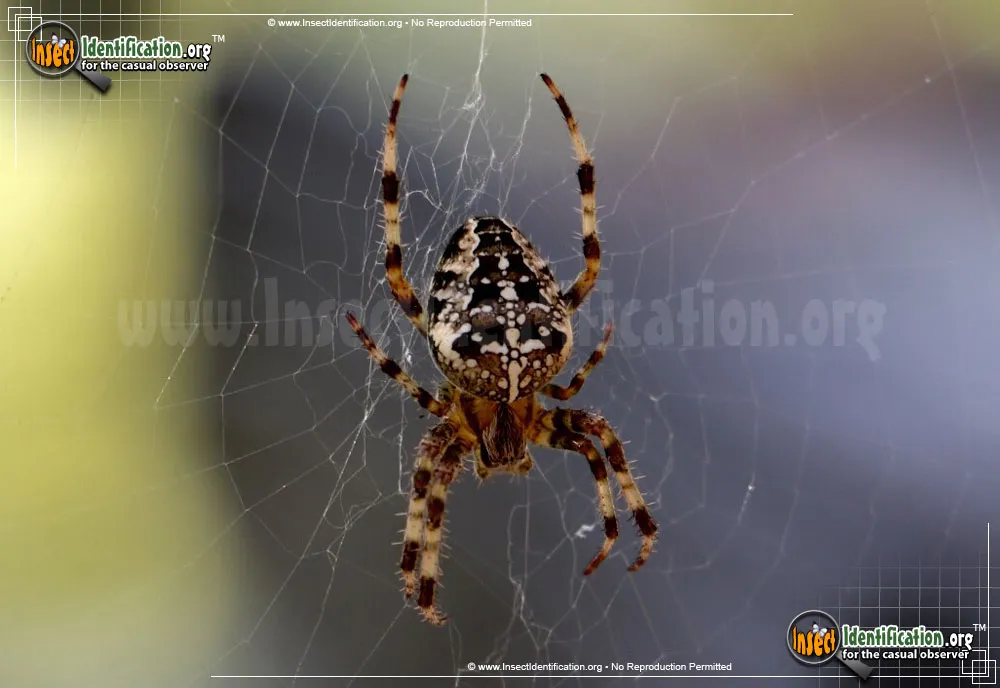
Cross Orbweaver
Araneus diadematus
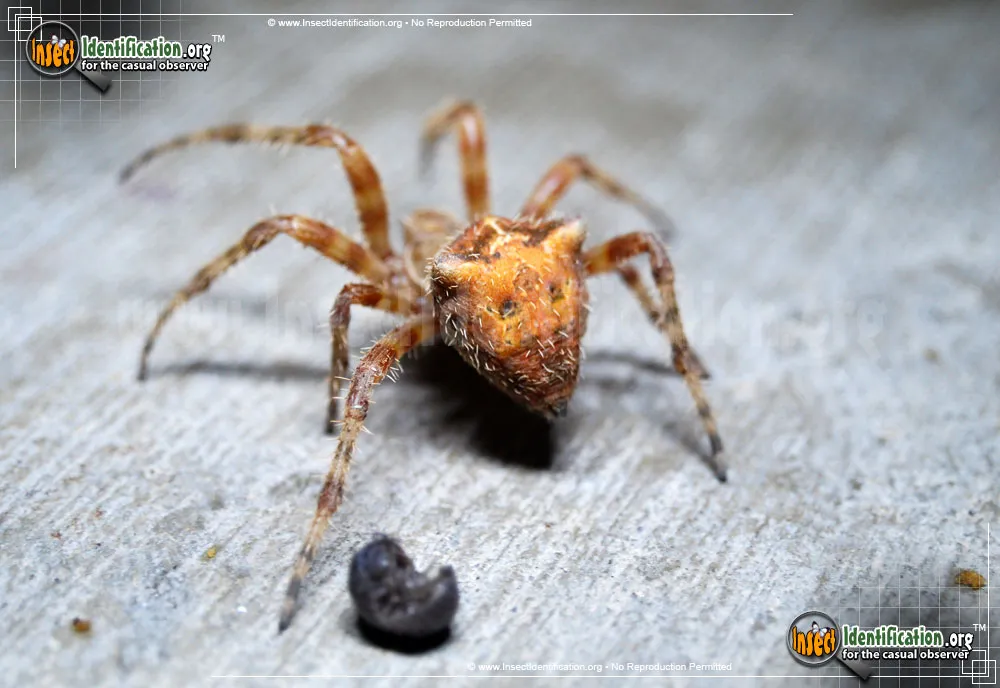
Cat-faced Spider
Araneus gemmoides
Araneus groenlandicola
Araneus groenlandicola
Araneus guttulatus
Araneus guttulatus
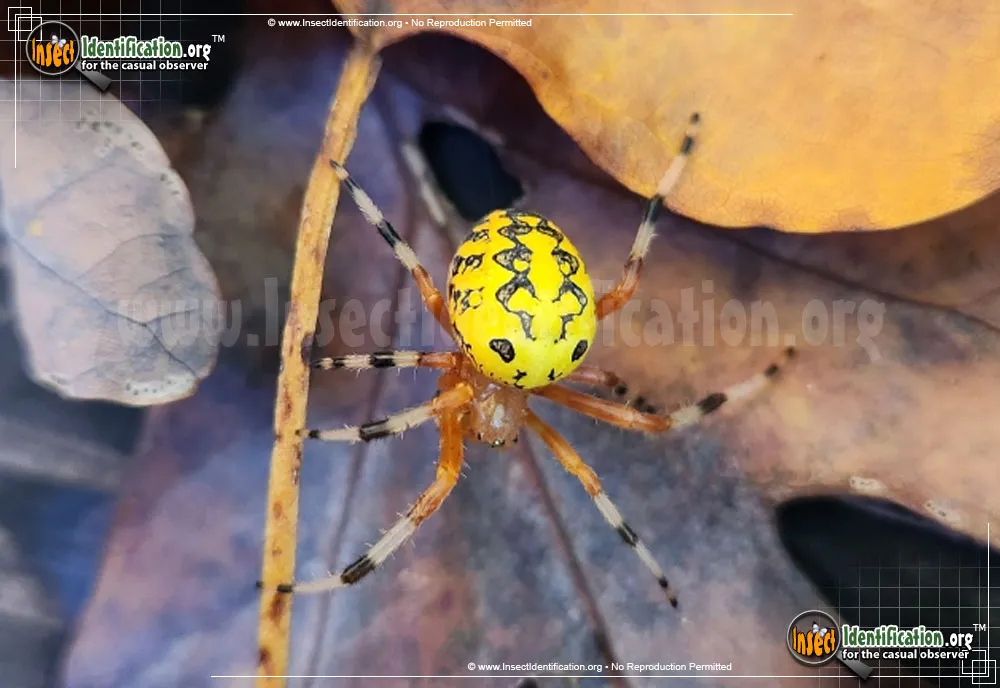
Marbled Orb Weaver
Araneus marmoreus
Araneus montereyensis
Araneus montereyensis
Araneus partitus
Araneus partitus
Araneus pegnia
Araneus pegnia
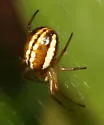
Araneus pratensis
Araneus pratensis