
Lesser Green Lynx Spider
Peucetia longipalpis
This record describes Peucetia longipalpis (species). Recorded family: Oxyopidae. Recorded order: Araneae.
Identification and Appearance
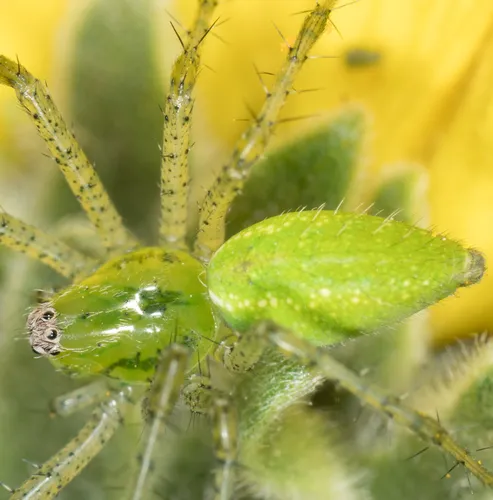
First described by Frederick Octavius Picard-Cambridge in 1902 from an adult male collected in Amula, Guerrero, Mexico (Brady, 1964). Unfortunately there is little information available on this species, and the description by Brady (1964) was based on preserved specimens. P. longipalpis is very similar in appearance and habits to P. viridans , and often confused with viridans . Adults can easily be seperated by examination of the sexual organs (Brady 1964). Note the cream colored endites, a characteristic of longipalpis . (Brady 1964) It is possible that the presence of white hairs on the abdomen is key for the species. It also appears that longipalpis lacks the chevron pattern typically seen in viridans , and Brady (1964) describes them as lacking white spots, bars and longitudinal white stripes, although white markings are present in some specimens. The legs are also shorter in proportion to body length when compared to viridans (Brady, 1964), and a shorter, more rounded abdomen.
Wikipedia reference for Peucetia longipalpis: https://en.wikipedia.org/wiki/Peucetia longipalpis.
Classification
Habitat and Range
Geographic Range
sw US (CA to w. TX) / Mex. to Venezula
Diet and Behavior
Diet: Primarily insects attracted to flowers, such as bees, wasps, butterflies, true bugs, etc.
About Spiders: the wider group
Order-level background for Araneae, the group containing Peucetia longipalpis. Species-specific details appear above.
Group overview
As of 2023, 51,673 spider species in 136 families have been recorded, though an estimated 150,000 species exist. Spiders rank 7th in total species diversity among all organism orders. Only 0.5% of spider species pose any risk to human health.
Ecological role of the group
Spider venom contains complex peptides with diverse pharmacological activities, making them valuable for drug development research. Spiders produce up to 7 types of silk from specialized glands. Spider silk genes have been inserted into mammals and plants for biotech applications.
Economic and practical significance of the group
The global spider community kills an estimated 400-800 million tons of prey annually (2017 study). Spiders provide billions of dollars in natural pest control for agriculture. Spider silk is 5× stronger than steel of the same diameter, driving a biomaterials research industry.
Recorded sources for this group: World Spider Catalog, PNAS, Nature, ScienceDirect. Imported estimates may describe particular regions or reporting periods.
Photos of Lesser Green Lynx Spider (7)
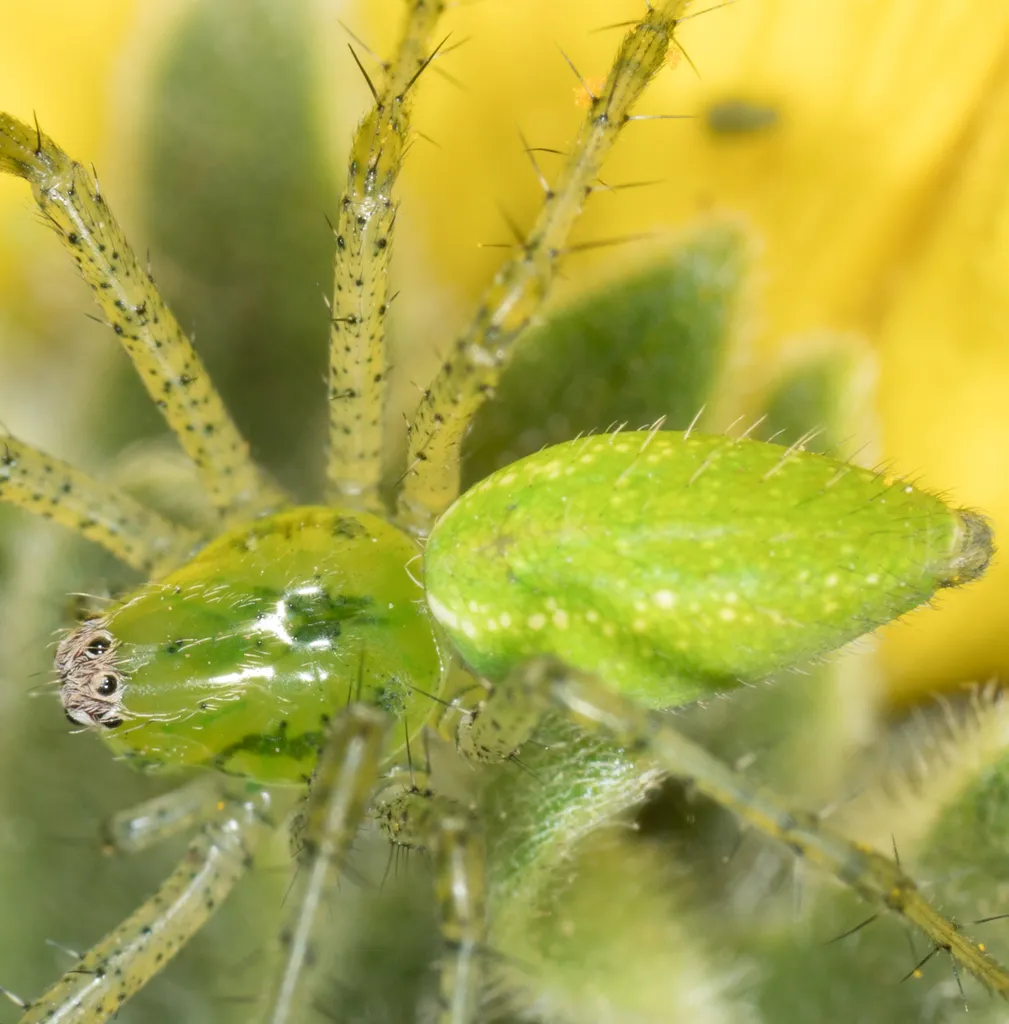
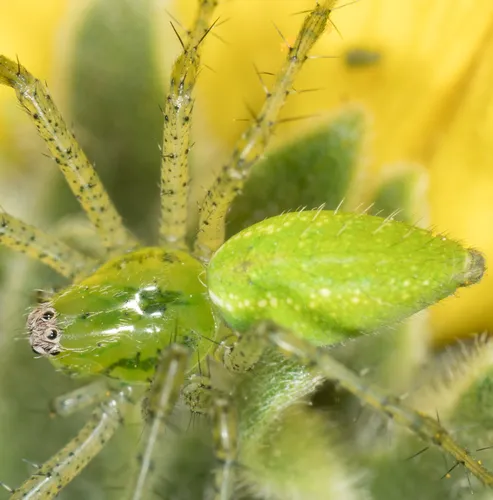
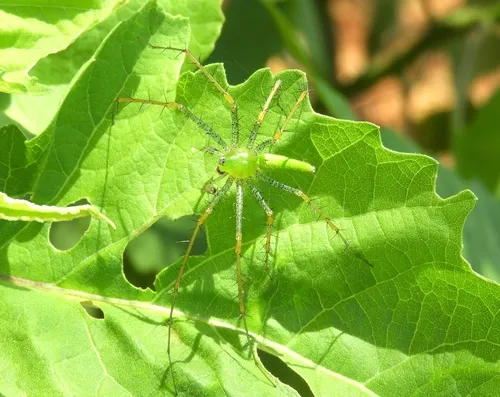
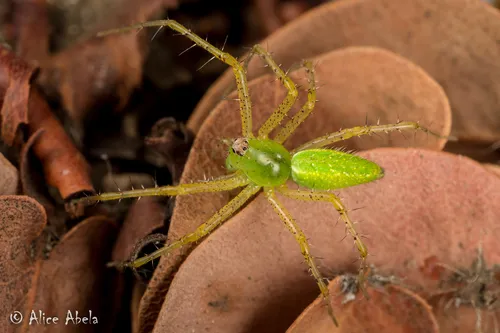
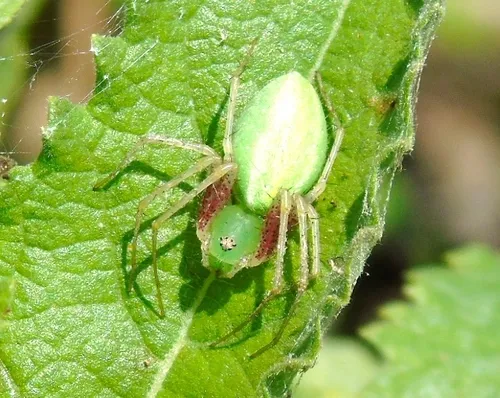
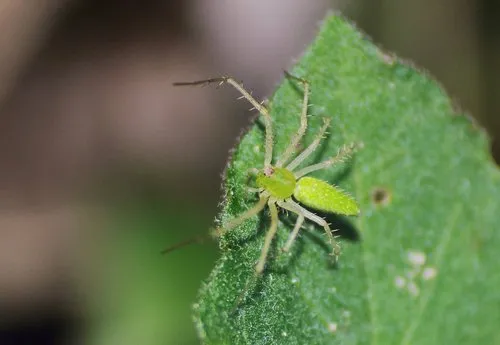
Photo credits: Contributed by Jeff Hollenbeck; Additional contributions by Mike Quinn , John S. Ascher , Aaron Schusteff
Frequently Asked Questions About Lesser Green Lynx Spider
What is Lesser Green Lynx Spider?
Lesser Green Lynx Spider (Peucetia longipalpis) is a species in the family Oxyopidae, within the order Araneae.
How do you identify Lesser Green Lynx Spider?
First described by Frederick Octavius Picard-Cambridge in 1902 from an adult male collected in Amula, Guerrero, Mexico (Brady, 1964). Unfortunately there is little information available on this species, and the description by Brady (1964) was based on preserved specimens. P. longipalpis is very similar in appearance and habits to P. viridans , and often confused with viridans . Adults can easily be seperated by examination of the sexual organs (Brady 1964). Note the cream colored endites, a characteristic of longipalpis . (Brady 1964) It is possible that the presence of white hairs on the abdomen is key for the species. It also appears that longipalpis lacks the chevron pattern typically seen in viridans , and Brady (1964) describes them as lacking white spots, bars and longitudinal white stripes, although white markings are present in some specimens. The legs are also shorter in proportion to body length when compared to viridans (Brady, 1964), and a shorter, more rounded abdomen.
Where is Lesser Green Lynx Spider found?
Range: sw US (CA to w. TX) / Mex. to Venezula
What does Lesser Green Lynx Spider eat?
The diet of the Lesser Green Lynx Spider includes Primarily insects attracted to flowers, such as bees, wasps, butterflies, true bugs, etc..