
Spiders
Order Araneae
The Spiders (Order Araneae) includes 1,848 species across 82 families and 552 genera in our directory.
About Spiders
As of 2023, 51,673 spider species in 136 families have been recorded, though an estimated 150,000 species exist. Spiders rank 7th in total species diversity among all organism orders. Only 0.5% of spider species pose any risk to human health.
Economic Impact
The global spider community kills an estimated 400-800 million tons of prey annually (2017 study). Spiders provide billions of dollars in natural pest control for agriculture. Spider silk is 5× stronger than steel of the same diameter, driving a biomaterials research industry.
Ecological Role
Spider venom contains complex peptides with diverse pharmacological activities, making them valuable for drug development research. Spiders produce up to 7 types of silk from specialized glands. Spider silk genes have been inserted into mammals and plants for biotech applications.
Families in Araneae (82)
Species in Araneae (1,848)
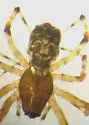
Neriene digna
Neriene digna
Identification: Palp Epigynum In this case it's the side view that's most diagnostic. The profile shape of the protruding epigynum that is the giveaway - not seen in either of the 2 other species found in the region. The dorsal and ventral abdomen co
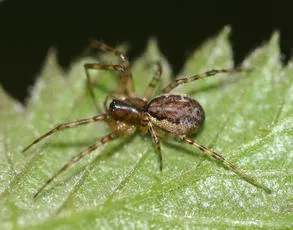
Neriene montana
Neriene montana
It is recognised by the dark brown radiating lines on the carapace, a dark-edged brown abdomen with pale mottled sides and annulated legs. It builds a horizontal web in bushes, etc.
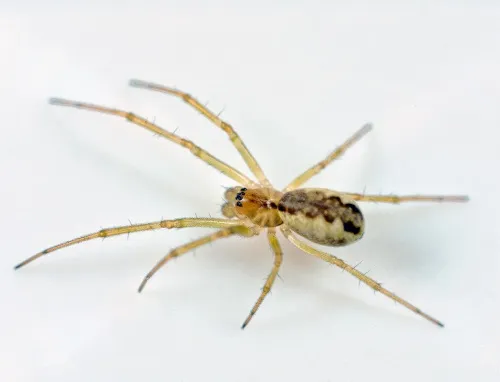
Neriene peltata
Neriene peltata
The carapace has a dark medial band which broadens to cover the head. The abdomen has a brown band with zig-zag edges. The legs are unmarked. This is a common and widespread species in Britain.
Neriene variabilis
Neriene variabilis
Identification: Profile of abdomen on male: Palp Epigynum
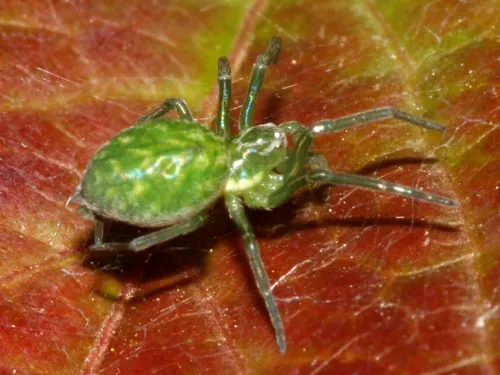
Nigma walckenaeri
Nigma walckenaeri
A small spider, up to 5 mm long with a beautiful, bright green abdomen that has a few white hairs giving a shiny, or frosted appearance. The legs are a yellowish-green. Females have a green head (cephalothorax), while adult males have a brown head. O
Nodocion eclecticus
Nodocion eclecticus
Identification: Epigynum (undissected/dissected-ventral/dissected dorsal)
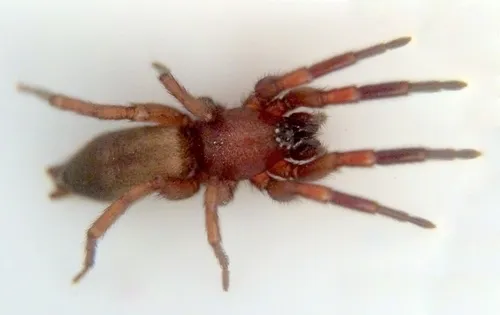
Nodocion floridanus
Nodocion floridanus
Nodocion floridanus is a species of ground spider in the family Gnaphosidae. It is found in the United States and Mexico.
Nodocion rufithoracicus
Nodocion rufithoracicus
Identification: Epigynum (undissected/dissected-ventral/dissected dorsal)
Nodocion voluntarius
Nodocion voluntarius
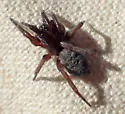
Identification: Epigynum (undissected/dissected-ventral/dissected-dorsal)
Nopalityna sublata
Nopalityna sublata
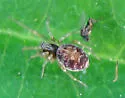
Identification: Females come in dark and light forms but can be variable. Males are redder. Epigynum Palp
Northern Black Widow
Latrodectus variolus
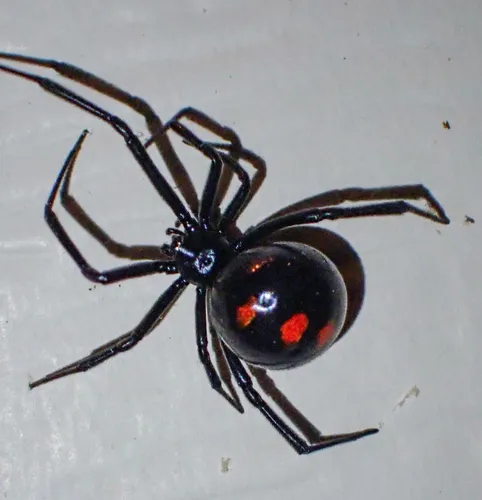
Identification: Although the Northern Black Widow is slightly smaller and not "quite as venomous/dangerous" (definitely still not to be messed with), it is similar to the Southern Black Widow ( L. mactans ) in general behaviors. Please refer to L. ma
Northern Crab Spider
Mecaphesa asperata
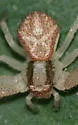
Identification: Dorsum of abdomen off-white with two pairs of longitudinal red bands or rows of spots, sometimes with lateral red band anteriad (Dondale & Rednder, 1978b) --- a "capped" V, with the point of the V at the end of the somewhat angular ab
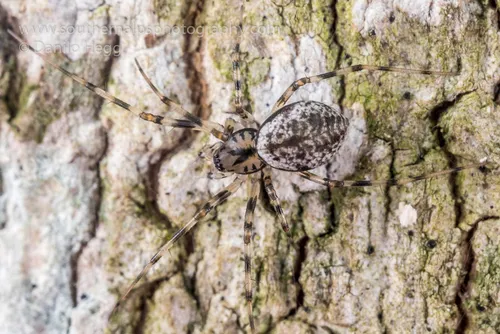
Northern Long-toothed Sheetweaver
Drapetisca alteranda
Identification: "The carapace is light with black edges and a black spot on each of the radial furrows. There is also a Y-shaped black spot at the anterior end of the dorsal furrow. The abdomen is highest in front, broadly oval seen from above, and p
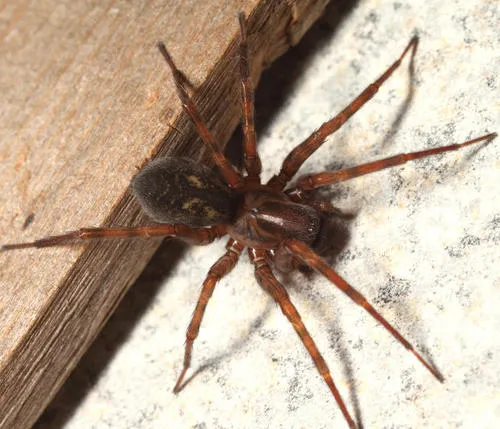
Northern Spurred Woodland Funnelweaver
Coras montanus
Coras montanus is a species of funnel weaver in the family of spiders known as Agelenidae. It is found in the United States and Canada.
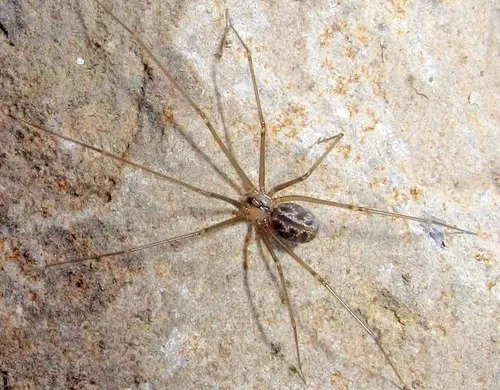
Northwestern Cellar Spider
Psilochorus hesperus
Psilochorus hesperus is a spider found in cellars and rock boulder nooks in the Northwestern United States and in British Columbia. Adult males have curved spikes protruding forward from their jaws.
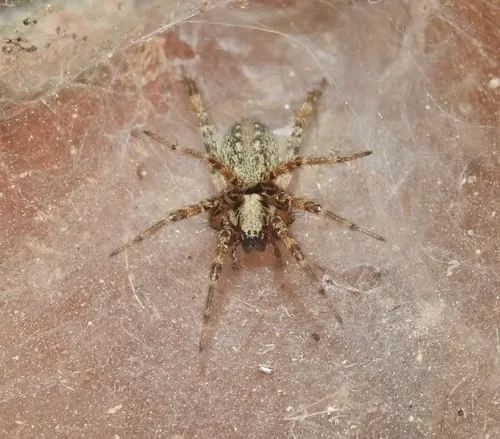
Novalena intermedia
Novalena intermedia
Identification: Males differ in the RTA with dorsal projections large and cupped. GBIF map - https://www.gbif.org/species/5168596
Nursery Web Spider
Pisaura mirabilis
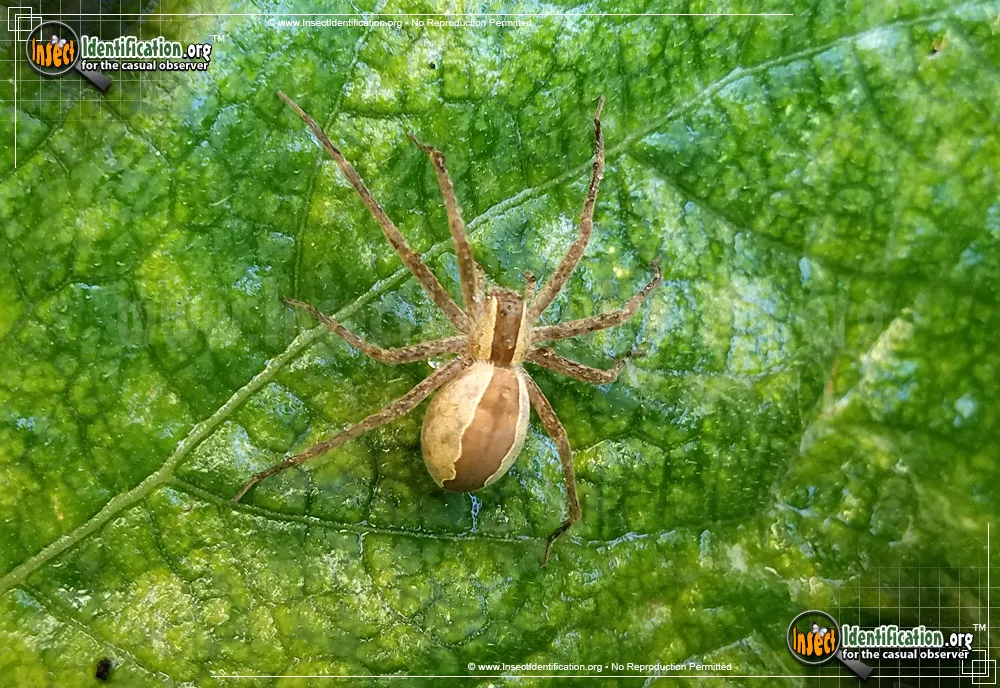
Male length: 10-13 mm. Female length: 12-15 mm. They vary in colour from grey through orange to dark brown. The abdomen is slender and is divided by a pale line and there are pale 'tear marks' at the sides of its eyes. Usually found in long grass or
Ocrepeira ectypa
Ocrepeira ectypa
This nocturnal spider builds a specialized web with no sticky threads. Built in the fork of a small branch, the web consists of several radii connected to a small hub. The radii act like trip wires to alert the spider to prey walking along the branch
Oedothorax agrestis
Oedothorax agrestis
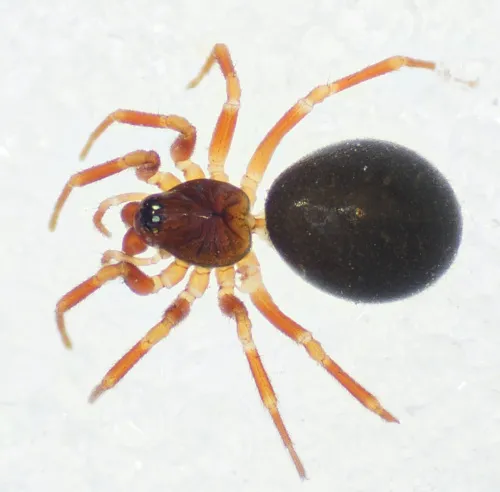
Body length 2 to 3 mm. Prosoma brown to dark brown, distinctly darker radial stripes. Legs yellow-orange. Opisthosoma blackish. Males distinguishable from the palps, particular the tibia. Females can be difficult to determine. Confirmation of this sp
Oedothorax apicatus
Oedothorax apicatus
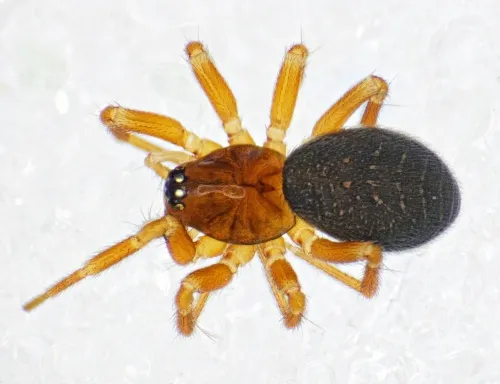
This is a very small, dark bodied spider with red/brown legs. The species is a frequent aeronaut that occurs in most habitats. It is characteristic of open disturbed habitats such as disturbed grasslands, agricultural fields and river shingles. All y
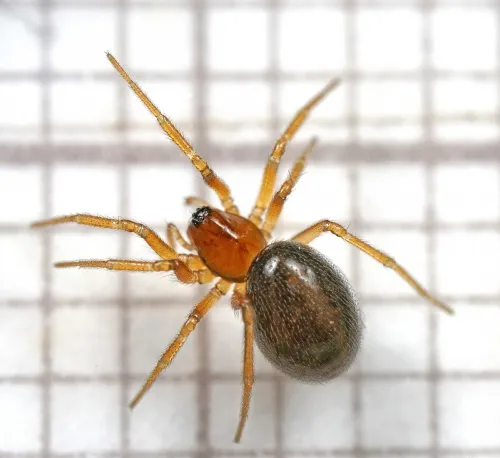
Oedothorax fuscus
Oedothorax fuscus
Females 2.1 to 3.0 mm, males 2.0 to 2.3 mm. Prosoma (cephalothorax) brown-orange-brown, male: with a crown. Opisthosoma (abdomen) grey dorsally with lighter longitudinal stripes. Female epigyne and male pedipalps are characteristic. Unless identified
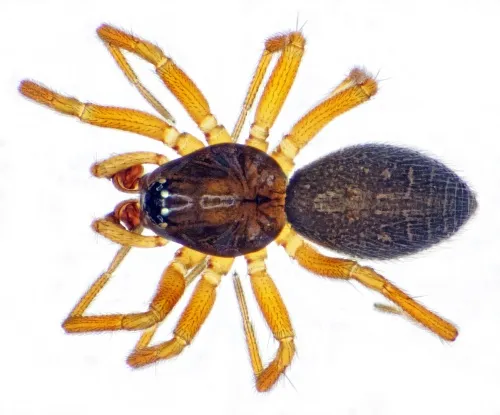
Oedothorax gibbosus
Oedothorax gibbosus
Males: 2.0 to 2.3 mm. Females: 2.4 to 3.2 mm. Prosoma brown, radial stripes and margin darker. Male: with high, rounded hump, anteriorly with bipartite, densely bristled groove (gibbosus-form) or with broad-conical hump (tuberosus-form). Legs yellow-
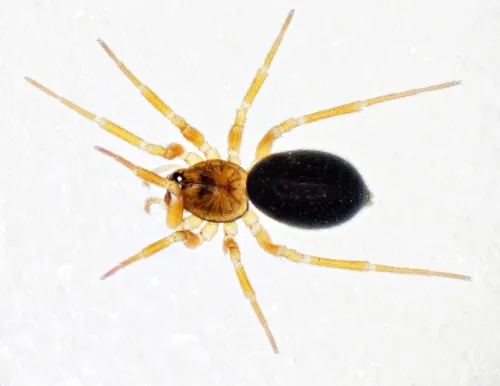
Oedothorax retusus
Oedothorax retusus
Males 2 mm, females 2.5 to 3 mm. Prosoma light to dark brown, margin and radial stripes darker, steeply ascending behind eyes. Legs yellow-orange. Opisthosoma grey. Tibial spines: 2-2-2-2 / TmIV: no / TmI: 0.34-0.44 Confirmation of this species requi
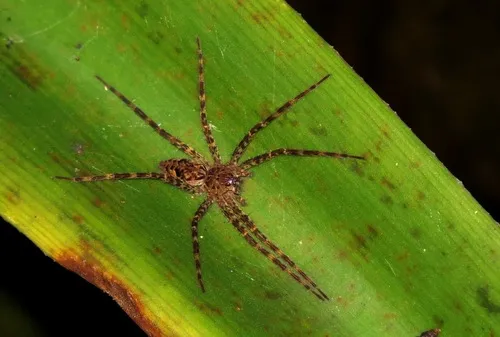
Okefenokee Fishing Spider
Dolomedes okefinokensis
Identification: This species is not distinguishable from D. tenebrosus without looking at characteristics of the palp/epigynum (Carico, 1973). Adult female D. okefinokensis may actually be the largest species of Dolomedes . See the measurements give
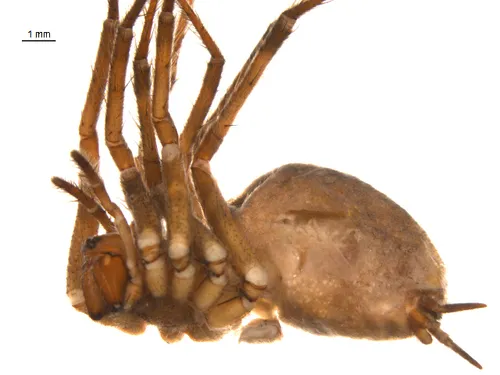
Oklahoma Funnelweb Spider
Agelenopsis oklahoma
Agelenopsis oklahoma is a species of funnel weaver in the spider family Agelenidae. It is found in the United States and Canada.
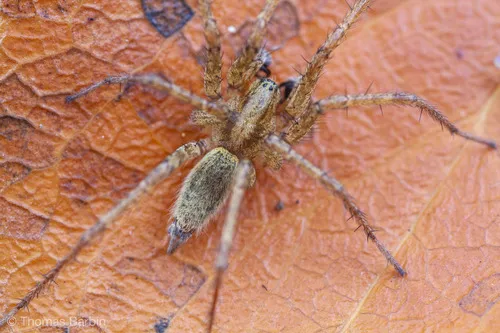
Oregon Funnelweb Spider
Agelenopsis oregonensis
Agelenopsis oregonensis is a species of funnel weaver in the family of spiders known as Agelenidae. It is found in the United States and Canada.
Oreophantes recurvatus
Oreophantes recurvatus
Identification: Not meant to be diagnostic by itself, but this species has unusually long, slender legs; femur I is nearly twice as long as the length of the cephalothorax, and tibia I is longer than femur I. The male's pedipalp or female's epigynum
Origanates rostratus
Origanates rostratus
Identification: Palp Epigynum One identifying character: the large oval cephalic pits just behind the posterior lateral eyes (Kaston, 1948). The male has a very distinctive raised cephalic lobe (fig. 35.152 on page 138 of SONA, for those who have it)
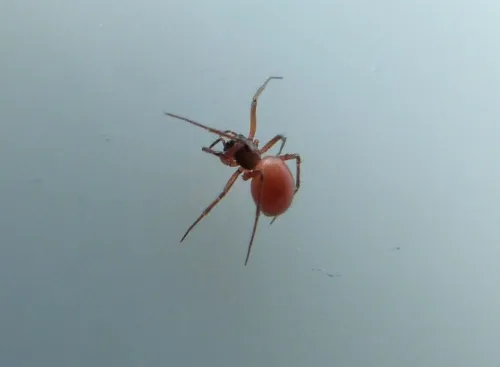
Ostearius melanopygius
Ostearius melanopygius
This is a very small spider. The male has a 2 mm body length and is smaller than the female which has a 3 mm body length. The uniformly orange-red abdomen is most distinctive, whilst the head is darker almost back. There is also a blackish patch at t
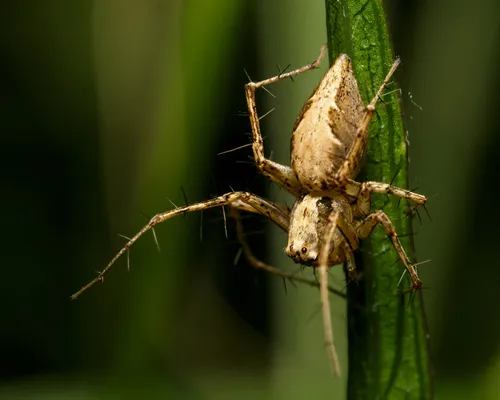
Oxyopes acleistus
Oxyopes acleistus
Oxyopes acleistus is a species of lynx spider in the family Oxyopidae. It is found in the United States and Mexico.
Oxyopes aglossus
Oxyopes aglossus
Identification: Ventral surfaces of femora I and II with black median lines (femora III and IV might have dashes) O. salticus also has black median lines on the ventral surfaces of femora I and II; however, it shows this characteristic on femur III a
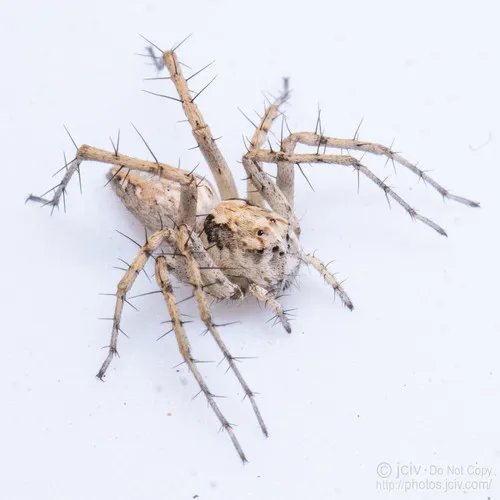
Oxyopes apollo
Oxyopes apollo
Identification: Identified as O. apollo This species is capable of changing from a light coloration to a slighty darker coloration to blend in with their background. Legs 4 (the hind legs) are the longest, then legs 2, legs 1, and 3 being the shortes
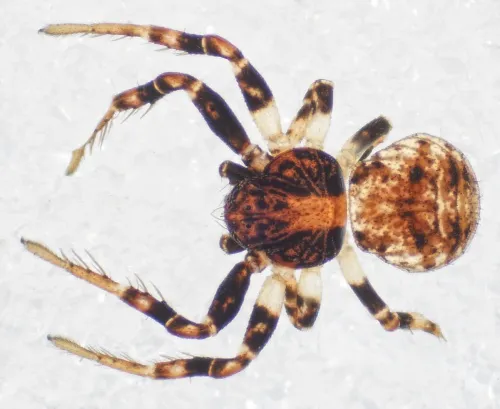
Ozyptila brevipes
Ozyptila brevipes
Length 2 to 4 mm. A small dark crab spider. Identification of this species “Requires examination at high magnification in good lighting, typically examination of the genitalia." Bee, L., Oxford, G., & Smith, H. (2020). Britain's Spiders: A Field Guid
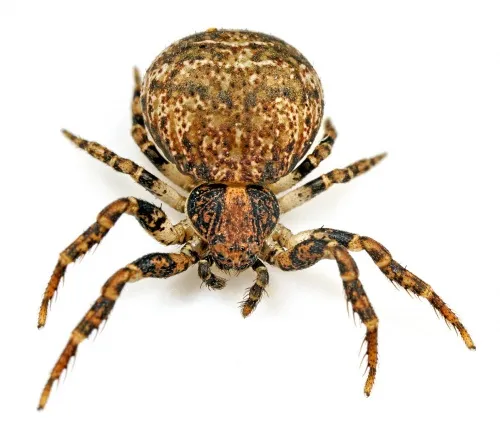
Ozyptila praticola
Ozyptila praticola
Females reach up to 4 mm and males grow up to 3 mm. Both sexes are of a dark reddish brown. Identification of this species "Requires examination at high magnification in good lighting, typically examination of the genitalia." Bee, L., Oxford, G., & S
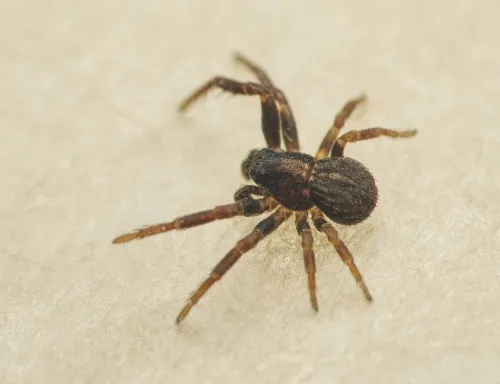
Ozyptila sanctuaria
Ozyptila sanctuaria
Length 2 to 4 mm. A dark crab spider with squat appearance. Identification of this species "Requires examination at high magnification in good lighting, typically examination of the genitalia." Bee, L., Oxford, G., & Smith, H. (2020). Britain's Spide
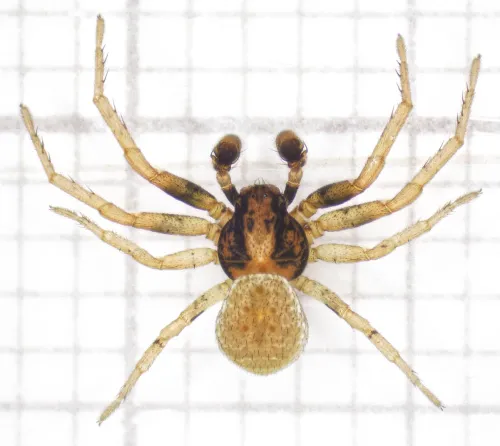
Ozyptila simplex
Ozyptila simplex
Body length male: 2-5mm. Prosoma yellow-brown, legs yellow-brown with femur darker than remaining segments. Opisthosoma yellow-brown. Identification of this species “Requires examination at high magnification in good lighting, typically examination o
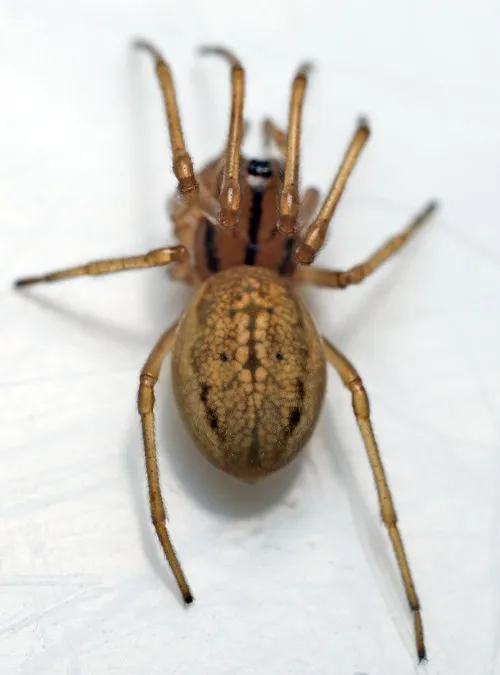
Pachygnatha clercki
Pachygnatha clercki
4-6mm. Prosoma yellow-brown with dark margin and median stripe. Chelicerae same colour as prosoma. Opisthosoma mostly light yellow, folium vague, sometimes with dark median line. Pachygnatha clercki is a ground-living species usually found in wet hab
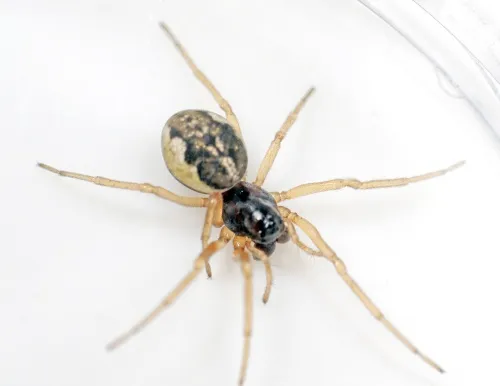
Pachygnatha degeeri
Pachygnatha degeeri
3-4mm. Prosoma dark brown. Chelicerae same colour as prosoma. Opisthosoma with distinct folium, medially with 2-3 longitudinal silver spots. Mainly in grassland and in low vegetation, but also comes into gardens. Spring to autumn but adults may be fo
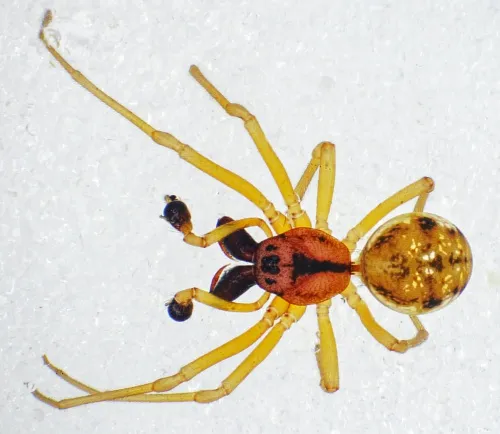
Pachygnatha listeri
Pachygnatha listeri
Length 3 to 5mm. Prosoma reddish yellow, or brown with dark median band, margin not darkened. Sternum dark brown. Chelicerae dark brown. Legs yellow-orange. Opisthosoma grey, mostly with almost black folium dorsally, with bright pairs of spots along
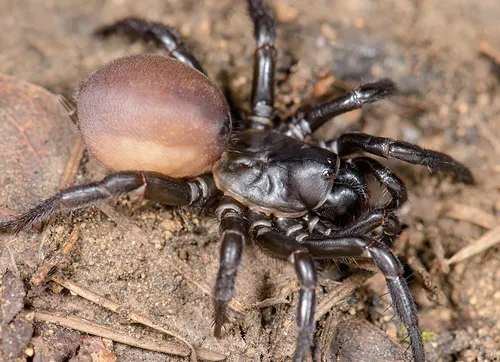
Pacific Foldingdoor Spider
Antrodiaetus pacificus
Antrodiaetus pacificus is a species of antrodiaetid mygalomorph spider. It is native to the Pacific Northwest.
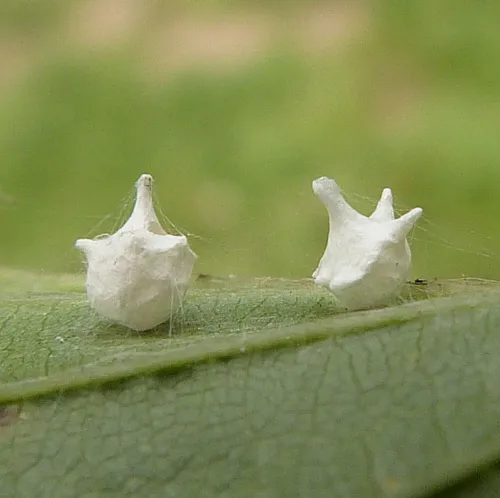
Paidiscura pallens
Paidiscura pallens
A tiny spider (around 1.5mm), which could be mistaken for a very young spider, rather than an adult. Usually pale ( pallens means "pale"), but variable in colour with green and dark forms occurring. Often overlooked due to its small size, but it's st
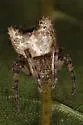
Pale Frilled Orbweaver
Kaira alba
Identification: Strong resemblance to a leaf or flower bud. Overall warty, bristly, irregular appearance.
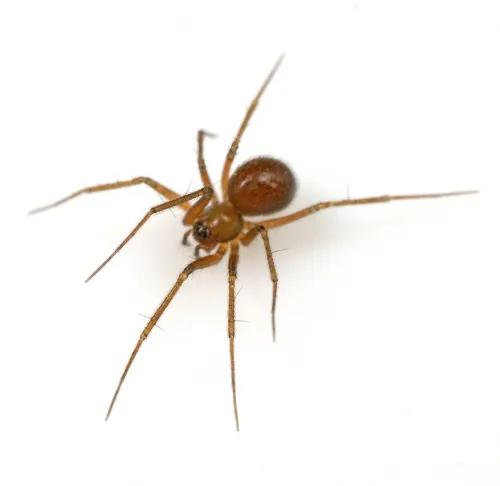
Palliduphantes ericaeus
Palliduphantes ericaeus
Male body length: 1.3 to 1.9 mm, Female body length: 1.3 to 2.4 mm. Prosoma yellow-brown, with dark margin. Legs yellowish. Opisthosoma yellow-grey. Male palp with slightly serrated end of lamella. Epigyne with flat scapus, hardly protruding. Lateral

Palliduphantes pallidus
Palliduphantes pallidus
This is one of the 'money spiders' in the Linyphidae family - which has more UK species than any other. Most are small and need microscopic examination to identify. No additional images available for this species.
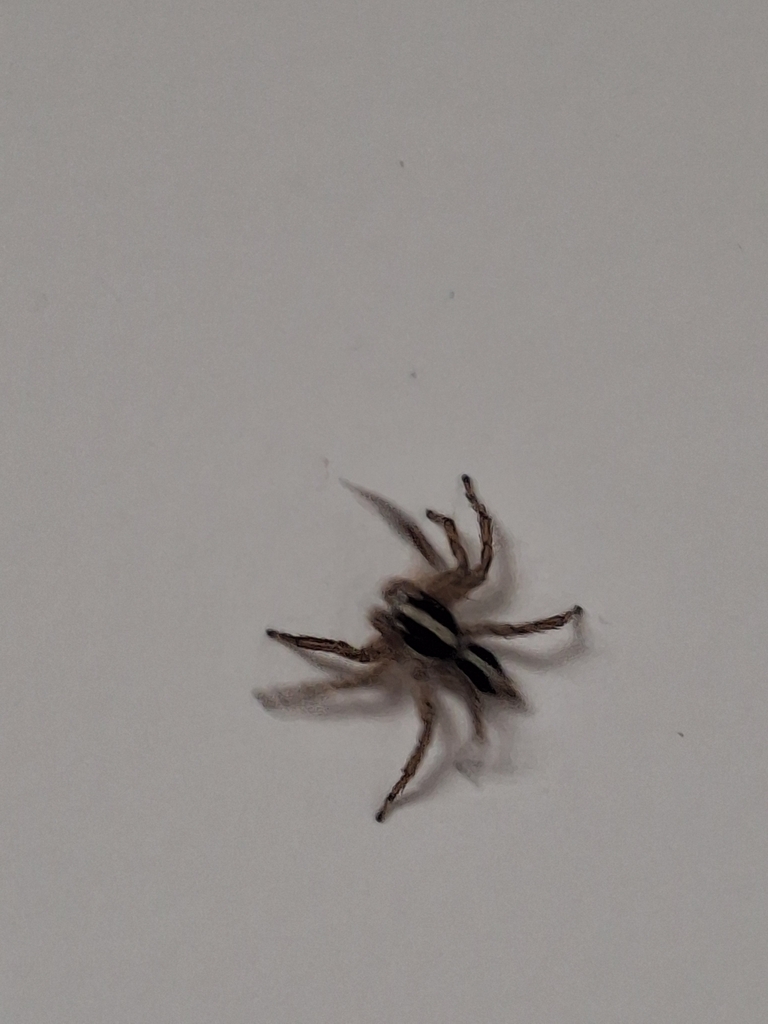
Pantropical Jumping Spider
Plexippus paykulli
(c) Gab Buffo, some rights reserved (CC BY)Plexippus paykulli is a jumping spider in the family Salticidae. It is native to south east Asia but has spread to other parts of the world. In the United States it is called the pantropical jumping spider. It is usually associated with buildings and
Parasteatoda lunata
Parasteatoda lunata
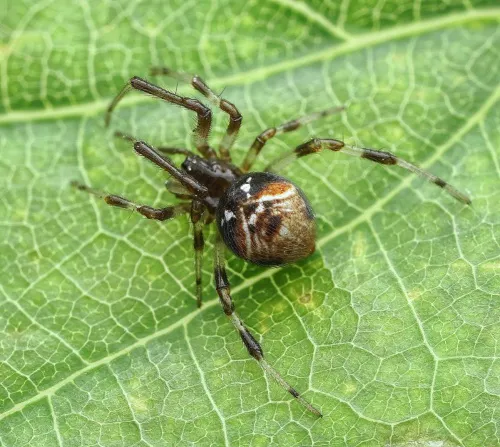
2.5 to 6 mm. Parasteatoda lunata has a distinctive large yellowish patch posteriorly on its unusually proportioned abdomen, and red patches laterally, contrasting with black overall colour. There is also another form which is browner in colour. P. si
Parasteatoda simulans
Parasteatoda simulans
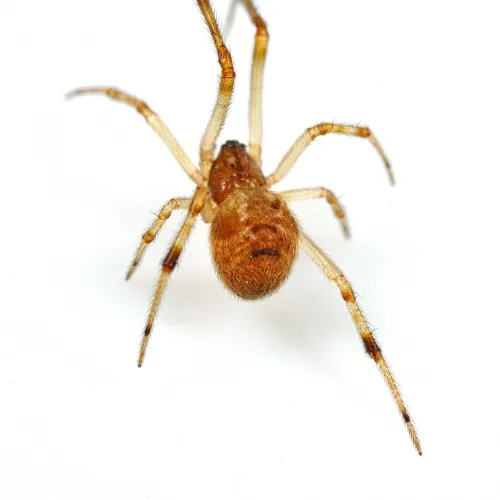
Males 2.5 to 3 mm, females 4 to 4.5 mm. Prosoma ochre-yellow. Sternum ochre yellow or brown, mostly irregularly spotted and with dark margin. Legs brown with narrow, darker rings. Opisthosoma spotted light and dark brown. Markings very variable. Exam
Parasteatoda tabulata
Parasteatoda tabulata
Identification: See drawing of male and female on page 38 of Yoshida 1983 . (Be careful, it's somewhat similar in appearance to P. tepidariorum . The best, if only, way to accurately separate them is by the genitalia.) Unlike Parasteatoda tepidarioru
Pardosa amentata
Pardosa amentata
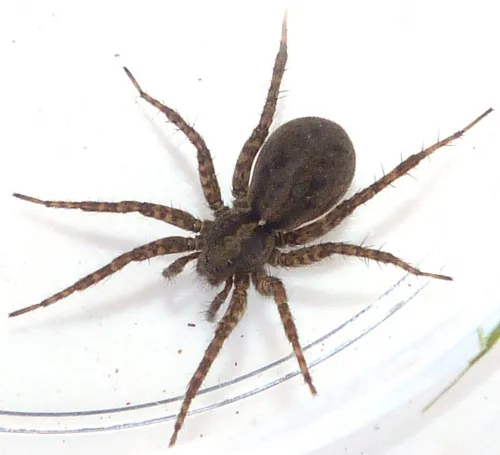
Pardosa amentata is a wolf spider between 5 mm and 8 mm in length and has a brownish coloured body with darker brown markings or spots. Confirmation of this species requires examination of the genitals of mature specimens. Confirmation of this specie
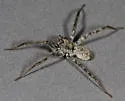
Pardosa atromedia
Pardosa atromedia
Pardosa atromedia is a species of wolf spider in the family Lycosidae. It is found in the United States.
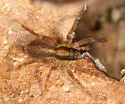
Pardosa distincta
Pardosa distincta
Identification: Male Coloration in adult males can vary from pale to dark (these examples are from Alberta): Left palp, ventral view: Female Epigynum
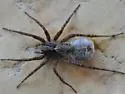
Pardosa dorsuncata
Pardosa dorsuncata
Identification: Info from Rod Crawford regarding Pardosa of Washington: Pardosa mackenziana [& P. dorsalis which is likely a synonym] females can't be distinguished from the equally common P. dorsuncata without a little bit of dissection. The posteri
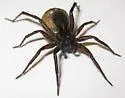
Pardosa fuscula
Pardosa fuscula
Identification: Female : epigyne Male : left palp, ventral view ........
Pardosa luteola
Pardosa luteola
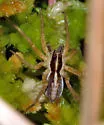
Ivanova et al. 2023 concluded that all P. hyperborea in the New World were genetically distinct from the P. hyperborea of the Old World. They resurrected P. luteola which was associated with Emerton's original description from the New World.-ChH
Pardosa modica
Pardosa modica
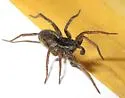
Identification: Male: Voucher Specimen: left palp, ventral view
Pardosa nigriceps
Pardosa nigriceps
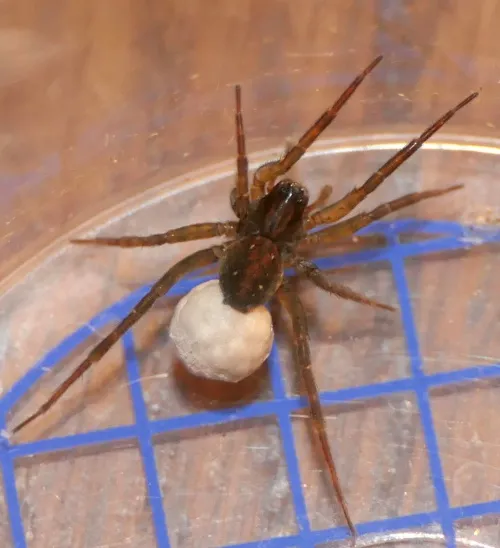
Female 5 to 7 mm. Abdomen brown with a clear light brown cardiac mark, a double row of white spots behind and light brown sides. Carapace dark brown with a light brown median band and light brown bands along the sides. Legs and palps brown with dark
Pardosa ontariensis
Pardosa ontariensis
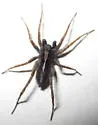
Identification: Female: epigyne Male: palp, ventral view The male also has dark spinnerets:
Pardosa orophila
Pardosa orophila
Pardosa orophila is a species of wolf spider in the family Lycosidae. It is found in the United States and Mexico.
Pardosa palustris
Pardosa palustris
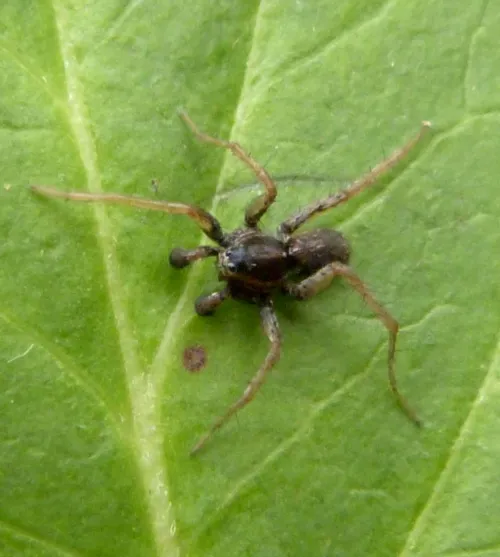
Confirmation of this species requires examination of the genitals of mature specimens. Confirmation of this species: "Requires examination at high magnification in good lighting, typically examination of the genitalia." Bee, L., Oxford, G., & Smith,
Pardosa prativaga
Pardosa prativaga
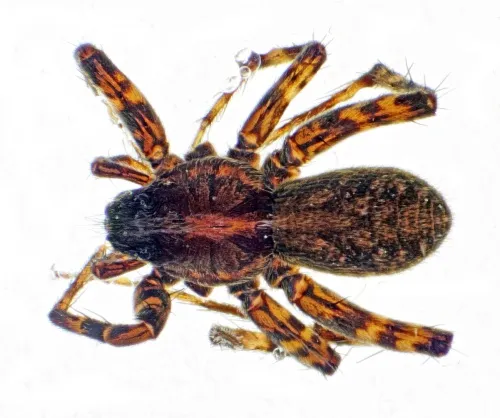
Its mottled patterning of brown and black is similar to that of other Pardosa species and detailed examination is required to be sure of the correct identification. Confirmation of this species: "Requires examination at high magnification in good lig
Pardosa saltans
Pardosa saltans
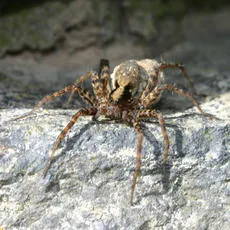
One of the smaller wolf spiders (5 to 7 mm). The cephalothorax (head and thorax) of the female is dark brown has a lighter brown median strip. In the male the cephalothorax is almost black with a paler grey median strip. A difficult species to identi
Pardosa tesquorum
Pardosa tesquorum
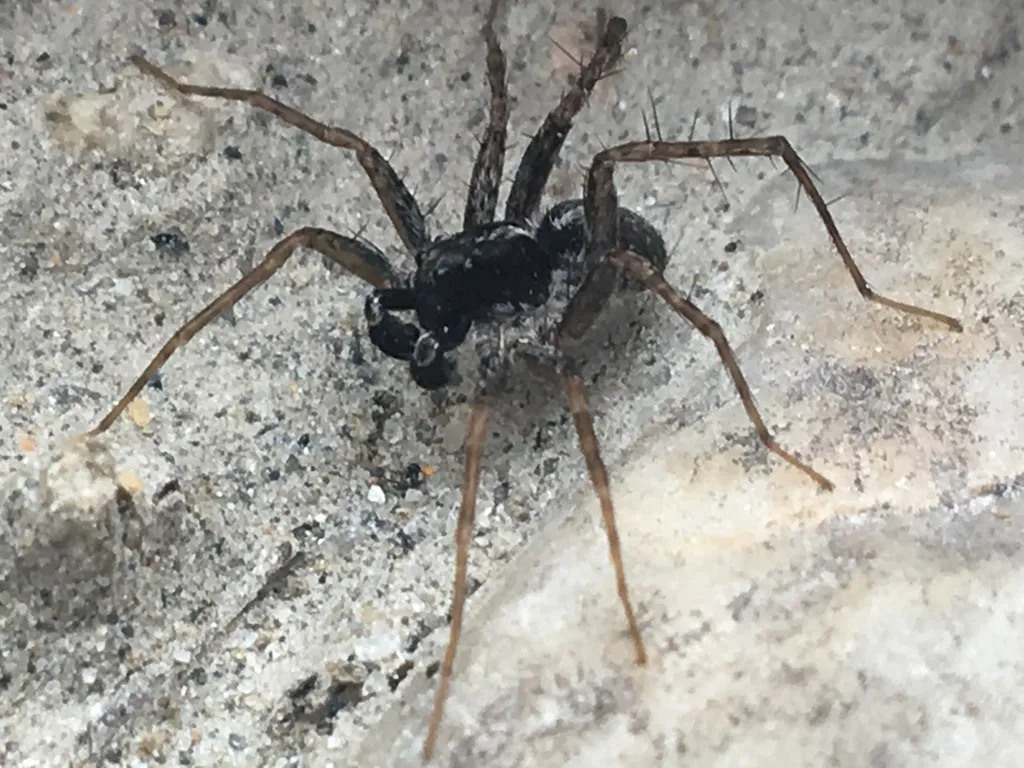
Pardosa tesquorum is a spider in the genus Pardosa ("thinlegged wolf spiders"), in the family Lycosidae ("wolf spiders"). The distribution range of Pardosa tesquorum includes Russia, Mongolia, China, the USA, and Canada.
Pardosa vancouveri
Pardosa vancouveri
Identification: The epigynum does not separate females from other species, but the males of P. vancouveri can be distinguished by the thickened "club foot" of tarsus I. ( Vogel 2004 )
Peckhamia americana
Peckhamia americana
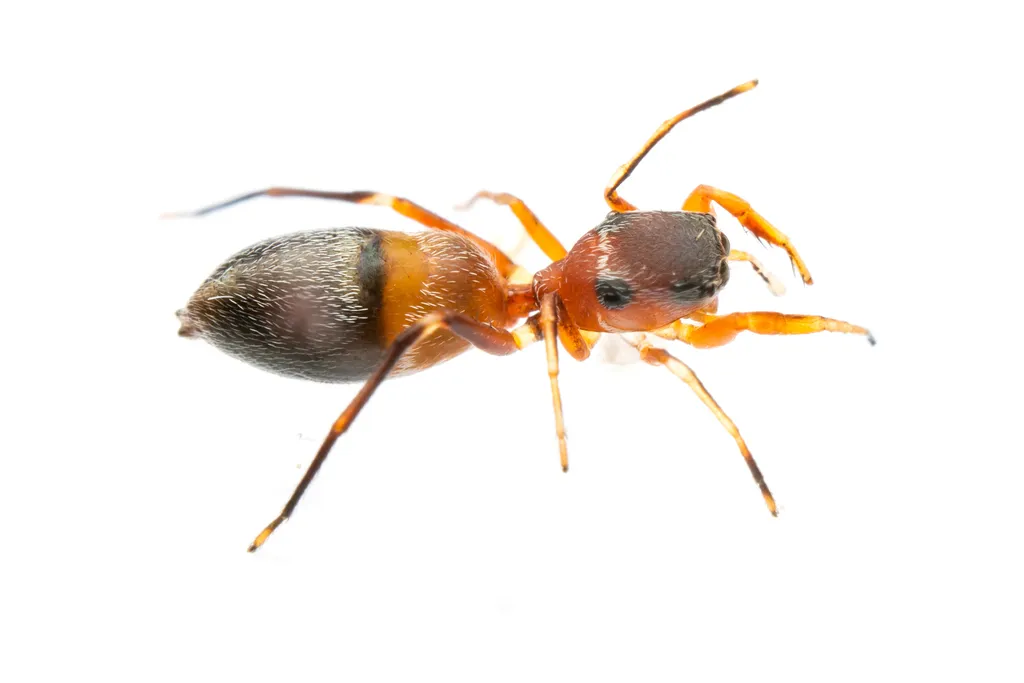
Peckhamia americana is a species of jumping spider in the family Salticidae. It is found in the United States, Mexico, and Hispaniola.
Pelecopsis parallela
Pelecopsis parallela
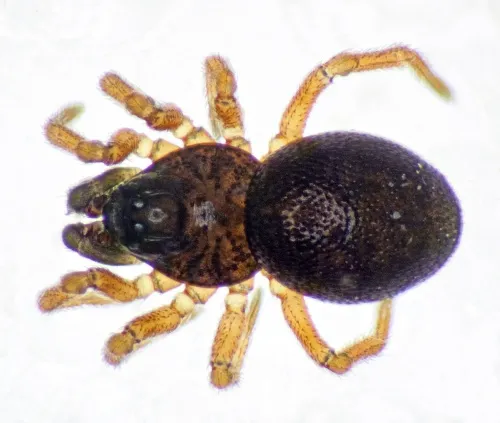
Confirmation of this species requires examination of the genitals of mature specimens. Occurs in a variety of habitats including moss, detritus in woods, under stones and grasslands. Crocker & Daws (1996) recorded the species in disused quarries, on
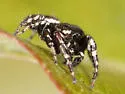
Pelegrina aeneola
Pelegrina aeneola
Pelegrina aeneola (Pelegrina aeneola) is a species in the family Salticidae, commonly known as jumping spiders, belonging to the order Araneae (Spiders). This species belongs to the genus Pelegrina. As a member of class Arachnida, phylum Arthropoda,
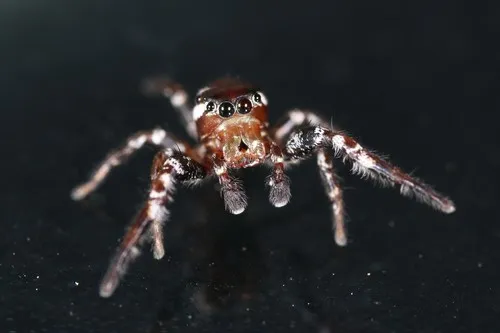
Pelegrina exigua
Pelegrina exigua
Pelegrina exigua is a species of jumping spider in the family Salticidae. It is found in the United States.
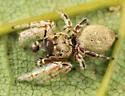
Pelegrina flaviceps
Pelegrina flaviceps
Identification: Palp (ventral/lateral) Epigynum (ventral/dorsal) Males can be distinguished from the closely related flavipedes and exigua by the dark lateral spots on the chelicerae and pale yellow legs.
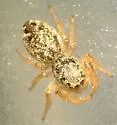
Pelegrina insignis
Pelegrina insignis
Identification: Maddison mentions that the female's face and legs are yellowish Palp Epigynum
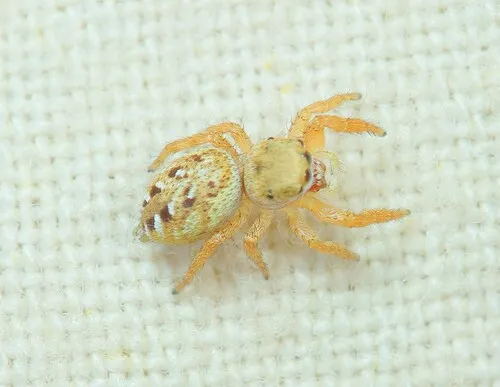
Pelegrina sabinema
Pelegrina sabinema
Pelegrina sabinema is a species of jumping spider in the family Salticidae. It is found in the United States.
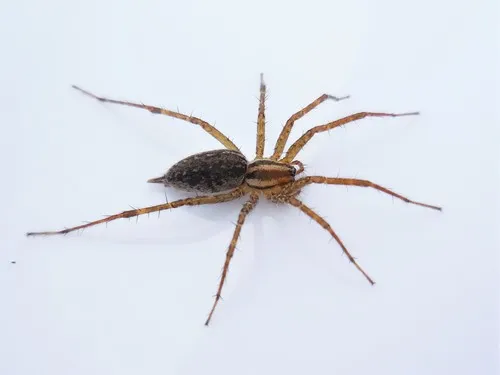
Pennsylvania Funnelweb Spider
Agelenopsis pennsylvanica
Agelenopsis pennsylvanica is a species of funnel weaver in the family of spiders known as Agelenidae. It is found in the United States.
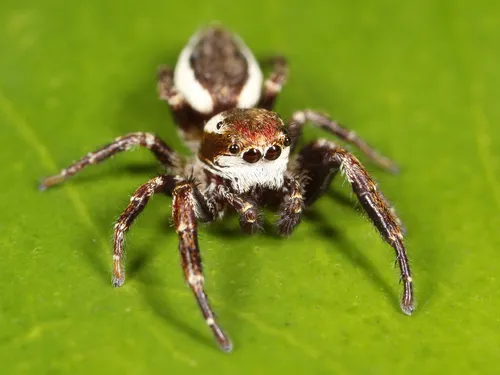
Phanias albeolus
Phanias albeolus
Phanias albeolus is a species of jumping spider in the family Salticidae. It is found in the United States.
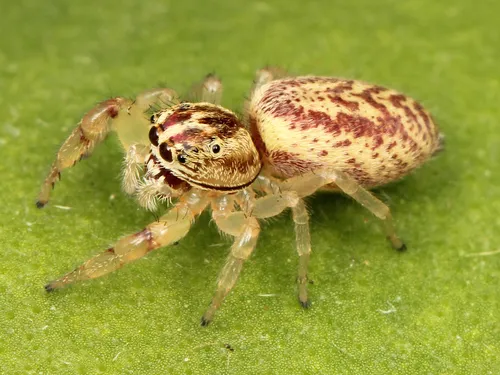
Phanias watonus
Phanias watonus
Identification: Male is similar in appearance to Phanias harfordi , but without the solid covering of white scales on the face. Palp Epigynum
Phantyna bicornis
Phantyna bicornis
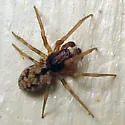
Identification: Epigynum: undissected, dissected ventral, dissected dorsal Palp: ventral, lateral P. terranea replaces this species in the west.
Phidippus apacheanus
Phidippus apacheanus
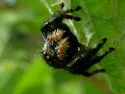
Identification: Male/Female Male P. cardinalis can be distinguished from male P. apacheanus by the lack of the shiny, green chelicerae found in the latter. See images of faces below ( P. cardinalis/P. apacheanus ):
Phidippus aureus
Phidippus aureus
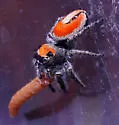
Identification: Female Phidippus aureus is a rare species within the purpuratus complex and is closest in affinity to species like P. ardens/ apacheanus . Widespread, but never common- this is a smaller-sized member of the group- closer to P. ardens
Phidippus bidentatus
Phidippus bidentatus
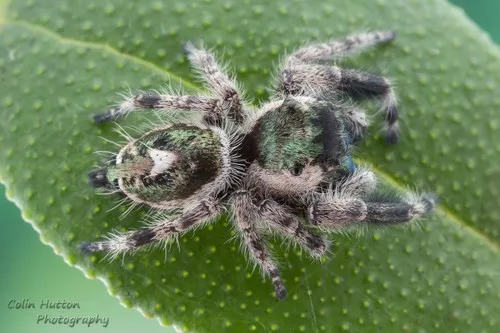
Phidippus bidentatus is a species of jumping spider in the family Salticidae. It is found in a range from the United States to Costa Rica.
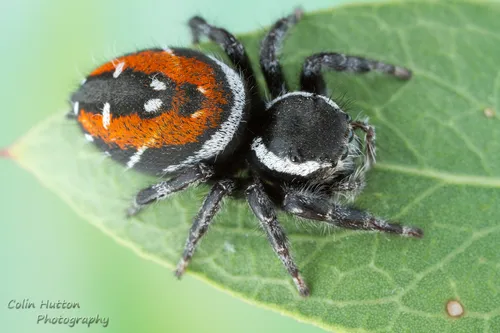
Phidippus carneus
Phidippus carneus
Identification: Male Females have a melanistic form which is only known from New Mexico and Texas currently. Females of the montivagus form are more typical.
Phidippus clarus
Phidippus clarus
Identification: Male/Female Palp Epigynum (ventral/dorsal) The female constructs a conspicuous white retreat and egg case near the tops of plants
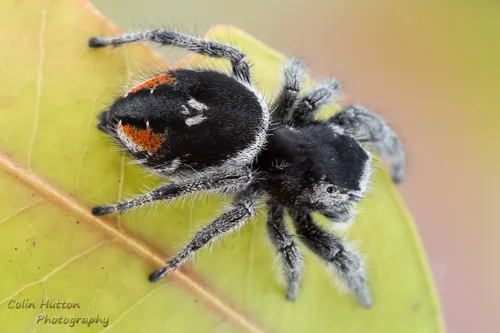
Phidippus concinnus
Phidippus concinnus
Phidippus concinnus is a species of jumping spider found in Idaho and California in the United States....
Phidippus cryptus
Phidippus cryptus
Identification: Adult Male Voucher specimen: Left palp (ventral/lateral): Female
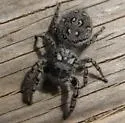
Phidippus mystaceus
Phidippus mystaceus
Identification: Large, variable in color. Three sets of abdominal markings apparently distinctive. Male Female
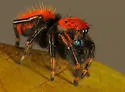
Phidippus nikites
Phidippus nikites
Identification: Male/Female Palp This species is closely related to Phidippus apacheanus and looks very similar. However, according to Edwards 2004 , unlike P. apacheanus , which stays the same color throughout its life cycle (usually red, sometimes
Phidippus octopunctatus
Phidippus octopunctatus
Identification: Male/Female Epigynum (ventral/dorsal)
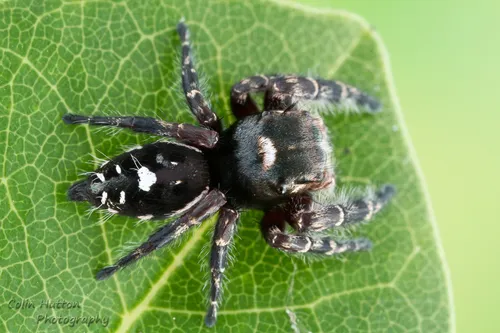
Phidippus richmani
Phidippus richmani
Phidippus richmani is a species of jumping spider (Salticidae) native to the United States.
Phidippus whitmani
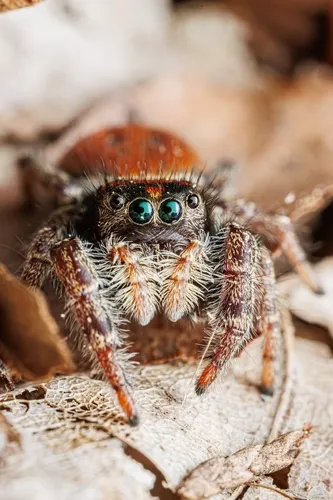
Phidippus whitmani
Identification: Male/Female There appears to be a melanistic version in the southern parts of its range.
Philaeus chrysops
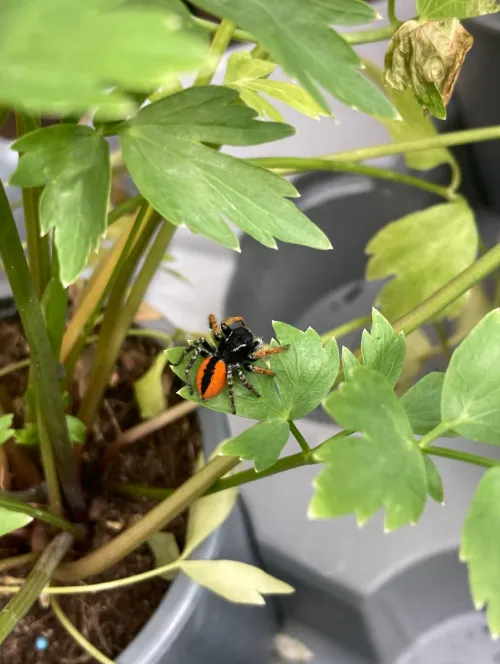
Philaeus chrysops
A non-native jumping spider sometimes imported with plants or for the pet trade from Europe and North Africa. Length 5.5-9.7mm. Opisthosoma - females and juvenile males: black with 2 long white spots, sometimes formed like 2 parallel lines; male red
Philodromus albidus
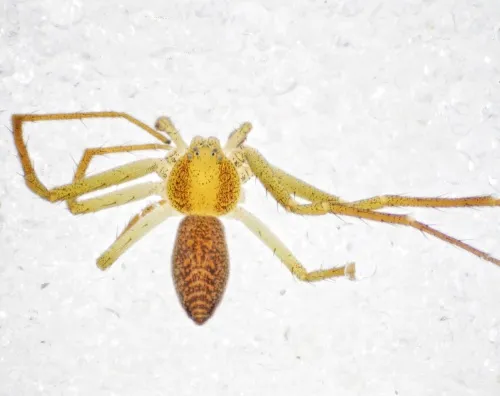
Philodromus albidus
Males 3.1 to 3.8 mm; Females 4 to 5.4 mm. Prosoma with orange-brown lateral stripes. Opisthosoma yellowish with bright chevrons. Legs pale, greenish. Confirmation of this species: "Requires examination at high magnification in good lighting, typicall
Philodromus anomalus
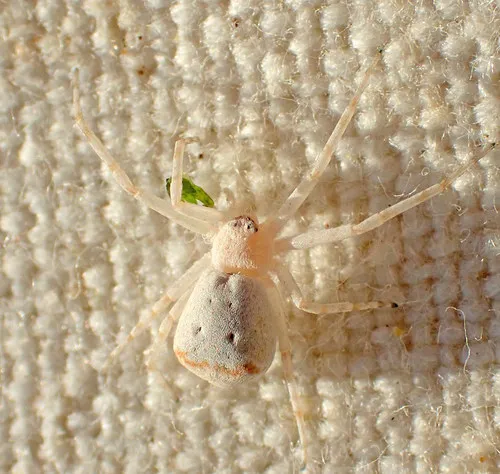
Philodromus anomalus
Identification: Description of female from Schick 1965 (in part): "Abdomen angulate caudolaterally, dorsum largely white, with a typically red caudal band, distinct spiniforms lacking". Palp: Epigynum:
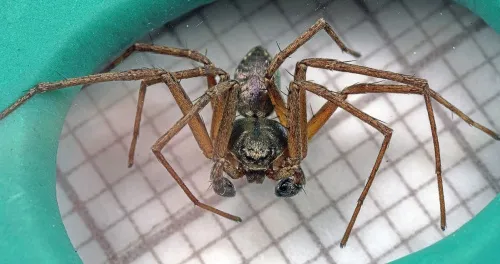
Philodromus aureolus
Philodromus aureolus
Very similar to other members of the group and microscopic examination of the genitalia is necessary to confirm identification. Voucher specimens of all species in the aureolus group are essential (P. aureolus, P. buxi, P. cespitum, P. collinus, P. l
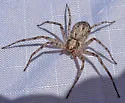
Philodromus californicus
Philodromus californicus
Identification: Epigynum: Regarding intraspecific variation: "Re-examination of most of the available material of P. californicus convinces us that this is a variable species in size, color and external genitalia... More specifically, we point out th
Philodromus cf. pratariae
Philodromus possible-pratariae
Identification: This is a placeholder page for spiders we believe may be Philodromus pratariae .
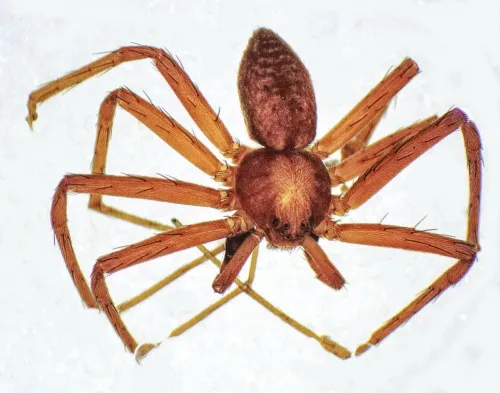
Philodromus collinus
Philodromus collinus
Length 4 to 6 mm. Prosoma with broad, dark brown lateral stripes and almost white centre. Legs yellowish grey or brown with black spots. Opisthosoma dorsally with broad median band consisting of large, yellowish white spots. Confirmation of this spec
Philodromus dispar
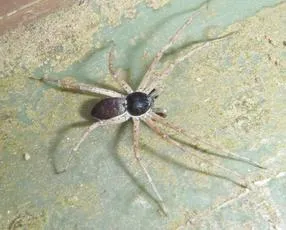
Philodromus dispar
Philodromus dispar is a type of crab spider and is about 5 mm long. The male is black or dark brown with white edges, the female more beige in colour. Whilst the male is distinctive, the female can look very similar to P. cespitum . Mature males are
Philodromus imbecillus
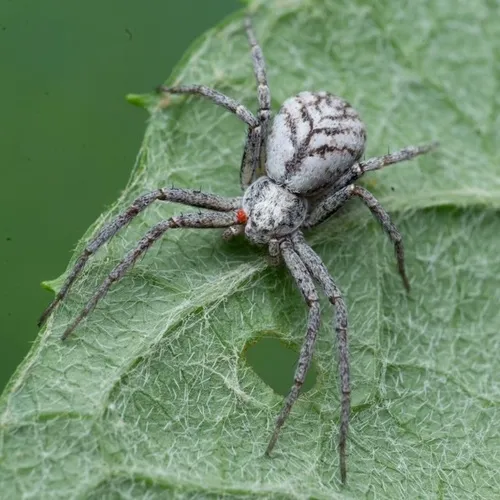
Philodromus imbecillus
Philodromus imbecillus is a species of running crab spider in the family Philodromidae. It is found in the United States and Canada.
Philodromus josemitensis
Philodromus josemitensis
Identification: P. josemitensis has the abdomen obviously acutely angulate at each side. ~ Rod Crawford Palp: Epigynum: undissected/dorsal view of dissected
Philodromus keyserlingi
Philodromus keyserlingi
Identification: Palp: Epigynum: undissected/dissected ventral/dissected dorsal
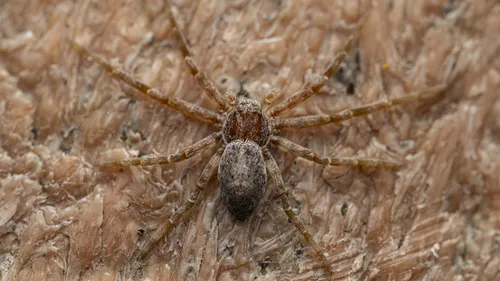
Philodromus mineri
Philodromus mineri
Philodromus mineri is a species of running crab spider in the family Philodromidae. It is found in the United States.

Philodromus minutus
Philodromus minutus
Philodromus minutus is a species of running crab spider in the family Philodromidae. It is found in the United States and Canada.
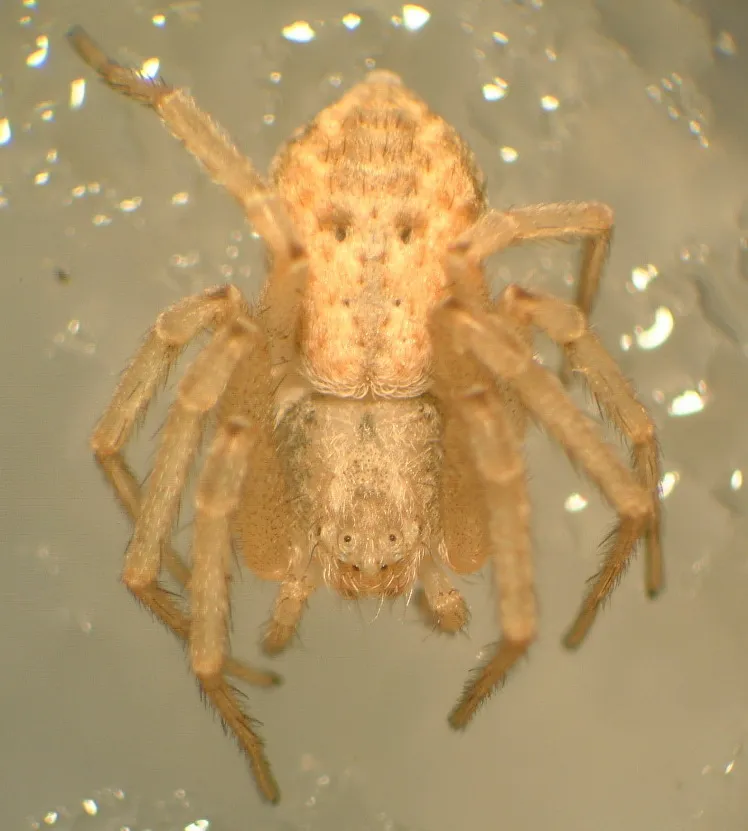
Philodromus peninsulanus
Philodromus peninsulanus
Identification: Palp: Epigynum (dorsal/ventral): While epigynum is similar to that of P. placidus , the pattern on the legs is different. P. placidus has dark distal marks on the segments of the legs.